
Aluminum Foil Health Risks: Do you use aluminum foil to store or bake food? Doctor explains when you need to be cautious |
[ad_1]
Do you use aluminum foil or aluminium containers to store cooked food? If yes, you’re definitely not alone. Many of us wrap leftover rotis, cover curries, or pack lunch in aluminium foil because it feels quick, neat, and convenient. It’s been part of everyday kitchen habits for years, especially when we want to keep food warm, fresh, or easy to carry. But have you ever paused to wonder if this common practice is actually good for your health?Why vitamin deficiencies often show up on your face or hairWeight loss food for women: 7 high-protein foods women can find anywhereMost of the time, we think, “It’s just food storage, what could go wrong?” After all, aluminum foil is easily available, lightweight, and doesn’t break like glass. But the way we use it matters more than we realise.
Why does it matter?
The fish roasted with Al foil recorded unsafe levels of metals. As per a study published in December 2024 in the Food Bioscience journal metals leached from aluminium foil into Clarias gariepinus muscles roasted at high temperatures. “According to redundancy analysis, foil area had the most influence on metal leaching. The percentage weight loss of the foil after fish roasting indicates leaching of its metal contents into the fish,” the researchers said.Another study estimated the degree of aluminum leakage from aluminum foil during baking process. The researchers found that aluminum content in the baked food, comprising Atlantic salmon Salmo salar, mackerel Scomber scombrus, duck breasts, cheese Hermelín, tomato, paprika, Carlsbad dumplings, pork roast, pork neck, chicken breasts, and chicken thighs increased by 40 times.
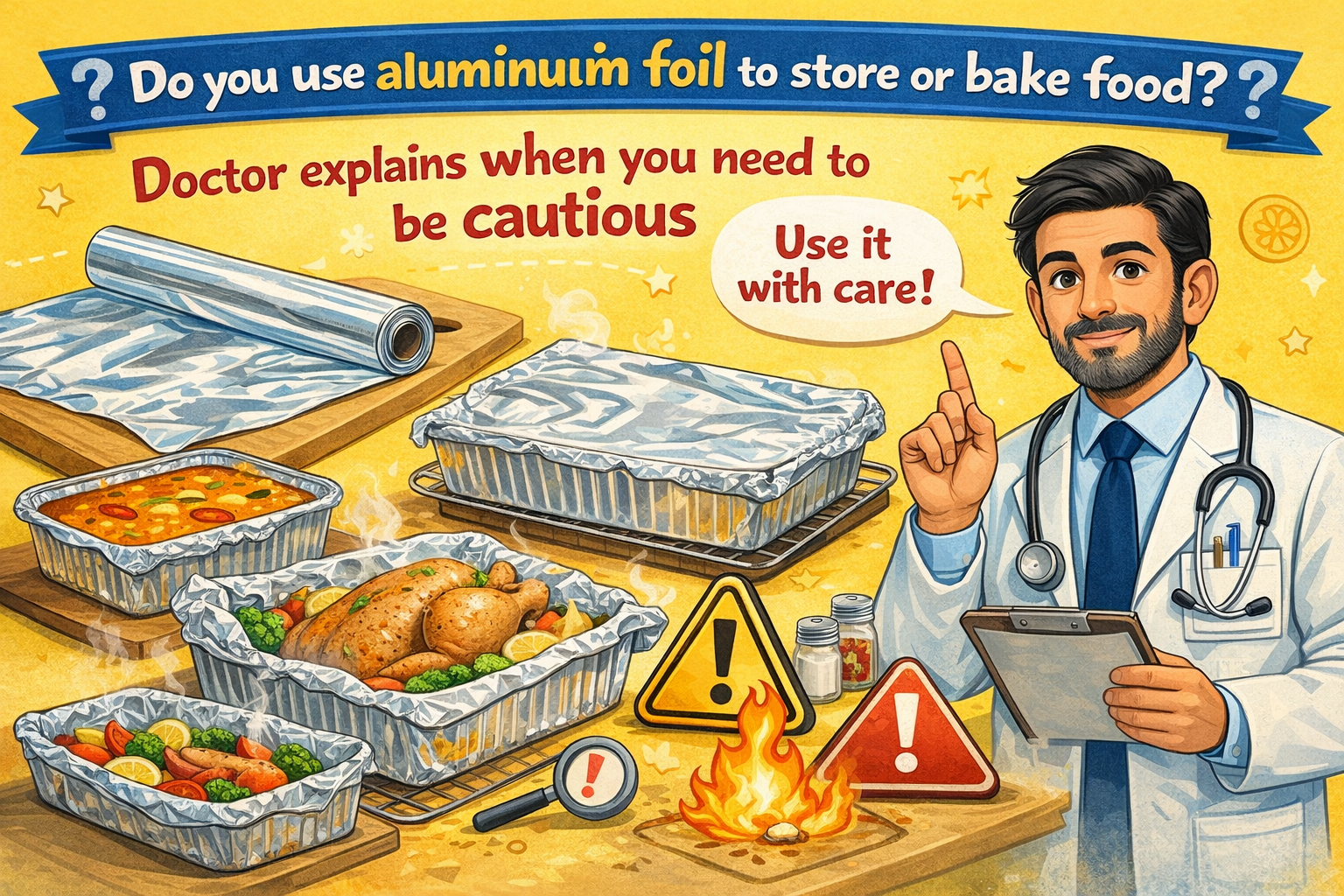
Dr. Chhaya Vaja, Internal Medicine Expert, Apollo Spectra Hospital, Mumbai says there is a safety concern regarding these storage methods. Unfortunately, these methods can do more harm than good. These methods may lead to a plethora of health issues. Hence, it is necessary to store food the right way. “Aluminum tends to react with acidic and salty foods such as tomatoes, lemon, vinegar, pickles, and spicy gravies. When these foods are cooked or stored in aluminum foil or containers, some amount of aluminum may mix into the food. Excess aluminum intake over long periods may lead to bone problems, kidney strain, and nerve-related issues, especially in people with kidney disease, where the body cannot easily remove aluminum. Using damaged, scratched, or thin aluminum containers may also increase the chances of leaching. Wrapping hot food directly in foil and storing it for long hours can further raise the risk of aluminium exposure,” the doctor warns.
Safety measures
Dr. Chhaya urges us not to use aluminum foil or a container for daily cooking or long-term storage. She advises: Avoid wrapping or cooking acidic, salty, or spicy foods in foil. Use steel, glass, or ceramic containers for storing cooked food. If using aluminum foil for baking or grilling, place butter paper or baking paper between the food and the foil so that the aluminum doesn’t come in direct contact with the food. Don’t reuse disposable aluminum containers, and avoid cooking food at very high temperatures directly in foil.Adhere to safe storage methods instead of getting influenced by any trend on social media that promotes aluminum foil and container usage. Be attentive when it comes to your well-being, and don’t follow any food storage methods blindly. Try to take help from an expert when it comes to appropriate storage methods. This will help you to avoid health issues linked to wrong storage methods.
[ad_2]
Source link