
Platform for peer-to-peer lending changes lives, hits 100 cr loans | Mumbai News
[ad_1]
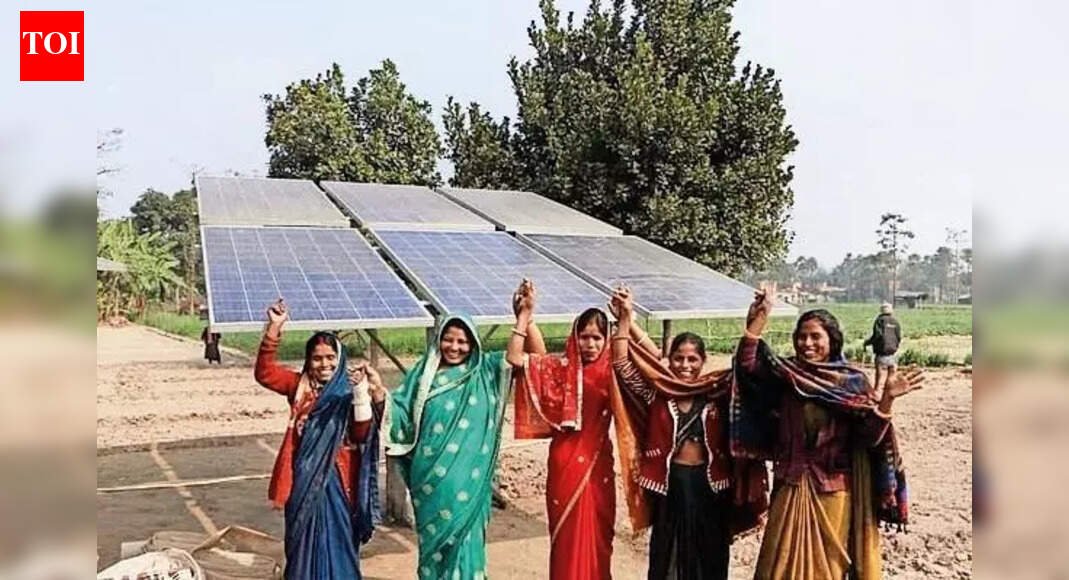
On a scorching afternoon in rural Bihar, the rhythmic thump of a water pump rises above the quiet of the cauliflower fields. Here, Devki Devi runs a solar-activated pump which today irrigates 112 farmers across 36 acres of land, and brings her a steady income.But the real story behind the solar-wali didi’s micro-enterprise is that it was fortified by strangers sitting in a Bangalore office or Mumbai high rise after they had scrolled through many such farmers and rural entrepreneurs profiled by Rang De, an online peer-to-peer lending platform. Last month, this unusual crowd-lending platform hit a total disbursement of Rs 100 crore.In a land of staggering inequity, where big businesses routinely default on loans while millions of individuals find themselves on the outskirts of the financial system, Rang De has created a bridge between individual lenders and underserved borrowers. Over the last 15-odd years, this hybrid space braiding philanthropy, social enterprise and finance, has enabled some 11,000 lenders to connect with 28,000 borrowers. The default rate is less than 0.31%. “We are appealing to anyone who wants to invest in a fellow Indian,” says Smita Ram, Rang De co-founder who, along with her husband, started the platform in 2008 after moving back to India from the UK. Their idea was simple, yet radical: Let ordinary Indians lend directly to underserved borrowers across the country—at interest rates that are fair rather than predatory. On average, the interest rate offered on loans is 8% per annum. “People do get financial returns, but that is not the focus. People who are participating on the platform are really interested in change,” adds the Bangalore-based Ram. Rang De does not view credit as merely a financial transaction but as a pathway to unlock dignity and opportunity among people who have been excluded from the financial world due to systemic or gender bias. Long after the gut-wrenching films that chronicled generational debt have given way to a ‘shiny India,’ most Indians still turn to friends, family and ruthless money lenders for urgent credit needs. Many lack documentation like pay-slips or income proof and an established credit history which would enable them to access formal finance. On the other side, there is a growing population of people who aspire to participate in a world beyond their own — but do not know where to begin and whom to trust. The spectrum of lenders on this platform ranges from senior citizens to students, who can invest as little as Rs 500 at a time. A glance at some of the loan requirements is like a reality check into ‘real’ India – a Telangana dairy farmer requires Rs 1 lakh to buy buffaloes and expand his dairy business; a woman in Rajasthan who already runs a successful grocery store needs less than a lakh to move into cosmetic products. Stories of transformation have been palpable in communities across India. For example, soon after the Supreme Court banned hand-pulled rikshas in the car-free town of Matheran, Rang De enabled 462 social investors to collectively raise Rs 53 lakhs to help the riksha pullers get loans to transition to e-rikshas. Last year, some 18 riksha drivers upgraded to e-autos in the dusty Maharashtra hill station. The concept of P2P lending in India is still relatively young. In 2017, the Reserve Bank of India classified P2P crowd-lending platforms under non-banking finance companies and required them to register as well as follow strict disclosure and credit assessment norms. This transformed P2P lending from a risky grey-area activity into a supervised, credible retail asset class. While most P2P platforms sought salaried borrowers and monthly returns, Rang De’s team went about identifying borrowers who were never entertained for a loan inside a bank branch—people who had stories, not credit histories. Rang De partners with local non-government organisations and social enterprises. Devki Devi came to Rang De’s attention thanks to the Aga Khan Rural Support Program (India), while the e-riksha loan project was facilitated through Caring Friends. The team does its own due diligence.For Devki Devi, who was married at 15, and had three children, one of whom has developmental disabilities, life had been a constant battle for survival. Now, many like her are exhaling into a brave new world of possibilities.
[ad_2]
Source link