
Trump’s tariffs illegal: US top court strikes down tariffs imposed across globe
In a stinging rebuke to President Donald Trump’s aggressive trade war, the US Supreme Court ruled on Friday that his sweeping unilateral tariffs on imports worldwide violate federal law, derailing a cornerstone of his foreign policy and economic agenda. In a 6-3 verdict, the court held that the tariffs went beyond the scope of the law, with Chief Justice John Roberts authoring the majority opinion.“The president asserts the extraordinary power to unilaterally impose tariffs of unlimited amount, duration, and scope,” Roberts wrote for the court, reported CNN. “In light of the breadth, history, and constitutional context of that asserted authority, he must identify clear congressional authorization to exercise it.”The emergency authority Trump attempted to rely on, the court said, “falls short.”In his opinion, Roberts brushed aside an argument from the administration that the president had power to use tariffs to regulate commerce. That was an issue that came up during the oral arguments last year as Trump suggested the president had inherent authority to issue the tariffs.“When Congress grants the power to impose tariffs, it does so clearly and with careful constraints,” Roberts wrote. “It did neither here.”
Decision impacts some, but not all of Trump’s tariffs
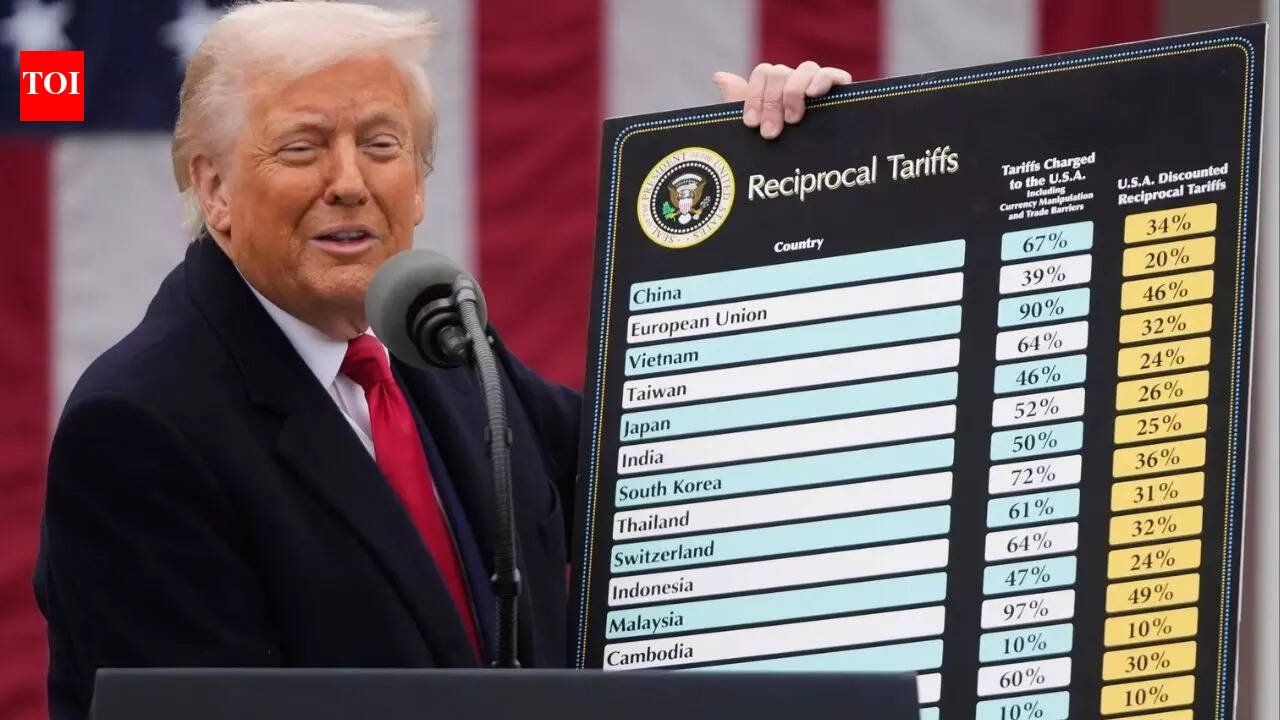
The judgment is expected to offer major relief to economies worldwide.The country-wide tariffs Trump imposed on most of the world will be affected by Friday’s decision.The ruling centres on Trump’s use of a 1977 law, the International Emergency Economic Powers Act (IEEPA), that gives the president the power to “regulate” trade in response to an emergency.Trump first invoked it in February 2025 to tax goods from China, Mexico and Canada, saying drug trafficking from those countries constituted an emergency.He deployed it again in April, ordering levies from 10% to 50% on goods from almost every country in the world. He said the US trade deficit – where the US imports more than it exports – posed an “extraordinary and unusual threat”.The unaffected tariffsThe industry-specific steel, aluminium, lumber and automotive tariffs, which were implemented under Section 232 of the Trade Expansion Act of 1962, citing national-security concerns.The legal challenge to Donald Trump’s tariff regime has emerged as a crucial test of the limits of presidential power, with the court’s decision likely to have far-reaching consequences for the global economy.On January 12, 2026, Trump wrote on Truth Social that if the Supreme Court were to rule against the United States on tariffs, the country could face repayments amounting to hundreds of billions of dollars. He added that this estimate would exclude potential compensation claims from countries and companies that had invested in new plants, factories and equipment to sidestep tariff payments.Including such investments, he warned, the financial burden could run into trillions of dollars, creating a situation that would be extremely difficult for the country to manage and possibly take years to calculate and settle. He also argued that a ruling against the tariffs would deal a severe blow to the United States’ national security-driven trade policy.
Read the full judgment