
Un-fare deal: Bengalureans restart own vehicles | Bengaluru News
[ad_1]
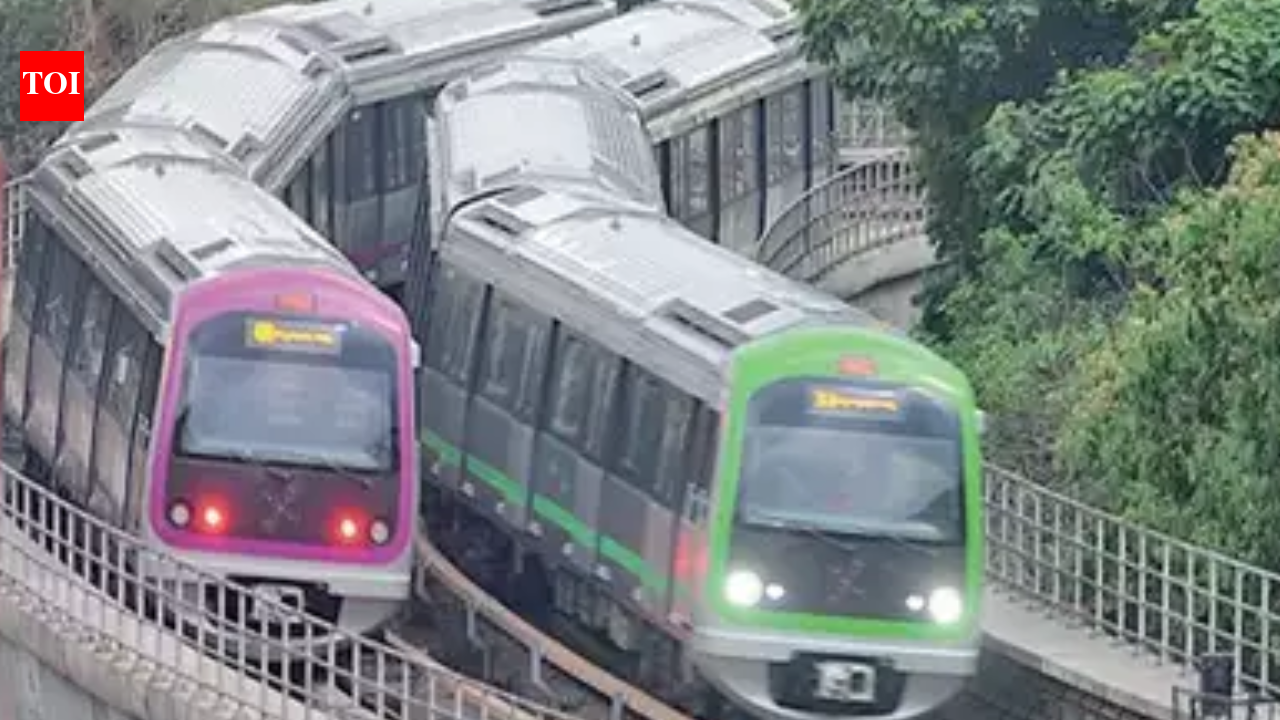
BENGALURU: The huge gains of Metro as a friendly and efficient public transport are being undone by frequent fare hikes and last-mile connectivity woes. The perception that commuting by Metro in Bengaluru is becoming increasingly expensive is gaining ground: More commuters are returning to their personal vehicles, worsening traffic congestion across the city.While there is no data-based quantification yet (such as new vehicle sales in the recent past), both motorists and traffic police say they are witnessing a perceptible slowdown in traffic flow. Officers note a visible surge in the number of two-wheelers on city roads, especially during peak hours. Once seen as faster, safer and relatively affordable, Namma Metro is no longer the obvious first choice for many commuters.According to transport department data, Bengaluru city has over 80 lakh registered two-wheelers as of 2026. Traffic police fear that a renewed reliance on private vehicles will translate into longer travel times and mounting congestion in the coming months.Unni Krishna Menon, who earlier commuted by Metro between Jalahalli and Indiranagar, has now switched back to his car. “While the Metro is convenient, the proposed fare hikes and last-mile connectivity gaps would make it less viable for me. Travelling from Jalahalli to Indiranagar costs around Rs 70 one way, and I pay Rs 30 for the first four hours of parking. On reaching Indiranagar, I still need an autorickshaw or a cab to reach my office in Domlur. Each day cost me Rs 220, but if I fill my car with Rs 500 petrol, I can go for 2.5 days, which is cheaper,” Menon explained the commute math to TOI.Echoing this sentiment, college student Jatin Polanki said he has shifted to his bike, well almost. “I used to take the Metro regularly in my first year, travelling from Pattanagere to Majestic for about Rs 30 one way. After the initial hike in fares and early classes, I started using a bike. In Rs 100, I can go to college, roam around, and come back.”Resident welfare groups warn that higher user charges for essential services could prove counterproductive. Christopher Cruz of NERWA said, “Public transport is any city’s lifeline and critical to decongesting the city. Revenue cannot be a consideration. Making the Metro expensive in a city like Bengaluru, already infamous for traffic, is counterproductive.”Some commuters argue that cost alone is not the deciding factor. Techie Naresh Sadasivan said, “Public transport will win 10 out of 10 times if it offers good connectivity and user experience. What pushes people to private transport is unpredictability and poor interconnectivity. Fix that, and people will pay a fair price.”Namma Metro Fare hike that was proposed 0–2 km: Rs 11 (previously Rs 10) 2–4 km: Rs 21 (previously Rs 20) 4–6 km: Rs 32 (previously Rs 30) 6–8 km: Rs 42 (previously Rs 40) 8–10 km: Rs 53 (previously Rs 50) 10–15 km: Rs 63 (previously Rs 60) 15–20 km: Rs 74 (previously Rs 70) 20–25 km: Rs 84 (previously Rs 80) 25–30 km / Above 30 km: Rs 95 (previously Rs 90) Reactions with mugshots:Ramdev Satyanarayana, RWA, Konankunte“The Metro fare hike is concerning for the commuter. Though I have access to both a car and a two-wheeler, I consciously chose Metro because it is safer, faster, and far more convenient. However, fare hikes leave commuters like me with little choice but to reconsider our travel options. Such increases risk discouraging daily commuters who depend on affordable public transport. Keeping the Metro accessible is crucial not just for commuters, but also for reducing traffic congestion and promoting sustainable urban mobility.“Shivkumar V, general secretary, Domlur Layout Resident Welfare Association“The repeated fare increases place a direct burden on the common man, another steep revision is unfair. This will inevitably push people back to private vehicles or already overcrowded public buses, worsening road congestion.”Shany Sunny, Joint Secretary, Indiranagar Stage 1 RWA“I know of friends and family members who shifted back to bikes. The primary reason is the increase in fares — for many, travelling by bike is cost-effective. An overcrowded Metro no longer feels like a comfortable escape from the daily commute rush. While it may help avoid vehicular pollution, the experience itself is stressful due to the heavy crowd.”
[ad_2]
Source link