
National Students’ Film Festival 2026: Young voices, bold frames: NSFF 2026 wraps up in Mumbai with spotlight on innovation and ethics in cinema | Mumbai News
[ad_1]
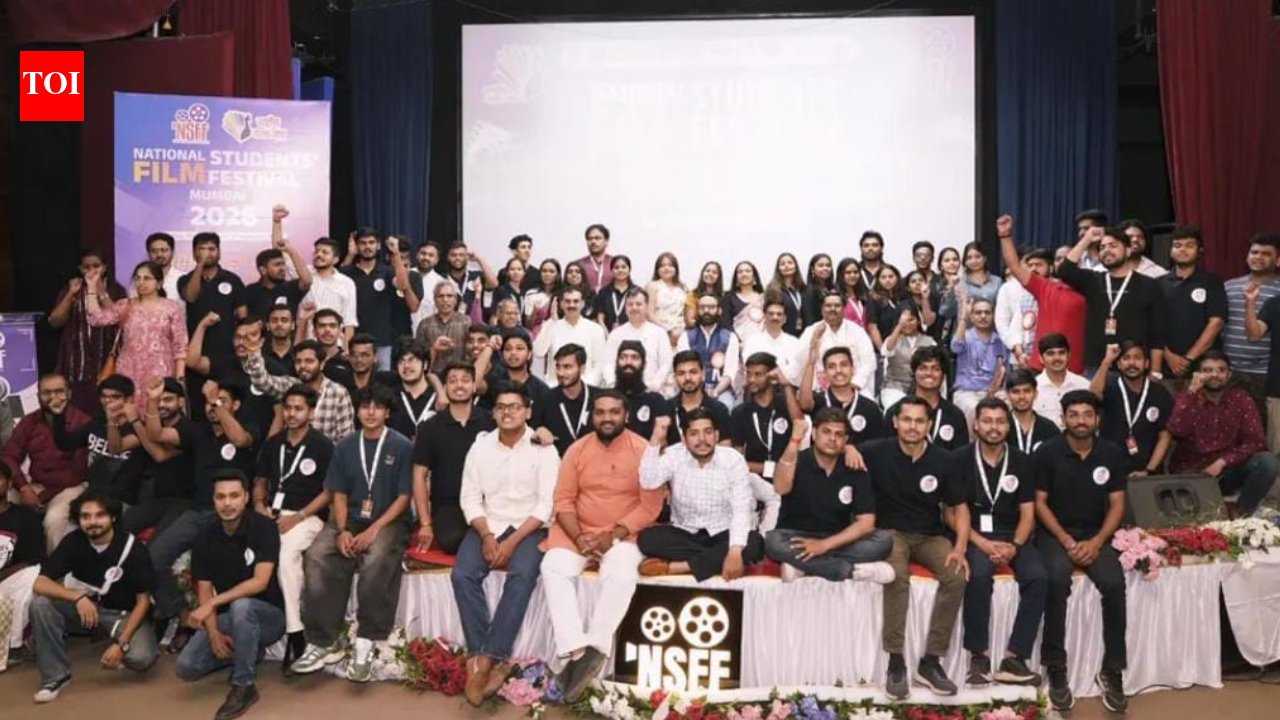
MUMBAI: For film enthusiasts looking for the next wave of cinematic voices, the National Students’ Film Festival (NSFF) 2026 offered a promising glimpse. Held on February 28 and March 1 at the University of Mumbai’s Kalina campus, the two-day festival brought together 30 shortlisted student films across languages and genres, combining screenings with masterclasses, jury interactions and discussions on the future of Indian cinema.Organised jointly by Rashtriya Kala Manch (RKM), Akhil Bharatiya Vidyarthi Parishad (ABVP) and Vidyarthi Nidhi Trust, the festival positioned itself as more than a campus showcase. It functioned as a platform where young filmmakers engaged directly with industry professionals on storytelling, technology and ethics.The festival opened in the presence of director Ravi Udyawar, along with ABVP national secretary Payal Kinake, RKM coordinator Abhinav Deep and festival organiser Soumya Chawre. The inauguration set the tone, while a jury briefing later highlighted the festival’s focus on craft and responsibility.Among the mentors were writer Nidhi Singh Dharma, screenwriter Amarnath Jha, music director Rahul Suhas, National Award-winning directors Neeraj Kumar Mishra and Vandita Chakradev, and filmmaker Vishal Chaturvedi. Their sessions explored the changing language of cinema, the evolving media landscape and the social responsibility of filmmaking — themes that resonated with a generation shaped by OTT platforms and algorithm-driven visibility.The festival featured 30 selected films ranging from intimate dramas and socially driven narratives to experimental storytelling. Screenings received strong audience engagement, with post-film discussions often extending beyond scheduled time.Four masterclasses formed the academic core of the event. Writer-editor Abhijeet Deshpande explained storytelling structure and screenplay design. Sudip Lahiri, head of Collective Media, discussed technological changes in filmmaking, including digital workflows and emerging visual formats. Writer-cinematographer Kedar Gaikwad shared insights into cinematography, editing rhythm and sound design, emphasising technical precision. Telugu filmmaker V. N. Aditya spoke about ethics in filmmaking and the responsibility that comes with influence.Each session ended with an open question-and-answer segment, giving students the opportunity to clarify doubts and exchange ideas.Satyajit Mandle, deputy director of the National Museum of Indian Cinema, conducted a networking session that combined historical perspective with practical career guidance, highlighting the importance of understanding cinema’s roots.A widely discussed panel on “AI and the Future of Indian Cinema” featured filmmaker Pooja Kadam and producer Avinash Tripathi. The discussion examined how artificial intelligence is influencing scripting, editing and production design, while also raising concerns about originality and authorship.The valedictory ceremony was attended by Maharshi Shah, creative director of Birla Studios, as chief guest. He encouraged young filmmakers to study Indian cinema deeply before attempting innovation. “Study widely, absorb deeply, then create,” he said.Tarun Rathi, chairman of the Film Development Authority, highlighted the importance of “unique concept, unique character and unique scene”, while ABVP national organisation minister Ashish Chauhan stressed perseverance. RKM head Ankita Shukla spoke about the organisation’s “Triple P Concept” — Passion, Platform and Purpose — as a guiding principle for emerging artists.At the awards ceremony, Panpankh won Best Film. Songti and Seize received the Special Jury Award. Sanjha Kua won Best Music, Riha received Best Editing, Baap Re Baap was named Best Young Director, and The Queue was recognised as Best Promising Voice.For Mumbai’s film community, NSFF 2026 reflected a growing confidence in student cinema — one that is socially aware, technically skilled and creatively bold. As the festival concluded with a collective rendition of “Sampurna Vande Mataram”, it left behind a strong sense that a new generation of storytellers is ready to shape the future of Indian cinema.
[ad_2]
Source link