
US imposes 100% tariff on patented pharma imports: How it impacts India
[ad_1]
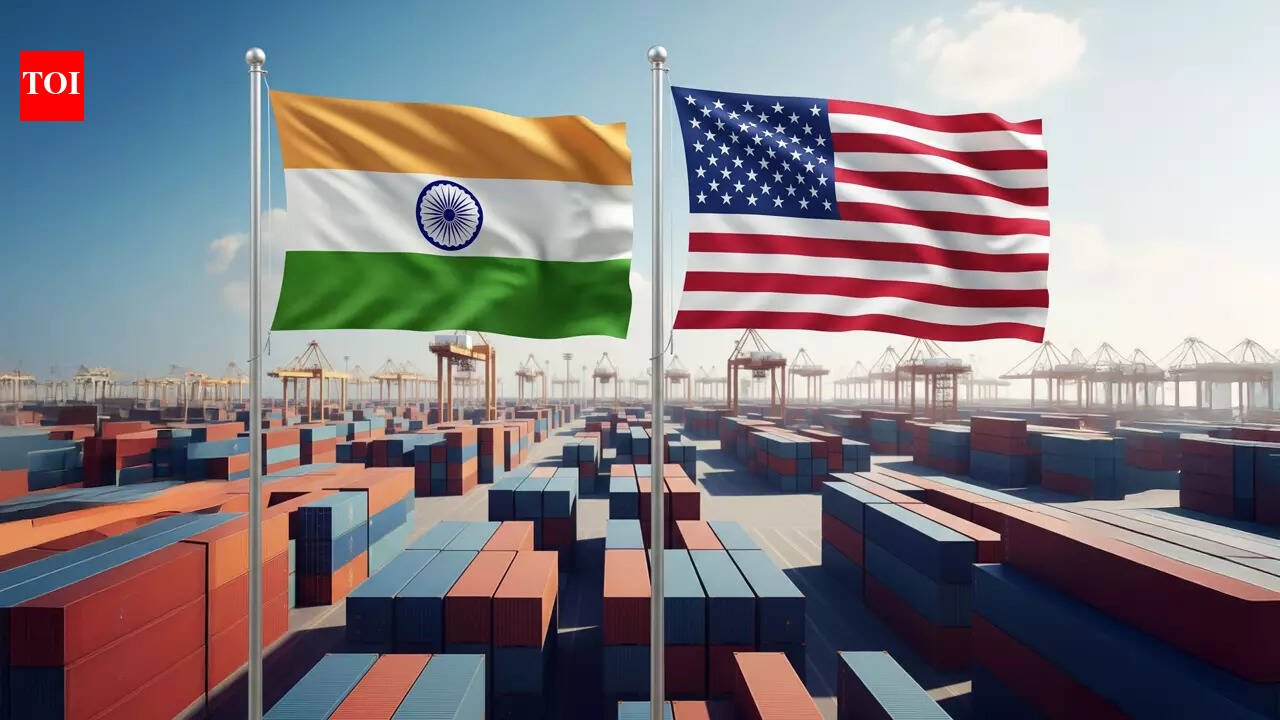
A year after US President Donald Trump’s “Liberation Day” tariffs shook global markets, Washington is back with another round, this time targeting drug and metal imports. The earlier tariffs, announced on April 2 last year, had sent ripples across major financial markets as investors assessed their impact. Now, the US has unveiled fresh measures on the same date, imposing duties of up to 100% on patented drugs made outside the country, while also tightening rules on key metals.But what does this mean for India? According to a report by the Global Trade Research Initiative (GTRI), the immediate impact is expected to be limited, although risks could emerge if the scope of these tariffs widens in the future. The latest move is aimed at pushing companies to manufacture within the US and reducing dependence on foreign supplies.
What does Trump’s new tariff order say?
The US has imposed a steep 100% tariff on patented drugs manufactured outside the country, aiming to push pharmaceutical companies to shift production to the US. However, firms can avoid the full duty if they negotiate trade terms or commit to setting up manufacturing facilities locally. The US plans to impose tariffs of up to 100% on patented drugs and certain high-value pharmaceutical ingredients produced outside the country. These tariffs will take effect between August and September 2026, following a transition period of 120 to 180 days.Companies that lower prices or shift production to the US may benefit from reduced tariffs of 10–20% or avoid them altogether.The measure applies to multiple countries, including India. A White House official said the move is intended to cut reliance on foreign medicines, adding, “100% tariff is on patented products. Any patented drug imports from India made by companies that do not get approved for a reshoring plan will be subject to a 100% tariff,” ANI cited the official.Meanwhile, some countries have been granted relief. The European Union, Japan, South Korea and Switzerland will face a reduced tariff of 15% under existing arrangements, while Britain has secured tariff-free access for its medicines for three years. Companies can also benefit by adopting “Most Favored Nation” pricing and investing in US manufacturing.Generic medicines are currently exempt from the tariffs, although this will be reviewed after a year. “Generic medicines—making up over 90% of US drug use—are exempt for now, likely for about a year, to avoid shortages and price increases,” the report said.
How will Trump’s 100% tariff on pharma goods impact India?
For India, the impact is expected to be limited at present. The report notes that about 90% of India’s pharmaceutical exports to the US are generic medicines, which are currently exempt from the tariffs. In 2025, India exported $9.7 billion worth of pharmaceuticals to the US, accounting for 38% of its total global pharma exports of $25.8 billion. “The United States will impose tariffs of up to 100% on certain branded medicines and key pharmaceutical ingredients, while leaving generics untouched —a move that leaves India largely protected given its dominance in low-cost generic drug exports to the US,” GTRI said in its report. One senior White House official told ANI, “Generics, which constitute the majority of Indian pharma exports, are exempt from tariffs, but the Commerce Department will evaluate the state of generics reshoring and re-evaluate tariffs accordingly.” Meanwhile, some Indian companies could still be affected under the existing order, the think tank flagged.Firms producing branded or specialty drugs, or those supplying inputs for patented medicines, may face tariff pressure. The report also warns that generics are exempt only for now and may be reviewed after about a year, creating uncertainty. “A 100% tariff applies to patented products. Any patented drug imports from India made by companies that do not get approval for a reshoring plan will be subject to a 100% tariff,” the official clarified.Developed nations to face biggest impactThe tariffs are expected to hit developed pharmaceutical exporters the hardest. Countries such as Ireland, Germany, Switzerland, Belgium, Denmark, the United Kingdom and Japan, major suppliers of high-value and patented drugs, including biologics, are likely to be most affected.The report also highlights that the US has not offered exemptions based on trade agreements. Instead, relief depends on whether companies meet specific conditions such as cutting prices or investing in US manufacturing.
America’s tariff strategy: Pressure, not revenue
According to GTRI, the US is using tariffs mainly as a pressure tool rather than to raise revenue. The aim is to push companies to reduce drug prices in the US, shift manufacturing locally and strengthen control over key pharmaceutical supply chains.The order is based on a Section 232 investigation launched on May 1, 2025, which cited national security concerns over dependence on foreign drug supplies. It also signals continuity in US trade policy even after earlier tariff measures were struck down by the Supreme Court.The report further noted that the US is likely to continue using tools such as Section 232 of the Trade Expansion Act of 1962 and Section 301 of the Trade Act of 1974 to impose tariffs. “With the US Supreme Court striking down reciprocal tariffs, Washington is likely to rely more heavily on tools such as Section 232 of the Trade Expansion Act of 1962 (national security) and Section 301 of the Trade Act of 1974 (foreign trade barriers) to justify tariffs on a wide range of products and countries. In effect, the court’s decision has not changed the tariff strategy—it has only pushed the administration to shift the legal basis while keeping the pressure intact,” GTRI stated. This means even countries with trade agreements with the US are not fully protected, as such investigations and tariffs can still be applied regardless of existing deals.
Industry response and broader tariff push
Pharmaceutical companies, particularly in Europe, are expected to respond by adjusting their strategies. Some may offer limited price cuts, invest in US manufacturing or shift final-stage production such as packaging to the US. Others may revise pricing structures or delay product launches.Alongside pharmaceuticals, the US has also revised tariffs on metals including steel, aluminium and copper. These changes are aimed at boosting domestic production, addressing pricing concerns and strengthening national security.Overall, while India remains largely shielded for now due to the exemption on generics, the report cautions that any future expansion of the tariffs could increase risks for Indian exporters.India and the US have been in long-standing talks over a free trade agreement, culminating in an interim deal announced on February 2. As part of this, the US had agreed to lower tariffs on Indian goods to 18%. Last week, commerce and industry minister Piyush Goyal also met US trade representative Jamieson Greer to review the next steps in the negotiations. The meeting took place on the sidelines of the 14th WTO Ministerial Conference in Yaounde, where both sides discussed broader trade issues as well.However, the tariff structure has since changed. After the US Supreme Court struck down earlier sweeping tariff measures, US President Donald Trump introduced a temporary 10% tariff on all countries for 150 days starting February 24.
[ad_2]
Source link