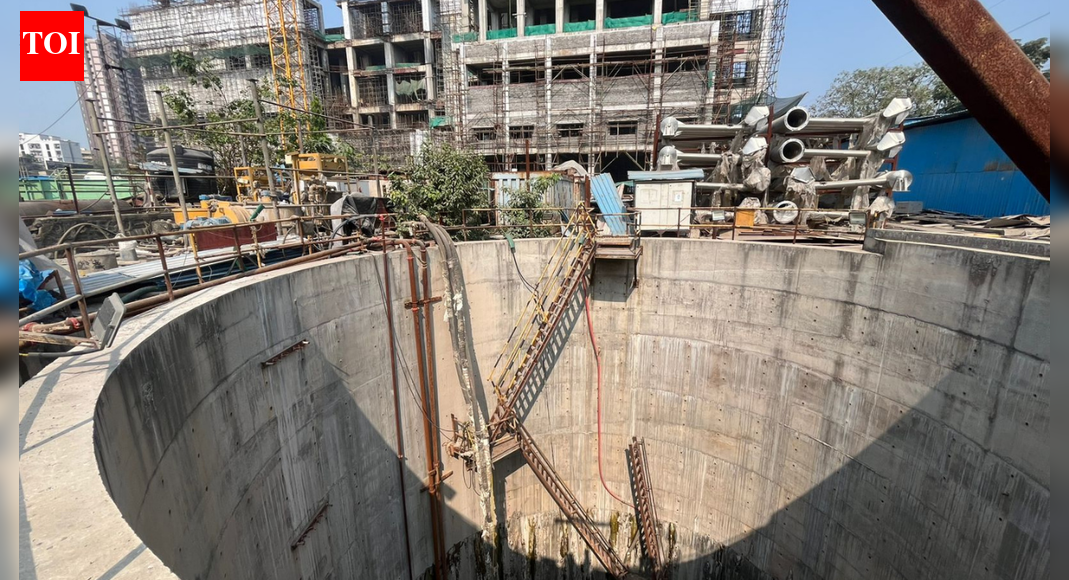
Mumbai’s latest attempt to revive the long-polluted Mithi river is also its most ambitious and expensive so far. Anchored by a 6.6-km underground diversion tunnel and a sweeping overhaul of the river’s tidal stretch, the new plan seeks to intercept nearly 60% of the sewage currently choking the river. Together, the two projects involve an investment of over Rs 2,000 crore, adding to more than Rs 2,200 crore already spent over the past two decades on earlier clean-up efforts.If executed on schedule — and supported by strict controls on dumping, encroachment and untreated effluents — officials believe the projects could significantly reduce pollution and ease flooding in some of the city’s most vulnerable areas.
Critics, however, caution that engineering solutions alone cannot restore a river whose degradation is rooted in decades of unregulated urban activity.The two key river cleanup projects1. Diversion tunnel: Taking sewage deep undergroundAt the heart of the clean-up strategy is a massive diversion tunnel designed to intercept dry-weather sewage before it enters the Mithi.Special interceptor structures have been built at the Bapat Nallah and Safed Pul Nallah, two of the river’s biggest sewage carriers. These capture all dry-weather sewage and channel it into screening chambers, where plastics, rags and other solid waste are removed. The flow then descends through vortex drop shafts — spiral structures that safely carry sewage deep underground — before entering the main tunnel.The 6.6-km-long tunnel, with a diameter of 2.6 metres, carries sewage by gravity all the way to Dharavi, where it will eventually be treated at a new wastewater treatment facility. Flow-meter chambers along the route measure the volume of sewage transported through the system.
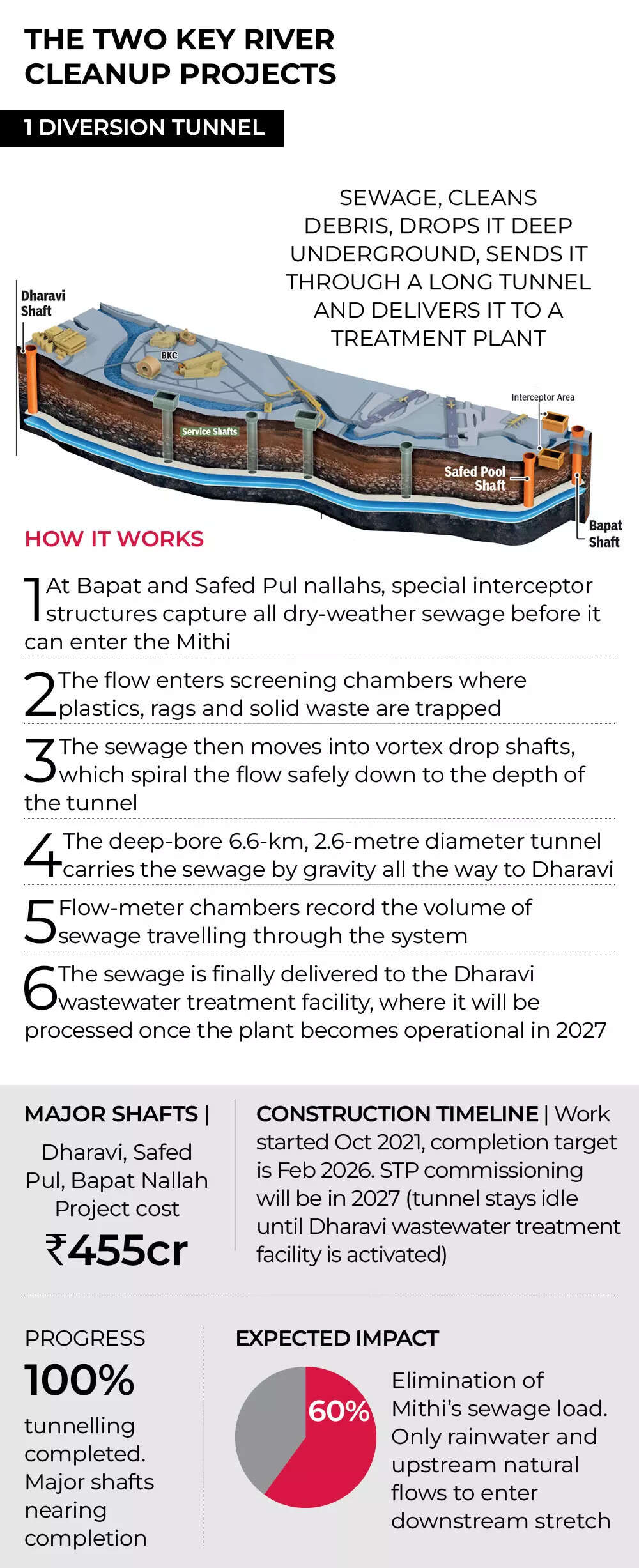
In effect, the system traps sewage, removes debris, drops it far below ground level, transports it across the city and delivers it to a treatment plant — a process officials say will transform the river’s downstream water quality.Key details
- Major shafts: Dharavi, Safed Pul, Bapat Nallah
- Project cost: Rs 455 crore
- Construction start: October 2021
- Completion target: February 2026
- STP commissioning: 2027 (the tunnel will remain idle until the Dharavi plant becomes operational)
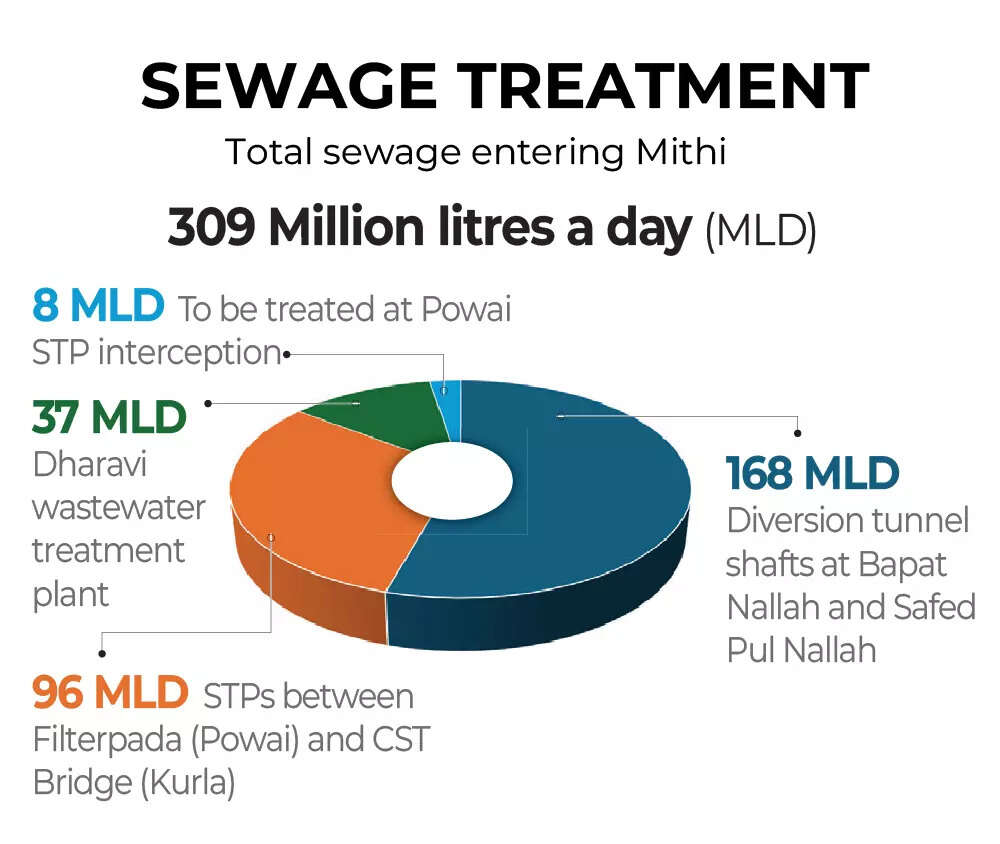
Tunnelling work is already complete, and the main shafts are nearing readiness.Once operational, the diversion tunnel is expected to eliminate about 60% of the Mithi’s sewage load, allowing only rainwater and natural upstream flows to reach the downstream stretch.Officials say around 168 million litres a day (MLD) of sewage — more than half the river’s estimated total load of 309 MLD — will be diverted away from the river.
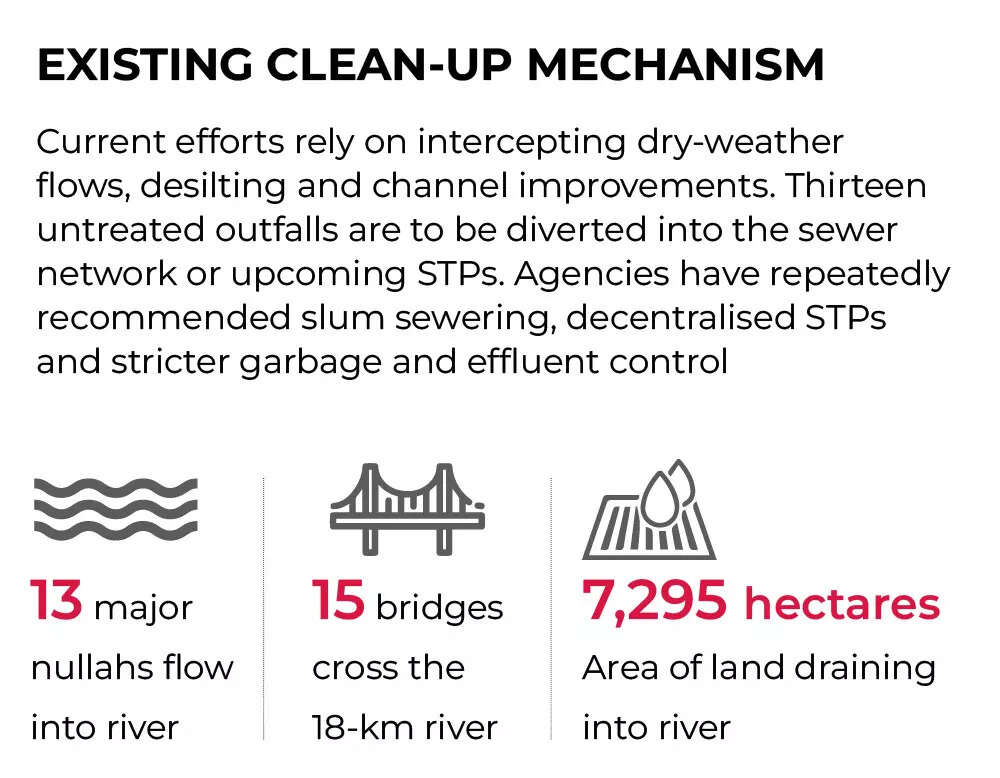
Why the tunnel’s impact depends on DharaviMunicipal officials acknowledge that the tunnel’s benefits will only materialise once the Dharavi wastewater treatment plant is commissioned.“The river’s black, foul water today is because untreated sewage continues to flow directly into it,” said an official overseeing storm-water drainage works. “While tunnelling and shaft construction are advancing, the full impact will be visible only after the Dharavi plant comes online, likely by mid-2027.”The tunnel itself has a carrying capacity of about 440 MLD, providing some buffer for future flows.Existing clean-up efforts — and their limitsSo far, Mithi clean-up measures have largely relied on intercepting dry-weather flows, desilting the riverbed and improving channel geometry. Thirteen untreated outfalls are slated for diversion into sewer networks or upcoming treatment plants, while agencies have repeatedly flagged the need for slum sewering, decentralised treatment systems and stricter garbage control.Key facts underline the scale of the challenge:
- 13 major nullahs drain into the river
- 15 bridges cross the 18-km-long Mithi
- 7,295 hectares of land drain into its catchment
Where the river begins — and endsThe Mithi originates inside the restricted zone of Vihar Lake, where overflow water directly forms the river. Powai Lake contributes additional flow further downstream.The river ends at the Mahim Causeway, where it meets the Arabian Sea. This lower, tidal stretch is heavily littered and tide-driven but plays a critical role in draining the city during the monsoon.Where the pollution comes fromPollution enters the river through multiple pathways. Domestic sewage and industrial effluents flow in via 13 major nullahs and dense slum belts lining the banks. Workshops, unauthorised units and scrap yards discharge untreated waste, while plastic, solid waste and construction debris are routinely dumped into the channel. Encroachments, particularly in the BKC stretch, choke flow and trap pollutants.The river carries untreated sewage, industrial waste, plastics, debris and hazardous sludge. Levels of biochemical oxygen demand (BOD) and chemical oxygen demand (COD) routinely exceed permissible limits, while dissolved oxygen often falls below 4 mg/l during dry months — effectively turning parts of the river into an open drain.Measuring pollution: COD, BOD and TSSWater quality along the Mithi is assessed using three key indicators:
- COD: chemical oxygen demand, measuring all oxidisable matter
- BOD: biochemical oxygen demand, indicating biodegradable pollution
- TSS: total suspended solids such as silt and clay
These parameters help gauge organic pollution, treatability and ecological impact.
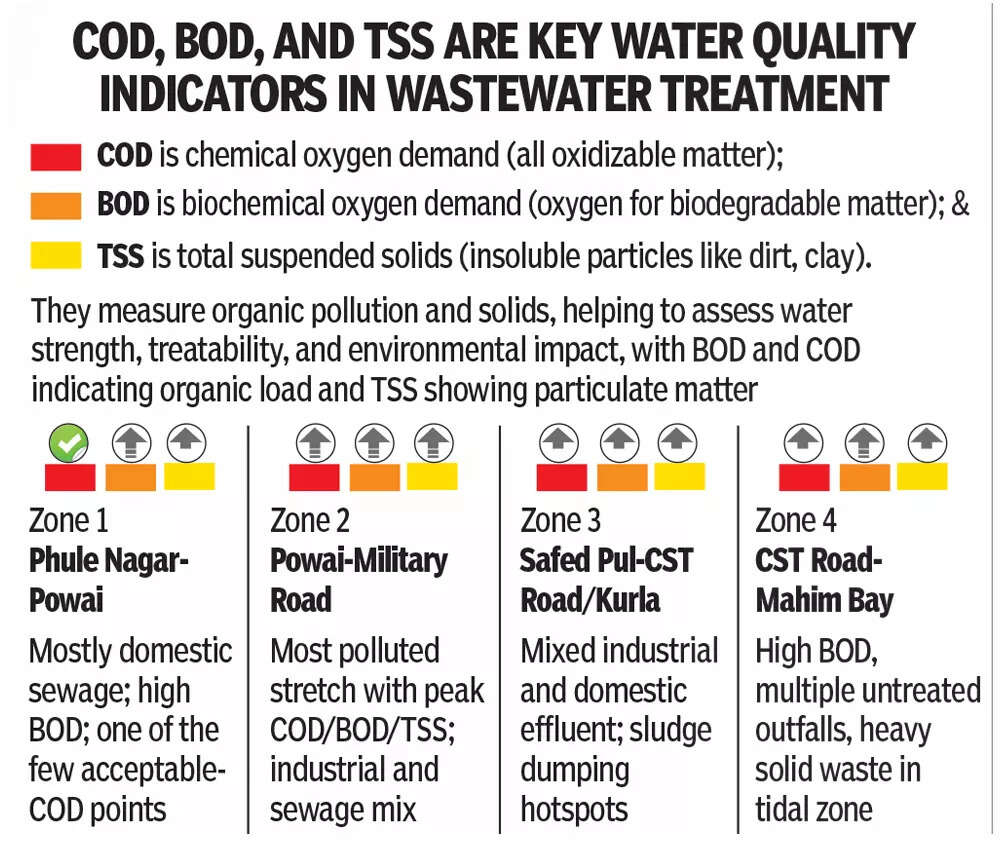
Monitoring shows sharp contrasts along the river:
- Powai stretch: mostly domestic sewage, high BOD but relatively acceptable COD
- Powai–Military Road: the most polluted segment, with peak COD, BOD and TSS
- Safed Pul–Kurla: mixed industrial and domestic effluent, sludge dumping
- Kurla–Mahim Bay: high BOD, multiple untreated outfalls and heavy solid waste in the tidal zone
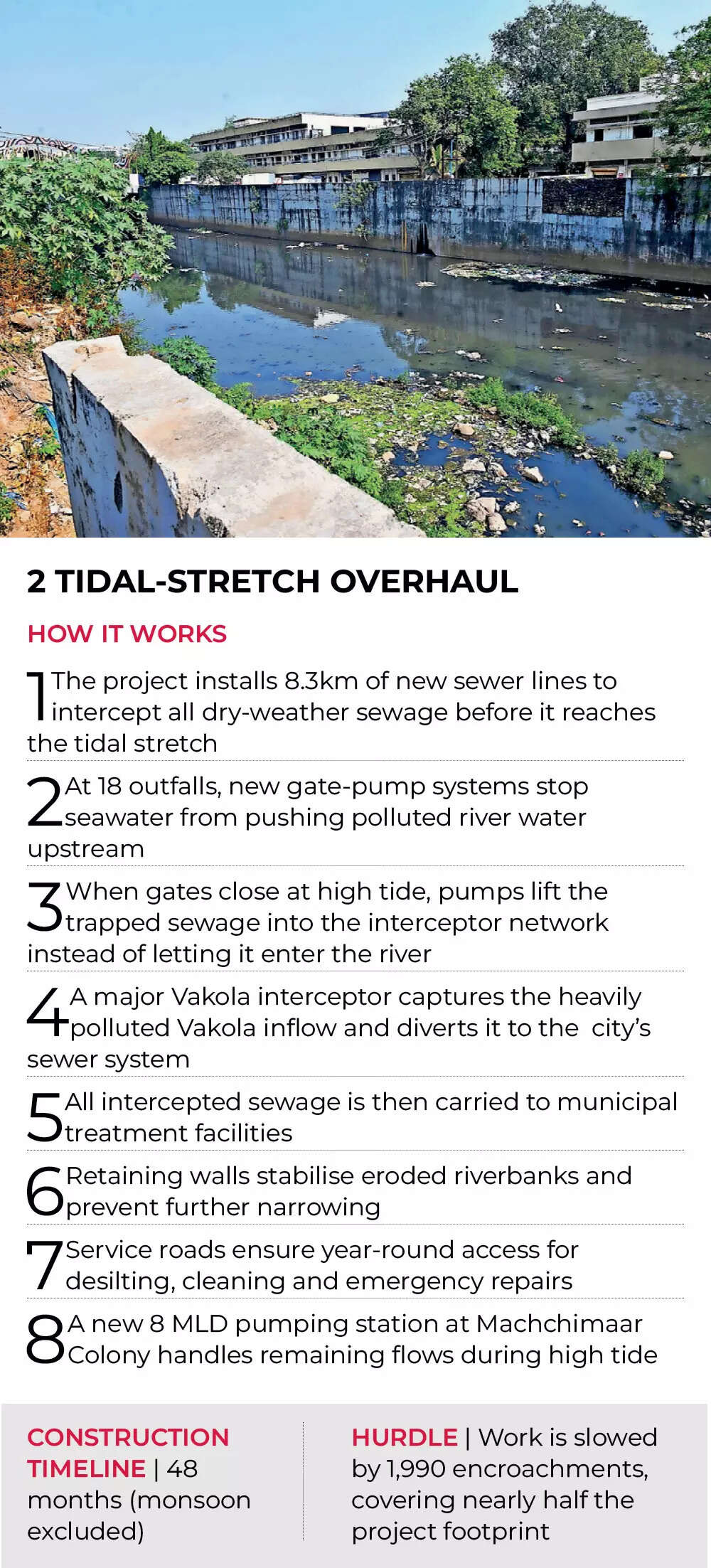
2. Tidal-stretch overhaul: Tackling the hardest sectionThe second and costlier leg of the clean-up targets the heavily encroached, tide-affected stretch from CST Bridge at Kurla to Mahim Causeway, including the Vakola river.This Rs 1,700-crore project involves installing interceptor systems at four major Vakola nullahs to capture dry-weather sewage, which will then be sent to municipal treatment plants. At 18 outfalls, new gate-and-pump systems will prevent seawater from pushing polluted river water upstream during high tide. Retaining walls will stabilise eroded banks, while service roads will allow year-round desilting and maintenance. An 8-MLD pumping station at Machchimaar Colony will manage residual flows.The construction timeline is estimated at 48 months, excluding monsoons.Encroachments: The biggest hurdleThe tidal-stretch project faces major land constraints. Nearly 1,900 encroachments — covering almost half the project footprint — have been identified across key locations, complicating wall construction, service-road formation and pipe-laying.Officials say visible improvement in water quality will depend on completing this phase and ensuring that all intercepted sewage is actually treated.
Two decades, Rs 2,200 crore — and countingMumbai has spent 20 years working on the Mithi through four major packages, at a cost exceeding Rs 2,200 crore. The latest round alone adds another Rs 2,000 crore to that tally.The question now is whether this push will finally deliver durable change — or repeat the cycle of heavy spending and limited results.Experts urge cautionEnvironmental experts broadly welcome the scale of sewage interception but warn against viewing mega-projects as silver bullets.They point out that pollution extends well beyond sewage to unmanaged solid waste, plastic, sludge and industrial effluents. Unless these inputs are stopped at the neighbourhood level, they argue, engineering solutions will only offer temporary relief.Others caution that large-scale interception could leave long stretches of the river dry outside the monsoon, altering its ecology unless treated water is returned in a controlled manner. Reliable, round-the-clock operation of pumps, gates and treatment plants will be critical.“The city has shown it can build complex infrastructure,” said one expert. “The real test is whether it can enforce discipline along the river’s banks and restore ecological balance — not just move pollution from one place to another.”After two decades and thousands of crores, Mumbai is once again betting big on the Mithi. Whether this time the river truly recovers will depend not just on tunnels and pumps, but on governance, enforcement and long-term ecological thinking.