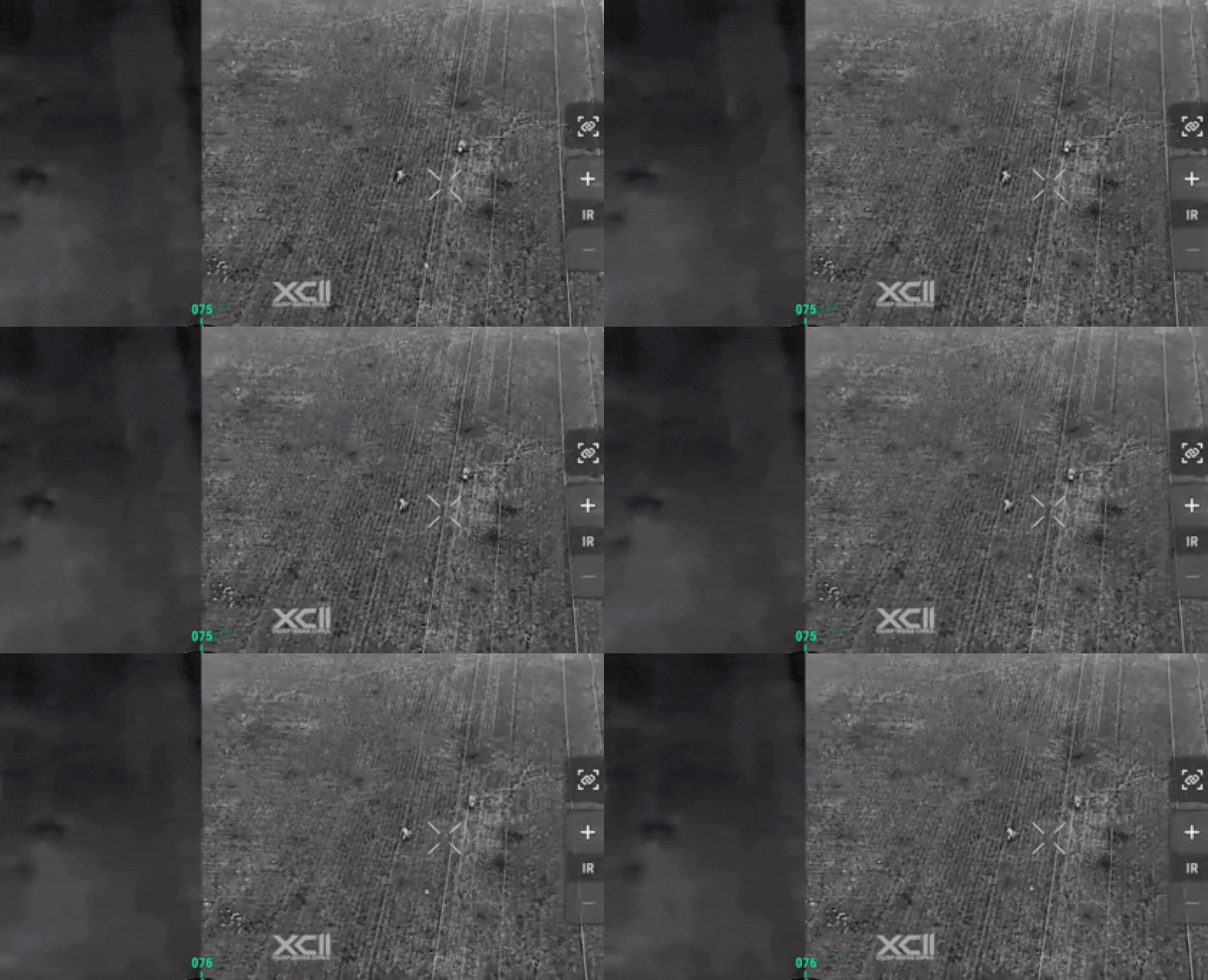

‘Russians losing equipment quickly’: Ukrainian drone strikes soldier riding horse on battlefield – watch video
[ad_1]

Ukrainian forces have released video footage showing Russian soldiers advancing toward frontline positions on horseback. The footage is being cited as evidence of Russia’s growing equipment shortages on the battlefield.The Ukrainian Armed Forces (AFU) said servicemembers of the 5th Assault Battalion of the 92nd Separate Assault Brigade detected the group of Russian soldiers and tracked their movement using drones, as reported by Kyiv Post. The video, shared on the 92nd Brigade’s official Facebook page, includes commentary from Ukrainian troops involved in the operation.According to the brigade, Russian forces are losing military equipment so rapidly during repeated assaults that they are increasingly resorting to unconventional methods of movement. “Russian occupiers are losing equipment so quickly during their ‘meat assaults’ that they are forced to move on horseback. But even this does not help them,” the brigade said. The statement added that the drone operators “neutralize the enemy as soon as they see a target.”The video shows a Russian soldier riding across open ground while being tracked from above by a drone. Moments later, the drone strikes as the soldier attempts to flee. The footage then shows another rider being targeted, with the blast knocking the horse to the ground and throwing the rider off.Ukrainian officials said that the riders were killed as Ukrainian positions were defended using drones.Ukrainian commentators described the incident as a sign of Russia’s difficulty in finding ways to break through heavily monitored and defended areas. FU servicemember and civic activist Mykola Voroshnov reacted to the footage by calling the scene extraordinary. “Cavalry assaulting our positions. This is insane,” he wrote. Voroshnov added that such incidents are now being discussed and confirmed within closed military pilot groups. He also expressed sympathy for the animals involved.The development follows earlier reports that Russian ground forces, facing shortages of vehicles and equipment, have been using donkeys for transportation and logistics in some areas of the conflict.
[ad_2]
Source link