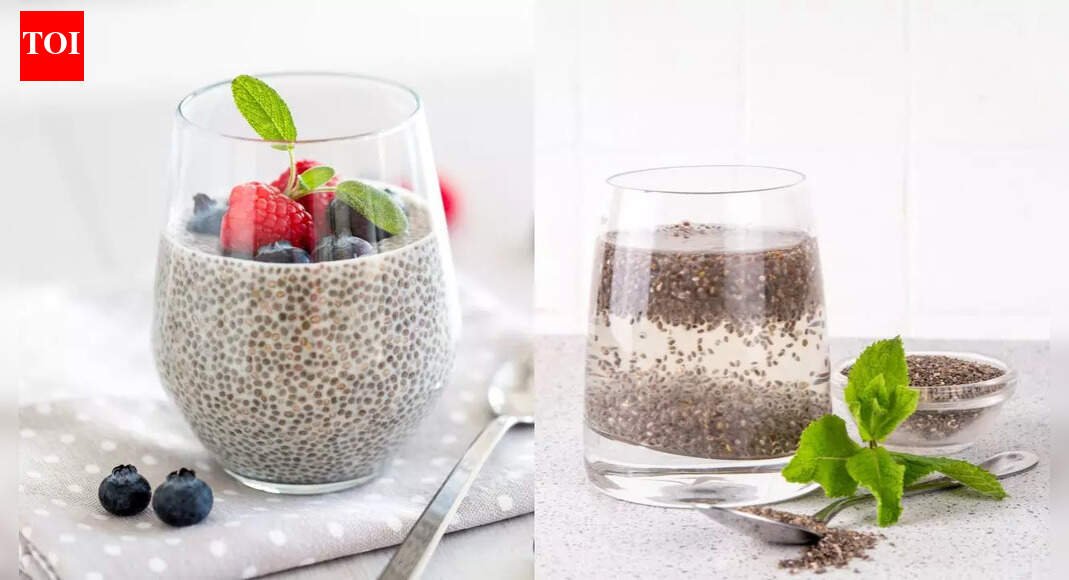

Are chia seeds more effective for weight loss in water or in milk |
[ad_1]
From a familiar presence in kitchens and gym bags to café menus, chia seeds have been widely promoted as an easy addition to support weight control. If you’re trying to make sense of this advice, you may have noticed conflicting suggestions about how they should be consumed. Some swear by soaking chia seeds in plain water; others like to stir them into milk for a thicker, more filling option. These choices aren’t just about taste or texture. The liquid used changes the way chia seeds release nutrients, how they are digested, and how they affect appetite and energy balance. Examining these differences closely might help you figure out how chia seeds can be your way, instead of making assumptions that one method will automatically give you more weight loss.
Why chia seeds behave differently in water and milk
From a functional point of view, chia seeds are highly adaptable; therefore, their application in water-based drinks and milk-based dishes. When soaked in water, they form a gel that is light and neutral in flavour, easily consumed on its own. In milk, whether dairy or plant-based, the same seeds become part of a more substantial preparation, almost like a pudding or a smoothie base. Scientific interest in these forms has focused on how soaking affects nutrient release and functionality. Research into water-soaked chia seeds published in Food Research International has demonstrated the effects of hydration on the release of lipids and polyunsaturated fatty acids such as omega-3 and omega-6, while a separate study on the protein of chia seeds published in Applied Food Research underlines how these seeds interact with protein-rich liquids such as milk. Considering this evidence altogether, there is an indication that both methods are valid but for different nutritional purposes and not necessarily competing against each other.
Water vs milk: How the nutrition profile of chia seeds shifts
The chia seeds vary in nutritional profile depending on the liquid used. In water, they add fibre, a bit of healthy fat, and some micronutrients while not contributing extra calories or protein, which keeps intake overall modest. In milk, it’s a different equation: Milk adds protein, calcium, and sometimes additional fat, moving the nutritional complete serving up a notch. When it comes to weight loss, protein is useful because it allows satiety and can preserve lean mass, but does raise total calorie intake. The difference isn’t in the chia seeds themselves; it’s just a question of whether one is seeking a low-energy additive or a full, added nutrient component in something.
How different liquids change the way chia seeds digest
Of course, chia seeds strongly act upon digestion due to their gel-forming fibre. This gel, when taken with water, remains fairly intact and slows down the movement of food through the digestive tract. This can prolong fullness and reduce the urge to snack soon after. Digestion becomes more complicated with milk-based preparations. Milk proteins and fats associated with the chia gel result in a more sluggish yet resource-intensive digestion process. This may suit people who require sustained energy over several hours, but it can be heavier for those with sensitive digestion or lower energy requirements.
Do chia seeds affect blood sugar differently in milk?
When it comes to weight loss, blood sugar control becomes one of the central themes. Water-soaked chia tends to have a neutral effect because there are no sugars present, and it dampens carbohydrate absorption from other foods eaten concurrently with chia. This may help establish stable energy levels. Milk adds natural sugars, and depending on the type, more or less fat. Even though protein and fat blunt rapid spikes in glucose, overall glycaemic response will depend on portion size and timing. For those people, preparations with milk help them avoid crashes of energy, while others prefer the minimal input of blood sugar by keeping things as simple as water.
Water or milk: Which fits weight loss better?
The other question is how each one fits into the daily energy balance when weight management is the desired goal. Water-based chia drinks have been used as an appetite aid and can provide some reduction in portion sizes at subsequent meals. Milk-based chia servings function more as small meals and may become a replacement for higher-calorie snacks. Neither approach alone is guaranteed to ensure weight loss. The effect depends on whether the preparation leads to a net reduction in calorie intake over time or simply adds another source of energy to the day.
Water or milk for chia seeds: A quick comparison
| Aspect | Chia seeds in water | Chia seeds in milk |
| Calorie contribution | Very low | Moderate, depends on milk |
| Protein content | Minimal | Higher due to milk |
| Satiety effect | Volume and fibre driven | Fibre plus protein driven |
| Digestion speed | Slower gastric emptying | Slower but more complex digestion |
| Typical use | Appetite control | Meal or snack replacement |
| Texture and mouthfeel | Light, gel-like, drinkable | Thick, creamy, pudding-like |
Practical ways to include chia seeds in your daily diet
Knowing the effective use of chia seeds involves preparation that matches your routine rather than a single rule. Both water and milk versions can be weight, friendly when used consciously and in the right amounts. In this case, if a better appetite is your main concern, soak chia seeds in water before meals. Use milk, based chia preparations when you are substituting a snack or light meal. Cut back on portion sizes to take into account the extra calories from milk. Depending on whether the question is more about digestion or just an energy need, one option may be better than the others for different times of the day.Also Read | Everyday foods that quietly harm your brain: Sausages, energy drinks, chewing gum and more
[ad_2]
Source link