
From leading defence importer to exporter: Make in India, for the world – how 2025 was the year of reforms
[ad_1]
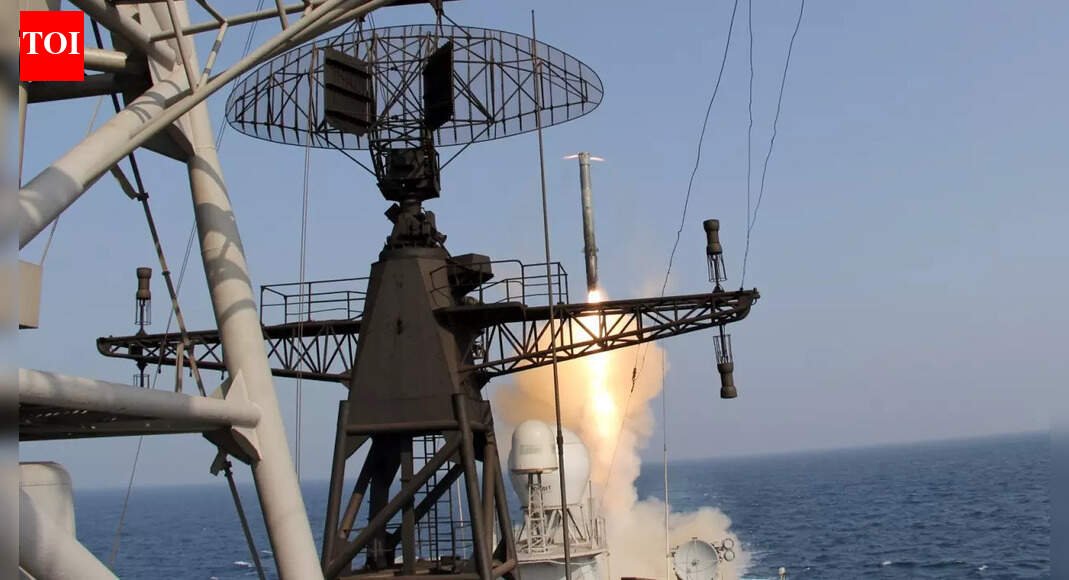
By Pawan Khatter For the defence sector, 2025 is the Year of Reforms with various goals, one of which is the focus on new domains such as cyber and space, AI, ML, hypersonics and robotics. 2025 saw several feats in these domains amongst others. DRDO showcased its highly anticipated Hypersonic Glide Vehicle (HGV) and Transporter Erector Launcher (TEL) as part of the Long-Range Anti-Ship Missile (LR-ASHM) program. The Indian ecosystem, a dynamic mix of large corporations, MSMEs, start-ups, DPSUs, DRDO, academia and international collaborations with FOEMs, continues to revolutionize defence R&D. Many systems were unveiled this year including various types of unmanned systems, India’s first Generation 5 AI-driven imaging seeker, wing-in ground aircraft, exoskeleton, etc. This growth is driven by the twin goal of achieving self-reliance and global competitiveness. The nation’s defence production stands at Rs 1,50,590 crore, ~23% of which has been the private sector’s contribution. There are nearly 16,000 MSMEs integrated into the supply chain of DPSUs and large private defence manufacturers which have emerged as formidable players.Indian defence exports are at a record high of Rs 23,620 crore. One of the most successful exports is the BrahMos missile for which countries like Indonesia, South Africa and from the Middle East are expressing interest. India is amongst the top 5 military spenders in the world with a budget of Rs 6,81,210 crore. Of this, ~Rs 2,67,000 is earmarked for modernization. This modernization is a balance of indigenous acquisitions and meeting immediate requirements through imports where capability is not readily available in the country. In April 2025, India and France signed an ~Rs 63,000 crore for 26 Rafale-Marine fighter jets. Under the FMS route, India shall also import 100 Javelin Missile Systems and 216 Excalibur tactical projectiles from the US.In this year of reforms, GoI’s vision also includes enhanced integration. Co-development and international collaborations are therefore vital in the journey towards Atmanirbharta. Towards this end, DRDO will partner with a leading global aerospace major to co-develop a 120 kn aeroengine, a first for India. Further under Project P75I, six submarines will be manufactured in India under a collaborative model.On the policy front, the Ministry of Defence has engaged stakeholders to review and revise the Defence Acquisition Procedure (DAP). While the industry awaits DAP 2025, the Defence Procurement Manual (DPM) 2009 underwent a comprehensive revision, culminating in the release of DPM 2025 in September 2025. This updated version introduces decentralized decision-making authority aimed at expediting approval processes and minimizing bureaucratic delays. GoI also released the Technology Perspective and Capability Roadmap (TPCR) 2025 articulating the Indian Armed Forces’ requirements and offering industry a clear line-of-sight on capability needs over the next 15 years.India’s significant upward trajectory positions the country among the world’s leading military powers. From being a lead importer for decades, India has ranked among the top 25 countries as an exporter of arms. Indigenous production now meets nearly 65% of defence requirements, a remarkable improvement from a decade ago, driven by platforms such as BrahMos, Pinaka, Akash, and Tejas. While the nation has developed cost-effective, battle-proven systems and strong export achieved competitiveness, certain advanced domains—such as next-generation propulsion, stealth technologies, and strategic electronics—remain areas for further development. However, increasing technological sophistication and affordability place India in direct competition with its peers. As the Indian sub-continent aspires to assume the role of a global leader, it is imperative that defence engagement expands beyond arms trade into strategic technology partnerships, joint development, and interoperability initiatives. India has different bilateral agreements that cover emerging technologies and critical mineral security (Australia, Canada, USA, Chile, Congo) to de-risk supply chains, while military diplomacy focuses on co-production ecosystems and multi-domain cooperation—including space, cyber, and AI-driven C4I2 systems. 2026 is on the horizon that builds on the foundation to achieve self-reliance and supply chain resilience, enhanced localisation, integration of legacy systems with emerging technologies, AI-enabled warfare systems, etc. Another dynamic year may be ending, but in this realm of ever-changing global scenarios and technologies, for the Indian Defence Industry, it is yet another beginning.(Pawan Khatter is Partner and National Leader, Aerospace & Defence, EY India. Nayan Nag, Senior Manager, EY India also contributed to the article)
[ad_2]
Source link