
The Jeffrey Epstein Story: How a middle-class schoolteacher with fake degrees accumulated power, money, and impunity | World News
[ad_1]
What do Bill Clinton, Donald Trump, Noam Chomsky, Prince Andrew, Alan Dershowitz, Leon Black, Leslie Wexner, David Rockefeller, Ehud Barak, Kevin Spacey, Woody Johnson, and Lynn Forester de Rothschild have in common? At different points in time and in different capacities, they were all connected to Jeffrey Epstein.That overlap is often treated as the mystery at the heart of the Epstein story. It is not. As a detailed investigation by The New York Times makes clear, the more revealing question is how Epstein became a person to whom such proximity was even possible. How did a man who began life as an unremarkable schoolteacher, armed with fake degrees and no inherited privilege, move with such ease through the upper reaches of politics, finance, academia, and global high society? The answer lies less in Epstein’s personal skill than in the way elite systems reward usefulness, tolerate ambiguity, and repeatedly choose comfort over confrontation.
Early life and entry into elite spaces
Before the private jets, the island, and the proximity to presidents and princes, Epstein was a teacher. In the mid-1970s, he taught mathematics and physics at the Dalton School in New York, one of the city’s most prestigious private institutions. He came from a working-class family in Brooklyn and had never completed a college degree. He fabricated academic credentials to secure the teaching position, and his classroom performance left little impression. Dalton administrators asked him to leave after the academic year. By any conventional measure, this should have marked the limit of his upward mobility. Instead, it marked the moment when social access began to substitute for merit.
The Bear Stearns opportunity and the first lie
Epstein’s move from the classroom to Wall Street did not occur through professional achievement but through proximity. A parent of one of his Dalton students introduced him to a senior executive at Bear Stearns, then a major investment bank that prided itself on hiring unconventional talent. Epstein lacked formal training in finance and possessed no legitimate academic pedigree, yet he was hired. When the firm later discovered that he had lied about holding degrees from two universities, Epstein did not deny it. He admitted the deception calmly and explained that without impressive credentials, no one would give him a chance. Bear Stearns chose not to fire him. That decision, more than the lie itself, shaped the rest of his life.
How institutional tolerance shaped his rise
At Bear Stearns, Epstein did not distinguish himself as a financial innovator. What he learned instead was how power functions inside institutions. He observed that relationships often outweighed rules, that proximity to senior figures created insulation, and that violations could be negotiated away if one appeared useful or non-disruptive. He cultivated patrons, dated the daughter of a senior executive, and learned when to apologise and when to express offence. This education in institutional behaviour would prove more valuable than any technical training.
Leaving Wall Street without losing its protection
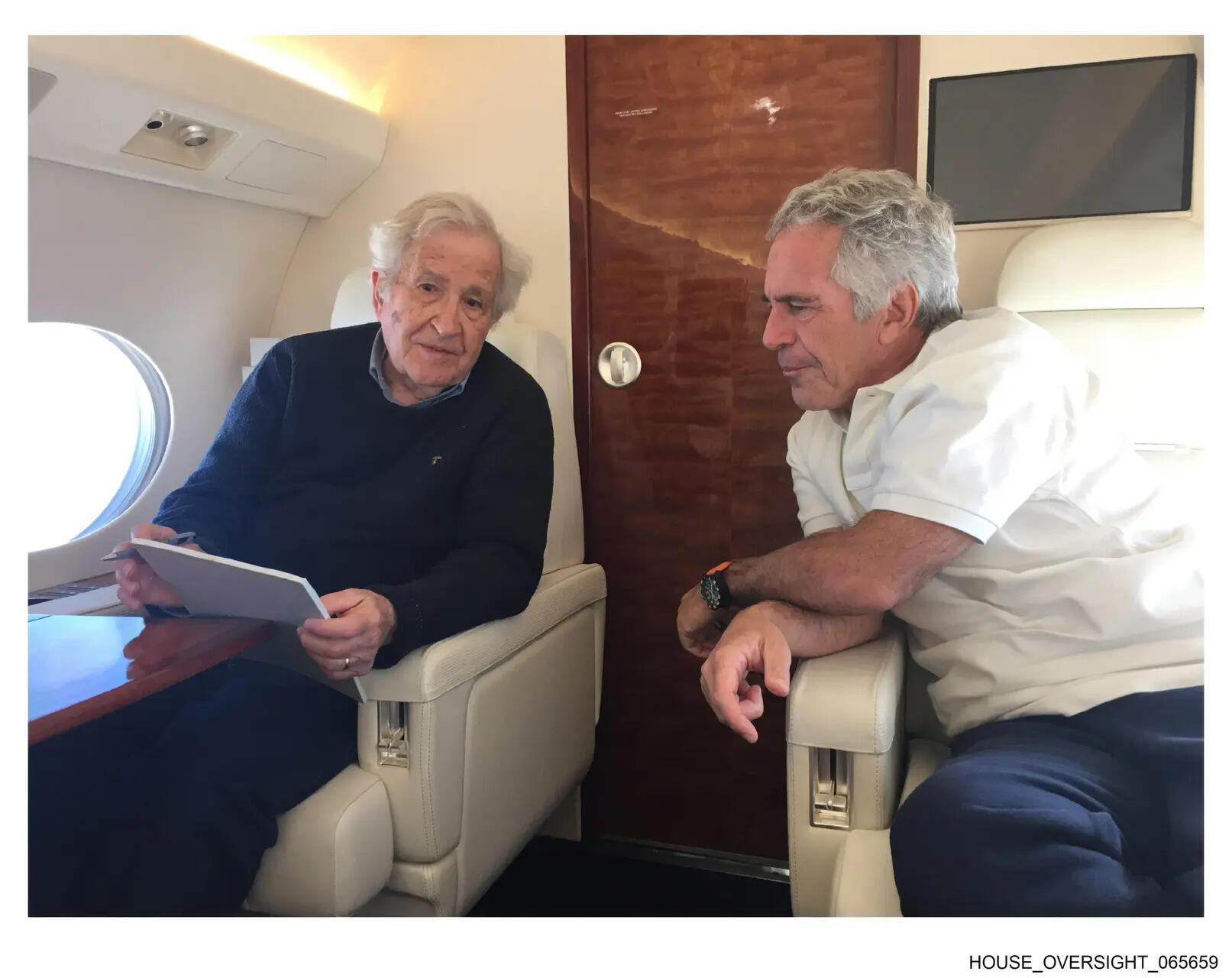
This undated photo released by Democrats on the House Oversight Committee Thursday, Dec. 18, 2025, shows Jeffrey Epstein talking with Noam Chomsky. (House Oversight Committee via AP)
Epstein misused company funds, violated internal compliance norms, and channelled privileged opportunities to romantic partners. Investigations followed, but consequences remained limited. Even when disciplinary action was finally imposed, Epstein resigned rather than accept formal punishment, preserving the appearance of autonomy. Crucially, Bear Stearns did not sever ties with him. Former colleagues continued to vouch for him, and his association with the firm became a credential that followed him long after the reasons for his departure had faded from institutional memory.
Early wealth built on weak accountability
After leaving Bear Stearns, Epstein relied heavily on that institutional residue. He presented himself to wealthy individuals as a Wall Street insider, knowing that brand association often substitutes for verification. In this period, he engaged in a series of questionable investment arrangements, including at least one instance in which an investor entrusted him with a substantial portion of his net worth for a deal that never materialised. When the money disappeared, Epstein avoided personal liability through legal technicalities. These early episodes were not anomalies but rehearsals, teaching him how often accountability could be deferred.
Exposure to old money and elite norms
Epstein’s ambitions sharpened when he encountered genuine generational wealth. Through British and European connections, he moved within aristocratic and defence-linked circles where discretion was prized above transparency and loyalty outweighed explanation. He repositioned himself as a specialist in locating hidden assets, cultivating an image as someone who could navigate offshore financial structures beyond the reach of conventional advisers. In at least one high-profile case, he successfully helped recover missing funds, earning significant compensation and credibility.
From investor to intermediary
By the mid-1980s, Epstein was a millionaire, but wealth alone was not the inflection point. He had acquired a role within elite networks. He was no longer merely investing or advising. He was mediating, connecting, and facilitating. This intermediary position insulated him from scrutiny because his value lay not in outcomes but in access. People tolerated him because he appeared useful.
Building legitimacy through boards and donations
From that point onward, Epstein focused on assembling legitimacy. He understood that access to America’s most exclusive circles is constructed incrementally. He joined boards, donated strategically to cultural and academic institutions, and embedded himself in philanthropic circuits where influence circulates informally. He cultivated academics, politicians, and donors, ensuring that each affiliation reinforced the next. He also surrounded himself with young women, using them to smooth introductions and signal desirability within male-dominated power networks. This was not incidental behaviour. It was deliberate.
The role of Leslie Wexner in Epstein’s expansion

This undated redacted photo released by Democrats on the House Oversight Committee Thursday, Dec. 18, 2025, shows Jeffrey Epstein. (House Oversight Committee via AP)
By the late 1980s, Epstein was perceived as established rather than aspirational. That perception proved decisive when he met Leslie Wexner, the billionaire founder of what would become the L Brands empire. The two met by chance, and Epstein presented himself as a financial expert. Wexner hired him. Within a year, Epstein had been granted power of attorney over Wexner’s finances, effectively transferring extraordinary authority over assets, corporate entities, and charitable structures. Epstein’s wealth expanded dramatically. Advisers warned Wexner. Colleagues raised concerns. He did not sever ties.
Converting money into access and influence
With Wexner’s backing, Epstein converted wealth into institutional immunity. He donated to universities, joined commissions, cultivated political access, and became a regular presence in elite social settings without ever clearly explaining his professional role. Banks accepted his business. Foundations accepted his money. Institutions accepted his presence. Each acceptance validated the next, creating a closed loop of credibility that insulated him from scrutiny. Epstein was not invisible. He was ubiquitous.
Ghislaine Maxwell and the widening of networks
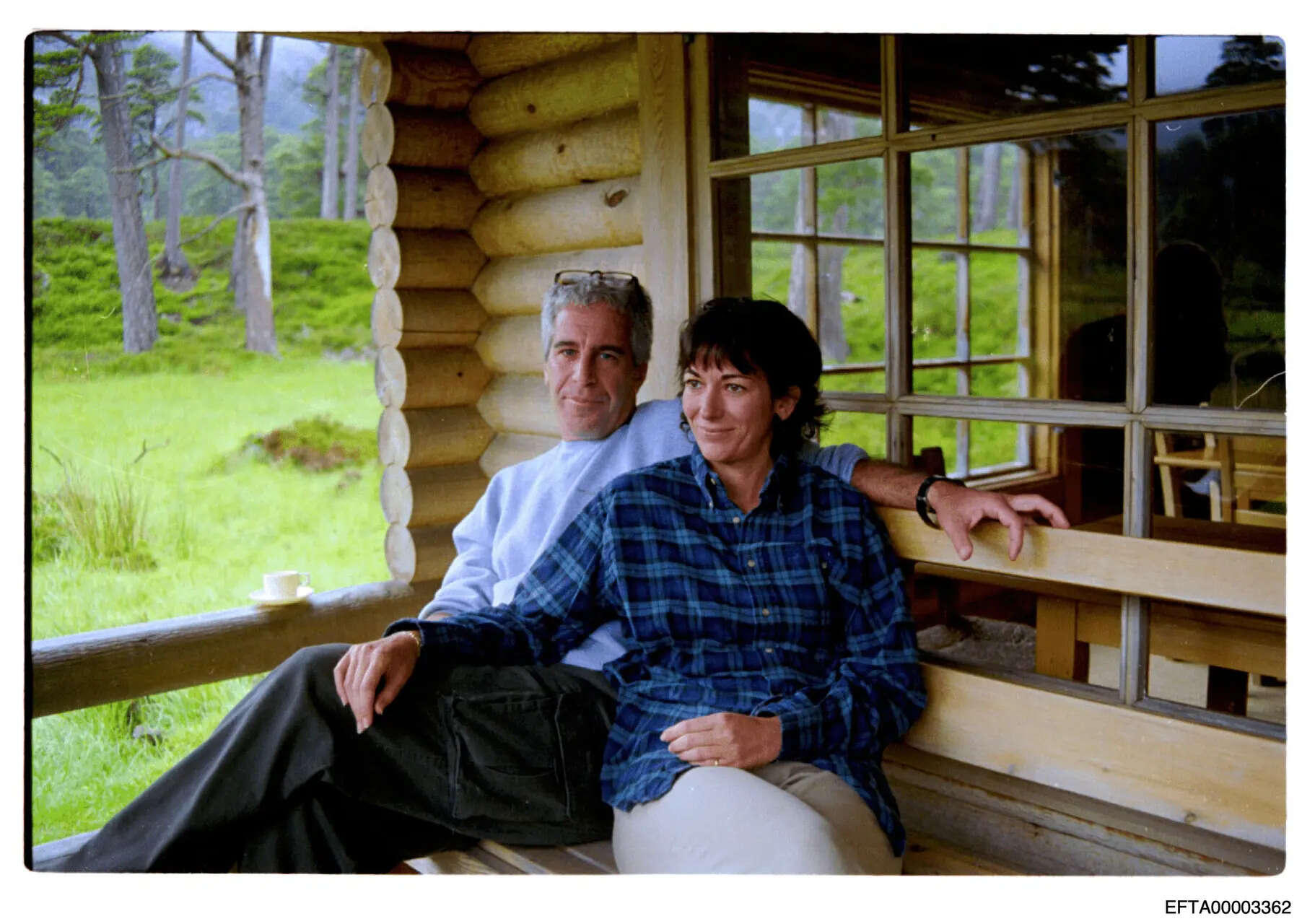
This undated photo released by the U.S. Department of Justice shows Jeffrey Epstein and Ghislaine Maxwell. (U.S. Department of Justice via AP)
In the early 1990s, Epstein’s relationship with Ghislaine Maxwell marked a further consolidation of power. Maxwell, the daughter of British media baron Robert Maxwell, brought aristocratic polish and social reach, helping Epstein navigate elite spaces more fluently. She also became central to his criminal operation, recruiting and grooming victims and normalising abuse within environments that discouraged scrutiny. Their partnership thrived in plain sight, buffered by reputation and institutional reluctance to intervene.
Why early investigations failed to stop him
When Epstein was first investigated in the mid-2000s, the response followed a familiar pattern. Elite lawyers negotiated. Prosecutors deferred. Institutions prioritised containment over exposure. Epstein received a lenient plea deal and served a brief sentence before returning to his life largely intact. The system did not collapse. It adjusted. A later investigation by The New York Times would strip away much of the mythology around Epstein’s wealth, showing that it was built not on brilliance or espionage but on manipulation enabled by repeated institutional failure.
What Epstein’s rise reveals about elite systems
The Epstein story ultimately reveals less about one man’s depravity than about how power protects itself. Epstein did not invent corruption. He exploited tolerance for it. He thrived because elite systems reward confidence without verification, loyalty without ethics, and money without questions. His ascent was not a glitch. It was the predictable outcome of institutions that repeatedly chose not to look too closely at what they were enabling. Jeffrey Epstein was not an aberration within the system. He was assembled by it, patiently and predictably, over decades of indulgence.
[ad_2]
Source link