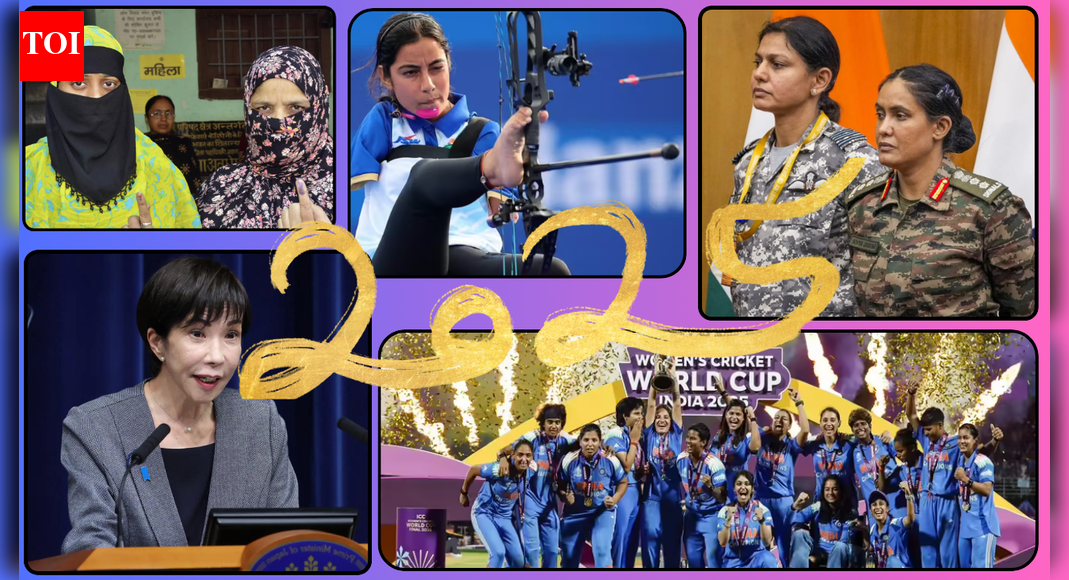
In 2025, women were no longer the footnote to the big story — they were the story. Across crises and celebrations, ballots and battlefields, podiums and boardrooms, women emerged as the decisive force shaping outcomes and narratives.This year ender traces how women became the X factor of 2025: from the symbolism and steel of Operation Sindoor, to the women voters who once again decided Bihar’s fate; from new women heads of state reshaping global politics, to athletes who carried India’s sporting year; and finally, to a woman who climbed into the world’s richest ranks, redefining economic power. These were not isolated moments. Together, they marked a year when women didn’t just influence events — they changed the balance.
Pahalgam attack and Operation Sindoor
A newlywed wife, sitting silently beside her husband’s body — the image that came to define the Pahalgam attack.A terrorist strike. Twenty-six dead. All men.“Go, tell Modi,” a terrorist told a woman after shooting her husband.Operation Sindoor was the response. Its imagery was stark and deliberate — red and black, vermillion smeared like a warning. A symbol of vengeance, resolve, and the state’s answer to terror.“Terrorists dared to wipe ‘sindoor’ from the foreheads of our sisters; that is why India destroyed the very headquarters of terror,” PM Modi had said in his first address to the nation after the launch of the operation.The symbolism did not stop at words or posters. It took shape on the world stage when two women officers stepped forward to brief the global media on Operation Sindoor.
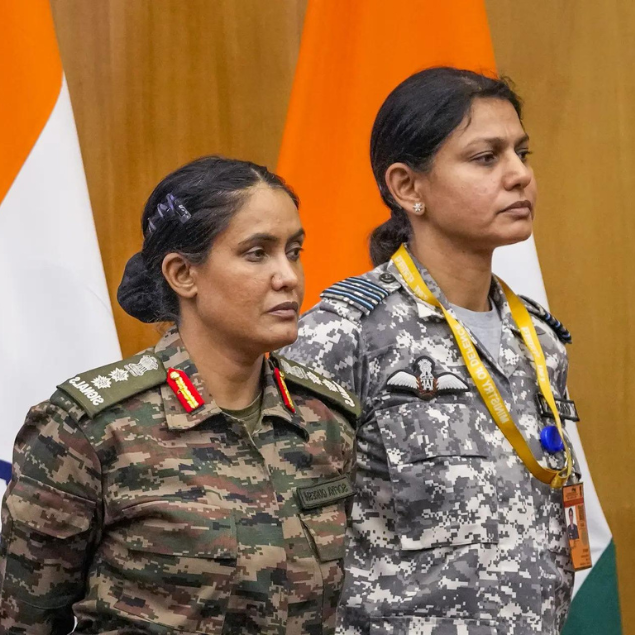
Colonel Sophia Qureshi and Wing Commander Vyomika SinghTheir presence was widely seen as intentional messaging — women not just as victims or symbols, but as the face and force of India’s response to terror.Operation Sindoor also saw women in direct combat. In the Akhnoor sector along the IB, a six-member women’s BSF team led by Assistant Commandant Neha Bhandari defended forward posts under sustained Pakistani fire for three days and nights, forcing enemy positions across Sialkot to retreat. For several of the young recruits, it was their first combat test — marking a decisive shift from symbolism to frontline action.
Nitish won Bihar, but credit goes to women
Women decided Bihar’s verdict once again, delivering Nitish Kumar a victory that numbers make hard to dispute. While their support for the JD(U)-BJP government’s pro-women agenda has been steady since 2005, this election saw a decisive surge. The turnout told its own story. As many as 71.6% women voted, nearly nine percentage points higher than men, and a sharp rise from 59.7% in 2020.A Rs 10,000 cash transfer to over 1.5 crore women in the run-up to polls acted as a turbo-boost. Like Rakhi after Diwali, the ‘das-hazariya’ payout — along with the mobilisation of Jeevika Didis — became the catalyst for the NDA’s sweeping win.For many women, this loyalty has been shaped over two decades — beginning with schemes like free bicycles for schoolgirls in Nitish Kumar’s first term.In 2010, smiling girls cycling to school became the defining image of his landslide victory, much like women voters have shaped this one.Even contentious policies have found unlikely champions. Prohibition, despite widespread criticism from men, continues to draw strong backing from women, particularly the poor, who often credit it with tangible household benefits.Add to this structural reforms — 35% reservation for women in government jobs, 50% in local bodies, and the expansive Jeevika self-help group network — and the pattern is clear.In Bihar, elections may be fought by parties, but they are increasingly won by women.
When women rose to rule
Across continents in 2025, the ascent of women to the highest political office began to look less like an exception and more like a long-delayed correction. In March, Namibia’s Netumbo Nandi-Ndaitwah was sworn in as the country’s first woman president. In a region where power has long been shaped by patriarchal traditions, her presidency carries the promise of something deeper: a recalibration of institutional culture, with greater emphasis on accountability, environmental stewardship, and gender-balanced governance.That same shift echoed months later in South America. In July, Suriname elected Jennifer Geerlings-Simons as its first woman president at a moment of economic uncertainty and cautious optimism, driven by newly discovered offshore oil reserves. A physician by training and a respected parliamentary leader, Geerlings-Simons embodies a quieter, steadier form of authority — one rooted in consensus-building and institutional continuity. Her victory underscored an important truth: the gender wave in politics is no longer confined to large economies or global power centres. It is reaching smaller, diverse nations where leadership had remained stubbornly homogeneous for decades.By October, the tremor reached East Asia. Sanae Takaichi’s elevation as Japan’s first female prime minister shattered one of the country’s most enduring political glass ceilings. In a system long dominated by men, her rise signalled a shift not only within party hierarchies but also in public expectations. For Japan, where women’s political representation has historically lagged, Takaichi’s appointment was as much a cultural moment as a political one — a sign that the contours of leadership are slowly expanding, allowing future generations of women to imagine themselves not at the margins of power, but at its very centre.
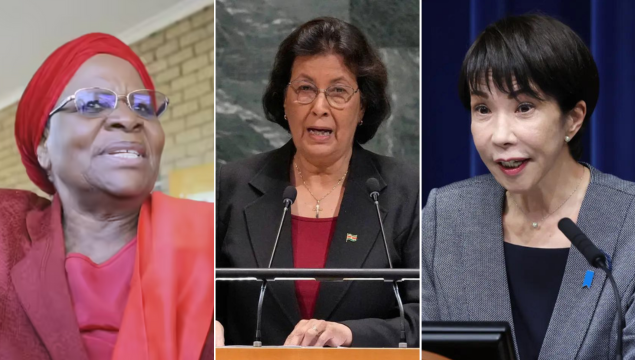
Netumbo Nandi-Ndaitwah, Jennifer Geerlings-Simons, Sanae Takaichi
Women played the best
Harmanpreet Kaur, Jemimah Rodrigues, Divya Deshmukh, Sheetal Devi, Nikhat Zareen, Stanzin Dolkar, Anahat Singh and India’s women footballers defined Indian sport in 2025, delivering results that cut across disciplines. The landmark moment came when the Indian women’s cricket team won its first-ever ODI World Cup, that too in front of a home crowd, with Jemimah’s match-winning knock in a pressure semi-final and a controlled final performance sealing a long-awaited title.
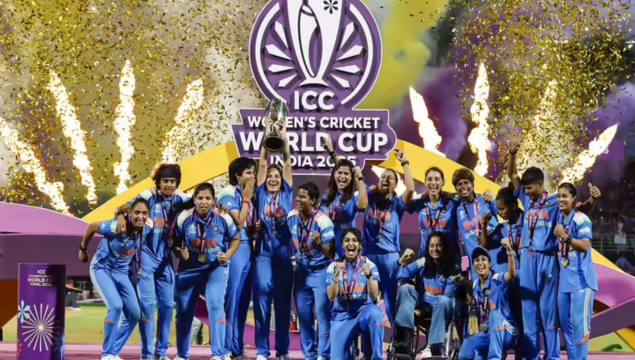
Beyond cricket, Indian women asserted themselves with authority. Divya Deshmukh became the youngest Women’s World Cup champion in chess, while archer Sheetal Devi added a para-world title and earned selection to the able-bodied compound team purely on scores. In squash, Anahat Singh claimed the national spotlight by winning the SRFI Squash Indian Open, and in boxing, India’s women powered the country to seven of nine gold medals at the World Boxing Cup Finals, led by Nikhat Zareen.

Divya Deshmukh, Sheetal DeviSome of the year’s most powerful moments came from inclusive and emerging sport. The Indian Blind Women’s Cricket Team won the inaugural Women’s T20 World Cup for the Blind, while Stanzin Dolkar’s decisive goals earned India its first international bronze in women’s ice hockey. Football completed the surge, with the women’s national team qualifying outright for the AFC Asian Cup for the first time in over two decades, and the U-20 and U-17 sides also sealing continental berths. In 2025, Indian women didn’t just shine — they set the standard.
First Indian among world’s top 10 richest women
Roshni Nadar scripted history in 2025 by becoming the first Indian woman to break into the world’s top 10 richest women, ranking fifth on the Hurun Global Rich List with a net worth of Rs 3.5 lakh crore ($40 billion).The milestone followed the transfer of a 47% stake in HCL Technologies from her father, Shiv Nadar, firmly establishing her as India’s richest woman and the country’s third-richest individual this year.