
Don’t go to Harvard for STEM: Malcolm Gladwell’s warning explained
[ad_1]

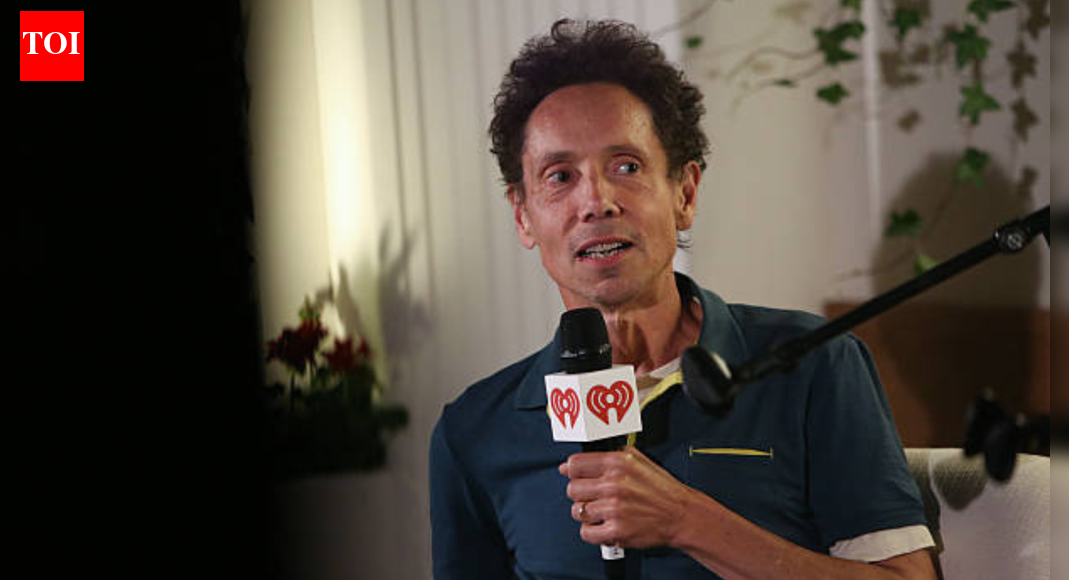
For years, science students have been taught a simple equation: the harder the institute is to enter, the brighter the future that awaits outside. The assumption runs so deep that questioning it can feel almost heretical. But Malcolm Gladwell — a Canadian journalist, author, and public speaker — has never been particularly interested in reassuring ambition. He is more interested in examining what ambition does to people when it collides with reality.That is why his latest warning — blunt, uncomfortable, and aimed squarely at elite universities — has struck a nerve.“If you’re interested in succeeding in an educational institution, you never want to be in the bottom half of your class. It’s too hard,” Malcolm Gladwell told in a recent episode of the Hasan Minhaj Doesn’t Know podcast, according to a Fortune report. “So you should go to Harvard if you think you can be in the top quarter of your class at Harvard. That’s fine. But don’t go there if you’re going to be at the bottom of class. Doing STEM? You’re just gonna drop out,” he added.He also advised students to consider their second or third choice institutions instead. These, according to him, are places where young aspirants are more likely to perform at the top rather than struggle at the margins.What makes the remark sharper is that it is not new. Gladwell has been making the same case for years: STEM persistence is shaped as much by where you stand in the room as by how smart you are.“If you want to get a science and math degree, don’t go to Harvard,” Gladwell said in a Google Zeitgeist talk in 2019 also, Fortune reports. “Persistence in science and math is not simply a function of your cognitive ability,” . “It’s a function of your relative standing in your class. It’s a function of your class rank,” he added.It is a line that sounds provocative, almost reckless. But Gladwell is not attacking Harvard University. He is questioning something far more foundational: Whether prestige-heavy academic environments help most science students persist long enough to succeed.
Why Gladwell keeps sounding the same alarm: The ‘big fish, small pond’ problem
Malcolm Gladwell’s argument has always been about psychology, about what happens inside students long before grades translate into careers. When he warns science students against placing themselves at the bottom of elite classrooms, he is not making a comment on intelligence or effort. He is describing a behavioural pattern he believes quietly determines who persists and who gives up. In highly competitive academic environments, Gladwell suggests, students do not measure themselves against global standards or long-term potential. They measure themselves against the peers they see every day. And that comparison, repeated over semesters, begins to shape identity.His contention is straightforward: When capable students constantly experience themselves as “below average” within an elite cohort, the psychological cost becomes cumulative. Struggle starts to feel like inadequacy. Temporary difficulty begins to look like permanent unsuitability — especially in STEM, where early coursework is rigid and unforgiving.That idea was formally laid out earlier in his 2013 book, David and Goliath, drawing on what researchers call “relative deprivation” and the Big-Fish–Little-Pond Effect. Gladwell argued that people derive confidence, motivation, and persistence not from being objectively exceptional, but from feeling competent in their immediate environment. A student who is a big fish in a smaller or moderately competitive pond may develop stronger academic self-belief than an equally talented student who is a small fish in an elite one.Seen through this lens, Gladwell’s advice sounds less like provocation and more like consistency. The recent podcast comment, the 2019 talk and the 2013 book are variations of the same claim: Talent does not fail in isolation; it fails in contexts that quietly convince people they are failing. For science students, whose paths demand endurance more than early brilliance, the environment they choose can matter as much as the ability they bring with them.
‘Don’t go to Harvard’ can also be bad advice for some
Gladwell’s warning is useful — but only when read as a way to think, not as a rule to follow.For one, elite campuses can genuinely deliver. They offer deep research ecosystems, stronger lab access, higher funding density, and networks that can open doors early — sometimes before a student has even figured out what kind of scientist they want to become. And for some students, the intensity is not corrosive; it is catalytic. A high-achieving peer group can raise standards, sharpen discipline, and make excellence feel normal rather than exceptional.Then there is the age problem. The “top quarter” test sounds decisive, but at 17, it is often guesswork. Many students misjudge fit in both directions. Some arrive convinced they will dominate and discover, quickly, that everyone was a topper somewhere. Others arrive feeling underqualified and surprise themselves — not because they were secretly brilliant, but because they found the right supports, mentors, and rhythm.So the best way to interpret Gladwell is as a stress-test, not a prophecy:
- If your plan depends on never being average, it is a fragile plan.
- If your self-worth collapses after the first B-minus, STEM will start to feel personally humiliating.
- And if you want a science career in 2026, you need an environment that still lets you keep building — skills, confidence, work habits — even when you are not the smartest person in the room.
Reading Gladwell right: A tricky act of balance for students
On paper, it can look like we are contradicting ourselves. We are saying elite universities can help, and also that they can harm. But that tension is the point. Gladwell is not offering a neat rule. He is pointing to a risk that is easy to ignore when we are dazzled by brand names.The context matters more now than it did even a few years ago. In 2025 and 2026, a STEM degree is no longer the finish line people imagine it to be. It is closer to an entry badge and what separates students is the proof they carry alongside it. The World Economic Forum’s Future of Jobs Report 2025 frames 2025–2030 as a churn cycle, where a large share of skills will change and adaptability becomes a workplace currency. The PwC 2025 Global AI Jobs Barometer adds a sharper twist: In AI-exposed roles, skills are changing faster, and employers are also easing away from degree requirements faster than before.So the modern science student is running two races at once. One is inside the classroom — grades, labs, curves, weed-out courses. The other is outside it — projects, internships, research exposure, tools, portfolio, AI fluency. The second race quietly depends on something we do not talk about enough: Mental bandwidth.This is where Gladwell’s warning begins to make sense without turning into dogma. If an elite environment consistently pushes a student into the bottom half, the danger is not only that they may switch out of STEM. It is that they may be too depleted to build the extra proof-of-work that today’s STEM hiring expects. In other words, the cost is not just academic. It is cumulative.But it is also true that elite campuses can deliver — sometimes spectacularly. The labs are deeper, the funding is denser, the networks travel farther. For many students, the peer environment is not crushing, rather, it is catalytic. They rise to the pace, and the pressure becomes productive.So the right way to read Gladwell is not as a ban on prestige. It is a question about fit and, more specifically, about pipelines. The real question for science students is no longer: Is this university famous? It is: Will I get early access to the kind of work that will make me employable?That usually means:
- Research exposure, even if it starts small,
- Lab access that is not reserved for a select few,
- Faculty bandwidth and mentorship,
- Internship pathways, and
- A peer culture where struggle is treated as part of training, not as evidence you do not belong.
If prestige expands those opportunities, it can be worth it. If prestige shrinks a student’s confidence so early that they stop building, it can quietly backfire.In 2025–26, choosing a university is not merely choosing a pond. It is choosing a pipeline — one that lets a science student keep accumulating competence, visibility, and resilience, even on days when they are not the smartest person in the room.
[ad_2]
Source link