
KYC lapses, backlog weaken defences against fraud: RBI
[ad_1]

MUMBAI: In a renewed push to contain fraud and improve customer safeguards, RBI has asked banks to clear the growing backlog in KYC updates and warned against the routine rejection of applications. Lapses in KYC, the central bank said, weaken defences against fraud and exclusion, particularly in rural and semi-urban areas. Alongside fraud, RBI has flagged mis-selling as a persistent conduct risk and has said that it will come out with new guidelines.In a report, RBI said banks should “organise camps and launch intensive campaigns” to deal with delays in periodic KYC updates, with a focus on smaller branches. It also cautioned lenders against mechanical rejections, stressing that onboarding or KYC-updation requests should not be turned down without due consideration and that reasons for rejection must be properly recorded. The regulator noted that it had itself been involved in a nationwide re-KYC drive at the gram panchayat level between July and Oct 2025.
New age threats
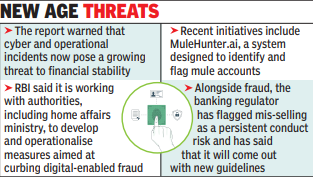
The emphasis on KYC forms part of a broader attempt to curb fraud at a time when financial crime is becoming more sophisticated. The report warned that cyber and operational incidents pose a growing threat to financial stability. To counter this, RBI said it is working closely with other authorities, including the ministry of home affairs, to develop and operationalise measures aimed at curbing digital and cyber-enabled fraud while strengthening customer protection.Technology is central to this effort. Recent initiatives include MuleHunter.ai, a system designed to identify and flag mule accounts through system-wide learning, and a digital payments intelligence platform that uses AI to detect risky transactions and share intelligence across the system. Banks have also been advised to use the mobile number revocation list available on the telecommunications department’s digital intelligence platform to clean customer databases and prevent fraud carried out through voice calls and SMS. The regulator has asked lenders to tighten internal controls, ensure adequate grievance-redress officers at all levels and invest in digital financial literacy.The report said mis-selling of financial products by regulated entities has “significant consequences” for customers and for the financial system more broadly. In response, RBI plans to issue comprehensive instructions covering advertising, marketing and sales practices across different categories of regulated entities, with the explicit aim of preventing mis-selling.
[ad_2]
Source link