


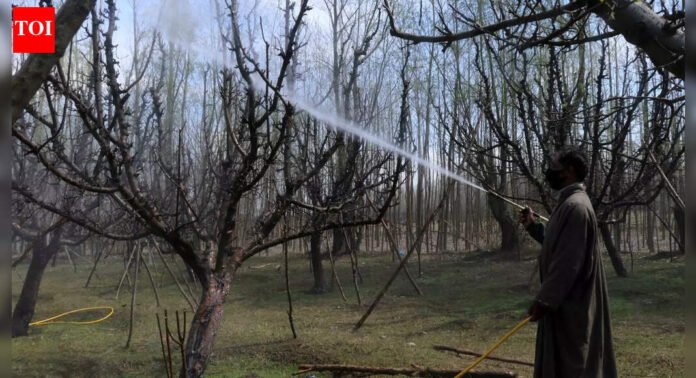
SRINAGAR: Kashmir’s apple orchards — the backbone of the Valley’s rural economy — are under renewed scrutiny as lawmakers and medical experts raise concerns over a possible link between decades of pesticide use and rising cases of malignant brain tumours among orchard workers.Lawmakers shift focus to farmers’ healthThe concerns were raised by the House Committee on Environment of the Jammu and Kashmir assembly, chaired by CPM legislator MY Tarigami, which met officials, scientists and health experts to examine the health hazards faced by those working in apple orchards.
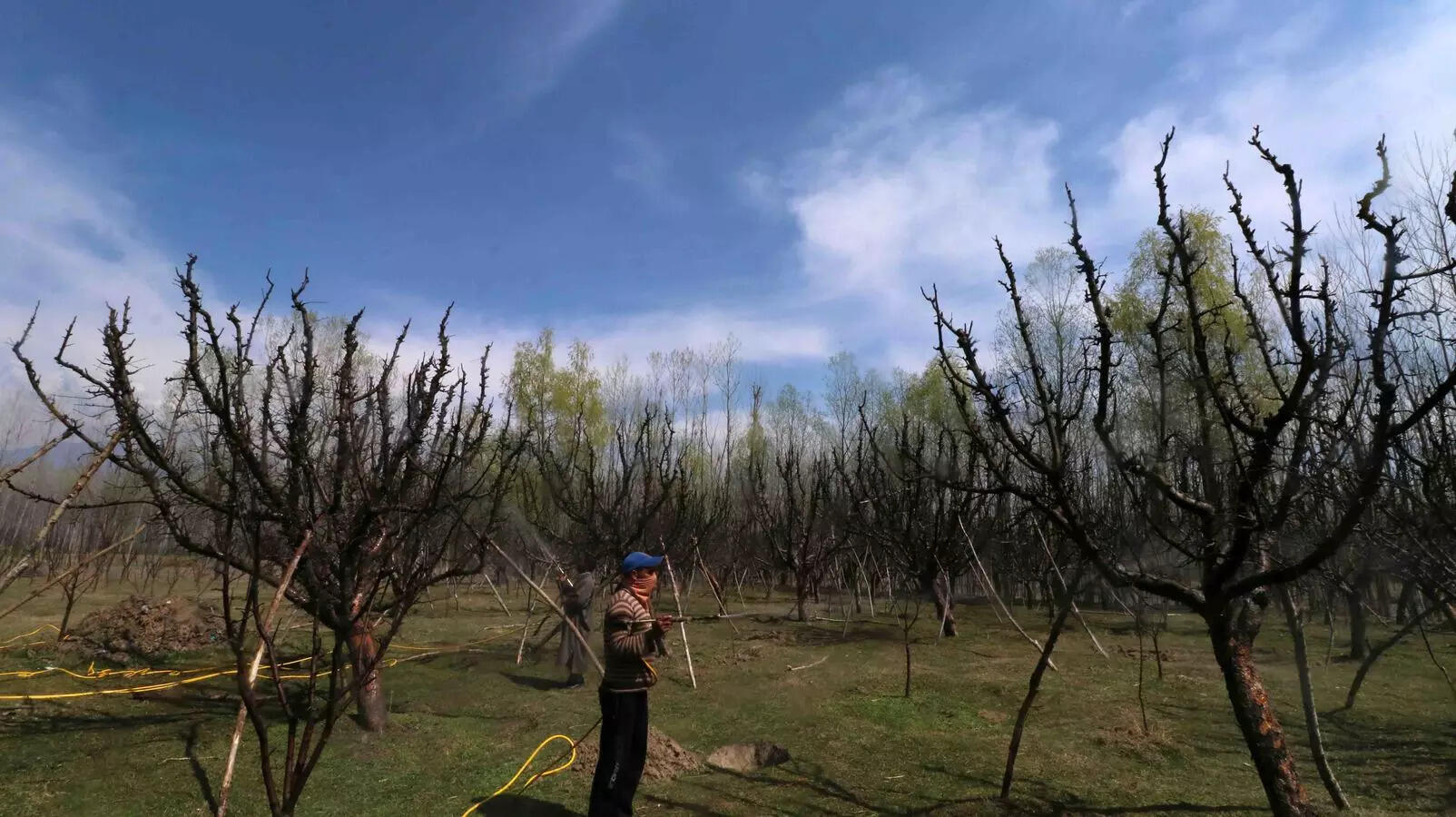
Image Credit: Bilal Bahadur/TNN
“For years, farmers have sprayed orchards unaware of the toxicity of constant pesticide exposure, leading to a rise in malignant brain tumors among those who power the valley’s billion-rupee apple economy and contribute more than 70% of India’s total apples,” the committee said.Evidence from Kashmir’s fruit beltThe discussion revisited findings from a study conducted by the Sher-i-Kashmir Institute of Medical Sciences (SKIMS), which examined more than 400 cancer patients between 2005 and 2008.The study reported high incidences of primary brain cancer in districts forming Kashmir’s core fruit belt, including Baramulla, Anantnag, Budgam, Shopian and Kupwara. It identified a “quite strong and possible” link between pesticide exposure and malignant brain tumours among orchard farmers.
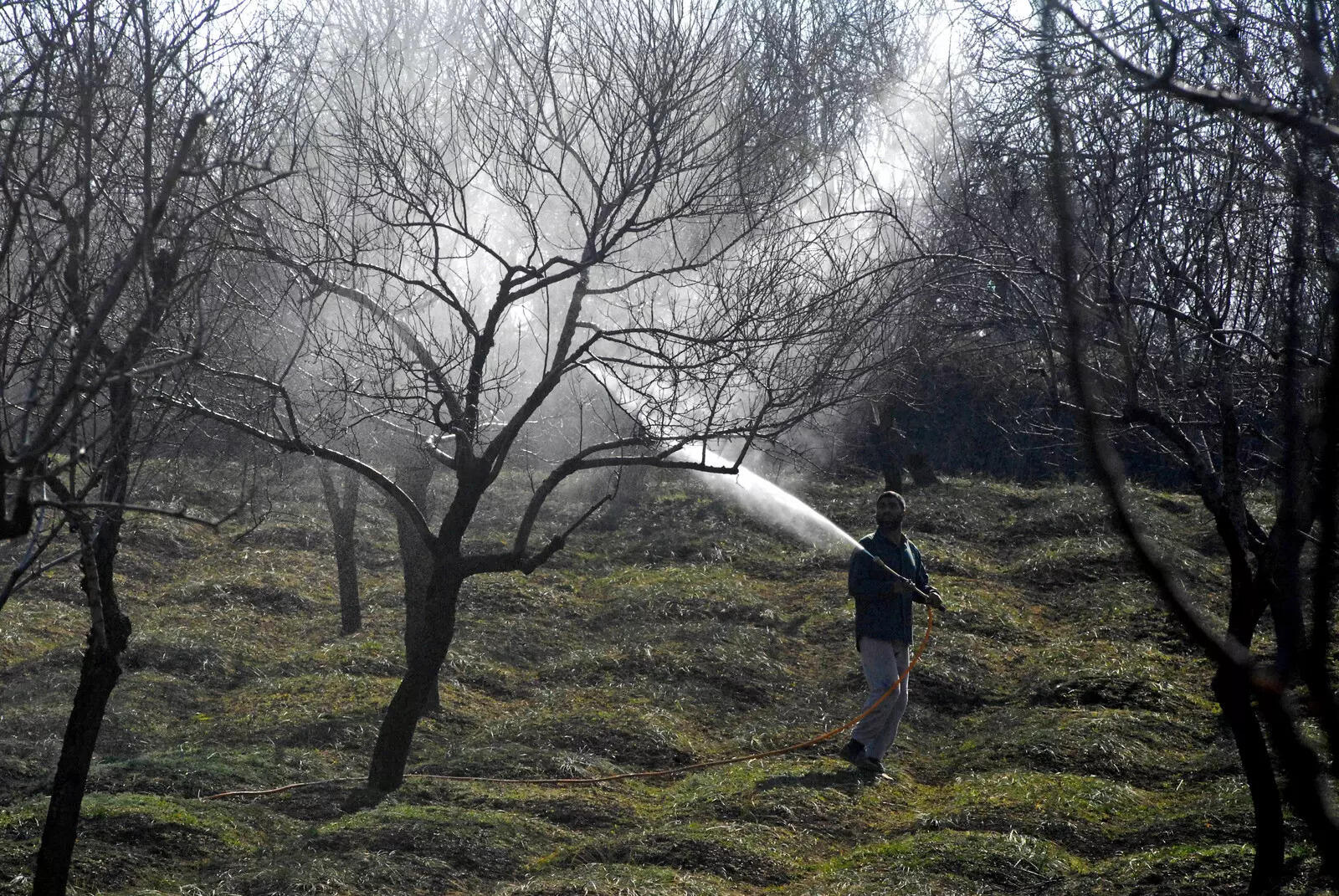
Image Credit: Bilal Bahadur/TNN
The findings were largely ignored when first published but have resurfaced amid growing medical evidence of pesticide-linked health disorders in the Valley.Tarigami told TOI, “We don’t want to create panic among farmers who spray their orchards every season. But neither can we sit idle when data indicates a serious health hazard. If pesticide spray is harming lives, it must be addressed.”Overuse of chemicals and lack of protectionScientists told the committee that pesticide use in apple orchards often exceeds recommended limits.Shahid Rasool, principal scientist at CSIR–Indian Institute of Integrative Medicine, said many orchardists spray chemicals every 10 to 12 days instead of the advised 18 to 21, believing it boosts yield.“Few can afford protective gear; chronic cough, rashes and irritation are common. Without gloves, goggles and masks, the risk multiplies,” he warned.Rasool said orchardists now use as many as 15 rounds of fungicide and insecticide each season, far beyond recommended schedules, and called for safer practices and protective equipment.Traces of pesticides found in human bloodFurther concerns were raised by Dr Sobia Nisar, a physician-researcher at Government Medical College, Srinagar, who has studied the biochemical effects of pesticide exposure among residents of apple-growing districts such as Shopian and Pulwama.“The initial idea was to check pesticides residue levels in the fruit,” she said. “But what we found was far more disturbing. Traces of these compounds in human blood samples.”
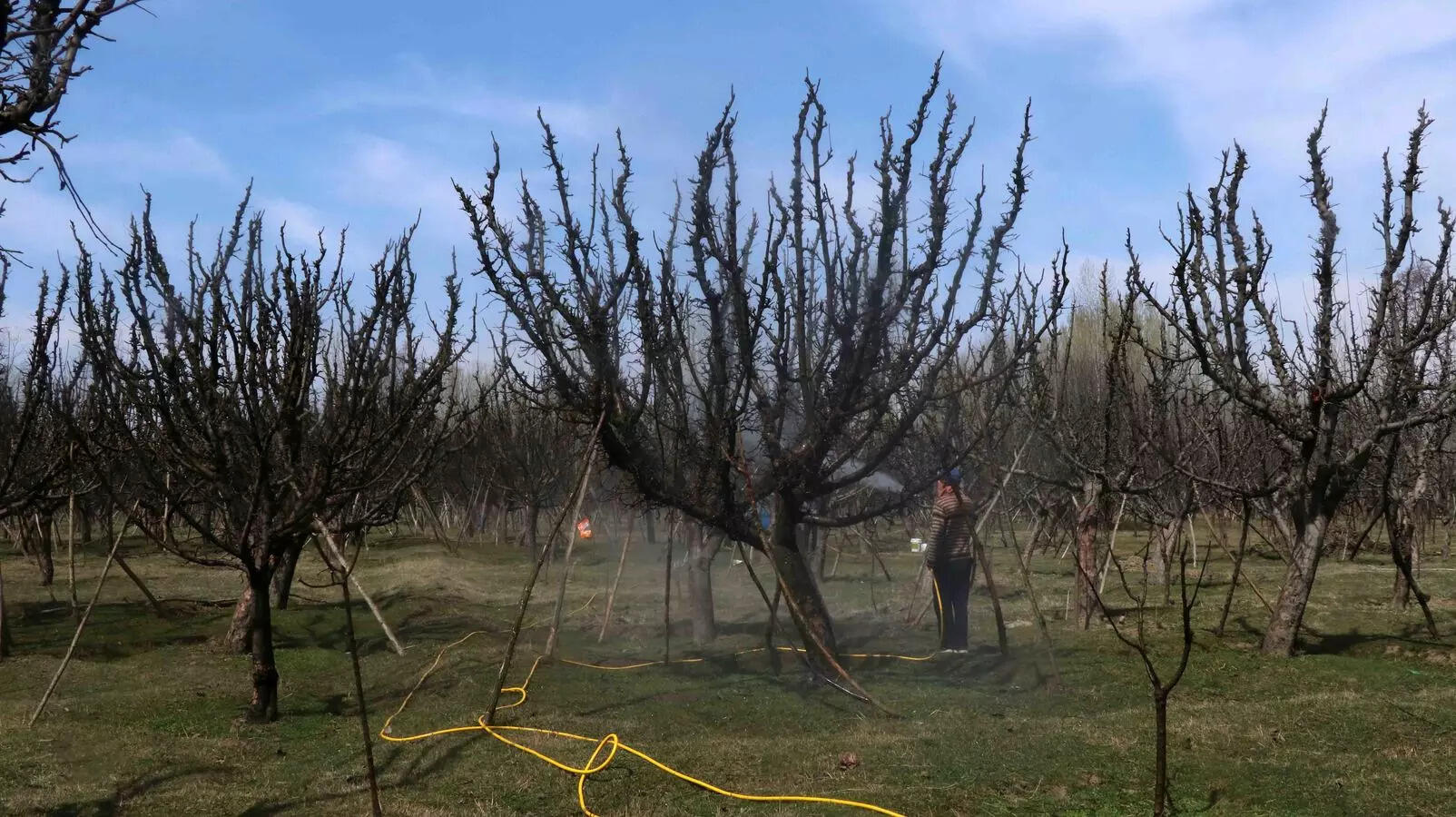
Image Credit: Bilal Bahadur/TNN
Her findings document pesticide residues in the bloodstream of orchard workers and nearby residents, along with higher rates of obesity, lipid disorders, metabolic syndrome and early kidney impairment.“When such patterns emerge consistently across populations exposed to pesticides, it demands urgent scientific scrutiny,” Dr Nisar said.Earlier studies show high exposure among cancer patientsA study published in the Indian Journal of Occupational and Environmental Medicine reported that 90% of brain tumour patients from Kashmir’s orchard belts had been exposed to pesticides, with all cases involving high-grade, aggressive tumours.The research focused on orchard workers in districts such as Anantnag, Budgam and Baramulla — areas that account for over 90% of the Valley’s apple-growing land — with smaller districts like Shopian and Kulgam also showing significant concentrations of cases.Committee seeks policy responseThe House Committee on Environment said it would recommend measures to the health and horticulture departments focusing on monitoring, research funding and worker safety, as concerns grow over the long-term health impact of pesticide use in Kashmir’s apple orchards.What the study foundA detailed study titled “Pesticides and brain cancer linked in orchard farmers of Kashmir”, conducted by researchers at the Sher-i-Kashmir Institute of Medical Sciences (SKIMS), examined the relationship between pesticide exposure and primary malignant brain tumours among orchard workers in the Valley.
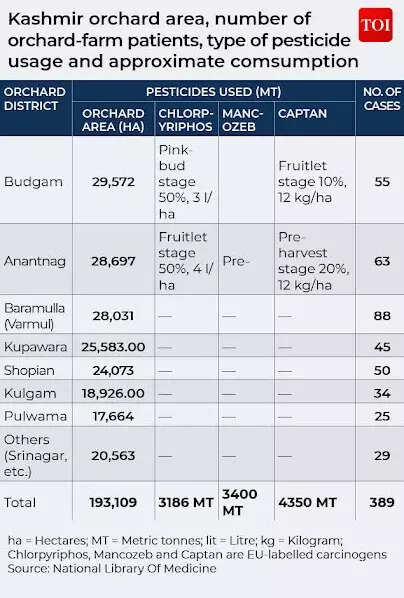
The study analysed medical records of 432 patients diagnosed with primary malignant brain tumours and 457 control patients with non-tumour neurological conditions, all treated at SKIMS over a four-year period between 2005 and 2008.High exposure among cancer patientsThese patients had been exposed to multiple neurotoxic and carcinogenic chemicals, including chlorpyriphos, dimethoate, mancozeb and captan.Only 9.96% of patients had no recorded exposure to pesticides. Among the control group, 119 out of 457 patients had a history of pesticide exposure, while 338 had no such link. Of the pesticide-exposed cancer patients, 71.7% were male and 28.3% were female, including members of three families. Nearly a third — 31.9% — were younger than 40 years, having begun exposure at an early age.Tumour severity and mortalityThe study found that all orchard-related patients had high-grade, aggressive brain tumours, unlike those in the non-pesticide-exposed group. Mortality among pesticide-exposed tumour patients was recorded at 12%.Researchers measured serum cholinesterase levels — a marker used to assess exposure to organophosphate pesticides — and found higher-than-normal levels in 31.9% of exposed patients, while decreased levels were seen in 45.3%.
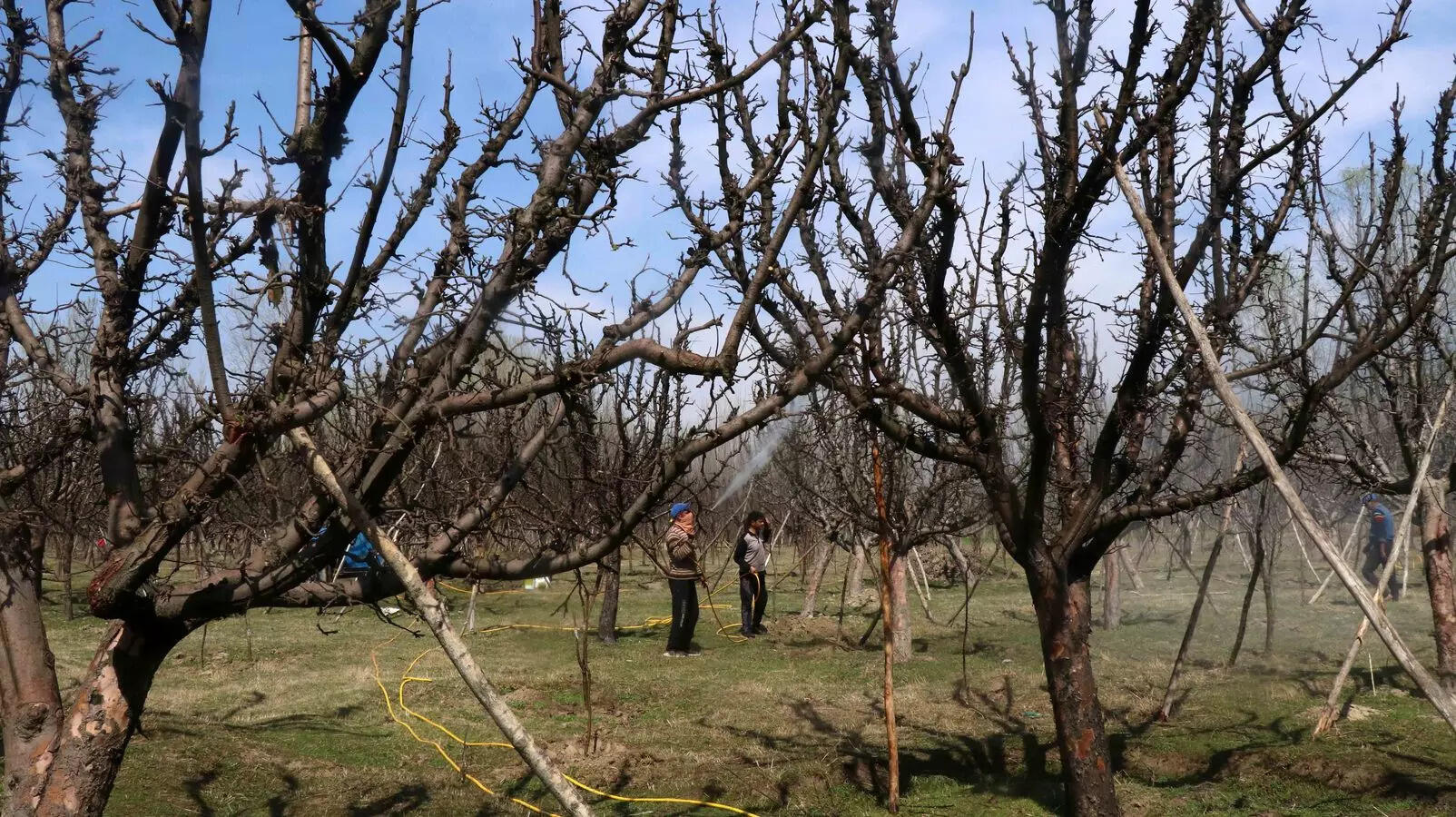
Image Credit: Bilal Bahadur
Statistical analysis showed a significant case-control odds ratio of 0.28, with additional hospital and family control serum cholinesterase odds ratios of 1.1 and 1.5 respectively, pointing to what the study described as a strong suspicion of a link between pesticide exposure and brain cancer.Wider environmental and occupational contextThe study noted that millions of tonnes of pesticides, insecticides and fungicides are sprayed annually across Kashmir’s orchards. Apple cultivation alone covers more than half of the Valley’s fruit-growing land, with around 40% of the population directly or indirectly exposed through farming, residence near orchards or recreational use of orchard spaces.Researchers highlighted that prolonged use of synthetic pesticides over the past three decades has coincided with a marked rise in admissions of high-grade malignant brain tumours from orchard districts to SKIMS.The study concluded that occupational and environmental exposure to pesticides in Kashmir’s fruit-growing regions poses a serious health risk, warranting closer monitoring and further investigation.

