


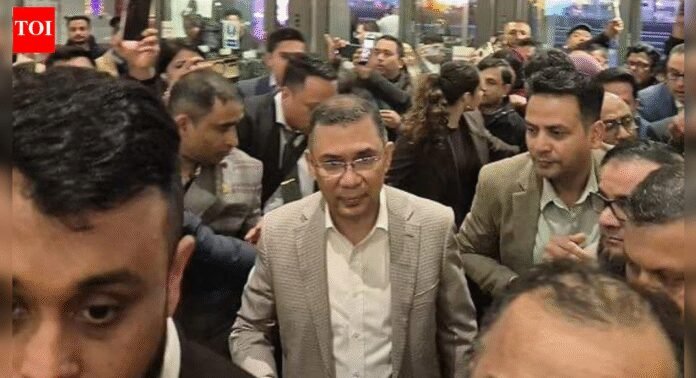
Bangladesh Nationalist Party’s acting chairman Tarique Rahman landed at the Sylhet airport in Dhaka on Thursday, ending more than 17 years of self-exile in the UK. His return ends a prolonged period abroad that began in 2008, when he left Bangladesh for medical treatment amid heightened legal and political pressures at home.Rahman, the elder son of former prime minister and BNP chairperson Khaleda Zia, is widely seen as the party’s principal face of the polls ahead of parliamentary elections slated for February 12, particularly as Zia remains unwell.
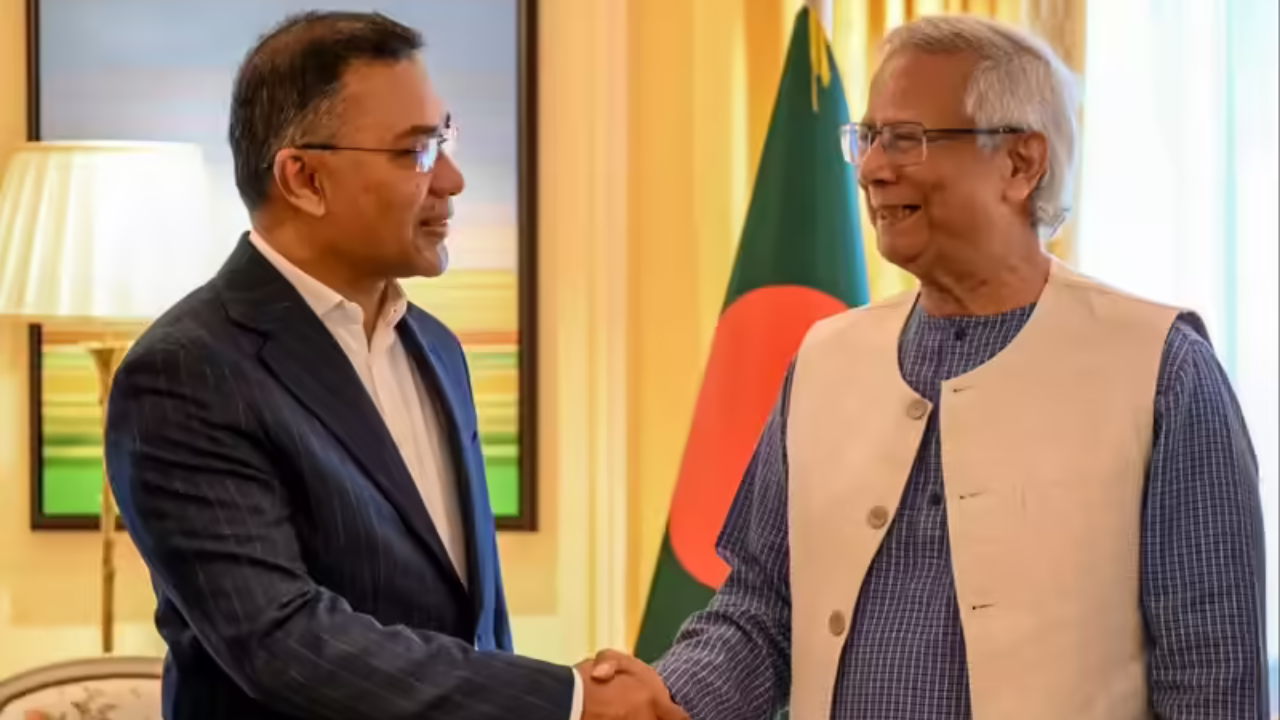
Since the ouster of former prime minister Sheikh Hasina, Bangladesh has witnessed recurring spells of violence. The recent killing of youth leader and key figure in Hasina’s ouster, Osman Hadi, has reignited tensions, with Hadi’s brother alleging that the murder was aimed at “sabotaging polls”.Rahman’s homecoming has been facilitated by the interim government. Earlier this month, foreign advisor Md Touhid Hossain said the government could issue a “one-time” travel pass within a day if Rahman wished to return. Chief advisor Muhammad Yunus also discussed Rahman’s return at a recent meeting, according to officials.
Who is Tarique Rahman?
Tarique Rahman, 58, is the elder son of former prime minister Khaleda Zia and acting chairman of the Bangladesh Nationalist Party. He has lived in self-exile in London since 2008 after leaving Bangladesh amid multiple criminal convictions, including money laundering and charges linked to an alleged plot to assassinate then prime minister Sheikh Hasina.
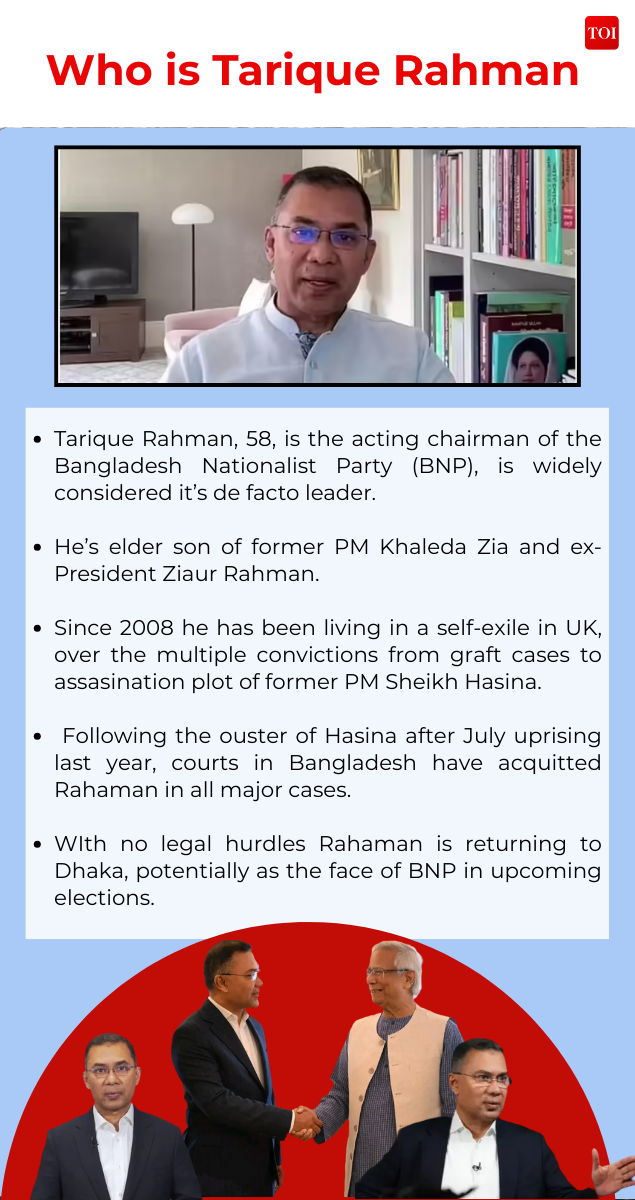
Over the past year, Bangladesh’s higher courts have acquitted him in all major cases, including the 2004 grenade attack and the Zia Orphanage Trust graft case, clearing legal hurdles to his political return. Widely regarded as the BNP’s de facto leader, Rahman has now announced plans to return and contest the February 2026 general elections.
Why it matters?
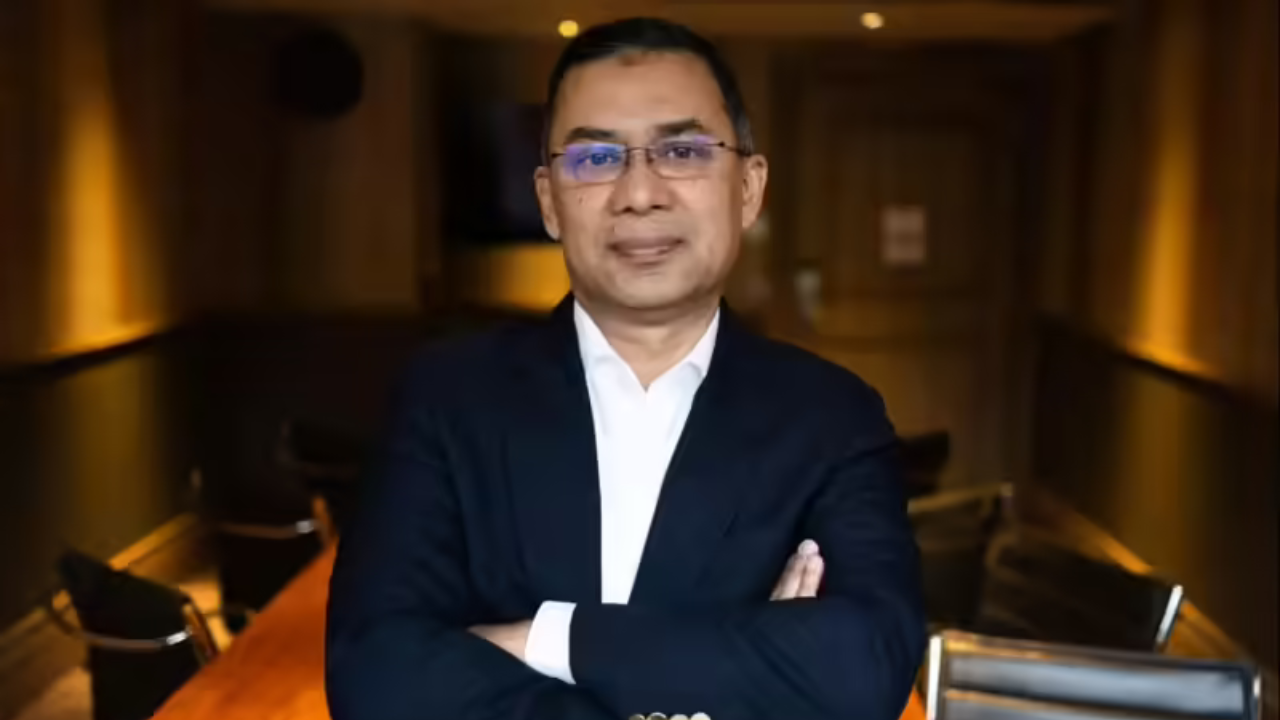
His decision to return comes at a time of intense political transition in Bangladesh. A nationwide uprising last year led to the resignation and exile of former Prime Minister Sheikh Hasina, who had been in power for 15 years. In the aftermath, a Yunus-led interim government took charge. Nobel laureate Muhammad Yunus was sworn in as Chief Adviser, a position equivalent to head of government in the interim setup, with a mandate to oversee reforms and ensure a fair electoral process ahead of upcoming 2026 polls. Rahman’s homecoming carries both symbolic and practical significance. It ends years of leadership from abroad and strengthens the BNP’s position as the main rival to parties contesting the February polls. Supporters see him as a potential prime ministerial candidate and a unifying force for opposition politics after years of exile and legal disputes.BNP leaders said Rahman will complete formalities to become a registered voter on December 27, a step that would allow him to play a direct role in electoral politics.Rahman earlier told BBC Bangla, “For some reasonable reasons my return has not happened… but the time has come, and I will return soon… I am running in the election [as well].”
Will Rahman be the next PM?
Bangladesh’s political order has been reshaped following the violent 2024 uprising that led to Sheikh Hasina’s ouster and the disbanding of her Awami League by the interim government led by Muhammad Yunus. With the Awami League barred from elections, traditional alliances have fractured, including the long-standing BNP–Jamaat partnership, the BNP is betting big on Rahman. The emergence of the student-led National Citizen Party, born out of the July protests and now registered with the Election Commission, has added further uncertainty to an already fluid electoral landscape.As Khaleda Zia, 80, is battling health issues, the BNP sees Tarique Rahman as its most viable leader going into the first election in nearly two decades without the Awami League. His decision to contest signals an effort to consolidate party unity, reclaim the Zia family’s political legacy, and project the BNP as the principal governing alternative.Political observers view the BNP as a frontrunner, and Rahman is being tipped as a possible prime ministerial candidate if the party secures a majority.
Khaleda Zia’s tenure
Bangladesh over the last three decades has alternated power between two rivals, now-ousted prime minister Sheikh Hasina and Rahman’s mother, former prime minister Khaleda Zia.Zia was the first female prime minister of Bangladesh and served from 1991 to 1995, and again from 2001 to 2006. Her tenure remains fresh in public memory, particularly among political factions that ousted Hasina on allegations of corruption. Her regime also saw allegations of atrocities and discrimination against minorities. In 2018, Zia was sentenced to five years in prison on graft charges.
Rahman’s schedule
According to BNP standing committee member Salahuddin Ahmed, senior party leaders will receive Rahman at the airport before he proceeds to a reception venue on the July Expressway, also known as the 300 Feet Road, where he is expected to address the nation.He will then visit Khaleda Zia at the hospital and return to his residence in Gulshan-2, Ahmed said. Details of Rahman’s first three days back were outlined by Ahmed at a press conference on Wednesday, as reported by Prothom Alo.On Friday, December 26, Rahman is slated to visit the grave of BNP founder and former president Ziaur Rahman at Sher-e-Bangla Nagar, followed by a visit to the National Martyrs’ Monument in Savar.On Saturday, December 27, he is expected to complete national identity card procedures to become a voter, visit the grave of martyred Osman Hadi at Dhaka University, and meet those injured in the July mass uprising at the National Orthopaedic Hospital in Shyamoli, Prothom Alo reported.

