


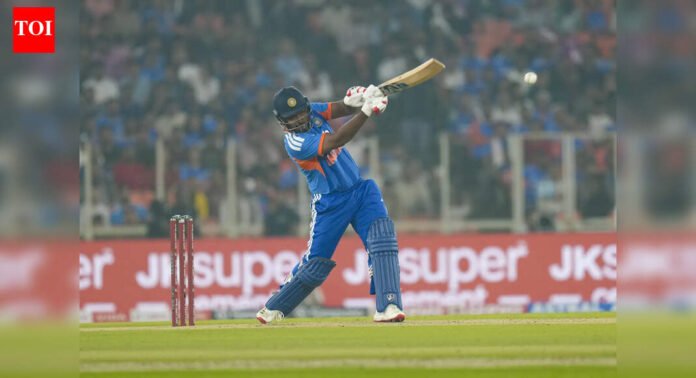

NEW DELHI: With just 50 days to go for the ICC Men’s T20 World Cup in India and Sri Lanka, Team India’s numbers no longer scream dominance, even if recent results offer some comfort.As defending champions, India began their post 2024 title run in ruthless fashion, winning 17 of their next 20 T20Is. Eight scores crossed the 200 mark, five of them were 220 plus and three breached 245 mark, underlining a batting unit operating well ahead of the curve. That curve has flattened since the 2025 Asia Cup. India’s overall strike rate has dropped to 141.64, a worrying decline for a side that had redefined intent at the top of the order.
Since the Asia Cup, Abhishek Sharma remains the only Indian batter striking above 145. Everyone else has slowed down, and the biggest talking point changed to the new opening combination. The Sanju Samson-Abhishek Sharma partnership set the tone for India’s surge after the 2024 World Cup. Across 16 innings, the pair averaged 33.43 and scored at a blistering strike rate of 193.84. That early momentum allowed India to sustain a strike rate of 154.56 through the middle overs and 169.39 at the death.The dynamic shifted when Shubman Gill returned to the playing XI as part of the management’s long-term leadership plan. Samson, who amassed 417 runs in 12 T20Is at a strike rate of 183.70 with three centuries at the top, was pushed down the order. His Asia Cup returns were mixed, though he still finished as India’s third highest run-getter with 132 runs, behind Abhishek Sharma’s 314 and Tilak Varma’s 213. A solitary outing in Australia at No. 3 ended without impact, after which Samson was dropped from the playing XI.Gill’s own returns since his comeback have been underwhelming. In 15 matches, he has scored 291 runs at an average of 24.25 and a strike rate of 137, without a single fifty. The numbers point to a batter searching for rhythm at a time when India’s top order needs clarity more than caution.Speaking at the JioStar Press Room ahead of the upcoming T20 World Cup, former India batter Robin Uthappa, who was part of the 2007 World Cup winning squad, was clear about the balance he wants to see. “I would not personally like to tinker with the opening combination,” Uthappa said. “What I would like is to see Sanju bat at No. 3, Tilak at No. 4 and Surya at No. 5. Suryakumar Yadav plays his best cricket outside the powerplay. Tilak Verma needs a pivotal role in this team and that is why No. 4 suits him.”Uthappa explained that placing Tilak Verma at No. 4 and Suryakumar Yadav at No. 5 would free up the top order. “This gives the openers and the No. 3 position the authority to go hard,” he said.
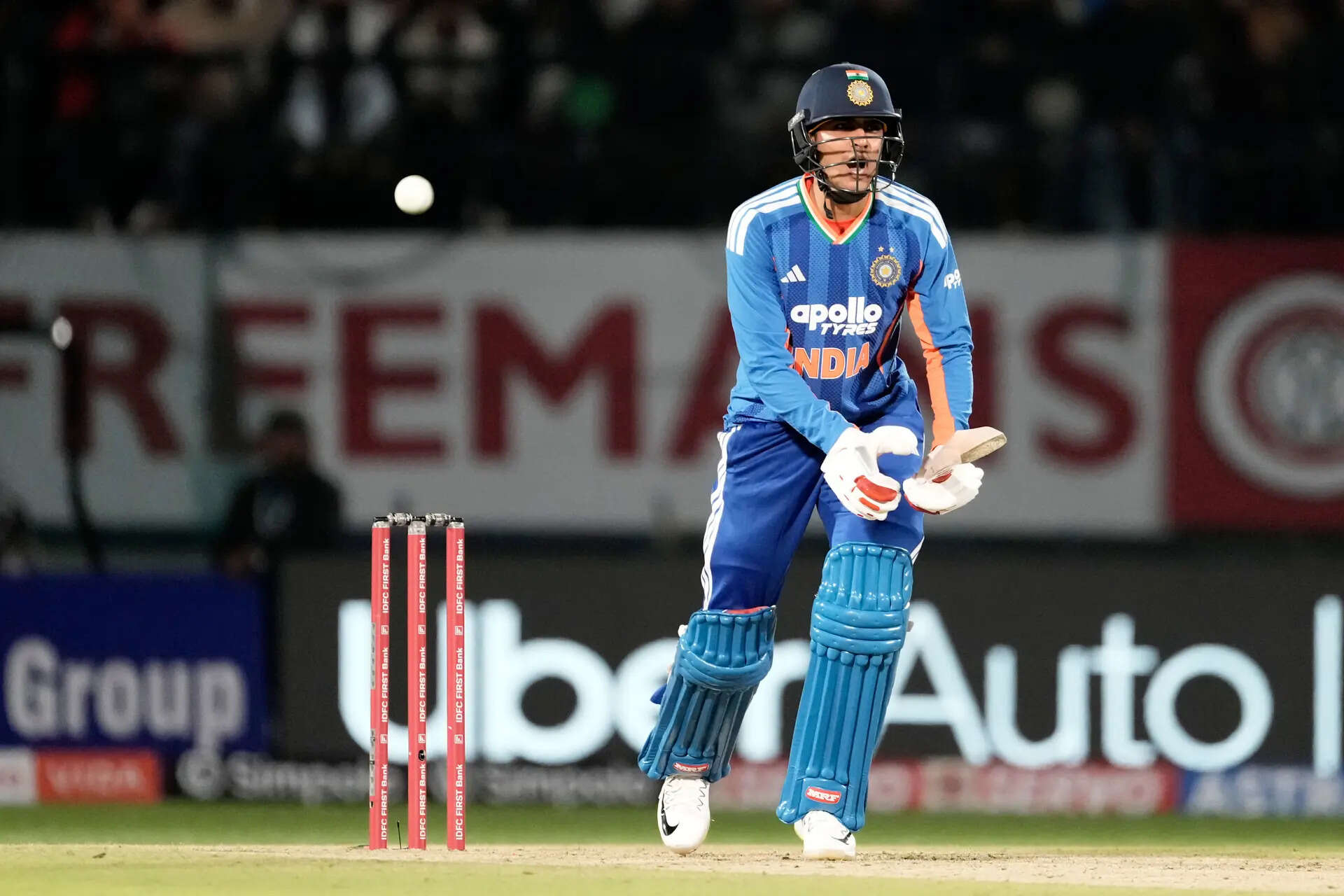
India’s Shubman Gill (AP Photo/Ashwini Bhatia)
He then addressed Gill’s role directly. “You can have someone like Shubman Gill play that sheet anchor role that India desperately need right now, so everyone else can play aggressively around him. India can still use the hyper aggressive batting template that has worked for them, while Gill bats at a 140 to 150 strike rate, which is where he thrives. It is similar to the role Virat Kohli played in the last T20 World Cup.”The concerns, however, extend beyond Gill alone. India’s intent has also dipped due to Suryakumar’s prolonged lean patch. In 2025, the captain has scored just 213 runs from 20 matches at an average of 14.20 and a strike rate of 125.29. With both captain and vice-captain struggling for form, pressure has inevitably shifted on to the middle order.At the same interaction, former India all-rounder Irfan Pathan stressed that the phase of experimentation must now come to an end. “There has been a lot of talk about chopping and changing,” Pathan said. “I think the team management was trying to understand who can play different roles, but this is not the time to experiment. When the World Cup starts, it has to be very clear who is batting at what position.”That experimentation has been evident. In the last two T20I series against Australia and South Africa, India tried multiple options at No. 3, including Sanju Samson, Shivam Dube, Suryakumar Yadav, Tilak Varma and even Axar Patel.Pathan also did not hide his concern over Suryakumar’s form. “As a captain, you need to bat well and be in form going into a big tournament like the World Cup,” he said. “The concern is not just that he is not scoring runs, but that his strike rate is also going down. His strike rate is generally around 166, but over the last year it has come down to around 119.”Referring to Abhishek Sharma’s high risk approach at the top, Pathan said that such a style will inevitably lead to occasional early dismissals and that is acceptable. “He does not need to change,” Pathan said. “That is why he has been successful. But then the pressure comes on the middle order. When you have an in-form Suryakumar Yadav, it becomes a completely different game. Hopefully, he finds a way to stay a bit longer at the crease and get those runs before the World Cup.”What Team India needs right now is certainty of roles. With the World Cup fast approaching, rediscovering tempo, fixing roles and getting their leaders back among the runs may matter far more than any tactical tweak.

