


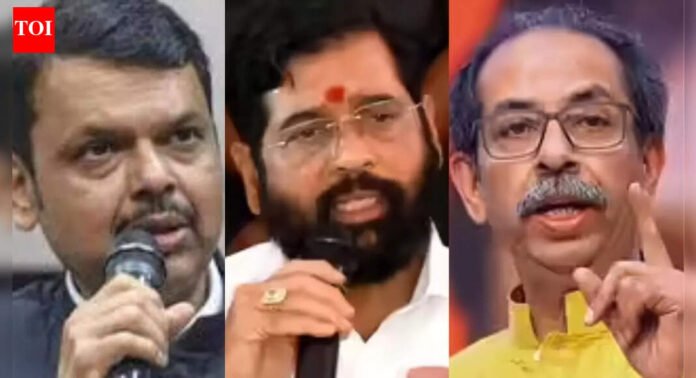
As the battle for Mumbai begins, here’s how various parties are placed and how they could see their chances enhanced or diminished during the poll drive. For the BJP, the party’s strengths lie in Prime Minister Narendra Modi’s continued popularity and Chief Minister Devendra Fadnavis’ reputation. Infrastructure works such as the coastal road and the Metro network may help win voters, while aggressive campaigning for local body polls so far is seen as a plus. However, intra-party competition for control of the city unit, if it happens, may hamper the party’s chances. The BJP sees this as its best opportunity to capture the BMC, riding on a series of successes starting from last year’s Maharashtra Assembly polls, with morale running high. In 2017, it fell just a couple of seats short of the undivided Shiv Sena. Now, with the Sena split into two, it can hope to surge ahead. At the same time, the party faces threats in the form of competition with ally Shiv Sena for the No. 1 slot, underestimating the last-mile strength of the UBT Sena and the MNS, and vulnerability to being seen as a traders’ party. The Shiv Sena led by Eknath Shinde counts among its strengths the support of a majority of former Sena corporators. Shinde’s grassroots-level connect may help win over traditional Sena voters. However, though the Shinde Sena will be inheriting part of the party network in the city built by the Thackerays, it is not clear how much it will be able to leverage it given its relative lack of exposure. The party sees an opportunity to stamp its presence in Mumbai and over the BMC, taking over fully from the Thackerays and becoming the governing party in Mumbai apart from Thane. It can also use Sena’s traditional neighbourhood links to attract voters. Its main threats include the challenge from ally BJP, which would want to be No. 1 in the civic body, and the political opposition posed by the UBT Sena and the MNS, as their vote base is similar. For the Shiv Sena (UBT), strengths include its long-time organisational network in the city and its record of being in power in the BMC for 25 years. The appeal of Uddhav Thackeray and the Thackeray family remains significant, especially if cousins Uddhav and Raj join hands and campaign. However, the party’s weakness lies in the depleted strength of former corporators, with a majority shifting to the Shinde camp since the party split in mid-2022, and morale being quite low after the split and the rout in the Maharashtra Assembly polls. The party sees a win in Mumbai as a chance for revival of the party and the family’s political repute, and an opportunity to show that the Thackerays still call the shots in the city of the party’s birth and reassert control over city politics. The threats include the loss of more activists and voters to the BJP and Shinde Sena, with a loss in Mumbai making questions over its future much bigger. The Congress draws strength from its traditional vote base in Mumbai, which usually gives it at least 30-odd seats in the BMC House, if not more. The party still has strong recall among voters in many parts of the city and a visible and expressive city unit that speaks about city policies and the direction it should take. Its weaknesses include low morale after several defeats at the Centre and in states, especially in last year’s Maharashtra Assembly polls, facing a tough challenger in the BJP, and being organisationally much weaker than it was even in 2017. The party may choose to go it alone so that its vote bank does not shift to other parties in the MVA. If it does reasonably well in the city of its birth, the party could work towards a broader revival. However, Uddhav and Raj Thackeray might try to grab some part of the Congress vote in Mumbai, given the UBT Sena’s gains in the 2024 Lok Sabha polls. For the NCP and NCP (SP), strengths include clarity about party leadership and little to lose, as numbers can only grow if they campaign hard and smart. However, both factions have a negligible presence in the city and have not built a party network over the years. Controversy around Nawab Malik’s alleged gangland links is a concern for the Ajit Pawar-led faction. The parties see an opportunity to make a mark in the state capital with the help of alliance partners who are better placed in the city. Threats include confusion about the direction in which the party is headed and the unwillingness of other alliance partners to share political space they already occupy. Among other parties, the MNS draws strength from Raj Thackeray’s oratory and personality, though the party has been in disarray after several poll setbacks. It has a chance to revive its fortunes, and an alliance with the UBT Sena may help consolidate votes and gain electoral success, though the Shinde Sena may be eyeing the same vote base. The Samajwadi Party has a minority vote base in the city but has not broad-based its presence beyond certain pockets, with the UBT Sena and other MVA partners having taken some minority votes in the Lok Sabha and Assembly polls, a trend that could repeat. The AAP has a chance to present itself as an untested alternative, though its network in the city is poor and largely faceless. The MIM will have to compete with the Congress, NCP, SP and UBT Sena for votes in Muslim-majority areas, but still has a chance to establish itself in the BMC with a few seats.

