


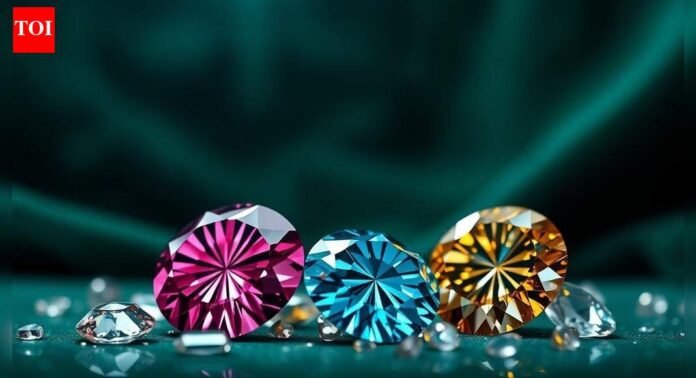
Ultra wealthy Indians are increasingly placing their bets on pink, blue and yellow diamonds, embracing the rare stones as both eye-catching statement jewellery and long-term investment assets. Coloured diamonds,far rarer than conventional white diamonds, have seen demand spiked by 20%-25% over the past year, even as prices continue to climb.According to jewellers and traders, since the pandemic period, India has become one of the fastest-growing markets for coloured diamonds, fuelled by a new generation of globally exposed and asset-conscious ultra high net-worth individuals (HNIs), ET reported. Conventional and coloured diamonds fall in completely different price categories. Unlike traditional white diamonds, which typically cost between Rs 1 lakh and Rs 7 lakh a carat depending on cut and clarity, coloured stones command a significant premium. Pink diamonds can range from Rs 15 lakh to as much as Rs 5 crore a carat, while blue diamonds are priced between Rs 25 lakh and Rs 5 crore, according to ET. Meanwhile, yellow diamonds, considered more accessible entry points into the segment, are priced comparatively lower, between Rs 5 lakh and Rs 15 lakh a carat.
Why are coloured diamonds shining more?
Beyond their visual appeal, price appreciation is playing a major role in driving demand. With no new mines coming online, coloured diamonds are increasingly being viewed as alternative investments amid rising scarcity.In rupee terms, prices of pink diamonds have increased tenfold over the past two decades, while blue diamonds have risen six to seven times. Yellow diamonds, meanwhile, have roughly doubled in value over the same period.Darshit Hirani, cofounder of P Hirani Exports, told ET, that “demand is also driven by the fact that celebrities and businessmen across the globe are embracing coloured diamonds for weddings and other special occasions. Wealthy Indians want to be part of this global trend.” He further noted that interest is no longer limited to major metros. “An interesting trend we are seeing is that HNIs from tier II cities are showing interest in coloured diamonds and are buying yellow diamonds as their first purchase,” Hirani said.Hirani, who has worked exclusively with coloured diamonds for over 40 years, said buying patterns vary by age group. Larger stones of one to two carats are typically being purchased by HNIs aged 45 and above, while smaller and mid-sized stones are attracting younger buyers from affluent families or those in higher salary brackets.The post-pandemic shift in consumer behaviour has also been noted by retailers. Ishu Datwani, founder of Mumbai-based Anmol Jewellers, said spending on rare stones has risen sharply since Covid. “Indians have become globetrotters…(exposed to) fine jewellery brands such as Chopard and Cartier. They now want us to create pieces that resonate with their evolved tastes,” he said. Datwani added that there has been a strong increase in demand for fancy yellow diamonds sourced in rough form from Australia, Russia and South Africa, before being cut and polished in Surat.Globally, coloured diamonds are also emerging as standout performers at auctions, particularly in Asia, where their rarity and investment appeal have made them highly sought after. A July report by the Natural Diamond Council (NDC) estimated that the wholesale value of fancy colour diamonds entering the market in 2024 exceeded $4.5 billion, citing data from the Israel-based Fancy Colour Research Foundation (FCRF).Industry executives estimate that coloured diamonds account for less than 1% of global diamond production, with only a handful of mines producing them in limited quantities. The closure of Rio Tinto’s Argyle mine in 2020, once responsible for more than 90% of the world’s pink and red diamonds, has further tightened supply. With no consistent alternative source emerging since, dealers say scarcity has intensified, forcing buyers to compete aggressively for the remaining inventory, often at any cost.

