


Something in the Atlantic is shifting, though it is not easy to see from the surface. There are no dramatic waves or sudden storms to mark it out. Instead, the change is slow and buried deep in the ocean, tracked quietly by scientists who watch how water moves rather than how it looks. Over time, those movements shape winters, coastlines, and the way entire regions feel from year to year. New research suggests one of these systems may be losing its balance. If that trend continues, Europe could face colder and less predictable conditions than it has known for generations. This is not a sudden disaster story. It is about gradual change, hidden signals, and a climate system that may be edging closer to a point where recovery becomes harder.
What is the North Atlantic Subpolar Gyre
The North Atlantic Subpolar Gyre is a large circular system of ocean currents that sits between Greenland, Iceland, and Canada. It plays a quiet role, pulling warmer water northwards and helping regulate temperatures across Europe and parts of North America.Without this steady movement, heat would stay closer to the equator. Northern regions would cool more sharply, especially during winter. Cities that now experience mild cold could begin to feel harsher seasonal extremes.Why scientists say the system is weakeningA study published in Science Advances points to a long term decline in the stability of the gyre. The research suggests this is not a short fluctuation but part of a deeper shift that has been unfolding for more than a century.The concern is not just slowing movement but loss of resilience. Once a system becomes unstable, it is more vulnerable to tipping into a different state.
How tiny shells revealed a big warning
The evidence did not come from satellites or modern instruments. Instead, scientists studied the shells of long lived marine molluscs buried beneath the seabed. Species like the ocean quahog grow slowly, forming annual layers that record chemical changes in the surrounding water.By analysing these layers, researchers reconstructed past ocean conditions going back hundreds of years. They identified two clear periods of instability. One occurred before the 1920s. The other began in the mid twentieth century and continues today.
Is this similar to the Little Ice Age
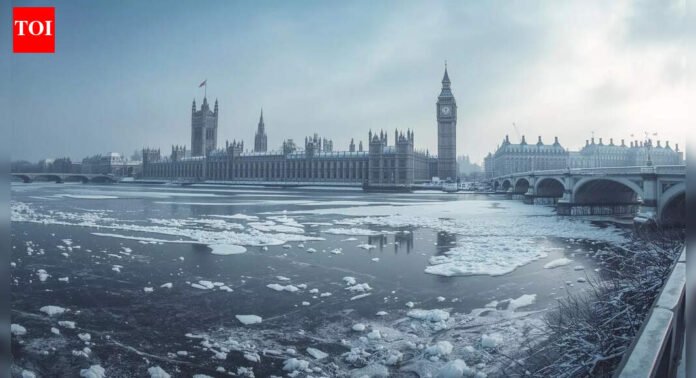
Europe has experienced major cooling before. During the early 1300s, average temperatures dropped slightly, yet the effects were severe. Rivers froze, harvests failed, and winters became longer and harsher.The current situation would not repeat that period exactly. The modern climate is warmer overall. Still, even small shifts in ocean circulation can amplify cold spells and disrupt rainfall patterns across large areas.
How this links to the larger AMOC system
Basically, the gyre is just a small part of a much larger process known as the Atlantic Meridional Overturning Circulation. Similar to a conveyor belt, the system carries warm water at the surface to the north and sends back cold water from the depths to the south.In fact, water that is melting the ice of Greenland is becoming new freshwater for the North Atlantic. This is changing the salt concentration of the ocean and making the surface water lighter, which disrupts the process of sinking that is what actually keeps the circulation going.
What could happen if the slowdown continues
If the circulation were weaker, winters in Europe would probably be colder, there would be stronger seasonal changes and the sea level would rise in some areas of the US coast. The weather might become more unpredictable; thus, farming, infrastructure, and water systems would be affected.A long term weakening of the circulation could have a significant impact on the climate in which people have been living even if the collapse did not occur completely.
Is there still time to avoid the worst outcomes
Researchers stress that the system has not fully tipped. But warning signs are accumulating. Reducing greenhouse gas emissions remains the most effective way to lower the risk of pushing the Atlantic into an irreversible state.The changes may be slow, but their consequences would not be subtle. Climate systems remember what happens to them. And once altered, they rarely return to what they were.

