


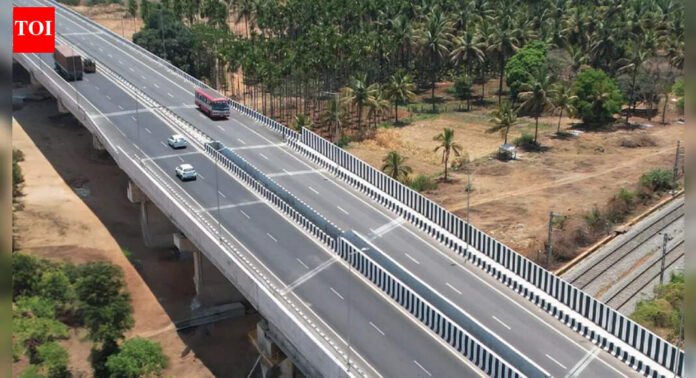

By Sushi Shyamal VemuIndia’s infrastructure sector is experiencing a significant transformation, as major developers and Infrastructure Funds shift their focus from isolated project implementation to developing large-scale infrastructure platforms. This change is driven by increased government spending, a more robust regulatory environment, policies oriented toward growth, and reliable financing mechanisms. Following the union budget in 2021, which marked a pivotal move toward capital expenditure, the government has steadily increased its allocations for infrastructure with the aim of stimulating economic demand and delivering major projects. The FY26 union budget earmarked ₹11.21 lakh crore for infrastructure—a 10% year-over-year rise, accounting for 3.1% of GDP estimates. In the roads and highways segment, the government continues to prioritize the expansion and enhancement of the national highways network. For FY26, the Ministry of Roads Transport & Highways (MoRTH) received a budget of ₹2.7 lakh crore, targeting 6,376 km of new bids, major expansions, and brownfield expressway projects. Over the past five years, NHAI has constructed between 4,200 and 6,500 km of national highways annually.Until 2020, India had only a handful of expressways—such as Mumbai–Pune, Delhi–Agra (Yamuna), and Bangalore–Mysore corridor connecting key cities. MoRTH is now building 27 expressways and access-controlled corridors, totaling 9,860 km at a cost of ₹4.2 lakh crore. State governments are also at the forefront, working on landmark expressway projects like Maharashtra’s Mumbai–Nagpur Expressway and Ganga, Purvanchal, Bundelkhand expressways in Uttar Pradesh, connecting Bangalore city to Chennai, Pune and Nagpur in the south thereby enhancing both intra- and inter-state connectivity. These ambitious plans will deliver modern economic corridors, improve logistics efficiency, connect pilgrimage sites, and depend heavily on hybrid financing to attract private investment and foreign capital.Through the Multi-Modal Logistics Parks (MMLP) program, MoRTH is establishing 35 infra logistics parks—each over 100 acres—with multimodal transport access, modular warehouses, and container terminals near ports to optimize freight movement and reduce shipping costs and times. Additionally, the Port Connectivity Project seeks to upgrade last-mile connectivity to all active and under-construction ports, with 108 projects identified and 36 already completed. In line with the Viksit Bharat 2047 infrastructure vision, the Public Private Partnership (PPP) model has evolved considerably. The government is proactively engaging private investors, refining concession agreements, and promoting stable, consultative policy approaches across sub-sectors such as roadways, renewables, and ports & infra-logistics. These efforts have enhanced investor confidence and reinforced policy continuity. Innovative funding models also play a critical role. Infrastructure Investment Trusts (InvITs), regulated by SEBI, have matured from niche products for institutional investors to mainstream vehicles providing transparent, efficient, and long-term yield-oriented returns for both domestic and institutional capital providers. The potential reclassification of InvIT units to equity status promises to stimulate even greater participation from long-term capital sources. While early InvITs focused primarily on roads and power transmission assets, the next phase includes diversification into sectors like renewable energy, digital infrastructure, ports, airports, warehousing, and infra-logistics. InvITs are managing assets exceeding ₹7 lakh crore, with several new listings planned for 2026, aiming to bridge India’s infrastructure funding gap and recycle primary capital for institutional investors. The approach to financing highways is undergoing a major overhaul, with MoRTH raising ₹1.06 lakh crore so far through TOTs (Toll-Operate-Transfer) and InvIT. While NHAI’s current InvIT is privately listed (NHIT), a new public InvIT is being set up to facilitate retail participation alongside institutional investors such as Infrastructure funds, mutual funds, sovereign wealth funds, and pension funds. Private entities and developers are seizing opportunities in sectors like roads, renewables, and infra-logistics, benchmarking infrastructure quality against global standards for connectivity, safety, and operational excellence. There is a growing shift toward greener, low-carbon construction, with organizations investing in AI technologies to increase productivity, harness modular construction, manage resources efficiently, and ensure safer, more reliable journeys and services by analysing large datasets and optimizing project lifecycles.(Sushi Shyamal Vemu os Partner, Infrastructure Practice and Investment Banking Advisory at EY India. Views expressed are personal)

