


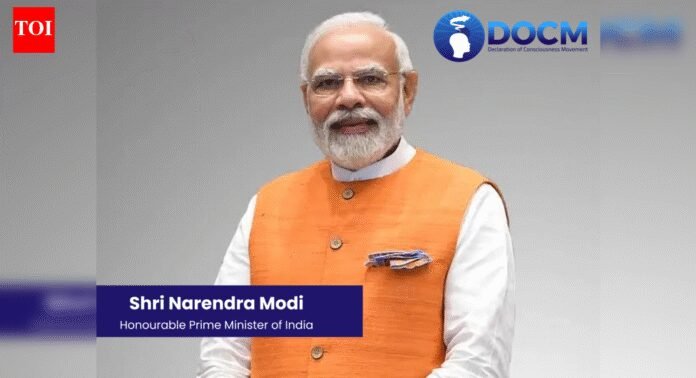
- Humanitarian Solidarity Across 150+ Countries
- Operation Sindoor & Peaceful Diplomacy
- Environmental Stewardship & Climate Leadership
- Economic Development & Poverty Alleviation
- Women’s Empowerment & Naari Shakthi
- Digital Public Infrastructure & Governance Transformation
- Cultural Diplomacy, Yoga & Soft Power
- Innovation & Entrepreneurship
- Democratic Mandate & People’s Trust
Together, these principles are the foundation and guiding seeds of wisdom upon which DoCM functions and moves towards conscious progress in unity.
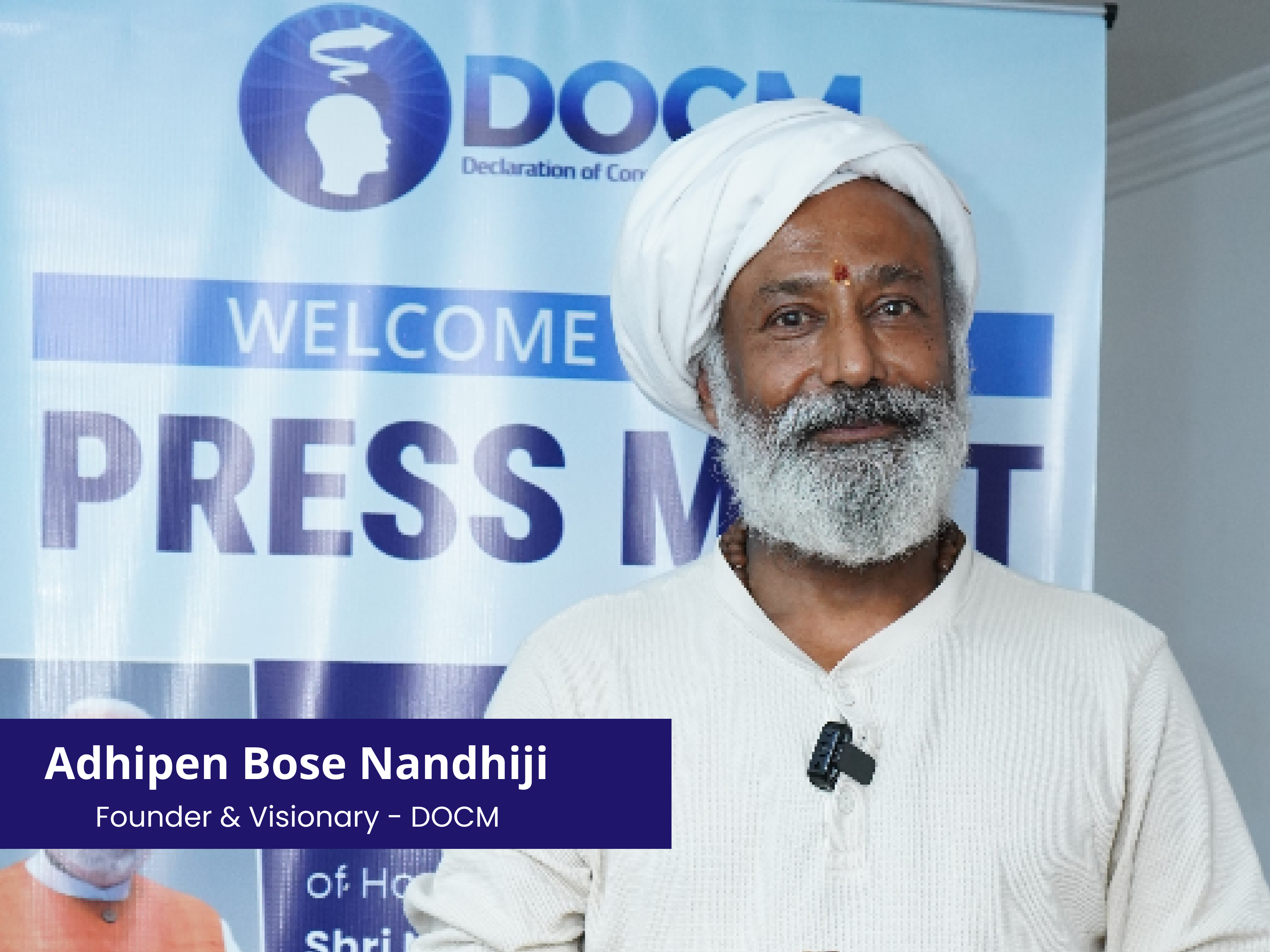
The proposal was unveiled at a press conference in Chennai, where DoCM leaders outlined their rationale for the nomination and their broader vision for peace-led global governance. While Nobel Peace Prize nominations are submitted confidentially by qualified individuals and institutions and are not publicly confirmed by the Norwegian Nobel Committee, DoCM said its proposal is intended to spark dialogue on alternative leadership models at a time of rising geopolitical tensions and social polarisation.DoCM was founded by Adhipen Bose Nandhiji, a proponent of values-based leadership and societal transformation. The organisation describes itself as a global nonprofit working across governance, education and civic life, blending traditional contemplative practices with contemporary behavioural and social research. According to DoCM, its work focuses on translating inner awareness and ethical intent into measurable social and institutional outcomes.
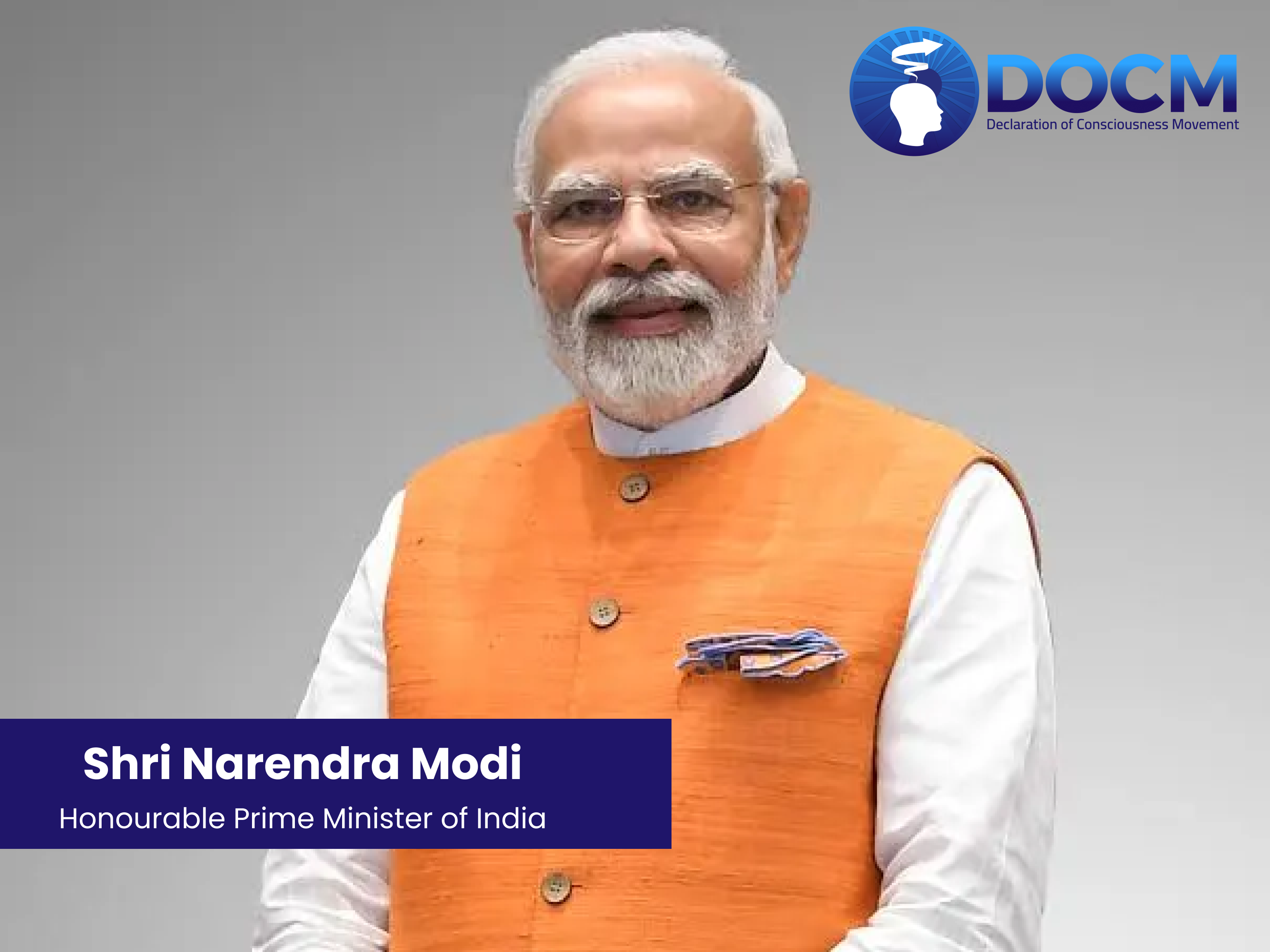
Explaining the basis for its proposal, the organisation said Prime Minister Modi’s leadership aligns with several principles it advocates, including peace-oriented diplomacy, environmental responsibility, digital empowerment and inclusive growth. DoCM argues that these elements reflect a governance style rooted in compassion, ethical action and collective upliftment — values it believes are increasingly essential in addressing global challenges such as climate change, inequality and conflict.A key element of DoCM’s initiative is its proposal for the establishment of a World Consciousness Day, envisioned as a global observance inspired by India’s philosophical and spiritual traditions. The organisation noted that the idea builds on existing international observances such as World Yoga Day, which has gained widespread global recognition, as well as the growing international awareness of Maha Shivratri. According to DoCM, such observances symbolise introspection, clarity and compassionate engagement, which it considers foundational to sustainable peace.Central to DoCM’s framework are nine guiding principles that it describes as the foundation of an ethical global society. These include nonviolence, equality, freedom, women’s rights, children’s rights, respect for elders, ethical and conscious institutions, environmental responsibility and unity beyond cultural or ideological divisions. The organisation says these principles are designed to transcend religious, political and national boundaries, offering a shared moral compass for societies navigating rapid technological and social change.To operationalise these ideals, DoCM works through four international programmes focused on peace dialogue and diplomacy, education and cultural transformation, consciousness research, and planetary awareness. The organisation has stated its intention to encourage national adoption of its Declaration in India, with the longer-term goal of seeking consideration of the framework as a resolution at the United Nations.
DoCM leaders emphasised that their proposal should be viewed within a broader context of evolving global leadership paradigms. In a world marked by climate uncertainty, social fragmentation and escalating geopolitical risks, the organisation argues that conventional approaches to governance may no longer be sufficient. Instead, it calls for leadership that integrates awareness, cooperation and ethical responsibility into decision-making processes at both national and international levels.While the Nobel Peace Prize process itself remains confidential and independent, the proposal has added to ongoing discussions about India’s growing role in shaping global narratives around peace, sustainability and inclusive development. For DoCM, the initiative represents not just a nomination, but an attempt to foreground consciousness-led governance as a viable framework for addressing the complex challenges of the 21st century. As the organisation’s guiding philosophy suggests, lasting peace, it argues, begins with an elevation of collective awareness.Learn More of the nine citations of Honorable Prime Minister Shri Narendra Modiji for the Nobel Peace Prize.https://signdc.org/Disclaimer: Content Produced by Declaration of Consciousness Movement

