


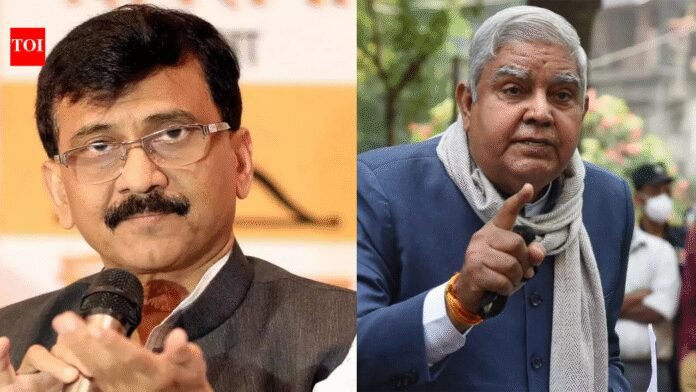
MUMBAI: In his book ‘Unlikely Paradise’, written during his time in prison, Shiv Sena (UBT) leader Sanjay Raut has alleged that former vice-president Jagdeep Dhankhar resigned in 2025 under pressure from ED in response to his “independent political moves against the Modi govt”. The Marathi book came out in 2025 and its English version, which includes more incidents, is set to be released Monday.Rumours had circulated that Dhankhar and his wife had sold their Jaipur house and transferred part of the proceeds overseas, the book says. ED allegedly prepared a file to press charges against him along with other investigative agencies, the book claims.
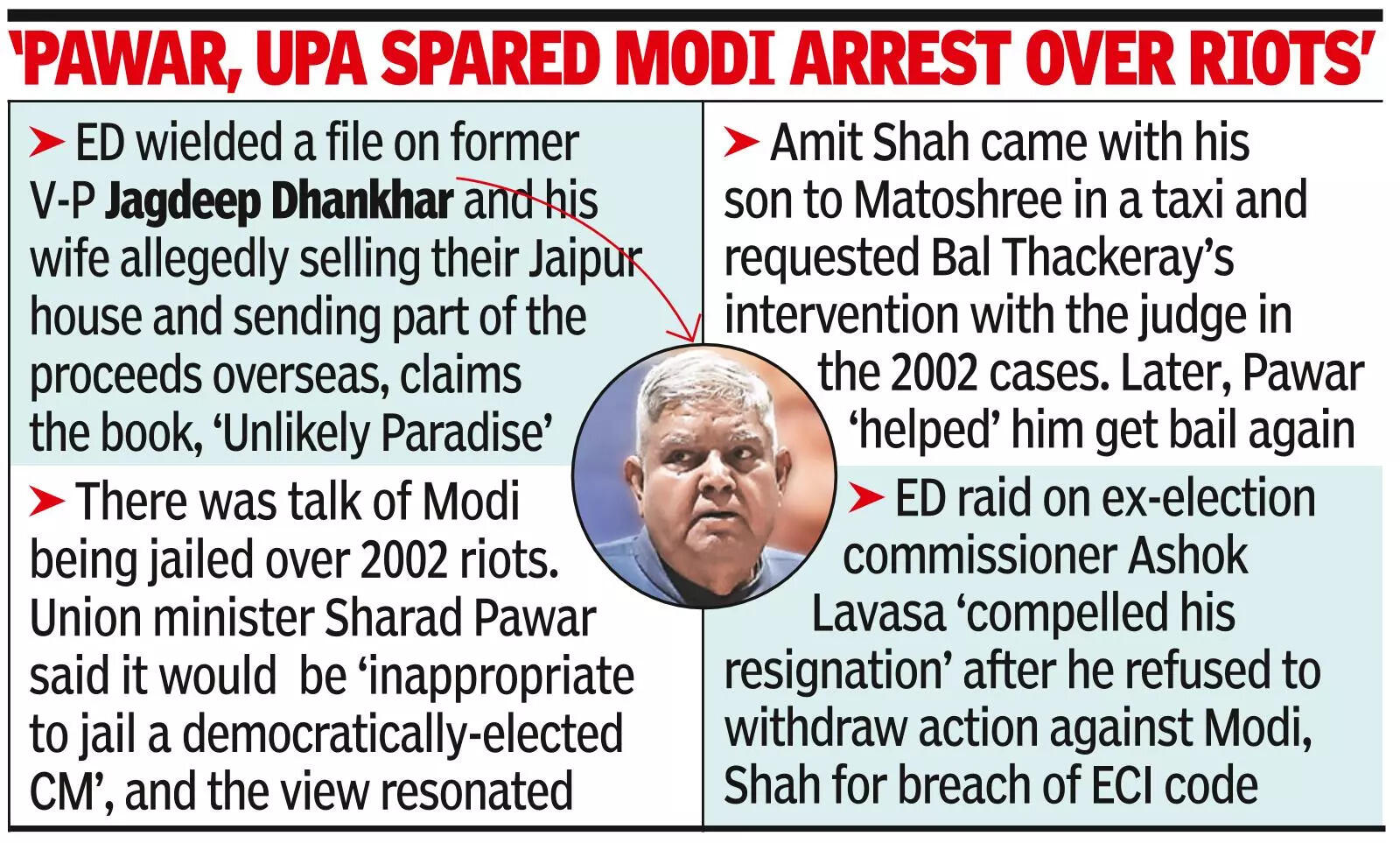
“When whispers emerged of Dhankhar’s independent political moves against the Modi govt, ED reportedly presented him with the file, pressuring him to resign,” the book claims. “His refusal to comply initially led to intensified scrutiny, leaving him visibly uneasy.”Raut also alleges that former Election Commissioner Ashok Lavasa’s house was raided and his family faced ED summons because he took a dissenting position against PM Modi and home minister Amit Shah’s alleged electoral violations.“Based on complaints citing eight breaches of the Election Code of India, (former Election Commissioner Ashok) Lavasa initiated action to restore public trust in the ECI. Despite advice to remain silent, he refused to yield to pressure. Predictably, Lavasa and his family faced severe repercussions for his dissent,” Shiv Sena (UBT) leader Sanjay Raut has alleged in his book. It says the ED raid on his residence “compelled his resignation” in 2020, and he remained under the agency’s scrutiny even after that. The book also claims that during the UPA govt’s tenure, there were rumours that Modi, then Gujarat chief minister, may be jailed in connection with the post-Godhra riots in Gujarat. However, NCP SP chief, Sharad Pawar, then a Union minister, was among those who were not comfortable with this. “In a cabinet meeting, Pawar had opined, ‘It’s inappropriate to jail a democratically elected chief minister, regardless of political differences’,” the book claims. “This view resonated with many, sparing Modi from incarceration. Does Modi remember these favours and morality in politics?” it asks. The book also claims both Pawar and Shiv Sena founder Bal Thackeray helped Amit Shah secure bail when he faced charges on several cases, with the CBI opposing bail. “A Maharashtra cadre officer in the CBI unit was particularly adamant against granting Shah bail. Modi sought Pawar’s intervention and as was his nature, Pawar helped him and Shah was released on bail. We all know how Shah later treated Pawar and Maharashtra,” the book claims. The book also claimed that Amit Shah faced “grave danger” after the Gujarat riots and Modi could not protect him since the CBI controlled investigations into the riots. Shah arrived at Thackeray’s residence in a black-and-yellow cab with his son and requested his intervention with the judge in his case, the book alleges. “If you speak to the judge, he will listen and not defy your wishes,” the book claims Shah told Thackeray. “It would be unethical to disclose what followed. Balasaheb summoned Manohar Joshi, provided the judge’s name and instructed him to discuss the matter, concluding, ‘You may hold any position but remember that you too are a Hindu’,” the book claims. “That single call altered Amit Shah’s political trajectory. Yet the world witnessed his ungrateful treatment of the Shiv Sena and the Thackeray family,” the book claims.

