


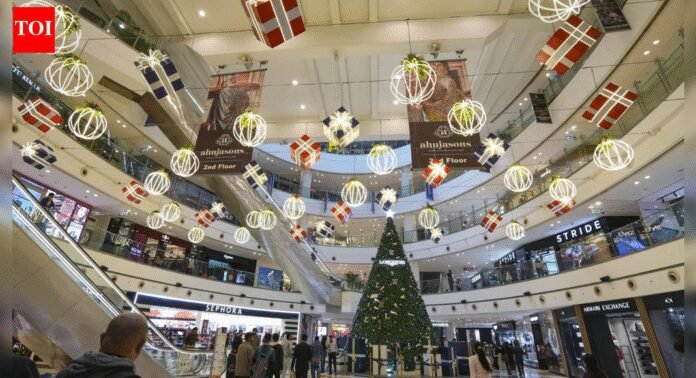
India is emerging as a rare bright spot in retail at a time when shopping malls across Western economies are facing sustained closures, according to real estate consultancy firm Anarock.Since 2020, the US has recorded a net shutdown of nearly 1,200 mall stores, with rising vacancy levels pushing almost 40 per cent of empty malls toward rezoning or alternative use. India, however, is seeing renewed momentum in its retail segment, backed by strong consumption trends and growing interest from institutional investors, real estate consultancy firm Anarock said, as quoted by ANI.This confidence is translating into capital inflows. Indian shopping malls are projected to attract more than $3.5 billion in investments over the next three years, according to Anuj Kejriwal, CEO, Retail Leasing and Industrial and Logistics, Anarock Group. “88+ foreign brands have entered the Indian retail market and are seeking to expand aggressively. Several more global brands are in the pipeline, seeking space in the severely restricted Grade-A assets currently available,” Kejriwal said.At the core of India’s retail appeal is a combination of a young consumer base and limited organised retail competition. Hoeeber, Anarock pointed out that India’s organised retail supply remains significantly constrained, with per-capita retail stock among the lowest globally compared with markets such as the US and China.“This gap, combined with India’s per-capita income nearly doubling in the last decade, has created a demand-supply mismatch virtually unheard of in global retail,” Kejriwal added.Operational performance reflects this imbalance. Premium malls are operating at near-maximum capacity, with occupancy levels ranging between 95 and 100 per cent, while rental growth continues to outpace pre-pandemic benchmarks.“Grade-A malls are running near-full occupancy, reporting 95-100 per cent occupancy with long waitlists for key zones. Rental growth has consistently surpassed pre-pandemic levels, and developers now find leasing cycles outpacing construction cycles — a rarity anywhere in the world,” also said the CEO.Additionally, Indian malls have evolved into multi-purpose destinations rather than pure shopping centres. With daily visitor counts surpassing 20,000 on weekdays and surpassing 40,000 on weekends, entertainment, dining, and social interaction serve as the main drivers of foot traffic. Thirty to thirty-five percent of all foot traffic comes from entertainment and food and drink.Anarock also emphasized how resilient Indian retail has been in the face of the global e-commerce boom. Online retail penetration in India stands at around 8 per cent, well below the 20 per cent-plus levels seen in the US and China, allowing physical retail to coexist and even benefit from digital channels.Looking ahead, according to the consultancy, India is expected to grow into a $6 trillion consumption economy by 2030, solidifying its standing as a major growth market for international retailers and investors looking for long-term prospects.

