


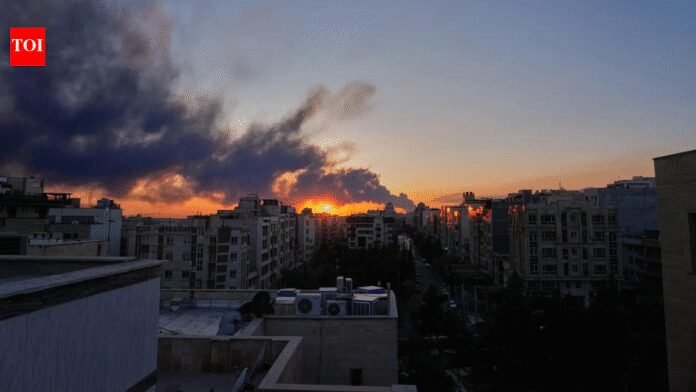
Residents in Tehran have described one of the most intense nights of bombing since the start of the war between Iran, the United States and Israel, recalling how explosions shook buildings and lit up the night sky as waves of strikes hit the capital.The conflict, which began with US–Israeli attacks on Iranian targets on February 28, has entered its second week with both sides escalating military operations across the region. In Tehran, civilians said the bombardment overnight into Tuesday was among the heaviest they had experienced since the fighting began.Israel-US-Iran war – follow live updatesSima, a 38-year-old resident of western Tehran, described the moment the strikes began. Speaking anonymously to Al Jazeera, she said the noise of aircraft and explosions lasted for long stretches.“It felt like tens of fighter jets were flying right above our heads for 15 minutes straight at first, then a few minutes of pause before the next rounds of strikes came in,” she said.“The ground and the windows and our hearts were shaking, but we took shelter in our bathroom and got through it.”According to reports, multiple Iranian cities were hit during the same wave of attacks, including Isfahan and Karaj. US Defence Secretary Pete Hegseth had earlier warned that Tuesday would be “our most intense day of strikes inside Iran”.Several residents said the bombardment briefly turned night into day. Bright flashes from the aerial attacks illuminated large parts of the city, prompting some people to rush to rooftops or balconies to record the strikes despite the danger.Others focused on finding somewhere safe in a city that lacks formal air raid shelters.Alireza, a 25-year-old living in central Tehran, said he kept the front door of his apartment unlocked throughout the night in case he needed to run quickly to the building’s underground parking area.“I’m going crazy with how many times I’ve had to communicate with friends and family in Tehran and other cities through endless phone calls and text messages to see where and what was hit,” he said.“There’s hardly any information in this internet shutdown.”Tehran residents say the absence of early warning systems has made the situation more frightening. Iran’s capital, like much of the country, does not have extensive civilian shelters or siren systems comparable to those in Israel. Many residents instead rely on basements, parking garages or interior rooms of their homes.The strikes in Tehran came as the war expanded across the wider Middle East. Iranian forces launched what state broadcaster IRIB described as the “most intense and heaviest” missile barrage of the conflict, targeting Israeli cities including Tel Aviv and Haifa.Iranian missiles and drones were also reported heading towards American and allied facilities across the Gulf. Air defences were activated in several countries, including Saudi Arabia and the United Arab Emirates, which said it intercepted multiple incoming threats.Meanwhile, the US military reported destroying 16 Iranian mine-laying boats near the Strait of Hormuz after warnings that Tehran could attempt to block the critical oil shipping route.

