


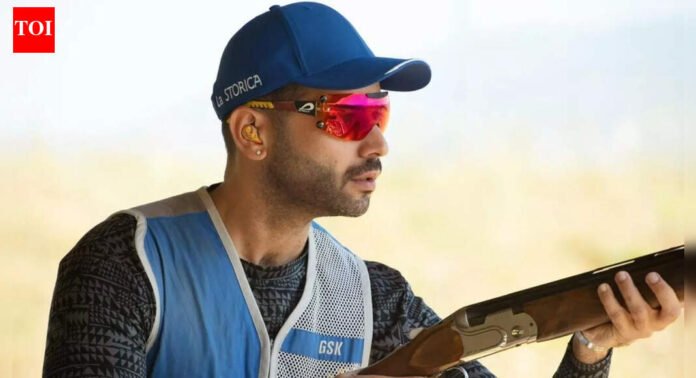
NEW DELHI: “Gurjoat ka matlab hai Guru ki Jyot, the light of God,” said Gurjoat Siingh Khangura, his voice still carrying the absolute warmth and undeniable pride of a newly crowned national champion.As he finished explaining his name’s literal meaning, a short pause and a quiet laugh followed. After all, the light, for him, has just begun to glow brighter.
Less than a fortnight ago, the 31-year-old shooter stood atop the podium at the 68th National Shooting Shotgun Championship at New Delhi’s Dr Karni Singh Shooting Range. Hanging around his neck was a gold medal in the men’s skeet event.It was his first National title, a long-awaited one after years of competing against some of the country’s finest shotgun shooters.Yet, if one expected celebrations or time off, Gurjoat is quick to dismiss the idea. Call him on Christmas afternoon, and the reply is blunt: “It’s not Christmas. There is no Christmas for me. I was literally out of the shooting range when you called me.”For Gurjoat, the range remains home, even during the festive season.Why the Nationals mattered so muchIn Indian shooting, Nationals are more than just another competition. “Nationals are very important for me because this is the first competition. Basically, it happens at the end of the year, and the national score is counted as the base score for the next year,” he told TimesofIndia.com from Patiala during an exclusive conversation.“For the team to be selected, whoever will represent India internationally in World Cups, Asian Games and everything, Nationals are the most important competition of the year.”
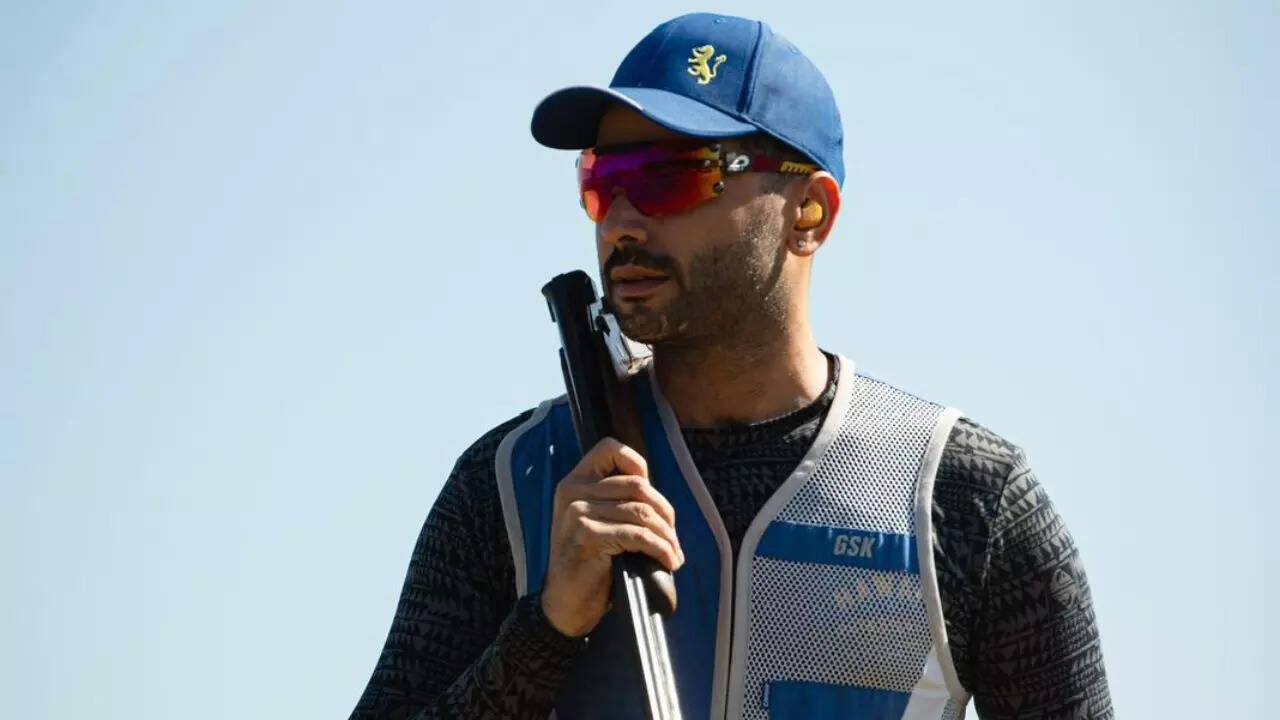
Gurjoat Siingh Khangura (Special arrangements)
As it goes in the shooting circuit, winning gold here does not just bring recognition. It sets the tone for selection trials, international opportunities and confidence heading into the new cycle.That context makes Gurjoat’s triumph even more significant. The field included Olympians, world record holders and seasoned international shooters.“Most of the players I played with are nine-time national champions, two-time Olympians, World Cup medallists,” he added. “So defeating them and winning the Nationals is basically like winning any tournament against international players.”A year of resurrectionIronically, the national title came at the end of a year that tested Gurjoat in every possible way. The 2025 season followed the Olympic cycle, and for Gurjoat, it was a year of experimentation. “It was a non-Olympic year, so it was the best time to try and test everything,” he explained.Early in the year, he represented India at World Cups in Argentina and Peru, where results did not go according to plan.“I had trained very well, but things didn’t work out. I fell very sick and had a back injury in Peru. I could barely get up, but I still shot the World Cup,” he recalled. Instead of frustration, he decided to reflect. “I sat and analysed everything that needed to change. It was actually a very positive year for me.”“I made a lot of technical changes this year. I bought a brand new gun, changed my stock setting and personalisation. I shot the Nationals with a brand new gun and stock, which was not even a month old.”The gold at Nationals, he feels, confirmed that those changes were worth the risk.“It ended on a very positive note. Whatever changes I needed to do, I worked on them, and now I know exactly how I will go about next year,” he stated.Age is just a numberAt 31, Gurjoat is often asked about age and pressure. He is quick to dismiss those concerns.“The pressure comes only in normal life. It doesn’t come in shooting,” he said with a smile. “If you keep yourself physically and mentally fit, you actually become more mature with time.”He points to veterans like Zoravar Singh Sandhu, who represented India at the Olympics last year at the age of 47, as examples of longevity in shotgun shooting.“Age doesn’t matter for shotgunners. That’s not true for shooting in general, actually,” he elaborated.‘My journey has just begun’Despite achieving what many chase for years, Gurjoat refuses to see the national title as a destination.“If I were to summarise my journey, I would say it has just begun. This gold was a big push and motivation for me,” he added. “For me, my journey has literally just begun. I have a lot more to go.“Next year, my aim is to get the quota, go for the Asian Games and try to win medals at the World Cups I attend.”Indian skeet on the riseIndian skeet shooting has historically lagged behind rifle and pistol events, but Gurjoat believes the tide is turning.“We didn’t have a strong base earlier. There were not enough international medals to motivate people,” he explained.“But that historical approach is changing. Last year, there were three Olympic representations and all were from skeet. That is a very big change.”According to him, confidence within the Indian contingent is steadily growing.ALSO READ: World champion at 7 in her first international event; ‘nervous’ while meeting PM Modi: How Pragnika Lakshmi became a chess prodigyBreaking the cost mythSkeet shooting is often labelled an expensive sport, but Gurjoat, who picked up the gun at the tender age of nine in the presence of his father, Col Manvinder Singh, wants aspiring shooters to know that entry barriers are not as high as perceived.“In many places, especially in Delhi, guns are provided on rent by clubs, private ranges and district associations,” he explained. “Rent is very nominal, from Rs 500 to 1,000. Anyone who wants to start can do so by affiliating with a local club.”
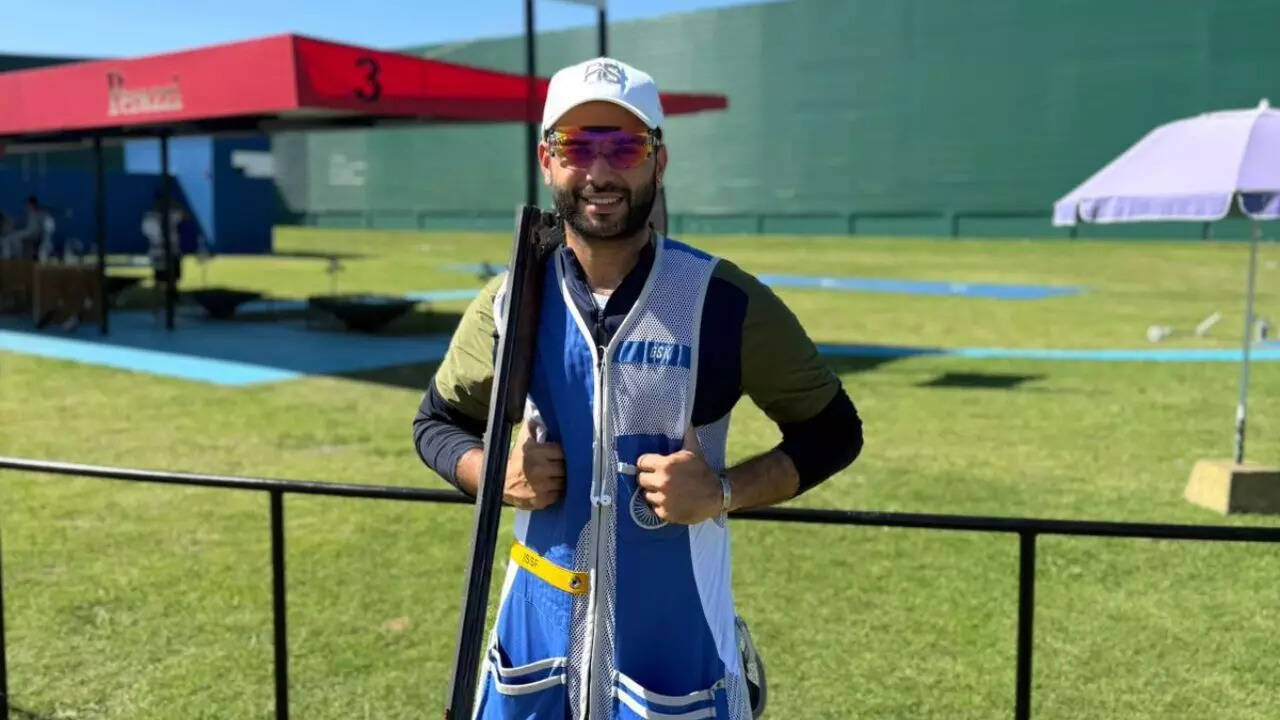
Gurjoat Siingh Khangura (Special arrangements)
He credits government initiatives like Khelo India and the National Centres of Excellence for supporting athletes who perform consistently.“The government is doing a fantastic job once you reach a certain level,” he further stated.Life behind the medalThe discipline behind Gurjoat’s success is relentless. His day starts early, followed by stretching and dry training before heading to the range.“I shoot around 250 to 300 cartridges daily on average. Sometimes it goes up to 500 or 600, but I don’t shoot less than 200,” he added.Training is split into two sessions, adding up to five to six hours on range days, four to five times a week.Gym sessions, physiotherapy and early nights complete the routine.As the conversation wound down, the subject of Christmas returned. Gurjoat chuckled. “There is no Christmas for me.”For the newly crowned national champion, the celebration lies in hitting the target at the range. And if his words are anything to go by, this is only the beginning.

