Breaking News
Gold & silver price prediction: Where are gold & silver headed in 2026? Here’s the outlook


Gold & silver price prediction: Where are gold & silver headed in 2026? Here’s the outlook

2025 has been an extraordinary year for precious metals, marked by gold gaining nearly 71% and silver surging an impressive 150%. (AI image)

By Praveen Singh2025 has been an extraordinary year for precious metals, marked by gold gaining nearly 71% and silver surging an impressive 150%. As 2025 draws to a close, it’s an ideal moment to reflect on what 2026 may hold. With strong fundamentals and deep‑rooted structural forces supporting a long‑term bullish outlook for hard assets, particularly precious metals, it is reasonable to expect that 2026 could deliver another year of substantial gains. Indeed, it wouldn’t be far‑fetched to anticipate gold and silver maintaining their strength well into the remainder of the decade. Looking for a historical parallel to today’s surge in precious metals, the current rally closely echoes the boom of the 1970s a period defined by intense geopolitical tensions, runaway inflation, and the emergence of a new monetary and financial order following the collapse of the Bretton Woods system in 1971. It is worth highlighting that despite stellar performance of the metals, both gold and silver continue to remain under owned as gold ETF share of total global ETF AUM is 2.8%, while silver ETF share is merely 0.25%; the very fact itself may serve as a positive catalyst going forward. Drivers of 2025 rally:

  • Spot gold, currently at $4487, up around 71% YTD, is making 2025 its second-best year after 1979 (126%).
  • The ongoing exponential rally in gold this year has been powered by a confluence of strong fundamental factors including political concerns, geopolitical tensions, concerns about the US Dollar as a global reserve currency, inflation hedging, trade wars and mounting macroeconomic worries as surging debt and reckless fiscal spending by the governments in key economies are leading to a fiscal dominant policy, which is nothing but fast-paced fiat currency debasement.
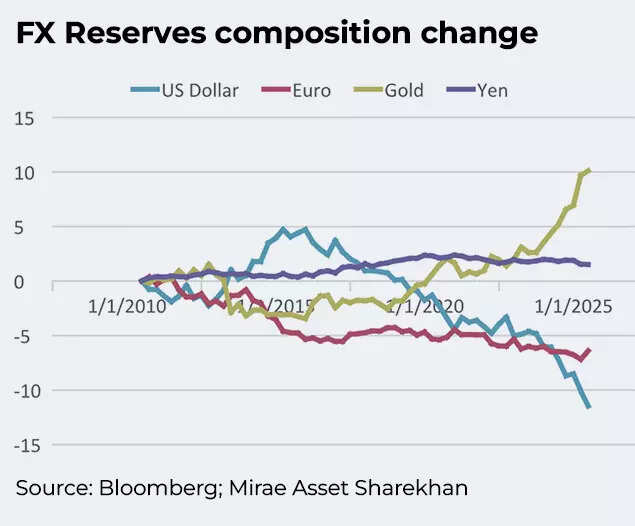
  • Mounting risks to the US Dollar and US treasuries have broken the traditional relationship of gold with key drivers like US Dollar and yields. These seismic changes in the global macroeconomic and geopolitical landscapes have led to unprecedented gold buying by central banks in recent years as they diversify their forex reserves.
.

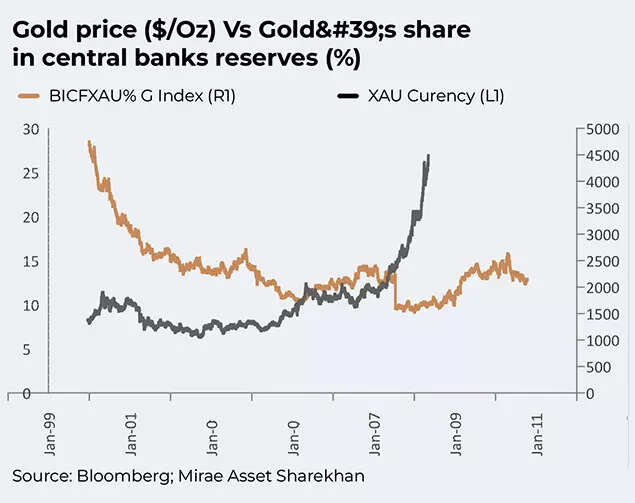
  • The official sector, i.e., central banks, which became net gold buyers since 2009, has boosted the gold’s share in its forex reserves making the shiny metal as the second largest asset in central banks’ reserves.
.

Macroeconomic & policy backdrop:

  • Political polarization is straining social fabric amid rising inequality.
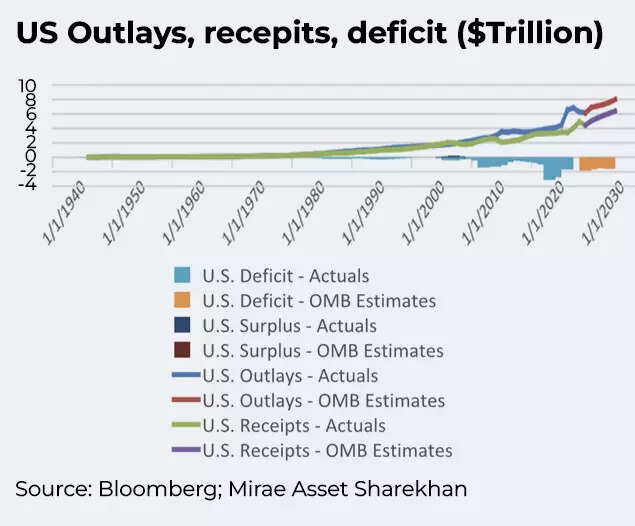
  • The US fiscal deficit, at 6.1% ($1 .9 trillion) as compared to fifty-year average of 3.8%, amid unhinged government borrowing puts fiscal trajectory on an unsustainable path.
  • The current debt/GDP ratio of 100% is expected to surge to 118% in 2035.
  • Enormous net interest payment (NIP) load (around $1 trillion for 2025 exceeds defense spending) and sharply growing gap between revenues and outlays will lead to a cumulative fiscal deficit of around $22 trillion in 2025-2035 period. NIP/Primary deficit ratio rising to nearly 200% by then is a huge potential risk to its economic stability.
.

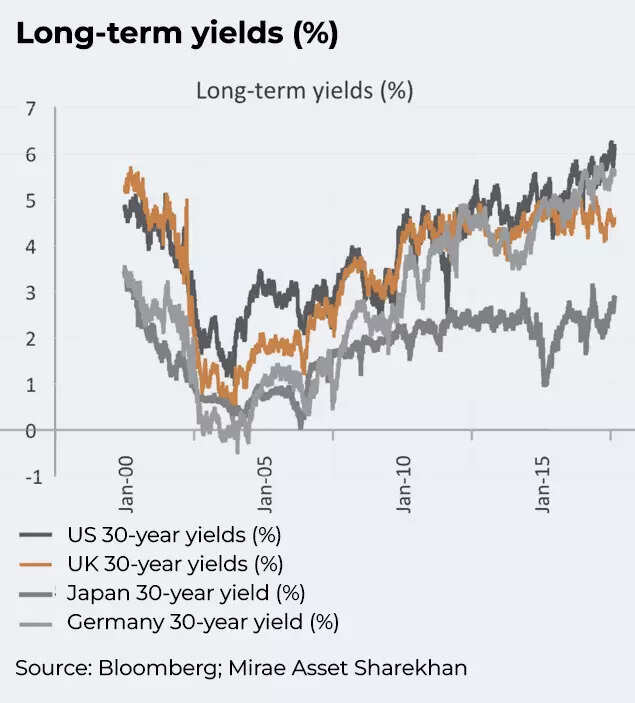
  • Despite rate cuts, long-term yields are surging globally on fiscal concerns and inflationary outlook as currency debasement continues unbated reducing the purchasing power of the fiat currencies.
  • Surging long-term yields may force the US Federal Reserve to go for Yield Curve Control (YCC)/quantitative easing (QE) to mitigate risks to the economy and bring down cost of interest, which will be bullish for gold and silver.
.

  • The Fed is expected to cut rates twice in 2026 in response to weakening US job market. We think that there could be more than 2 cuts. The Fed Chair Powell at his December 10 post FOMC voiced his concern that the nonfarm payrolls could have been overstating jobs by as much as 60K since April, which means the total number 277K jobs created since April might be masking a loss of over 200K jobs.
  • Trump’s tariff wars and ‘US first’ agendas make the geopolitical situation quite vulnerable and volatile amid elevated economic uncertainty, prompting nations to rethink globalization—effectively a geopolitical reset. The US and China caught up in a struggle for global supremacy will continue to support precious metals.
  • Heightened geopolitical risks due to ongoing Ukraine war, volatile situation in Middle East and simmering tensions in the Caribbean due to US-Venezuela standoff will keep huge geopolitical risk premiums embedded in gold prices.
  • Institutional risk is rising as political pressure on the Fed grows. With Stephen Miran, Chair of Council of Economic Advisers, on the Fed Governor Board and Kevin Hassett (a vocal proponent of lower rates) being floated as a potential successor to Powell, questions around Fed independence and inflation credibility intensify.
  • As the Federal Reserve, running a fiscal dominant monetary policy, cuts rates into elevated inflation and normalizes 3% inflation, its credibility to contain inflation is being questioned, more so as the Fed’s independence faces political threat.
  • The US Dollar Index, already down 10% YTD, faces further losses due to huge US twin deficits, diversification, loose monetary policy and the US government’s intent to weaken the Dollar to support the hollowed-out US manufacturing sector, a deeply politicized subject.
  • China and Europe, sensing an opportunity in the Dollar woes, continue to promote their currencies. We are also seeing increased bipartite/regional trade deals which will further erode the US Dollar’s role in global trade.
  • It is to be noted that fiscal worries and inflation concerns are visible in key economies like Japan, China, UK, etc. as well, so it is not merely a US-centric phenomenon. As government bonds face downside pressure, it is expected that the traditional 60:40 portfolio will change soon to accommodate precious metals also.

Positioning & flows:

  • AI-led lofty equity valuation and ROI concerns add to gold’s appeal.
  • Global gold ETF holdings of ~98.41 Moz are up ~18.7% YTD (+484t), the highest since Sep-2022. 2025 net inflows are the strongest since 2009 (644t); all-time high is 111.25 Moz (15 Oct 2020).
  • Central-bank reserves: gold’s share is ~28%, second after US Dollar and near 3-decade high.
  • The yellow metal’s share is reportedly above US treasuries for the first time since 1996.
  • Gold’s share in global FX reserves has nearly tripled since the 2007–08 crisis; with gold’s share near 75% in the 1980s, there remains ample runway for official sector buying.

View and target:

  • I remain constructive on gold and look for a target of $5000 in 2026. There is an upside risk to the target though.

Silver: moving out of gold’s shadow

  • Silver has stepped out of the shadows of the yellow metal as it builds on the gold rally with an enormous momentum.
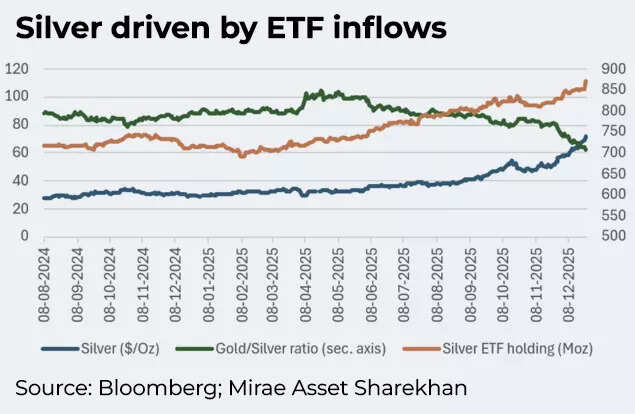
  • The grey metal, currently at $72.33, has surged 150% YTD.

Fundamentals:

  • Strong bullish underpinnings rooted in green energy transition, AI and new demand sources like nuclear reactors, medical devices, defense technologies, etc. support our bullish thesis with industrial demand at a record high.
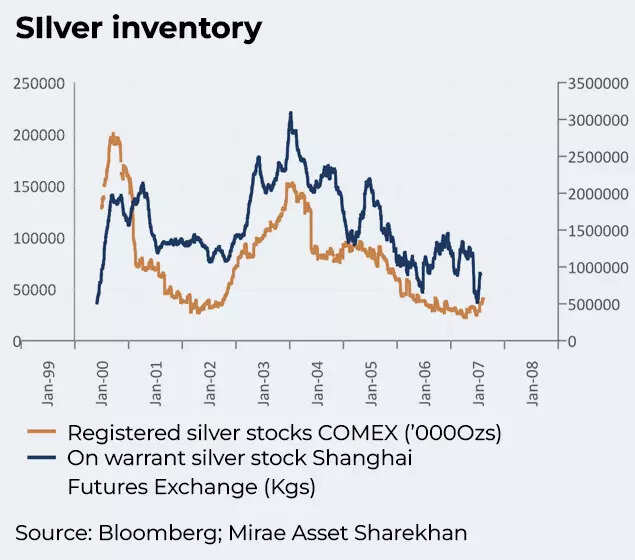
  • The metal is deriving its strength from tight inventory too as investors pile into the metal on its relatively cheaper valuation as compared to gold. In addition, strong ETF demand for silver has been resulting in inventory dislocation and tight inventory also, which is also a huge catalyst for silver rally.
.

  • Gold/Silver ratio, which surged to 105 in the wake of ‘Liberation Day’ shock in April, has plummeted to 62 as silver caught up with gold rally.
  • The silver market, currently in the fifth consecutive year of deficit, is expected to be in deficit in 2026, too.
  • Supply crunch has been felt in India, China and most notably in the LBMA market. One-month LBMA silver lease rate at 6% is at the highest since October 23 and is well-above the historical lease rate of 0.3%-0.5%.

Flows & positioning:

  • Silver ETF holdings of ~871 Moz are up ~21% YTD, the highest since June 2022.
  • Net inflows of ~4820 tons YTD are the strongest since 2020 (8,802t), and ETF holdings could surpass the 2021 peak (~1.02B oz).
.

Policy tailwinds to be supportive:

  • Possibility of QE/yield curve control in the US and stimulus in Germany, China, and the US should reinforce the demand for the metal.

View and target:

  • I continue to remain constructive on the grey metal and expect it to reach ~$85-$95 in 2026. At the same time, given that ~70% of silver demand is industrial, price action at times may be volatile sensitive to monetary policy, broader market corrections, and macro shifts.

Is it too late to start investing in precious metals?

  • It’s a natural question especially after the meteoric rallies in gold and silver. Despite their strong performance, our long‑term outlook still sees gold eventually moving into the $6,500–$7,000 range, while silver could advance toward $125 by the end of the decade.
  • Given this trajectory, it’s not too late for investors who may have missed the earlier upswings. Beginning to build exposure now through a systematic, disciplined investment approach can still position portfolios to benefit from the structural strength underpinning precious metals over the long term.

(Praveen Singh is Head of Commodities and Currencies, Mirae Asset ShareKhan)(Disclaimer: Recommendations and views on the stock market, other asset classes or personal finance management tips given by experts are their own. These opinions do not represent the views of The Times of India)
Source link

Kashmir Apple Orchards News: ‘An apple a day’ but at what cost? Kashmir’s orchards raise health alarm | Srinagar News


Image Credit: Bilal Bahadur/TNN

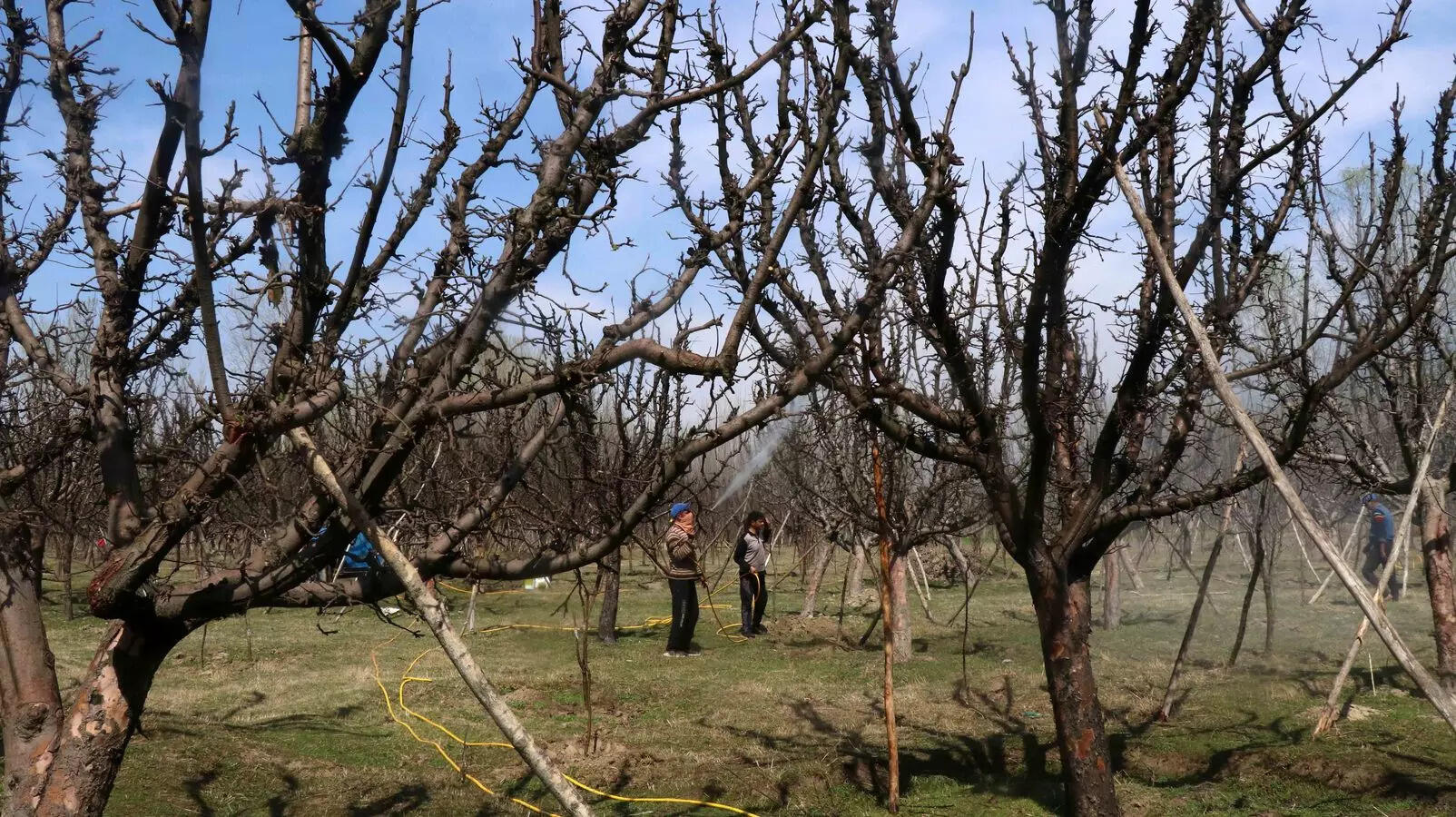
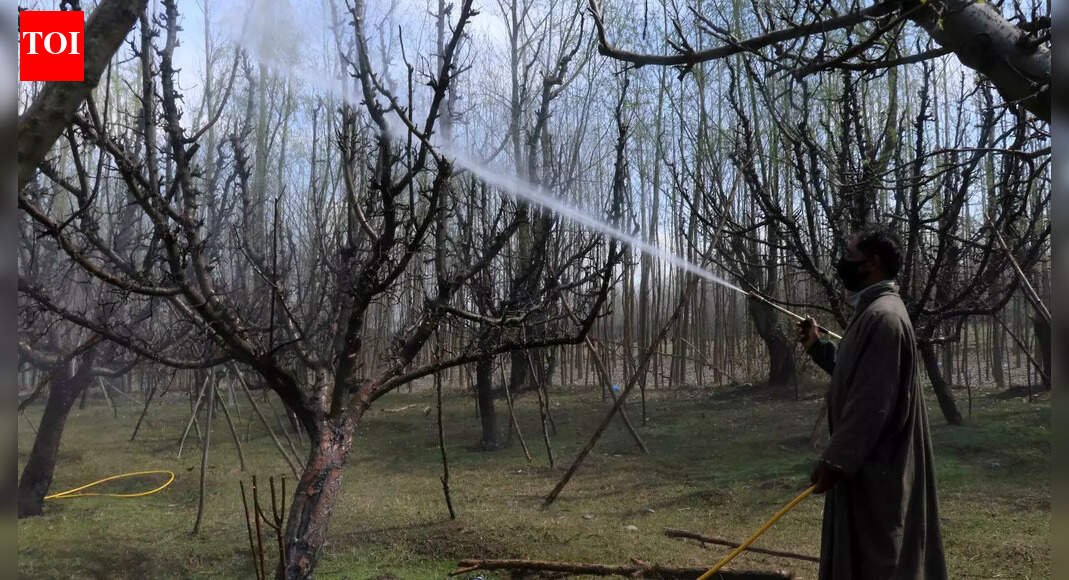
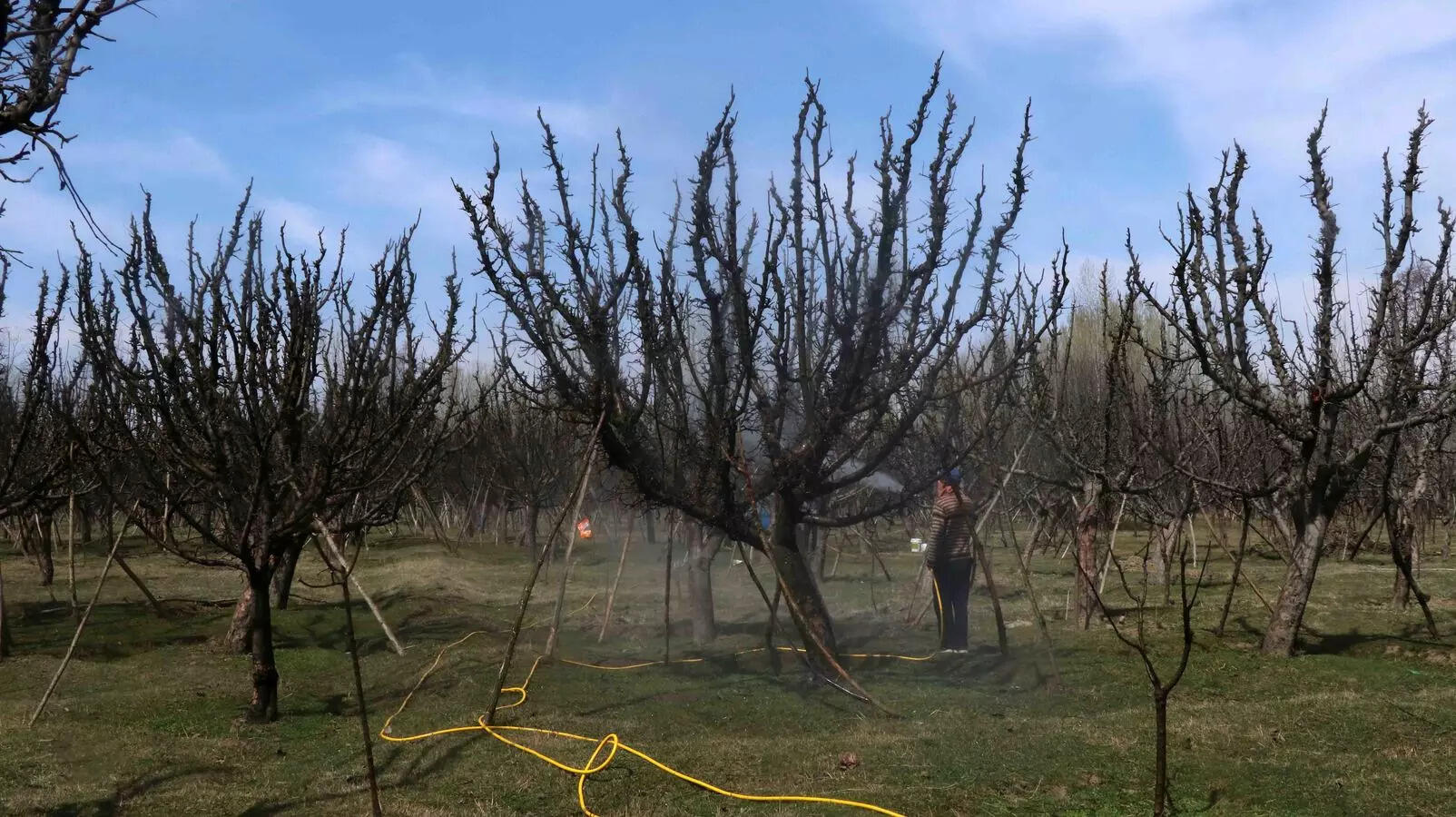
SRINAGAR: Kashmir’s apple orchards — the backbone of the Valley’s rural economy — are under renewed scrutiny as lawmakers and medical experts raise concerns over a possible link between decades of pesticide use and rising cases of malignant brain tumours among orchard workers.Lawmakers shift focus to farmers’ healthThe concerns were raised by the House Committee on Environment of the Jammu and Kashmir assembly, chaired by CPM legislator MY Tarigami, which met officials, scientists and health experts to examine the health hazards faced by those working in apple orchards.

-

Image Credit: Bilal Bahadur/TNN

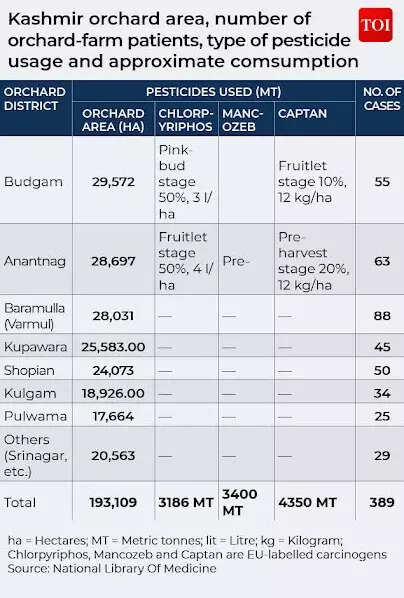
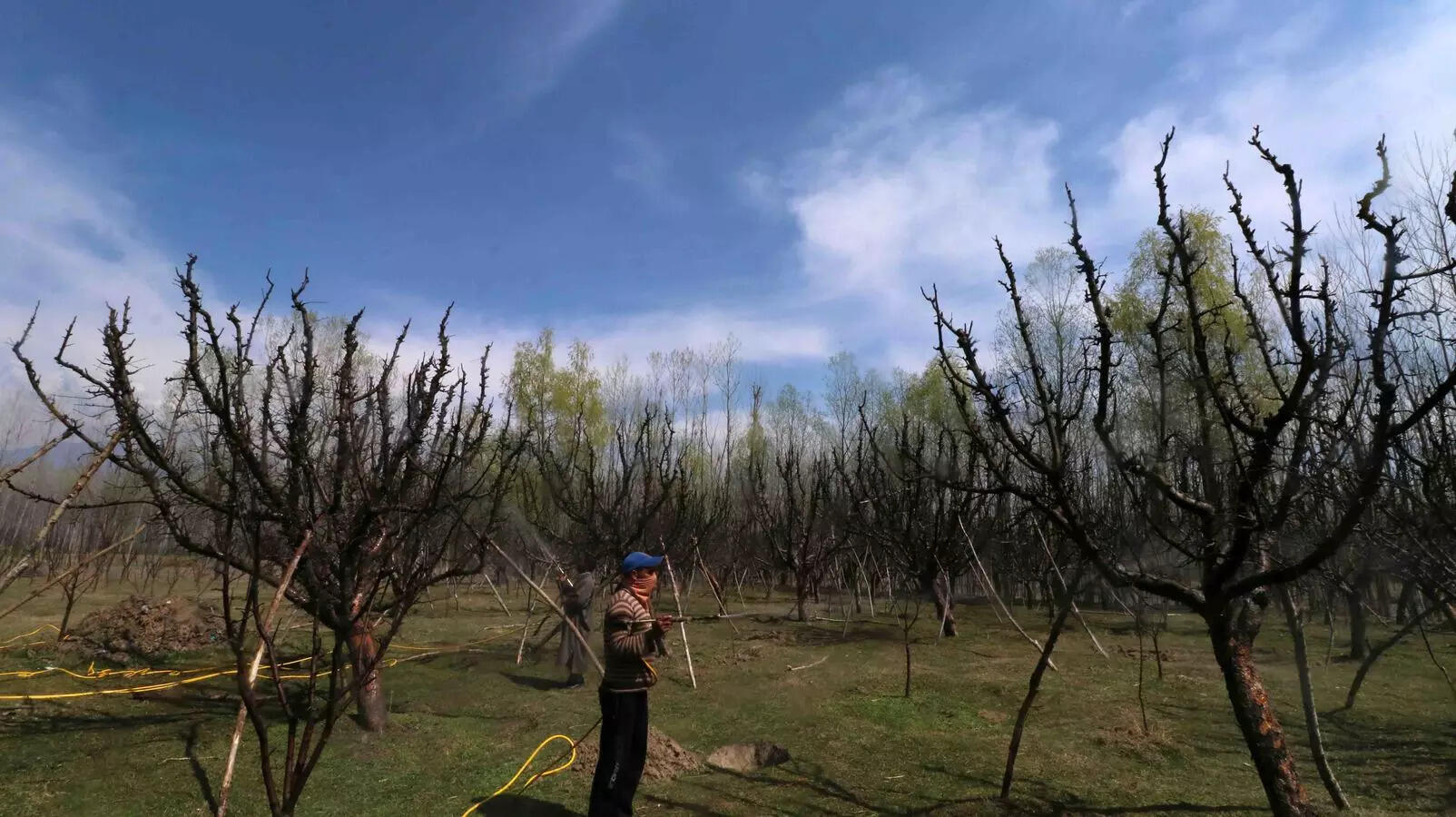
“For years, farmers have sprayed orchards unaware of the toxicity of constant pesticide exposure, leading to a rise in malignant brain tumors among those who power the valley’s billion-rupee apple economy and contribute more than 70% of India’s total apples,” the committee said.Evidence from Kashmir’s fruit beltThe discussion revisited findings from a study conducted by the Sher-i-Kashmir Institute of Medical Sciences (SKIMS), which examined more than 400 cancer patients between 2005 and 2008.The study reported high incidences of primary brain cancer in districts forming Kashmir’s core fruit belt, including Baramulla, Anantnag, Budgam, Shopian and Kupwara. It identified a “quite strong and possible” link between pesticide exposure and malignant brain tumours among orchard farmers.

-

Image Credit: Bilal Bahadur/TNN

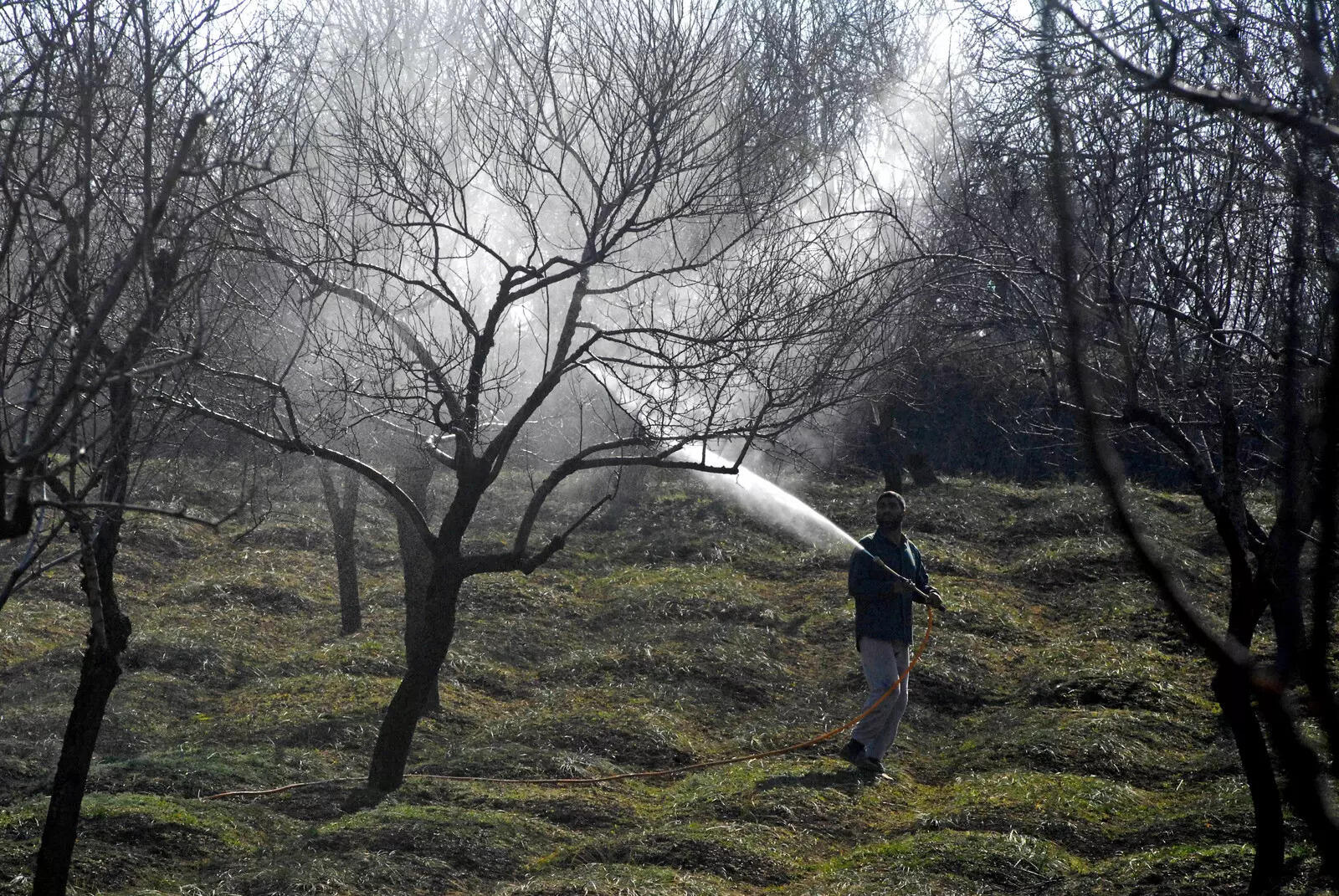
The findings were largely ignored when first published but have resurfaced amid growing medical evidence of pesticide-linked health disorders in the Valley.Tarigami told TOI, “We don’t want to create panic among farmers who spray their orchards every season. But neither can we sit idle when data indicates a serious health hazard. If pesticide spray is harming lives, it must be addressed.”Overuse of chemicals and lack of protectionScientists told the committee that pesticide use in apple orchards often exceeds recommended limits.Shahid Rasool, principal scientist at CSIR–Indian Institute of Integrative Medicine, said many orchardists spray chemicals every 10 to 12 days instead of the advised 18 to 21, believing it boosts yield.“Few can afford protective gear; chronic cough, rashes and irritation are common. Without gloves, goggles and masks, the risk multiplies,” he warned.Rasool said orchardists now use as many as 15 rounds of fungicide and insecticide each season, far beyond recommended schedules, and called for safer practices and protective equipment.Traces of pesticides found in human bloodFurther concerns were raised by Dr Sobia Nisar, a physician-researcher at Government Medical College, Srinagar, who has studied the biochemical effects of pesticide exposure among residents of apple-growing districts such as Shopian and Pulwama.“The initial idea was to check pesticides residue levels in the fruit,” she said. “But what we found was far more disturbing. Traces of these compounds in human blood samples.”

-

Image Credit: Bilal Bahadur/TNN

Her findings document pesticide residues in the bloodstream of orchard workers and nearby residents, along with higher rates of obesity, lipid disorders, metabolic syndrome and early kidney impairment.“When such patterns emerge consistently across populations exposed to pesticides, it demands urgent scientific scrutiny,” Dr Nisar said.Earlier studies show high exposure among cancer patientsA study published in the Indian Journal of Occupational and Environmental Medicine reported that 90% of brain tumour patients from Kashmir’s orchard belts had been exposed to pesticides, with all cases involving high-grade, aggressive tumours.The research focused on orchard workers in districts such as Anantnag, Budgam and Baramulla — areas that account for over 90% of the Valley’s apple-growing land — with smaller districts like Shopian and Kulgam also showing significant concentrations of cases.Committee seeks policy responseThe House Committee on Environment said it would recommend measures to the health and horticulture departments focusing on monitoring, research funding and worker safety, as concerns grow over the long-term health impact of pesticide use in Kashmir’s apple orchards.What the study foundA detailed study titled“Pesticides and brain cancer linked in orchard farmers of Kashmir”,conducted by researchers at the Sher-i-Kashmir Institute of Medical Sciences (SKIMS), examined the relationship between pesticide exposure and primary malignant brain tumours among orchard workers in the Valley.

-

The study analysed medical records of 432 patients diagnosed with primary malignant brain tumours and 457 control patients with non-tumour neurological conditions, all treated at SKIMS over a four-year period between 2005 and 2008.High exposure among cancer patientsThese patients had been exposed to multiple neurotoxic and carcinogenic chemicals, including chlorpyriphos, dimethoate, mancozeb and captan.Only 9.96% of patients had no recorded exposure to pesticides. Among the control group, 119 out of 457 patients had a history of pesticide exposure, while 338 had no such link.Of the pesticide-exposed cancer patients, 71.7% were male and 28.3% were female, including members of three families. Nearly a third — 31.9% — were younger than 40 years, having begun exposure at an early age.Tumour severity and mortalityThe study found that all orchard-related patients had high-grade, aggressive brain tumours, unlike those in the non-pesticide-exposed group. Mortality among pesticide-exposed tumour patients was recorded at 12%.Researchers measured serum cholinesterase levels — a marker used to assess exposure to organophosphate pesticides — and found higher-than-normal levels in 31.9% of exposed patients, while decreased levels were seen in 45.3%.

-

Image Credit: Bilal Bahadur

Statistical analysis showed a significant case-control odds ratio of 0.28, with additional hospital and family control serum cholinesterase odds ratios of 1.1 and 1.5 respectively, pointing to what the study described as a strong suspicion of a link between pesticide exposure and brain cancer.Wider environmental and occupational contextThe study noted that millions of tonnes of pesticides, insecticides and fungicides are sprayed annually across Kashmir’s orchards. Apple cultivation alone covers more than half of the Valley’s fruit-growing land, with around 40% of the population directly or indirectly exposed through farming, residence near orchards or recreational use of orchard spaces.Researchers highlighted that prolonged use of synthetic pesticides over the past three decades has coincided with a marked rise in admissions of high-grade malignant brain tumours from orchard districts to SKIMS.The study concluded that occupational and environmental exposure to pesticides in Kashmir’s fruit-growing regions poses a serious health risk, warranting closer monitoring and further investigation.


Source link

Escalation in Mukalla: Yemen declares emergency after Saudi Arabia bombs port; 72-hour blockade imposed


Escalation in Mukalla: Yemen declares emergency after Saudi Arabia bombs port; 72-hour blockade imposed
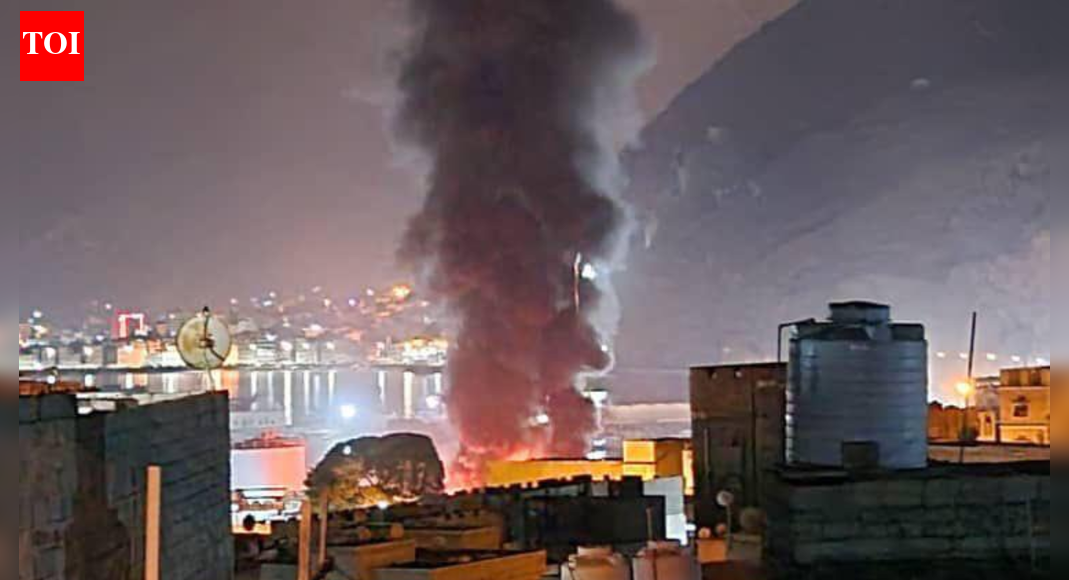
Airstrikes in Mukalla port (Image/X@Alpha7021)

Yemen’s anti-Houthi forces declared a state of emergency on Tuesday after Saudi Arabia carried out airstrikes on the port city of Mukalla. According to Riyadh, the strikes targeted an arms shipment bound for UAE-backed separatist forces.The anti-Houthi authorities also cancelled a security pact with the United Arab Emirates, announcing the decision in an official statement. “The Joint Defence Agreement with the United Arab Emirates is hereby cancelled,” the statement read.

Saudi Fighter Jets ‘Bombard’ UAE-Backed Separatist Fighters In Yemen In Huge Escalation Over South

Following the attack, the authorities ordered a 72-hour ban on all border crossings. Saudi Arabia said the airstrikes targeted armoured vehicles and weapons offloaded from ships that arrived in Mukalla from Fujairah in the United Arab Emirates (UAE). In a military statement carried by the state-run Saudi Press Agency, the coalition said that the vessels had disabled their tracking systems and were carrying military equipment intended for the Southern Transitional Council (STC), a powerful separatist force backed by the UAE.The coalition said the weapons posed an “imminent threat” to peace and stability, prompting a limited and precise overnight strike designed to avoid civilian casualties.Analysts said the strike displayed growing friction between Saudi Arabia and the UAE, close allies that have supported competing groups in Yemen’s decade-long war. While both countries oppose the Houthis, they support rival factions on the ground, according to the news agency AP. Satellite tracking data indicated that at least one vessel believed to be carrying the weapons had been docked in Fujairah on December 22 before arriving in Mukalla on Sunday. Mukalla, located in Yemen’s Hadramout governorate, lies about 480 kilometres northeast of Aden, the interim seat of Yemen’s internationally recognised government. The STC has recently expanded its presence in the region, pushing out forces affiliated with the Saudi-backed National Shield Forces.The Saudi strike follows earlier airstrikes on Friday, which analysts described as a warning to the STC to halt its advance in Hadramout and neighbouring Mahra. The separatist group has stepped up its campaign in recent days, with supporters increasingly flying the flag of former South Yemen, which existed as a separate state until 1990.The developments come amid broader instability across the Red Sea region, where Saudi Arabia and the UAE also back opposing sides in Sudan’s ongoing conflict. Tensions have further been heightened after Israel’s recent recognition of Somalia’s breakaway region of Somaliland, a move that has drawn threats from Yemen’s Houthi rebels.The situation in eastern Yemen remains volatile, with regional rivalries increasingly complicating efforts to stabilise the war-torn country.


Source link

Access Denied


Access Denied

You don’t have permission to access “http://www.ndtv.com/education/upsc-announces-combined-defence-services-i-2025-result-535-candidates-shortlisted-for-interview-10087970” on this server.

Reference #18.acf856b8.1767081461.30d95ca

https://errors.edgesuite.net/18.acf856b8.1767081461.30d95ca


Source link

Ravichandran Ashwin picks 2 standout players for India in 2025


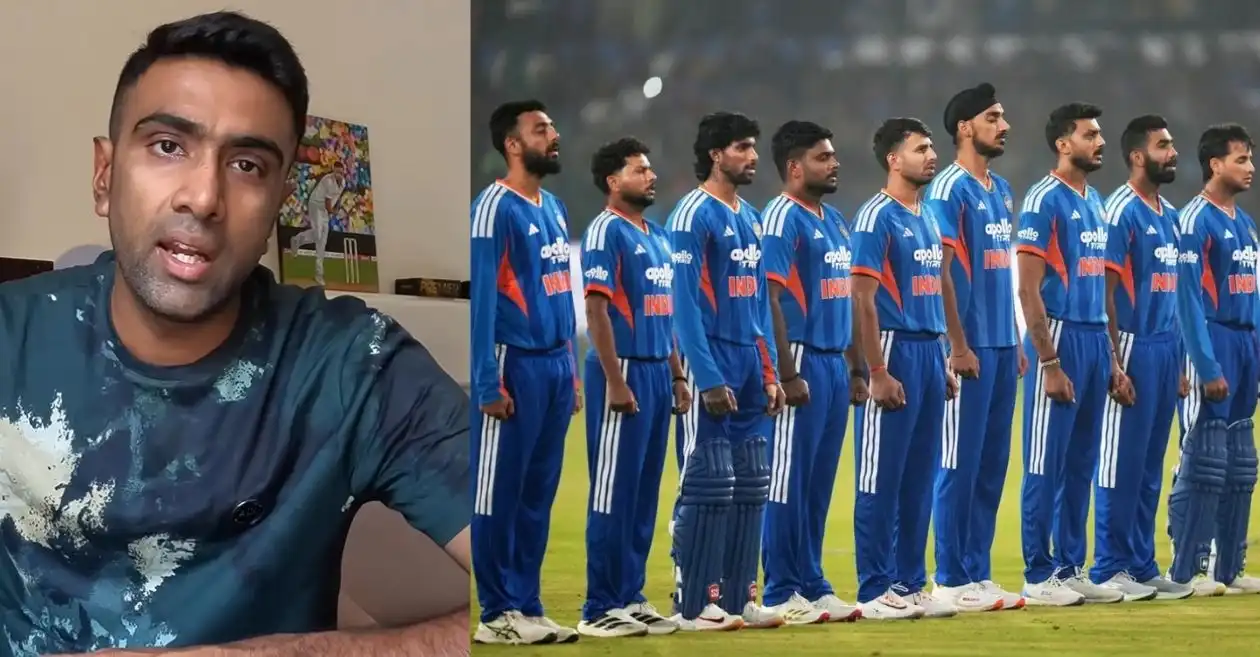
As Indian cricket reflects on a landmark 2025 filled with transition, experimentation, and explosive performances, former off-spinner Ravichandran Ashwin has offered his verdict on the two players who defined the year for the national team. Speaking on his YouTube channel, Ashwin highlighted explosive opener as India’s breakout batting star and top-quality spinner as the most impactful bowler, underlining how both players have reshaped India’s white-ball identity heading into a crucial World Cup cycle.

Ravichandran Ashwin terms young opener as rare X-factor star

Ashwin reserved special praise for Abhishek Sharma, calling 2025 not just a breakthrough year but the arrival of a rare X-factor player for India. The left-handed opener enjoyed a phenomenal run in T20Is, piling up 859 runs in 21 matches at an average of 42.95 and a breathtaking strike rate of 193.46. His tally included a century and five half-centuries, numbers that reflect both consistency and carnage.

“It’s not just the arrival of Abhishek Sharma; it’s probably the arrival of India’s next-generation X-factor player. If there is one player who I have to name who had the best year for India in 2025, it has to be him because he has batted so well,” said Ashwin on his YouTube channel.

According to Ashwin, what separates Abhishek from other attacking batters is the way he has redefined India’s approach in the powerplay. Rather than merely providing quick starts, the youngster has imposed himself from ball one, forcing bowling sides into defensive modes early in the innings. Ashwin described this shift as a reimagination of India’s powerplay batting template, something the team had been searching for in recent years.

While firmly established in T20Is, Ashwin expressed his desire to see the opener tested in ODIs, believing his fearless strokeplay could translate well to the 50-over format. Ashwin went a step further by projecting Abhishek as a frontrunner for India’s men’s cricketer of the year, a bold statement that underscores the scale of his impact in 2025.

“He has reimagined India’s powerplay batting and has been exceptional. I would love to see him in the ODI format as well. I think his red-ball credentials will be worked upon. I believe he will probably be the men’s team player of the year,” the Chennai-born added.

Also WATCH: Abhishek Sharma makes surprise appearance at Punjabi singer AP Dhillon’s Jaipur concert

Ashwin labels spin sensation as a huge MVP for India

While Abhishek lit up stadiums with the bat, Ashwin identified Varun Chakravarthy as India’s standout bowler of the year. Terming him a “huge MVP,” Ashwin highlighted how Chakravarthy consistently delivered whenever the team turned to him, often breaking partnerships and choking scoring rates in the middle overs.

Ashwin pointed out that Varun’s greatest strength lies in his unpredictability. Despite the growing familiarity of mystery spin in T20 cricket, batters have continued to struggle against him, finding it difficult to read his variations off the hand. This ability, Ashwin believes, will be central to India’s ambitions at the ICC Men’s T20 World Cup.

“I will pick Varun Chakravarthy as India’s bowler of the year. He was a huge MVP. Whenever the team used him, he showed that X-factor. People have found it hard to pick him. His fortunes will be very key to India’s chances at the 2026 T20 World Cup as well. Secondly, he is a T20 bowler,” explained Ashwin.

Beyond the numbers, Ashwin dwelled on Chakravarthy’s remarkable journey of reinvention. After being sidelined from the national setup, the spinner went back to the grind, bowling in lower divisions in Chennai and seeking opportunities as a net bowler. His performances in the Tamil Nadu Premier League played a key role in his resurgence, showcasing his skills to scouts and selectors once again.

“He was out of the side, then he reinvented himself and came back, and now he is at the top of the T20I rankings. He started mystery bowling, bowled in the fifth division in Chennai, then asked for a chance in net bowling, came back and bowled well, and showed all the scouts how he bowled in the TNPL (Tamil Nadu Premier League). It has been a journey to remember,” Ashwin added further.

Also READ: Varun Chakaravarthy details mental blueprint ahead of T20 World Cup 2026


Source link

‘Treated as infiltrators’: Congress’ Adhir Ranjan Chowdhary meets PM Modi; flags ‘violence against migrant workers’ | India News


'Treated as infiltrators': Congress' Adhir Ranjan Chowdhary meets PM Modi; flags 'violence against migrant workers'

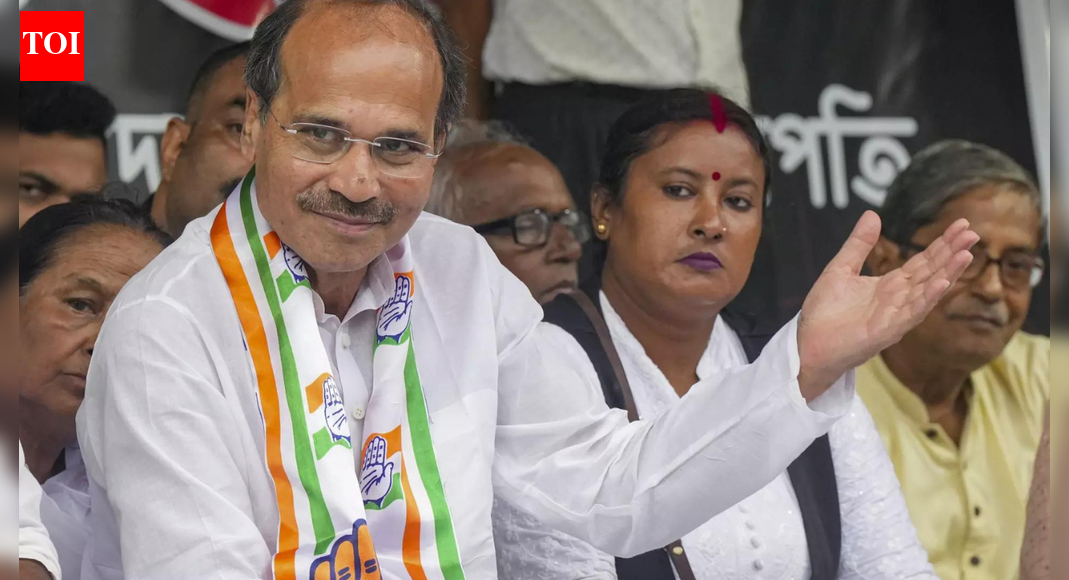
NEW DELHI: Prime Minister Narendra Modi on Tuesday met Congress leader Adhir Ranjan Chowdhury at his residence in Delhi and raised the issue of attacks on Bengali-speaking people, especially in BJP-ruled states.Chowdhury, a former West Bengal Congress chief, urged the Prime Minister’s intervention to help stop such attacks.He claimed that such incidents could flare up communal tension in the state.“Their only offence is that they speak the Bengali language, which is often misunderstood by the concerned administration as meaning they belong to neighbouring Bangladesh and are treated as infiltrators,” Chowdhury said in a letter to PM Modi.“It is ironical to note that administrative officers, including the police, do not differentiate between ‘Banglabhasi’ and ‘Bangladeshi’ people. Without committing any offence, they are lodged in jail or detention centres, resulting in grave injustice,” he added.The meeting comes as West Bengal gears up for the Assembly elections scheduled for May 2026.Chowdhury, however, played down the visit, claiming it was “not political”.Meanwhile, Union Minister Amit Shah, who is on a three-day visit to West Bengal, is scheduled to hold back-to-back closed-door meetings with the BJP’s MLAs and MPs, besides representatives in various civic bodies.He is also expected to meet the top brass of the RSS in the state.After his arrival on Monday, Shah held a meeting at the BJP office in Salt Lake to take stock of the party’s organisational preparedness for the upcoming polls.


Source link

Access Denied


Access Denied

You don’t have permission to access “http://www.ndtv.com/india-news/who-is-aviva-baig-delhi-woman-to-marry-priyanka-gandhi-vadras-son-raihan-vadra-10087311” on this server.

Reference #18.2ef63717.1767080893.f0b71bc

https://errors.edgesuite.net/18.2ef63717.1767080893.f0b71bc


Source link

PAN-Aadhaar link status: How to check if your PAN is linked to Aadhaar, what to do if it’s not & what happens if you miss December 31, 2025 deadline?


PAN-Aadhaar link status: How to check if your PAN is linked to Aadhaar, what to do if it’s not & what happens if you miss December 31, 2025 deadline?
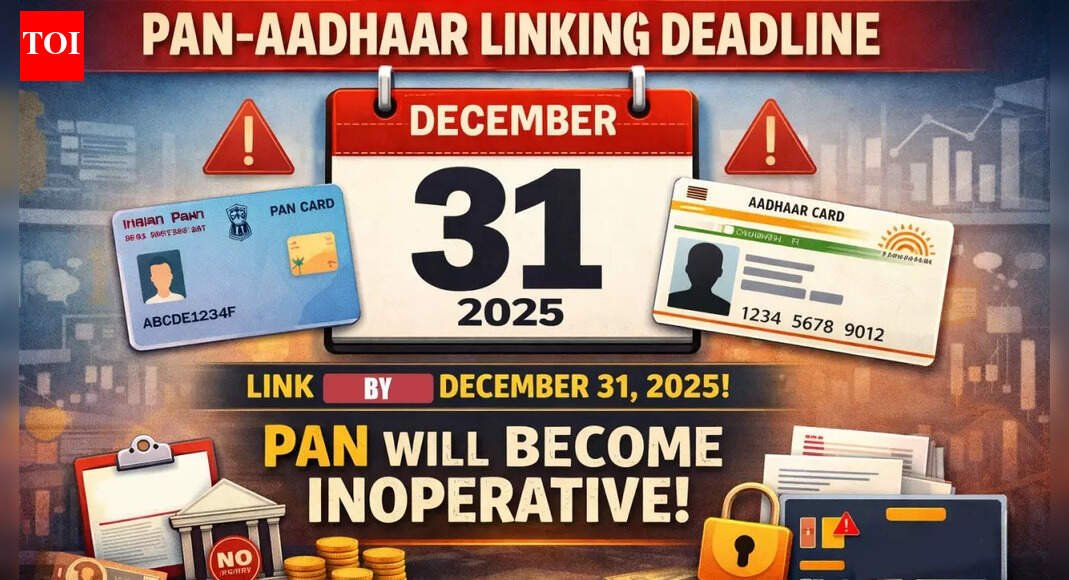
Individuals who fail to complete the process may find their PAN rendered “inoperative” from January 1, 2026. (AI image)

PAN-Aadhaar link status update: December 31, 2025 is the deadline for linking your PAN card with your Aadhaar card – an important step if you don’t want your PAN card to become inoperative. The Income Tax Department has again appealed to PAN holders to complete the mandatory linking of PAN with Aadhaar. Taxpayers who miss this December 31, 2025 deadline face the risk of their PAN being rendered inoperative. With the cutoff date for PAN Aadhaar linking drawing closer, individuals who fail to complete the process may find their PAN rendered “inoperative” from January 1, 2026, according to an ET report. Such a situation can create hurdles in filing income tax returns, receiving refunds and carrying out routine financial transactions.

PAN-Aadhaar Deadline Nears: How To Link Before December 31 Or Risk Inoperative PAN From Next Year

The Income Tax Department has warned that an inactive PAN cannot be used for key financial transactions or tax related purposes, underscoring the need to finish the process before the year ends.

PAN-Aadhaar Linking: How To Link Your PAN With Aadhaar Card

Taxpayers can complete the PAN Aadhaar linking by following these steps:

  • Log in to the income tax e-filing portal (https://www.incometax.gov.in/iec/foportal/)
  • Navigate to the profile section and select the option to link your PAN with Aadhaar
  • Enter your PAN and Aadhaar details, then choose the option to proceed with payment through e-pay tax
  • Select the applicable assessment year and choose “Other Receipts” as the payment category
  • Verify the pre-filled payable amount and click on continue
  • Generate the challan and make the payment through your bank’s portal
  • Once payment is successful, return to the e-filing portal to finalise the linking process
  • Enter your PAN, Aadhaar number and name exactly as recorded in Aadhaar, then click on “Validate”
  • An OTP will be sent to your mobile number registered with Aadhaar; enter the OTP to proceed
  • Submit the request to finish the linking process

Once you submit the request to link PAN with Aadhaar and the payment, if applicable, is reflected, the verification generally moves quickly. The Income Tax Department forwards the details to UIDAI for validation. You can recheck the linkage status after a day or two to confirm that the process has been completed successfully, the ET report said.

Is your PAN linked to your Aadhaar? How To Verify

To check whether PAN and Aadhaar are already linked follow these steps:

  • Visit the income tax e-filing portal
  • Click on the option to check Aadhaar link status
  • Enter your PAN and Aadhaar card details
  • Submit the information to view the status displayed on the screen

How to checking PAN-Aadhaar link status via SMSYou can also confirm the linkage through a text message. Type UID PAN 12 digit Aadhaar number 10 digit PAN number and send it to 567678 or 56161. For instance: UID PAN 34512349891 CFIED1234JWhat to do if your PAN and Aadhaar card details do not matchIf discrepancies exist between PAN and Aadhaar records, you can take the following steps:

  • Correct your Aadhaar details through the UIDAI portal
  • Update your PAN information via Protean (NSDL) or UTIITSL
  • If problems persist, opt for biometric verification at authorised PAN service centres

PAN-Aadhaar linking FAQs:

What if I miss the deadline for linking my PAN with Aadhaar Card?The Income Tax Department has made it clear that PAN card holders who do not complete the Aadhaar linkage by December 31, 2025 will find their PAN becoming inoperative. This means that the PAN card cannot be used for a range of financial and tax related purposes. This includes filing income tax returns and undertaking transactions where PAN details are mandatory.What is the penalty if PAN and Aadhaar are not linked?December 31, 2025, is the final date to link PAN with Aadhaar. Individuals who have not completed the process by now are required to pay a penalty of Rs 1,000 before proceeding with the linkage.That said, certain PAN holders have been granted relief from this charge. PAN cards issued after October 1, 2024, using an Aadhaar enrolment ID are exempt from the late fee. Such PAN holders can complete the PAN Aadhaar linking without any charge up to the deadline.The tax department has reiterated that Aadhaar linkage is compulsory for eligible PAN holders.“For existing PAN holders, who were allotted PAN on or before 01-07-2017 it is mandatory to link PAN with Aadhaar. The Link Aadhaar service is available to individual taxpayers (both registered and unregistered on e-Filing Portal),” the official income tax website reads.What does an inoperative PAN card mean?A PAN marked as inoperative can severely disrupt your financial and tax-related activities. In such cases, you will be unable to file income tax returns, and any refunds due will not be processed, according to the ET report. In addition, higher rates of TDS and TCS will apply. Carrying out key financial transactions, such as opening a bank account or investing in securities where quoting PAN is mandatory, may also become difficult, the report said.


Source link

TOI’s Indian Sportsperson of the Year: The women’s World Cup winning team | Cricket News


TOI's Indian Sportsperson of the Year: The women's World Cup winning team
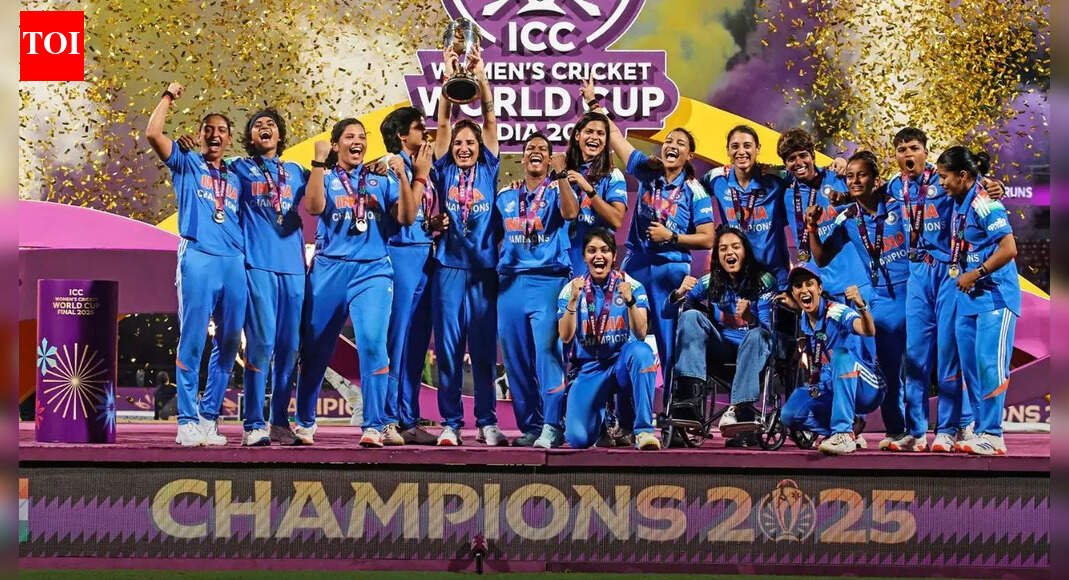
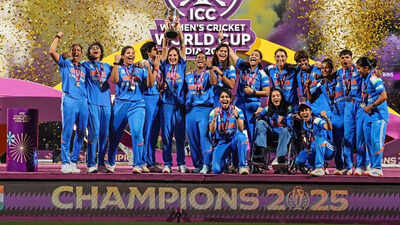
Harmanpreet Kaur and Co. relish their big moment with the trophy (Pic credit: BCCI)

In a year that was awash with sporting achievement, if there was one that captured resilience, redemption and resolve in equal measure, look no further than the Indian women’s cricket team’s ICC World Cup triumph.Go Beyond The Boundary with our YouTube channel. SUBSCRIBE NOW!Harmanpreet Kaur‘s girls did not begin the year as favourites, nor did they enter the World Cup at home with the aura of inevitability that often surrounds champions like Australia.A sputtering start — three consecutive defeats in the league stage, against biggies South Africa, Australia and England — only reinforced old doubts about consistency, composure and whether this group really had it in them to finally cross the line.

Inside a champion’s mind | ft. Shafali, Deepti and Saiyami | TOI’s Ideas for India

Yet, by the time Harmanpreet lifted the trophy in Navi Mumbai on Nov 2, those doubts felt like relics from another time. And in one fell swoop, it changed the narrative that has surrounded Indian women’s cricket for the past so many years — that of the nearly women who always tend to stumble at the last. What a story it was!The league phase, to make the eventual title win sweeter, exposed India at their most vulnerable.Dropped catches, missed stumpings, sloppy overthrows and erratic fielding threatened to derail the campaign early. At the top of the order, stability was fleeting.But beneath the visible flaws lay a quieter, sturdier undercurrent — a belief that this episode unfolding before a fervently expectant home crowd was still theirs to shape.

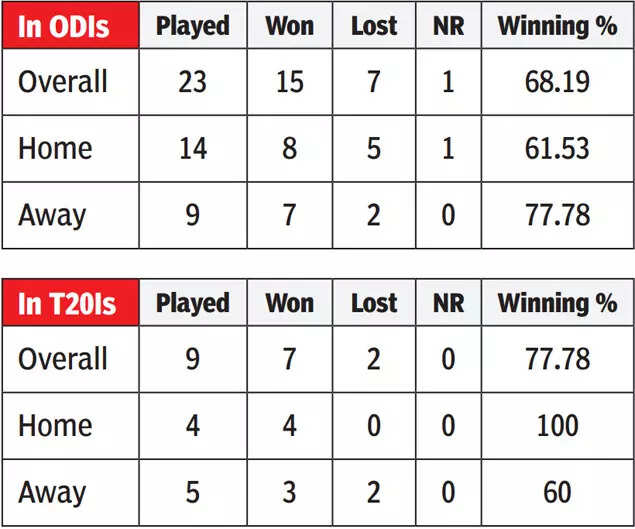
Team India Stats

The turnaround started on Oct 23 at the DY Patil Stadium. Against New Zealand, with elimination looming, Pratika Rawal and Smriti Mandhana stitched together a monumental 212-run opening stand. Rawal’s 122 and Mandhana’s 109 powered India to a 53-run win but more importantly, reignited a campaign that had seemed on the brink. Twelve days later, at the same venue, Harmanpreet would lift the World Cup.From that point, India played with freedom and ferocity, a newly-forged belief. Contributions flowed from across the XI and beyond. The fielding unit, once hesitant, transformed into a side willing to dive, chase and scrap. Even adversity, in the form of Pratika Rawal’s injury, became an opportunity. Shafali Verma, short on confidence and coming off a stint on the sidelines, returned to the squad.Her semifinal numbers against Australia were a poor 10, but her presence reflected a team backing belief over fear, which yielded results in the final in the form of a defining 87 and two crucial wickets from the 21-year-old.

Indian Women's Cricket Team in 2025

But the defining chapter of the year would come in the semifinal against Australia.Jemimah Rodrigues, who shuffled in and out of the setup over the past three years, delivered a career-defining unbeaten 127. Calm under pressure, fluent yet unhurried, she anchored India through their toughest examination, as Australia — the benchmark in women’s cricket — were finally subdued.If the batters set the tone, the bowlers ensured India never lost control. Spinner Deepti Sharma’s experience anchored the attack while the emergence of Sree Charani added freshness and bite. Medium-pacer Renuka Singh’s discipline with the new ball applied early pressure. Together, they transformed India into a side capable of defending totals and dictating terms.

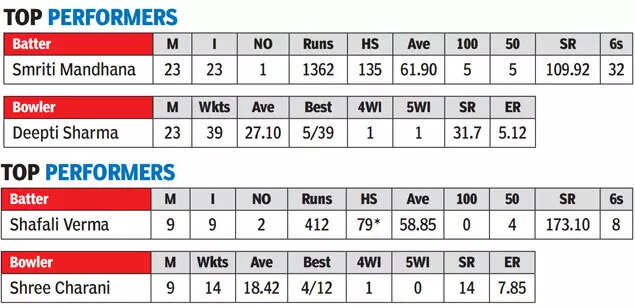
Top Performers in ODIs & T20Is

The five-wicket semifinal win over Australia instilled conviction in a group that was already discovering its strength. In the final, India were assured and authoritative, outplaying South Africa to clinch the title by 52 runs — a performance befitting of champions.In a year that featured several standout Indian sporting moments, the women’s World Cup triumph stood apart not merely for the trophy but for what it represented.The title arrived nearly 47 years after India played their first One-Day International — against England at the Eden Gardens on Jan 1, 1978 — which also marked their maiden World Cup appearance. It crowned a journey that began long before global tournaments and prime-time broadcasts.

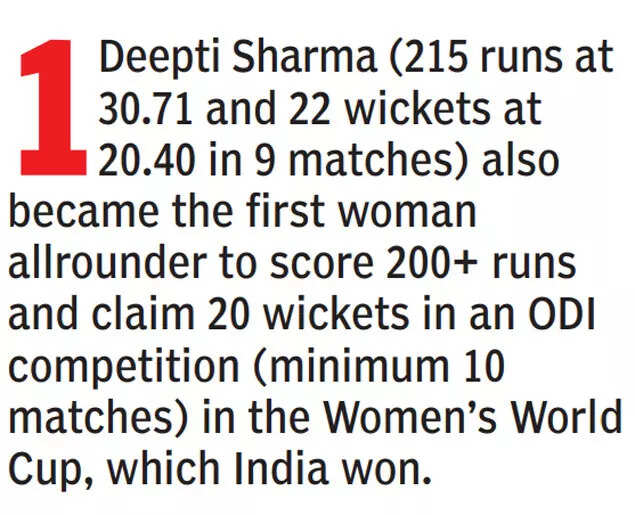
Deepti Sharma

Indian women’s cricket has long been a story of perseverance. Played as early as 1913, the sport survived decades of neglect, limited funding, years without international matches and social resistance, with players often mocked for embracing a gentleman’s game. What carried them through was collective conviction — that their moment would come.That moment has been shaped by structural change: the BCCI merger, improved infrastructure, financial security, increased international exposure and the advent of the Women’s Premier League.Yet even in 2025, comparisons with the men’s game persist, often overshadowing achievement.On that winter night in Navi Mumbai, such comparisons felt unnecessary.Coming after heartbreak in the 2005 and 2017 World Cup finals, this time India’s women did more than win a World Cup. They authored the defining Indian sporting story of 2025 — one of belief rewarded, patience vindicated and a long, arduous journey finally illuminated. Something tells us, there’s more to come.

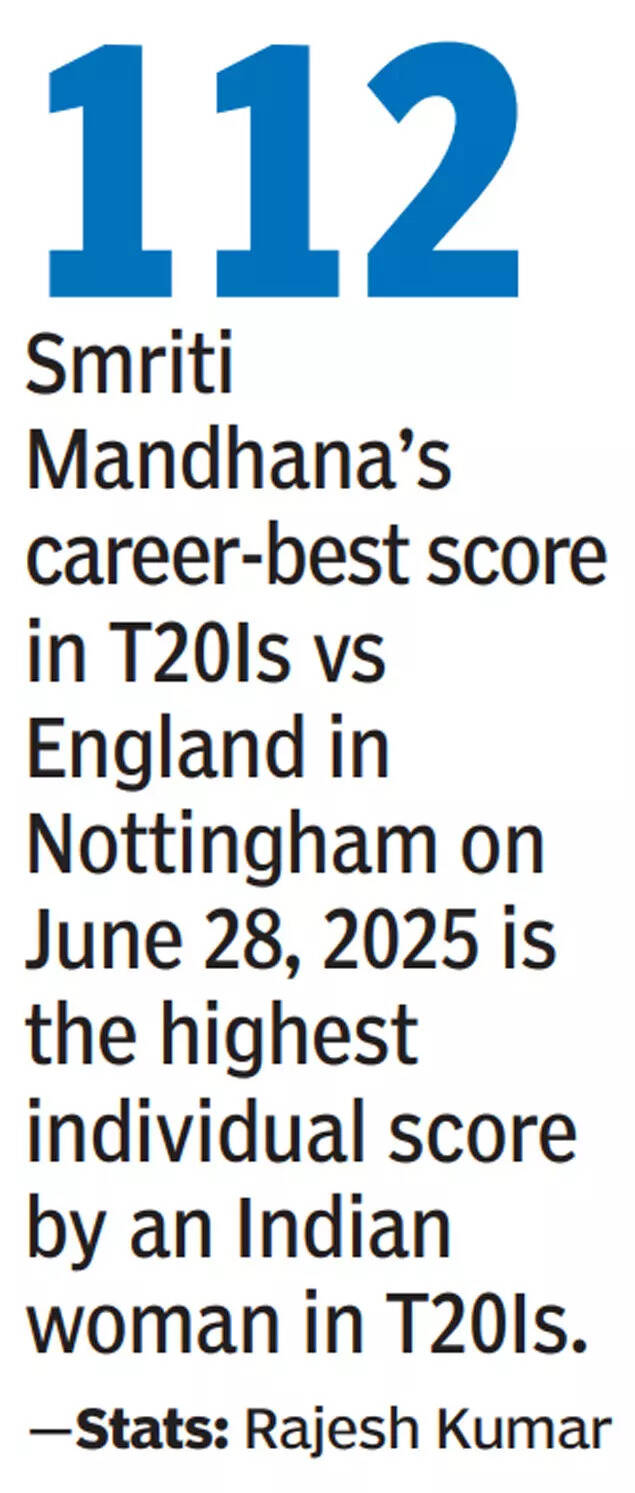
Smriti Mandhana

THE OTHER CONTENDERS

Sheetal Devi

— By Sabi HussainSheetal Devi‘s journey from a remote village to a global sporting icon — overcoming congenital phocomelia — makes her a powerful symbol of courage and determination. Calling her the ‘wonder woman’ of Indian archery isn’t an exaggeration. The country’s youngest Paralympic medallist and a World and Asian Para Games champion, she has defied conventional logic — and the usual science of archery — by mastering a unique technique that uses her legs, shoulder and jaw to shoot from a seated position with world-class precision. Born without arms due to the rare condition, the 18-year-old from Loidhar village in Jammu’s Kishtwar district trailblazed her way to glory in 2025 with breathtaking, record-breaking highs.Sheetal became the first female armless world champion in paraarchery by winning gold in the women’s compound open event at the World Championships in Gwangju, South Korea, defeating Paralympic champion Oznur Cure Girdi of Turkiye in Sept. She also secured a team silver and a mixed team bronze at the same competition.Later, she became the first Indian para-athlete selected for an able-bodied international team, qualifying for the Asia Cup Stage 3 in Jeddah after finishing third in national trials against able-bodied archers. She has now set her sights on winning medals at events for able-bodied athletes next year.

Divya Deshmukh

— By Amit KarmarkarYoung Divya Deshmukh made a telling statement on the board. The Nagpur girl, now 20, managed to achieve a remarkable first in Indian chess when she won the knockout Women’s World Cup in Georgia in July. Though the World Cup is Fide’s third-ranked women’s event, after the World Championship and Candidates, winning the tournament against an elite field — and clinching the GM title with it — makes Divya a contender for India’s Sportsperson of the Year.A hint of Divya’s real prowess showed in 2024 — not through the individual and team golds in the Women’s Olympiad, or the Asian women’s titles earlier, but in the Abu Dhabi meet. She drew with Yagiz Kaan and M Pranesh and defeated L Srihari in an open field. As she touched the Elo 2500 mark for the first time during that phase, a breakthrough in 2025 felt inevitable. Though Divya had a modest series in the FIDE Women’s GP, her preparation, daring approach and modern perspective kept her in a good space.Her World Cup scalps included the Chinese Zhu Jiner, Tan Zhongyi and Indians D Harika and K Humpy, three of them via faster tiebreaks. With that, she clinched a Women’s Candidates spot — a stepping stone to dethroning Ju Wenjun. Divya also rubbed shoulders with men over 11 classical rounds of the Fide Grand Swiss.

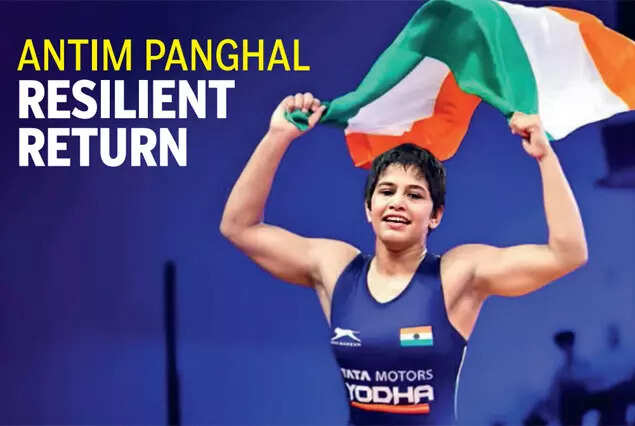
Antim Panghal

— By Sabi HussainFor a full year after the Paris Olympic heartbreak, wrestler Antim Panghal endured a range of emotions. She suffered a disappointing exit in the opening bout of the women’s 53kg category in Paris and was later deported from the French capital for trying to get her sister Nisha entry into the athletes’ village using her accreditation card. The 21-year-old two-time junior world champion suffered a mental breakdown and seriously contemplated quitting the sport as she confined herself to her home in Bhagana village in Haryana’s Hisar district and stopped all social interactions.“It was a tough period. I wasn’t quite myself. That one bout in Paris changed everything for me,” she had told this newspaper.With encouragement from her parents and friends, Antim chose to bury the Paris chapter once and for all. She returned to training under coach Siyanand Dahiya and won bronze at the Asian Championships in March besides securing gold at the Ulaanbaatar Ranking Series meet and the Polyák Imre and Varga János Memorial.Her big moment arrived in Sept this year when she won her second consecutive bronze at the World Wrestling Championships in Zagreb. “My next goal is to secure gold at the Asian Games in 2026. My preparations have already started,” she said.


Source link

PM Narendra Modi to unveil Jain monk’s 500th book at Mumbai event | Mumbai News


PM Narendra Modi (File Photo)

MUMBAI: Padma Bhushan Acharya Shri Ratnasundersuriswarji Maharaj Saheb’s 500th book will be unveiled on January 11 by PM Narendra Modi as a part of Urja Mohatsav from Jan 7-12.For this Jain spiritual teacher, that number is less a tally of titles and more a record of a lifetime spent putting down his inner reflection into public language. The 500th book, titled “World of Love, Love of the World” has been translated into 21 languages.Ratnasundersuriswarji Maharaj Saheb, whose formal schooling ended at Class X, recalled telling his guru that writing a book was an “impossible task”. “I told him I couldn’t even write a postcard,” he said.But his guru, Bhuvanbhanusuriswarji Maharaj Saheb, was unmoved by the protest. He asked him, simply, to begin. “Five minutes later, I was writing,” he said. “And I have not stopped since.”Five hundred books later, the arc of that instruction has stretched across more than 80 themes, genres and preoccupations. Published in multiple languages, his work ranges from personal ethics and mental resilience to social behaviour, spiritual inquiry — and occasionally, the unexpected.He has written on marriage, on cricket, on the social consequences of mobile phones, and even on a public campaign he led years ago opposing the introduction of sex education for six-year-olds in Indian schools. “I have written about things I have never lived,” he said. That body of work has earned him two Guinness World Records, a rare distinction for a Jain monk whose daily life remains defined by austerity: long silences, careful restraint, and radical simplicity.


Source link