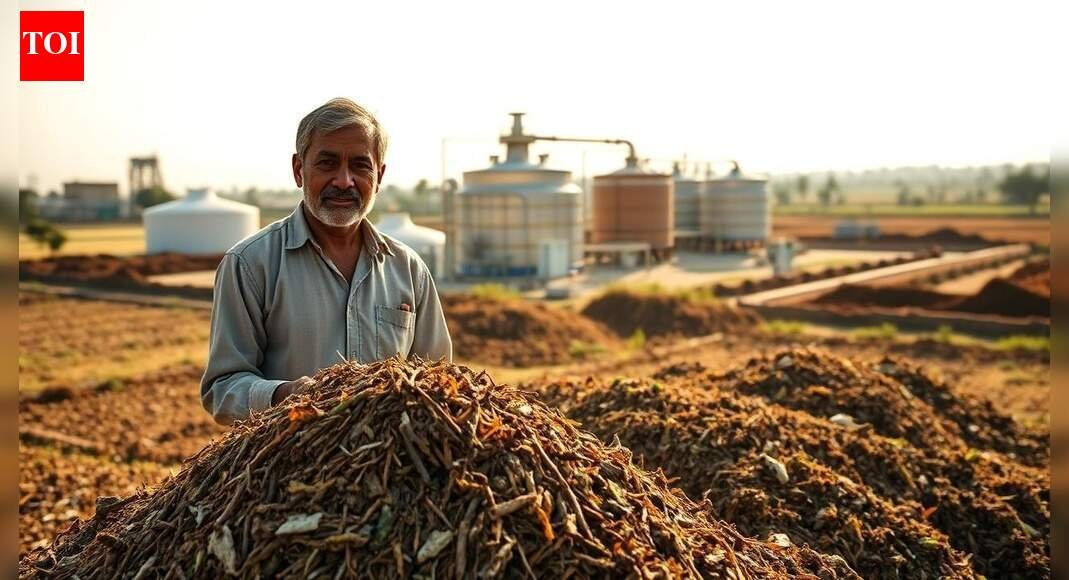
India has set up 132 Compressed Bio Gas (CBG) plants with a combined production capacity of 920 tonnes perday, with more capacity being added under the Sustainable Alternative Towards Affordable Transportation (SATAT) initiative, Union petroleum and natural gas minister Hardeep Singh Puri said on X.In a social media post, the minister said the CBG programme is helping convert farm and organic waste into clean fuel while supporting rural incomes and lowering emissions. “What was once waste is now powering progress. India has 132 Compressed Bio Gas plants producing 920 TPD today, with more capacity coming up under SATAT,” Puri wrote.SATAT was launched on October 1, 2018, with the objective of creating an ecosystem for producing CBG from waste and biomass sources across the country. Under the initiative, oil and gas marketing companies such as IOCL, BPCL, HPCL, GAIL and IGL have invited expressions of interest from entrepreneurs to procure CBG for marketing, according to news agency ANI.Separately, the minister also highlighted recent steps taken to boost India’s domestic energy production. Puri said that in December 2025, India offered 50 new exploration and production blocks covering oil, gas and coal bed methane assets, describing it as a significant step towards strengthening energy security.“We are offering 50 new E&P blocks across Open Acreage Licensing Policy (OALP-X): 25 blocks, Discovered Small Field (DSF-IV): 55 fields across 9 contract areas/blocks. Special CBM Bid Rounds 2025 and 2026: 3 blocks (2025) & 13 blocks (2026),” the minister said in his post.Under the Open Acreage Licensing Policy, 25 blocks covering around 1.83 lakh square kilometres are on offer, including onland, shallow water, deepwater and ultra-deepwater blocks. Puri said these blocks allow exploration throughout the contract period, graded royalty rates and flexibility in work programmes.The Discovered Small Field Bid Round-IV includes 55 discoveries across nine contract areas, with incentives such as zero royalty for the first seven years in deepwater areas and relaxed eligibility norms. Similar incentives apply to coal-bed methane rounds, including pricing freedom and cost reimbursement for mandated drilling in the 2026 round, as per ANI.Puri also said the Oilfields (Regulation and Development) Amendment Act, 2025 and the PNG Rules 2025 have introduced a unified regulatory framework to improve ease of doing business in the sector.
NEW DELHI: AIMIM leader Imtiaz Jaleel on Friday said he would “cut off the hand of any individual who dares to touch Muslim women with ill intent,” amid controversy over Bihar CM Nitish Kumar’s action of pulling down a hijab from a woman’s face.Addressing a rally in Maharashtra, Jaleel also took a veiled jibe at BJP, alleging that “so-called secular parties” often support goons and criminal elements but hesitate to stand with Muslims.“A minister from Uttar Pradesh had made an objectionable remark. If anyone dares to touch a Muslim sister with ill intent, I will cut his hand,” the former Aurangabad MP said, referring to a comment by UP minister Sanjay Nishad on the hijab row involving Nitish Kumar. Nishad had said, “What would have happened if he touched her somewhere else?” and later clarified that his comment was twisted and misinterpreted.Campaigning for 17 AIMIM candidates in the upcoming January 15 municipal corporation elections, Jaleel accused other parties of branding AIMIM as communal while failing to support Muslims.“Secular parties often brand AIMIM as a communal and untouchable party, whereas in reality, they themselves are the most communal and do not want Muslims to emerge as leaders. They have no hesitation in favouring goons and criminal elements, but they hesitate to stand with Muslims or give proper representation to the Muslim community,” he alleged, as quoted by PTI.Jaleel also mocked Maharashtra Social Justice Minister and Shiv Sena leader Sanjay Shirsat’s demand to freeze AIMIM’s ‘kite’ election symbol, citing the coincidence of the civic polls with the Makar Sankranti festival. In a lighter remark, he urged Shiv Sena and BJP leaders not to wear “watches” for the next month, targeting the ‘Clock’ symbol of their Mahayuti ally, the Nationalist Congress Party (NCP).
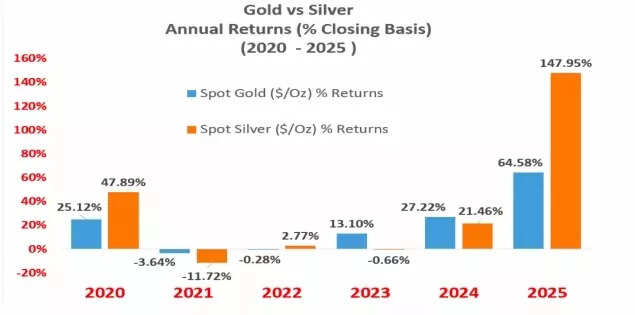
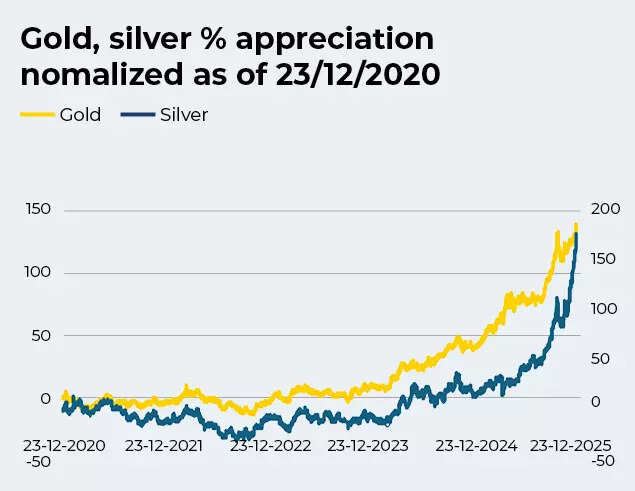
Gold and silver price rallies in 2025 left investors gasping – the stellar run of the precious metals was unprecedented and many had not predicted such a steep rise in the prices of the yellow and white metals. But what happens in 2026? Will gold and silver continue their record breaking run this year as well?Gold prices had an exceptional year in 2025 continuing their bull run and witnessing around 52 new record highs while also the strongest annual returns since 1979. Gold closed at $4319 on the last trading day of 2025; thus, it gained around 65% last year, while silver surged 148% to $71.66.In the last five years, gold has rallied from $1898 to $4488; thus, giving a return of 127%, while silver in the same period surged from $26.40 to $71.66, which amounts to a return of 171%. So, in the last five years silver has outperformed gold, though the major catch-up play by silver happened in the second half of 2025. Since August 27 silver has rallied nearly 82%, while gold has been up by 28%.
Why did gold & silver rally so much in 2025?There were a multitude of factors that contributed to the stellar rallies in the two metals in 2025, and some of these are expected to continue to propel these precious metals to new highs this year as well.Praveen Singh, Head – Commodities and Currencies, Mirae Asset ShareKhan says that the stellar rally in the precious metals in 2025 has been driven by a confluence of strong fundamental factors including political concerns (rising social instability risk) , geopolitical tensions (fragmentation, slowdown in globalization, realignments of global powers initiating reset of geopolitical order), trade wars (risks to global economy, increased polarization), mounting macroeconomic worries as surging global debt and reckless fiscal spending, and debasement of currencies by central banks and governments in key economies have made hard assets ,like gold and silver natural assets of choice.
Abhilash Koikkara, Head – Forex & Commodities at Nuvama Professional Client Group explains, “In 2025, deep structural factors rather than merely short-term money speculation drove up the prices of gold and silver. Although short-term fluctuations have been influenced by the US Federal Reserve policy, the primary drivers were more fundamental.” According to Koikkara, the rise of gold signals a change in the world’s financial and monetary system. “Gold has evolved from a passive safe haven to a crucial macro asset due to rising central bank buying, mounting fiscal pressure in developed nations, and a general shift towards de-dollarisation,” he told TOI. Liquidity conditions, which had been tightening for over a year, began stabilising in early 2025 which is historically a favourable environment for gold.
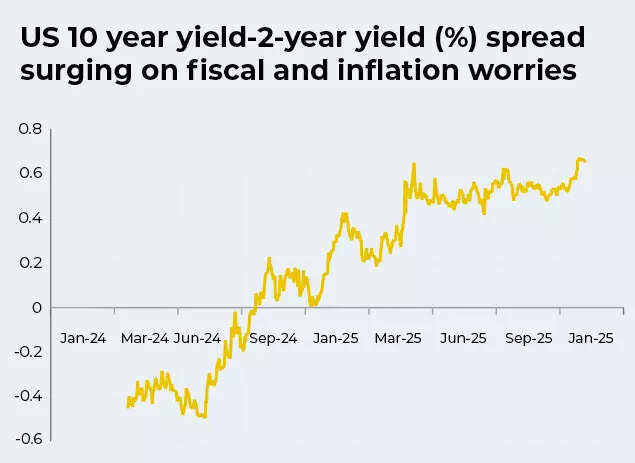
On the other hand, silver’s rally, while aligned with macro tailwinds, is driven more directly by physical market fundamentals. “Structural supply deficits, accelerating industrial demand from electrification, renewable energy, AI, and electronics, along with robust investment inflows, have tightened the market. Unlike previous cycles, silver’s strength is grounded in consumption growth and supply inelasticity rather than speculative excess,” he says.In fact, Praveen Singh points out that the traditional relationship of gold with key drivers like US Dollar and yields has broken. “Threats to the reserve status of the US Dollar are multiplying due to US twin deficits, weaponization of the currency, trusts in US treasuries getting eroded and the US President Trump adopting ‘US first policy’,” he tells TOI.
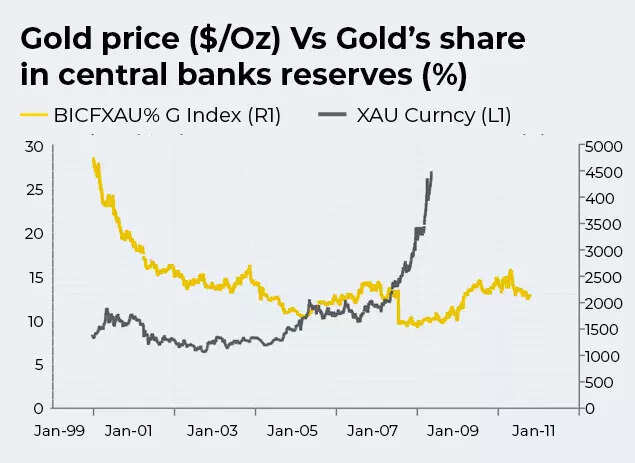
Interestingly, global central banks continue to diversify their forex reserves as they reduce their dependence on the US Dollar by adding more gold to their reserves. “This diversification has been a key factor in boosting gold prices in recent years, especially since 2022 as the West confiscated nearly $300 worth of Russian assets in the wake of Russia-Ukraine war,” Singh adds.Jateen Trivedi, VP Research Analyst – Commodity and Currency, LKP Securities says that rupee weakness has boosted the prices in domestic market, as rupee saw weakness of 5% this year. Dollar weakness, de-dollarisation themes, and concerns around global debt sustainability have increased allocation toward precious metals. Silver has also benefited from strong industrial demand linked to clean energy, EVs, and grid infrastructure, adding a structural demand layer to the rally.Maneesh Sharma, AVP – Commodities & Currencies, Anand Rathi Shares & Stock Brokers is of the view that the sudden spike in import demand from key consuming nations such as India prior to Diwali festival along with increased interest seen in Global ETFs were also behind the rally in second half of 2025 while 3 consecutive rate cuts seen in US since September onwards also kept the investment flows intact in Gold. Overall a supercharged geo-economic environment combined with dollar weakness kept the safe haven flows intact, he told TOI.But why did silver rally more than gold?Praveen Singh of Mirae Asset ShareKhan explains:
Initially, it was gold’s rally that provided a solid foundation for silver to rally as a catchup play. Silver eventually built on gold’s rally to surge much more than gold as investors are piling into silver on the grey metal being a cheaper alternative. That silver is a much smaller counter as compared to gold; the former’s price action is usually quite sharp. As the key central banks, especially the US Fed, cut interest rates into elevated inflation, it is leading to inflation hedge buying.
Long-term Gold/silver ratio (since 1970) is around 60; gold/silver ratio has plummeted from 105 in April to 60.24 on investors piling into silver as a cheaper alternative. China imposing export restrictions on silver exports from January 1, 2026, has also been a major factor behind silver significantly outperforming gold towards the end of the year.
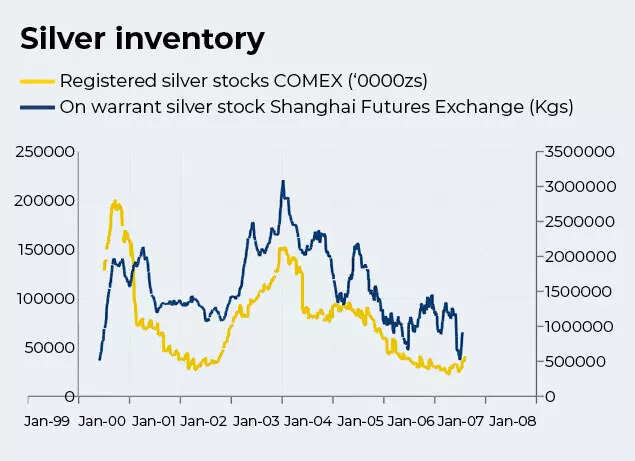
Investors’ interest in silver is visible in sharply rising global ETF holdings. Silver ETF holdings rose 21% YTD or by 147 Moz in 2027, which is equivalent to 4583 tons. As silver ETF demand soars, inventory dislocation amid steep inventory decline continues to keep the silver market tight, which is reflected in elevated lease rates. Lease rate is currently around 7% as compared to historical average of 0.3-0.5%.
Nearly 59% of silver is currently consumed for industrial purposes, making it highly susceptible to developments in solar energy, electric vehicles, semiconductors, artificial intelligence infrastructure, and electronics. “The World Silver Survey 2025 projects a deficit of 117.6 million ounces, extending a shortfall that has existed for nearly six years. These pressures have been exacerbated by investment demand. While investor positioning is still underdeveloped in comparison to historical peaks, ETF holdings have increased to 850 million ounces, the highest level in more than three and a half years. Silver is far more sensitive to favorable macro and liquidity changes than gold due to a combination of limited supply, growing industrial use, and increased financial demand,” he tells TOI.
Where are gold and silver headed in 2026?Maneesh Sharma of Anand Rathi Shares & Stock Brokers tells TOI that gold should continue to perform steadily, supported by expectations of lower global interest rates, geopolitical uncertainty, continued central bank buying, and a softer US dollar along with continued ETF inflows. “However, its gains may moderate as investors continue to adjust to higher prices.” Silver, on the other hand, despite higher volatility, may continue to outperform gold in percentage terms due to its dual role as both a precious and industrial metal, he said. “For the next one year, gold could deliver 25–30% returns on an annual average basis. Meanwhile Silver may still offer higher returns on an annual average basis but volatility with intermittent corrective moves could remain high in Silver as compared to gold,” he said.Between the two, silver has a higher probability of outperforming gold, especially in the first half of 2026, primarily due to persistent supply deficits and strong structural industrial demand from sectors such as Solar energy, EVs, AI infrastructure & electronics, he added.“In rupee terms MCX Gold futures could test Rs 1,60,000 – 165,000 / 10 gm on the higher side, while silver could witness levels of around Rs 3,25,000 – 3,50,000 / kg on the higher side in futures contract. However Silver always remains a highly volatile commodity with the market being less liquid & roughly 8 – 9 times smaller than the gold market, thus it always shows amplifying price moves as compared to gold,” he predicts. Praveen Singh of Mirae Asset ShareKhan tells TOI:
Gold is expected to rise to $5000/Oz (Rs 150,000) by 2026-end. Silver is expected to rise to $85-$95 (Rs 275,000 to Rs 3,00,000) by the end of the year.
In more favorable scenarios, we may see gold rising to $5500 (Rs 165,000) and silver surging to $125 (Rs 400,000). Silver can rise exponentially should China strictly follow its silver export restrictions which now would be license based instead of quota system. Only those Chinese producers with proven export track records, with capacity of more than 80 tons per annum and a $30 million credit line will be allowed to export.
We expect gold to eventually rise to Rs 2000,000 in the coming years, while silver may rise to Rs 500,000, though trajectories could be punctuated with sharp corrections, long consolidations and huge volatility.
Jateen Trivedi of LKP Securities says Comex gold could target $5,000–$5,200, while MCX gold may move toward ₹1,50,000–₹1,55,000 per 10g, supported by rate cuts, central bank demand, and geopolitical hedging.“Silver could aim for $100–$110 on Comex and ₹3,00,000–₹3,25,000 per kg domestically, driven by industrial demand growth and continued investment interest,” he tells TOI.(Disclaimer: Recommendations and views on the stock market, other asset classes or personal finance management tips given by experts are their own. These opinions do not represent the views of The Times of India)
NEW DELHI: The Board of Control for Cricket in India (BCCI) on Saturday announced the squad for the upcoming three-match One-Day International series against New Zealand, starting January 11 at the BCA Stadium in Vadodara.Shubman Gill has returned as captain after missing the previous ODI series against South Africa due to injury.Shreyas Iyer has been included in the squad and named vice-captain. However, his availability is “subject to fitness clearance from BCCI COE,” the board said in a release.
Inside details of why Shreyas Iyer’s return to cricket has been DELAYED
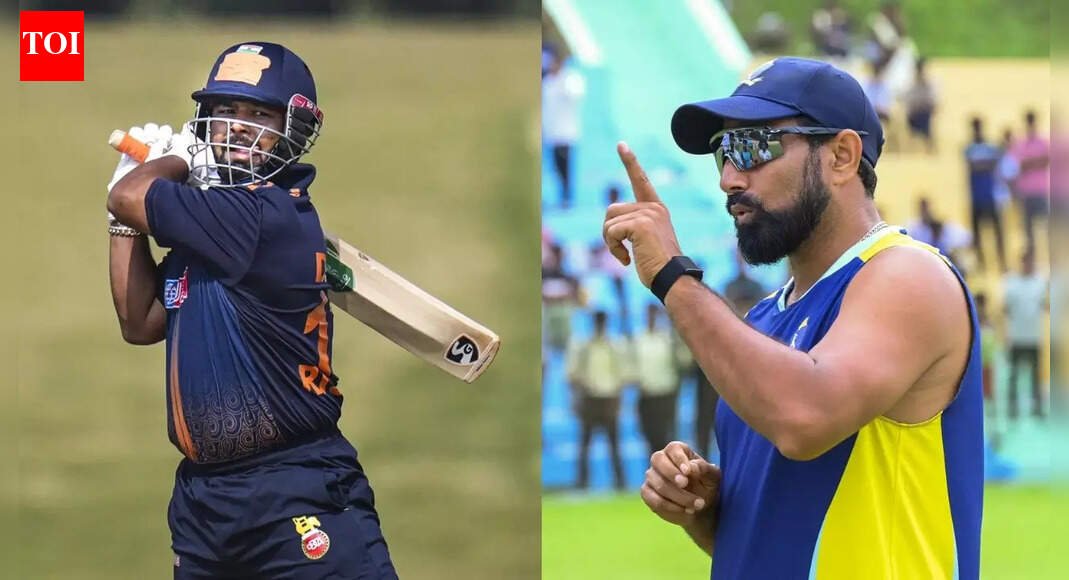
Despite reports suggesting he could be left out, wicketkeeper-batter Rishabh Pant has retained his place in the squad as Ishan Kishan, who has returned to India’s T20 setup, was not included.All-rounder Hardik Pandya has also not been included. Explaining the decision, the BCCI release said, “Hardik Pandya has not been cleared by the BCCI COE to bowl 10 overs in a match, and considering the ICC Men’s T20 World Cup to follow, his workload is being managed.”Nitish Kumar Reddy has been named in the squad in Pandya’s place.While pacer Mohammed Siraj is back in the squad, Mohammad Shami couldn’t find a place in the squad despite doing some heavy lifting in the domestic cricket in the last few months, and it is now all but clear that the BCCI has decided to move on from Shami.The first ODI of the series will be played in Vadodara on January 11. The other two matches will be played in Rajkot and Indore on January 14 and 18 respectively.India’s ODI squad: Shubman Gill (C), Rohit Sharma, Virat Kohli, KL Rahul (WK), Shreyas Iyer (VC), Washington Sundar, Ravindra Jadeja, Mohd Siraj, Harshit Rana, Prasidh Krishna, Kuldeep Yadav, Rishabh Pant (WK), Nitish Kumar Reddy, Arshdeep Singh, Yashasvi Jaiswal
Madhya Pradesh’s Indore is facing a public health emergency as the Bhagirathpura locality has been hit by a waterborne disease outbreak, with 9 confirmed deaths and over 1400 affected. Now, the death of a 6-month-old child has raised outrage. The infant died after diarrhea and high-fever, and contaminated water is suspected to be the cause. The father of the child said, “He had diarrhoea and fever. We took him to the doctor on December 26. The doctor gave medicine and we brought him home. The child was fine for two days but again, suddenly, at night, he developed a very high fever. He vomited, and he died at home on December 29. This child was born after 10 years. I have a daughter, and this son was born 10 years later. He was 6 months old.”
Cleanest City Hit By Water Contamination As Lab Links Indore Diarrhoea Outbreak To Pipeline Leak
According to Media reports, the outbreak began after sewage water from a local toilet seeped in the bhagirathpura water supply. After the contamination, locals began developing symptoms of vomiting, diarrhoea, dehydration and high fever. The Chief Medical and Health Officer (CMHO) Dr. Madhav Prasad Hasani confirmed that lab tests have detected contamination in drinking water caused by a leak in the main supply pipeline.
How waterborne bacteria can put life at risk
The World Health Organisation notes that contaminated drinking water is one of the most underestimated public health threats globally. Water-borne bacteria present in the contaminated water can cause rapid severe infections. Also, the water-continated by sewage water, as in the Indore case, may carry bacteria such as Escherichia coli, Salmonella, Shigella, and Vibrio cholerae. A study titled “Health risks to children from exposure to fecally-contaminated recreational water”, published in the PLOS One Journals notes:
Exposure to sewage-polluted water is linked to diarrhea, vomiting, fever and in severe cases can lead to hospitalisation.
In young children, these infections can escalate rapidly, leading to dehydration, electrolyte imbalance, sepsis, and organ failure, outcomes that can become life-threatening within hours if treatment is delayed.
How to stay protected from contaminated water
While the devastating mishap can not be undone, and proper sanitization of the water will hopefully be done by government-level measures, it is important to know how to stay protected from water contamination in such life-threatening situations. Here are some recommendations from US Centres for Disease Control and Prevention (CDC): CDC notes consuming boiled water is the best way to kill germs.CDC notes chemical disinfectants can kill most germs in water. These include: unscented household chlorine bleach, iodine, or chlorine dioxide tablets. Note- These measures are for emergency situations, and these do not guarantee safety against waterborne illnesses. It is recommended to avoid consumption of contaminated drinking water.
The Ashes 2025-26 series has ignited fierce rivalry between Australia and England across iconic venues like Perth’s Optus Stadium, Brisbane’s Gabba, and Adelaide Oval, captivating millions worldwide. Beyond the boundary, the wives and girlfriends (WAGS) of Australia’s top cricketers have stolen the spotlight, cheering passionately from the stands, sharing stylish moments on social media, and embodying unwavering support amid high-stakes Tests. These women, often spotted in elegant outfits blending comfort with cricket glamour, add a human touch to the intense battle for the urn, turning player milestones into family celebrations.
Wives and girlfriends of Australia cricketers at the Ashes 2025-26
Pat Cummins’ wife – Becky Cummins
Becky Cummins (Image source: X)
Pat Cummins, Australia’s captain leading the charge in the Ashes, draws strength from his wife Becky Cummins (née Boston), a devoted mother and pillar of stability. Married in a intimate Byron Bay ceremony in 2022 after dating since 2013, Becky has been by his side through triumphs like the 2023 ODI World Cup, often posting family glimpses with their children Albie (born 2021) and Edi (born February 2025). Fans spotted her in the Perth crowd during the first Test, her poised presence a calming force as Cummins navigated leadership pressures.
Travis Head’s wife – Jessica Davies
Jessica Davies (Image source: X)
Travis Head, the explosive batter who topped Australia’s run charts with 437 in the series so far, celebrates his dynamic life with wife Jessica Davies, a model-turned-entrepreneur and mental health advocate. The couple, childhood friends turned soulmates, wed in a picturesque Adelaide ceremony in April 2023, welcoming daughter Milla Paige in 2022 and a second child—a son—in late 2024. Jessica’s vibrant Instagram captures her at the Gabba for the pink-ball Test, radiating pride in a chic sundress while balancing motherhood and her restaurant ventures in Sydney and Canberra.
Steve Smith’s wife – Dani Willis
Dani Willis (Image source: X)
Steve Smith, vice-captain and middle-order maestro, shares his world with wife Dani Willis, a lawyer with a passion for interior design and Pilates. They met during the 2011-12 Big Bash League at a Sydney bar, got engaged atop New York’s Rockefeller Center in 2017, and married at Bandooley Estate in 2018. Dani, often seen courtside or pitchside in tailored outfits, cheered Smith during the MCG Boxing Day Test, her low-key elegance complementing his comeback story post-injury.
Usman Khawaja’s wife – Rachel Khawaja
Rachel Khawaja (Image source: X)
Usman Khawaja, the seasoned opener, is supported by wife Rachel Khawaja (née McLellan), a marketing graduate, business development manager, and 7Cricket reporter who converted to Islam before their 2018 nikah. With dual Australian-New Zealand citizenship, Rachel met Usman at university in 2015; they now raise two daughters in a serene all-white Sydney home. Her presence at Adelaide Oval, blending professional poise with family devotion, highlights her role in Usman’s resilience during probing spells from England’s bowlers.
Marnus Labuschagne, Australia’s No.3 mainstay with 174 runs, leans on wife Rebekah Labuschagne (née Gillam), whom he met through their shared Baptist church community in Brisbane’s Redlands. Married since May 2017 at Sirromet Wines, the couple welcomed a daughter in September 2022 and announced their second child in January 2025, just before the Sydney finale. Rebekah’s heartfelt social media posts from the SCG stands capture her quiet strength, fueling Labuschagne’s focus amid fluctuating form.
Cameron Green’s girlfriend – Emily Redwood
Emily Redwood (Image source: X)
Cameron Green, the rising all-rounder, recently proposed to long-time girlfriend Emily Redwood in February 2025 at Yallingup beach, Western Australia, after five years together. Emily, his fitness inspiration during injury recoveries, has been pivotal in his growth; their engagement photos went viral, showing sunset hugs and diamond-ring joy. She turned heads at Optus Stadium in casual chic athleisure, her youthful energy mirroring Green’s aggressive cameos.
Josh Hazlewood’s wife – Cherina Murphy Christian
Cherina Murphy Christian (Image source: X)
Josh Hazlewood, the towering pacer, married high school sweetheart Cherina Murphy Christian in August 2022 in Hunter Valley, with their son Zac born in November 2024. A professional makeup artist from Tamworth’s Oxley High, Cherina motivates Hazlewood’s precision bowling, often attending award nights and IPL matches incognito. During the Brisbane Test, her subtle celebrations from the members’ enclosure underscored their grounded romance.
Nathan Lyon’s wife – Emma McCarthy
Emma McCarthy (Image source: X)
Nathan Lyon, the veteran off-spinner, found enduring love with wife Emma McCarthy, a real estate agent; they wed in July 2022 after dating since 2017, post his previous marriage. Emma helped him rebound from the 2019 Ashes heartbreak, sharing a $3.8 million Sydney townhouse since 2020. Her elegant figure in the Adelaide crowd during Lyon’s wily spells added glamour, her supportive gaze a constant amid turning pitches.
Alex Carey’s wife – Eloise Carey
Eloise Carey (Image source: X)
Alex Carey, wicketkeeper with 291 runs including an emotional Adelaide century dedicated to his late father, shares tears and triumphs with wife Eloise Carey, a therapist and former model from Australia’s Next Top Model Season 5. Married since September 2016 after meeting in the early 2010s, they have two children, Louis and Clementine; Eloise’s sobbing joy in the stands during his ton became an iconic Ashes image.
Josh Inglis’ wife – Megan Kincart
Megan Kincart (Image source: X)
Josh Inglis, the backup keeper-batter who recently wed long-term partner Megan Kincart in late 2025 after their April 2024 engagement, balances family with flair. Parents to son Oscar (born June 2023), Megan’s glamorous feed showcases match-day outfits from Perth to Melbourne. Her presence at the MCG, cradling their toddler, symbolizes the new generation of WAGS blending parenthood with pitchside passion.
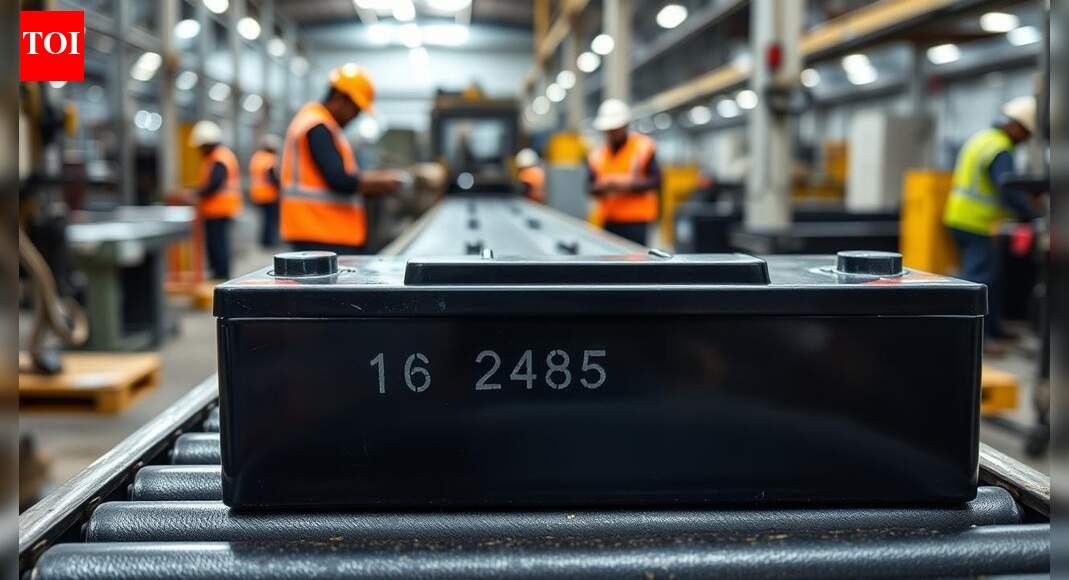
The ministry of road transport and highways has proposed assigning an Aadhaar-like unique identification number to electric vehicle (EV) batteries to ensure end-to-end traceability and improve recycling efficiency, according to draft guidelines issued by the ministry.Under the proposed framework, battery producers or importers will be required to assign a 21-character Battery Pack Aadhaar Number (BPAN) to every battery they introduce in the market, including those used for self-consumption, as per news agency PTI. They will also have to upload relevant Battery Pack Dynamic data on the official BPAN portal.“The battery producer or importer shall have the obligation of assigning a unique Battery Pack Aadhaar Number (BPAN) to each battery that they introduce in the market and the battery they put to self-use,” the draft guidelines said. It added that the BPAN must be placed in a “clearly visible and accessible position” and located in a way that it “cannot be destroyed or deteriorate.”As per the ‘Guidelines for Implementation of Battery Pack Aadhaar System’, the BPAN will capture and store key information throughout the battery’s lifecycle, starting from raw material extraction and manufacturing to usage, recycling or final disposal. Any change in attributes due to recycling or repurposing will require the issuance of a new BPAN by the same or a new producer or importer.The ministry said the system aims to bring greater transparency, accountability and sustainability to the battery ecosystem by enabling accurate tracking of battery performance and environmental impact. BPAN is also expected to play a key role in facilitating second-life usage, regulatory compliance and efficient recycling.Electric vehicle applications currently account for 80–90 per cent of total lithium-ion battery demand in India, far exceeding demand from industrial or non-automotive uses. While the guidelines recommend applying BPAN to industrial batteries above 2 kWh, EV batteries have been proposed as a priority segment during standard formulation, given their scale, safety implications and regulatory relevance.“This approach will ensure that the Battery Pack Aadhaar framework addresses the most impactful segment of the Indian battery ecosystem in its initial phase,” the draft said.The ministry has recommended that the framework be developed through the Automotive Industry Standard route under the Automotive Industry Standards Committee, enabling structured stakeholder consultation, technical validation and alignment with existing automotive regulations, as per PTI.
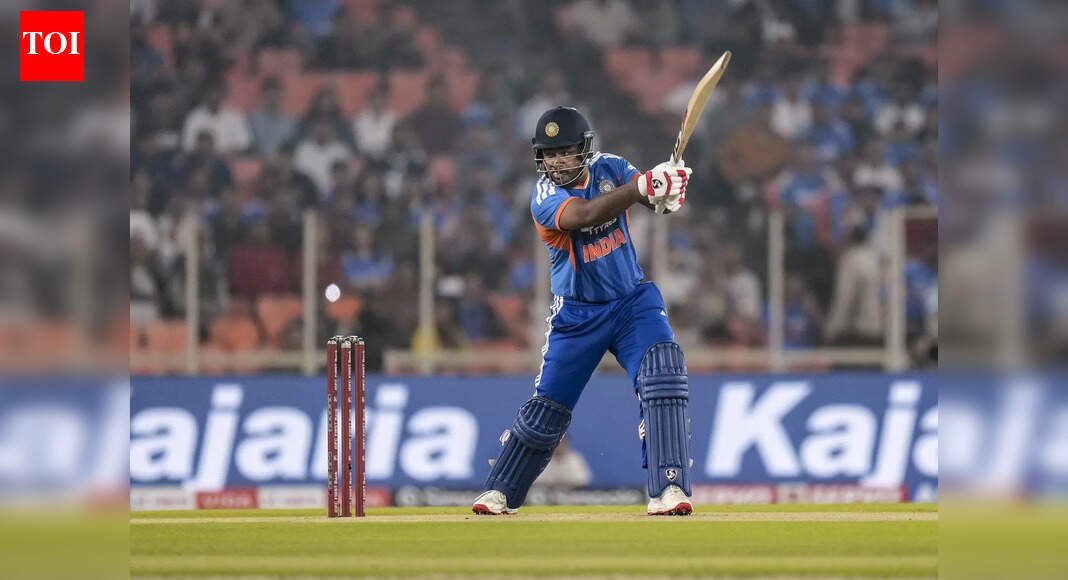
Sanju Samson’s timing could not have been better. With the Indian ODI squad set to be picked on Saturday, the Kerala batter produced a commanding century against Jharkhand, putting himself firmly back into the selection conversation. Chasing a stiff target of 312, Samson led Kerala’s charge with a fluent hundred, anchoring a massive opening stand of 212 runs with captain Rohan Kunnummal. Kunnummal was equally destructive, smashing 124 with eight fours and eleven sixes before falling, but by then the damage had been done. Samson looked assured throughout, pacing his innings with clarity and intent, exactly the kind of knock selectors tend to notice on the eve of squad meetings.
Sarfaraz Khan is knocking the selectors’ door again
The innings carries added significance for Samson, who last played an ODI for India in 2023. Since then, he has remained on the fringes despite scoring a memorable century against South Africa in South Africa. His ODI numbers make a strong case. In 16 matches, Samson has scored 510 runs from 14 innings at an impressive average of 56.67, striking at 99.61. In contrast, it was a quieter outing for Ishan Kishan in the same match. Kishan, who recently forced his way back into India’s T20 World Cup plans through strong domestic form and a standout Syed Mushtaq Ali Trophy, managed just 21 off 21 balls before being dismissed. Across his ODI career, Kishan has played 27 matches, scoring 933 runs at an average of 42.41 with a strike rate of 102, numbers that still keep him firmly in the race. Elsewhere, Rishabh Pant reminded everyone of his white-ball value with a brisk unbeaten 72 off 45 balls for Delhi against Services. Pant’s innings ensured a comfortable chase of 178 and underlined his ability to finish games under pressure. In 31 ODIs, Pant has scored 871 runs at an average of 33.5 and a strike rate of 106, adding another strong performance to his case. With KL Rahul established as India’s first-choice wicketkeeper in ODIs, the battle for the second spot is wide open. Samson’s century, Pant’s fluent knock, Kishan’s overall record and Dhruv Jurel waiting in the wings have given the selectors plenty to think about.
NEW DELHI: The Telangana legislative assembly has passed a bill that scraps the “two-child norm” that barred individuals with more than two children from contesting in the local body elections.Panchayat raj minister Danasari Anasuya Seethakka, citing the state’s declining fertility rate, lower than the replacement rate, argued that the provision had outlived its relevance.She stated that the two-child norm was implemented in 1994 as a population control measure to address concerns such as food security, unemployment, and poverty arising from the population surge of the 1980s and 1990s.She said the government reviewed the population policy nearly three decades after it was enacted, noting that demographic trends had undergone significant changes. The fertility rate in rural Telangana currently stands at 1.7, which is below the replacement rate of 2.1, and if it continues at this level, it could adversely impact the state’s long-term demographic balance.The minister said the government believes maintaining the replacement fertility rate is essential for the future of the coming generations. The decision was taken after considering the views of representatives of Panchayat Raj institutions, she added.Observing that citizens are now opting for smaller families, Seethakka cautioned that a steep decline in population growth could lead to undesirable consequences.She said the government is proposing amendments to the Telangana Panchayat Raj Act, 2018, both to address the declining fertility rate and to facilitate the conduct of local body elections.The bill was later passed by the Telangana assembly, replacing an ordinance that had been promulgated earlier for the same purpose.
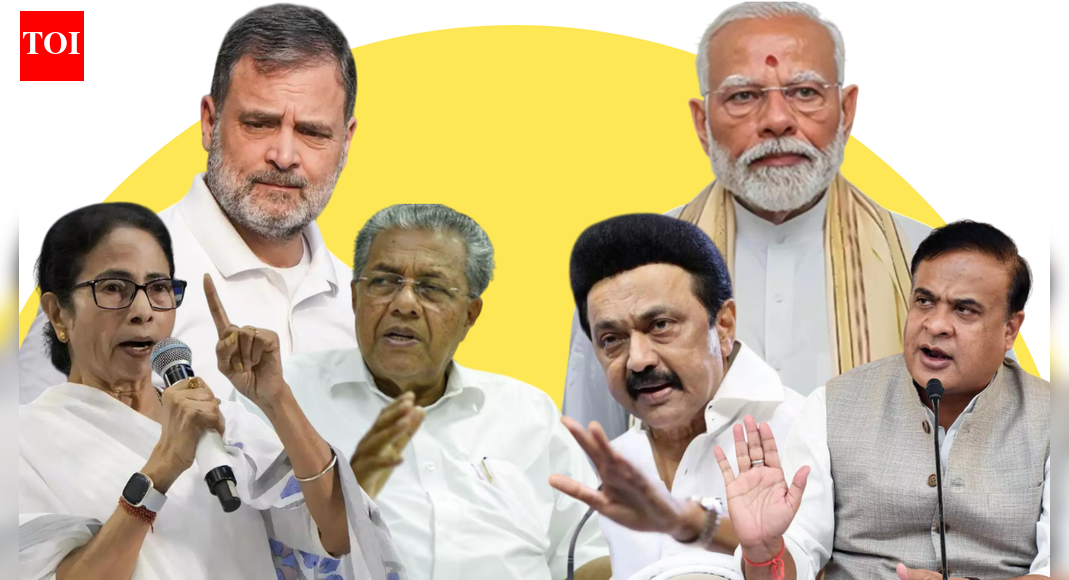
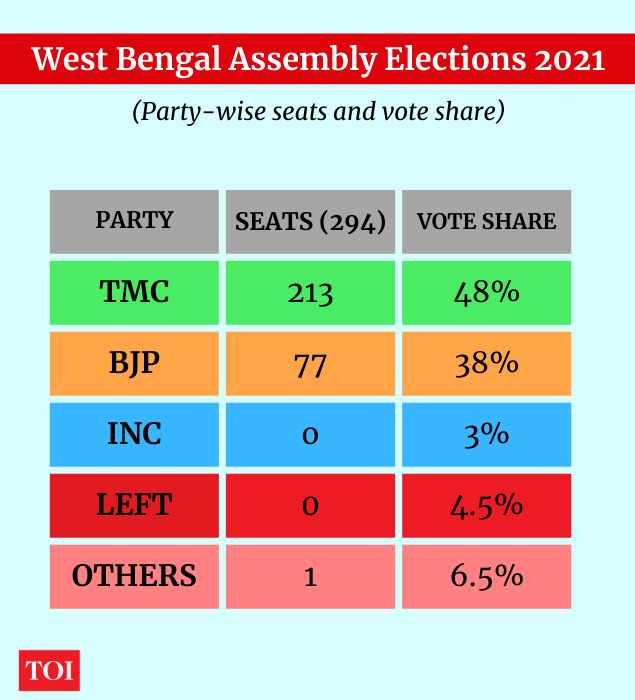
The year 2026 is finally here and we know it will not be a routine stop on the electoral calendar. This year’s calendar is filled with elections, starting with the long-overdue Mumbai-Pune civic polls. Later, with high-stakes assembly elections due in West Bengal, Tamil Nadu, Kerala, Assam and Puducherry, it will place some of the most influential politicians under rare and sustained scrutiny. For many leaders, the results will define not just the fate of their governments and party, but also their relevance heading into the 2029 Lok Sabha elections.Across these five states and a Union Territory, regional parties are strong and national parties are testing the outer limits of their expansion. What unfolds in 2026 will reshape the party’s existence, recalibrate the opposition’s cohesion and test the BJP’s claim of being a truly pan-Indian force. At the centre of it all are a dozen leaders whose careers may pivot decisively over the year.West Bengal: Mamata Banerjee vs Dilip GhoshWest Bengal remains one of the most politically charged battlegrounds of 2026. The pre-campaign has already started with high-voltage remarks amid the Election Commission’s Special Intensive Revision (SIR) exercise. For Mamata Banerjee, this election comes after a decade in uninterrupted power. Having crushed the Left and successfully repelled the BJP’s surge in the 2021 assembly elections, she now faces her toughest test yet. BJP’s momentum stalled in the 2024 Lok Sabha elections after it managed to win only 12 out of 40 seats. In the 2021 assembly election, it won 77 seats while TMC won the election by winning 213 seats.
A fourth consecutive term would cement Mamata’s status as Bengal’s long-term chief minister and one of the last regional leaders capable of stopping the BJP’s advance. But the margins matter. A slip below 200 seats from the 213 she won in 2021, or a BJP surge past the 100-seat mark, would signal vulnerability and weaken her leverage in national opposition politics ahead of 2029.Meanwhile, on the last day of 2025, Union home minister Amit Shah outlined an action plan for the party’s West Bengal unit while reviewing its preparedness for the assembly polls due early next year. Addressing the party’s public representatives, both past and present, Shah sought to project a unified front, while indicating former state president Dilip Ghosh as one of the main faces of the saffron camp for the elections.For Ghosh, the stakes are existential. The BJP firebrand and a former TMC heavyweight, he was central to the party’s rise to 77 seats in 2021. If the BJP crosses 120 seats in 2026, Ghosh emerges as Mamata’s undisputed challenger and Bengal’s principal alternative. Failure to capitalise on anti-incumbency, however, would raise uncomfortable questions about his influence and the BJP’s long-term strategy in the state.Tamil Nadu: Stalin vs Palaniswami — and the Vijay factorTamil Nadu’s contest is shaping up as a three-cornered test of endurance, revival and disruption.Chief minister MK Stalin is seeking a second term after the DMK’s comfortable victory in 2021. Retaining a tally above 130–140 seats would keep the DMK firmly dominant and reinforce Tamil Nadu’s role as a firewall against the BJP’s national narrative. But anti-incumbency pressures, over floods, employment, law and order, and urban governance, could open space for a revival of the opposition.
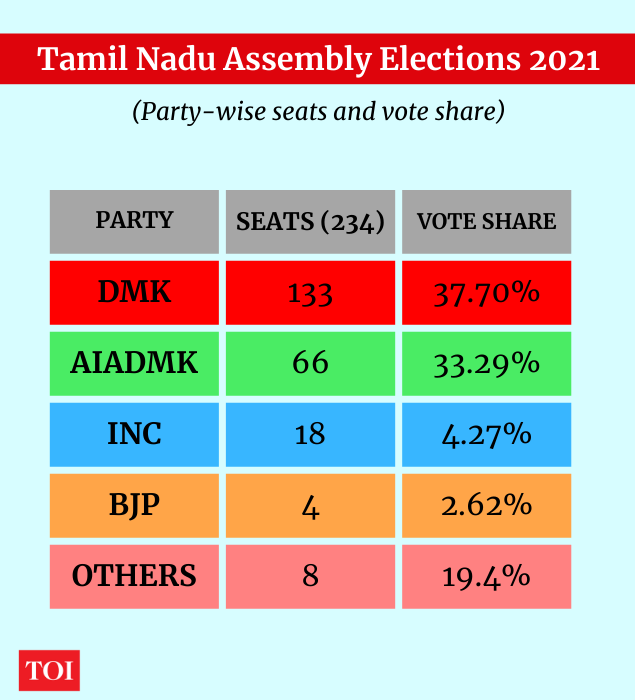
That revival hinges on Edappadi K Palaniswami, the former AIADMK chief minister and leader of the main opposition. A strong showing of 100-plus seats would restore the AIADMK as the DMK’s equal and slow the BJP’s attempt to subsume it. Another weak performance, however, could accelerate AIADMK’s marginalisation and strengthen the BJP’s influence within opposition politics in the state.Hovering over both is Joseph Vijay, the actor-turned-politician whose Tamilaga Vettri Kazhagam is eyeing its electoral debut. Even a victory in 10–20 seats could make him a kingmaker. A failure to break through, however, would mean another failed debut and would reinforce the DMK–AIADMK duopoly.In the 2021 assembly election, DMK won 133 seats, AIADMK got 66 seats and BJP got 4 seats.Kerala: Vijayan vs SatheesanKerala’s 2026 election carries unusually high stakes for both the Left and the Congress.For Pinarayi Vijayan, the CPI(M) stalwart and chief minister, the contest is about legacy. He is aiming for a historic third consecutive term—something rarely achieved in Kerala’s alternating political culture. Retaining a clear majority would keep the LDF dominant in the state and cement Vijayan’s stature as the Left’s most powerful surviving leader. But dipping below the 70-seat mark would likely end his era, especially amid criticism over governance, SFI-linked violence, and fatigue after two terms.
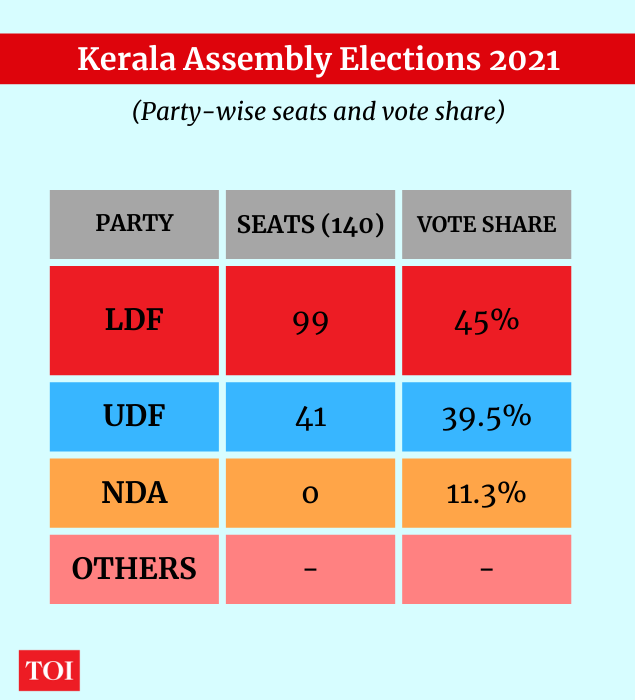
On the other side stands VD Satheesan, the Congress-led UDF’s leader of opposition. A crossing of the 80-seat mark would flip the House and revive Congress’s credibility in the South. Another narrow loss, however, would reinforce the perception that while Congress fights hard in Kerala, BJP’s slow creep, not the UDF, is the more consequential long-term challenger.In the 2021 assembly election, the LDF won 99 seats and the UDF got 41 seats, while the NDA was unable to open its tally. Assam: Himanta Biswa Sarma vs Gaurav GogoiAssam will test the durability of strongman politics versus generational transition.Chief minister Himanta Biswa Sarma is targeting a third straight NDA victory, with ambitious claims of winning over 104 of the state’s 126 seats.
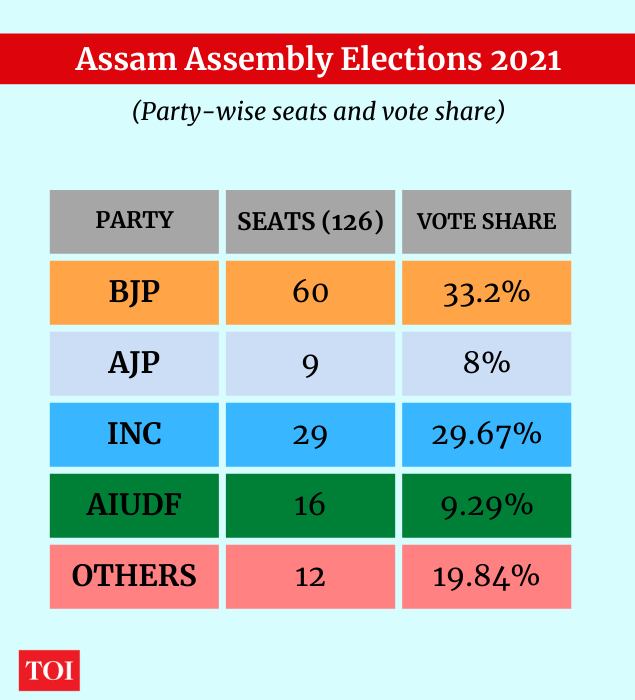
In 2021, Sarma delivered a decisive mandate as the BJP-led alliance won 75 seats in the 126-member assembly.Success would burnish his national ambitions and strengthen his standing as the BJP’s most assertive regional leader. But even a significant drop from the BJP’s 60 seats in 2021 would expose cracks beneath his muscular governance style, particularly amid CAA and NRC.Facing him is Gaurav Gogoi, Congress leader and son of former CM Tarun Gogoi. For Gogoi, 2026 is about emergence. A credible fight, around 40 seats for the INDIA bloc, would position him as Assam’s foremost Congress face and a potential future chief minister. A rout would risk pushing the Congress further into irrelevance in the state.Puducherry: N Rangasamy vs V VaithilingamSmall in size but large in symbolism, Puducherry could deliver one of 2026’s most telling verdicts.Incumbent CM N Rangasamy is leading a fragile AINRC-BJP coalition and currently governing with a narrow majority secured in 2021. Retaining power would validate his long-standing role as a political kingmaker and reinforce the BJP’s power of managing complex coalition politics.For V Vaithilingam, the Congress stalwart, 2026 is a chance at revival. A UDF victory with 15 or more seats would mark a dramatic comeback for a party that once ruled Puducherry. Failure would further cement the BJP’s foothold and underline Congress’s shrinking influence in smaller southern units.The bigger pictureBeyond state leaders, two national figures will shape the outcomes across all five battlegrounds.For PM Narendra Modi, 2026 is less about immediate electoral survival and more about narrative control. With high-stakes assembly elections this year, the Prime Minister’s role will be that of a campaign anchor and message-setter across multiple states, particularly West Bengal, Assam and the southern battlegrounds where the BJP remains an outsider.
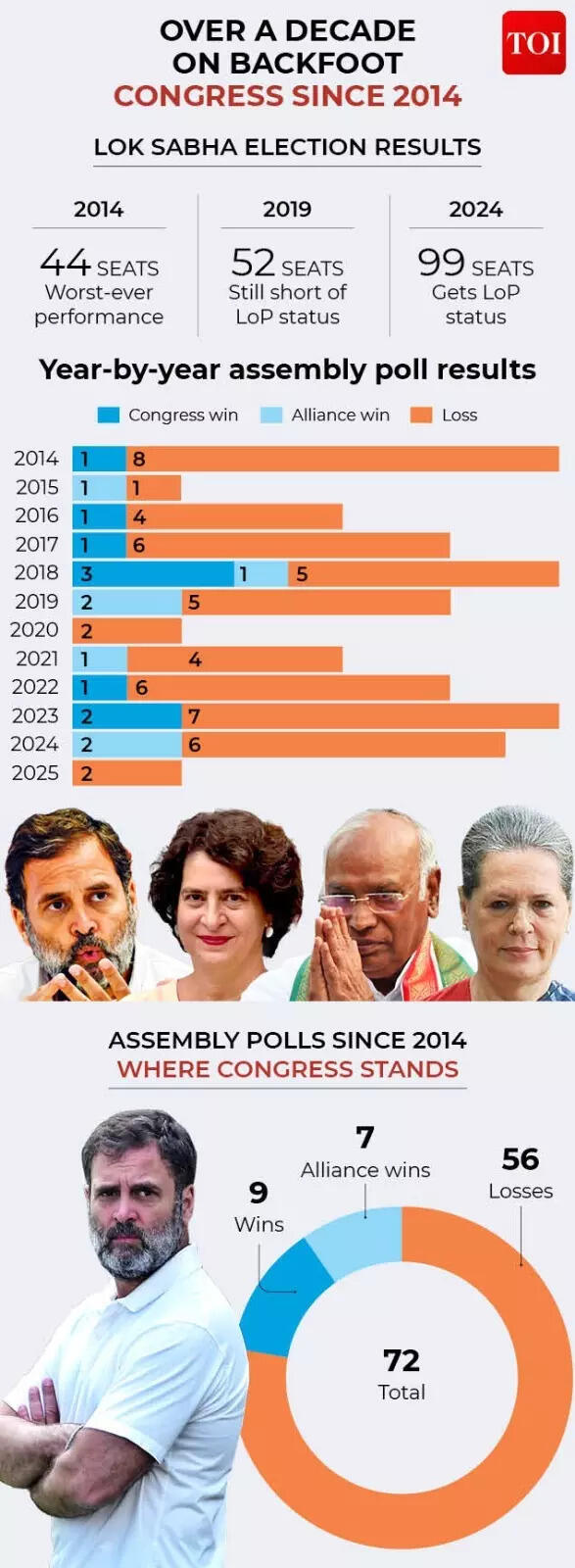
A strong BJP showing in Bengal or incremental gains in Tamil Nadu and Kerala would reinforce PM Modi’s claim of leading a truly pan-Indian party heading into 2029. Conversely, stagnation or reverses in these regions would embolden the opposition’s argument that the BJP’s expansion has peaked outside its core Hindi belt. The margins, not just victories, will matter in shaping how invincible PM Modi appears in the run-up to his third Lok Sabha contest.While not a mass leader, Nitin Nabin will be one of the BJP’s most closely watched backroom strategists in 2026. As a key organisational figure tasked with strengthening party units beyond the Hindi heartland, the outcomes in West Bengal, Assam and the South will directly reflect on his effectiveness.If the BJP improves booth-level performance, vote share and cadre depth in traditionally resistant states, Nabin’s stature within the party will rise sharply. But failure to translate central leadership popularity into durable state-level structures would revive internal questions about the BJP’s organisational limits and succession planning within its second rung of leadership.For Amit Shah, 2026 is the culmination of “Mission 2026”. As Union home minister and the BJP’s chief electoral architect, he is overseeing campaigns across Assam, Puducherry, Bengal, Tamil Nadu and Kerala. Clean sweeps in states the BJP already governs, combined with breakthroughs in the South, would further solidify his authority.For Rahul Gandhi, 2026 is a make-or-break year. After setbacks in Bihar and Delhi, strong UDF performances in Kerala or Puducherry, or credible INDIA bloc gains elsewhere, would validate his approach to coalition politics. Continued erosion would deepen doubts about his leadership at a time when Congress’s room for error is shrinking fast.
For Priyanka Gandhi, this year will decide if she is ready to take charge of the party, as demanded by several disgruntled party leaders in the past. As Congress’s most recognisable campaigner after Rahul Gandhi, her effectiveness will be judged by how far she can convert charisma and street connect into electoral dividends, particularly in states where the party is fighting to arrest decline rather than expand. Strong UDF performances in Kerala or a credible revival in smaller battlegrounds would bolster her standing as the party’s chief mobiliser. Meanwhile, in BMC elections, the Pawar senior and junior have united for the Pimpri-Chinchwad Municipal Corporation (PCMC) and the Thackeray cousins have joined hands for the Brihanmumbai Municipal Corporation (BMC) polls. If these reunions frutify, it could change the dynamics of mega Maharashtra alliances (MVA and Mahayuti).In 2026, people will look at Shashi Tharoor with the ‘will he, won’t he’ question. With his constant tug of war with his own party, it will be interesting to see if Congress finally makes him fall in line with the party lines or if he calls it quits. Tharoor’s influence will also be tested by outcomes closer to home in Kerala.A Congress-led UDF victory would strengthen Tharoor’s hand within the party, renewing speculation about a larger leadership role nationally or in the state. A loss, however, would blunt his political momentum. How Tharoor positions himself during the campaign, whether as a team player or a distinct voice, will be closely parsed by both supporters and critics.Stage is all for a year of back-to-back elections that matter. In the end, 2026 will not just choose governments, it will quietly decide who still matters when the long road to 2029 truly begins.