Breaking News
Ladakh’s new chief secy Ashish Kundra vows peace | India News


Ladakh's new chief secy Ashish Kundra vows peace
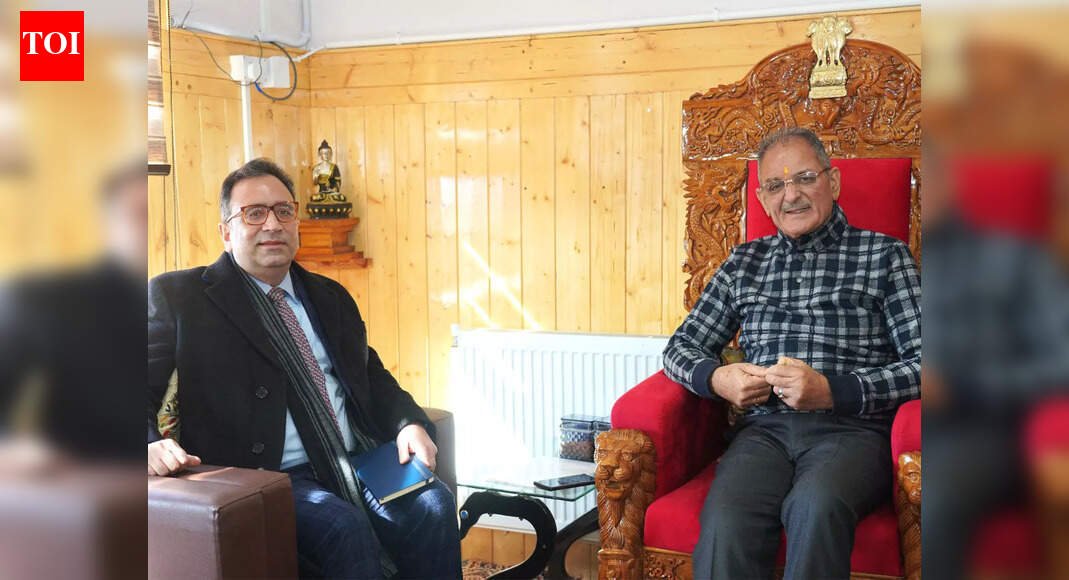
Ladakh chief secretary Ashish Kundra (left) calls on Ladakh LG Kavinder Gupta

NEW DELHI: Ladakh’s new chief secretary Ashish Kundra has listed addressing people’s aspirations as a key priority, stressing the Union territory’s “civilisational history of peace must be treasured and preserved”.The senior IAS officer, who took charge Thursday, comes in at a time of heightened tensions over demands by Leh Apex Body (LAB) and Kargil Democratic Alliance (KDA) for statehood and Sixth Schedule status.Four statehood protesters were killed in alleged police firing on Sept 24. Climate activist and LAB member Sonam Wangchuk was among the over 70 people arrested after the violence.Kundra, who previously served as principal secretary to Delhi LG VK Saxena, also echoed concerns over Ladakh’s fragile ecology, warning against “reckless construction in the name of development”.


Source link

Rats gobble up stored ganja samples in case against 5 ‘traffickers’ | Mumbai News


Mumbai: In a ratty turn of events in a “high-stakes” narcotics trial, the prosecution’s ganja samples in the case against five alleged drug traffickers were literally “devoured by rats” while sitting in storage. By the time the trial reached its conclusion, the envelopes that once supposedly held smaller samples of the nearly 130kg of ganja that were seized were found empty. “It is noted in the course of the trial all the envelopes containing samples were empty. The superintendent of the court has placed on record a report stating that the samples of alleged contraband therein were probably gnawed by rats. All the envelopes were found empty,” Special Judge H M Bhosale noted at the end of the 38-page judgment that highlighted a comedy of errors, procedural shortcuts, and a total lack of credible evidence leading to the acquittal. While the bulk of the seized drugs had already been destroyed before the magistrate, these specific samples were meant for the trial. “However, there are small particles in the envelopes. Therefore, it would be just and proper to send all the envelopes, in which samples were drawn, to the Anti-Narcotic Cell to take steps for its disposal as provided under the provisions in Narcotic Drugs And Psychotropic Substances (Seizure, Storage, Sampling and Disposal) Rules,” the judge concluded.The accused—Rajesh Jaiswal, Durgaprasad Yeddu, Mohammed Hanif Khan, Mohammed Nisar Shaikh, and Nijamuddin Shaikh—had been facing the prospect of years in jail following a 2021 raid by the Anti-Narcotic Cell (ANC) in Worli and the alleged seizure of 130kg of ganja.The prosecution’s case centred on a Jan 31, 2021 operation where the accused were allegedly intercepted in an SUV with heavy bags of contraband. However, the judge found despite the men demanding to be searched in the presence of a gazetted officer— a statutory right under NDPS Act—police ignored them. “This fact clearly establishes that despite specific demand by the accused, they were not produced before the nearest gazetted officer and their personal search was conducted...,” the judge noted. The judge observed the official letters claiming the men had waived this right appeared to be fabricated, stating, “All the letters indicating compliance of section 50 are manipulated documents.”The legal definition of the drug itself became a major hurdle for the state. Under the law, “ganja” specifically refers to the flowering or fruiting tops of the cannabis plant, excluding seeds and leaves when not accompanied by those tops. However, the police and chemical analysers failed to distinguish between these parts when weighing the “commercial quantity”.The judge pointed out the scientific negligence in the report, stating, “It is quite painful to note that the chemical analyser analysed leaves and seeds… and opined that said substance is ganja, when leaves and seeds when not accompanied by the tops are specifically excluded from the definition.”Further, the judge highlighted a massive delay in the inventory process, which took place two and a half years after the arrests. By the time the magistrate certified the evidence, the weight of the seized drugs had mysteriously dropped by more than 2kg. This discrepancy, combined with the fact that the samples drawn before the magistrate were never actually sent for laboratory testing, led the judge to conclude that the “primary evidence was not at all placed before the court”.The judge characterised the entire operation as a series of paper-only compliances. “The documents… are only prepared to show the compliance on paper,” he remarked, adding that the testimony of the senior officers was “not worth to rely upon”.


Source link

Magnus Carlsen extends his kingdom | Chess News


Magnus Carlsen extends his kingdom
Magnus Carlsen (Image credit: X)

If other elite chess players ask scientists to do a case study that proves that Magnus Carlsen is a different breed and hence should not be allowed to play against humans, they can be totally forgiven!By winning the World Rapid and Blitz titles in Doha, Qatar — his fifth such double and 20th overall world title in a jaw-dropping career — the 35-yearold once again proved that his competitors, including what Garry Kasparov termed “Vishy Anand’s children”, are kids in comparison.

GM Raunak Sadhwani Exclusive: Becoming Grandmaster at 13, hidden costs of the game, and more #chess

“If I am not mathematically eliminated, then ruling me out is probably not a good idea,” Carlsen told a press conference streamed on the FIDE webcast, inviting laughs of approval.Calling his 2016 Doha silver in blitz and bronze in rapid “unfinished business” — and admitting that not winning the blitz title then still bugged him — Carlsen said, “It was not a straightforward decision at all to play here. But once I decided to play, I thought I should give my very best. I have probably over-performed a little bit. Winning both (titles together) should not be a norm. But sometimes, the numbers don’t lie.He also talked about his struggles in the blitz meet that forced him to score 4.5 in the last five rounds to qualify for the semis.“I was not doing many things right till the 14th round. My pace was too slow and I could not keep my cool in time trouble, which is a pretty bad combination when you are playing slowly.“But once we got to the knockouts, I thought I should really try and enjoy this. I did not necessarily expect to be there. It was a tough event but I am super happy because, at some point, I defied the odds.”When someone suggested his waning powers in reference to his struggles, Carlsen said, “I don’t think I am getting worse compared to my opponents!”He also boasted about his quality: “When I am on my game, I am usually very good in any format that you put in front of me.”Carlsen displayed his human side to fellow players and critics, his nerves on display as he stretched equal endgames into defeats in critical games of both tournaments — banging the table, spilling pieces and even pushing the cameraman’s equipment.But he was good enough to give his followers another reason to chant his name.When you dominate a fast-evolving cerebral sport in this fashion for 15 years — and uplift it with online initiatives during the Covid pandemic — some behavioural concessions are well-earned.Another eccentric player, Alireza Firouzja, said recently that he respects Carlsen. “Magnus says whatever he believes in and does whatever he believes in,” he had said in Mumbai.Carlsen explained: “I’m playing for the first place when I am playing here. A lot of players, a majority of the top boards, want a good prize and maybe a medal and maybe a win. For them, getting one of the top prizes is the most important thing. But for me, it’s different. That’s certainly a huge psychological advantage that I have and that’s one of the reasons why I sometimes am able to pull away at the end when others are sort of trying to consolidate.World No. 2 Hikaru Nakamura did not approve of Nodirbek Abdusattorov’s approach in the final.On his streaming platform, Nakamura said, “Though at some level, it’s good to treat Carlsen like any other player, in certain situations — especially endgames — you have to be mindful about whom you are playing. It’s better to simplify the position rather than getting into positional battles with Magnus.”The player knows how to cement his position as one of the absolute greats, even as the usual suspects with younger, sharper minds and AI backing come along.


Source link

Insurance costs under lens: RBI flags high-cost distribution driving premium growth, warns of medium-term pressure


Insurance costs under lens: RBI flags high-cost distribution driving premium growth, warns of medium-term pressure

The Reserve Bank of India has flagged emerging structural pressures in the insurance sector, warning that premium growth is increasingly being driven by high-cost, distribution-led strategies rather than improvements in operating efficiency, even as the sector remains stable in the near term, according to its latest Financial Stability Report.“While posing no near-term systemic risks, the surface-level stability masks emerging structural pressures that could weigh on medium-term sustainability and coverage expansion,” the RBI said in the report.“A primary pressure is the persistence of a high expense structure, particularly the acquisition costs. Premium growth has been increasingly driven by high-cost distribution-led strategies rather than operating efficiency,” the central bank noted.In the life insurance segment, the RBI said frontloaded acquisition costs have limited the extent to which scale efficiencies are passed on to policyholders. It added that the expected benefits from digitisation have not yet fully materialised.“From a financial stability perspective, continuously elevated expenses could weaken profitability buffers and amplify cyclical vulnerabilities,” the report said.The RBI said a reorientation towards cost rationalisation, better alignment of intermediary incentives with policy persistency and value, and wider adoption of technology-enabled low-cost distribution models are essential to improve the sector’s long-term resilience.Supported by regulatory initiatives such as the risk-based capital framework, enhanced disclosures and strengthened market conduct standards, a sustained moderation in expense intensity would improve consumer value and help the sector transition from a ‘high-cost, low-inclusion’ model to an ‘affordable-cost, broad inclusion and high quality’ equilibrium, it added.According to the report, total premium income rose to Rs 11.9 lakh crore in 2024-25 from Rs 8.3 lakh crore in 2020-21, reflecting continued expansion of the insurance market.“However, total insurance premium masks a significant growth moderation, as the growth rates for both life and non-life sectors have slowed sharply,” the RBI said.At a sectoral level, the life insurance segment continues to exhibit high concentration risk, while the non-life sector has seen a structural shift, with health insurance emerging as the leading segment. Product concentration across both segments indicates limited diversification, the report noted.Total assets under management of the insurance sector stood at Rs 74.4 lakh crore as on March 31, 2025, with life insurers accounting for 91 per cent of total investments, underscoring the sector’s growing role as a major institutional investor.The RBI also highlighted a divergence in cost efficiency between public and private insurers.“Public life insurers show a strong focus on expense management and potentially lower acquisition costs underlined by a flat commission structure despite growing premiums. In contrast, private life insurers show a steep increase in commission pay-outs, particularly surging from 2022-23 onwards, indicating business acquisition at higher marginal cost,” it said.In the non-life segment, public insurers maintain a stable but high expense base, with commission costs remaining low and flat. Private non-life insurers, however, show a sharper escalation in commission expenses, pointing to a high-cost distribution-led growth strategy that could impact underwriting margins, the RBI said.The report also noted that insurance density rose steadily from $78 in 2020-21 to $97 in 2024-25, indicating higher per-capita spending on insurance. At the same time, a decline in insurance penetration suggests that GDP growth has outpaced the rise in premiums.

Source link

Pension reform: PFRDA allows banks to set up pension funds for NPS; aims to boost competition


Pension reform: PFRDA allows banks to set up pension funds for NPS; aims to boost competition

The Pension Fund Regulatory and Development Authority (PFRDA) on Thursday permitted banks to independently set up pension funds to manage the government’s flagship National Pension System (NPS), a move aimed at enhancing competition and safeguarding subscriber interests, PTI reported.The PFRDA board “has approved, in principle, a framework to permit Scheduled Commercial Banks (SCBs) to independently set up pension funds to manage NPS, with the objective of strengthening the pension ecosystem, enhancing competition and safeguarding subscriber interests,” the regulator said in a statement.Under the proposed framework, PFRDA said it seeks to address regulatory constraints that had so far limited bank participation, while introducing clearly defined eligibility criteria based on net worth, market capitalisation and prudential soundness, in line with RBI norms. This is intended to ensure that only well-capitalised and systemically robust banks are allowed to sponsor pension funds.“The detailed criteria will be notified separately and will apply to both new and existing Pension Funds,” the regulator said. At present, there are 10 pension funds registered with PFRDA.In a parallel reform, the regulator said it has revised the Investment Management Fee (IMF) structure for pension funds with effect from April 1, 2026, to align with evolving realities, subscriber aspirations and international benchmarks, while expanding coverage across corporate, retail and gig-economy segments.The revised slab-based IMF structure introduces differentiated rates for government and non-government sector subscribers and will also apply to schemes under the Multiple Scheme Framework (MSF), with the MSF corpus being counted separately. However, the Annual Regulatory Fee (ARF) of 0.015% payable by pension funds to PFRDA will remain unchanged.The regulator said it expects these policy reforms to provide subscribers and stakeholders access to a more competitive, well-governed and resilient NPS ecosystem, leading to improved long-term retirement outcomes and enhanced old-age income security.Separately, PFRDA announced the appointment of three new trustees to the board of the NPS Trust. These include Dinesh Kumar Khara, former chairman of State Bank of India, Swati Anil Kulkarni, former executive vice president of UTI AMC, and Arvind Gupta, co-founder and head of Digital India Foundation.Khara has also been designated as the chairperson of the NPS Trust Board. The National Pension System currently has over 9 crore subscribers and assets under management of Rs 15.5 lakh crore as of August 31.


Source link

‘Significant role in strengthening governance’: Centre launches e-bill system for fertilizer subsidies; platform to digitise workflow | India News


‘Significant role in strengthening governance’: Centre launches e-bill system for fertilizer subsidies; platform to digitise workflow

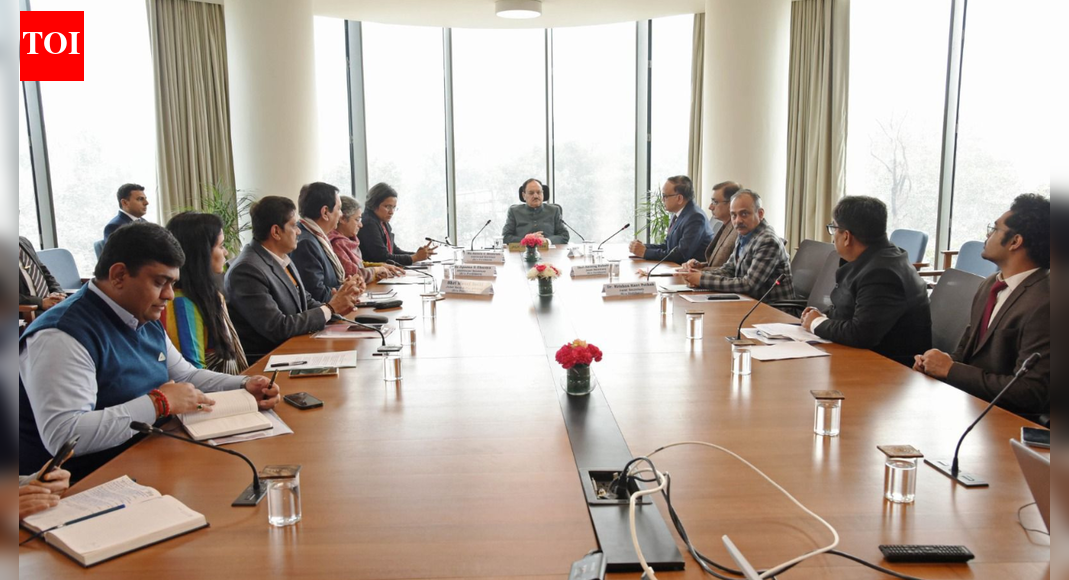
Union fertilizers minister J P Nadda on Thursday inaugurated an integrated e-bill system aimed at digitally processing fertilizer subsidies of about Rs 2 lakh crore. The move replaces manual, paper-based procedures with a fully digital workflow, eliminating the physical movement of bills, an official statement said.“This online system will play a significant role in strengthening transparent, efficient and technology-driven governance,” Nadda said at the launch event, as cited by PTI. The initiative is a key outcome of a technological collaboration between the Department of Fertilizers’ Integrated Financial Management System (iFMS) and the Public Financial Management System (PFMS) of the controller general of accounts under the ministry of finance.The transformation “significantly enhances transparency and accountability by creating a centralised and tamper-proof digital audit trail for all financial transactions, thereby facilitating easier monitoring and audits,” said CGA Santosh Kumar. The e-bill platform allows fertilizer companies to submit subsidy claims online and monitor payment status in real time, removing the need for physical visits and manual follow-ups. It introduces a standardised electronic workflow, including first-in-first-out bill processing, to ensure consistency and adherence to financial rules.The system offers real-time oversight of expenditure and stronger financial controls, with all payments tracked and reported through a central platform.Manoj Sethi, joint secretary in the fertilizers ministry, said the system “enables end-to-end digital bill processing, which will significantly accelerate payment timelines, including timely release of weekly fertilizer subsidy payments”.The system also incorporates robust internal controls that validate payments against predefined criteria, record every action for audit purposes, and help reduce the risk of fraud.The event was attended by additional secretaries Aneeta C Meshram and Aparna Sharma, joint secretaries K K Pathak and Anurag Rohatagi, and director Laboni Das Datta.Senior Technical Director Aseem Gupta of the National Informatics Centre (NIC) outlined the technical features and architecture of the system. The implementation and demonstration were supported by the NIC team, including joint director Ashutosh Tiwari and developer Harekrishna Tiwari, whose efforts in building and rolling out the platform were widely appreciated.


Source link

Record-breaking: IIT-Hyderabad student lands Rs 2.5 crore package; highest in institute’s history | Hyderabad News


HYDERABAD: Amid a tough job market, a computer science engineering student from Indian Institute of Technology, Hyderabad (IITH), has landed a Rs 2.5 crore package from a Netherlands-based firm in this year’s placements. According to IITH, this is the highest package ever bagged by a student in the history of the institution, which started in 2008.Edward Nathan Varghese, a final-year student, will begin work with Optiver — a global trading firm — as software engineer from July. The 21-year-old secured the offer after converting a two-month internship into a pre-placement offer (PPO).

Hyderabad Headlines Today — The Biggest Updates You Need to Know.

“This was the first and only company I interviewed for. I was ecstatic when my mentor indicated that the firm would be extending me an offer. So were my parents,” a jubilant Varghese told TOI on Wednesday. Born and raised in Hyderabad — he later studied in Bengaluru from class 7 to class 12 — Varghese said he was always confident of landing a handsome package, the slowdown in the market notwithstanding.“I knew that the IIT tag would draw companies to our campus and that the effect of the present job market would be minimal. Also, since first year of engineering, I was into competitive programming and among the top 100 in the country. That too helped me crack the interview, along with the curriculum that gave us the option to do a wide range of courses. I was lucky to get a PPO,” said Varghese, whose parents are both engineers.While two students were selected for the internship at Optiver, Varghese alone got a PPO. The summer internship included two weeks of training and a six-week project. He will be working full-time at the firm’s Netherlands office. Apart from Varghese, another CSE student at IITH walked away with a Rs 1.1 crore package — raising the bar for the institute. Until now, the highest package ever offered to an IITH student was about Rs 1 crore, recorded in 2017.Avg package up by 75%But 2025 not only changed that, it also saw the average packages at the institute jump by about 75% compared to 2024 — from Rs 20.8 lakh to Rs 36.2 lakh. A total of 24 international offers were secured by students this year in the first phase of placements, which ended in Dec.“More than packages, our target is to ensure that all students who want to get placed receive a good offer. Along with tech jobs, we are also concentrating on providing good opportunities to core engineering students by giving PSUs and core engineering companies early slots,” said Mayur Vaidya, faculty-in-charge (FiC), Office of Career Services, adding that they are constantly reaching out to more firms and highlighting their flexible calendar, diversity of courses, and curriculum to ensure more companies come to campus.Vaidya said in Phase 2 of placements, more postgraduate students are likely to receive offers from domestic companies.Currently, 196 PG students out of 650 have been placed, with an average package of Rs 22 lakh. When it comes to UG students, 62% of the 487 students who registered for placements received job offers.Highest packages in the last 3 years:2025-26 – Rs 2.5 crore2024-25 – Rs 66 lakh2023-24 – Rs 90 lakh


Source link

Mumbai civic polls: No rival from main opposition parties in Mulund ward, BJP neta Kirit Somaiya rejoices for his son | Mumbai News


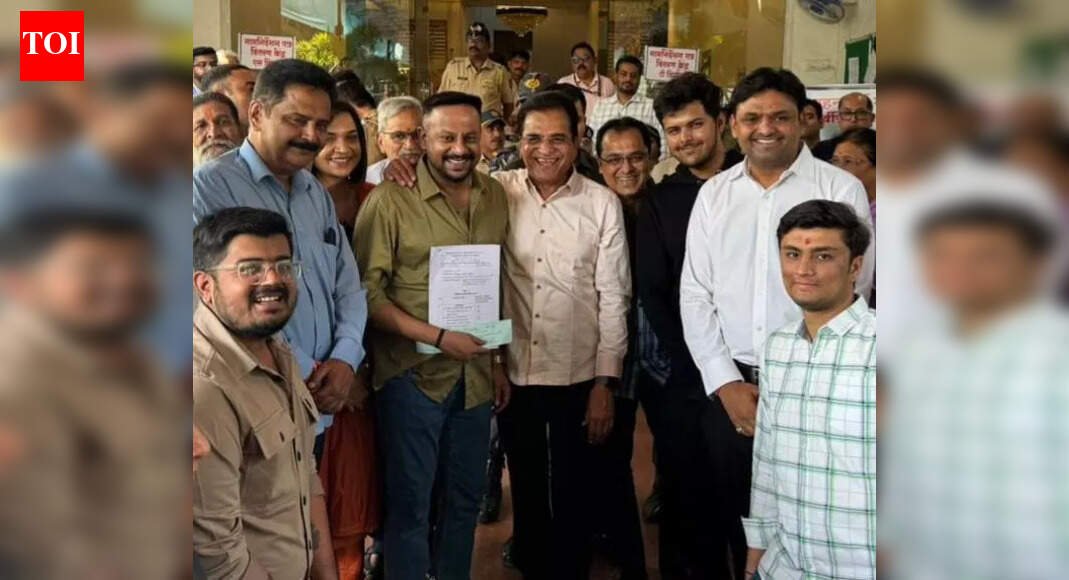
Mumbai: BJP politician Kirit Somaiya could not contain his joy on Thursday. He took to social media to express it: “Neil Somaiya ward 107 in Mulund. 1. Uddhav Thackeray Sena UBT 2. Raj Thackeray MNS 3. Sharad Pawar NCP 4. Rahul Gandhi Congress did not put up candidates. God is Great.” Somaiya’s confidence in his son winning the election for the second time stems from the fact that there is no heavyweight candidate against Neil.

Mumbai Headlines Today — The Biggest Updates You Need to Know.

On account of an alliance among Shiv Sena (UBT), MNS and NCP (SP), Ward No. 107 was allotted to NCP (SP). The party nominated Bharat Vanani as its candidate for the ward, but Vanani’s form was rejected and he was disqualified.The Congress, on the other hand, has an alliance with the Vanchit Bahujan Aghadi (VBA). Its candidate is Vaishali Sapkal.Returning officer Ujwala Bhagat said there were 13 valid nominations from Ward No. 107, of which four were filed by Neil Somaiya. “There is one VBA candidate, while the rest are independent candidates,” Bhagat said. In 2017, Neil contested the election from the adjacent Ward No. 108 and won. In Jan 2023, the VBA formed an alliance with the Shiv Sena for the civic election, but the alliance ended in 2024. Asked if there is some understanding with the Shiv Sena, VBA chief Prakash Ambedkar said his party does not have any alliance with the Shiv Sena and MNS.Good fortune also favoured Shiv Sena MLA from Andheri East Muraji Patel. His wife, Kesarben, is contesting the election from Ward No. 81 on a BJP ticket, and his former PA Prakash Musale is contesting from Ward No. 76. Both electoral wards are in Patel’s constituency. Patel said it is merit and the candidates’ winnability factor that decided their candidature. “Every party chooses its candidate, and Musale is not my PA; he is the BJP’s dy district president,” he said.While the BJP has spoken about winnability being a factor in deciding the candidate and ward, at least four candidates who lost the 2017 election kept their candidature intact. Prakash Darekar (Ward No. 3) and Nisha Parulekar-Bangera (Ward No. 25), both considered close to MLC Pravin Darekar, and Ritu Tawde (Ward No. 132) and Shakeel Ansari (Ward No. 211) were given a second chance. Ansari, the party’s lone Muslim candidate, missed the deadline this time and failed to file his nomination. MSID:: 126290009 413 |


Source link

Bombay high court stays MCOCA conviction, enables man to contest Mumbai civic body election | Mumbai News


Mumbai: The Bombay high court has paved the way for a man found guilty under MCOCA, the law dealing with organised crime, to contest the BMC election by staying his conviction in a 2009 case of alleged extortion. The high court said the right of the election hopeful, Vinod Ghogale (43), to participate in the democratic process was likely to be affected if the conviction was not stayed, given that an appeal by him had been admitted but was yet to be heard. Ghogale filed his nomination form as an independent candidate for Ward No. 119 in Vikhroli East on Dec 30 — the last day of filing of nominations — along with a submission that his petition seeking permission to contest the election was pending in the high court.The FIR in the case, registered with the Vikhroli police station, said that several members of an organised crime syndicate headed by an accused, Kumar Pillai, who was then absconding, were involved in a firing incident to extort Rs 50 lakh from a builder in 2009. Ghogale, the fifth accused, was arrested on April 21, 2010.The role attributed to Ghogale in a confession statement by a co-accused, Sanjit alias Lafda Shetty, was that he was aware of organised crime syndicate activities and “took bullets from a shop of a co-accused on one occasion and took delivery of a box containing pistols, live cartridges and cash on another, and took training for loading and unloading firearms”.In 2015, the special trial court for the Maharashtra Control of Organised Crime Act (MCOCA) convicted him along with others and sentenced him to 10 years’ rigorous imprisonment. Ghogale has already served seven years so far. He appealed against the conviction before the high court in 2016. In March 2017, the high court rejected his plea for suspension of sentence and bail. He then moved the Supreme Court, which granted him bail in Oct 2017 after suspending his sentence. On Thursday, Ghogale told TOI that he was working with the BJP for the last eight years and was currently the Maharashtra state vice-president of the Akhil Bharatiya Kamgar Karmachari Sangh. He worked as a trade union leader in the aviation sector and also the hospitality sector, and worked at the grassroots level during the recent Lok Sabha and assembly elections.Justice Sandesh Patil on the high court vacation bench in his interim order observed that Ghogale already served seven years behind bars. “Although right to contest election is not a fundamental right, yet his right to participate in a democratic process is surely likely to be effected,” the high court said.Ghogale’s lawyer said that while filing his nomination form he had informed the authorities that his petition seeking a stay of the conviction verdict was filed on Dec 22 and was pending before the high court. Ghogale’s counsel, Subhash Jha, on Wednesday argued that Ghogale, who filled his nomination form, intended to contest the civic polls and that unless the conviction is stayed, he cannot contest under the law. Jha said Ghogale so far never sought a stay of his conviction. Section 8 of the Representation of People Act bar persons from contesting elections if they are convicted in a crime and sentenced to two or more years.Mayur Sonavane, additional public prosecutor for the state, sought dismissal of Ghogale’s plea, saying that after the 2015 conviction there was another offence registered against Ghogale in an alleged criminal conspiracy for an attempt to murder case.The high court said: “The only question which arises before this court is whether the impugned judgment (of conviction) and order deserves to be stayed in light of the fact that the sentence is of a fixed imprisonment of 10 years … . The appeal was not taken for hearing since Feb 2016. The appeal is admitted.” The high court noted that, on merits, prima facie the question in appeal is of prior prosecution sanction and also the mandatory requirement of two prior chargesheets within 10 years against each accused in the case to invoke MCOCA.The high court said that pending final disposal of his application, the “implementation and execution” of the trial court judgment in the MCOCA special case is stayed. The high court posted his plea for hearing before a regular bench post-vacation, on Jan 21.


Source link

Audit push: NFRA releases second audit practice toolkit; focuses on revenue risk assessment


Audit push: NFRA releases second audit practice toolkit; focuses on revenue risk assessment

The National Financial Reporting Authority (NFRA) on Thursday said it has rolled out its second Audit Practice Toolkit to support small and medium audit practitioners across the country, as part of its broader effort to improve the quality of auditing practices, PTI reported.The toolkit, titled ‘Risk & Response Memorandum: ROMM (Risk of Material Misstatement) Assessment at Assertion Level for Revenue’, focuses on a key stage of the audit process involving the identification and assessment of risks of material misstatement in revenue, the audit regulator said in a release.NFRA said the initiative builds on its recent outreach programmes for audit firms and practitioners, with a particular emphasis on small and medium-sized practitioners. The authority began issuing audit practice toolkits in November 2025 as part of a systemic approach to strengthening audit quality.NFRA chairperson Nitin Gupta said the sample document has been designed to be adaptable to different types and sizes of audit engagements.The regulator said the toolkit is expected to serve as a practical guide for many small and medium practitioners, who can use it by suitably amending the contents based on the facts and circumstances of their respective audit engagements.NFRA added that it plans to issue sample audit practice toolkits covering a few other significant audit areas during the remainder of the financial year.


Source link