Breaking News
India saved its tigers. Now big cats are running out of room | India News


India saved its tigers. Now big cats are running out of room

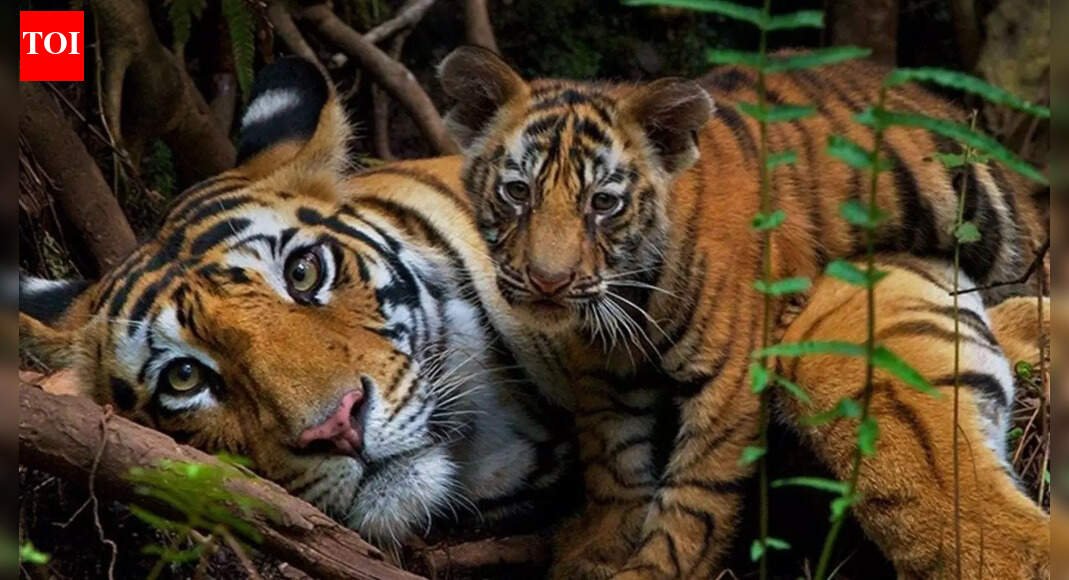
In early 2025, a motion-sensor camera high on the hills of Purulia district, West Bengal, blinked to life. The image it captured was unremarkable in isolation: the grainy silhouette of a tiger crossing scrubland. But for residents and forest officials, it was extraordinary. Purulia had never yielded a tiger sighting before. No camera traps, no spoor, no local memory of the big cat. The photograph was more than a record; it was a signal – that the landscape had begun to shift in ways people were only beginning to comprehend. Within weeks, researchers traced the animal’s path through a series of camera traps: March 2024 in Chhattisgarh’s Balrampur forest division; summer sightings in Jharkhand’s Palamau Tiger Reserve; and by January 2025, in Bengal’s Purulia and Jhargram. The tiger had wandered roughly 500 km through human-dominated terrain, crossing administrative and ecological boundaries in search of space. The tiger’s journey is not an anomaly. It is part of a pattern. India’s wild tiger population, once on the brink of collapse, has surged from 1,411 in 2006 to approximately 3,682 in the latest estimate – almost 75% of the world’s wild tiger population. This rebound, often hailed as a conservation landmark, is the centrepiece of Project Tiger’s story. Conservationists and forest staff took pride in the numbers, even as they now grapple with the consequences of unprecedented success. Scientists at the Wildlife Institute of India (WII) estimate that nearly 30% of these 3,682 tigers – more than 1,100 animals – now roam outside notified tiger reserves, sharpening the challenge of coexistence. WII director GS Bhardwaj told TOI that a dedicated Tiger Outside Tiger Reserves (TOTR) project has already been initiated from 2025, with the focus on conserving both tigers and people. The project targets forest divisions that host dispersing tigers, aims to mitigate human-tiger conflict linked to TOTR, and envisages strengthening protection regimes beyond reserve boundaries.

Testing human tolerance

Testing human tolerance

But there is a paradox embedded in that success: Project Tiger became “a little too successful”, as an expert said. As core reserves fill, tigers disperse farther – into buffers, across states and into human landscapes, fuelled by instinct, not intention. Tigers are inherently territorial; adults typically range across tens to hundreds of square km depending on prey and habitat. Studies in Indian landscapes have shown female home ranges between 30 and 64 sq km, with males sometimes exceeding 170 sq km. The average, even in prey-rich forests, often approaches 90 sq km. Bhardwaj said WII has advised all states to strengthen wildlife protection outside tiger reserves and carry out intensive monitoring of tigers moving beyond them, so that encounters do not escalate into human casualties or retaliatory killings. In the central Indian landscape – the broad swath of forests, hills and plateaus that includes Madhya Pradesh, Chhattisgarh and surrounding states – pressure is particularly acute. Bandhavgarh Tiger Reserve, for instance, has one of the highest tiger densities in the country. A state-level review found territorial fights to be a major cause of death among tigers there between 2021 and 2023, reflecting intense competition for space and mates. With older males holding core territories, younger animals are pushed into buffer zones and near villages, raising the frequency of conflict. Bandhavgarh registers more than 2,000 cattle kills annually – a stark indicator of how tigers are pressed against the edges of ecological and social boundaries. Not all reserves exhibit the same degree of crowding though. In Uttarakhand, Corbett and Rajaji tiger reserves are approaching saturation, but nearly half of India’s reserves remain below what scientists describe as their ecological capacity. Forest officials in the state have reported that Corbett can support about 20 tigers per 100 sq km, while eastern Rajaji’s capacity is around 14 per 100 sq km – figures that help explain why animals increasingly stray outside protected areas. As tigers move beyond core forests, their presence ripples through local communities in palpable ways. In early 2025, in several villages in Uttar Pradesh’s Pilibhit region, a prowling tiger caused schools to be closed. Children stayed home. “Exams are coming,” said a Class 5 student from Khalispur had then said, “but we haven’t even completed the syllabus.” Teachers refused to hold evening sessions. Parents stopped letting children walk alone. Tigers in Pilibhit often establish temporary bases in sugarcane fields, drawn by wild boars that feed on the sweet crop. Boars attract tigers. Sugarcane draws both. And between them lies the village. Elsewhere, the consequences have turned fatal. In Gadchiroli district of eastern Maharashtra, tiger numbers grew from zero to nearly 30 in five years – a startling shift in a landscape long considered tiger-scarce. With 12,000 sq km of forest, it appears generous on paper. But in practice, only about 7,000 sq km in two forest divisions is occupied. Human settlements, encroachments, and patchy prey base have constrained the actual carrying capacity. In 2024, 25 villagers died in tiger attacks across the Wadsa and Gadchiroli divisions. Two problem tigers were captured. A tigress was spared because she had cubs. Though technically capable of holding far more – by some estimates, up to 300 tigers – Gadchiroli cannot even accommodate 25 without triggering conflict. In one forest-fringe home in Jharkhand, a tiger entered a family’s hut, settled on a wooden cot, and waited. The family, stunned, watched in silence from a corner of the room. The tiger had wandered far from mapped territory. Its entry was a mistake. Its departure, hours later, was quiet. Nobody was hurt. The event became a story of awe and fear. These tigers are no longer sentinels of wilderness. They are migrants. Monarchs in exile. Each one a ghost of ecological success, walking into fields, hamlets and homes – not out of aggression, but because the forests behind them are full. In some landscapes, officials speak of “social carrying capacity” – not how many tigers the habitat can sustain, but how many human communities are willing to tolerate. In parts of Uttarakhand, tiger-inflicted fatalities have surpassed leopard attacks for the first time in years. In response, village volunteers called Bagh Mitras have been trained to monitor tiger movement and alert forest departments. Some report sightings through mobile apps. Others simply listen for silence – the kind that descends before a tiger appears. Translocation – moving tigers from dense parks to underpopulated reserves – has been tried. Odisha attempted it in 2018, without success. Intra-state efforts show more promise, but officials now lean toward corridor consolidation. Movement is safer when it’s natural. But for that, corridors must exist – not just on policy maps, but on the ground. In the Terai Arc, at least 10 critical corridors are under threat from habitat loss and development. In central India, linear infrastructure – railways, highways, power lines – cuts across migration routes. And yet, some reserves offer hope. In Tadoba, tiger density rose 30% over a decade, with buffer populations expanding as prey base improved. In Sundarbans, the reserve is being expanded by more than 1,000 sq km to create space for 101 tigers now crowding its mangrove heartland. India now has more than 50 tiger reserves. Some are full. Others still hold ecological potential, if prey can be restored. The key lies not just in creating new habitat, but in connecting the old – allowing dispersing tigers to move without triggering conflict. Perhaps the tiger today is not just an emblem of wilderness, but a kind of refugee of success – displaced by recovery. The Purulia tiger’s trek is both a biometric trail and a metaphor. It is the story of a tiger with nowhere to go, walking east until the land gave way to politics and fear. In the empty classrooms of Pilibhit, in the living room of a Jharkhand family, in the cattle sheds of Bandhavgarh, and in the forests of Gadchiroli now marked by claw and memory, India’s national animal is no longer confined to the forest. The tiger has returned. The question is – where can it stay?

Source link

‘China’s claim as baseless as Trump’s ceasefire talk’ | India News


'China's claim as baseless as Trump's ceasefire talk'
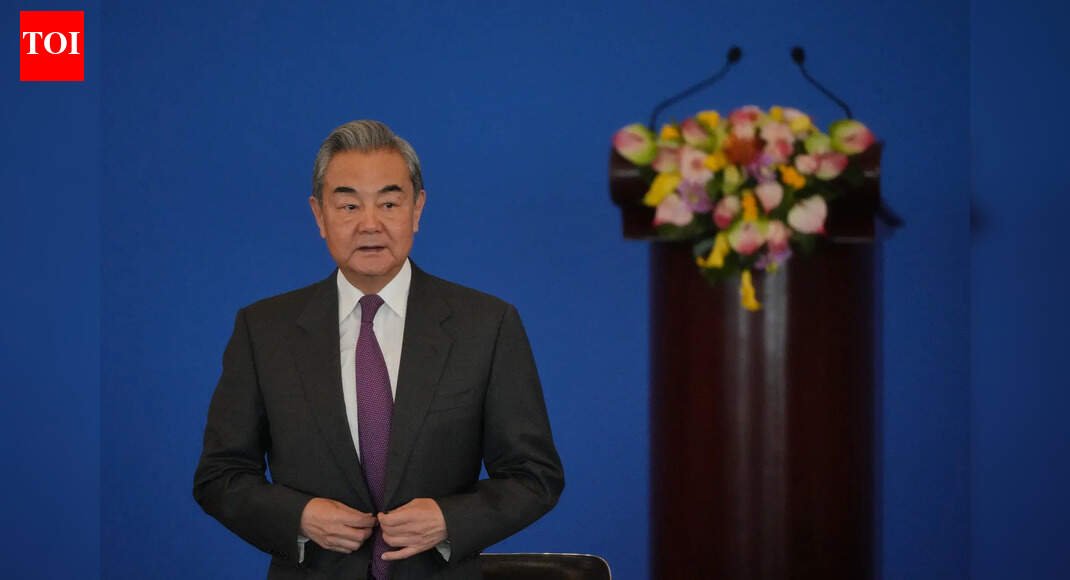
China’s foreign minister Wang Yi (AP Photo/Andy Wong)

NEW DELHI: India has rejected China’s claim of mediation in its conflict with Pakistan, reiterating its stand that the military action was paused following a request from the Pakistani DGMO to his Indian counterpart. Chinese foreign minister Wang Yi claimed on Tuesday that the crisis involving India and Pakistan were among the “hotspot issues” mediated by his country in 2025. The assertion, similar to the US President Donald Trump’s boasts of having played the peace broker in May, came as a surprise because of the time lag and the assessment here that Beijing was the undeclared participant in the4-day conflict arrayed on Pakistan’s side.

“To Build Peace That Lasts”: China Claims Credit for India-Pakistan Conflict, Follows Trump

Indian govt sources expressed surprise at Wang’s statement, whose country, in fact, provided crucial military assistance to Pakistan in May 7-10 conflict, and said it was as baseless as the repeated assertion of President Trump that he brokered a “ceasefire”.They emphasised that China was not part of any conversation related to the cessation of military action. India, from PM Modi downwards, has repeatedly asserted that it agreed to pause the military action after Pakistani DGMO Maj Gen Kashif Abdullah reached out to his Indian counterpart Lt Gen Rajiv Ghai.India has consistently maintained there is no place for any third-party intervention in matters related to India and Pakistan, terming them bilateral. Wang had said, “China mediated in northern Myanmar, Iranian nuclear issue, tensions between Pakistan and India, issues between Palestine and Israel, and the recent conflict between Cambodia and Thailand.”India had targeted terror infrastructure in Pakistan and PoK – following the killing of civilians, mostly tourists, by terrorists in Pahalgam – as part of Opeartion Sindoor, and had then responded to the hostile neighbour’s military action.


Source link

Murder charge dropped, alcoholic son gets 6.5-year jail term for mom’s death | India News


Murder charge dropped, alcoholic son gets 6.5-year jail term for mom's death

PANAJI: Holding him guilty of culpable homicide not amounting to murder, a sessions court in North Goa handed Sandeep Verlekar, 55, a sentence of 6 years and 6 months in prison for assaulting his aged, bed-ridden mother under the influence of alcohol in Merces in 2019. Sandeep was arrested for dragging his 69-year-old mother, Laxmibai, from the bed, hitting her with his fists and leaving her out in the verandah, where she succumbed to her injuries. The court took a lenient view. It considered that Verlekar was an alcoholic and stated that he had no intention to kill his mother. The court directed that the imprisonment of 6 years, 1 month and 11 days already undergone by him be set off, and that he be released upon completion of the balance period. Public prosecutor Roy D’Souza told the court that he should be given the maximum sentence as he had committed a serious offence by assaulting his own bedridden mother. Rohan Desai, appearing under free legal aid, stated that he had been in custody for over 6 years since he was arrested in Nov 2019, and that he had two children. The court observed that the manner in which he had assaulted his mother showed that he had been under the influence of liquor and had no intention of killing her. “I also came to the conclusion that the act of assault committed by the accused was not committed with an intention to kill his own mother. Although it is a death caused, he never intended to kill his own mother. Therefore, according to me, a lenient view has to be taken against the accused,” Merces sessions judge Irshad Agha said. The sessions court observed that there was no complaint of misbehaviour on his part during the period in custody. “The period of sentence already undergone acted as rehabilitation for the accused as he could not access liquor. In this context, I do not find any reason that the accused will again turn alcoholic to commit any such act,” the court stated.


Source link

Key Hizbul conspirator gets life term | India News


Key Hizbul conspirator gets life term

GUWAHATI: A special NIA court convicted and sentenced a key accused in a Hizbul Mujahideen terror conspiracy case to life imprisonment, the agency said Wednesday. The convict, Kamruj Zaman alias Hurairah or Kamaruddin from Erakapili village in Assam‘s Hojai district, was arrested in 2018 for conspiring to raise a module of the banned outfit in the state during 2017-18.Zaman was awarded three separate sentences, with maximum being life imprisonment under Section 18 of Unlawful Activities (Prevention) Act, 1967. He was sentenced to five years’ simple imprisonment each under UAPA sections 18B and 38, read with IPC Section 120B. All sentences will run concurrently. The court imposed a fine of Rs 5,000 in each case.NIA said Zaman recruited several accused to establish a terror network aimed at expanding Hizbul Mujahideen’s footprint in the northeast.

Throwback 2025: Five Big Moments When India Defied Pressure And Delivered Diplomatic Masterstrokes


Source link

Maharashtra civic polls: Who is Amol Balwadkar? Ex-BJP leader joins Ajit Pawar’s NCP after ticket denial | Pune News


Former BJP corporator Amol Balwadkar switched to the NCP after being denied a ticket at the last minute for the Pune civic polls

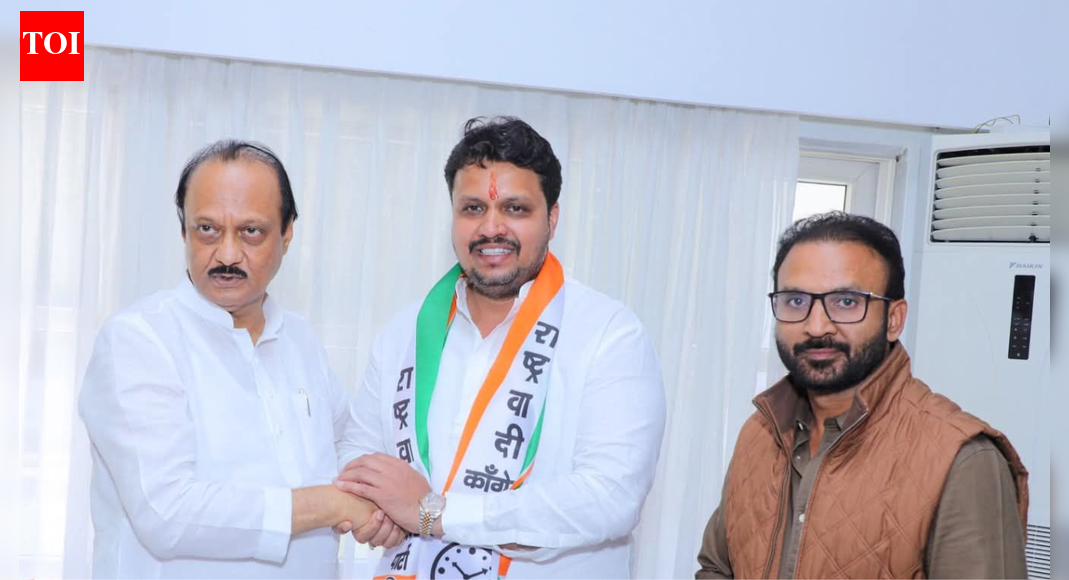
PUNE: Former BJP corporator Amol Balwadkar joined the Nationalist Congress Party after the BJP denied him a ticket at the last moment. The NCP immediately announced Balwadkar as its candidate, adding a new twist to the civic election battle in Pune.Balwadkar had earlier contested the Assembly elections and emerged as an internal challenger to Higher and Technical Education Minister Chandrakant Patil. His aggressive campaign during that period is believed to have caused unease within the BJP. After the elections, Balwadkar was kept out of active politics for some time but was later brought back into the party after Chief Minister Devendra Fadnavis intervened.

‘Batenge Toh Katenge’: Uddhav & Raj Thackeray Unite For Mumbai Civic Polls | Shiv Sena (UBT) | MNS

However, old differences appear to have resurfaced during the distribution of tickets for the PMC elections. With just about an hour left for filing nominations, the BJP denied Balwadkar a ticket and instead named Kothrud North Mandal president Lahu Balwadkar as its candidate. This decision led to fresh discontent among party workers.Soon after being dropped, Amol Balwadkar met Deputy Chief Minister Ajit Pawar and formally joined the NCP.“I worked for 10 years and was betrayed. If they had spoken to me with respect, I would have stayed even now. But now this will be a do-or-die fight,” said Amol Balwadkar.In Ward number 9, covering Sus, Baner, and Pashan, the BJP kept its candidate selection unclear until the last moment. The party finally chose new faces in Wards 8 and 9, leaving out former corporators. These developments have highlighted internal differences within the BJP and have made the PMC election contest in Pune more competitive.


Source link

‘Red-hot’ Devdutt Padikkal, Sarfaraz Khan, Ruturaj Gaikwad put selectors under pressure ahead of NZ series


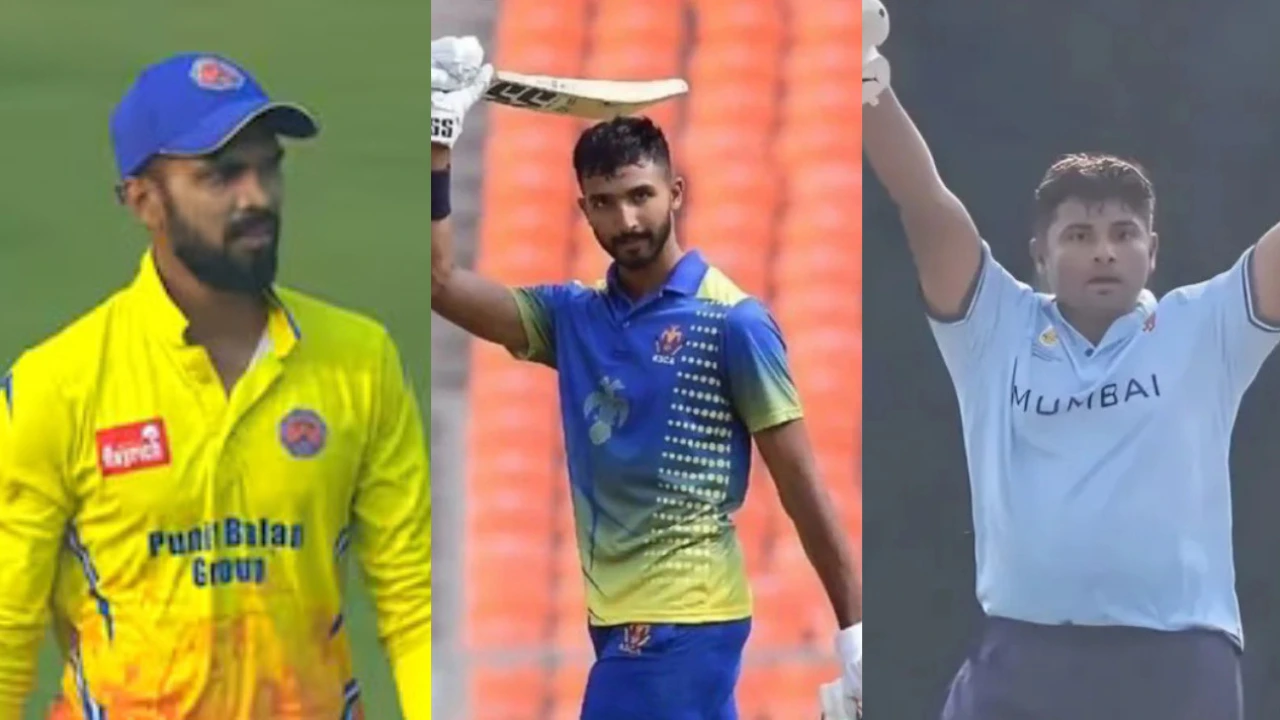
The sizzling form of the batters Devdutt Padikkal, Sarfaraz Khan, and Ruturaj Gaikwad in the ongoing Vijay Hazare Trophy 2025-26 has put the Ajit Agarkar-led selection panel under huge pressure as they are gearing up to finalize the squad for the ODI series against New Zealand.

India’s No. 4 Conundrum: Padikkal, Sarfaraz, or Gaikwad for New Zealand ODIs?

India is all set to host New Zealand in a three-match ODI series against New Zealand, starting on January 11, 2026. The selection committee will reportedly meet on January 2 or 3 to finalise the squad for the upcoming New Zealand series.

Read Also: Mohammed Shami-Ajit Agarkar cold war ends as BCCI signals pacer’s India comeback vs New Zealand

Your daily dose of cricket!

next

Presently, the Indian selection committee faces a pleasant but dramatic dilemma. An injury cloud over Shreyas Iyer has thrown the crucial No. 4 spot wide open, and a trio of in-form Devdutt Padikkal, Sarfaraz Khan, and Ruturaj Gaikwad have launched compelling cases through the Vijay Hazare Trophy 2025-26.

The Case for Devdutt Padikkal: Unstoppable Consistency

Padikkal isn’t just scoring runs, but he is redefining form. With three centuries in his last four Vijay Hazare matches, the left-hander is in a purple patch that is hard to ignore by the selectors.

He had smashed 147 against Jharkhand on December 24 and followed it up with 124 against Kerala just two days later at the same ground. And now on December 31, the Karnataka star made 113 off 116 balls against Puducherry.

His last 12 List A innings read like a dream: 6 centuries and 4 fifties at an astronomical average of 81.51. This weight of runs, relentless consistency, and a left-handed option in the middle order can certainly force the selectors to offer Padikkal an opportunity to make his debut in ODI cricket.

Sarfaraz Khan’s explosive form in the Vijay Hazare Trophy

Meanwhile, Sarfaraz has also made sure his name stays firmly in the conversation. The Mumbai batter produced a breathtaking innings against Goa in Jaipur, scoring 157 off just 75 balls. Earlier in the tournament, he had scored a quick 55 off 49 balls against Uttarakhand on December 26.

Read Also: BCCI BLOCKS Shreyas Iyer’s return, denies clearance at the last moment

Sarfaraz is still waiting for his first ODI cap, but his Vijay Hazare Trophy performance can make the selectors think of him. However, the right-handed batter has just 692 runs in 40 List-A matches to his name, but his international cricket experience in Test cricket can help him earn his maiden ODI call-up.

Gaikwad Emerges as Safe Middle-Order Option for India

On the other hand, Ruturaj Gaikwad brings both form and international experience into the selection debate. He has already played nine ODIs and was recently part of India’s home series against South Africa, where he scored his first ODI century.

In the South Africa series, Gaikwad batted at number four in the absence of Shreyas Iyer, who was recovering from an abdominal injury suffered during the Australia tour in October. Then, Gaikwad once again showed his reliability in the Vijay Hazare Trophy with his stunning performances.

He scored 124 off 113 balls against Uttarakhand in Jaipur to prove his ability to anchor the innings and handle pressure in the middle order. His form and experience can help him retain his ODI spot if Iyer is given more time to recover from the injury for the New Zealand series.


Source link

SC handled 75k cases in 2025; unmatched by any top court | India News


SC handled 75k cases in 2025; unmatched by any top court

NEW DELHI: CJI Surya Kant has devised four categories of cases to prioritise listing and hearing of petitions filed by socially, physically, and financially disadvantaged people. The new categories of cases relate to those filed by disabled people and acid attack survivors, by senior citizens above 80 years, persons who are below poverty line and those who have approached the court through legal aid services that provide free advocate assistance to poor litigants. The new categorisation was needed as their cases used to get lost in the crowd of 800-odd cases that get listed on Mondays and Fridays, the two days in a week when 16 benches of SC entertain fresh petitions and determine whether these require longer hearing. A circular by the SC registry said, “Members of the Bar, parties-in-person and all stakeholders are required to invariably mention the relevant head… under which the matter actually falls, in all the fresh petitions to be filed… and submit an appropriate application/letter along with the documentary proof issued by an appropriate govt authority in this regard.”SC handled 75k cases in 2025, unmatched by any top courtFurther, all concerned are also requested to provide the said details in pending matters/cases to enable the registry to appropriately update the matter under the respective head. This will enable the registry to prioritise listing of such cases,” it said. The humongous volume of cases handled by the highest court of the country is unmatched by any country’s Supreme Court, by a huge margin. In 2025, as many as 75,280 cases were filed in SC – 51,357 civil and 23,923 criminal. It decided 65,403 (87% of the total filing), 42,793 civil and 22,610 criminal. In contrast, though thousands of cases are filed every year in US Supreme Court, it accepts only 70-80 cases for arguments. Till Dec 29, UK Supreme Court had received little over 200 cases and gave judgments in around 50 cases. Their Indian counterpart gave 1,400 lengthy judgments and thousands of orders to dispose of cases. SC, which saw three CJIs in 2025 in Justices Sanjiv Khanna, B R Gavai and Surya Kant, will not see a new CJI till Feb 2027, when Justice Kant retires. In 2027, SC will see a record four CJIs – Justices Surya Kant, Vikram Nath (from Feb to Sep), BV Nagarathna (for 37 days) and PS Narasimha.


Source link

‘I’m in Dubai,’ says Hadi killing suspect Dhaka accused India of sheltering


'I'm in Dubai,' says Hadi killing suspect Dhaka accused India of sheltering

DHAKA: In a twist to the intriguing murder of Bangladeshi Islamist radical Sharif Osman Hadi, one of the alleged killers, Faisal Karim Masud alias Daud (37), has denied the charge pinned on him by the interim govt while also refuting its assertion that he slipped into India after committing the alleged crime and is holed up there. Masud, a key suspect in the Hadi murder case and who Bangladesh claimed had escaped to India, in a video message said he was in Dubai and denied his role in the killing of Hadi, who died on Dec 18, six days after being shot in the head. On Dec 28, Dhaka claimed two primary suspects – Masud and Alamgir Sheikh – of the Hadi case have “fled Bangladesh and crossed into the Indian state of Meghalaya with the help of local associates”, inviting a rebuttal from Indian agencies, which termed the statement “fabricated and malicious”. In the message, Masud said, “I, Faisal Karim Masud, want to state clearly that I am not involved in Hadi’s murder in any way. This case is completely false and based on a fabricated conspiracy.” “Because of this false implication, I was forced to leave the country (Bangladesh) and come to Dubai. I came here with great difficulty, even though I held a valid five-year multiple-entry Dubai visa,” he said.


Source link

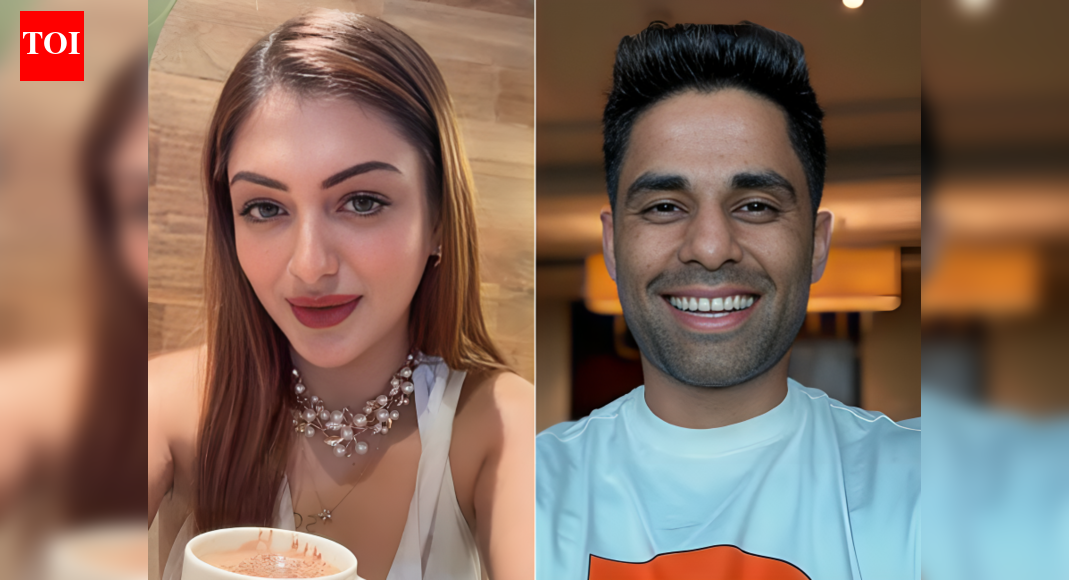
Bollywood actress Khushi Mukherjee issues fresh clarification on ‘relationship’ with Suryakumar Yadav | Cricket News


Bollywood actress Khushi Mukherjee issues fresh clarification on 'relationship' with Suryakumar Yadav
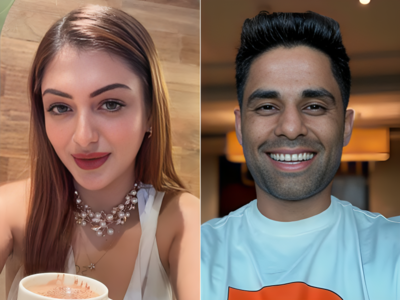
Bollywood actress Khushi Mukherjee and Indian T20I captain Suryakumar Yadav (Insta)

Bollywood and television actor Khushi Mukherjee has moved to clear the air around her recent comments involving India’s T20I captain Suryakumar Yadav, addressing the issue in an exclusive interaction with NDTV. Her clarification has eased concerns among the captain’s supporters and Indian cricket followers, especially with a major ICC event on the horizon. Responding to questions from the channel, Khushi remarked, “Can’t we talk as friends?” Her explanation follows a statement made a day earlier that triggered widespread debate within cricket circles. With the T20 World Cup less than six weeks away and the Indian squad already announced under Suryakumar Yadav’s leadership, the interpretation of her earlier remarks was viewed as potentially unsettling for the team setup. Such off-field noise often raises fears about its impact on dressing-room harmony.

Inside details of why Shreyas Iyer’s return to cricket has been DELAYED

Despite leading India to the Asia Cup title in 2025, Suryakumar Yadav has recently faced scrutiny due to a lean run with the bat. Against this backdrop, Khushi Mukherjee’s remarks added to the buzz. Notably, her earlier comments surfaced at a time when Suryakumar was on a personal visit to the Sri Venkateswara Swamy Temple in Tirupati along with his wife, Devisha, on Tuesday. The Indian captain has so far chosen not to respond publicly to the controversy. Speaking to NDTV, Khushi categorically stated that there was no “romantic relationship” between her and Suryakumar Yadav. She said her words had been taken out of context and sensationalised, and also claimed that her Instagram account had been hacked. Khushi explained that she had spoken to Suryakumar as a friend in the past but stressed that they are no longer in contact. She added that there has been no communication between them even after the issue erupted. Wishing the Indian team well, she expressed her support for Suryakumar Yadav and Team India ahead of the upcoming World Cup, mentioning that the cricketer had once spoken to her as a friend following a defeat. The controversy began after Khushi gave a striking response to a question at a recent event, where she said she did not wish to date any cricketer, claimed that several cricketers had approached her, and referred to Suryakumar Yadav messaging her in the past. Khushi Mukherjee is known for her appearances in television shows such as MTV Splitsvilla, Kahat Hanuman Jai Shri Ram, Baalveer Returns and MTV Love School, along with work in Tamil and Telugu cinema. In her earlier statement as well, she reiterated that she has no intention of dating a cricketer.


Source link

Draft labour rules pave way for higher minimum wages


Draft labour rules pave way for higher minimum wages
India new labour code (Image for representation)

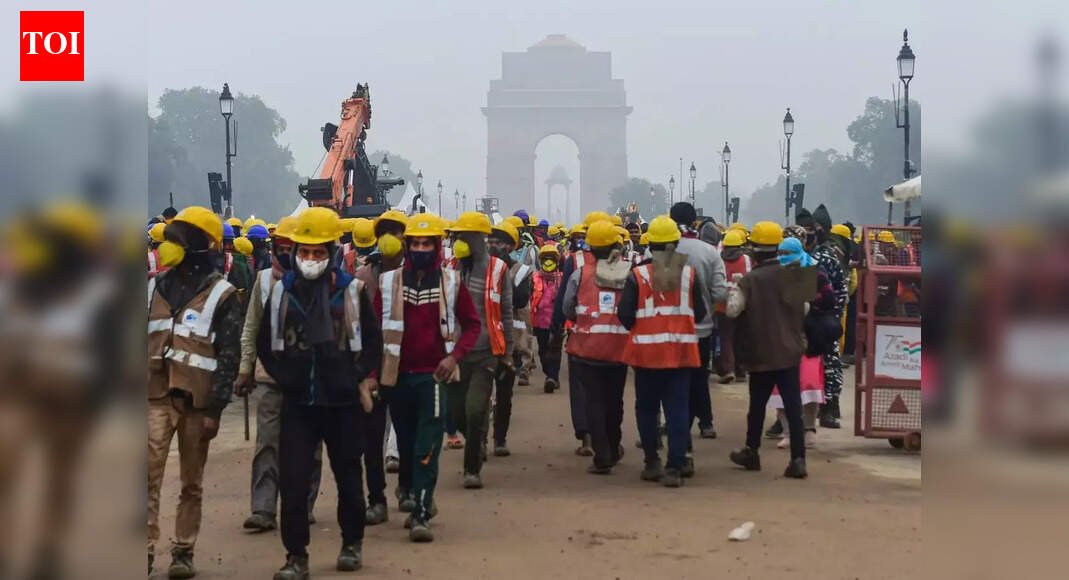
NEW DELHI: A month after notifying the four new labour codes, Centre on Wednesday released draft rules for their implementation, which lay out how minimum wages will be calculated, fix weekly working hours, set procedures to recognise and verify trade union membership, and provide for the composition of a National Social Security Board that will look after the welfare of gig and platform workers among other things. Under the draft rules, seeking public comments within 30-45 days, minimum daily wages will be based on the needs of a standard working-class family comprising the worker, a spouse and two children. This includes a daily intake of 2,700 calories per person, clothing needs of 66 metres a year for the family, house rent at 10% of food and clothing costs, 20% of wages for fuel, electricity and other essentials, and an additional 25% to cover education, healthcare, recreation and contingencies. An official told TOI that the calculation of minimum wage follows the principles laid down in the Reptakos Brett judgment, which took the socio-economic aspect of the wage structure into consideration, as a worker’s wage is no longer a contract between an employer and an employee. “Subsequently, the minimum wages are expected to see upward revision once the new codes come into effect.” Besides, the rules cap weekly working hours at 48, while daily working hours, rest intervals, and spread-over time will be notified separately. The proposed national social security board for gig workers will include lawmakers, representatives from states, worker and employer organisations, along with Centre’s nominees. On gratuity, govt clarified that the provisions will apply prospectively from Nov 21, 2025, the date the labour codes come into force. Fixed-term employees will be eligible for gratuity after one year of continuous service, compared with five years earlier for permanent workers. The labour ministry also iterated the definition of wages under the labour codes. If components other than basic pay, dearness allowance and retaining allowance exceed 50% of total pay, the excess will be treated as wages. Performance-linked incentives, ESOPs, variable or reimbursement-based payments and leave encashment are excluded. In the meantime, old rules will remain in force until final notification of the new rules during the transition period, the ministry clarified separately. States will also need to release draft rules under the new labour codes.


Source link