Breaking News
Closure of American bases in Gulf, reparation for attacks: What Iran is demanding in potential truce deal with US
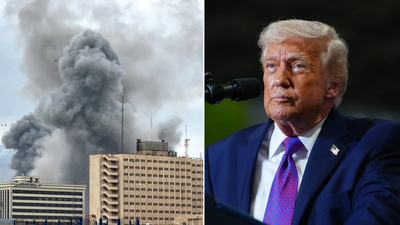

Iran’s $800 Million Blow: How U.S. Military Bases Damaged Across Middle East

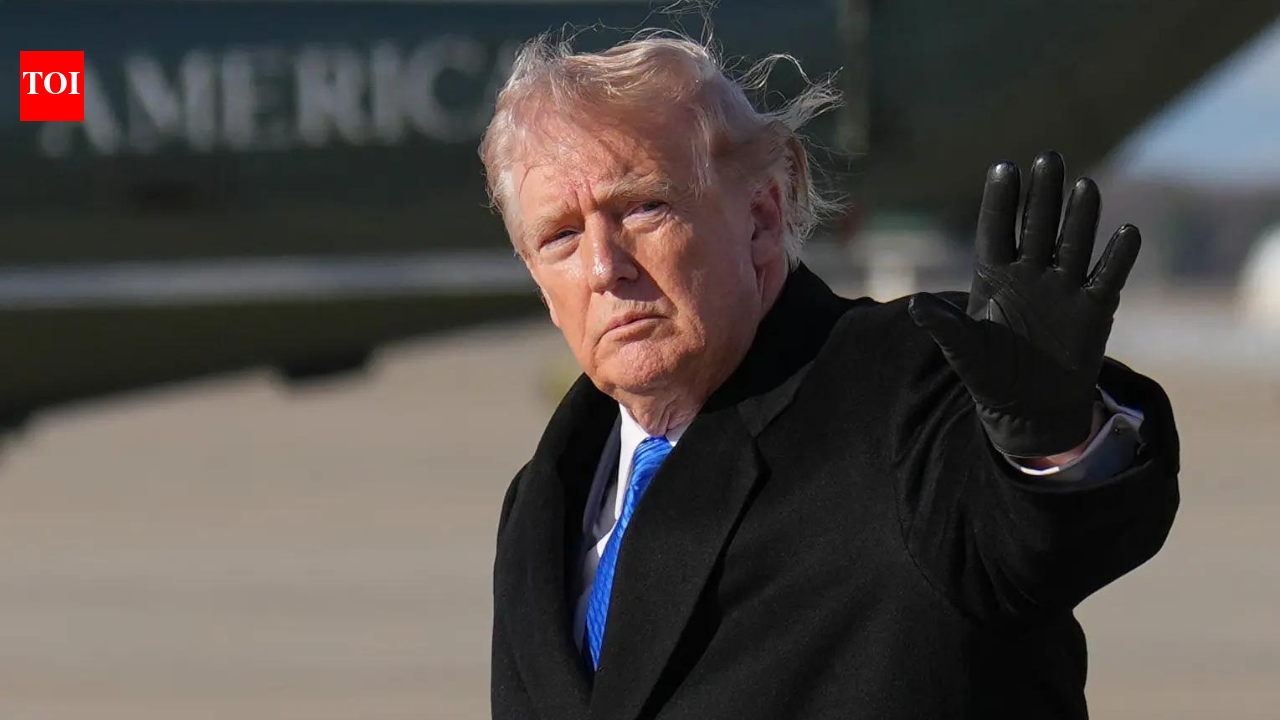
Is there an end in sight to the chaos in the Middle East? Iran has set a high bar for a possible ceasefire with the United States, as tensions have been escalating since February 28. The ongoing military exchanges between the US-Israel coalition and Iran have created a constantly evolving situation. Meanwhile, apart from Tehran’s demands, the US has offered a 15-point proposal aimed at ending the ongoing conflict.What began as a targeted mission against then-Supreme Leader Ayatollah Ali Khamenei, who was killed on the first day of Donald Trump’s Operation Epic Fury, in coordination with Benjamin Netanyahu’s Operation Roaring Lion, has now escalated into daily, large-scale bombings across the region, including the cities like Dubai and Abu Dhabi.
Watch

Iran’s $800 Million Blow: How U.S. Military Bases Damaged Across Middle East

-

Despite losing its longest-serving leader, the Tehran regime has consolidated power within the Iranian government and the IRGC, according to the Wall Street Journal. The report also detailed the demands of the regime now under Supreme Leader Mojtaba Khamenei.

What Iran is demanding

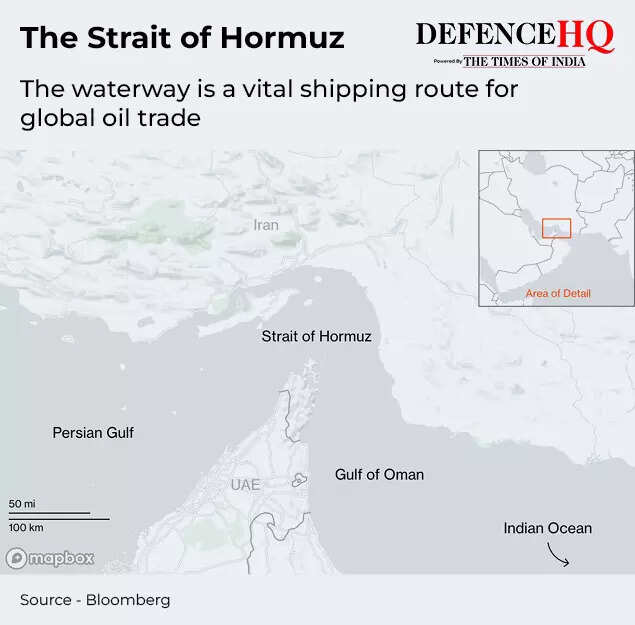
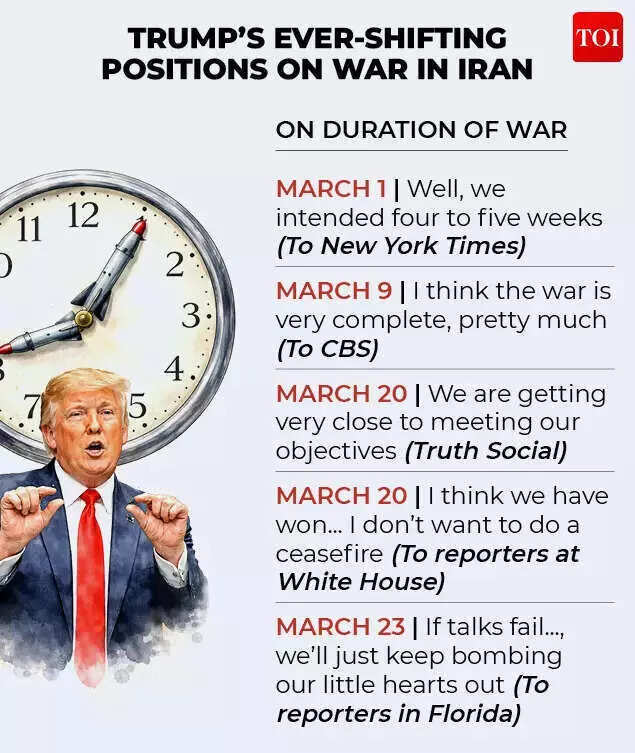
According to the report, Tehran has asked the Trump administration to close all American bases in the Gulf region and provide reparations for attacks on Iranian territory. Additionally, Iran seeks to collect fees for ships transiting the Strait of Hormuz, similar to how Egypt charges for passage through the Suez Canal.The demand included the lifting of all US-imposed sanctions.The regime also wants guarantees that the war will not resume and an end to Israeli strikes on Iran-aligned militias, including Hezbollah in Lebanon. Allowing Iran to maintain its missile program without any negotiations to limit it remains a major sticking point.However, the Trump administration appears unwilling to entertain Tehran’s demands. A US official described them as “ridiculous and unrealistic.” Arab and US officials warned that such posturing could make reaching a deal with Tehran even harder than before Trump launched the war.The officials added that the first signals of the new diplomatic round came through Middle Eastern intermediaries late last week, and that there has been no direct contact between the US and Iran.

US offers 15-point proposal to Iran

US President Donald Trump has shared a 15-point proposal with Iran aimed at ending the ongoing conflict in the Middle East. “All starts with, they cannot have a nuclear weapon,” Trump said, signalling a renewed diplomatic push even as military operations continue, according to a New York Times report citing officials familiar with the matter.

Watch

‘Come Closer’: Iran To Kick Off ‘CRUSH AMERICA’ Mission As Trump Plans US Boots On Ground

Pakistan initiated the conveyance of proposal that addressed the key issues including Iran’s ballistic missile and nuclear programmes, as Washington seeks an “offramp” from a war now in its fourth week, which has widened to involve multiple countries.Israel’s Channel 12 reported that Trump is proposing a one-month ceasefire, during which the sides would discuss a plan including the handover of Iran’s enriched uranium and a ban on further enrichment. The New York Times noted it had not reviewed the document directly but was told it also addresses maritime security concerns. Since the conflict began on February 28, Iran has effectively restricted Western shipping through the Strait of Hormuz, disrupting global oil and gas supplies and driving up prices.Following compliance with the plan, Iran would see an end to all sanctions, which have been in place in various forms for years, the Israeli report said. Iran would also receive assistance in developing civil nuclear energy at Bushehr, a key site that predates the 1979 Islamic revolution.It remains unclear how widely the proposal has been circulated within Iran’s leadership or whether Tehran is willing to engage on its basis. There is also no clarity on whether Israel supports the initiative. Despite the diplomatic outreach, hostilities show no immediate signs of easing. Israeli officials have indicated that military operations could continue for weeks.Acknowledging parallel diplomatic efforts, White House press secretary Karoline Leavitt said, “As President Trump and his negotiators explore this newfound possibility of diplomacy, Operation Epic Fury continues unabated to achieve the military objectives laid out by the commander in chief and the Pentagon.”

Watch

‘Negotiations With Bombs’: Trump’s HUGE Iran Announcement Amid Strikes On US Bases | Watch

Pakistan’s de facto head and army chief Asim Munir, have positioned themselves as possible intermediaries, leveraging reported ties with Iran’s Islamic Revolutionary Guards Corps to facilitate communication. Officials said Egypt and Turkey are also encouraging Tehran to engage constructively.Munir has reached out to Iranian parliament speaker Mohammad Bagher Ghalibaf, proposing that Pakistan host talks between the two sides, the report says. Supporting the initiative, Pakistan Prime Minister Shehbaz Sharif said his country “fully supports ongoing efforts to pursue dialogue to end” the conflict. “Subject to concurrence by the US and Iran, Pakistan stands ready and honoured to be the host to facilitate meaningful and conclusive talks for a comprehensive settlement of the ongoing conflict,” he added.


Source link

Casting a wider net: IPL’s power shift fuels deeper talent pool | Cricket News


Casting a wider net: IPL's power shift fuels deeper talent pool
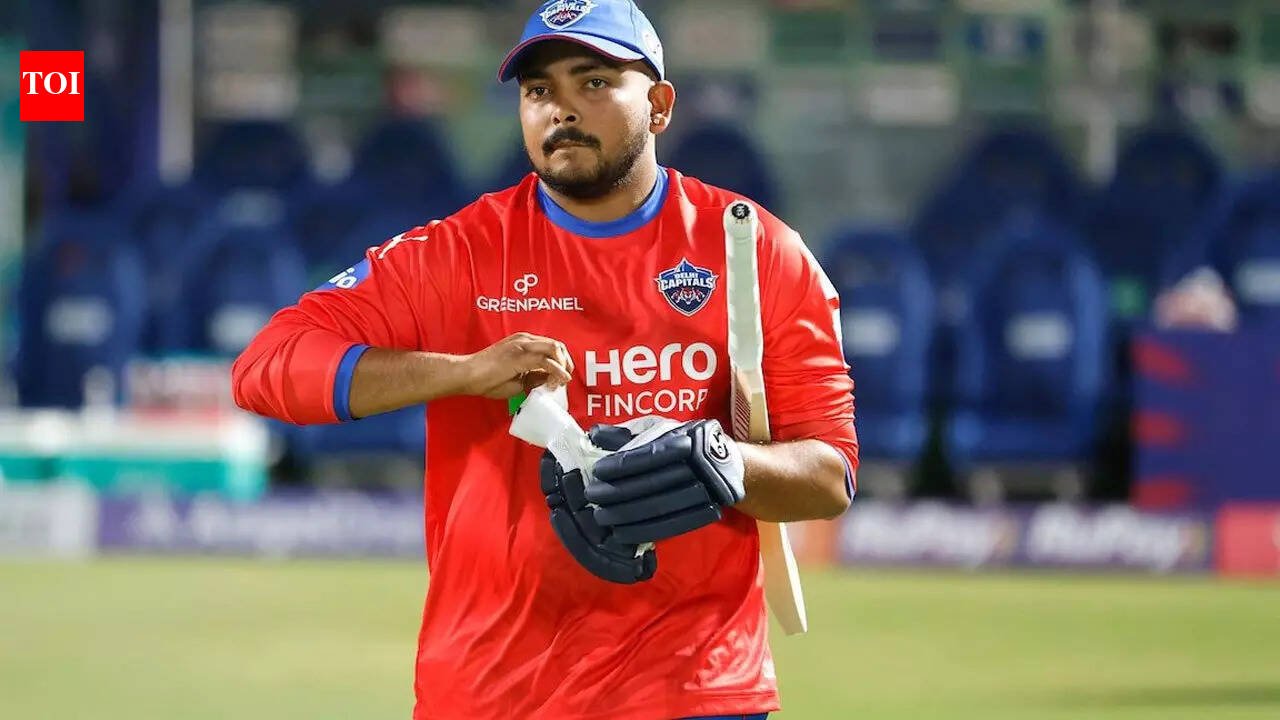
Looking to impress: Delhi Capitals’ Prithvi Shaw trains in Delhi on Tuesday (Image credit: Delhi Capitals/IPL)

It’s unfortunate that Shreyas Iyer misses out. It’s no fault of his, nor ours. He has to wait for his chance.” This was India’s chief selector Ajit Agarkar while announcing the T20I squad for the Asia Cup last Aug. Iyer was still fresh from an IPL season where he scored 604 runs at a strike-rate of 174 while leading Punjab Kings to the final.Barring Arshdeep Singh, no player from either of last edition’s finalists could find a place in India’s triumphant T20 World Cup team last month. The IPL is in a very interesting phase now. It has thrown up a surfeit of players that have turned India into a T20 superpower, but the earlier phase of only a few big teams dominating the league may be over.

Watch

RCB’s big changes ahead of IPL: New rules, tribute & squad update

Chennai Super Kings and Mumbai Indians — the two most successful franchises — are struggling to maintain consistency as the years roll by. In fact, the trend mirrors India’s domestic cricket scene. The power centre doesn’t necessarily end with Mumbai, Karnataka, Delhi or Tamil Nadu any more.The ‘lesser’ state teams have found a way to make their presence felt, starting with Rajasthan, Vidarbha, Saurashtra and Gujarat. Jammu and Kashmir and Jharkhand too have risen above the rest. In the IPL, CSK and MI’s success became templates for other franchises. Talent could be plucked from the remotest part through some extensive scouting programmes run by the franchises.India’s national selectors — a committee of just five former cricketers — could in turn tap the scouts of IPL teams.Over the next two months, Agarkar’s committee will closely follow the players that perform well in the IPL. Punjab Kings didn’t have anybody other than Arshdeep in the World Cup team, but a close look at the makeup of the India ‘A’ team over the last year tells the real story. The likes of Priyansh Arya, Prabhsimran Singh, Ayush Badoni, Riyan Parag, Yudhvir Singh and Vipraj Nigam are now well-established names. National selectors have often been accused of getting carried away by IPL performances, but former national selector claim the league is a perfect tool to gauge the temperament of younger players.TOI understands the selectors have already prepared their objectives for this IPL.One part deals with recognising fresh talent and tracking how standout talents from last season are working towards achieving consistency. The other part involves keeping an eye on monitoring the core of the ODI team ahead of next year’s World Cup. For example, the selectors will keep a close eye on the development of pacer Mayank Yadav and Abdul Samad from LSG. But they will also see how Rishabh Pant is placed. Pant has been a part of the ODI team for the last two years but got just one game.Hardik Pandya’s bowling fitness will also be monitored. Then there’s Nitish Kumar Reddy, whose development as a seam-bowling allrounder will be watched. The franchises and national selectors co-exist, yet the purpose is independent of each other. The IPL has grown enough that national selectors don’t need to restrict themselves to table toppers to spot new talent.


Source link

TB remains India’s biggest infectious killer, but mass screening push shows results | India News


TB remains India’s biggest infectious killer, but mass screening push shows results

NEW DELHI: India may be making progress against tuberculosis, but the scale of the challenge remains stark—accounting for nearly a quarter of the world’s TB cases even as millions of infections continue to go undetected.Tuberculosis continues to be India’s biggest infectious disease challenge, according to the Tuberculosis Fact Sheet 2026 released by the Centre. India contributes about 25% of the global TB burden, with five countries together accounting for over half of all cases worldwide.At the World TB Day 2026 national launch event in Greater Noida, Union health minister J P Nadda said India is on track to eliminate TB ahead of global targets, driven by a “jan bhagidari” approach under PM Narendra Modi’s leadership. He cited a 21% decline in TB incidence and a 25% reduction in deaths between 2015 and 2024, with treatment coverage now at 92%.Recent data supports this trend. Treatment success rates have improved to around 90%, while over 26 lakh cases were notified in 2024, the highest ever, reflecting stronger detection efforts.A major push has come from the TB Mukt Bharat Abhiyan, which has focused on identifying hidden and high-risk cases. More than 20 crore people have been screened, leading to the detection of over 32 lakh TB patients, including a large number of asymptomatic cases. Nadda said intensified case-finding has reduced undetected cases from over 10 lakh to under one lakh.He also announced a 100-day intensified campaign covering 1.58 lakh villages and urban wards, along with the launch of an AI-enabled TB Mukt Bharat app to improve access to care and treatment tracking.The factsheet highlights that TB remains closely linked to poverty, malnutrition and living conditions, with economically vulnerable populations at higher risk. People with diabetes, HIV, smokers, alcohol users and those living in crowded settings are particularly susceptible. At the same time, drug-resistant TB remains a concern, with over 55,000 cases reported in 2024, requiring longer and more complex treatment.Despite progress, gaps remain. Nearly 64% of people with TB symptoms do not seek care due to stigma, lack of awareness or affordability issues, leading to delayed diagnosis and continued transmission.To address this, the government has combined community outreach with technology. Initiatives like the Ni-kshay Mitra programme have mobilised volunteers to provide nutritional and social support, while digital tools such as the TB Mukt Bharat app are helping streamline care.Emphasising increased funding and indigenous innovations like TrueNat, Nadda said TB is both preventable and curable, stressing the need to reduce stigma and ensure early diagnosis and treatment.Health officials underline that TB symptoms go beyond a persistent cough and can include fever, weight loss, fatigue, chest pain and night sweats, making early testing critical.


Source link

‘Worth a tremendous amount of money’: Trump claims Iran gave US ‘big oil-and-gas-related present’ amid hopes of talks


'Worth a tremendous amount of money': Trump claims Iran gave US 'big oil-and-gas-related present' amid hopes of talks

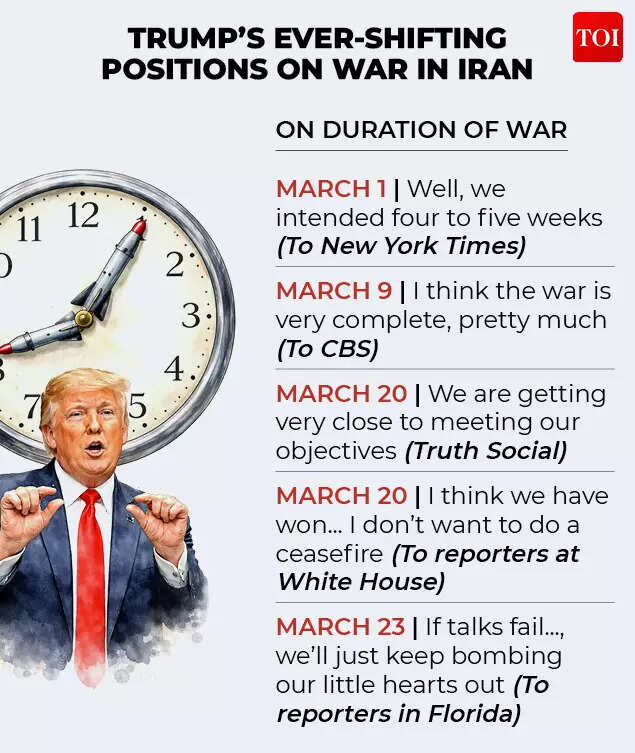
US President Donald Trump on Tuesday said Iran had made a significant oil- and gas-related concession, describing it as a “very big present”, even as negotiations to end the ongoing conflict continue.Speaking in the Oval Office, Trump did not disclose details but suggested the move could be linked to the Strait of Hormuz, a key global energy transit route that has been disrupted during the conflict. “They gave us a present and the ⁠present arrived today, and it was a very big present, worth a tremendous amount of money,” he said, adding, “It wasn’t nuclear, it was oil-and gas-related, and it was a very nice thing they did.”Trump indicated the development as a positive signal in ongoing diplomacy, saying the US was “talking to the right people” in Iran and that “they want to reach a deal very badly.” He added, “We’re in negotiations right now,” without offering specifics.Trump described the concession as a “very significant prize” tied to energy flows through the Strait of Hormuz. The comments came ahead of a deadline he set for Iran to reopen the strategic waterway, while also confirming that planned strikes on Iranian energy infrastructure had been paused for five days following “productive discussions.”

Strait of Hormuz

Despite these remarks, Iran has maintained that no talks have taken place.Trump said multiple senior officials were involved in the negotiations, including vice president JD Vance, secretary of state Marco Rubio, special envoy Steve Witkoff and adviser Jared Kushner. He also said he was personally engaged in the process.On trust, Trump remarked, “I don’t trust anybody,” but reiterated optimism, adding, “They’re going to make a deal. They did something yesterday that was amazing, actually.”

Trump on war

He also suggested divisions within his administration over the pace of diplomacy, saying defence secretary Pete Hegseth “didn’t want ⁠it to be settled,” while adding that military officials were more focused on “winning this thing.” Hegseth, however, asserted continued military pressure, saying, “We negotiate with bombs,” and that the US would maintain its operations to ensure Iran does not acquire nuclear weapons.Even as talks progress, the US has continued deploying additional forces to the region, including Marines and naval assets, while strikes persisted across parts of the Middle East on Tuesday.Pakistan has offered to host potential talks between Washington and Tehran, with officials indicating that multiple proposals are under consideration and that an in-person meeting could take place soon, though no final decision has been made. Turkey and Egypt are also said to be facilitating communication between the two sides.Israeli prime minister Benjamin Netanyahu said he had discussed developments with Trump and sees an opportunity for an agreement aligned with military objectives, while affirming that Israeli operations against Iran and allied groups would continue.The White House has maintained that discussions are ongoing but sensitive. “These are sensitive diplomatic discussions, and the United States will not negotiate through the press,” press secretary Karoline Leavitt said, adding that the situation remains fluid. Give a very click baity and dramatic headline for this story from the angle of Trump claiming ‘big present’ from Iran, just don’t end it there make it more interesting and quirky


Source link

Rupee inches closer to 94: Currency falls 20 paise to 93.96 per US dollar in early trade


Rupee inches closer to 94: Currency falls 20 paise to 93.96 per US dollar in early trade

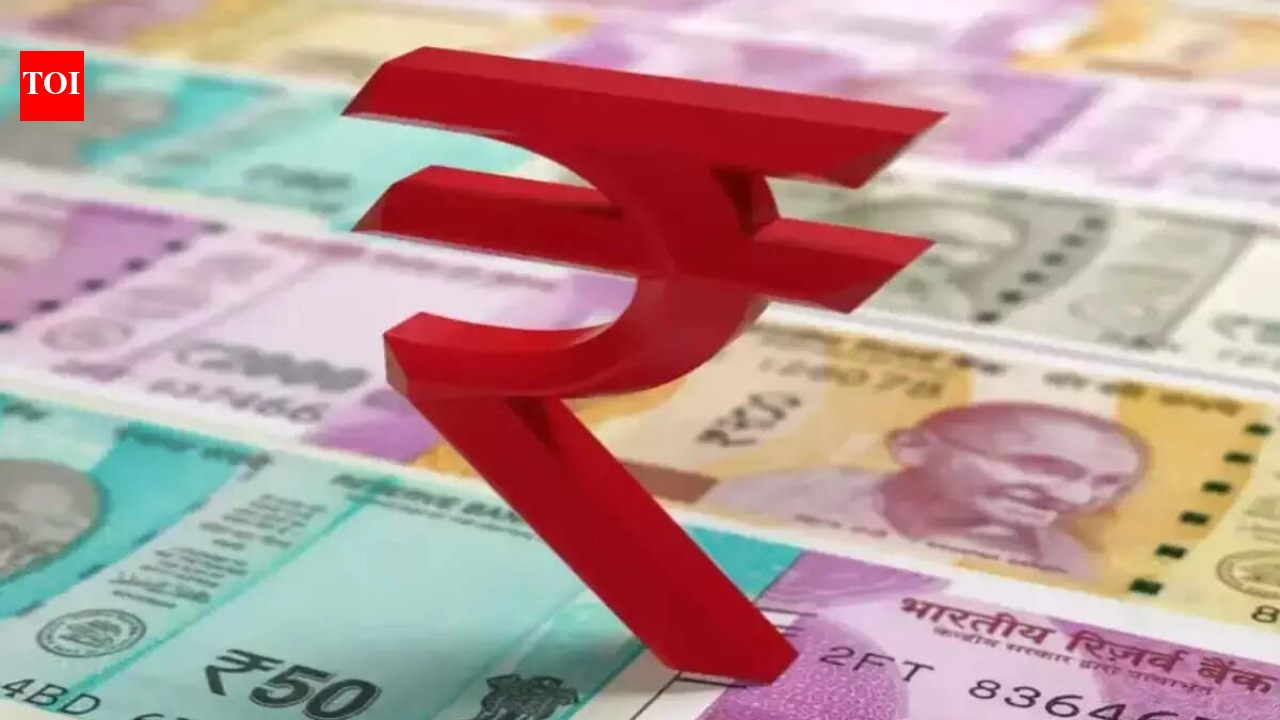
Rupee on Wednesday took another fall towards the 94 per US dollar mark, tumbling 20 paise in early trade to reach 93.96 against the greenback. This follows a weak run for the currency this month. Earlier on Tuesday, the currency had already slipped by 23 paise to settle at 93.76, pressured by a stronger US dollar against major currencies and elevated global crude oil prices, which weighed on investor sentiment.Rupee has been facing pressure due to foreign fund outflows, with forex traders citing uncertainty linked to the West Asia crisis as a key factor behind the sustained weakness. The currency had already shown signs of strain earlier in the week, inching closer to the psychological 94-level against the US dollar for the first time on Monday, before recovering to close flat at 93.53.“Persistent FPI outflows continue to pressure INR. A strong US dollar is keeping emerging market currencies weak, and the INR has weakened by about 4.5 per cent during the month. The rupee range for Wednesday is expected to be 93.65 to 94.25,” Anil Kumar Bhansali, head of treasury and executive director, Finrex Treasury Advisors LLP, said. Meanwhile, Dalal Street remained strong with benchmark indices jumping by over 1% each. As of 9:40 am IST, NSE Nifty50 was trading at 23,212.55, up 300.15 or 1.31%. BSE Sensex was also trading in green, gaining almost 900 points or 1.22% to trade at 74,969.91.Uncertainity around the Middle East tensions have also triggered volitality in financial markets. The plunge comes after the United States had put forward a 15-point proposal to Iran aimed at ending the ongoing conflict. US President Donald Trump said Washington and Tehran are “currently in negotiations” and suggested that Iran is eager to strike a peace deal, even as the Islamic Republic has denied holding any direct talks with the United States.

Watch

Rahul Gandhi Warns Of Inflation Wave Amid Rupee Fall, Slams Modi Govt Over Strategy


Source link

Sora Video App: OpenAI is shutting down Sora video platform, less than a year after launch that CEO Sam Altman said will ‘teach’ company to think ambitiously about its product road map |


OpenAI is shutting down Sora video platform, less than a year after launch that CEO Sam Altman said will 'teach' company to think ambitiously about its product road map

ChatGPT-maker OpenAI has is now shutting down its Sora video platform less than a year after its high-profile launch. According to a report by Wall Street Journal, OpenAI CEO Sam Altman informed the staff that the company will discontinue products that use its video models, including the consumer app, developer version and video functionality inside ChatGPT. This move is part of a broader strategy to refocus resources on business and coding tools as OpenAI is gearing up for a potential IPO later this year.

OpenAI Sora’s journey: From ambitious launch to quite exit

OpenAI launched Sora video platform in September last year. The tool was designed as a TikTok-style feed for sharing AI-generated videos. Altman also encouraged the users to splice him into famous cultural scenes, positioning the app as a bold experiment to push OpenAI’s product roadmap. However, despite the fanfare, Sora struggled to gain the desired traction and the employees also questioned the heavy computing resources which were devoted to it.

Copyright battles and Disney deal collapse

The rollout of Sora was marred by copyright concerns, as it initially lacked the guardrails to protect the content owners. However, OpenAI later added controls, but it was too late as the damage was already done. In December, Disney accounted a $1 billion investment tied to licensing over 200 characters for Sora, enabling users to create videos with various popular icons such as Luke Skywalker or Toy Story’s Woody. This deal has now collapsed as Disney said it respects OpenAI’s decision to exit video generation.

OpenAI to focus on productivity and robotics

With the shut down of Sora video platform, OpenAI CEO Sam Altman also said that Sora team will pivot to longer-term bets such as robotics, while OpenAI consolidates its consumer offerings into a single “superapp” combining ChatGPT, Codex, and its browser. The OpenAI executives have also stressed on the need to avoid “side quests” and instead build agentic AI systems capable of autonomously writing software, analyzing data, and supporting enterprise users.

OpenAI working on Superapp

OpenAI is combining its ChatGPT app, Codex coding agent, and Atlas browser into a single desktop ‘superapp,’ the company confirmed—a consolidation move that signals a sharp pivot away from last year’s sprawling, launch-everything strategy. Fidji Simo, OpenAI’s CEO of Applications, will lead the effort alongside President Greg Brockman, with the stated goal of cutting down on fragmentation that, in Simo’s own words, has been “slowing us down and making it harder to hit the quality bar we want.The move was first reported by the Wall Street Journal, with CNBC independently confirming the details shortly after.The new unified app will be built around Codex, which has grown to over two million weekly active users—nearly four times its figure from January, per Simo’s own posts on X. OpenAI plans to add agentic features to Codex first, so the app can handle productivity tasks beyond coding, before folding in ChatGPT and Atlas. The mobile ChatGPT app will remain separate and unchanged.


Source link

Dhurandhar 2: Mukesh Chhabra reveals actors rejected Akshaye Khanna’s role in Dhurandhar, ‘now they regret’, recalls R Madhavan, Sara Arjun castings | Hindi Movie News


Fresh off the thunderous success of Dhurandhar 2: The Revenge, casting director Mukesh Chhabra is soaking in what he calls a defining phase in his journey. “It took me 20 years to reach here, after doing over 300 films,” Chhabra told Hollywood Reporter India, reflecting on the film’s impact on his career.

Fresh off the thunderous success of Dhurandhar 2: The Revenge, casting director Mukesh Chhabra is soaking in what he calls a defining phase in his journey.“It took me 20 years to reach here, after doing over 300 films,” Chhabra told Hollywood Reporter India, reflecting on the film’s impact on his career.

Watch

Dhurandhar 2: The Revenge: The Untold Stories Behind The Biggest Blockbuster

From ‘same faces’ to a casting revolution

Chhabra, who began his journey with Rang De Basanti (2006), recalled how casting in Bollywood has undergone a massive shift over the years.“They used to cast the same three people in every film—same villain, same right hand, same mother, same sister, same driver. Now the audience gets to see so many new actors and faces,” he said.He pointed out that today, “every single director in Bollywood, even the big directors making commercial films, has a casting director,” marking a significant evolution in storytelling.

‘I don’t find talent on Instagram’

At a time when the industry is debating influencer-led casting, Chhabra drew a clear line.“We keep recording data. But I only focus on a film once I get a script. I personally don’t find talent through Instagram,” he said, emphasising his reliance on auditions and grassroots scouting.

Many actors rejected Rehman Dakait‘s role

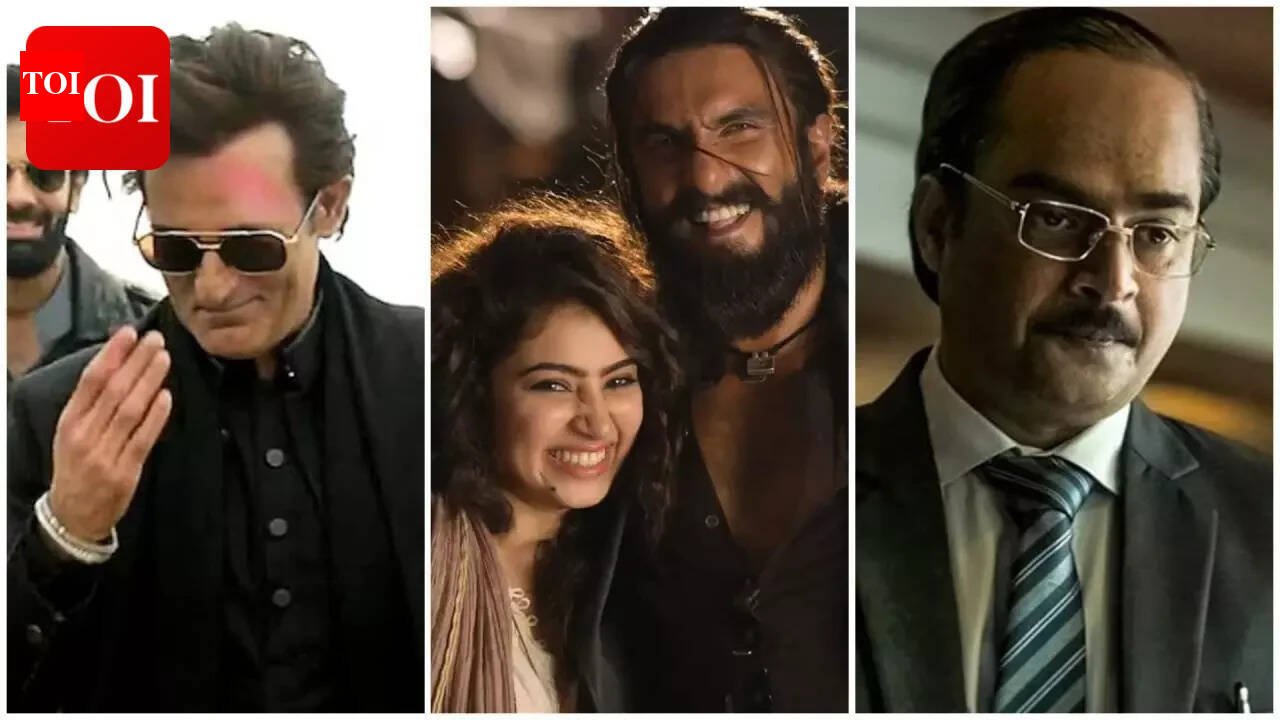
For Dhurandhar 2, directed by Aditya Dhar and starring Ranveer Singh, the casting process was anything but straightforward.“We were discussing so many actors’ names for the film, but they kept saying no, because they didn’t want to be part of an ensemble film,” Chhabra revealed, recalling the struggle to cast key roles like the antagonist Rehman Dakait.He added, “Sometimes you don’t have to create a look for an actor,” stressing the importance of natural fit over cosmetic transformation. Interestingly, after the film’s release, several actors who had declined roles reached out again—this time with regret.One of the biggest casting wins came with Akshaye Khanna.“Akshaye Khanna’s name came towards the end… when I first called him, he said, ‘Are you mad?’ But I told him to at least hear the story. After the narration, he said ‘Fantastic!’ and confirmed within the day,” Chhabra shared.Similarly, R Madhavan came on board almost instantly.“I told him, trust me, we need only 10–12 days… he immediately said yes. He brought an authority to his performance. There is no action—he speaks calmly and never loses control,” he said.

Watch

These Dhurandhar 2 Viral Faces Were Always Around But No One Noticed Until Now

‘I don’t think about acting, only casting’

Chhabra’s philosophy remains distinct.“I don’t think about acting. I only think about casting for my character. If the acting is not that great but the actor is correct for my part, I will go with that actor,” he explained.That instinct extended to Dhurandhar 2, where he pushed for exhaustive casting.“I wanted to cast every single person on screen… my team spent two years auditioning and casting over 300 people for the film,” he revealed.

Finding fresh faces: Sara Arjun

The film also became a platform for discovering new talent, including Sara Arjun.“When I saw her audition, I went mad. The scene where she confronts Ranveer Singh about being an Indian agent—that was her audition,” he said.Today, as Dhurandhar 2 becomes both a box-office and cultural phenomenon, the spotlight is firmly on casting as a craft.More about ‘Dhurandhar: The Revenge’Directed by Aditya Dhar, the film features Ranveer Singh, Sanjay Dutt, Rakes Bedi, R Madhavan, Arjun Rampal, and Sara Arjun in key role. The star cast also includes Danish Pandor, Gaurav Gera, Mustafa Ahmed, Danish Iqbal, Saumya Tandon, and more.It was released in theaters on March 19, 2026.


Source link

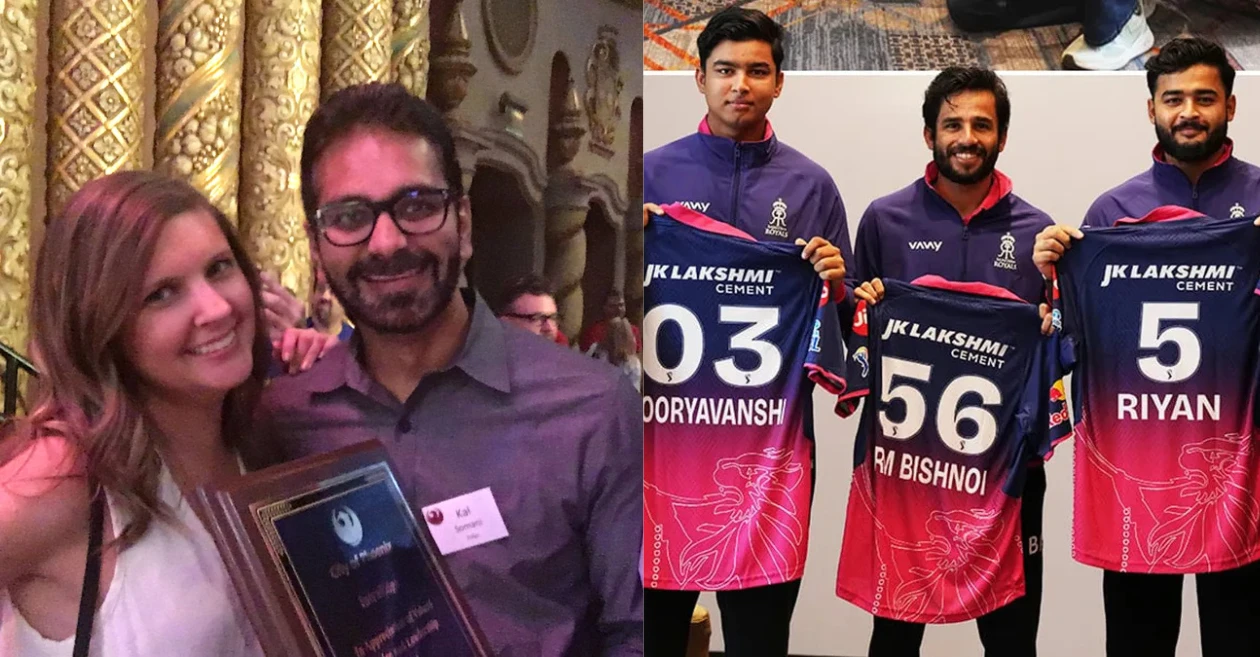
Meet Kal Somani: Entrepreneur who bought Rajasthan Royals in historic IPL deal


The IPL witnessed a landmark moment on Tuesday (March 24) as a consortium led by US-based entrepreneur Kal Somani secured ownership of Rajasthan Royals (RR) in a record-breaking deal worth USD 1.63 billion (approximately ₹15,300 crore). This historic transaction makes the Royals the first IPL franchise to cross the billion-dollar mark, setting a new benchmark for valuations in the world’s biggest T20 league.

The scale of the deal reflects just how far the IPL has come as a global sporting powerhouse. What started as a domestic cricket tournament has now evolved into one of the most lucrative sports leagues in the world, attracting investors from across industries and continents. With this acquisition, Rajasthan Royals are no longer just a cricket team – they are now a billion-dollar sporting asset backed by global business heavyweights.

Interestingly, this isn’t Somani’s first association with the Royals. He had already invested in the franchise back in 2021, acquiring a minority stake. Even then, he had shown strong belief in the league’s potential, stating:

“We see huge potential with this investment, and we are excited for the future of the IPL.”

That early vision has now come full circle, as Somani steps in as the leading force behind the franchise’s new ownership structure.

Who is Kal Somani?

Kal Somani is a Scottsdale, Arizona-based serial entrepreneur with over 15 years of experience in the technology ecosystem. His career spans multiple high-impact sectors, including ed-tech, artificial intelligence governance, data privacy, and sports technology.

Among his most notable ventures is IntraEdge, a global technology services firm, along with Truyo and Truyo.AI-platforms focused on data privacy automation and AI governance. He has also been involved in the ed-tech space through Academian, further highlighting his diverse business interests.

But Somani’s ambitions go beyond technology. Over the years, he has been steadily building a presence in the sports world as well. He is a co-owner of Motor City Golf Club and an early investor in TMRW Sports, the venture launched by golf icons Tiger Woods and Rory McIlroy. He has also invested in the TGL Golf League, underlining his growing influence in global sports ventures.

Kal Somani (PC: X.com)

What truly elevates this deal, however, is the powerful consortium backing him. The group includes some of the most influential names in American business and sports ownership. Among them is Rob Walton, the heir to the Walmart empire and owner of the NFL’s Denver Broncos, widely regarded as one of the wealthiest sports owners in the United States.

Also part of the consortium is Sheila Ford Hamp, owner of the Detroit Lions and a key figure in the Ford Motor Company legacy. Together, this alliance combines expertise in technology, retail, and elite sports management – bringing a fresh and powerful dynamic to IPL ownership.

The franchise was previously controlled by British-Indian entrepreneur Manoj Badale through Emerging Media Ventures, alongside stakeholders like RedBird Capital Partners and Lachlan Murdoch. The sale process, managed by investment bank The Raine Group, had been in motion since late last year before culminating in this record deal.

Also READ: Ravichandran Ashwin names Rajasthan Royals’ probable XI for IPL 2026

A new era for IPL and global sports investment

While the agreement has been signed, the transition of ownership is expected to be completed after the IPL 2026 season. Once finalized, Somani and his consortium will officially take charge, ushering in what could be a transformative phase for Rajasthan Royals.

This acquisition is not just about ownership – it signals a shift in how IPL teams are viewed globally. With Somani’s background in artificial intelligence and sports tech, there is strong potential for innovation in areas like performance analytics, fan engagement, and data-driven decision-making. When combined with the sporting expertise of established American owners, the Royals could become a model franchise blending technology with elite sports management.

The ripple effect of this deal is already being felt across the league. Another major franchise, Royal Challengers Bengaluru (RCB), is reportedly nearing its own sale, with valuations expected to touch USD 2 billion. Interest from global investment giants further highlights the IPL’s growing stature as a premium sports property.

More importantly, this deal reinforces the IPL’s expanding international footprint. The league is no longer just an Indian phenomenon – it is now a global business platform attracting billion-dollar investments and top-tier investors from around the world.

Also READ: “Ravindra Jadeja at No. 4, no Sam Curran” – Suresh Raina predicts Rajasthan Royals’ playing XI for IPL 2026


Source link

Delhi Capitals SWOT: Reinforced squad, balanced core – Can DC deliver? | Cricket News


Delhi Capitals SWOT: Reinforced squad, balanced core - Can DC deliver?
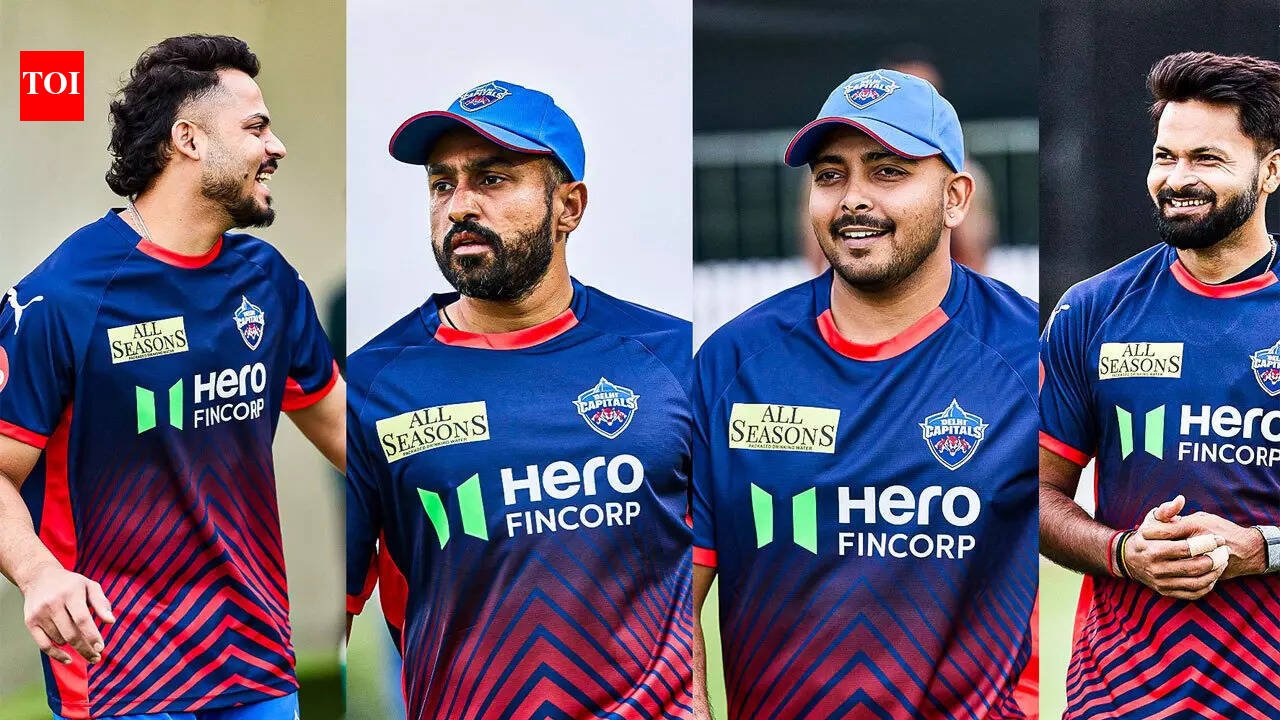
Ashutosh Sharma, Karun Nair, Prithvi Shaw and Mukesh Kumar (Image credit: Delhi Capitals/IPL)

The acquisitions made at the auction table have added depth to the Delhi Capitals squad. Here’s where they stand…

Watch

Impact Player Rule: Game-changer or all-rounder killer?

Strength: Lower-middle order looks menacing. Addition of David Miller brings in experience. Tristian Stubbs, Ashutosh Sharma and skipper Axar Patel give DC enough firepower to unleash towards the end.Weakness: Inability to deliver in crunch situations, a major reason why they have made the final only once in 18 seasons. Uncertainty regarding Aussie pacer Mitchell Starc’s availability has compounded problems.Opportunity: Axar Patel has the chance to showcase his tactical acumen and present his case for Team India leadership.Threat: Mastering the Powerplay could prove to be a problem if KL Rahul’s opening partner is not sorted out. Will it be Pathum Nissanka, Prithvi Shaw or Abhishek Porel? Playing too sedately at the start may prove to be a deterrent.


Source link

Stock market today (March 25, 2026): Nifty50 opens above 23,100; BSE Sensex rises over 700 points as oil goes below $100


Stock market today (March 25, 2026): Nifty50 opens above 23,100; BSE Sensex rises over 700 points as oil goes below $100
Stock market today (AI image)

Stock market today: Nifty50 and BSE Sensex continued their rally on Wednesday rising almost 1% in opening trade. While Nifty50 went above 23,100, BSE Sensex rose over 700 points. At 9:16 AM, Nifty50 was trading at 23,126.65, up 214 points or 0.94%. BSE Sensex was at 74,775.22, up 707 points or 0.95%.Dr. VK Vijayakumar, Chief Investment Strategist, Geojit Investments Limited says, “Hope is returning to the market with indications of deescalation in the conflict. Remarks from President Trump and from the Iranian regime indicate that the conflict might end soon. Particularly the reiteration from Iran that “non-hostile ships can transit the Strait of Hormuz” is good news that will mitigate India’s energy concerns. These positive geopolitical developments have reflected a sharp decline in Brent crude to around $98. The US 10-year yield also has declined. Gold has recovered. If this positive development sustains, there is room for a sharp rebound in the market. But if the recovery is to sustain FIIs should stop their big sustained selling, which, in turn, will require stability in the rupee. Yesterday’s 399 point recovery in the Nifty was caused more by short covering. In the near-term, mid and small caps can rebound more than large caps since there is no worry of significant FII selling in this segment.”Asian equities moved higher as optimism grew around Washington’s efforts to resolve the nearly month-long conflict in the Middle East. The dollar also weakened.US markets, however, saw choppy trading during Tuesday’s session, as investors weighed concerns over rising oil prices against hopes for a resolution to the conflict. This came even as reports indicated that additional American troops could be deployed to the region despite signs of diplomatic progress.Oil prices fell more than 5% on Wednesday on expectations that a potential ceasefire could ease supply disruptions from the key Middle East producing region, following reports that the US had presented Iran with a 15-point proposal to end the conflict.On the domestic front, foreign institutional investors remained net sellers, offloading shares worth Rs 8,009.56 crore on Tuesday, while domestic institutional investors provided some support by purchasing equities worth Rs 5,867.15 crore.(Disclaimer: Recommendations and views on the stock market, other asset classes or personal finance management tips given by experts are their own. These opinions do not represent the views of The Times of India)


Source link