
What will humans look like in a million years? The answer may surprise you |
[ad_1]
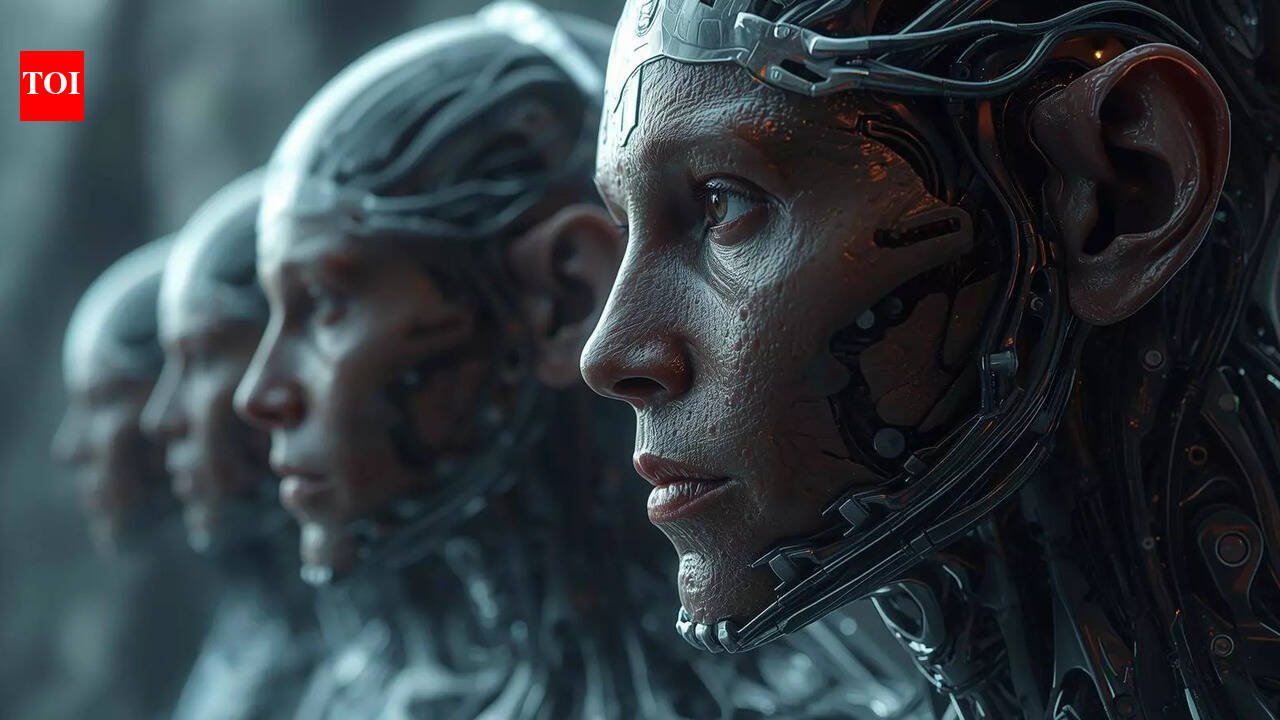
Thinking about human appearance far into the future tends to drift into science fiction, but the question is rooted in real science. Human bodies have never been fixed. They have shifted with climate, food supply, disease, movement and technology. A million years ago, humans did not look as they do today, and there is little reason to assume today’s form will last unchanged. Genetics, population growth and medical intervention all continue to shape people in quiet ways. Scientists are cautious about long-range predictions, yet patterns can be observed. By looking at fossils, recent human history and present demographic trends, researchers can outline pressures that may influence future human appearance. The picture that emerges is uncertain, uneven and shaped as much by choice and technology as by natural evolution itself.
Smaller bodies, darker skin, and tech-enhanced brains: How humans could evolve next
According to an article published on BBC Earth a million years ago, modern humans were absent. Instead, species such as Homo erectus and later Homo heidelbergensis lived across parts of Africa and Eurasia. They had heavier bones, stronger brow ridges and different body proportions. Homo sapiens appeared much later. The fossil record suggests slow shifts rather than sudden transformations.In the last 10,000 years, agriculture reshaped daily life. Reliable food supplies changed height and weight patterns. Some populations grew taller, others heavier. Diseases linked to diet increased, but medicine allowed many people to survive and reproduce. Evolution did not stop. It simply took a different route.
Crowded living might be a new environment that favours new traits
Our daily life requires us to be in constant social contact with others. This situation is considered a novelty in evolutionary terms. Some researchers think that abilities related to memory, communication and stress tolerance might become more significant. Also, there might be a change in the physical size as smaller bodies may need less energy in crowded places.
Human biology is getting merged with technology
Medical implants nowadays help to support hearts and joints as well as hearing. In the future, technology may not only be about repair but will also focus on enhancement. Brain implants and artificial eyes are currently being researched, but they are still at an experimental stage. If such devices become widespread, the exterior appearance could show technology as much as biology.
Population trends are the major influencers of the global features
The growth rate of the population varies drastically in different parts of the world. The fast growth of some parts of Africa indicates that some genetic traits may increase globally. Scientists suppose that darker skin tones may become more prevalent as demographic patterns have more influence than selection alone on the change.
Extra, terrestrial Life would cause a reshaping of the body
Living for an extended period on a planet like Mars may lead to muscle and bone atrophy due to lower gravity. Such alterations would most probably take place gradually, over many generations.Human variability is on the rise instead of decreasing. The destiny of the shape of humans is thus not predetermined and is continuously influenced by movement, free will and time rather than a single path.
[ad_2]
Source link