Breaking News
Rupee slide: RBI lets currency weaken amid outflows; focus shifts to curbing speculation

[ad_1]
Rupee slide: RBI lets currency weaken amid outflows; focus shifts to curbing speculation

India’s central bank will allow the rupee to weaken as the country’s external position comes under strain from slowing dollar inflows, widening trade pressures and heavy foreign selling in domestic markets, according to sources cited by news agency Reuters. The Reserve Bank of India (RBI), which had been actively supporting the currency until last month through sizeable dollar sales, has let the rupee depreciate 1.3% in the last seven trading sessions, taking it to a record Rs 90.42 per dollar.

Rupee Slides To Record Low Of 90 Per Dollar As Trade Uncertainty, Dollar Demand And Oil Costs Spike

The rupee is now down 5.5% this year, making it Asia’s worst-performing currency.According to three people familiar with the RBI’s thinking, the central bank is no longer inclined to defend any specific exchange-rate level and will focus instead on preventing disorderly movements or speculative pressure. “It doesn’t make sense to spend reserves when fundamentally everything is against the currency,” one of the sources said, as per Reuters. Another source said the RBI “does let the rupee move more than it normally would” whenever the underlying demand for dollars warrants it. The central bank has not commented on the matter.India has witnessed significant portfolio outflows, with foreign investors selling $17 billion worth of equities so far this year, Reuters reported. Foreign direct investment, external trade flows and offshore fundraising have all slowed. While the rupee’s fall below the psychologically sensitive Rs 90 mark has attracted attention, the RBI is prepared to counter attempts at speculative build-ups, a third source said.Market participants remain cautious. A weaker currency gives the RBI more room in policy terms but risks making Indian assets less attractive to overseas investors. “A weakening Indian rupee is definitely a negative when it comes to investing in Indian equities,” said Sam Kongrad of Jupiter Asset Management, adding that his firm remains “neutral weight” on India, as per Reuters.MSCI’s India index has gained 7% this year, but rupee weakness has cut dollar returns to below 2%, far behind South Korea and Hong Kong.Some investors believe the impact could ease if a resolution to trade frictions with the United States emerges and fresh foreign flows come through potential global index inclusion. Others argue India’s strong domestic fundamentals — including 8.2% GDP growth in July–September — may help offset currency weakness over time.“I’m not losing sleep over it,” chief economic adviser V Anantha Nageswaran said on Wednesday. He added that the rupee’s slide has not fed into inflation and said he expects a recovery in 2026.Meanwhile, the rupee staged a brief rebound on Thursday, rising 26 paise to Rs 89.89 on reports of supposed RBI intervention and a softer US dollar, as per PTI. Earlier in the day, it hit another record low of Rs 90.43 amid foreign selling and costlier crude oil. Traders said uncertainty around the India-US trade deal, elevated oil prices and persistent FII outflows continue to weigh on sentiment, though a weaker dollar and expectations of a US rate cut may offer some support.The market is now awaiting the RBI’s monetary policy announcement on Friday, which comes at a time of rising GDP growth, easing inflation and ongoing geopolitical uncertainties.


[ad_2]

Source link

Raj Nidimoru’s ex-wife Shhyamali De pens a lengthy note after his and Samantha Ruth Prabhu’s wedding: ‘Spent a sleepless night’ |

[ad_1]

Raj Nidimoru’s ex-wife Shhyamali De pens a lengthy note after his and Samantha Ruth Prabhu’s wedding: ‘Spent a sleepless night’

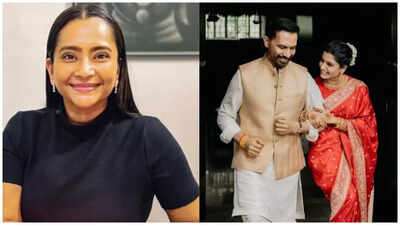
On December 1, Samantha Ruth Prabhu and Raj Nidimoru got married at Isha Yoga Centre, Coimbatore. As soon as the pictures of their wedding were made public, everyone was elated and sent congratulatory messages. However, with this new update in Raj Nidimoru’s life, people once again showed keen interest in his ex-wife Shhyamali De’s reaction to the news. Though she didn’t directly mention anything anywhere, a cryptic note by her just before the wedding and one only a day after fed the rumour mill. Now days after Samantha and Raj’s wedding, Shhyamali De has shared her a lengthy on social media. Read on to know what it’s all about.

Shhyamali De, Raj Nidimoru’s ex-wife’s long note after his and Samantha Ruth Prabhu’s wedding

On Thursday, in a series of stories, Shhyamali De expressed her gratitude towards people who sent good wishes and positive vibes her way in her hour of need. She also mentioned in her note that her Jyotish guru was diagnosed with Stage 4 cancer, which left her in a state of grief. Amid all this, she found some peace when people sent her sweet wishes. She also urged her followers to keep the space clean during the difficult times.

Samantha Ruth Prabhu Marries Raj Nidimoru : First Wedding Photos Out!

Here’s what her note exactly reads:

“I spent a sleepless night tossing and turning, debating, and realised it would be ungrateful and churlish not to acknowledge all the good that is coming to me. I have been practising Meditation on Twin Hearts for many years now. Doing the meditation involves blessing Mother Earth and all persons and beings with peace, love, forgiveness, hope, light, joy, loving-kindness, goodwill, and the will to do good. As a friend reminded me, what I am receiving now is simply that energy returning. I have no team, no PR, no staff, or associates managing my page. I am personally responding while dealing with something that needs my full presence,” she wrote.She continued and mentioned the ordeal of her Joytish guru’s disease. She penned, “On 9 November, my Jyotish guru was diagnosed with Stage 4 cancer, which has unfortunately metastasised to multiple parts of the body, including the brain. I am sure you all will understand where my attention must be right now.”

Shhyamli De long post after Raj Samantha's wedding (1)

“So, a humble request: please keep this space clean. Thank you… thank you… thank you… May every person, every being be blessed with good health, happiness, prosperity, and spirituality,” Shhyamali De concluded.Meanwhile, just a day before Samantha and Raj’s wedding, Shhyamali shared one line on her story – ‘Desperate people do desperate things.’ It caught the attention of the netizens instantly. Later, a day after Samantha shared wedding pictures, De posted a picture of a vast universe, with an arrow pointing to a tiny planet. In text she mentioned, “We live here.”

Samantha Ruth Prabhu and Raj Nidimoru’s wedding

Samathan and Raj got married according to the yogic tradition of Bhuta Shuddhi Vivaha. Their wedding was a low-key ceremony attended by only close friends and family. Pictures from their wedding and pre-wedding festivities are keeping the internet engaged.Sam and Raj’s first collaboration was marked by ‘The Family Man 2’ in 2021. It was the first time the two worked together, where Samantha played a strong antagonist, and Raj was one of the makers. Their professional collaboration turned into friendship and then into a romantic relationship. Initially, the couple kept their affair low-key, but their public spottings always hinted at their chemistry.


[ad_2]

Source link

Photo Gallery: WAGS of top England cricketers at the Ashes 2025-26

[ad_1]

England’s Ashes 2025–26 campaign in Australia has drawn almost as much attention off the field as on it, with several star players joined by their wives and girlfriends (WAGs) for the high‑profile tour. From captain Ben Stokes to senior batter Joe Root and rising stars like Jamie Smith and Will Jacks, the support group in the stands has become a major talking point for fans on social media and at the grounds.

Wives and girlfriends of England cricketers at the Ashes 2025-26

Ben Stokes’ wife – Clare Ratcliffe

Ben Stokes' wife - Clare Ratcliffe

Clare Ratcliffe, married to England captain Ben Stokes, has been one of the most recognisable faces among England’s cricket families. Known for her grounded personality, Clare has supported Stokes throughout his career highs and personal challenges. She often attends marquee series like the Ashes and is known for sharing family moments while staying largely private.

Jofra Archer’s girlfriend – Druanna Butler

Jofra Archer's girlfriend - Druanna Butler

Druanna Butler has frequently accompanied Jofra Archer during tours since the fast bowler’s return to international cricket. She drew social-media attention during the Ashes for her appearances in the stands. Druanna keeps a low profile publicly but is known to be a strong emotional support for Archer as he navigates injury comebacks and high-pressure cricket.

Harry Brook’s partner – Lucy Lyles

Harry Brook's Partner - Lucy Lyles

Lucy Lyles, partner of batting star Harry Brook, has been visible during England’s overseas series and major Test matches. The couple have been together since before Brook’s rapid rise in international cricket. Lucy is known for her quiet presence and occasional celebratory photos during Brook’s standout performances.

Ben Duckett’s girlfriend – Paige Ogborne

Ben Duckett's wife - Paige Ogborne

Paige Ogborne, Ben Duckett’s girlfriend, is often spotted cheering from the family enclosure. She has been vocal in celebrating Duckett’s return to England’s Test setup and shares glimpses of their travel and cricket life on social platforms. The couple married recently and are popular among England fans.

Brydon Carse’s partner – Marina Mackintosh

Brydon Carse's partner - Marina Mackintosh

Marina Mackintosh is the partner of fast bowler Brydon Carse and has been present for parts of England’s Ashes campaign. She maintains a private profile but is known for supporting Carse during both domestic and international fixtures.

Will Jacks’ partner – Ana Brumwell

Will Jacks' partner - Ana Brumwell

Ana Brumwell, partner of all-rounder Will Jacks, has been active on social media during England tours, sharing travel diaries and behind-the-scenes glimpses. She has become a familiar face in the WAGs group, especially during marquee away series.

Ollie Pope’s wife – Ella Gurdon

Ollie Pope's wife - Ella Gurdon

Ella Gurdon, married to vice-captain Ollie Pope, has frequently accompanied him on overseas assignments. Known for her elegant presence, Ella has supported Pope across his injury recoveries and leadership responsibilities, often seen in the VIP stands with England families.

Matthew Potts’ girlfriend – Holly Beattie

Matthew Potts' girlfriend - Holly Beattie

Holly Beattie, partner of seamer Matthew Potts, is part of the newer members of the England supporters’ group. She has attended several home and away matches and is often pictured celebrating Potts’ milestones.

Joe Root’s wife – Carrie Cotterell

Joe Root's wife - Carrie Cotterell

Carrie Cotterell, wife of former England captain Joe Root, is one of the most recognisable WAGs in the squad. A long-term supporter of Root’s career, Carrie is known for attending Ashes series regularly and sharing moments with other England families. She and Root are also parents, often balancing family life with England’s touring demands.

Also READ: Kevin Pietersen’s wife – Who is Jessica Taylor and why is she trending?

Jamie Smith’s partner – Kate Jukes

Jamie Smith's partner - Kate Jukes

Kate Jukes, partner of wicketkeeper-batter Jamie Smith, accompanied him on his first major Ashes tour. As Smith continues to establish himself in the Test side, Kate has been part of the England families’ contingent, supporting him through early milestones.

Mark Wood’s wife – Sara Lonsdale

Mark Wood's wife - Sara Lonsdale

Sara Lonsdale, wife of fast bowler Mark Wood, has long been a favourite among England fans for her warmth and humour. She shares occasional glimpses of life with Wood, including behind-the-scenes travel and family updates, and is often present during major overseas tours.

Also READ: All you need to know about Stuart Broad’s girlfriend Mollie King

[ad_2]

Source link

‘Absolutely filthy’: ‘Gutted’ Nathan Lyon voices anger after being dropped from Gabba Ashes Test | Cricket News

[ad_1]

'Absolutely filthy': 'Gutted' Nathan Lyon voices anger after being dropped from Gabba Ashes Test

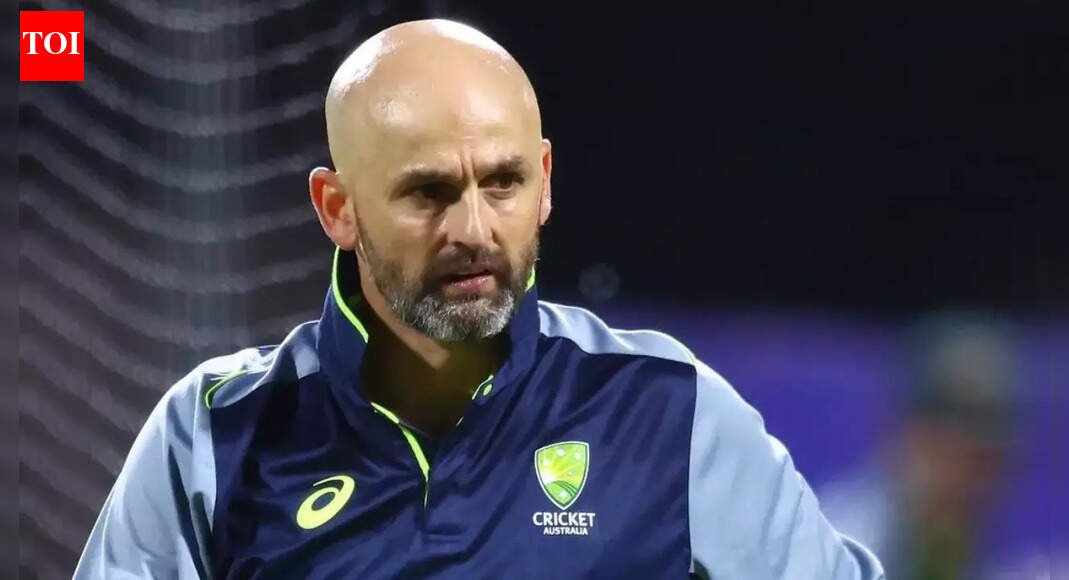
Veteran Australian off-spinner Nathan Lyon said he was “absolutely filthy” after learning he had been left out of the second Test of the Ashes series against England in Brisbane on Thursday. Lyon also explained whether he had spoken with the Australian team management after the decision.Australia opted for an all-pace attack for the Brisbane Test, leaving out Lyon. The team made two changes from the eight-wicket win in the opening Test in Perth. Michael Neser came in for Lyon, and Josh Inglis replaced injured opener Usman Khawaja.Lyon said he got to know about his omission only after reaching the ground on the morning of the match.“I found out as I came to ground, as I always do, pretty early, about 12 o’clock, and found out about 12.30,” Nathan Lyon said to 7Cricket.George Bailey, the chair of Australia’s National Selection Panel, said the pace of recent Test matches had limited Lyon’s chance to influence games on seam-friendly surfaces.Reacting to that, Lyon said he has not had a detailed conversation with the team management yet and is taking time to process the decision.“No, yeah, absolutely filthy, but, yeah, can’t do anything about it. So, yeah, just hope I can play my role in making sure I can get the guys ready and do whatever I can to make sure that we get the right result here,” Lyon said.“To be honest, I haven’t really sat down with Ronnie [Andrew McDonald] or George yet. I’m letting things settle down in my own head, and trying to make sure that, as I said, doing whatever I can to make sure the guys out in the middle there, representing Australia, do the right thing and get the right result for us,” Lyon added.“The communication is always there, I just hadn’t had it in me to sit down with the coach and George at the moment,” Lyon furher said, adding, “So that will happen. I’m not the first player to miss a Test match and I won’t be the last. But, yeah, obviously pretty gutted because I know the role that I can play within Australian cricket and especially a venue like this.”In the first day of the match, Joe Root scored his first Test century in Australia and his 40th overall, taking England past 300 runs in their first innings.


[ad_2]

Source link

Access Denied

[ad_1]


Access Denied

You don’t have permission to access “http://www.ndtv.com/india-news/pm-modi-hugs-russian-president-putin-at-delhi-airport-private-dinner-shortly-9751681” on this server.

Reference #18.a4f856b8.1764861738.1a840608

https://errors.edgesuite.net/18.a4f856b8.1764861738.1a840608

[ad_2]

Source link

SGB returns: RBI confirms final payout for 2017 gold bond series; long-term holders gain over 340%

[ad_1]

SGB returns: RBI confirms final payout for 2017 gold bond series; long-term holders gain over 340%

A Sovereign Gold Bond (SGB) bought eight years ago has turned a Rs 1 lakh investment into more than Rs 4.4 lakh, after the Reserve Bank of India announced the final redemption price for the 2017-18 Series-X tranche. The RBI said in its statement dated 3 December 2025 that this series will mature on Thursday, marking exactly eight years from its issue date.This particular tranche had remained open for subscription between 27 and 29 November 2017, with settlement taking place on 4 December that year. The central bank reiterated that, under the Government of India’s notification dated 6 October 2017, these bonds are repayable after eight years, making 4 December 2025 the official redemption date.The RBI has fixed the final payout at Rs 12,820 per unit, a figure calculated using the simple average of the closing prices of 999-purity gold for the three business days immediately before redemption. The India Bullion and Jewellers Association (IBJA) recorded gold prices at Rs 12,821 per gram on 1 December, Rs 12,759 on 2 December, and Rs 12,880 on 3 December 2025, producing an average of Rs 12,820.When the bonds were originally issued, the ministry of finance had priced them at Rs 2,961 per gram, with an online discounted rate of Rs 2,911. Based on this, the absolute return—without including interest—comes to Rs 9,909 per unit (Rs 12,820 minus Rs 2,911). In percentage terms, this works out to roughly 340.3%, delivering a substantial gain for long-term investors.Alongside capital appreciation, SGB holders have also earned a 2.5% annual interest, paid by the government. The scheme, managed by the RBI, is designed as a digital or paper-based alternative to holding physical gold, removing concerns around purity and storage while offering the added benefit of interest income. Investors can also redeem their bonds early after five years, but only on interest payment dates. The bonds remain tradable, can be transferred, and may be used as collateral for loans.The RBI has clarified that investors will receive a maturity intimation one month before the payout date. On maturity day, the redemption amount will be credited directly to the bank account registered in the investor’s records. As per ET, anyone who has changed their bank details, email address or other contact information must inform their bank, SHCIL or post office in advance to avoid delays.


[ad_2]

Source link

Karnataka plans wider rollout of telescope scheme to govt schools | India News

[ad_1]

Karnataka plans wider rollout of telescope scheme to govt schools

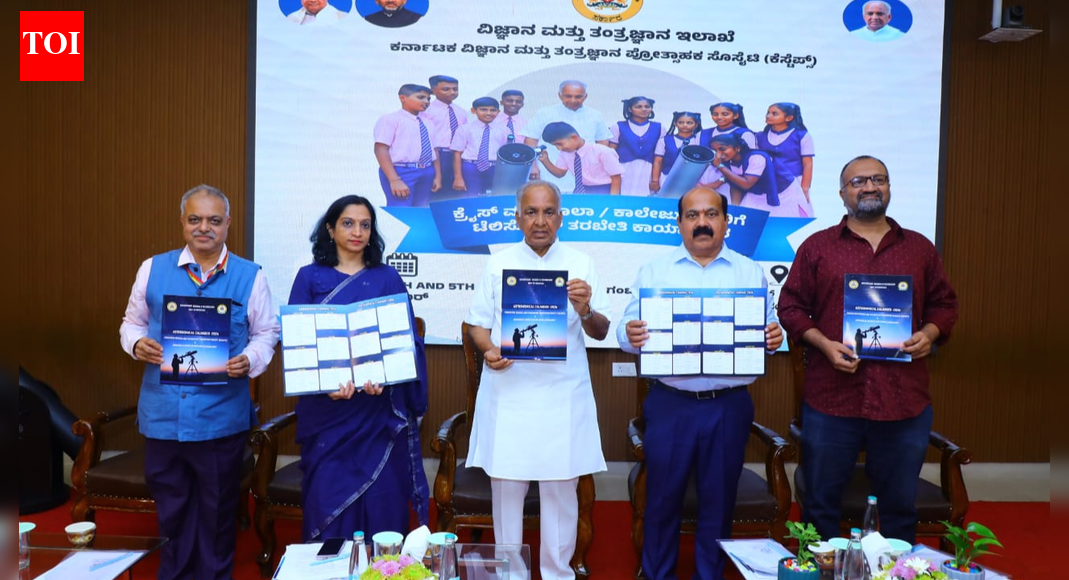
BENGALURU: Karnataka is preparing to expand its Telescope Distribution Scheme beyond Karnataka Residential Educational Institutions Society (KRIES) schools to a larger group of govt institutions, science and technology minister NS Boseraju said Thursday. A proposal seeking more funds will be placed before the chief minister during the next budget meeting.Boseraju was speaking at the Jawaharlal Nehru Planetarium, where he inaugurated a training programme for KRIES teachers on operating and maintaining the telescopes supplied to their schools. The effort is part of a broader push to strengthen astronomy-based learning across the State.Under the scheme, 833 residential schools and PU colleges under KRIES have each received a telescope at a total cost of Rs 3 crore. Boseraju said no other government department in the country had taken up a project of this scale. He added that the department hopes to extend telescope distribution to more schools in the coming year.

Google To Invest $15 Billion On AI Hub In Visakhapatnam, CEO Sundar Pichai Speaks To PM Modi

He stressed the need to foster scientific temper and rational thinking among students. Strengthening science education, he said, is essential in an era driven by knowledge and innovation.Training is a key part of the programme. The minister said the govt’s intention was not to distribute the instruments and step away, but to ensure teachers are equipped to use them in classrooms. The hands-on workshop aims to help teachers integrate regular sky observations into school activities, encouraging students to explore astronomy.The department’s 2026 astronomical calendar was also released at the event. The calendar lists monthly celestial events and is meant to support teachers in using the telescopes more effectively. Senior officials from the department and the planetarium joined around 90 KRIES teachers at the event.


[ad_2]

Source link
Putin India Visit: PM Modi welcomes Russian President in Delhi, shares car ride after warm reception – key points | India News

[ad_1]

Putin India Visit: PM Modi welcomes Russian President in Delhi, shares car ride after warm reception - key points

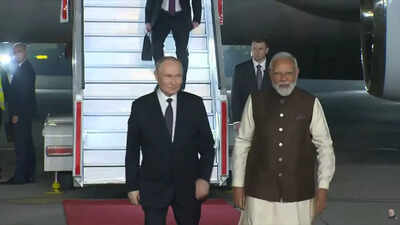
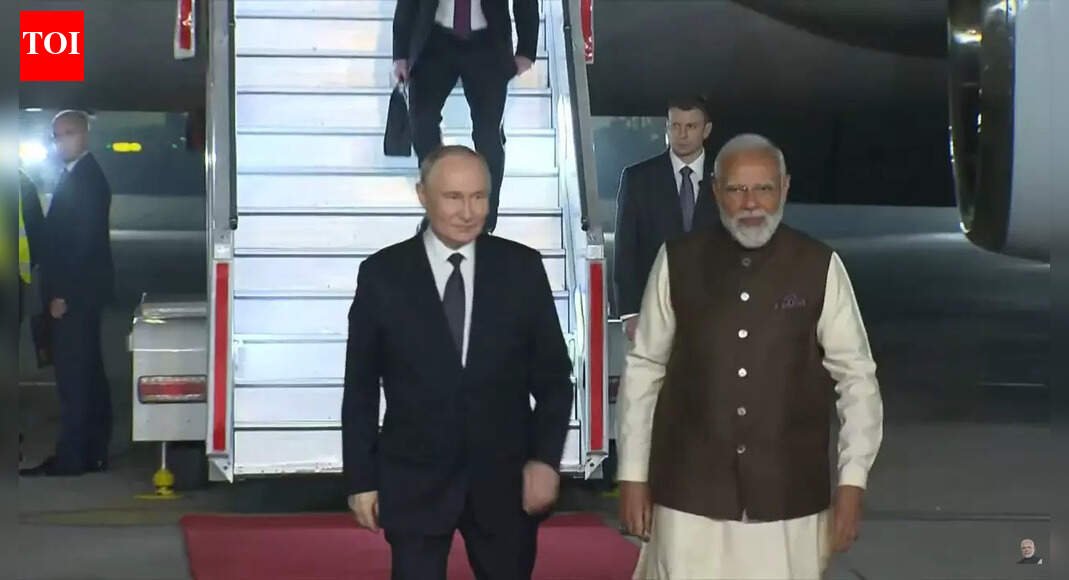
NEW DELHI: Prime Minister Narendra Modi on Thursday personally received Russian President Vladimir Putin at Delhi’s Palam Airport, marking the start of his two-day state visit to India. PMModi greeted Putin with a handshake and warm embrace, before both leaders left the airport together in the same vehicle.

Putin Visit To Boost India-Russia Trade To New Highs, Says WTC Chairman

Putin’s arrival was met with a security grid comprising the Delhi Police, Special Protection Group (SPG), and Russian security officials. Flex boards and Russian flags lined the airport route, and advanced surveillance systems were activated across key areas of the capital.The two leaders will co-chair the 23rd India–Russia Annual Summit, where more than 10 inter-governmental agreements and over 15 commercial MoUs are expected to be signed. Key focus areas discussed by officials include trade expansion, healthcare, fertilisers, shipping, agriculture, connectivity and workforce mobility.

India And Russia Boost Military Ties As Rajnath Singh Highlights Strategic Tech Partnership

Defence and trade ties in focus amid global uncertainty

Ahead of Putin’s arrival, defence minister Rajnath Singh underlined that despite global instability, India–Russia cooperation “is moving at a healthy pace.” He welcomed progress toward a Free Trade Agreement with the Eurasian Economic Union and highlighted consistent military exchanges between the two sides.Russian defence minister Andrei Belousov echoed the sentiment, describing relations with India as a “time-proven friendship” based on mutual respect and cultural affinity.During the visit, Putin will attend a state banquet hosted by President Droupadi Murmu and is also expected to launch the Indian edition of Russian broadcaster RT.

Private dinner diplomacy with PM Modi

Putin’s first engagement in India is a private dinner with PM Modi. The meeting is expected to cover the full spectrum of the “special and privileged strategic partnership,” ranging from defence and energy security to trade and cooperation in emerging sectors. Discussions will also include global geopolitical issues, Eurasian developments and the Indo-Pacific.The dinner sets the stage for Friday’s structured summit talks.

Day Two: Rajghat tribute, ceremonial welcome and business engagements

Putin begins his Friday schedule with a visit to Rajghat to pay homage to Mahatma Gandhi — a tradition for visiting heads of state. He will then receive a ceremonial welcome at Rashtrapati Bhavan, followed by formal summit discussions with PM Modi at Hyderabad House.After a working lunch, Putin will address the India–Russia Business Forum aimed at boosting private sector partnerships and investments. The evening will conclude with a state banquet hosted by President Murmu, after which Putin is expected to depart around 9.30 pm.

Big-ticket agreements and 2030 trade roadmap

A joint statement is expected, along with agreements across multiple sectors. Among the key outcomes is the Programme for the Development of Strategic Areas of Russian-Indian Economic Cooperation until 2030, seen as a roadmap to enhance long-term industrial and trade cooperation.Putin’s aide Yuri Ushakov confirmed that bilateral trade reached $63.6 billion in 2024, a 12% rise driven by energy, fertilisers and machinery. He also listed priority areas for collaboration: industrial partnerships, innovative technologies, peaceful space exploration, transport, mining, healthcare and labour mobility.Putin will also attend the launch of Russian media channel RT’s India operations — a signal of Moscow’s growing soft power outreach.

India–Russia ties continue to adapt

Modi and Putin have spoken by phone five times in 2024 and last met in person at the SCO Summit in Tianjin. Despite shifting global alignments and the ongoing Russia–Ukraine conflict, the India–Russia partnership continues to diversify, balancing legacy defence ties with new cooperation in technology, energy transition, education and workforce mobility.


[ad_2]

Source link
‘After China, it’s India’s turn to take concentrated action against pollution’ | Mumbai News

[ad_1]

Mumbai is in the headlines for its worsening air. But “publicity for the wrong reasons can be a motivator,” says Douglas Worsnop, noting that bad press over Beijing’s smog before the 2008 Olympics pushed China to clean up its air. Worsnop—a leading atmospheric chemist who helped develop key instruments to study pollution particles—has also worked on China’s clean air efforts. In Mumbai for the 14th Asian Aerosol Conference, the University of Helsinki professor spoke to Vaishnavi Chandrashekhar about lessons for India.Q: Tell us about the air pollution experience in China.A: I’ve been visiting China for 20 years, and I watched things get worse and then things get better. The govt there actually talks to scientists, more directly and more formally than anywhere else I’ve seen. That doesn’t mean the govt does exactly what the scientists say, but over time, they listen. And the govt in China, specifically, has the authority and the discipline to make things happen on a timescale of years. The air is still not fully clean there. There’s still work to do. But for five years or more, they made it a top priority, and things happened. And it’s still a high priority. China also took advantage of what had been learned in the US and Europe. In 1970, the US introduced the Clean Air Act, and it worked but it took us 40 years. The Europeans were roughly a decade behind us and now have caught up. The Chinese made the air dirty five times faster than we did, but they are cleaning it up maybe five times faster. But it took international headlines about pollution in Chinese cities to get concerted action. It’s now India’s turn. And India has the opportunity to do it even more efficiently, more scientifically.Q: What have we learned in recent decades?A: When the air was bad in the US, in the ’50s, ’60s, we didn’t know nearly as much, we didn’t have the instruments. We never studied the air in Los Angeles when it was at its worst. Now we understand the basic photochemistry better and we have better measurements. At the same time, the local sources are unique to each place. For example, in LA, the biggest problem in the ’60s were the cars. When China exploded their car (population), if they hadn’t had modern emission controls, they would have choked. In Delhi, a large fraction of the worst days is due to open and crop burning. China still has a problem with crop burning, but they’re trying to educate the farmers. What you need now is more measurements. That’s what happened around the 2008 Olympics in China. They scaled up measurements. There are 1,500 stations or so now, and you can call up the PM2.5 map of the country on your phone. Q: One thousand five hundred stations for the whole of China doesn’t seem much.A: That’s true, but it still gives you a picture. When you have a haze event like this (points to the Mumbai skyline outside) it’s widespread. But even when the sky looks cleaner, it doesn’t mean it’s clean. These networks give you that information.Q: What do advances in measuring pollution tell us?A: We figure out which emissions are most important. And we also get to understand the photochemistry. The haze we see today is accumulated photochemistry… To go back to the US, when the EPA (Environment Protection Agency) started regulating pollution in 1970, they started with total suspended particulates, and the biggest source of that was cement factories. And they forced the cement factories to clean up. And then they went to PM10 (larger particles), and that included construction dust. And then in 1997, they went to PM2.5 (smaller particulates), which stays in the atmosphere longer and has more health effects. China just did that faster.


[ad_2]

Source link
‘Despite geopolitical uncertainty’: Rajnath hails defence ties with Russia; message for Trump? | India News

[ad_1]

'Despite geopolitical uncertainty': Rajnath hails defence ties with Russia; message for Trump?
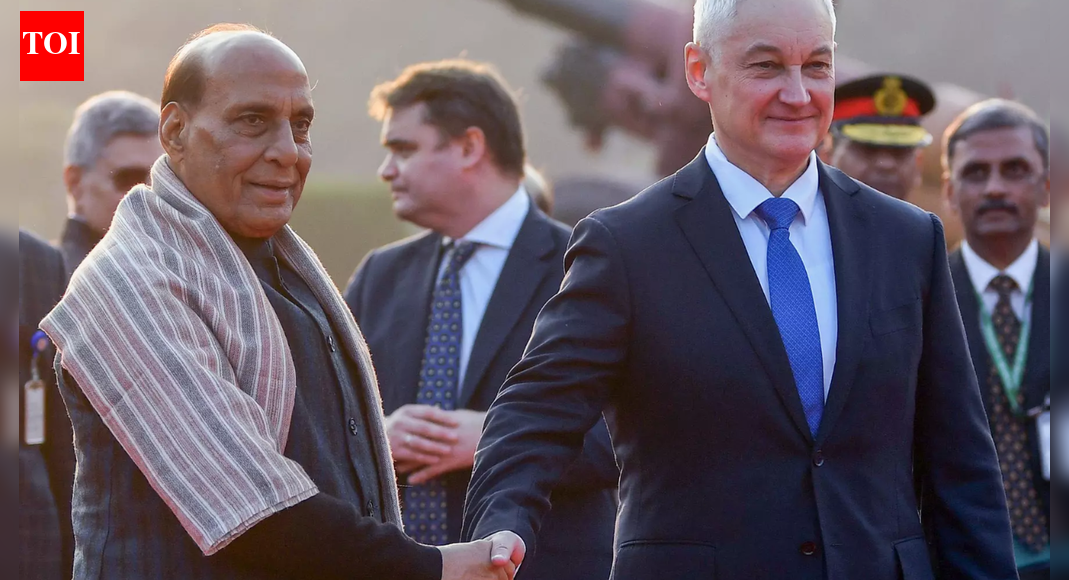
Defence minister Rajnath Singh with Russian defence minister Andrei Belousov (Image credits: ANI)

NEW DELHI: India on Thursday sent out a strong signal about the continuity of its partnership with Russia, with defence minister Rajnath Singh emphasising that bilateral defence cooperation remains steady “despite the geopolitical uncertainty.” His remarks came at the 22nd India-Russia Inter-Governmental Commission on Military & Military Technical Cooperation (IRIGC-M&MTC) meeting in New Delhi, held just hours before Russian President Vladimir Putin arrives for the 23rd Annual Summit.Singh described Russia as a “time-tested, special privileged, and strategic partner” and noted that defence ties have grown consistently since the signing of the 2000 Declaration of the India-Russia Strategic Partnership. “I thank you very much for coming all the way to India to discuss and promote bilateral defence cooperation between our countries… It is good that despite the geopolitical uncertainty, our India-Russia defence cooperation is moving at a healthy pace,” he said, as quoted by ANI.He highlighted “outcome-oriented exchanges” between military personnel and experts and also pointed to wider economic engagement.“We welcome the successful holding of the 26th meeting of the India-Russia Working Group on Trade and Economic Cooperation in Moscow last month, and the commencement of negotiations for a Free Trade Agreement with the Russia-led Eurasian Economic Union,” Singh said. He added, “We were also eagerly awaiting the visit of His Excellency, Vladimir Putin… which has been fulfilled today.”

Russia’s message at the defence commission meeting

Russian defence minister Andrei Belousov, co-chairing the meeting with Singh, echoed the sentiment of long-standing partnership.Belousov also noted the extent of military cooperation. “Russia actively cooperates in full scale with India in formation of the new outlook of the Army, Air Force, and the Navy. And using this opportunity, let me congratulate you, the command, and all Indian sailors with the National Navy Day,” he said.On the work of the joint commission, he added, “Distinguished Minister, the intergovernmental commission on military and military-technical cooperation brings the huge dedication in taking part in taking effective and mutually beneficial decisions in the military domain.”

Setting the stage for PM Modi–Putin summit

Earlier in the day, Singh and Belousov laid a wreath at the National War Memorial, and the Russian minister inspected the Tri-Service Guard of Honour. Belousov was received at Air Force Station Palam by Minister of State for Defence Sanjay Seth, with Chief of Defence Staff General Anil Chauhan also present.Russian President Vladimir Putin is set to arrive in India on Thursday evening for his first visit in four years, beginning the trip with a private dinner hosted by PM Modi. The two leaders have spoken by phone five times in 2024 and last met in person on the sidelines of the SCO Summit in Tianjin.Putin’s arrival marks his first trip to India since 2021 and his first since the Ukraine conflict began in 2022.His return to New Delhi comes as the India–Russia partnership continues to adjust to shifting global dynamics, balancing long-standing defence ties with cooperation in technology, energy transition, education, and workforce mobility.


[ad_2]

Source link