Breaking News
IND vs SA: Will Ruturaj Gaikwad play in Ranchi ODI? India stand-in skipper KL Rahul breaks silence

[ad_1]

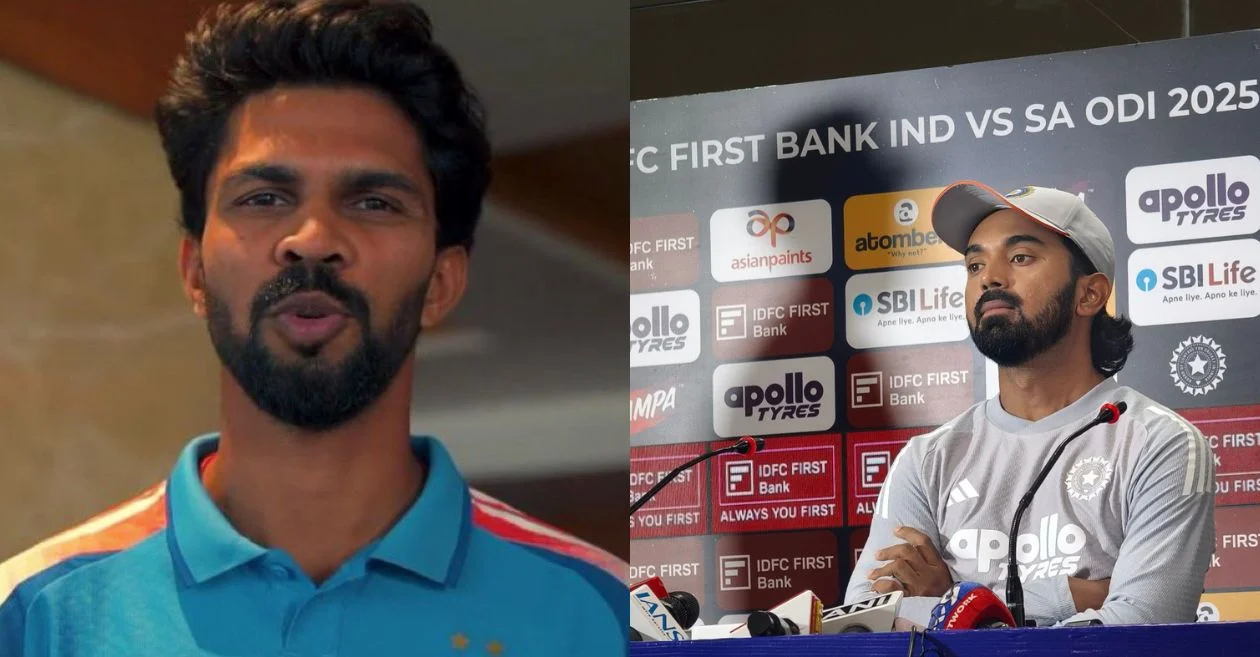
On the eve of the first ODI against South Africa in Ranchi, India’s stand-in skipper KL Rahul addressed the media, confirming the selection dilemma regarding opener Ruturaj Gaikwad. Following a humiliating 0-2 whitewash in the preceding Test series, the Indian team is eager to turn their fortunes around in the shorter formats, starting with the three ODIs. Rahul gave a glowing assessment of Gaikwad’s abilities but acknowledged the difficulty in finding a spot for him due to the settled nature of the top order.

KL Rahul’s high praise for Ruturaj Gaikwad’s class ahead of IND vs SA ODI series

Stand-in captain Rahul was effusive in his praise for Gaikwad, recognizing the young opener’s quality and his compelling form that earned him a recall to the national side. Gaikwad’s inclusion comes on the back of impressive domestic performances, notably his stunning exploits against South Africa A, where he registered scores of 117, 68*, and 25 in the unofficial One-Dayers. Rahul conceded that Gaikwad is a “top-class player. We’ve all seen that whatever limited opportunities he has received, he has utilised them well and shown what he can do.”

However, Rahul explained the persistent selection challenge: “Unfortunately, in ODIs, the top five or six is quite settled and performing well, so you feel bad for players who don’t get enough chances.” He acknowledged the current situation, where injuries to key players like Shubman Gill and Shreyas Iyer have opened up opportunities, must be seized: “It’s unfortunate for those missing out, but with a few injuries, he now has an opportunity.” Rahul concluded by affirming the team management’s intent to play the young batsman: “He will get his chance at some stage. We’re looking forward to giving him that opportunity and letting him show what he can do.”

Also READ: Parthiv Patel reveals his predicted India XI for 1st ODI vs South Africa; leaves out superstar player

IND vs SA: Rahul clears the air on Gaikwad’s participation in Ranchi ODI

Rahul stressed that while Gaikwad’s skill level has never been in question, his chance hinged purely on timing, suggesting the current series against South Africa could be his long-awaited opportunity to cement his place. Gaikwad last played an ODI during India’s 2023 tour of South Africa, and the current series presents his best shot at consistent selection due to the absence of regular openers.

Rahul reiterated the management’s view that the series offers a chance for the young talent to shine, stating: “There’s never been a question about his skill – it’s only about the right opportunity and timing. Hopefully, this series gives him that chance.” The ODI series against Temba Bavuma‘s South African side, beginning on Sunday, is critical for the Indian team to redeem themselves after their demoralizing Test performance, making any potential selection of Gaikwad a high-stakes decision aimed at adding stability and form to the batting unit.

Also READ: Ayush Mhatre breaks Rohit Sharma’s record with exceptional century in Syed Mushtaq Ali T20 Trophy 2025

[ad_2]

Source link

Centre expands Tamil outreach with Kashi Tamil Sangamam 4.0 | India News

[ad_1]

Centre expands Tamil outreach with Kashi Tamil Sangamam 4.0
KTS 4.0 will open at NaMo Ghat on Dec 2, coinciding with Karthigai Deepam on Dec 4

NEW DELHI: Even as the Centre and the DMK-led Tamil Nadu govt continue to spar over education-related issues, the fourth edition of Kashi Tamil Sangamam (KTS) marks a significant expansion of the Union govt’s Tamil language outreach with two major initiatives – sending 300 college students from Varanasi to Tamil Nadu for immersive Tamil learning and bringing 50 Tamil teachers to Varanasi schools to teach spoken Tamil. Officials maintain that the push remains culturally anchored and aimed at strengthening India’s linguistic traditions.KTS 4.0 will open at NaMo Ghat on Dec 2, coinciding with Karthigai Deepam on Dec 4. More than 1,500 delegates from Tamil Nadu will participate in an eight-day programme featuring knowledge-sharing sessions, cultural events and heritage visits to Kashi Vishwanath temple, BHU, Sarnath, Hanuman Ghat and Ayodhya temple. The theme – “Let Us Learn Tamil or Tamil Karkalam” – reinforces the idea of Indian languages as part of a shared civilisational fabric.What makes this year’s edition notable is the Centre’s scaling-up of Tamil-learning programmes at a time when its relationship with Tamil Nadu govt remains strained over NEET, the three-language policy and centralisation of education regulation. Officials say the reciprocal model – Tamil teachers in Uttar Pradesh and Uttar Pradesh students in Tamil Nadu – is intended to deepen “people-to-people connections.” Under the Tamil Karkalam campaign, 50 teachers from Tamil Nadu will begin spoken Tamil classes across 50 Varanasi schools from Dec 2 to Dec 15, reaching 1,500 students.The inaugural batches arrive on Dec 1.In return, 300 college students from Varanasi will travel in 10 batches to Tamil Nadu between Dec 17 and Dec 30. After an orientation at Central Institute of Classical Tamil in Chennai, they will be placed across nine host institutions, including IIT Madras, Central University of Pondicherry, Gandhigram Rural Institute and Sastra University.A senior official with the ministry of education said the dual initiatives would “take Tamil learning beyond symbolic engagement to structured classroom exposure.”“KTS 4.0 celebrates India’s knowledge traditions by making language a living bridge,” said the official, adding, “When Tamil teachers teach in Kashi and students from Varanasi learn Tamil in its native soil, we are renewing the shared heritage and ancient currents that have linked the two regions for centuries.”The Sage Agastya Vehicle Expedition (SAVE) – tracing ancient Tamil-Kashi linkages from Tenkasi to Varanasi – will also be launched on Dec 2, highlighting civilisational ties shaped by the Chera, Chola, Pandya, Pallava and Chalukya dynasties. It will conclude in Varanasi on Dec 12. Four allied events under Ek Bharat Shreshtha Bharat will run alongside the Sangamam.


[ad_2]

Source link

Senior counsels can’t orally mention case before any bench, says SC | India News

[ad_1]

Senior counsels can’t orally mention case before any bench, says SC

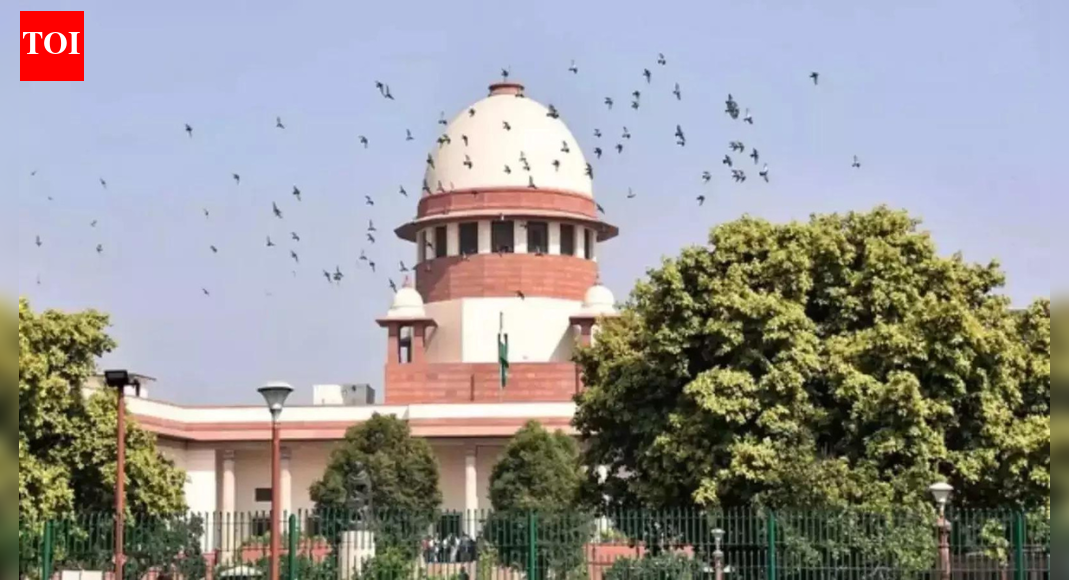
NEW DELHI: What is being informally followed in recent months in SC has now become official. Senior advocates have been barred from mentioning any case before any bench. The court has issued a circular prescribing procedure for mentioning, adjournment and listing of urgent cases.It says all fresh cases relating to bail/cancellation of bail, death penalty, habeas corpus, eviction, demolition or any other matter involving urgent interim relief will be listed within next two working days. It says no senior counsel shall be permitted oral mentioning before any court and young junior counsel may be encouraged to make oral mentioning.“In case of an exceptionally urgent matter relating to anticipatory bail, death penalty, habeas corpus, eviction/dispossession and demolition, which cannot await listing on the scheduled date as per circular, the mentioning proforma together with the letter of urgency, must be handed over to the mentioning officer prior to 10:30am”, the circular said.To discourage lawyers to seek unnecessary adjournments, it said, “Adjournment of the case would be considered only in case of bereavement in the family or medical/health condition of the advocate/party-in-person or such other genuine reason to the satisfaction of the court”.


[ad_2]

Source link

‘Virat Kohli is a master at that’: KL Rahul reveals what Team India will look to learn from star batter ahead of South Africa ODIs | Cricket News

[ad_1]

'Virat Kohli is a master at that': KL Rahul reveals what Team India will look to learn from star batter ahead of South Africa ODIs
KL Rahul dropped praise on Virat Kohli on the eve of the first ODI against South Africa in Ranchi. (Images via X/@BCCI)

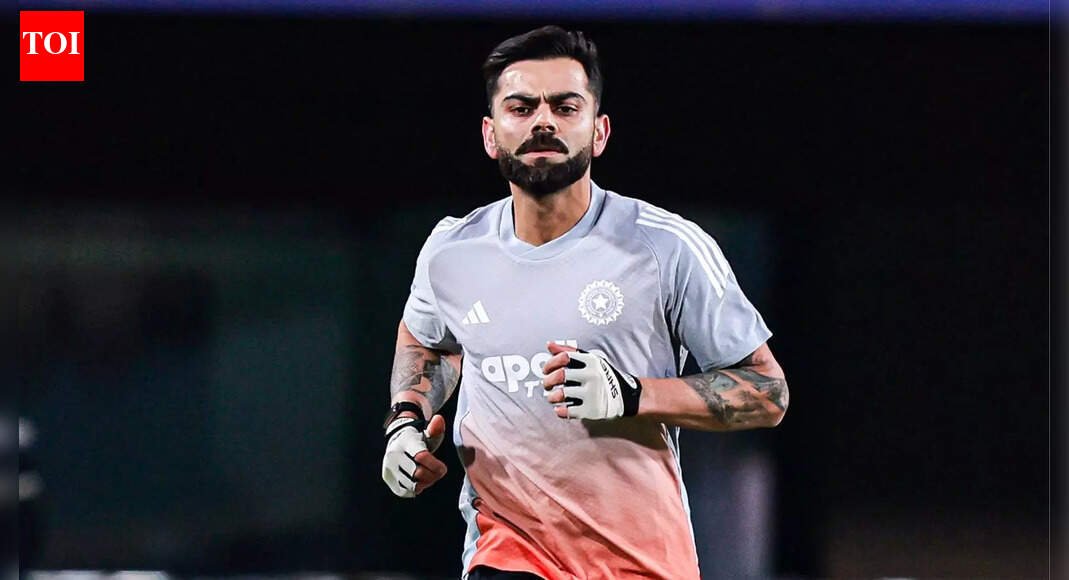
KL Rahul said the return of Virat Kohli and Rohit Sharma has immediately lifted the Indian dressing room ahead of the first ODI against South Africa in Ranchi, calling their presence “invaluable” for a team still settling after the Test series defeat. “Their importance at any point is huge. To have senior players in the team obviously makes the dressing room feel a lot more confident. Having their presence and experience helps out a lot of players and helps out the team,” Rahul said on Saturday. Kohli and Rohit rejoin the squad for the three-match ODI series, with Rahul continuing as captain.

KL Rahul press conference: On Virat Kohli and Rohit Sharma return, role of Ruturaj Gaikwad and more

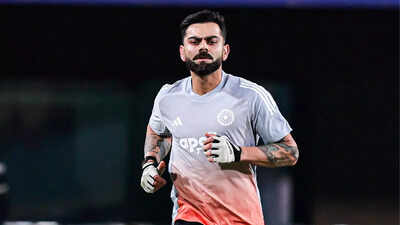
Rahul stressed Kohli’s influence on the batting group, especially in 50-over cricket where India have been trying to refine their rhythm in the middle overs. “In ODIs, singles are as important as boundaries. Virat is a master at that. We all keep learning from him. He’s excited to be back and his presence is always invaluable,” he said.Watch Virat Kohli in training ahead of the first ODI Rahul confirmed he will continue at No. 6, a role he said suits the team combination with Kohli and Rohit back at the top. He also welcomed Ravindra Jadeja’s return to the ODI setup. “His experience is huge for us,” Rahul said, adding that the final XI would be decided on match day. If selected, Rishabh Pant will take the gloves.

Poll

Do you believe that the return of Virat Kohli will positively impact the team’s performance after the Test defeat?

Rahul acknowledged that the group is still working on parts of its batting, particularly shot selection and tempo, but said the presence of experienced players naturally steadies the side. He also mentioned the impact of MS Dhoni’s possible appearance at the stadium during the match. “If he’s at the stadium, the players and the crowd both feel the buzz,” he said. India face South Africa in the series opener on Sunday, looking to reset quickly with two of their most senior players back at the core of the batting order.


[ad_2]

Source link

‘All 200 aircraft updated’: IndiGo completes A320 upgrade; safety checks continue | India News

[ad_1]

‘All 200 aircraft updated’: IndiGo completes A320 upgrade; safety checks continue

IndiGo confirmed late on Saturday that all 200 aircraft in its A320-family fleet had been fully updated, becoming the first major Indian operator to complete the mandatory enhancement. In a message posted on X, the airline said the work was “carefully coordinated” between engineering and operations teams and carried out with “minimal impact on customers’ journeys and zero cancellations”. It added that the entire fleet was now flying with the latest approved configuration, with routine monitoring continuing.Air India and Air India Express also reported rapid progress, with more than 90% of their affected aircraft upgraded by Saturday night. The push came after aviation regulators in India and Europe issued urgent directives requiring operators to install software protections designed to prevent possible data corruption in flight-control systems.

Regulators step in as airbus issues global warning

Airbus triggered the global response on Friday after telling operators that intense solar radiation could corrupt data in key flight-control computers. The company identified a “significant number” of A320 family aircraft as potentially at risk and urged immediate installation of updated software or, in some cases, hardware realignment.The Directorate General of Civil Aviation (DGCA) issued an Airworthiness Directive soon after, covering a wide range of A319, A320 and A321 variants. Indian airlines were instructed to carry out the upgrades without delay, with a deadline set for early Sunday morning.Airbus CEO Guillaume Faury issued an apology to airlines and passengers affected by delays, saying, “I want to sincerely apologise to our airline customers and passengers who are impacted now. But we consider that nothing is more important than safety when people fly on one of our Airbus aircraft… Our teams are working around the clock to support our operators and ensure these updates are deployed as swiftly as possible.

Airlines push through updates as delays ripple across airports

According to DGCA data, 338 Indian A320-family aircraft required the update, with modifications completed on more than 270 by Saturday evening. IndiGo upgraded 184 of its 200 affected aircraft earlier in the day, before confirming full completion later at night. Air India reported successful resets on over 90% of its operating A320 fleet, while Air India Express said 22 of its 25 impacted aircraft had been updated.The upgrades—conducted at bases in Delhi, Mumbai, Bengaluru, Chennai, Hyderabad, Ahmedabad and Kolkata—caused delays of 60–90 minutes at several airports. Air India Express cancelled four flights, though IndiGo and Air India avoided cancellations.Aviation experts said the issue demanded swift action. Former pilot Ehsan Khalid explained that the affected Elevator Aileron Computer (ELAC) is central to flight control: “The software problem with one of the ELACs is significant,” he said, citing a JetBlue incident where an A320 experienced an uncommanded pitch-down, injuring passengers.With most Indian aircraft now updated and global airlines racing to do the same, regulators and Airbus say they expect normal operations to resume rapidly—though full worldwide compliance may take longer, given the nearly 6,000 aircraft requiring upgrades.


[ad_2]

Source link

Bhayandar to Batam: Meet India’s first postman to win a bodybuilding bronze | Mumbai News

[ad_1]

Bhayandar to Batam: Meet India’s first postman to win a bodybuilding bronze

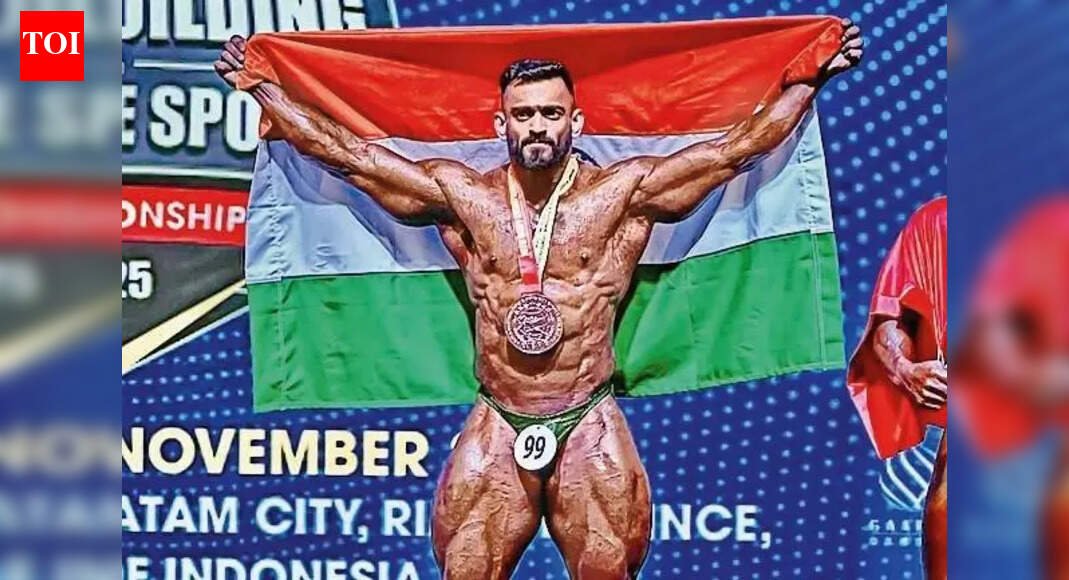
Chest: 49 inches. Biceps: 14.5 inches. The measurements somehow didn’t fit the brief. Tailor Pintya set down the tape and once again sized up the soon-to-be postman for whom he was stitching a khaki uniform. When he had last measured Ashutosh Saha, he was a scrawny neighbourhood teen given to sprinting in the bylanes of Bhayander. “I got the job of a postman as I am now a bodybuilding champion,” Saha told him back in 2023. Two years on, the uniform seems two sizes too small for the 28-year-old, who returned from Indonesia recently with a medal that sits above his TV.At the 16th WBPF World Bodybuilding & Physique Sports Championships 2025–held from Nov 14 to 16–in Batam, Saha won bronze in the 85 kg category, becoming India Post‘s first bodybuilding medallist.“I felt like a superhero for a few moments,” he says. His parents teared up. Even as he held up the tricolour at the contest in which 34 national teams competed across categories, his parents teared up and friends cheered but he felt a familiar tug. “I know my potential. I could have done better. I’ve decided I will win gold in 2026.”While a global stereotype suggests postmen have strong calves from the physical demands of their job, Saha’s legs were built long before he began cycling through the streets of Worli as a 26-year-old in fresh khaki in 2023.Fresh from his SSC exams, he was 15 when he first entered a local gym. “My father, who was working as a manager at a chemical firm, suggested I join instead of wasting time during the vacation.” Today, he is the first from India Post to bring home a bodybuilding medal.A sprinter in school, his body adapted quickly to gym training in tenth grade. “My father used to work out. I think I am genetically gifted for bodybuilding.” Within two years, the lean teenager from Bhayandar had transformed. By 2016, he finished fifth at Jr Mumbai Shree, later winning gold at Jr Mumbai Shree and Jr Maharashtra Shree. Nationals were within reach, but financial hardship forced him to pull out. A typical competition prep month—nutrition, protein, and medical tests—costs Rs 45,000. “Multiply that by eight. Nearly Rs 3.5 lakh. I couldn’t afford it,” recalls Saha. Unable to see him heartbroken, his mother mortgaged her jewellery. In 2017, much to his father’s chagrin, she sold her mangalsutra, a gold chain, a ring, and a pair of earrings to fund his Rs 3 lakh trip to the national tournament in Punjab. What followed was a clean sweep the following year: Jr Mumbai Shree overall, Jr Maharashtra Shree overall, and Jr Mr India overall. Just as his prospects surged, an accident in 2019 shattered his left forearm. Doctors inserted 12 screws and a plate and told him he would never lift weights again. “I thought everything was over,” he says. After nearly a year of recovery, he returned to the gym.During this time, he applied to an India Post recruitment drive for sportspersons. When results were declared in 2023, he was the only bodybuilder selected, joining as a postman in Worli MDG under the Maharashtra Circle. The job came with punishing logistics: a three-hour commute from Bhayandar, long delivery rounds, meals eaten on the go, and gym sessions squeezed into late evenings. “My colleagues would taunt me for getting a two-hour concession as a sportsperson. They resented that I could leave early,” he says. But the salarkept him steady. “I am the sole breadwinner. My father retired long ago,” adds Saha, who has a sister.Still, he clawed his way back. In 2023, four years after his accident, he made a winning return at the Vashi Mahapaur Shree, taking the overall title. Over the next two years, he collected six state-level championships, five gold medals, a silver at Senior Mr India, and the overall trophy at DAK Shree—earning felicitations within the postal department.After 2024, he paused competing “to build the muscles I felt I lacked” and set his sights on Mr World. In May 2025, he cleared the IBBF trials in the 85 kg category. With the contest in November, he had five months to sculpt his best physique. His seniors—Deepak Sir, Prajakta Madam, and especially Astha Jain, Head of Mumbai West Division—supported him with on-duty leave and other assistance.Competing abroad brought new challenges—finding meals, navigating unfamiliar surroundings, managing nerves. But the federation, led by Chetan Pathare and the IBBF, handled accommodation, food, for the Indian contingent. “This was my first international flight,” says Saha, who now hopes to join the railways.


[ad_2]

Source link

Mumbai housing societies turn the tables on builders, drive hard bargain during redevelopment | Mumbai News

[ad_1]

Mumbai housing societies turn the tables on builders, drive hard bargain during redevelopment

Mumbai: Developers are generally known to call the shots and always have the upper hand, but now housing societies across the city, planning to redevelop their buildings, are turning the tables on them. With builders queuing to grab redevelopment rights, these housing societies are upping the ante, squeezing maximum benefits for their properties, sometimes leading to “unrealistic demands”.According to market sources, societies are demanding additional area, hardship compensation, and displacement amounts that are 15%–25% higher than what the market realistically supports today. Beyond the standard area matching and displacement compensation many are asking for excess amenities and significant hardship payouts per member. In some cases, these expectations stretch beyond feasibility — for instance, societies are asking for substantial additional area, large displacement payouts, and premium-grade finishes, they said.“There’s a herd mentality at play — once a few societies in an area get a high offer, others assume that becomes the new baseline. But every plot has its own FSI profile, zoning constraints, and financial viability. You can’t benchmark every property against the most premium transaction in the belt,” said a property market watcher.Essentially, the sentiment that “developers are back in the market” post-2022 has led to inflated benchmarks across the western corridor. Between Bandra and Juhu, societies expect rents for alternate accommodation at the rate of Rs 225 a square foot when the rates are around Rs 150 to Rs 175 a sq ft. Individual corpus funds that are ideally between Rs 3,000 a sq ft to Rs 3,500 per sq ft on carpet are sought at the rate of Rs 4,500 to Rs 5,000 a sq ft.“We have seen this trend quite prominently across the western belt — from Bandra right up to Borivli. The spike is especially visible in micro-markets like Khar, Santacruz, Andheri, and Goregaon, where redevelopment activity has intensified in the past couple of years. Even societies in Borivli and Kandivli, which traditionally saw more mid-segment projects, are now quoting unrealistic expectations comparable to those in Vile Parle or Juhu,” said property market sources.Said Sanjay Daga, CEO and MD, Anex Advisory, “Rising aspirations and changing lifestyles have influenced how societies approach negotiations. Many are seeking higher compensation, additional area and enhanced amenities, mainly driven by the belief that today’s buoyant market will support these expectations. At the same time, developers must follow strict feasibility parameters shaped by fluctuating land economics, construction costs and market absorption.He added that it is equally important for societies to assess a developer’s track record rather than rely solely on the highest offer, as an initially lucrative proposal can prove costlier if project delivery falters. “Taking a balanced approach lies in recognising that both sides have legitimate concerns. While societies want fair value for their homes, developers need to ensure long-term viability and timely delivery is in check. When expectations and feasibility align, redevelopment becomes a collaborative opportunity rather than a point of contention.”Developer Ram Raheja said some societies exploring redevelopment may sometimes have expectations that appear commercially unrealistic. “There are several tenders we consciously step away from when the numbers stop making economic sense,” he said, adding that this trend has largely emerged because certain developers are willing to offer terms that stretch beyond standard feasibility norms. “Often, such developers are looking for a strategic entry into a micro-market where they are not yet established, and the bid becomes a gateway opportunity for them to compete with seasoned players already active in that locality,” he said.“It’s natural for members to want the best possible terms and maximise the benefits from redevelopment—no one can fault a society for that. However, it’s equally important to approach such expectations carefully, because redevelopment is a long-term commitment and the margin for error is very slim,” said Raheja.Experts said there are two main reasons: perception and partial information. First, many societies hear about record-breaking deals and assume the same numbers apply to them—without understanding the underlying economics. They focus on the headline figure rather than the project’s cost structure, sale value, or land utilization potential. Social media, word-of-mouth comparisons between societies, and anecdotal references to marquee projects have all contributed to this bubble of expectations.“What most societies miss is that land economics can shift drastically every few kilometres, and the feasibility of a redevelopment deal depends on FSI potential, construction cost, sale value, and market absorption—not just the perceived brand value of a location,” they said.There’s also a new trend of societies expecting 70–80% of the FSI share for members, up from the earlier 35–40%, assuming the developer can still make the numbers work. “When societies over-quote or demand unrealistic areas and payouts, credible developers step back, leaving room for smaller players with limited capital investment. These are often the ones who promise aggressively but lack the financial depth to deliver—leading to stalled projects and delayed possessions,” said a market expert.


[ad_2]

Source link

Genes: Why some tobacco users get oral cancer earlier | Mumbai News

[ad_1]

Genes: Why some tobacco users get oral cancer earlier

Mumbai: Researchers from Tata Memorial Centre’s Kharghar centre have identified genetic factors that, for the first time, explain why some tobacco chewers in India develop oral cancer a decade earlier than others.“We come across people who use tobacco, a common cause for oral cancer, for decades and don’t get cancer while there are other users who are diagnosed with cancer early on. Our research provides an answer,” said Dr Pankaj Chaturvedi, director of ACTREC in Kharghar. The genetic findings also explain why some who have never used tobacco or similar carcinogenic substances still get oral cancer.The research, published in ‘eBioMedicine’, part of The Lancet Discovery Science, on Saturday, analysed genetic data from 2,160 cancer patients and 2,325 healthy individuals over a 10-year period. The researchers, led by Dr Rajesh Dikshit and Dr Sharayu Mhatre, identified significant genetic risk areas on chromosomes 5 and 6 (near genes including CLPTM1L-TERT, HLA-DRB1, HLA-DQB1, and CEP43). “A meta-analysis using data from Europe and Taiwan identified novel risk loci near the NOTCH1 gene,” said Dr Dikshit.The team then calculated that tobacco chewers with high genetic susceptibility developed oral cancer a decade earlier than those with low genetic risk. Every year, India records about 1.4 lakh oral cancer cases, with some states having high rates of 33 per 1 lakh population. Lead author Dr Mhatre said that while tobacco use remains the strongest risk factor for buccal mucosa (inner cheek) cancer, a genetic susceptibility component also plays a role. Dr Chaturvedi said the risk of developing oral cancer is 26 times higher among tobacco chewers compared to non-users. He added that genetic susceptibility markers further double the risk among those with a high genetic risk score.However, TMC director Dr Sudeep Gupta emphasised that although genetic susceptibility is important to understand, tobacco chewing remains the single-most preventable cause of oral cancer, with over 80% of cases potentially avoidable through effective tobacco control policies. A press release quoted Dr Siddhartha Kar from Cambridge University as saying, “This landmark study advances our understanding of why oral cancer is so common in India, uncovering uniquely Indian genetic risk factors. By showing how inherited risk interacts with tobacco use, it lays the groundwork for targeted prevention and early detection.”


[ad_2]

Source link

Pakistan players mock umpire after taking wicket vs Sri Lanka – watch | Cricket News

[ad_1]

Pakistan players mock umpire after taking wicket vs Sri Lanka - watch
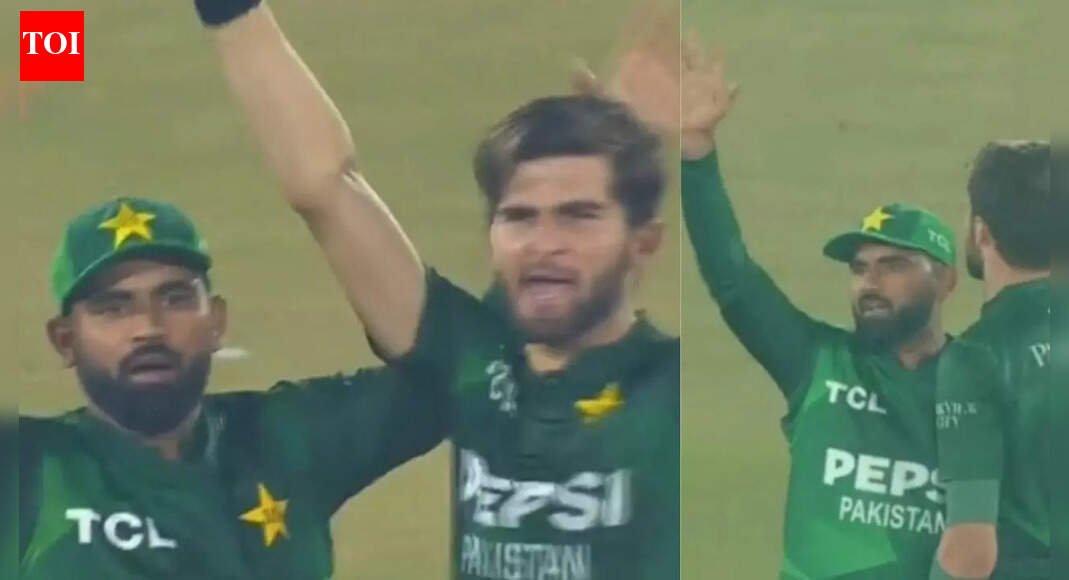
Fakhar Zaman and Shaheen Afridi react after the latter took the wicket of Dasun Shanaka. (Screengrabs)

Shaheen Shah Afridi delivered a decisive and controversial spell as Pakistan defeated Sri Lanka to clinch the tri-series title on Friday. The turning point came in the 19th over when a third-umpire call triggered visible frustration in the Pakistan camp. With Sri Lanka struggling, Dasun Shanaka miscued a slower delivery towards short third, where Fakhar Zaman completed what appeared to be a clean catch. Although the on-field decision was out, the third umpire overturned it after deeming the ball had touched the turf on landing. The reversal left Pakistan visibly stunned, with Fakhar and Shaheen expressing disbelief as the not out decision was confirmed.

Inside India nets in Ranchi: How Virat Kohli and Rohit Sharma prepared for first ODI vs South Africa

On the very next ball, Shaheen hit back. He bowled Shanaka with another slower delivery, sending the leg stump crashing. Shaheen then turned back towards the umpire’s direction with his arms raised, an appeal that doubled as a pointed response to the previous decision. Fakhar also gestured towards the TV umpire as Pakistan channelled their frustration into celebration.Watch the tense moment and the celebration here Shaheen struck again two balls later, removing Maheesh Theekshana for 1, caught by Usman Khan off a top edge while attempting a fine scoop. The quick double blow helped Sri Lanka collapse to 114 all out in 19.1 overs.Watch the sequence of events unfold here Pakistan’s chase was measured and controlled. Babar Azam sealed the result in the 18th over with a boundary off Dushmantha Chameera, cutting a short, wide delivery towards backward-point. Pakistan finished at 118 for 4 in 18.4 overs to complete a comfortable win and secure the title. Shaheen’s two-ball intervention, which came immediately after the overturned catch, became the defining moment of a match that Pakistan controlled throughout.


[ad_2]

Source link

Platform for peer-to-peer lending changes lives, hits 100 cr loans | Mumbai News

[ad_1]

Platform for peer-to-peer lending changes lives, hits 100 cr loans

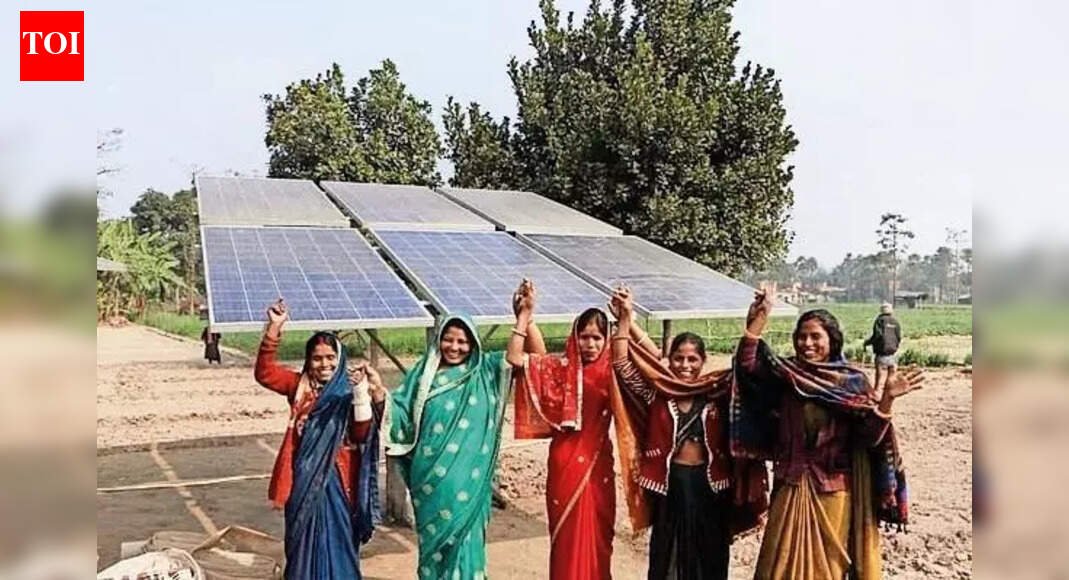
On a scorching afternoon in rural Bihar, the rhythmic thump of a water pump rises above the quiet of the cauliflower fields. Here, Devki Devi runs a solar-activated pump which today irrigates 112 farmers across 36 acres of land, and brings her a steady income.But the real story behind the solar-wali didi’s micro-enterprise is that it was fortified by strangers sitting in a Bangalore office or Mumbai high rise after they had scrolled through many such farmers and rural entrepreneurs profiled by Rang De, an online peer-to-peer lending platform. Last month, this unusual crowd-lending platform hit a total disbursement of Rs 100 crore.In a land of staggering inequity, where big businesses routinely default on loans while millions of individuals find themselves on the outskirts of the financial system, Rang De has created a bridge between individual lenders and underserved borrowers. Over the last 15-odd years, this hybrid space braiding philanthropy, social enterprise and finance, has enabled some 11,000 lenders to connect with 28,000 borrowers. The default rate is less than 0.31%. “We are appealing to anyone who wants to invest in a fellow Indian,” says Smita Ram, Rang De co-founder who, along with her husband, started the platform in 2008 after moving back to India from the UK. Their idea was simple, yet radical: Let ordinary Indians lend directly to underserved borrowers across the country—at interest rates that are fair rather than predatory. On average, the interest rate offered on loans is 8% per annum. “People do get financial returns, but that is not the focus. People who are participating on the platform are really interested in change,” adds the Bangalore-based Ram. Rang De does not view credit as merely a financial transaction but as a pathway to unlock dignity and opportunity among people who have been excluded from the financial world due to systemic or gender bias. Long after the gut-wrenching films that chronicled generational debt have given way to a ‘shiny India,’ most Indians still turn to friends, family and ruthless money lenders for urgent credit needs. Many lack documentation like pay-slips or income proof and an established credit history which would enable them to access formal finance. On the other side, there is a growing population of people who aspire to participate in a world beyond their own — but do not know where to begin and whom to trust. The spectrum of lenders on this platform ranges from senior citizens to students, who can invest as little as Rs 500 at a time. A glance at some of the loan requirements is like a reality check into ‘real’ India – a Telangana dairy farmer requires Rs 1 lakh to buy buffaloes and expand his dairy business; a woman in Rajasthan who already runs a successful grocery store needs less than a lakh to move into cosmetic products. Stories of transformation have been palpable in communities across India. For example, soon after the Supreme Court banned hand-pulled rikshas in the car-free town of Matheran, Rang De enabled 462 social investors to collectively raise Rs 53 lakhs to help the riksha pullers get loans to transition to e-rikshas. Last year, some 18 riksha drivers upgraded to e-autos in the dusty Maharashtra hill station. The concept of P2P lending in India is still relatively young. In 2017, the Reserve Bank of India classified P2P crowd-lending platforms under non-banking finance companies and required them to register as well as follow strict disclosure and credit assessment norms. This transformed P2P lending from a risky grey-area activity into a supervised, credible retail asset class. While most P2P platforms sought salaried borrowers and monthly returns, Rang De’s team went about identifying borrowers who were never entertained for a loan inside a bank branch—people who had stories, not credit histories. Rang De partners with local non-government organisations and social enterprises. Devki Devi came to Rang De’s attention thanks to the Aga Khan Rural Support Program (India), while the e-riksha loan project was facilitated through Caring Friends. The team does its own due diligence.For Devki Devi, who was married at 15, and had three children, one of whom has developmental disabilities, life had been a constant battle for survival. Now, many like her are exhaling into a brave new world of possibilities.


[ad_2]

Source link