Breaking News
Trump’s new attack on US Federal Reserve revives ‘Sell America’ trade – why stock market strategists are worried about deeper selloff

[ad_1]

Trump’s new attack on US Federal Reserve revives ‘Sell America’ trade - why stock market strategists are worried about deeper selloff
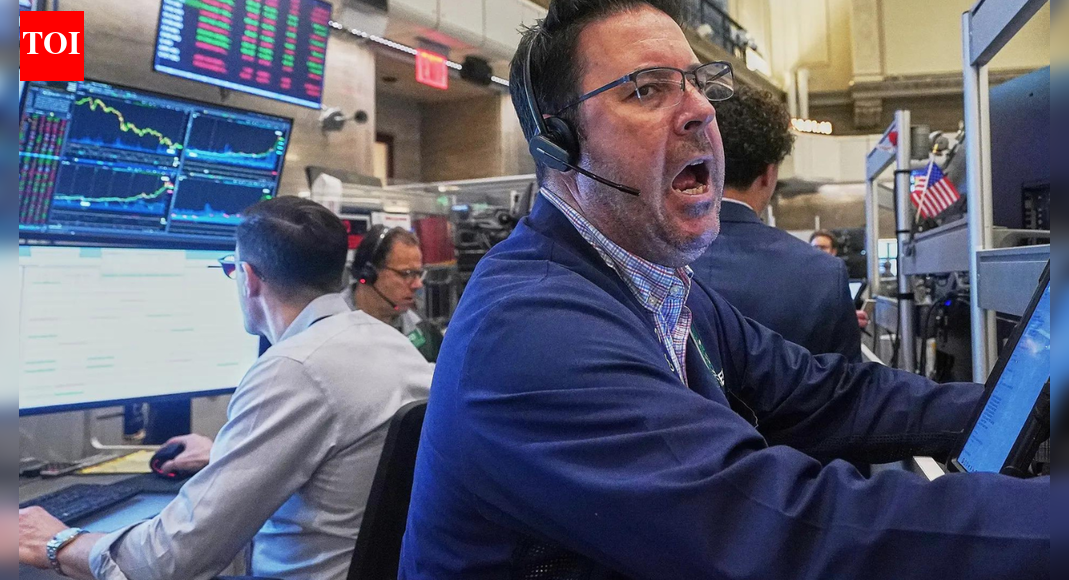
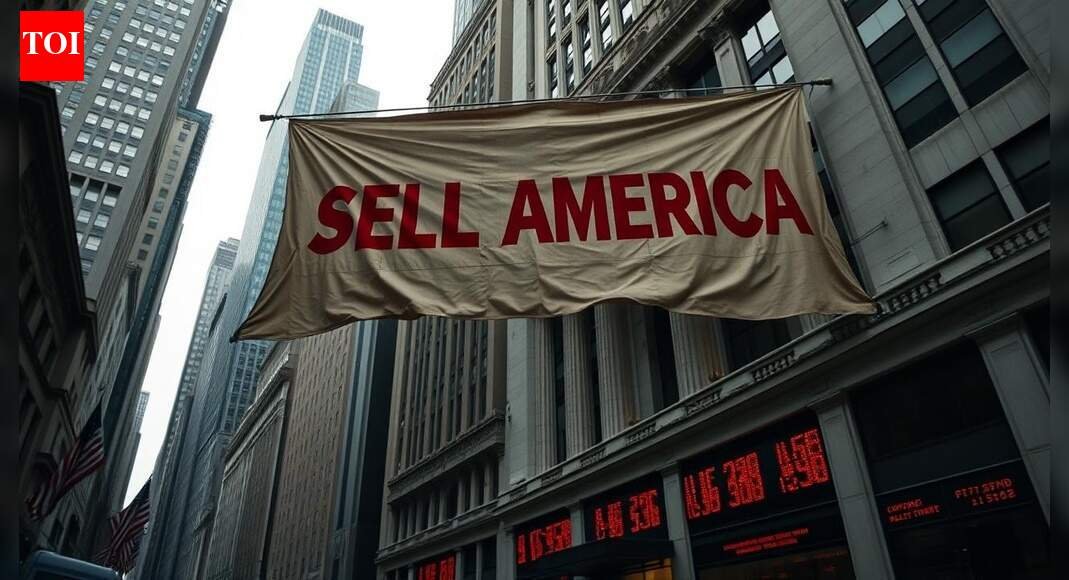
Pressure linked to the ‘Sell America’ narrative is unlikely to fade. (AI image)

US President Donald Trump’s fresh attack on the Federal Reserve seems to have revived the ‘Sell America’ sentiment in the stock market and strategists and market experts are warning that the selloff may deepen over time if the tiff between the government and the central bank snowballs.Market sentiment turned cautious on Monday as a growing ‘Sell America’ narrative gained traction following intensified criticism of the Federal Reserve by the Trump administration, reviving worries about the central bank’s independence in determining interest rates.

Trump Tells Putin ‘US Is Open For Business’ After Forces Seize 5th Oil Tanker Near Venezuela | Watch

The dollar, Treasury bonds and US equity futures all edged lower. Although the moves were modest, the renewed focus on the Fed’s autonomy and its broader implications for financial markets unsettled investors.

Trump vs Powell: What’s the fuss about?

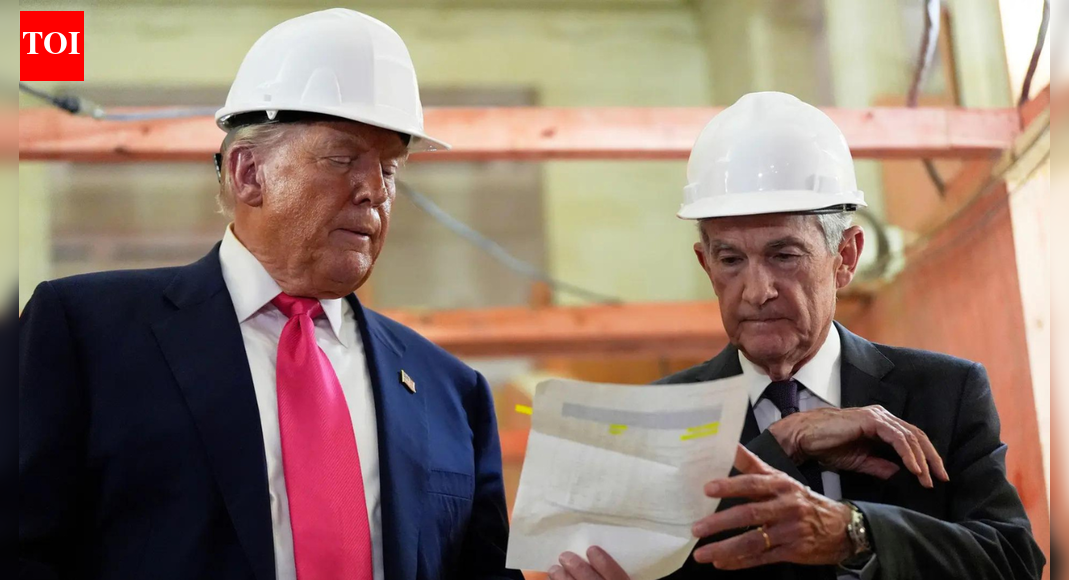
US Fed Chair Jerome Powell said on Sunday evening that the central bank had received grand jury subpoenas from the Justice Department linked to his testimony before Congress regarding renovation work at the Fed’s headquarters. The episode marks another flashpoint in a series of confrontations that have included attempts to remove Governor Lisa Cook and repeated demands for sharp interest rate cuts.Trump has repeatedly urged the Federal Reserve to reduce interest rates more aggressively to stimulate growth and lower government borrowing costs. In contrast, Fed policymakers have remained cautious, citing inflation risks. Paul Volcker, appointed Fed chair in 1979, is widely credited with taking tough measures to rein in inflation, a problem many believe had been allowed to worsen after the central bank yielded to pressure from then President Richard Nixon.Speaking to NBC News on Sunday, Trump said he was unaware of any Justice Department investigation involving the Federal Reserve.Hebe Chen, senior market analyst at Vantage Global Prime Pty., said the investigation involving Powell currently appears to be “more smoke than fire,” though she cautioned that its durability remains uncertain. “The longer-term and more deeply embedded consequences could be far more significant,” she added.

Why are markets wary?

At the heart of investor unease is the extent to which the US president can, or should, exert influence over monetary policy, an area that has largely remained shielded from political intervention for decades. This has revived questions over whether global investors should scale back exposure to US assets and the dollar, echoing concerns that swept markets last April after President Donald Trump announced blanket tariffs.“Any development that raises questions about the Fed’s independence adds uncertainty around US monetary policy,” said Gary Tan, portfolio manager at Allspring Global Investments, which manages more than $600 billion in assets according to a Bloomberg report. “This is likely to reinforce existing trends of diversification away from the dollar and increase interest in traditional hedges such as gold.”According to Bloomberg, Ian Lyngen, head of US rates strategy at BMO Capital Markets wrote in a note: To characterize the events as putting the Fed independence discussion into uncharted waters would be an understatement. We remain skewed toward higher yields in the near-term.Market strategists cautioned that the recent decline could intensify if political and policy frictions worsen. JPMorgan Asset Management highlighted the possibility of a sharper steepening in the US Treasury yield curve, where longer-dated yields rise faster than short-term rates, driven by expectations of deeper interest-rate cuts. Lombard Odier warned that both the dollar and Treasuries could face sustained pressure, while Invesco Asset Management noted that assets outside the US, including European and Asian equities, appear relatively more attractive.“This is a bad time to be worrying about Fed independence for the market,” said Bhanu Baweja, chief strategist at UBS Investment Bank, who added that US inflation is expected to pick up in the months ahead. “The one common theme for this year seems to be not just a weaker dollar, but equity volume going higher,” he was quoted as saying by Bloomberg.The latest developments risk reviving the “Sell America” theme, according to Gerald Gan, chief investment officer at Singapore-based Reed Capital Partners. He said the situation reflects an administration intent on rebuilding public support ahead of the midterm elections, even if that comes at the cost of weakening institutional credibility.US financial assets have faced similar pressure before. Last year, markets were jolted after President Donald Trump unexpectedly unveiled sweeping global tariffs, triggering sharp volatility. The subpoena involving the Federal Reserve adds to concerns that US assets are losing appeal, said David Chao, global market strategist at Invesco Asset Management, which manages over $2 trillion. He argued that the US is not only retreating behind what he described as “Fortress America” policies, but is also adopting a more aggressive stance that unsettles investors.Others urged restraint, noting that the dollar’s entrenched status as the world’s primary reserve currency, the depth and liquidity of the Treasury market, and the artificial intelligence-driven momentum in equities could limit the downside and even create buying opportunities. “Independence is always a concern, but we will monitor developments and respond once the economic implications become clearer,” said Marvin Loh, senior macro strategist at State Street in Boston.Even so, pressure linked to the ‘Sell America’ narrative is unlikely to fade.

[ad_2]

Source link

Simple trick to dry shoes faster in winters: Shoes won’t stay wet for long |

[ad_1]

Simple trick to dry shoes faster in winters: Shoes won’t stay wet for long

Winter makes small chores feel heavier than they should. Washing shoes is one of them. You clean them, set them aside, and then wait. A day passes. Sometimes two. They still feel cold and damp to the touch. The smell creeps in before they are properly dry. It is not dramatic, just irritating. Many people deal with this every winter without thinking much about it until the problem repeats. Damp shoes lose shape. Glue weakens. Fabric holds moisture longer than expected. This piece looks at a few simple ways people quietly deal with the issue. Nothing technical. Just small habits, borrowed tricks, and ordinary materials that help shoes dry faster in cold weather, without rushing them or causing damage.

How to dry shoes faster in winters without damaging them

Cold air holds less moisture, but it also slows evaporation. Add low sunlight and poor airflow, and wet shoes simply sit there. Thick soles and padded uppers trap water inside. Sports shoes and canvas pairs are the worst offenders. Leather behaves differently but still suffers if left damp for too long. The problem is not the water alone, but where it stays.Before thinking about heat or tricks, remove excess water. Many people skip this. Press the shoes gently with your hands to release trapped water. Do not twist them. That bends the structure and weakens stitching. Take out the insoles straight away. Insoles dry slower than the shoe itself and keep moisture locked inside if left in place.

Paper helps shoes dry faster

Newspaper works quietly well. Stuff dry newspaper or thick tissue inside the shoes, filling the toe and sides. Paper absorbs moisture from the inside, which is where drying usually stalls. If the shoes are very wet, replace the paper after a few hours. This method suits trainers and canvas shoes especially. It also helps shoes keep their shape while drying.

Keep in a warm, airy space (avoid keeping in front of a heater)

Avoid direct heat. Placing shoes next to a heater or blower seems tempting but often causes damage. Glue softens. Soles loosen. Fabric stiffens. A better option is a warm, airy space. Near a window. Under a ceiling fan. In a room with steady air movement. At night, leaving shoes out in an open room works better than locking them in a corner.

Hairdryer safe for drying shoes

Use carefully; keep the dryer on medium heat. Hold it at a distance. Move the airflow around rather than focusing on one spot. This helps remove surface moisture without stressing the material. It is useful when shoes are needed soon but should not replace slow drying entirely.

Use salt or silica gel

They do. Salt absorbs moisture naturally. Fill a cloth pouch with salt and place it inside the shoe. Leave it for several hours. Silica gel packets, often found in new shoes or bags, work in the same way. Both also help reduce odour. This is a slow, quiet method, suited to overnight drying.

How can you prevent bad smells in shoes while drying

Airflow matters more than fragrance. Dry shoes properly before storing them. Always dry insoles separately. Avoid closed cupboards until shoes are fully dry. Moisture causes odour, not dirt alone. A dry shoe rarely smells.Drying shoes in winter is less about speed and more about patience, with a few smart choices along the way. Small steps add up. The shoes last longer. They feel better to wear. And the wait becomes shorter, almost unnoticed.

[ad_2]

Source link

Fed showdown: Donald Trump’s legal move against Jerome Powell sharpens rate-cut battle; raises questions over central bank independence

[ad_1]

Fed showdown: Donald Trump’s legal move against Jerome Powell sharpens rate-cut battle; raises questions over central bank independence

The US Justice Department’s threat to criminally indict Federal Reserve Chair Jerome Powell has triggered a fresh confrontation between the White House and the central bank, intensifying concerns over the Fed’s independence and the direction of US monetary policy.The subpoenas, served on Friday, relate to Powell’s June testimony on the $2.5 billion renovation of Federal Reserve buildings, including its Washington headquarters, AP reported. Powell has said the legal action is a pretext aimed at forcing the Fed to comply with President Donald Trump’s demand for sharp interest rate cuts.“I have carried out my duties without political fear or favor, focused solely on our mandate of price stability and maximum employment,” Powell said in a video statement on Sunday night. “Public service sometimes requires standing firm in the face of threats.”Markets reacted negatively on Monday, with US stocks falling after Powell disclosed the subpoenas.

Why Trump is pressuring the Fed

Trump has repeatedly criticised Powell over the past year for resisting aggressive rate cuts, arguing that inflation is no longer a threat and that lower rates are needed to support growth. Powell, however, has maintained that inflation remains elevated, partly due to the impact of Trump-era tariffs, and has favoured a cautious policy approach.The conflict reflects a deeper dispute over how much influence the White House should have over monetary policy. Powell’s current term as Fed chair ends in May, but he could remain on the Fed’s board until January 2028, a move that would prevent Trump from immediately filling another vacancy.Asked whether Powell planned to stay on as a Fed governor, Kevin Hassett, director of the White House National Economic Council and a potential candidate to succeed Powell, said he was unaware of Powell’s intentions.“I’ve not talked to Jay about that,” Hassett said.Trump had earlier signalled his intent to escalate the confrontation, telling reporters in late December that his administration would “probably” sue Powell over the renovation costs.“He’s just a very incompetent man,” Trump said. “But we’re going to probably bring a lawsuit against him.”

Economists warn of risks to Fed independence

The legal action has drawn sharp criticism from economists and former policymakers, including several who previously led the Federal Reserve.A bipartisan group of former Fed chairs and top economists said on Monday that the White House’s actions amounted to “an unprecedented attempt to use prosecutorial attacks to undermine” the central bank’s independence.“This is how monetary policy is made in emerging markets with weak institutions, with highly negative consequences for inflation and the functioning of their economies more broadly,” the statement said. “It has no place in the United States whose greatest strength is the rule of law, which is at the foundation of our economic success.”The statement was signed by former Fed chairs Ben Bernanke, Janet Yellen and Alan Greenspan, along with former Treasury secretaries Henry Paulson and Robert Rubin.Republican Senator Kevin Cramer of North Dakota, a frequent Powell critic, also expressed discomfort with the criminal probe.He said he does not believe Powell is “a criminal” and added that he hopes “this criminal investigation can be put to rest quickly,” according to CNBC.Powell, who has largely avoided public confrontation since Trump began attacking him last year, said the subpoenas were intended to undermine the Fed’s ability to set policy independently and described them as a “pretext” to force interest rate cuts.The episode marks one of the most direct challenges to the Federal Reserve’s autonomy in modern US history, with implications for markets, borrowing costs and the broader economy, according to analysts.

[ad_2]

Source link

Budget 2026: Textile industry body seeks permanent removal of cotton import duty; flags cost pressure, export risks

[ad_1]

Budget 2026: Textile industry body seeks permanent removal of cotton import duty; flags cost pressure, export risks

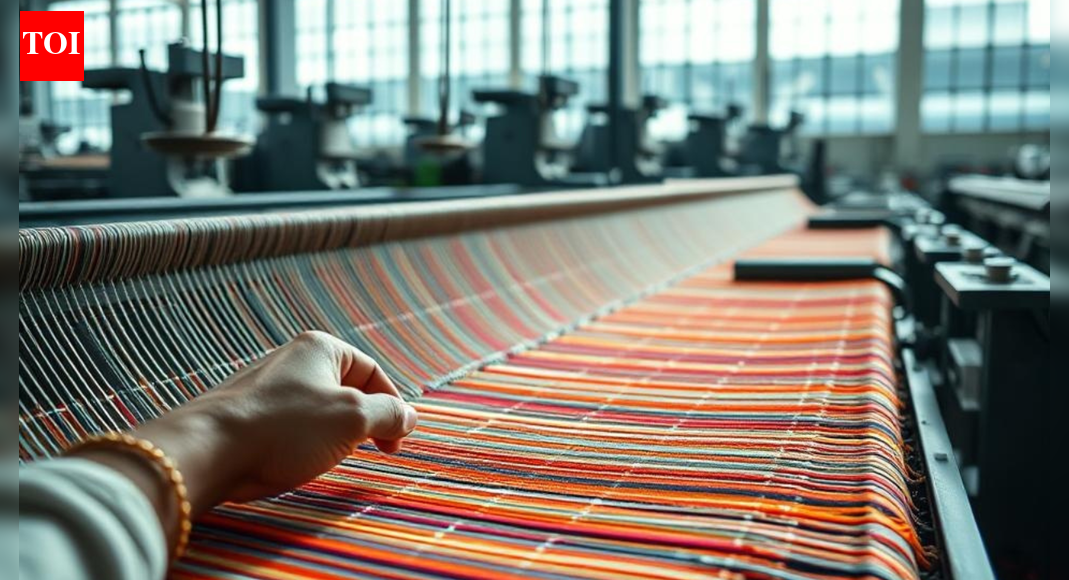
The Confederation of Indian Textile Industry (CITI) has urged the government to permanently remove the 11 per cent import duty on cotton in the Union Budget 2026, warning that the levy is aggravating cost pressures and hurting the global competitiveness of domestic textile and apparel manufacturers, PTI reported.A CITI delegation met Union Agriculture Minister Shivraj Singh Chouhan last week, seeking his intervention for the permanent removal of the import duty on cotton of all varieties, the industry body said on Monday.India’s textile industry — the country’s second-largest employment generator — depends on stable access to high-quality cotton. Against a persistent demand–supply gap, the government had extended the import duty exemption on cotton until December 31, 2025, a move that was welcomed by textile associations.However, with no further notification issued, the 11 per cent duty was reinstated from January 1, 2026. CITI said the move would adversely impact the competitiveness of India’s textile and apparel sector.The minister assured the delegation that the concerns raised would be carefully examined during the review process, CITI said.The industry body also flagged a steady decline in domestic cotton production, which it said is projected to fall to its lowest level in nearly two decades this year, intensifying concerns over supply shortages.CITI argued that reimposing the import duty would further aggravate cost pressures for manufacturers. It pointed out that over the past decade, India’s average cotton imports stood at around 20 lakh bales, accounting for about 6.8 per cent of average domestic production.Imports, the industry body said, are largely quality- and specification-driven, catering to specialised requirements and back-to-back export orders, and do not displace domestic cotton.CITI also highlighted that competing textile-exporting countries such as Bangladesh and Vietnam allow duty-free cotton imports, giving them a structural cost advantage in global markets.The demand comes at a time when the textile and apparel sector — one of India’s largest sources of employment and livelihoods — is facing fresh headwinds from a 50 per cent US tariff effective August 27, 2025. Cotton-based products dominate India’s textile exports.The US is India’s single-largest textile and apparel export destination, accounting for nearly 28 per cent of total export revenues. Exports to the US were valued at close to $11 billion in FY2024-25, according to industry data.

[ad_2]

Source link

Net direct tax kitty swells 9 pc to Rs 18.4 lakh cr till Jan 11

[ad_1]

Net direct tax kitty swells 9 pc to Rs 18.4 lakh cr till Jan 11

Net direct tax collection grew about 8.82 per cent to over Rs 18.38 lakh crore in the current fiscal till January 11 due to slower refunds and better corporate tax mop-up.Data released by the Income Tax Department on Monday showed that net corporate tax collection grew 12.4 per cent to over Rs 8.63 lakh crore, and taxes from non-corporates, including individuals and HUFs, rose 6.39 per cent to about Rs 9.30 lakh crore.Securities Transaction Tax collection stood at Rs 44,867 crore between April 1 and January 11, recording a flat growth compared to the same period last year.Tax Refund issuance nose-dived 17 per cent to Rs 3.12 lakh crore during the period.Gross direct tax collection increased 4.14 per cent to about Rs 21.50 lakh crore till January 11 of this fiscal.This includes gross corporate tax and non-corporate tax collection of Rs 10.47 lakh crore and Rs 10.58 lakh crore, respectively.Rohinton Sidhwa, Partner, Deloitte India, said the 9 per cent net collection growth is encouraging and seems to indicate that the government may be on track to achieve the year-end target. However, it is due to significantly lower refunds being released to both corporate and individual taxpayers.“Exact details of why the trends on refunds diverging significantly from the previous year are not very apparent,” Sidhwa said.In the current fiscal (2025-26), the government has projected its direct tax collection at Rs 25.20 lakh crore, up 12.7 per cent year-on-year.The government aims to collect Rs 78,000 crore from STT in FY26.

[ad_2]

Source link

US markets today: Wall Street drifts lower as White House–Fed feud unnerves investors; dollar weakens, gold gains

[ad_1]

US markets today: Wall Street drifts lower as White House–Fed feud unnerves investors; dollar weakens, gold gains

US stocks edged lower on Monday as investors showed signs of unease over a sharp escalation in tensions between the White House and the Federal Reserve, two Washington institutions whose independence markets have traditionally taken for granted. The S&P 500 slipped 0.3 per cent from its record high, while assets that typically benefit during periods of uncertainty, including gold, moved higher, AP reported. The US dollar weakened against major currencies such as the euro and Swiss franc amid concerns that the Federal Reserve’s independence in setting interest rates to control inflation could be under pressure. The Dow Jones Industrial Average was down 432 points, or 0.9 per cent, as of 9:35 am Eastern time, while the Nasdaq composite was nearly flat. The market reaction followed developments over the weekend in which the US Department of Justice subpoenaed the Federal Reserve and threatened a criminal indictment over Fed Chair Jerome Powell’s testimony regarding renovations at the central bank’s headquarters. In an unusual video statement released on Sunday, Powell said his testimony and the renovations were being used as “pretexts” for the threat of criminal charges, which he described as “a consequence of the Federal Reserve setting interest rates based on our best assessment of what will serve the public, rather than following the preferences of the President.” President Donald Trump, in a brief interview with NBC News on Sunday, said he was unaware of the investigation into Powell. Asked whether the probe was intended to pressure the Fed chair on interest rates, Trump said, “No. I wouldn’t even think of doing it that way.” Powell’s term as chair ends in May, and Trump administration officials have indicated that a potential successor could be named as early as this month. Trump has also sought to remove Fed Governor Lisa Cook. The Federal Reserve and the White House have been locked in a public feud over interest rates, with Trump repeatedly calling for deeper rate cuts to stimulate borrowing and economic growth. While the Fed cut its benchmark rate three times last year and has signalled the possibility of further reductions this year, it has moved cautiously — prompting Trump to label Powell “Too Late.” The Fed has long operated independently of political influence, a structure designed to allow it to take difficult and sometimes unpopular decisions, such as keeping rates high to rein in inflation, even at the cost of slower growth. On Wall Street, financial stocks were among the biggest losers after Trump separately proposed a one-year cap of 10 per cent on credit card interest rates, a move that could dent profitability for card issuers. Capital One Financial fell 6 per cent, while American Express dropped 4 per cent. In the bond market, the yield on the 10-year US Treasury edged up to 4.19 per cent from 4.18 per cent late Friday. Overseas, stock markets were mostly higher. European equities rose broadly, while Asian markets advanced sharply, with Hong Kong gaining 1.4 per cent and Shanghai climbing 1.1 per cent after reports that Chinese leaders were preparing additional measures to support economic growth.

[ad_2]

Source link

Bangladesh’s T20 World Cup matches to remain in India, security risk adjudged at ‘low to moderate’: ICC Source | Cricket News

[ad_1]

Bangladesh's T20 World Cup matches to remain in India, security risk adjudged at 'low to moderate': ICC Source
Players of Bangladesh celebrate the wicket of Tilak Varma of India during the Asia Cup match between India and Bangladesh at Dubai International Stadium on September 24, 2025 in Dubai, United Arab Emirates. (Photo/Getty Images)

NEW DELHI: Sources within the International Cricket Council (ICC) have denied claims that security concerns could prevent the Bangladesh men’s team from travelling to India for the ICC Men’s T20 World Cup 2026, clarifying that the cricket board’s risk assessments do not support such a conclusion.The clarification comes after Azif Nazrul, Bangladesh’s sports advisor, told reporters on Monday that the ICC’s security team had validated Dhaka’s concerns and warned of heightened risks for Bangladeshi players and supporters in India.

Bangladesh seek T20 WC match shift from India after Mustafizur Rahman’s IPL exit

Nazrul claimed the ICC had flagged increased security threats if star left-arm seamer Mustafizur Rahman was included in the squad, if fans wore Bangladesh jerseys in public, and if the tournament coincided with Bangladesh’s upcoming national elections.Nazrul went further, arguing that these purported observations made it “unrealistic and unreasonable” for Bangladesh to participate in a World Cup hosted in India.In a detailed statement on Monday evening, however, an ICC source rejected that interpretation, saying some public comments had selectively referenced its security risk assessment and misrepresented routine contingency planning as concrete threats.“The ICC’s independent risk assessments, carried out by internationally recognised security experts, do not conclude that Bangladesh cannot play its scheduled matches in India,” said the source in the ICC. It added that the overall security risk for the tournament had been assessed as “low to moderate”, consistent with many major global sporting events.Also read: ‘If Mustafizur Rahman is in team’ – Bangladesh claims ICC flagged security risks in IndiaThe source further clarified, no specific or direct threat has been identified to the Bangladesh team, officials or match venues. The risk associated with Bangladesh’s scheduled fixtures in Kolkata and Mumbai has also been assessed as low to moderate, with no indication of dangers that cannot be effectively managed through standard security planning.“The ICC wishes to be clear that it has never suggested, nor would it suggest, that any team should select or exclude players for security reasons, that supporters should be restricted from wearing national colours, or that domestic democratic processes be altered in order to participate in an ICC event,” the source explained.Tensions around Bangladesh’s participation escalated earlier this month after reports that the Bangladesh men’s team had decided not to travel to India for the 2026 tournament, citing safety concerns. The Bangladesh Cricket Board subsequently confirmed it had formally written to the ICC outlining its position, arguing that prevailing security issues made participation unfeasible if the event were held in India.The backdrop to the dispute also includes recent friction involving Mustafizur Rahman’s release from Kolkata Knight Riders squad ahead of the Indian Premier League 2026 season.Bangladesh are due to play three matches in India during the T20 World Cup, at the Eden Gardens in Kolkata and one match at Mumbai’s Wankhede Stadium. They are scheduled to take on West Indies, Italy and England on February 7, 9 and 14, respectively. Bangladesh are then due to take on Nepal in their last league stage game on February 17.

[ad_2]

Source link

‘Hide Your Puppies’: Erin Andrews’ NFL Playoff Coat Goes Viral for All the Right and Wrong Reasons | NFL News

[ad_1]

‘Hide Your Puppies’: Erin Andrews’ NFL Playoff Coat Goes Viral for All the Right and Wrong Reasons
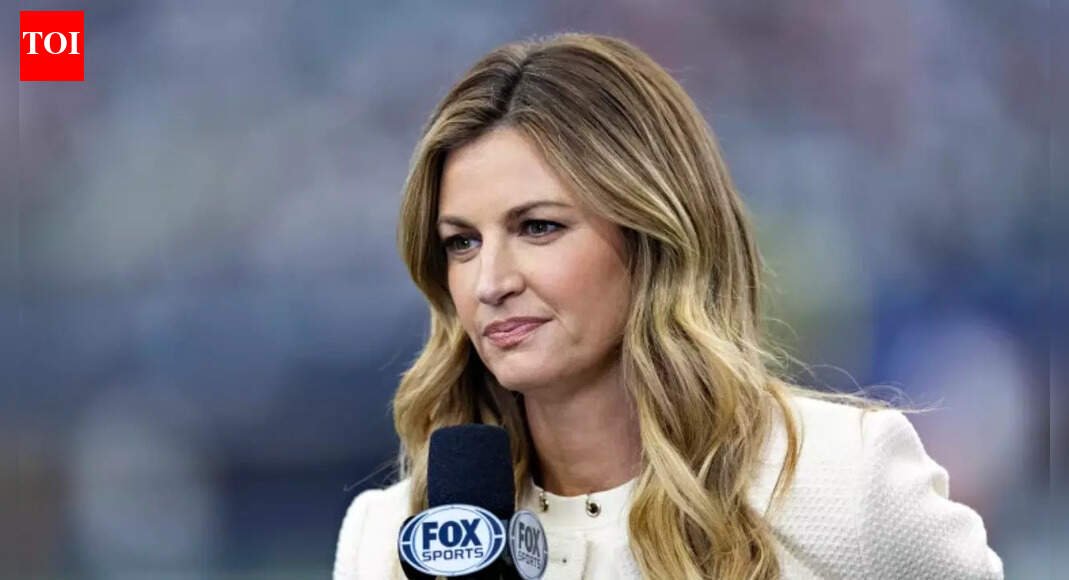
Erin Andrews didn’t score a touchdown, but she still owned the NFL playoff spotlight. One coat, endless memes, and a reminder that she never misses a beat on the sidelines. (Image via Getty)

Erin Andrews did not throw a pass, catch a touchdown, or call a play on Jan. 11. She still became one of the most talked-about figures of the NFL postseason.During the NFC Wild Card game between the San Francisco 49ers and Philadelphia Eagles at Lincoln Financial Field, the Fox Sports sideline reporter shifted attention away from the field with a bold wardrobe choice that quickly took over social media.

Erin Andrews’ sideline outfit turns a Wild Card game into a fashion moment

Andrews appeared on the Fox broadcast wearing an oversized black-and-ivory faux fur coat while reporting from the sidelines in Philadelphia. Game-time temperatures sat in the 30s with heavy wind, making outerwear a necessity. The coat still stood out the moment she went live.Within minutes, screenshots flooded X. Fans labeled it “outfit of the year” and turned the look into a running joke across the NFL internet. The coat’s sharp contrast and exaggerated collar drew instant comparisons to Cruella de Vil from 101 Dalmatians.One fan wrote, “Erin Andrews woke this morning and said ‘Imma slay bi**hes y’all!’” Another added, “Philadelphia, hide your puppies! Erin Andrews is in town.”The reaction did not stay online. Fox analyst Michael Strahan and members of the broadcast repeatedly referenced the coat on air. Andrews brushed it off each time and stayed focused on her reporting.According to Fox Sports and multiple fashion outlets, the coat is Auter’s “THE FOX JACKET” in Smoke Noir. It retails for roughly $950 and features a sculpted oversized collar designed for warmth and mobility. Auter describes the piece as a refined statement in faux fur with a bold black-and-smoke palette.The design worked on television. It also worked as insulation in freezing conditions. That combination fueled the reaction.

Internet jokes follow Erin Andrews while she keeps the broadcast on track

The comparisons escalated as the night went on. Fans likened Andrews to Cruella de Vil, Ric Flair, an emu, and even mafia movie extras. One joked, “Erin Andrews took out the entire polar bear exhibit at the Philadelphia Zoo to make this coat.” Merriam-Webster joined the moment with, “Fun fact: a group of emus is called a ‘mob.’”Not all reactions were positive. Some viewers argued the look distracted from the game. Others questioned whether sideline reporters should draw attention with fashion during playoff broadcasts.Veteran media writer Richard Deitsch addressed that debate directly, writing, “The position is valuable is my point. How you feel about specific reporters will always be subjective. Personally, I don’t care what anyone wears. Just ask good Qs, don’t be a league propagandist, and get info.”That is exactly what Andrews did. Despite the noise, she delivered key updates throughout the game. Most notably, she confirmed the Achilles injury suffered by 49ers tight end George Kittle, an injury that ended his season and placed his next year in question.Earlier that day, Andrews also drew attention for her pregame interview outfit while speaking with Christian McCaffrey. That look sparked its own split reaction online. Praise and criticism arrived in equal measure.The moment underscored a familiar reality in sports media. A woman can report accurately, break news, and still have her appearance dominate the conversation.By the end of the night, Andrews’ coat became a viral subplot to a playoff game that already carried high stakes. The Eagles led 13-10 at halftime. Injuries mounted for San Francisco. The Fox broadcast rolled on with Kevin Burkhardt, Tom Brady, Tom Rinaldi, and Andrews handling their roles.The coat did not change the outcome of the game. It did something else. It reminded everyone how fast attention moves and how easily it shifts. Andrews stayed steady while the internet ran wild. That part mattered more than the memes.

[ad_2]

Source link

Banking supervision: Need to shift from snapshot checks to continuous oversight; says RBI deputy governor

[ad_1]

Banking supervision: Need to shift from snapshot checks to continuous oversight; says RBI deputy governor

Reserve Bank of India Deputy Governor Swaminathan J on Friday called for a fundamental shift in banking supervision, stressing that oversight must move from periodic, point-in-time assessments to continuous awareness, as digital risks increasingly redefine financial stability, PTI reported. Speaking at the Third Annual Global Conference of the College of Supervisors on ‘Issues and Challenges in Banking Supervision in the Digital Era’, Swaminathan said traditional supervisory tools focused on balance sheets and process inspections are no longer sufficient. A bank may appear healthy on paper, he cautioned, yet remain “one incident away from severe disruption”.“The centre of gravity is shifting from the ‘branch and product’ to the ‘pipes and code’,” he said, underlining that stability today depends as much on operational resilience, data integrity and third-party dependencies as on capital and liquidity.Highlighting consumer protection as an early-warning signal, the deputy governor said weak grievance redressal systems should not be treated as minor irritants. From a supervisory perspective, regulators need to assess not just whether grievance frameworks exist, but how they perform — including timeliness of resolution, identification of root causes, repeat failures and whether boards receive clear dashboards on complaint trends and customer pain points.Swaminathan emphasised that supervision must expand beyond individual institutions to include the broader ecosystem in which they operate. Regulators, he said, should move from merely asking “did you comply?” to examining whether institutions can withstand stress, recover quickly and protect customers when things go wrong.For banks, compliance can no longer be a quarter-end exercise. With faster operational cycles, institutions must maintain stronger operational discipline and data governance throughout the year. “When an anomaly is flagged, the ability to explain it and fix it quickly becomes a marker of control maturity,” he said.He also flagged third-party risk as a critical area, stating that outsourcing services does not mean outsourcing responsibility. Banks, he said, need tighter oversight of partners, clearer accountability for incidents and contracts that support audit, access and resilience.As artificial intelligence and advanced analytics become more embedded in banking operations, Swaminathan warned that institutions should be prepared for more intensive supervisory scrutiny on model risk, explainability and fairness, signalling a more intrusive and continuous regulatory approach in the digital era.

[ad_2]

Source link

Another billionaire announces plan to leave California: ‘this make it irresponsible for me not to…’

[ad_1]

Another billionaire announces plan to leave California: ‘this make it irresponsible for me not to...’

California is witnessing an exodus of high-net-worth individuals following the introduction of the new Wealth Tax. Last month, Google co-founders Sergey Brin and Larry Page officially shifted their base out of California just ahead of the January 1 deadline, and now another tech leader has announced that he is leaving the US state. Andy Fang, the billionaire co-founder of DoorDash, has become the latest high-profile tech leader to announce plans to leave California. In a post on X (formerly Twitter), Fang cited the state’s controversial 2026 Billionaire Tax Act as the primary driver, and specifically targeted a provision that penalises founders who maintain voting control over their companies.“I love California. Born and raised there. But stupid wealth tax proposals like this make it irresponsible for me not to plan leaving the state. This Class B thing itself could wipe me out,” he said in the post.“Being founder-led is a big part of what makes DoorDash special. I will fight to keep it that way,” he added.

What is the ‘Class B’ conflict in California ‘Wealth Tax’ Act

Fang post came in response to a particular post by Y Combinator CEO Garry Tan who highlighted concerns over the “dual-class” share structure which is common in Silicon Valley. Like the founders of Google and Meta, Fang holds Class B shares, which grant him more voting power than standard Class A shares – allowing founders to maintain control over their company’s direction. Tan explained this in his post:Section 50303(c)(3)(C) of the 2026 Billionaire Tax Act states: “For any interests that confer voting or other direct control rights, the percentage of the business entity owned by the taxpayer shall be presumed to be not less than the taxpayer’s percentage of the overall voting or other direct control rights.”This means if a founder holds shares representing only 3% of economic interest but 30% of voting control (through Class B supervoting shares), the tax would presume their ownership stake is at least 30% for valuation purposes, not 3%.The wealth tax is poorly defined and designed to drive tech innovation out of California.The law is so poorly written. While the lawyers who drafted it claim it doesn’t apply to publicly traded shares, they designed a legal trap where Class B voting shares would count as private shares and therefore considered ownership.It’s so dishonest.Tan calculated that this provision could effectively “confiscate” 50% of a founder’s wealth in a single year. Tan and Fang both criticised the language of the Act, with Tan even going forward to say, “The law is so poorly written”, calling it a “legal trap” designed to treat public voting shares as private ownership.

[ad_2]

Source link