Breaking News
After NMC withdraws nod to MBBS course, Omar says government to accommodate selected students in other colleges | India News

[ad_1]

After NMC withdraws nod to MBBS course, Omar says government to accommodate selected students in other colleges
Jammu and Kashmir chief minister Omar Abdullah

JAMMU: Jammu and Kashmir chief minister Omar Abdullah on Thursday assured that the first batch of 50 students selected for admission to Shri Mata Vaishno Devi Institute of Medical Excellence (SMVDIME) in Reasi would not be allowed to suffer because of NMC’s withdrawal of permission to run the MBBS course. The government would accommodate the students in other institutions through supernumerary seats, he said.“We will adjust them by creating supernumerary seats in colleges close to their homes so that their education does not suffer,” the CM told media persons on the sidelines of a function in Jammu. It was the govt’s responsibility to accommodate the students, he said, adding that this was not a difficult task and had been “discussed thoroughly”.Supernumerary seats are additional seats created over and above the approved intake in an educational institute.Omar has been critical of the agitation spearheaded by Shri Mata Vaishno Devi Sangharsh Samiti against 42 Muslim students, mostly from Kashmir, being granted admission to the Jammu-based medical institute funded by Mata Vaishno Devi Shrine Board, as against only seven Hindus. He reiterated that the students got admission on merit as the selections were based on NEET scores.The NMC order on withdrawal of permission cited SMVDIME’s non-adherence to minimum standards as the reason. In a reference to that, Omar said accountability must be fixed if standards were not maintained at the medical institute. “We will accommodate these 50 students, but someone must answer for the damage done to students’ futures,” he said.Responding to questions on inspections by NMC and the medical college’s non-compliance with norms, he said: “You should question the university and its office-bearers from top to bottom — why, after building a medical college, did it fail to pass inspection?”The CM also interacted with the J&K Under-16 cricket team that clinched the Vijay Merchant Trophy (Plate Group) for the first time. Congratulating the team on their remarkable feat, he said, “Your victory reflects not just talent, but teamwork, discipline and dedication. You have made the entire J&K proud.”Omar presented an appreciation trophy to the victorious team, led by Smagey Khajuria. J&K defeated Mizoram by an innings and 182 runs to lift the trophy in Surat on Jan 6.

[ad_2]

Source link

US mortgage rates: 30-year home loan rate inches up to 6.16%, stays near 2025 low as housing demand remains cautious

[ad_1]

US mortgage rates: 30-year home loan rate inches up to 6.16%, stays near 2025 low as housing demand remains cautious

The average interest rate on a 30-year US mortgage edged slightly higher this week but remained close to its lowest level of 2025, offering limited relief to homebuyers amid a still-challenging housing market, according to data released by Freddie Mac.The average long-term mortgage rate rose to 6.16% this week from 6.15% last week, when it had slipped to its lowest level since October 3, 2024, AP reported. A year ago, the rate stood significantly higher at 6.93%, Freddie Mac said.Borrowing costs on 15-year fixed-rate mortgages, often favoured by homeowners refinancing their loans, also moved up marginally to 5.46% from 5.44% a week earlier. The rate averaged 6.14% during the same period last year.Mortgage rates are shaped by a range of factors, including Federal Reserve policy signals, inflation expectations and movements in the bond market. They tend to track the 10-year US Treasury yield, which was at 4.17% around midday on Thursday.Rates have largely stabilised in recent weeks after easing from late October, when the 30-year mortgage rate dipped to 6.17%, then its lowest level in over a year. The decline followed expectations of US Federal Reserve rate cuts, which began in September and continued last month.Although the Fed does not directly set mortgage rates, its interest rate decisions can influence investor behaviour. Rate cuts often signal slowing growth or easing inflation, prompting demand for US government bonds and pushing down long-term yields, which in turn can lower mortgage rates.Overall, the average 30-year mortgage rate ended last year nearly a percentage point lower than at the start of 2025, helping improve purchasing power for some buyers toward the end of the year. Sales of previously owned US homes rose month-on-month in September, October and November.However, November sales were lower than a year earlier — the first such decline since May — and the market is on track to finish the year below 2024 levels. Data on December existing home sales are due next week.Lower mortgage rates have offered some relief to buyers who can afford current prices. The median monthly US housing payment fell to $2,365 in the four weeks ended January 4, down 4.7% from a year earlier, according to Redfin.Despite this, housing affordability remains a major hurdle, especially for first-time buyers, due to years of rising home prices and modest wage growth. Economic and job market uncertainty has also kept many potential buyers on the sidelines.Economists broadly expect the average 30-year mortgage rate to hover slightly above 6% through the year, suggesting borrowing costs are unlikely to fall sharply in the near term.

[ad_2]

Source link

Global AI race: DeepSeek gains ground in developing nations; Microsoft flags widening gap

[ad_1]

Global AI race: DeepSeek gains ground in developing nations; Microsoft flags widening gap

Chinese AI startup DeepSeek is seeing rapid adoption across several developing countries, helping broaden access to generative artificial intelligence even as the overall gap between advanced and emerging economies continues to widen, according to a new Microsoft report.The report said global adoption of generative AI tools reached 16.3% of the world’s population in the three months to December, up from 15.1% in the preceding quarter, AP reported. However, AI adoption in developed economies — described by Microsoft as the “global north” — is growing at nearly twice the pace of adoption in developing countries.“We are seeing a divide and we are concerned that that divide will continue to widen,” Juan Lavista Ferres, chief data scientist at Microsoft’s AI for Good Lab, said. The analysis is based on anonymised telemetry data tracking global device usage.Countries that invested early in digital infrastructure and artificial intelligence continue to lead adoption levels, including the United Arab Emirates, Singapore, France and Spain. The findings broadly align with earlier surveys, including research by the Pew Research Center, which showed higher enthusiasm for AI in countries such as South Korea.Against this backdrop, the rise of DeepSeek — founded in 2023 — has played a significant role in expanding AI use across parts of the developing world. Microsoft researchers said DeepSeek’s free-to-use and “open source” models have lowered barriers to adoption, particularly in price-sensitive regions.When DeepSeek released its advanced reasoning model R1 in January 2025, claiming it was more cost-effective than comparable offerings from OpenAI, it drew attention across the global technology industry. Research co-authored by DeepSeek founder Liang Wenfeng and published in Nature later that year described the work as a “landmark paper”.Lavista Ferres said DeepSeek performs well on tasks such as mathematics and coding, but noted that it operates differently from US-based models on politically sensitive topics. “For certain type of questions, of course, they follow the same type of access to the internet that China has,” he said, adding that responses on political issues can differ significantly.DeepSeek offers a free chatbot across web and mobile platforms and allows developers to modify and build on its core engine. According to the report, the absence of subscription fees has “lowered the barrier for millions of users, especially in price-sensitive regions”.The report found that DeepSeek’s adoption remained limited in North America and Europe, where several governments have raised security concerns. Countries including the US, Germany and Australia have sought to restrict its use, and Microsoft last year banned its own employees from using the platform.By contrast, DeepSeek’s usage surged in China and in countries such as Russia, Iran, Cuba and Belarus — regions where access to US-based technology platforms is restricted. In many markets, its adoption was linked to being pre-installed or promoted on smartphones from Chinese manufacturers such as Huawei.DeepSeek’s estimated market share was about 89% in China, followed by Belarus at 56% and Cuba at 49%. In Russia, its share was around 43%, while in Iran and Syria it ranged between 23% and 25%. In several African countries, including Ethiopia, Zimbabwe, Uganda and Niger, its market share stood between 11% and 14%.“Open-source AI can function as a geopolitical instrument, extending Chinese influence in areas where Western platforms cannot easily operate,” the report said.

[ad_2]

Source link

Big push for road safety: Govt mulls V2V tech in vehicles to cut accidents; spectrum earmarked

[ad_1]

Big push for road safety: Govt mulls V2V tech in vehicles to cut accidents; spectrum earmarked

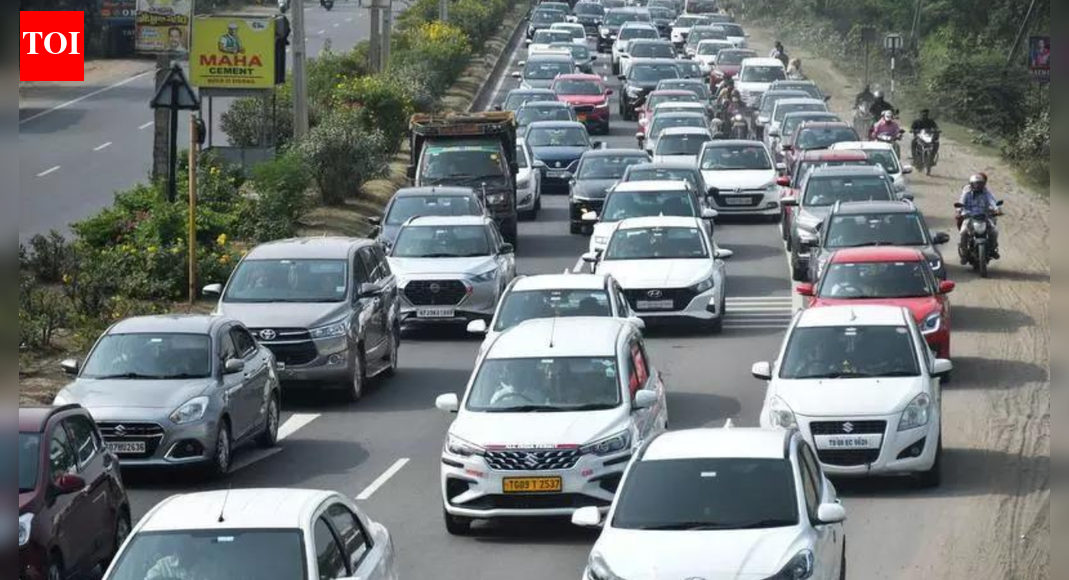
The government is working to introduce vehicle-to-vehicle (V2V) communication technology to help prevent road accidents by enabling real-time information sharing between vehicles, Union road transport and highways minister Nitin Gadkari said on Thursday, PTI reported.Addressing a press conference in New Delhi after chairing the annual meeting of transport ministers from states and Union Territories, Gadkari said a joint task force has been set up with the Department of Telecom (DoT) to take the initiative forward. “The Department of Telecom has agreed in principle for the use of 30 MHz (5.875–5.905 GHz) for V2V purposes,” he said.Under the proposed V2V system, vehicles will be able to communicate wirelessly with each other, alerting drivers about speed, location, acceleration, braking and the presence of vehicles in blind spots in the surrounding area, allowing timely corrective action.Gadkari said the move is part of broader efforts to reduce road fatalities through better road engineering, stricter enforcement of traffic laws and higher penalties for violations. “In our country, there are 5 lakh road accidents annually, causing around 1.8 lakh deaths,” he said, adding that about 66 per cent of those killed are in the 18–34 age group.The minister also said the government will bring amendments to the Motor Vehicles Act in the forthcoming Budget session of Parliament. The proposed 61 amendments aim to improve road safety, promote ease of doing business, enhance citizen services, improve mobility, simplify definitions and language, and align regulations with global standards.According to Gadkari, the meeting of transport ministers discussed a range of issues, including road safety, passenger convenience, ease of doing business and automobile regulations. Topics such as enhanced safety norms for buses, sleeper coaches and passenger vehicles — including bus body codes, Bharat NCAP ratings and the phased introduction of Advanced Driver Assistance Systems (ADAS) — were also taken up.The meeting further deliberated on introducing a points-based system to track traffic violations and enabling digital and automated issuance of permits for goods vehicles up to a specified gross vehicle weight.

[ad_2]

Source link

‘The game needs to evolve’: Robin Uthappa questions sense behind ICC tournament every year | Cricket News

[ad_1]

'The game needs to evolve': Robin Uthappa questions sense behind ICC tournament every year
Robin Uthappa (Photo by Duif du Toit/Gallo Images/Getty Images)

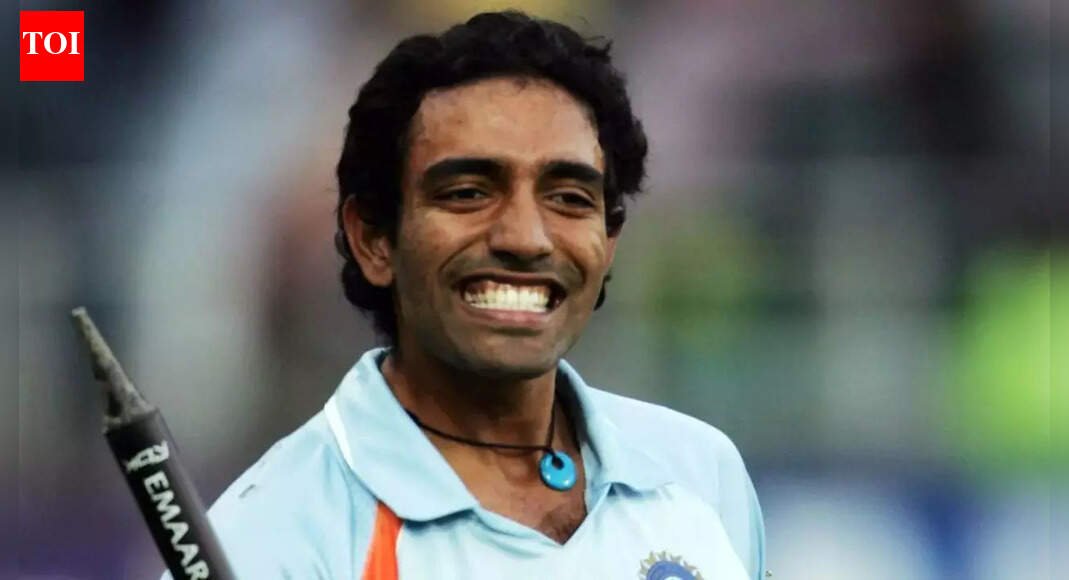
TimesofIndia.com in Durban: At a time when off-field matters are taking centre stage a month before the men’s T20 World Cup gets underway, former India cricketer Robin Uthappa has diverted attention back to the game. On the sidelines of his commentary stint at the ongoing SA20, Uthappa questioned the need to host an ICC tournament every year and asserted the novelty of the multi-nation events is wearing off. “I think the game needs to evolve from the administrative perspective. How much value do fans and audiences hold for an ICC tournament every year? The novelty of it is wearing off, to be very honest and with all due respect,” Uthappa said.

Robin Uthappa on SA20’s rise and why ICC shouldn’t host multi-nation tournaments every year

ODI World Cup in 2023, T20 World Cup in 2024, Champions Trophy in 2025 and now back to the T20 World Cup, which gets underway on February 7. There has been a men’s multi-nation event every year, and Uthappa felt there is a need to revisit the scheduling to ensure “novelty” of the tournaments remains intact. “I think the novelty of the ICC Championships must be there. It’s an integral part, not just for the players but also for the fans, also for the viewers. It has to mean something. There has to be a little bit of a gap. We can’t have or shouldn’t have an ICC championship every year. That is the hard truth that I think the administrators have to look at and face and look at evolving the game in a way where it’s actually moving towards,” he added.Uthappa is on commentary duties for the ongoing fourth edition of the SA20, and a visit to Durban for the contest between Durban’s Super Giants and Pretoria Capitals brought back memories of the 2007 T20 World Cup bowl out vs Pakistan. “Durbin brings back a lot of memories. I go back to 2007 all the time. Every time I come here, I look at that dressing room on the other side and I just think of all the wonderful things that, you know, we created here, the wonderful memories we created here. It was. It was a special time,” Uthappa said.The former India batter was one of the players who participated in the bowl out, and comfortably hit the target. India ended up winning the tie-breaker and also the group stage fixture vs arch-rivals Pakistan.“I was on the pitch today just having a look before the pitch report and obviously reminiscing about the time when I actually bowled there. It was certainly a lot of fun. We did a lot of preparation for it, which we don’t really kind of talk about, but I think we were better prepared than the opposition team on that night,” he recalled.

[ad_2]

Source link

ICE kills woman: Protestors clash with federal agents, 3 held; Minneapolis on edge

[ad_1]

ICE kills woman: Protestors clash with federal agents, 3 held; Minneapolis on edge

Minneapolis was on edge Thursday after a woman was fatally shot by an Immigration and Customs Enforcement officer during the Trump administration’s latest immigration crackdown. This led to the protest in the city. Protesters clashed with law enforcement agents on Thursday as anger mounted over the shooting, AP reported.State and local officials demanded ICE leave Minnesota after 37-year-old Renee Nicole Macklin Good was shot in the head Wednesday morning. However, Homeland Security Secretary Kristi Noem said agents would not be leaving.The Department of Homeland Security deployed more than 2,000 officers to the area in what it said was its largest immigration enforcement operation ever. Noem said more than 1,500 people were already arrested.Bystanders captured video of Macklin Good’s killing in a residential neighbourhood south of downtown. Hundreds of people attended a Wednesday night vigil to mourn her and urge the public to resist the immigration crackdown. Some then chanted as they marched through the city, but there was no violence.“I would love for ICE to leave our city and for more community members to come to see it happens,” said Sander Kolodziej, a painter who came to the vigil to support the community. 3 protestors arrestedThree people were arrested at an anti-ICE protest near the Whipple Federal Building in Minneapolis, where ICE operated from, after several hundred people gathered at the site in the south metro, CBS news reported.WCCO’s Beret Leone said the crowd split into three groups, blocking agents from entering or leaving the building. Shortly after 8 a.m., three people from the crowd were taken away in handcuffs.Federal agents also deployed chemical irritants at the crowd.Hundreds of people gathered in Minneapolis and neighbouring St. Paul, chanting, marching and holding signs urging ICE agents to get out of their city. The demonstrations were ongoing since news of the shooting broke yesterday.A live feed of the protests showed some confrontations breaking out between law enforcement and protesters.Some protesters were treated after it appeared a chemical agent was deployed.What DHS and Trump say about death of woman?Noem called the incident an “act of domestic terrorism” against ICE officers, saying the driver “attempted to run them over and rammed them with her vehicle. An officer of ours acted quickly and defensively, shot, to protect himself and the people around him.”President Donald Trump made similar accusations on social media and defended ICE’s work.Noem alleged that the woman was part of a “mob of agitators” and said the officer followed his training. She said the FBI would investigate.However, Minneapolis Mayor Jacob Frey called Noem’s version of events “garbage.”“They are already trying to spin this as an action of self-defense,” Frey said. “Having seen the video myself, I wanna tell everybody directly, that is bullshit.”What witness said?The Department of Homeland Security claimed Good “weaponised her vehicle” and attempted to run over officers, prompting an agent to fire what it described as defensive shots. However, multiple eyewitnesses strongly dispute this account. Neighbours say Good posed no threat and appeared to be trying to drive away when gunfire erupted, sending her vehicle crashing into parked cars. Witnesses described chaos, fear and helplessness as federal agents ordered residents to stand back and allegedly did not attempt to render aid. Viral videos and frame-by-frame analyses circulating on social media also challenge the official version, suggesting the agent was not in immediate danger. The shooting has left the community shaken and grieving, deepening public concern over aggressive immigration enforcement tactics.

[ad_2]

Source link

Budget 2026: Why home loan rules need a fresh look

[ad_1]

Budget 2026: Why home loan rules need a fresh look
For self-occupied homes, the deduction for interest is capped at Rs 2 lakh a year – a figure unchanged since 2015. (AI image)

Falling home-loan rates, increase in young population seeking to buy homes and a steady revival in residential sales have encouraged many to take the plunge into home ownership. Tax incentives continue to be a major attraction for borrowers — but several provisions in the Income-tax Act have not kept pace with rising property prices, bigger loan sizes and frequent delays in construction. As a result, taxpayers often discover that the benefits they assumed they were entitled to are either capped, postponed or unavailable.Pre-construction interest: EMIs now, deductions laterOne of the biggest pain points arises when individuals buy under-construction property. EMI payments begin immediately, but the tax deduction for interest paid during the construction period is deferred. The law currently allows this interest to be claimed only in five equal instalments starting from the year in which the construction is completed, or possession is obtained. Hinesh R Doshi, chartered accountant and past president of The Chamber of Tax Consultants says, “In an environment where project delays are common, this effectively means taxpayers shoulder EMIs, with no tax relief for years. If the borrower is also bearing the brunt of rent expenses, it means a greater financial burden. Allowing EMI deductions in the year of payment has gained urgency”.The Rs 2 lakh cap that no longer reflects realityFor self-occupied homes, the deduction for interest is capped at Rs. 2 lakh a year — a figure unchanged since 2015. As property values and loan sizes having risen sharply, this cap has lost relevance. If construction is not completed within five years from the end of the year in which the loan was taken, the deduction collapses further to just Rs. 30,000. Doshi comments that “Many taxpayers find these limits outdated and out of sync with today’s housing market, wherein prices has tripled in ten years”.Affordable housing deduction lapsesThe additional Rs. 1.5 lakh deduction introduced for first-time buyers of affordable homes expired in March 2022. It was intended to encourage purchases of units with a stamp duty value of up to Rs. 45 lakh. With affordability pressures persisting and housing costs climbing even in smaller cities, there have been repeated suggestions to reinstate or extend this benefit.Doshi is of the view that section 80EEA must be re-introduced to lure new buyers and boost housing sector for first time buyers. This must be continued for several years, as we have huge population below age of 35 years looking to buy a house.Loans from private sources: limited reliefHome loans taken from non-banking sources — such as employers, friends, relatives or private lenders — qualify for an interest deduction but not for a principal deduction under section 80C. Nor do such loans qualify for any additional housing benefits that were earlier available for affordable housing. Borrowers unable to access bank or housing finance company loans due to documentation challenges or credit scores or legal issues with project sanctions etc are therefore disadvantaged, even though the cost of borrowing may be similar.Doshi recommends that the existing provision of 80C should be amended to include borrowers who obtain loans from private sources or from non-banking finance companies.The 80C bottleneckRepayment of housing-loan principal qualifies for deduction under section 80C but must compete for space within the overall Rs. 1.5 lakh limit. With PPF, EPF, ELSS and life insurance premiums also claiming this quota, many taxpayers find themselves unable to claim the full principal repayment. Some experts suggest carving out a separate limit for home-loan principal or raising the current cap to reflect present-day financial realities. Doshi recommends, “A separate deduction of Rs. 1.50 lakh should be added to existing limit of Rs 1.50 lakh for repayment of housing loan. Also, the threshold limit should be enhanced to Rs. 2.50 lakh so as to make housing loan affordable to every citizen of India”Another issue is the reversal rule: if the property is sold within five years of purchase, all principal deductions claimed earlier become taxable in the year of sale.New tax regime denies key housing benefitsUnder the new, lower-tax personal income-tax regime, two major benefits are not available:

  • No deduction for home-loan interest on a self-occupied property, and
  • No deduction under section 80C for principal repayment.

This has left many salaried individuals reconsidering whether the simplified regime truly works in their favour, especially if they have significant housing-loan outgo.Why the law needs updatingHousing is a long-term financial commitment, and the tax framework should ideally support this investment rather than amplify challenges. Several provisions — particularly those dealing with pre-construction interest, deduction caps and eligibility criteria — were designed for a very different real-estate market. Today’s home buyers are coping with higher EMIs, longer construction cycles and tighter budgets.A relook at these provisions could ease financial strain on borrowers while giving a boost to the housing sector, which has strong linkages with employment and economic growth. With the Union Budget approaching, home buyers will be watching closely to see whether long-pending concerns finally get addressed.

[ad_2]

Source link

Russian oil purchase: How 500% tariff could upend $120 billion India-US trade – explained

[ad_1]

Russian oil purchase: How 500% tariff could upend $120 billion India-US trade - explained
A 500% tariff would effectively shut down India’s goods and services exports to the United States. (AI image)

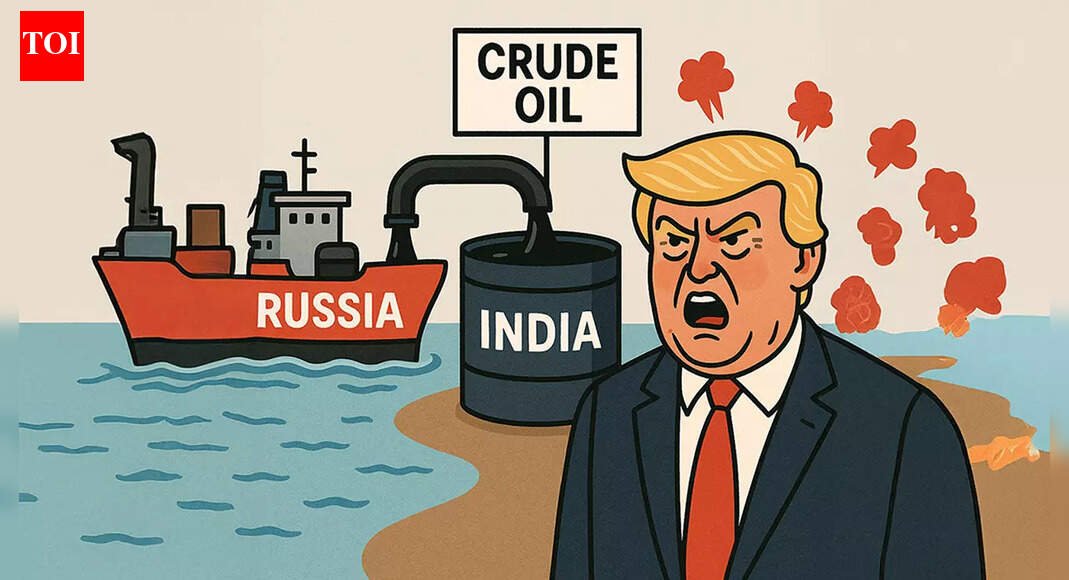
Will India face 500% tariffs from the US soon? It’s a question that’s on the mind of everyone after US Senator Lindsey Graham said that President Donald Trump has given the go ahead for a bill that looks to impose 500% tariffs on countries trading with Russia. What’s important to understand is that while China and India are the largest importers of Russian crude oil, it is only India which has faced Trump’s wrath on the issue.Senator Lindsey Graham said he held a “very productive meeting” with Trump at the White House on Wednesday, during which the President cleared the bipartisan Russia sanctions legislation that has been under discussion for several months.“This will be well-timed, as Ukraine is making concessions for peace, and Putin is all talk, continuing to kill the innocent. This bill will allow President Trump to punish those countries who buy cheap Russian oil, fuelling Putin’s war machine,” Graham said in a post on X on Wednesday.“This bill would give President Trump tremendous leverage against countries like China, India and Brazil to incentivise them to stop buying the cheap Russian oil that provides the financing for Putin’s bloodbath against Ukraine,” he added.Graham said he was hopeful of securing a “strong” bipartisan vote on the legislation, possibly as early as next week. So, what will happen to the India-US trade dynamics if the bill is passed? According to Global Trade Research Initiative (GTRI) founder Ajay Srivastava, a 500% tariff on goods – and potentially on services via secondary measures – could effectively halt India’s $120 billion US exports!

What is the 500% tariff bill?

Graham, along with Senator Richard Blumenthal, has introduced the Sanctioning Russia Act of 2025, which proposes secondary tariffs and sanctions on “countries that continue to fund Putin’s barbaric war in Ukraine.” The bill outlines a 500 per cent tariff on secondary purchases and resale of Russian oil and has been co-sponsored by nearly every member of the Senate Foreign Relations Committee.
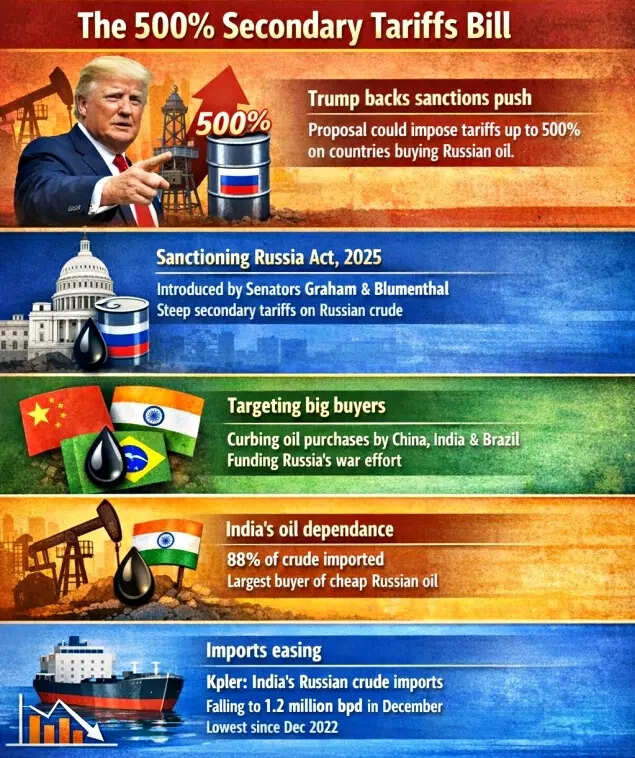
500% Secondary Tariffs Bill

500% Secondary Tariffs Bill

“President Trump and his team have made a powerful move, implementing a new approach to end this bloodbath between Russia and Ukraine… However, the ultimate hammer to bring about the end of this war will be tariffs against countries, like China, India and Brazil, that prop up Putin’s war machine by purchasing cheap Russian oil and gas,” Graham and Blumenthal said in a joint statement last year.

Will India Face 500% US Tariffs & What Will It Mean For Trade?

Trump has already imposed tariffs of up to 50 per cent on Indian goods, among the highest levied globally, including a 25 per cent component linked to India’s purchases of Russian energy.Senator Lindsey Graham has said Trump has given his consent to the legislation that would empower the US Congress to levy tariffs as high as 500 per cent on nations that continue to purchase Russian oil.Although China and India account for the bulk of Russia’s crude exports, recent US trade measures have targeted only India with 25% penal tariffs, a pattern that is widely expected to persist, according to GTRI. China, despite being a major buyer, has so far avoided punitive action. US officials are concerned that retaliatory steps by Beijing could include restrictions on rare-earth supplies, which are critical for American high-technology and defence manufacturing.“The same selective logic is likely to prevail under Senator Lindsey Graham’s proposed legislation. Even if the bill were to clear the Senate – a remote prospect – it would in practice target India alone, while China would remain beyond reach,” says GTRI.So far, President Donald Trump has refrained from pursuing tariff actions through Congress, preferring instead to invoke presidential emergency powers under the International Emergency Economic Powers Act. However, the tariff strategy is currently facing legal challenges, with a Supreme Court decision likely soon. In contrast, the Graham proposal would have to pass the Senate, adding another layer of uncertainty to its prospects.Even assuming the bill becomes law, questions remain over how a 500 per cent tariff would actually be implemented, notes GTRI. While US customs authorities are empowered to impose duties on physical goods, there is no statutory framework to levy tariffs on services. Any escalation, therefore, would likely take the form of taxing US companies on payments made for services sourced from India, the GTRI report says.The 50% tariff has already inflicted significant damage. A 500% tariff would effectively shut down India’s goods and services exports to the United States, now exceeding $120 billion annually.“India must take a clear position on Russian oil imports and convey it decisively to Washington,” Ajay Srivastava says.“The broader contradiction is hard to ignore. US lawmakers speak of “punishing” countries for purchasing Russian oil even as Washington moves aggressively to seize Venezuela’s oil assets. This is not a rules-based trading order; it is worse than the law of the jungle, as it is unevenly applied,” he adds.
[ad_2]

Source link

US market today: Wall Street trades flat; defence stocks rally on Donald Trump’s military spending push

[ad_1]

US market today: Wall Street trades flat; defence stocks rally on Donald Trump’s military spending push

US stock indices were largely subdued in early Thursday trade, even as defence companies rallied sharply after President Donald Trump said he wants to significantly raise military spending.The S&P 500 slipped 0.2% in early trading, though it remained close to its recent all-time high. The Dow Jones Industrial Average was down 109 points, or 0.2%, while the Nasdaq composite fell 0.4%, AP reported.Gains were concentrated in defence stocks after Trump said he aims to lift US military spending to $1.5 trillion in 2027 from about $901 billion, as part of plans to build what he called a “Dream Military”. Northrop Grumman jumped 8.2%, Lockheed Martin surged 8.8%, and L3Harris Technologies rose 8%, more than recouping losses from the previous session.RTX underperformed its peers, rising 3.4%, after Trump criticised the company for being the “slowest in increasing their volume”. The president also signed an executive order calling on the Pentagon to include clauses in future contracts that would bar defence contractors from buying back their own shares during periods of underperformance on government contracts.Bond yields edged higher following mixed US economic data. Weekly jobless claims rose, signalling some increase in layoffs, but broadly in line with expectations. Separate data showed stronger-than-expected gains in worker productivity and an unexpected narrowing of the US trade deficit in October.Oil prices climbed, extending recent volatility. US benchmark crude rose 2.1% to $57.18 a barrel, while Brent crude gained 2% to $61.14. Prices have been swinging amid uncertainty following Trump’s removal of Venezuela’s leader last weekend, even as expectations of ample global supply continue to weigh on the market.Global markets were mostly lower. Japan’s Nikkei 225 dropped 1.6%, while Hong Kong’s Hang Seng fell 1.2%. In the bond market, the yield on the 10-year US Treasury rose to 4.18% from 4.15% late Wednesday.

[ad_2]

Source link

Bajaj deal with Allianz values insurance arms at Rs 93000 crore

[ad_1]

Bajaj deal with Allianz values insurance arms at Rs 93000 crore

MUMBAI: Bajaj Group on Thursday completed the acquisition of a 23% stake in its insurance joint ventures from Allianz SE for Rs 21,390 crore, marking the largest transaction in India’s insurance sector and bringing the group closer to full ownership of Bajaj General Insurance and Bajaj Life Insurance.The stake purchase involved Bajaj Finserv, Bajaj Holdings & Investment and Jamnalal Sons acquiring Allianz’s shares for Rs 12,190 crore in the general insurance arm and Rs 9,200 crore in the life insurance arm. The transaction raises the Bajaj Group’s ownership in both insurers to 97% from 74%, with Bajaj Finserv holding 75.01%, giving it management control.Bajaj’s purchase values the general insurance venture at Rs 53000 crore and the life jv at Rs 40,000 crore. This is much lower than what analyst reports from Jefferies, Avendus and Kotak which have valued the non-life company between Rs 85700 crore and Rs 54600 crore while the life company has been valued between Rs 56,800 crore and 56,200 crore.Allianz said it received a gross consideration of around 2.1 billion euros for the divestment of the first major tranche and expects to sell the remaining 3% stake by the second quarter of 2026. The German insurer said the decision followed constructive and amicable discussions, noting that its ability to operate in India had remained limited due to its minority position.“This transaction is transformative for the Bajaj Group, enabling us to contribute even more strongly to the Govt’s vision of ‘Insurance for All’ that is Made in India, Made for India and Made by India,” Sanjiv Bajaj, chairman and managing director of Bajaj Finserv, said. He said the acquisition provides strategic flexibility to expand markets, launch new products and build scale as insurance penetration is set to rise over the next two decades.Bajaj Finserv said the transfer of Allianz’s remaining 3% stake is expected to be completed over the next few months through a proposed buyback, subject to approvals. If completed, Bajaj Finserv’s stake could rise to around 77.3%.Allianz said India remains a market of high strategic priority and that it intends to stay invested in the country’s insurance growth. The company pointed to its recently announced plans with Jio Financial Services to form a 50:50 domestic reinsurance joint venture and explore new general and life insurance ventures.Allianz said it expects to recognise a non-operating IFRS gain of around 1.1 billion euros from the transaction in its first-quarter 2026 results and anticipates a positive impact of around five percentage points on its group solvency ratio, with proceeds to be redeployed in line with its strategic priorities, including investments in new India ventures.

[ad_2]

Source link