Breaking News
Air India fleet revamp: Airline takes first custom-made Dreamliner post-privatisation; wide-body induction gathers pace

[ad_1]

Air India fleet revamp: Airline takes first custom-made Dreamliner post-privatisation; wide-body induction gathers pace

Air India has taken delivery of its first Boeing 787-9 Dreamliner since returning to private ownership, signalling steady progress in the Tata Group-led overhaul of the airline’s long-haul fleet, PTI reported citing an official.The aircraft, handed over at Boeing’s Everett facility in Seattle on January 7, is the first “line fit” Dreamliner built specifically for Air India after its acquisition by the Tata Group in January 2022. Line fit aircraft are manufactured with airline-specific cabin layouts and configurations.Following mandatory inspections by the Directorate General of Civil Aviation (DGCA), the aircraft is expected to be flown to India in the coming days, the official added.This delivery is significant as it marks Air India’s first new wide-body aircraft induction under private ownership and forms part of the airline’s large aircraft order placed in 2023. The Dreamliner is the 52nd aircraft to be delivered from Air India’s Boeing order of 220 jets.The Boeing 787-9 features a three-class cabin configuration comprising business class, premium economy and economy seating. The last time Air India inducted a line fit Dreamliner was in October 2017, when the airline was still government-owned.Air India Express, the group’s low-cost arm, has already inducted 51 Boeing 737-8 narrow-body aircraft, including its first line fit plane, which joined the fleet in late December.Since the Tata takeover, Air India has placed orders for 350 Airbus aircraft and 220 Boeing aircraft. Of the Airbus order, six A350 wide-body jets are already operational with Air India.The airline also operates 26 Boeing 787-8 aircraft and six Boeing 787-9 aircraft inherited from erstwhile Vistara, which has since been merged with Air India.At the group level, Air India currently operates a fleet of over 300 aircraft, including 185 with Air India and the remainder with Air India Express. The official said around a dozen older Dreamliners undergoing cabin upgrades are expected to return to active service by 2026.In November last year, Air India CEO and MD Campbell Wilson said the Air India Group plans to induct 26 additional wide-body and narrow-body aircraft and aims to operate 81% of its international flights using upgraded aircraft by the end of 2026.

[ad_2]

Source link

Cash discovery row: SC reserves order on Justice Yashwant Varma’s plea; denies time extension to reply | India News

[ad_1]

Cash discovery row: SC reserves order on Justice Yashwant Varma’s plea; denies time extension to reply

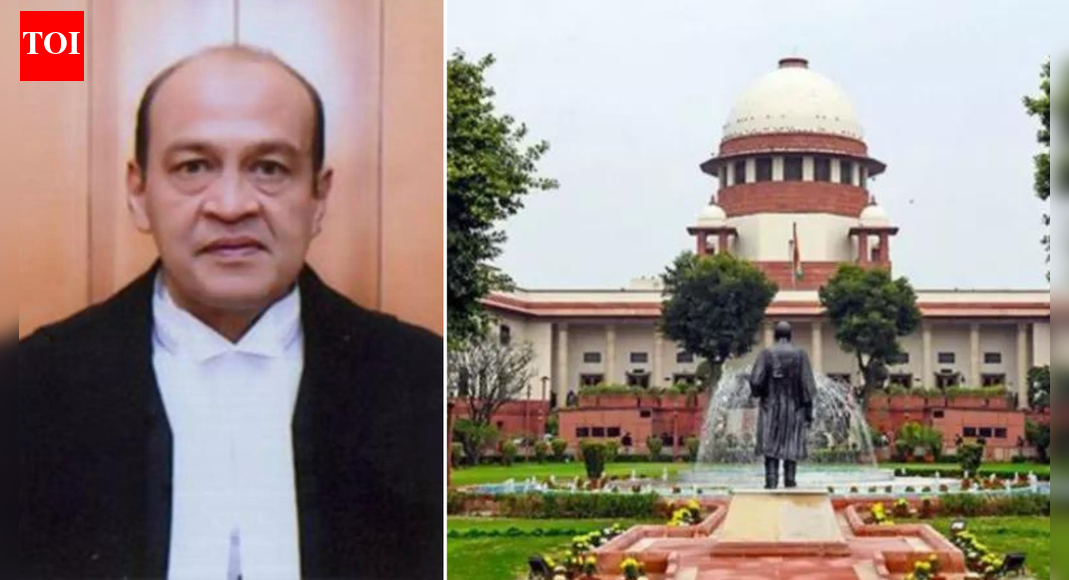
NEW DELHI: The Supreme Court on Thursday reserved its decision on a plea filed by Allahabad high court judge Justice Yashwant Varma, challenging the validity of a parliamentary committee probing corruption charges against him. The case relates to the recovery of a large sum of cash from his official residence last year.The apex body has also refused to grant him more time to file his response before the committee.A bench of Justices Dipankar Datta and Satish Chandra Sharma declined Justice Varma’s request for an extension to submit his reply to the parliamentary panel, which is scheduled to receive responses on January 12. Justice Varma has questioned the legality of the committee set up by the Lok Sabha Speaker, arguing that it is unsustainable under the Judges (Inquiry) Act.Justice Varma has contended that when a motion seeking the removal of a judge is introduced in both Houses of Parliament on the same day, an inquiry committee can be formed only if the motion is admitted in both Houses.In his case, he argued, the motion was rejected by the deputy chairman of the Rajya Sabha, rendering the committee invalid. He has challenged the admission of the Lok Sabha motion, seeking it to be declared “contrary to law”.The case stems from events on March 14 last year, when a large sum of currency was found at Justice Varma’s official residence in Delhi, where he was then serving as a high court judge. He was later transferred to the Allahabad high court.Following the recovery, then Chief Justice of India Sanjiv Khanna ordered an in-house inquiry and constituted a three-member panel, which submitted its report on May 4, finding Justice Varma guilty of misconduct.After receiving the report, the then CJI asked Justice Varma to resign or face impeachment proceedings. When he refused to step down, the report was forwarded to President Droupadi Murmu and Prime Minister Narendra Modi. On August 7, the Supreme Court dismissed Justice Varma’s plea challenging the in-house inquiry report. Days later, on August 12, Lok Sabha Speaker Om Birla constituted a separate three-member parliamentary committee to probe the charges.During an earlier hearing on December 16, the Supreme Court had agreed to examine Justice Varma’s challenge to the constitution of the Lok Sabha inquiry panel. Senior advocate Mukul Rohatgi, appearing for the judge, pointed to what he described as a procedural lapse, submitting that the inquiry committee could not be formed unilaterally by the Lok Sabha Speaker when notices of the removal motion were given in both Houses on the same day.“Where the notices of the motion are ‘given’ to the Houses on the same date, no committee will be constituted, unless the motion is being admitted in both Houses,” Rohatgi had argued. He added that such a committee must be constituted jointly by the Speaker of the Lok Sabha and the Chairman of the Rajya Sabha.

[ad_2]

Source link

Bharat Coking Coal IPO opens on January 9: GMP, listing details, price bands & more – all you need to know

[ad_1]

Bharat Coking Coal IPO opens on January 9: GMP, listing details, price bands & more - all you need to know

Bharat Coking Coal Limited (BCCL), a wholly owned subsidiary of Coal India, is set to launch its initial public offering (IPO) on Friday. The issue is witnessing robust demand in the grey market, with shares trading at a premium of around Rs 11.5, indicating a possible listing price of Rs 34–35 per share against the upper issue price of Rs 23.The Rs 1,071.11 crore IPO is entirely an offer for sale, with Coal India divesting 46.57 crore shares. The company will not receive any proceeds from the issue. The IPO will close on January 13, with allotment expected on January 14 and listing scheduled on the BSE and NSE on January 16.The price band for the issue has been fixed at Rs 21 to Rs 23 per share. Investors can apply in lots of 600 shares, requiring a minimum investment of Rs 13,800 at the upper end of the price band. The structure and pricing of the issue are aimed at attracting both retail and institutional investors.Bharat Coking Coal IPOAs of January 8, the grey market premium (GMP) for the BCCL IPO stood at about Rs 11.5, reflecting a nearly 50 per cent premium over the upper price band. The Grey Market Premium helps gauge market mood but, it’s cannot be termed a certainty indicator of listing.Established in the year 1972, Bharat Coking Coal Limited is involved in the mining of coking coal, non-coking coal, and washer coal. It is a major contributor to the supply of coking coal to the steel and power industries in India and is one of the major subsidiaries of Coal India.As of March 31, 2025, BCCL operates 32 mining units, including 25 opencast mines, three underground mines, and four mixed mines. Its operations are spread across the Jharia coalfields in Jharkhand and Raniganj in West Bengal, covering a total leasehold area of 288.31 square kilometres.The company holds coking coal reserves of around 7,910 million tonnes as of April 1, 2024. In FY25, BCCL accounted for nearly 58.5 per cent of India’s total domestic coking coal production. Coal output has risen steadily from 30.51 million tonnes in FY22 to 40.50 million tonnes in FY25. In FY24, the company produced 39.11 million tonnes of coking coal and 1.99 million tonnes of non-coking coal.On the financial front, BCCL reported revenue of Rs 14,402 crore in FY25, marginally lower than Rs 14,653 crore in FY24. Net profit declined by about 20 per cent to Rs 1,240 crore in FY25 from Rs 1,564 crore a year earlier.Brokerage viewsSBI Securities, in its note, said BCCL is India’s largest domestic producer of coking coal, contributing 58.5 per cent of total output in FY25. The company has estimated reserves of 7.91 billion tonnes and operates 34 mines. At the upper price band of Rs 23, the IPO is valued at an EV/EBITDA multiple of 6.4x on post-issue capital. SBI Securities has recommended subscribing to the issue at the cut-off price.ICICI Direct noted that BCCL’s revenue and profit after tax grew at a compound annual growth rate of 5 per cent and 37 per cent, respectively, between FY23 and FY25. In FY25, the company reported EBITDA margins of 12.7 per cent and a return on capital employed of 18.2 per cent. The IPO is valued at around 5.5x EV/EBITDA and 8.6x price-to-earnings based on FY25 numbers. ICICI Direct has assigned an UNRATED status to the issue.Key risks highlighted include the gradual depletion of coal reserves, high customer concentration—with the top ten customers contributing over 80 per cent of revenues—and the long-term risk of declining coal demand due to the increasing shift towards renewable energy.The IPO is being managed by IDBI Capital Markets & Securities and ICICI Securities as book-running lead managers. KFin Technologies has been appointed as the registrar to the issue.(Disclaimer: Recommendations and views on the stock market and other asset classes given by experts are their own. These opinions do not represent the views of The Times of India)

[ad_2]

Source link

Gen Z uprising in Pakistan? PhD student’s article challenges those in power — why it was taken down

[ad_1]

Gen Z uprising in Pakistan? PhD student's article challenges those in power — why it was taken down
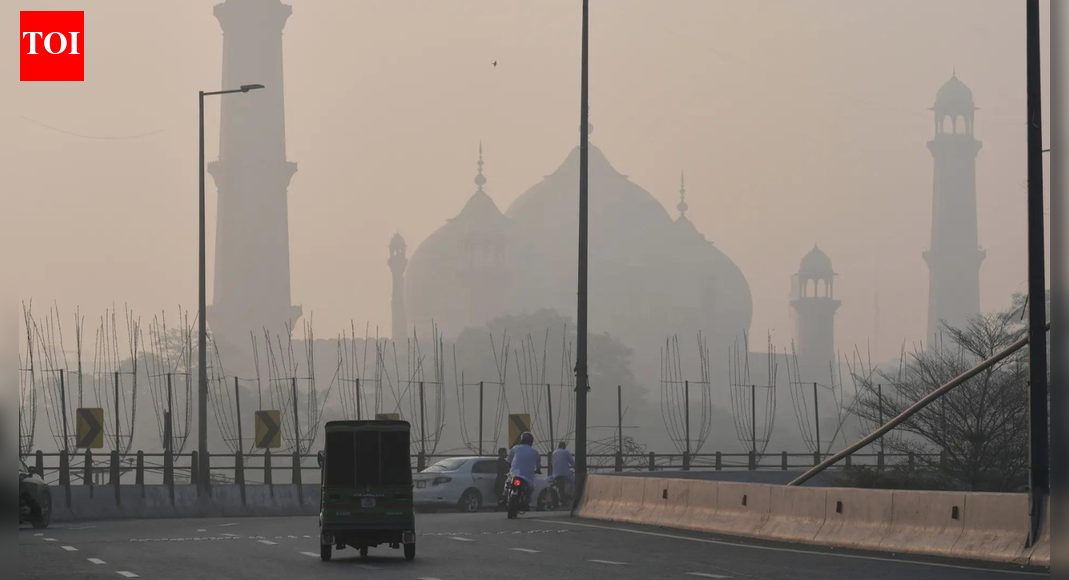
Badshahi Mosque, Lahore (AP photo)

Is Pakistan heading towards a Gen Z uprising? A PhD student from the country has sparked a debate after critically examining present-day Pakistan, under Prime Minister Shehbaz Sharif and army chief and de facto power centre Asim Munir, without naming either directly.The piece, written through a lens that shows contrast in powerful boomer generation and youth of Gen Z-Alpha, quickly struck a chord online and became a flashpoint for what many described as a quiet rebellion. It highlighted the widening divide between Pakistan’s ruling establishment, often referred to as “Boomers,” and its increasingly restless Gen Z population.The article, titled “It is over,” was written by US-based PhD student Zorain Nizamani and published in Pakistan’s daily The Express Tribune on January 1. It was later taken down, reportedly following pressure from the Pakistani military.“For the older men and women in power, it’s over. The young generation isn’t buying any of what you’re trying to sell to them. No matter how many talks and seminars you arrange in schools and colleges, trying to promote patriotism, it isn’t working,” Nizamani wrote.Writing from the perspective of Gen Z and Generation Alpha, Nizamani rejected what he described as an imposed narrative of patriotism pushed by those in power, arguing that such efforts no longer resonate with young Pakistanis.“Young minds, the Gen Z, the alphas, they know exactly what is happening, and despite your consistent efforts of trying to ‘sell’ your views of patriotism to them, they are seeing right through it. Thanks to the internet, thanks to whatever little education we have left, despite your best efforts of keeping the masses as illiterate as possible, you have failed. You have failed to tell people what to think, they are thinking for themselves. They might be a little too scared to speak their minds because they prefer breathing,” Nizamani wrote.He argued that forced patriotism, speeches and seminars cannot replace justice, opportunity and basic rights, and said young people clearly see corruption, inequality and hypocrisy despite censorship and propaganda.Nizamani also highlighted generational differences over economic freedom, writing, “The Gen Z wants erased restrictions on freelancing, the boomers want to increase regulations on freelancing.”Concluding his article, he wrote: “Boomers, we have had enough. We aren’t buying your narrative anymore. It’s worn out.”The article drew support from followers of former prime minister Imran Khan, who is currently incarcerated. The Canada wing of Khan’s Pakistan Tehreek-i-Insaaf (PTI) shared the article on X, highlighting its key points.“Zorain Nizamani’s article ‘It is Over’ was removed from eTribune most likely for exposing the reality: DG ISPR’s university visits are futile. The youth see through propaganda and are no longer easy to mislead or control,” the PTI Canada wing said.Pakistani activist Mehlaqa Samdani also linked the article’s removal to censorship. “Not surprisingly, this article is no longer accessible through the Express Tribune’s digital edition, exactly the kind of censorship Zorain talks about,” she wrote.The episode has intensified online debate over whether Pakistan’s younger generation is moving from quiet disillusionment toward open resistance against an entrenched establishment widely seen as out of touch.

[ad_2]

Source link

Stock market crash explained: Rs 7 lakh crore gone! Why Sensex has dropped 1,500 points in just 4 days

[ad_1]

Stock market crash explained: Rs 7 lakh crore gone! Why Sensex has dropped 1,500 points in just 4 days
The prolonged selloff has eroded investor wealth. (AI image)

Stock market crash: Sensex and Nifty are on a declining spree with both benchmark indices crashing in the last few days. Today is the fourth consecutive session of decline for the stock markets as mounting geopolitical risks, the threat of higher Trump tariffs and mixed corporate earnings continue to weigh heavily on investor confidence. Over the past four trading days, the BSE Sensex has shed more than 1,465 points, while the Nifty 50 has dropped about 1.7 percent, eclipsing isolated signs of optimism in select stocks.According to Dr. VK Vijayakumar, Chief Investment Strategist at Geojit Investments, recent market action has lacked a clear trend or direction, with movements in a handful of large stocks exerting an outsized influence on overall indices. He noted that “For instance, yesterday despite positive institutional buying Nifty drifted down by 71 points, mainly due to sharp declines in two stocks- Reliance and HDFC Bank. The large volumes in these two stocks in the derivative and cash market indicate activity associated with settlement day. In other words, the sharp dips in these stocks have nothing to do with their fundamentals; it is more technical in nature.”The prolonged selloff has eroded investor wealth, with the combined market capitalisation of all companies listed on the BSE shrinking by Rs 7.19 lakh crore over the four-day period to Rs 474 lakh crore, according to an ET report.

Why is the stock market crashing?

500% tariffs threat: US President Donald Trump has indicated backing for a bipartisan sanctions proposal targeting Russia that could levy tariffs of at least 500 percent on Russian imports, a move aimed at pressuring countries such as India, China and Brazil that continue to buy discounted Russian crude. Although the bill is yet to be cleared by lawmakers, Senator Lindsey Graham has said it could be brought up for a vote as soon as next week.Trump has also warned that Indian exports could face steeper duties if New Delhi fails to respond to Washington’s concerns over its Russian oil purchases. At present, Indian goods entering the US are already subject to tariffs of up to 50 percent, with around half of that explicitly linked to India’s crude imports from Russia.The broader trade relationship between the two countries remains strained. Trump recalled that Prime Minister Narendra Modi had personally raised the issue of early delivery of US-made Apache helicopters during a meeting, describing the exchange in detail.Together, these signals underscore how the expanding use of US sanctions and tariff threats is shaping investor sentiment in India, introducing fresh uncertainty at a time when markets are already on edge.Large-caps pull down benchmarksLarge-cap stocks continued to weigh on the broader market on Thursday, as persistent selling in heavyweight names kept benchmark indices under pressure. Shares of HDFC Bank and Reliance Industries extended their decline, slipping by as much as 1 percent. Earlier in the week, losses of up to 4 percent in these two stocks had already contributed significantly to the slide in the headline indices.Sector-wise, metals saw the sharpest fall, with the metal index dropping 1.9 percent as all 15 of its constituents retreated after hitting record highs earlier in the week. The IT index also moved lower, easing 1 percent after having risen 2.4 percent over the previous two sessions. Apparel retailer Trent remained under stress, shedding another 1 percent after plunging as much as 9 percent earlier in the week amid concerns over intensifying competition.Political turmoil in VenezuelaEvents in Venezuela have remained a key global focus, with their immediate impact felt largely across commodity markets. The abrupt political shock has added to geopolitical risks, especially given Venezuela’s vast oil reserves, raising concerns about potential repercussions for global energy markets.“Trump tweets and actions can always influence the market. Another important event which investors should closely watch is a possible Supreme Court verdict on Trump tariffs very soon. If the verdict goes against the reciprocal tariffs it will create huge volatility in stock markets,” said Dr. VK Vijayakumar, Chief Investment Strategist at Geojit Investments.Global markets lose momentumEquity markets across Asia traded mostly in the red on Thursday, as investors turned cautious after a strong start to the year. MSCI’s broad Asia-Pacific index excluding Japan slipped 0.6 percent, while Japan’s Nikkei fell 1.2 percent and China’s CSI300 blue-chip index declined 0.8 percent. Futures markets also signalled a muted tone, with Nasdaq futures down 0.35 percent, S&P 500 futures marginally higher by 0.22 percent, EUROSTOXX 50 futures lower by 0.12 percent and FTSE futures easing 0.4 percent.Sentiment was dampened by rising geopolitical risks and trade-related developments, including China’s anti-dumping investigation into imports of chemicals used in semiconductor manufacturing. The move weighed on Japanese chemical companies while lending support to their Chinese counterparts. Investors also remained focused on the upcoming US employment data for cues on the Federal Reserve’s interest rate outlook. Analysts at Goldman Sachs expect nonfarm payrolls to rise by 70,000 in December, with the unemployment rate seen edging down to 4.5 percent, according to Reuters.(Disclaimer: Recommendations and views on the stock market, other asset classes or personal finance management tips given by experts are their own. These opinions do not represent the views of The Times of India)

[ad_2]

Source link

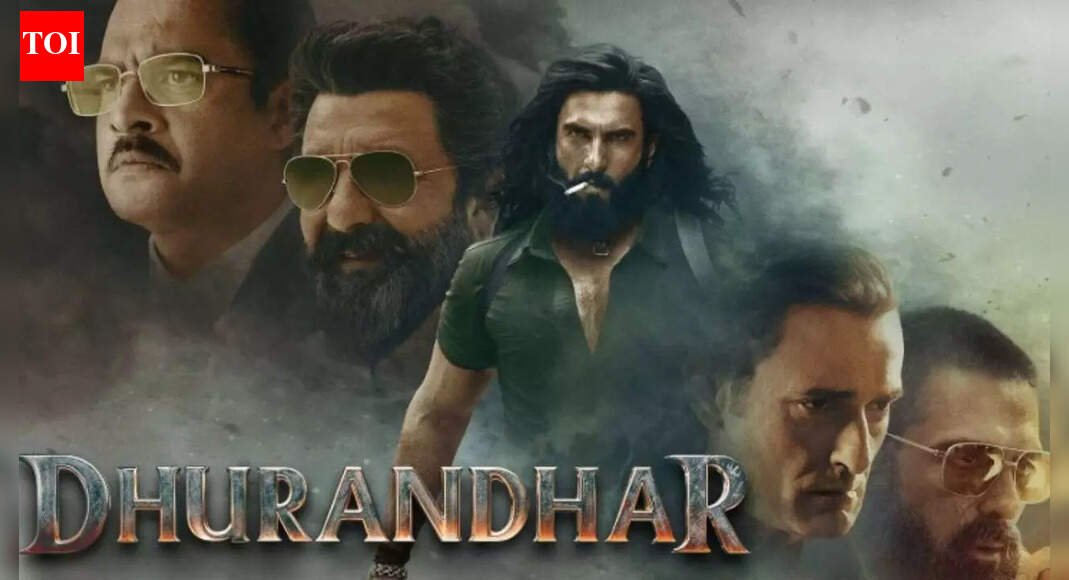
‘Dhurandhar’ box office day 35 (LIVE): Ranveer Singh starrer nears Rs 790 crore after lowest fifth Wednesday; ‘Ikkis’ and ‘TMMTMTM’ fade | Hindi Movie News

[ad_1]

'Dhurandhar' box office day 35 (LIVE): Ranveer Singh starrer nears Rs 790 crore after lowest fifth Wednesday; ‘Ikkis’ and ‘TMMTMTM’ fade

After spending more than a month in theatres, ‘Dhurandhar’ has added yet another feather to its cap by registering the biggest fifth weekend ever for a Hindi film. The Aditya Dhar directorial has also managed to remain consistent all through and remain unaffected by other big releases like ‘Avatar Fire And Ash’ and films like ‘Tu Meri Main Tera Main Tera Tu Meri’, ‘Ikkis’ which released in weeks after. The Ranveer Singh starrer pulled in an impressive Rs. 33.25 crore net over the weekend, pushing its total Hindi net collection beyond Rs. 781 crore in just 33 days. With this momentum, the film is now closing in on ‘Pushpa 2’s long-standing Hindi net record of Rs. 812 crore and is expected to surpass the mark during its sixth weekend, cementing its place at the very top.‘Dhurandhar’ has also carved out a rare distinction in box office history. Unlike other members of the Rs 1000-crore club, which depended on pan-India, multi-language releases to inflate their numbers, this espionage drama has achieved its staggering figures purely through its Hindi version. That achievement sets it apart as a one-of-a-kind solo-language blockbuster.

Dhurandhar’s Success Forces Bollywood To Rewrite Rules

While several big-ticket films have enjoyed explosive openings only to witness sharp drops after the initial weeks, ‘Dhurandhar’ has defied that pattern entirely. The Bollywood spy action thriller has displayed unprecedented consistency, continuing to earn strongly even in its fifth week. With its iron grip on ticket counters, the film has already sealed its status as an all-time blockbuster and is poised to chase a few more milestones before wrapping up its theatrical run.After making a good Rs. 12.75 crore on fifth Sunday, the film saw a huge drop on Monday, January 5 when the holiday period ended and made Rs. 4.75 crore. On fifth Tuesday, day 32, it made a similar number. On Wednesday, day 34, it saw a drop further, collecting Rs. 4.25 crore. On day 35, which is 5th Thursday, till afternoon, the film has collected Rs. 0.37 crore. The total collection of ‘Dhurandhar’ is now Rs. 786.37 crore. DISCLAIMER: The box office numbers in this article are compiled from our proprietary sources and diverse public data. While we strive for accuracy, all figures are approximate unless explicitly mentioned, offering a fair representation of the project’s box office performance. We are open to feedback and suggestions on toientertainment@timesinternet.in.

[ad_2]

Source link

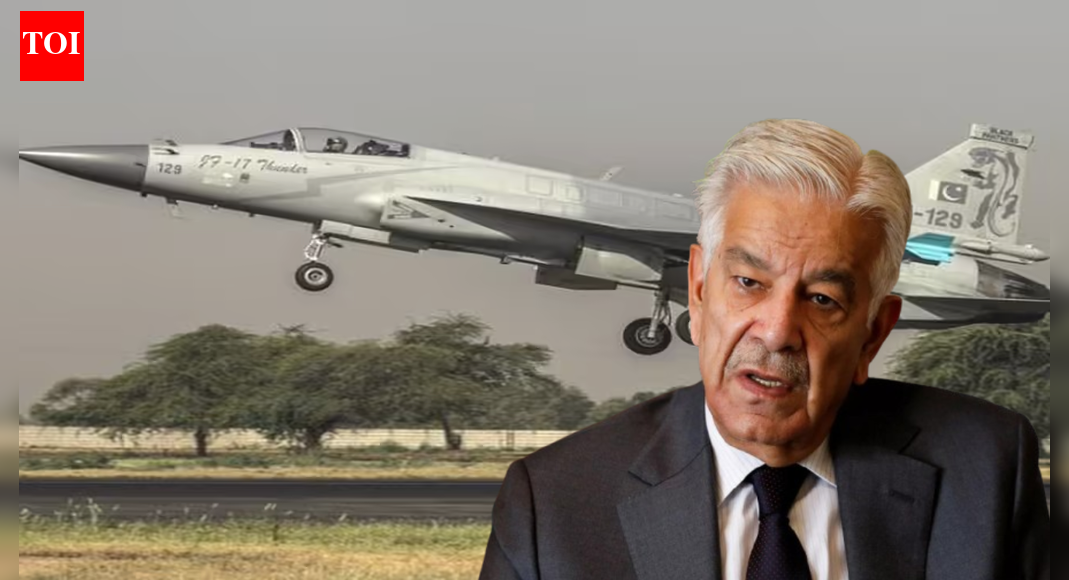
Khawaja Asif says Pakistan may not need IMF loans soon — what’s behind the claim

[ad_1]

Khawaja Asif says Pakistan may not need IMF loans soon — what's behind the claim
Pakistan defence minister Khawaja Asif

Pakistan on Tuesday expressed confidence that it may no longer need financial assistance from the International Monetary Fund within six months, with Pakistan defence minister Khawaja Asif claiming the country had seen a surge in aircraft orders following a four-day military standoff with India in May, Geo TV reported.Speaking on a Geo News programme, Asif made a fanciful claim while arguing that the May 2025 India-Pakistan conflict showcased Pakistan’s “resolve and military effectiveness” to the world.Military tensions escalated in May 2025 after Pakistan-sponsored terrorists carried out a terror attack in Pahalgam, killing 26 civilians in April. India responded with a strong military operation, launching Operation Sindoor, under which it targeted and destroyed multiple terror camps and Pakistani military facilities.However, Khawaja Asif, appearing disconnected from the ground reality, made such statements after a Bangladeshi defence delegation met Pakistan’s air chief to discuss a potential sale of the JF-17 Thunder, the multi-role fighter aircraft jointly developed by China and Pakistan. There are also reports of talks between Pakistan and Saudi Arabia to convert about $2 billion in Saudi loans into a JF-17 fighter jet deal, according to two Pakistani sources cited by Reuters.According to Arab News, several countries have since stepped up defence engagement with Pakistan.“Right now, the number of orders we are receiving after reaching this point is significant because our aircraft have been tested,” defence minister Asif told Pakistan’s Geo News channel.“We are receiving these orders, and it is possible that after six months we may not even need the IMF,” he said.Pakistan markets the Chinese co-developed JF-17 as a lower-cost multi-role fighter and has positioned itself as a supplier offering aircraft, training and maintenance outside Western supply chains.“I am saying this with full confidence,” Asif said. “If all these orders materialise over the next six months, we will not need the IMF.”

Pakistan’s repeated reliance on IMF

Pakistan has repeatedly turned to the International Monetary Fund over the years, for financial support to stabilise its fragile economy, with such assistance tied to strict conditions including fiscal reforms, subsidy cuts and revenue-enhancing measures.In September 2024, the IMF approved a $7 billion bailout for Pakistan under its Extended Fund Facility (EFF), followed by a separate $1.4 billion loan under its climate resilience fund in May 2025, aimed at bolstering the country’s economic stability and climate resilience.

Bangladesh shows interest in Pak’s JF-17

Demonstrating Dhaka’s efforts to move closer to Islamabad, Bangladesh has expressed “potential interest” in acquiring the JF-17 Thunder fighter aircraft from Pakistan, along with plans to resume direct flights between the two countries from January 29 after a gap of more than a decade.The JF-17, jointly developed by China and Pakistan, was deployed by Pakistan against India during the May 7–10 hostilities. In November last year, Indian Air Force chief Air chief Marshal A P Singh said the aircraft was among at least five high-tech Pakistani fighters shot down during Operation Sindoor.This latest development and closeness between Pakistan and Bangladesh comes under the pretext of Dhaka’s straining relations with India.

Pak seeks JF-17 deal with Saudi Arabia

Pakistan and Saudi Arabia are also in talks to convert around $2 billion in Saudi loans into a JF-17 fighter jet deal, as two Pakistani sources told Reuters, in a move that would deepen military cooperation between two Islamic nations. Pakistan and Saudi signed a mutual defence pact last year.The discussions highlight efforts by the long-time allies to operationalise defence cooperation at a time when Pakistan is under acute financial strain and Saudi Arabia is recalibrating its security partnerships amid uncertainty over US commitments in the Middle East.

[ad_2]

Source link

Budget 2026: From savers to investors – Unlocking India’s physical wealth through budget reforms

[ad_1]

Budget 2026: From savers to investors - Unlocking India’s physical wealth through budget reforms
Every festive season, India’s cultural affinity for gold expresses itself in strong demand. (AI image)

By Navneet MunotIndia is a country of enormous diversity, with languages, customs and beliefs varying widely across regions. Yet one financial habit cuts across income levels and geography. Most households have grown up buying physical gold or silver every year on Akshaya Tritiya, Dhanteras or on other auspicious days. This was not driven by price charts or return calculations but because Gold was trusted as a store of value that could be passed down across generations. For many families, Land served a similar purpose as a tangible, secure asset. In the absence of a wide range of formal investment avenues, this instinct served Indian households well and helped India build a reputation as a ‘Nation of Savers’. The downside however was that a large share of this wealth remained idle. That is now beginning to change owing to sustained efforts of policymakers and industry to build confidence in India’s capital markets. As of FY25, Indian households had ~7% of their total assets in Equities vs only ~3% in FY15. Since January 2021, Domestic Institutional Investors (DIIs) have infused over $250 billion into equity markets, providing stability even as Foreign Portfolio Investors (FPIs) pulled out approximately ~$20 billion during the same period. Retail participation through mutual fund SIPs has been critical, with monthly SIPs rising to ~Rs 29k Cr in November 2025 from ~Rs 8k Cr in November 2019. Even so, financialization of savings has barely begun, with households still holding approx. two third of wealth in physical assets.A section 54F style Income Tax provision for physical asset monetisationToday, with numerous avenues available to invest savings more productively and with the economy in need of enormous financial capital to meet its growth objectives, the next phase of reforms must focus on monetising these assets in a productive way. The Union Budget could consider introducing a new provision in the Income Tax Act, modelled on Section 54F. If introduced, it should provide an exemption from long-term capital gains tax when proceeds from the sale of physical gold, silver or Land are reinvested into Equity Linked Savings Schemes (ELSS), with a lock-in of 5 years. Section 54F currently allows tax-free reinvestment of gains from any asset into a residential house. Extending a similar principle to financial assets would encourage households to rebalance a part of their portfolios in a tax-efficient manner.Why this reform matters now?Indian households are among the largest holders of precious metals in the world, with an estimated holding of ~25,000 tonnes of gold accumulated over generations. The recent surge in gold and silver prices has significantly increased the financial worth of families across India. At the same time, for a large number of households, this wealth remains largely notional.Secondly, most working Indians remain outside formal pension systems, even as life expectancy rises and healthcare costs increase. As ELSS’ provide transparency, professional management and potential inflation-beating returns in the long term, this reform could go a long-way in creating a credible retirement security. Far-reaching impact across economyFor households, the benefits could be tangible if the reform is introduced. Families that have seen the value of inherited gold or under-utilised land rise over time could monetise a portion and reinvest it into ELSS without immediate taxation. Over 10–20 years, such investments can materially strengthen retirement security or fund other financial goals. For the financial system, even a modest shift of household portfolios from physical to financial assets could translate into substantial, stable inflows. The 5-year lock-in would create a pool of patient domestic capital. Such flows help deepen market liquidity and crucially, cushion the market and the economy during bouts of FPI selling. A stronger domestic investor base is the best insurance against external volatility.From the Government’s perspective, the revenue risks appear limited. Many of these Gold and Land holdings are not being sold today and are being passed on through generations. When these get monetised, the Government can generate revenues from securities transaction tax, Stamp duty and GST on transactions/associated services that would not have occurred otherwise. Without requiring budgetary allocation, it uses the tax benefit to gently change behaviour, encouraging savers to become long-term investors. This should also aid Government’s efforts for formalisation of the economy. Every festive season, India’s cultural affinity for gold expresses itself in strong demand. This festive season, robust festival-driven purchases contributed to higher gold imports ($9.6Bn in Oct’25, $14.7Bn in Nov’25 vs Average of $3.3Bn for other months of CY25) adding to the current account deficit at a time when trade landscape is challenging. At the macro level, recycling household gold can gradually reduce dependence on incremental imports and ease current account pressure. More importantly, it would free up much needed financial capital needed to finance India’s growth ambitions. A Budget reform that could signal a maturing economyUnion Budgets are often considered a statement of Government’s intent. A section 54F-style exemption for reinvestment of proceeds from physical assets into financial products like MFs would signal confidence in India’s capital markets to the rest of the world. With emphasis on investor protection and investor education, such a measure can advance financial inclusion, macroeconomic resilience and the realisation of Viksit Bharat in the decade ahead. (Navneet Munot is MD & CEO of HDFC Asset Management Company)

[ad_2]

Source link

‘Could not shake our eternal faith’: PM Modi recalls Somnath temple attack; shares throwback pictures | India News

[ad_1]

‘Could not shake our eternal faith’: PM Modi recalls Somnath temple attack; shares throwback pictures

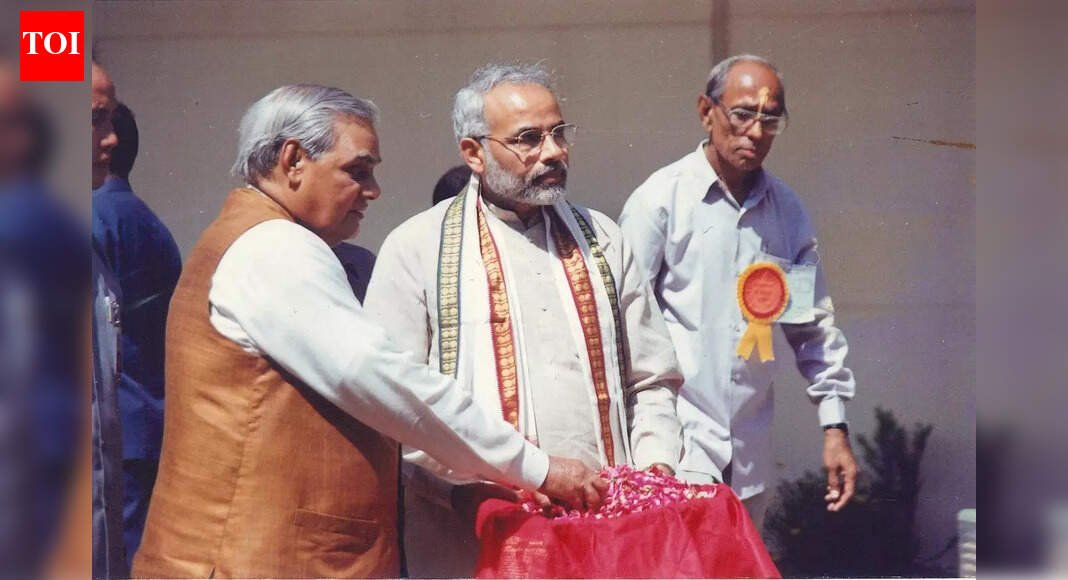
NEW DELHI: Prime Minister Narendra Modi on Thursday kicked off the Somnath Swabhiman Parv, sharing pictures from his visit to the Somnath temple in 2001 and describing the year-long celebrations as a tribute to country’s civilisational resilience.In a post on X, the Prime Minister said the Somnath Swabhiman Parv is about remembering “the countless children of Bharat Mata, who never compromised with their principles and ethos,” even in the most challenging times.“Jai Somnath! Somnath Swabhiman Parv begins today. A thousand years ago, in January 1026, Somnath faced its first-ever attack. The attack of 1026 and the subsequent attacks couldn’t diminish the eternal faith of millions, nor break the civilisational spirit that rebuilt Somnath time and again,” PM Modi wrote.He added, “#SomnathSwabhimanParv is about remembering the countless children of Bharat Mata, who never compromised with their principles and ethos. However daunting the times were, their resolve remained unshaken and their commitment to our ethos unwavering.”The Prime Minister also shared glimpses from a programme held at Somnath on October 31, 2001, when the 50th anniversary of the inauguration of the Somnath temple was commemorated.“I am also sharing with you some glimpses of a program organized in Somnath on October 31, 2001. That was the year when we celebrated the 50th anniversary of the inauguration of the Somnath Temple, which was reconstructed in 1951. In 1951, that historic ceremony was held in the presence of the then President Dr. Rajendra Prasad Ji. The efforts of great personalities including Sardar Patel and KM Munshi Ji in the reconstruction of the Somnath Temple were extremely commendable,” he said.PM Modi noted that the 2001 programme was attended by several senior leaders, including then Prime Minister Atal Bihari Vajpayee and then Home Minister L. K. Advani.“In this program of the year 2001, the then Prime Minister Atal Ji and Home Minister Advani Ji and many dignitaries had participated. In the year 2026, we are also commemorating the 75th anniversary of the grand ceremony that took place in 1951!,” he added.The Somnath temple at Veraval in Gujarat was reconstructed in 1951, with the inauguration ceremony held in the presence of then President Rajendra Prasad, following efforts led by leaders such as Sardar Vallabhbhai Patel and K. M. Munshi.PM Modi is scheduled to visit the Somnath Temple on January 11 to take part in the Somnath Swabhiman Parv celebrations.The Somnath Swabhiman Parv will be observed from January 8 to January 11, during which a series of programmes highlighting India’s spiritual heritage, cultural pride and social values will be organised.

[ad_2]

Source link

Who was Agnivesh Agarwal? Anil Agarwal’s son & Vedanta Group director passes away at 49; PM Modi offers condolences

[ad_1]

Who was Agnivesh Agarwal? Anil Agarwal’s son & Vedanta Group director passes away at 49; PM Modi offers condolences

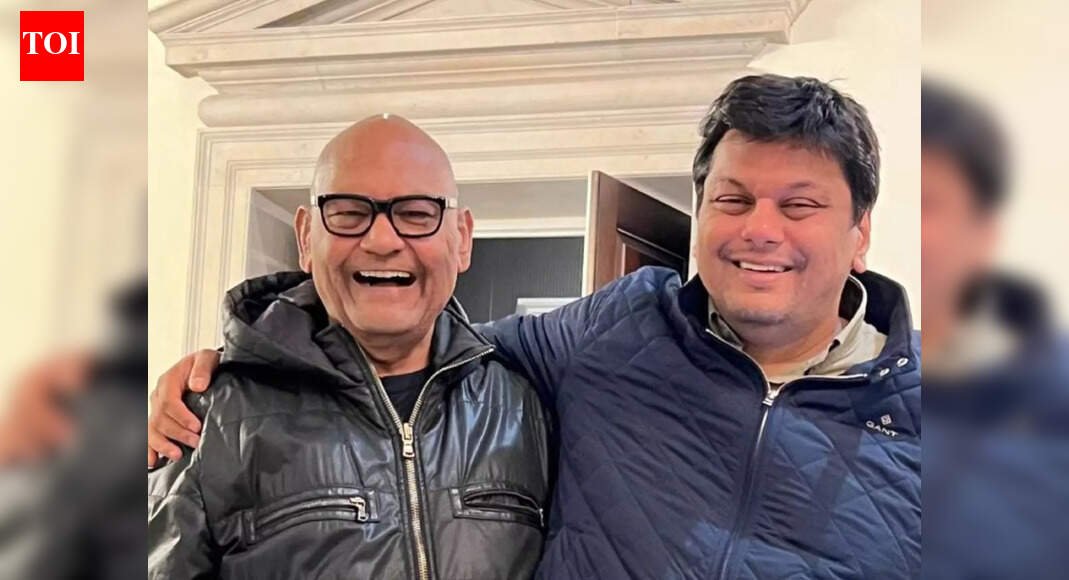
PM Narendra Modi, on Thursday, extended his condolences over the passing of Agnivesh Agarwal, the 49-year-old Vedanta Group director. Taking to X, PM Modi wrote, “The untimely passing of Shri Agnivesh Agarwal is deeply shocking and saddening. The depth of your grief is evident in this touching tribute. Praying that you and your family find continued strength and courage. Om Shanti. Agnivesh Agarwal, son of metals tycoon Anil Agarwal, passed away on Wednesday after suffering a cardiac arrest following a skiing accident in the United States. He had been receiving treatment at Mount Sinai Hospital in New York and was reported to be recovering before his sudden demise. Confirming the death, Anil Agarwal shared an emotional post on X, stating that his son had been “recovering well” before tragedy struck. “A sudden cardiac arrest snatched our son away from us,” he said, recalling Agnivesh’s life and journey.

Who was Agnivesh Agarwal?

Agnivesh was the son of metals and mining magnate Anil Agarwal, who grew Vedanta Resources from a small scrap metal business into a London-headquartered global conglomerate. Agnivesh served as the chairman of Talwandi Sabo Power (TSPL), a Vedanta subsidiary that runs a thermal power plant in Punjab. He was born in Patna on June 3, 1976. Agnivesh studied at Mayo College in Ajmer and went on to establish Fujairah Gold, a metals refinery in the UAE. He also held the position of chairman at Hindustan Zinc, acquired by Vedanta from the government in 2002, from November 2005 to February 2019, before taking charge of TSPL in May 2019. Remembering his son, Anil Agarwal said, “Agnivesh was many things – a sportsman, a musician, a leader. He studied at Mayo College, Ajmer, went on to set up one of the finest companies Fujeirah Gold, became Chairman of Hindustan Zinc, and earned the respect of colleagues and friends alike. Yet, beyond all titles and achievements, he remained simple, warm, and deeply human.”Anil Agarwal further addded that Agnivesh strongly believed in building a self-reliant India. He would often tell him, “Papa, we lack nothing as a nation. Why should we ever be behind?” They shared a vision to ensure that no child goes hungry, every child has access to education, every woman can stand on her own feet, and every young Indian has meaningful work. Anil had also promised Agnivesh that more than 75% of what they earn would be given back to society.

[ad_2]

Source link