Breaking News
The Mutual Fund Advisor: FD vs Mutual Funds – you are asking the wrong question!

[ad_1]

The Mutual Fund Advisor: FD vs Mutual Funds - you are asking the wrong question!
An FD gives you a fixed interest rate, a promise from the bank that you’ll get your money plus that interest back at maturity. (AI image)

Over the long run, mutual funds usually outpace FDs—but only if you use each for the right goal, time frame and temperament.You talk about mutual funds and there’s always someone who will raise their hand and ask, “Simple batao – FD better hai ya mutual fund?” What they want is a one-word verdict: “Mutual funds!”, with guaranteed double-digit returns. Real life is less dramatic. FDs and mutual funds are not enemies. They’re tools. One is a screwdriver, the other is a power drill. If you don’t tell me what you’re trying to build, “Which is better?” is the wrong question.FD comfortAn FD gives you a fixed interest rate, a promise from the bank that you’ll get your money plus that interest back at maturity, and the comforting feeling that your money is “growing nicely”. The problem is that this comfort is partly an illusion. The FD rate—say 7 per cent—looks neat on paper, but three things quietly chew it up: tax, inflation and time.Tax hits first. FD interest is taxed at your full slab. If you’re in a high tax bracket, that attractive 7 per cent may become more like 4.9 per cent after tax. Then comes inflation. If your cost of living is rising at roughly the same rate as your post-tax FD return, you’re not growing; you’re running to stay in the same place. Over 10–15 years, even a small gap between inflation and your FD return turns into a big shortfall.Put ₹10 lakh in an FD at 7 per cent for 10 years. Before tax, it becomes about ₹19.7 lakh. After tax, depending on your slab, it may be closer to ₹16 lakh in your hands. Now think what that amount will actually buy you 10 years later.I’m not saying FDs are bad. They’re excellent for short-term money and essential when capital safety is non-negotiable. But as an engine for long-distance wealth creation, they are underpowered.Equity engineWhen I compare FDs and mutual funds, I mainly mean equity mutual funds, because comparing FDs with pure debt funds is just a debate between two slow scooters. An equity mutual fund gives you ownership in a large basket of companies. There is no guaranteed return in any specific year, but over longer periods, a well-chosen equity fund has a high probability of outperforming an FD.Year to year, it can look ugly. A fund can be up 25 per cent one year and down 15 per cent the next. Stretch your view to 10–15 years, and the jagged line of an equity fund has historically sloped much steeper than the flat-ish FD line.Put the same Rs 10 lakh as a lump sum into a decent diversified equity fund. Over 10 years, using an illustrative 12 per cent average return, it could reasonably grow to around Rs 31 lakh. The gap between this and the FD outcome is what “mutual funds usually beat FDs in the long term” actually means.Two things drive this: first, compounding at a higher average rate—an extra 3–4 percentage points a year makes a huge difference over 15–20 years. Second, tax efficiency—mutual fund gains are taxed differently from FD interest, especially over the long term, and goal-based withdrawals can keep the tax bite modest.At Value Research Fund Advisor (VRFA), when we build goal based plans with mutual funds, asset allocation becomes the key. Think of it as choosing where your money sits on the comfort to growth spectrum. The same goal can look very different depending on whether the money is entirely in debt mutual funds, entirely in equity funds, or in a sensible mix of the two. The long term difference, even with reasonable assumptions, is often large enough to change how people think about “risk”.Discomfort premiumIf equity funds are so powerful, why doesn’t everyone dump FDs and rush into them? Because mutual funds come with discomfort, and humans hate discomfort. With FDs, your balance only goes up—slowly, but up. With equity funds, it goes up, down, sideways and then suddenly up again. The price of a higher long-term return is short-term volatility.Over one to three years, a good equity fund can easily underperform FDs. You may see a 10–30 per cent fall on paper during a bad phase. If your goal is very near—next year’s school fees, a home down payment in two years—you don’t have the time to wait for a recovery. For such goals, the FD “wins” not on return, but on suitability.That’s why, inside VRFA, we never chant “equity mutual funds are always better than FDs or similar options”. For each goal, we ask: how far away is it, can this money afford to bounce around in value, and what is your genuine risk tolerance? Only then do we decide the asset allocation between equity & debt funds. The aim is not to eliminate safety. It is to put safety in the right place, and not expect it to do the job of long term wealth creation.Real returnsMost comparisons stop at something like “FD returns 7 per cent, equity fund returns 12 per cent”. That’s half the story. You really need to think in three layers. First is the nominal return—the number on the brochure. Second is the post-tax return—what’s left after the government takes its share. Third is the real return—what remains after both tax and inflation. That third number decides whether you can truly afford your future.For instance, suppose inflation over the next 10 years averages 6 per cent. Your FD, after tax, effectively earns about 4.9 per cent. Your real return is roughly minus 1 per cent. A well-chosen equity fund that averages 12 per cent over the same period, even after tax, may give you a real return of about 5 per cent. Over time, that difference is the gap between “I’ll be okay” and “I wish I’d done this differently”.At VRFA, we build the portfolio with inflation in mind. Some part of the money has to beat it, or the goal keeps moving away. That is why equity funds are in the mix, if your risk appetite supports it. The question is not “How much will this grow?” It is “Will this be enough when the time comes?” On that test, playing it safe all the way usually does not work for long term goals.Right mixSo, do mutual funds really beat FDs over the long term? If you use equity funds mainly for long-term goals of 10 years or more, combine them with the right amount of debt for stability, and behave sensibly during bad years, then yes—historically they have outpaced FDs by a wide margin more often than not.But if you treat mutual funds as a two-year “FD upgrade”, jump in and out based on market noise, or use 100 per cent equity for a two-year goal, then no, they probably won’t beat an FD for you, and the funds will be blamed for behaviour that wasn’t their fault.Inside VRFA, we don’t aim to create heroic all-equity plans for everyone and say, “Dekho, kitna high return ban sakta hai.” We build portfolios where lower volatility debt funds handle short-term or non-negotiable money, while equity and hybrid mutual funds work together for medium- and long-term goals. In the end, the right question isn’t “Are mutual funds better than FDs?” It is: for this goal, at this time, with my temperament, what mix of safety and growth options gives me the best chance of success? Once you start asking that, the answer stops being a slogan and starts becoming a proper plan.(Sneha Suri is Lead Fund Analyst – Value Research’s Fund Advisor) (Disclaimer: Recommendations and views on the stock market, other asset classes or personal finance management tips given by experts are their own. These opinions do not represent the views of The Times of India)

[ad_2]

Source link
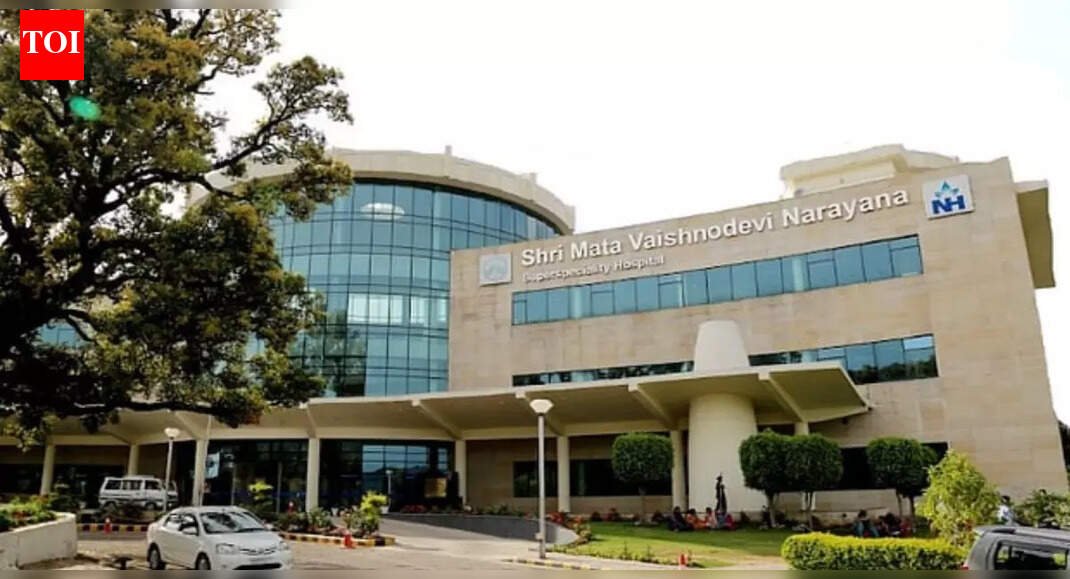
Explained: Why NMC shut down the MBBS course at Vaishno Devi medical college in J&K

[ad_1]

Explained: Why NMC shut down the MBBS course at Vaishno Devi medical college in J&K

On January 6, 2026, months after granting conditional approval to start an MBBS course, the National Medical Commission (NMC) withdrew permission for the Shri Mata Vaishno Devi Institute of Medical Excellence (SMVDIME) in Jammu and Kashmir’s Reasi district, following a regulatory process punctuated by inspections, complaints and, eventually, political and public unrest.At its core, the NMC decision rests on regulatory non-compliance. The controversy that followed has layered that decision with questions of governance, merit, religion and student protection.

How the college got approval

SMVDIME applied to establish a new medical college with an intake of 50 MBBS seats for the 2025-26 academic year under public notices issued by the NMC on December 5 and December 19, 2024, according to PTI.After processing the application, the Medical Assessment and Rating Board (MARB), an autonomous board under the NMC, granted a Letter of Permission (LoP) on September 8, 2025. The permission allowed the institute to start the MBBS course, subject to strict conditions.These included maintaining minimum standards of infrastructure, faculty and clinical material, permitting surprise inspections, furnishing accurate information and rectifying deficiencies before renewal, the MARB order said. The regulator also reserved the right to withdraw or cancel permission in case of misrepresentation or non-compliance.

Complaints and surprise inspection

Following the issuance of the LoP, the NMC received multiple complaints alleging serious shortcomings at the college. These included inadequate infrastructure, insufficient clinical material, a shortage of qualified full-time teaching faculty and resident doctors, and low inpatient and outpatient numbers, PTI reports.Acting under Section 28(7) of the NMC Act, 2019, which empowers the regulator to conduct surprise inspections without prior notice, a team of assessors visited the institute on January 2, 2026.The inspection formed the basis of the adverse findings that followed.

What the inspection found

According to the MARB assessment report, the deficiencies were extensive and cut across core requirements.Faculty strength was significantly below prescribed norms, with a 39% shortfall in teaching faculty and a 65% deficiency in tutors, demonstrators and senior residents. Clinical services were also found to be far below standards, with outpatient department attendance of 182 at 1 pm against a required 400, and bed occupancy at 45% against the mandated 80%.Intensive care units had around 50% average occupancy, while the number of deliveries averaged about 25 per month, a figure the MARB termed “grossly deficient”. Several practical laboratories and the research laboratory were not available. Lecture theatres did not meet minimum standards, the library had 744 books against a requirement of 1,500 and only two journals against the mandated 15.The report also noted the absence of an antiretroviral therapy centre and facilities for managing multidrug-resistant tuberculosis. Only two operation theatres were functional against a requirement of five, with no minor operation theatre in the outpatient area and inadequate equipment for para-clinical subjects. Some departments lacked separate male and female wards.

The regulatory basis for withdrawal

Citing Chapter V, Regulation 29 of the Establishment of Medical Institutions, Assessment and Rating Regulations, 2023, which treats non-compliance as an offence liable to penalty, the MARB categorised the deficiencies as statutory non-compliance.After considering the assessment report, the commission concluded that the institute had failed to meet the minimum standard requirements specified in the Undergraduate Medical Education Regulations, 2023. With the approval of the NMC chairperson, the MARB decided to withdraw the LOP with immediate effect, PTI said.In addition, the regulator decided to invoke the performance bank guarantee furnished by the college, underscoring the financial consequences of regulatory failure.

What happens to the students

To ensure that students are not academically displaced, the MARB order directed that all students admitted during counselling for the 2025-26 academic year be accommodated in other medical institutions in Jammu and Kashmir as supernumerary seats.“This means no admitted student will lose an MBBS seat due to the withdrawal decision,” PTI reports. The implementation of the relocation will be handled by the Union Territory’s designated health and counselling authorities, who have been formally informed.

Protests and political response

Parallel to the regulatory action, the college became the focus of protests by the BJP-supported Shri Mata Vaishno Devi Sangharsh Samiti, a conglomeration of right-wing organisations. The agitation was triggered by the composition of the inaugural MBBS batch, which included 42 Muslim students, seven Hindu students and one Sikh, admitted through NEET.The Samiti demanded either the expulsion of non-Hindu candidates or the closure of the college, according to IANS.Jammu and Kashmir Chief Minister Omar Abdullah publicly defended the admissions, stating that they were strictly merit-based. “Those children worked hard to get their seats. No one did them any favour,” he said, according to PTI. He added that if the prevailing atmosphere made the institution unsafe for students, they should be adjusted elsewhere.“We do not want to send them to a place where so much politics is being done. Close that medical college. That medical college is not worth opening,” Abdullah said.He also reiterated that SMVDIME is not a minority institution and receives grants from the Jammu and Kashmir government.

Security and administrative response

Following protest calls, security around the Civil Secretariat was tightened, with hundreds of police personnel deployed to prevent any law and order situation. Officials reiterated that admissions had been conducted strictly on merit and in accordance with prescribed norms.Union Minister of State Dr Jitendra Singh said the Lieutenant Governor, who is also the chairman of the Shri Mata Vaishno Devi Shrine Board, was competent to address the issue and expressed hope that steps were being taken to resolve it, according to IANS.

Why the shutdown happened

Despite the political and public fallout, the formal reason for the shutdown remains regulatory. The NMC’s decision was driven by documented deficiencies in faculty, infrastructure and clinical exposure, identified through a surprise inspection and assessed under existing law.The student relocation order has prevented immediate academic loss. What remains unresolved is the future of the institution itself, and whether it can address the deficiencies and seek fresh approval.For now, the episode stands as a case study in how regulatory enforcement, institutional preparedness and local politics can converge, with students placed at the centre of the fallout.

[ad_2]

Source link

Rupee strengthens! Indian currency surges 26 paise against US dollar; at 89.92 in early trading

[ad_1]

Rupee strengthens! Indian currency surges 26 paise against US dollar; at 89.92 in early trading

The rupee showed slight improvement against the US dollar on Wednesday, surging 26 paise to reach 89.92 in early trading. This came due to a weaker dollar globally and falling crude oil prices. The currency had already shown positive movement on Tuesday, ending its four-day decline.Starting the day at 90.20, the rupee kept getting stronger at the interbank foreign exchange. This follows Tuesday’s gain of 12 paise, when it closed at 90.18 against the US dollar.Anil Kumar Bhansali from Finrex Treasury Advisors LLP, was quoted by PTI saying, “The rupee opened firmer even as (US President) Donald Trump continues to threaten India with more tariffs. Exporters are expected to continue selling at high of the day on cash/spot basis while importers will buy the dips and more if the fall is close to 90 for the dollar.”The dollar’s strength against other major currencies showed a small decline, with the dollar index dropping 0.05 percent to 98.52. Global oil prices also fell, with Brent crude futures trading 1.05 percent lower at $60.06 per barrel.However, Indian stock markets showed decline. The Sensex fell by 169.64 points to 84,909.30, while the Nifty decreased by 42.35 points to 26,128.90 in early trading. Foreign investors continued their selling streak, removing Rs 107.63 crore worth of stocks on Tuesday.

[ad_2]

Source link

Gold price prediction today: Where are gold, silver prices headed? Here’s the outlook

[ad_1]

Gold price prediction today: Where are gold, silver prices headed? Here's the outlook
Another move toward new record highs in gold would likely be triggered if geopolitical tensions broaden. (AI image)

Gold price prediction today: Gold and silver prices may see volatility with some consolidative bias in the coming days, says Maneesh Sharma, AVP – Commodities & Currencies, Anand Rathi Shares and Stock Brokers. He shares his outlook for gold and silver prices in the coming days:

  • Gold price surpassed $4,450 in the current week after falling almost 4 % in the last week with the precious metal extending its upside today amid a renewed surge in geopolitical risk. This came with the United States (US) capture of Venezuelan President Nicolas Maduro.
  • This action came without the approval of Congress which had also prompted global outcry. Trump added that the US will be running Venezuela until it can do a safe, proper, and judicious transition. A combination of market expectations of lower interest rates in the US and growing geopolitical frictions has underpinned support from precious metals over the last few sessions.
  • President Donald Trump warned of another strike if Caracas resists US efforts to open up its oil industry and stop drug trafficking, and suggested possible action against Colombia and Mexico over illicit drug flows
  • Russia announced the revision of its stance at the peace talks with Ukraine, after an alleged drone attack in one of President Vladimir Putin’s residences, while US President Trump has elevated his tone against Iran since last week.
  • Federal Reserve Bank of Minneapolis President Neel Kashkari said on Monday that interest rates may be close to a neutral level for the US economy, leaving it to the incoming data to guide the central bank’s actions
  • Bullion hit an all-time high of $4,549.92 on Dec. 26. with leading banks forecast further gains this year, especially with the Fed expected to deliver additional rate reductions and Trump reshaping the US central bank’s leadership
  • Silver rose as much as 4% since the start of the week. In China, LONGi Green Energy Technology Co. said it would begin substituting base metals for silver in its solar cells in the latest move by the industry to mitigate the surging cost of the white metal.
  • Traders are turning their attention to a slew of US economic data due this week, headlined by the December jobs report on Friday.

Gold & Silver Price Outlook

Gold: Weekly view – Cautious upside with Consolidative biasSilver: Weekly View – Volatile

  • In the near term, there’s concern that a broad rebalancing of commodity indexes might put pressure on prices. The record-breaking rallies in gold and silver could push passive tracking funds to sell some contracts to match new weightings, beginning Thursday this week.
  • Also Major commodity indices are set to sell a portion of their gold holdings based on the end-2025 price and their 2026 weight targets, potentially creating some turbulence in the short term
  • Silver stands at risk of highly volatile moves in the medium term as exchanges may raise margin money again in case prices continue to trend upwards in the near term as CDE (Chicago Derivative Exchange) raised margin money twice for silver by 25% in the last month.
  • Meanwhile another move toward new record highs in gold would likely be triggered if geopolitical tensions broaden further or if incoming US data reinforces expectations that the Fed will have to ease more aggressively than currently priced.

(Disclaimer: Recommendations and views on the stock market, other asset classes or personal finance management tips given by experts are their own. These opinions do not represent the views of The Times of India)

[ad_2]

Source link

134-year-old record shattered: Australia create history in Ashes, achieve rare Test feat | Cricket News

[ad_1]

134-year-old record shattered: Australia create history in Ashes, achieve rare Test feat
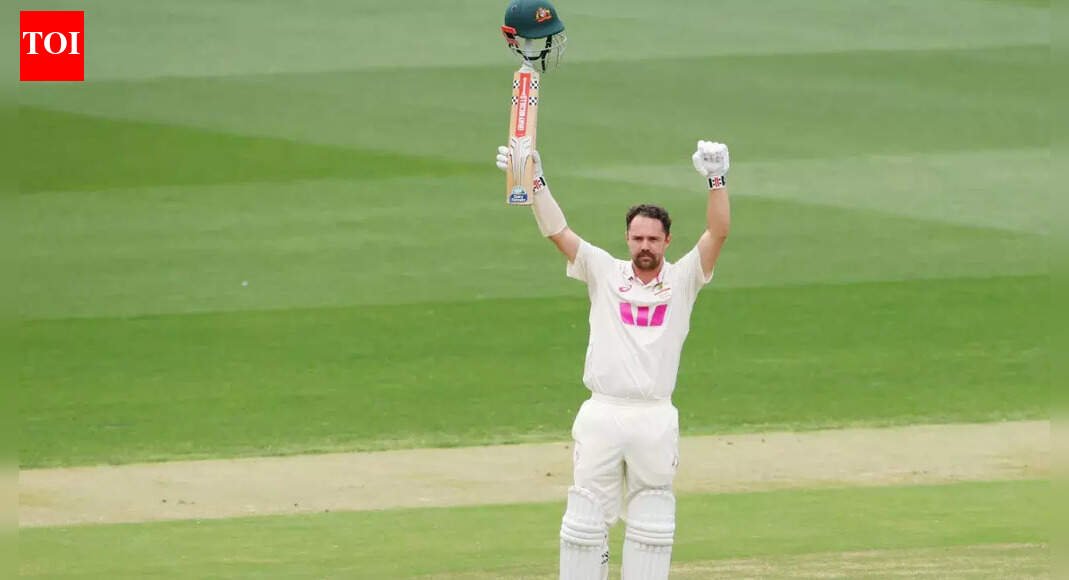
Travis Head scored a blistering 163 in the SCG Test (Getty Images)

NEW DELHI: Australia etched their name into a rare 134-year-old chapter of Test history on Day 3 of the fifth Ashes Test at the Sydney Cricket Ground, producing a batting effort unmatched in the rivalry since the 19th century. Australia, pushing for a 4-1 series victory after the shock defeat at the MCG in the Boxing Day Test, are firmly in control in the fifth and final Test.Smith registered the 37th Test century of his career and remained unbeaten on 129 at stumps, following Travis Head’s blistering 163 earlier in the innings.

Usman Khawaja’s retirement speech: ‘I want the journey for the next Usman Khawaja to be easier’

Australia closed the third day on 529 for 7, holding a commanding first-innings lead of 134 runs after England were dismissed for 384 despite Joe Root’s sublime 160.What made Australia’s innings truly historic was the sheer consistency across the batting order. The hosts stitched together seven partnerships of 50 or more runs, a feat achieved only once before in the 134-year history of Test cricket — by India at The Oval in 2007 under Rahul Dravid, in a match remembered for Anil Kumble’s lone Test century. Australia fell just short of equalling that benchmark, with the lone sub-50 stand being the 27-run partnership between Alex Carey and Smith.

Most 50+ partnerships an innings in Ashes

Team 50+ Partnerships in an Innings Venue Year
Australia 7 SCG 2025
England 6 Adelaide 1892
England 6 Brisbane 1928
Australia 6 Brisbane 2006
Australia 6 Brisbane 2025

In the long history of the Ashes, seven half-century partnerships in a single innings had never been recorded until now. The previous best in the contest dated back to 1892, when England managed six such stands at Adelaide — a record that stood untouched for 134 years. Only four other Ashes innings have featured six 50-plus partnerships, underlining the rarity of Australia’s effort at the SCG.

[ad_2]

Source link

Trump tariffs’ Supreme Court test likely Friday: Legality of emergency powers under scrutiny; global markets on edge

[ad_1]

Trump tariffs' Supreme Court test likely Friday: Legality of emergency powers under scrutiny; global markets on  edge

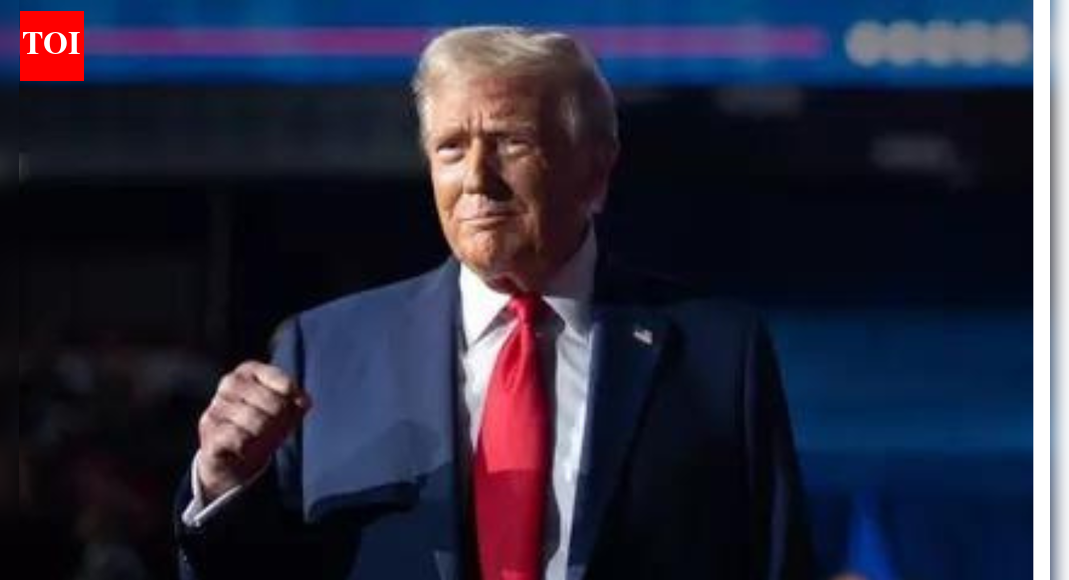
The US Supreme Court is likely to announce its final ruling on President Donald Trump’s global tariffs on Friday, with regards to its legality that has put global economies on edge. According to Reuters, the court, which has a 6-3 conservative majority, will also address cases involving voting rights, conversion therapy bans, and future matters concerning transgender athletes and Federal Reserve leadership.

Donald Trump Says PM Modi ‘Not Happy With Me’ Over Higher Russian Oil Tariffs

The last hearing on tariffs was in November, when, both conservative and liberal justices questioned the legality of using a 1977 emergency powers law to impose trade restrictions. Trump has defended his actions strongly on social media, stating “Because of Tariffs, our Country is financially, AND FROM A NATIONAL SECURITY STANDPOINT, FAR STRONGER AND MORE RESPECTED THAN EVER BEFORE.”The US president used the International Emergency Economic Powers Act to tackle what he called trade deficit emergencies. He also applied it to pressure China, Canada, and Mexico to help fight fentanyl trafficking. Trump recently expressed worry about possibly losing the case, calling such an outcome a “terrible blow” to the United States.The court is also weighing other significant matters. In October, they heard arguments about the Voting Rights Act’s Section 2, which protects minority voting power. The conservative majority seemed likely to limit this protection. They also considered a challenge to Colorado’s ban on conversion therapy for LGBT minors, with justices appearing to favor a Christian counselor’s free speech argument.Looking ahead, the court will hear cases about transgender athletes in school sports on January 13. Later this month, they’ll also consider Trump’s unprecedented attempt to remove Federal Reserve Governor Lisa Cook, a case that could affect the central bank’s independence.

[ad_2]

Source link

Trump ‘sir’ dials wrong number on India’s Apache purchase

[ad_1]

Trump 'sir' dials wrong number on India's Apache purchase

The TOI correspondent from Washington: US President Donald Trump pulled another hyperbole out of his MAGA hat on Tuesday, claiming that India had ordered 68 Apache attack helicopters from the United States, the delivery of which was so slow that Prime Minister Narendra Modi deferentially sought a meeting with him to raise concern over the delays. A review of official contracts, delivery records, deployment details and conversations with military and diplomatic sources shows that the claim does not align with facts: India ordered only 28 Apache helicopters in total, and as of December 2025, all of them have been delivered.

Apache AH-64e And Prachand Give India A Two-Front Air Strike Edge From Deserts To High Himalayas

The discrepancy reinforces a pattern critics have frequently noted in Trump’s public remarks where numbers are often inflated and timelines simplified to emphasise US leverage or personal involvement, like for instance in his persistent claim that he forced India and Pakistan into a truce with threat of tariffs. In this case, while delivery delays were real and did frustrate New Delhi, the scale described by Trump was not; neither was his claim that PM Modi asked “Sir, may I see you, please?” to raise the issue.In Trump’s recalls, everyone – even foreign leaders (except Putin and Xi Jinping) – is always calling him “sir.”India’s acquisition of the Boeing AH-64E Apache Guardian helicopters took place in two distinct phases, not one massive order. The first deal was signed in September 2015, during the final months of the Obama administration, when India signed an agreement to buy 22 Apaches for the Indian Air Force (IAF) in a contract worth about $2.2 billion. These helicopters were delivered on schedule, with the final units arriving by 2020 during the first Trump administration. They were inducted into two frontline squadrons and quickly became a central part of India’s attack helicopter capability.The second deal was signed in February 2020 during Trump’s visit to India. This follow-on contract, valued between $600 million and $800 million, covered six Apaches for the Indian Army Aviation Corps. This is the order that experienced repeated delays and became a talking point in US and Indian political discussions, including PM Modi flagging it during his visit to the White House in February 2025, one of many topics that were on the agenda. Combined, both deals amount to 28 helicopters—less than half of the figure cited by Trump.While the Air Force’s Apaches arrived on time, delivered at the end of Trump’s first term, the Army’s six helicopters were significantly delayed. Deliveries were initially scheduled to begin in early 2024. Instead, the first batch reached India only in July 2025—about 15 months late. The final three helicopters arrived in December 2025, completing the order nearly two years behind schedule.Several factors contributed to the delays. Boeing’s Apache production line in Mesa, Arizona, was affected by post-pandemic supply chain disruptions, including shortages of engines, gearboxes, and specialised electronics. In addition, India reportedly had a relatively low priority ranking within the US defence priorities and allocations system (DPAS) in 2024, meaning other customers—including the US. Army—were ahead in the queue for certain components.There were also technical and logistical complications. Boeing briefly paused some Apache deliveries worldwide due to electrical and power-generation concerns that required additional safety testing. In a final twist, the last batch bound for India in November 2025 had to turn back mid-flight after Turkey denied overflight clearance to the Antonov-124 transport aircraft carrying the helicopters, adding several more weeks of delay.Also read: ‘If they don’t help on Russian oil issue…’; Donald Trump’s new tariff warning to India; praises PM ModiThese genuine frustrations likely form the basis of Trump’s comments, but the numerical exaggeration undermines their credibility. Is it possible that Trump may have conflated two separate Indian helicopter purchases from Boeing: the AH-64E Apache attack helicopter and the CH-47F Chinook heavy-lift helicopter? Both deals were signed around the same time, both involved Boeing (for which Trump claimed to be the all-time best salesman), but they still add up to only 43, since India ordered 15 Chinooks, all of which have been delivered between 2019 and 2020. There is no record in India’s ministry of defence or US foreign, military Sales (FMS) notifications of any additional Apache orders beyond the 28 units. While the Army originally projected a requirement for 39 Apaches, no new contracts have been signed.In fact, despite the Apache’s formidable firepower, India’s experience with dodgy US supply chains issues and increasingly mercurial strategic shifts vis-a-vis China and Pakistan is such that it is now peeling away from American, and for that matter, any foreign dependency. Instead, New Delhi is increasingly prioritising indigenous solutions under its “Make in India” policy. In this case, it is leaning on the HAL Prachand Light Combat Helicopter. A lighter chopper optimized for extreme altitudes, Prachand can operate where the heavier Apache struggles, including at heights above 20,000 feet like in Siachen. India plans to induct 156 Prachand helicopters across the Army and Air Force, gradually reducing reliance on foreign attack helicopters.The emerging strategy is clear: Apaches will remain India’s heavy strike platforms in plains and desert sectors, but the future of India’s rotary-wing combat power will be increasingly domestic. Trump’s claim of 68 helicopters may have overstated the scale, but it has inadvertently highlighted why India is determined to avoid dealing with a maverick.

[ad_2]

Source link

Top stocks to buy today: Stock recommendations for January 7, 2026 – check list

[ad_1]

Top stocks to buy today: Stock recommendations for January 7, 2026 - check list
Top stocks to buy (AI image)

Stock market recommendations: According to Mehul Kothari, DVP – Technical Research, Anand Rathi Shares and Stock Brokers, the top stocks to buy today (January 7, 2026) are Varun Beverages Ltd, Havells, and IREDA. Let’s take a look:Varun Beverages Ltd – Trend Resumption After BreakoutBuy near: ₹490–₹485 | Stop Loss: ₹460 | Target: ₹550 | Time Frame: 30–60 DaysVBL has witnessed a decisive trendline and triangle breakout, indicating resumption of the primary uptrend. Momentum remains supportive, with RSI breaking out and hovering near 55, reflecting improving strength without overbought conditions. MACD bullish crossover further reinforces the positive bias. Additionally, the stock has closed above its quarterly VWAP, validating the breakout from a medium-term institutional perspective.Havells – Breakout with Improving Momentum StructureBuy near: ₹1455–₹1430 | Stop Loss: ₹1375 | Target: ₹1560 | Time Frame: 30–60 DaysHavells has shown a clear price trendline breakout along with an RSI range breakout, signalling strengthening technical structure. Momentum indicators are supportive, with RSI trending higher and MACD confirming a bullish crossover. The stock has also closed above its 10- and 20-DEMA and reclaimed the monthly VWAP, enhancing the credibility of the emerging uptrend and reflecting improved institutional participation.Indian Renewable Energy Development Agency – Reversal from Double Bottom FormationBuy near: ₹145–₹142 | Stop Loss: ₹135 | Target: ₹162 | Time Frame: 30–60 DaysIREDA is displaying encouraging signs of a trend reversal after forming a well-defined double bottom pattern. The setup is supported by bullish divergence, indicating improving momentum. The stock has closed above its 10-DEMA and prior swing high, strengthening the bullish case. Additionally, RSI trendline breakout and MACD bullish crossover further improve the probability of continuation toward higher levels.(Disclaimer: Recommendations and views on the stock market, other asset classes or personal finance management tips given by experts are their own. These opinions do not represent the views of The Times of India)

[ad_2]

Source link
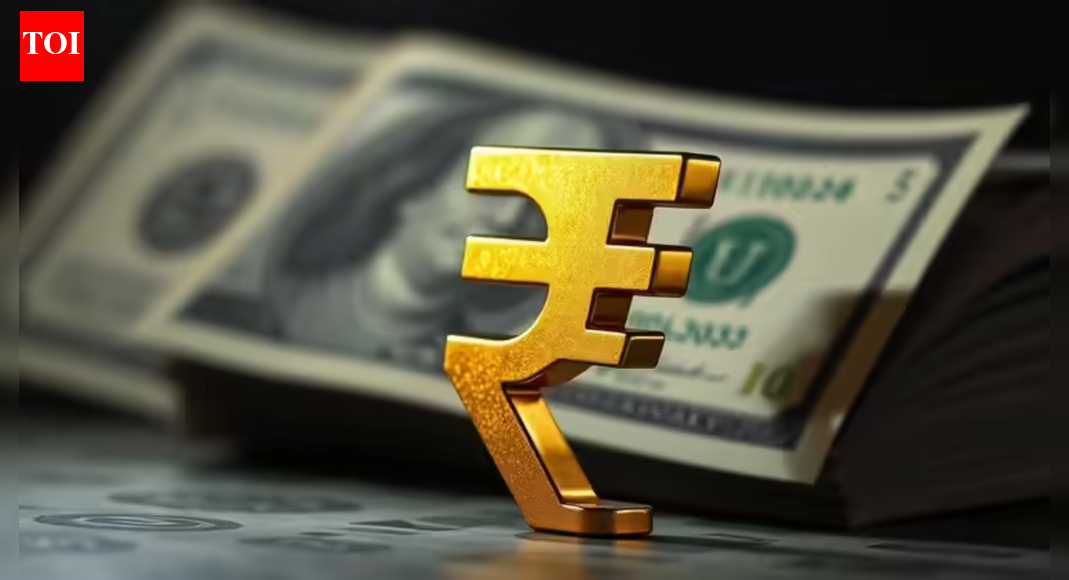
‘Ikkis’ box office collection day 6: Agastya Nanda and Dharmendra starrer walks the same path as ‘Tu Meri Main Tera Main Tera Tu Meri’, earns Rs 1.5 crore on its first Tuesday | Hindi Movie News

[ad_1]

'Ikkis' box office collection day 6: Agastya Nanda and Dharmendra starrer walks the same path as 'Tu Meri Main Tera Main Tera Tu Meri', earns Rs 1.5 crore on its first Tuesday
Agastya Nanda’s inaugural film ‘Ikkis’ has hit a rough patch at the box office, reportedly falling short of Rs 25 crore even after a week of release. The war drama, featuring the legendary Dharmendra in his swan song role, only managed to collect Rs THIS amount on day six. Read on.

Agastya Nanda‘s ‘Ikkis’ failed to impress the audience, and its box office collections are proof of the same. While both the makers and the audience had high hopes for the film, it ultimately did not meet their expectations. Even after six days since the release, the movie has not crossed the Rs 25 crore mark at the box office. Let’s take a look at how much it has earned on its sixth day.

‘Ikkis’ box office collection Day 6 (first Tuesday)

The war drama starring Amitabh Bachchan’s grandson, Agastya Nanda, opened to mixed reviews from the audience and the critics as well. According to the Sacnilk report, the film has earned Rs 1.5 crore at the box office on Day 6 since the release. With this, the total collection of the film stands at Rs 23 crore.

Day-wise collection

Day 1 [1st Thursday]: Rs 7 croreDay 2 [1st Friday]: Rs 3.5 croreDay 3 [1st Saturday]: Rs 4.65 croreDay 4 [1st Sunday]: Rs 5 croreDay 5 [1st Monday]: Rs 1.35 croreDay 6 [1st Tuesday]: Rs 1.50 croreTotal: Rs 23.00 crore

‘Ikkis’ vs ‘Tu Meri Main Tera Main Tera Tu Meri

The Kartik Aaryan and Ananya Panday starrer has witnessed the same fate as ‘Ikkis’ at the box office. The rom-com has been earning in lakhs in its second week. On day 13 (second Tuesday), the film earned Rs 25 lakh at the box office. The total collection of the film stands at Rs 32.5 crore.

‘Ikkis’ vs ‘Dhurandhar’

The Aditya Dhar directorial, ‘Dhurandhar’, has finally shown signs of slowing down towards the end of its fifth week. On day 33 since the release, the Ranveer Singh-led spy thriller raked in Rs 4.75 crore at the box office. The total score of the movie in India is Rs 781.75 crore.

More about ‘Ikkis’

Directed by Sriram Raghavan, ‘Ikkis’ is the last screen appearance of the late legendary actor Dharmendra. Apart from Agastya Nanda and Dharmendra, the film also stars Jaideep Ahlawat, Simar Bhatia, Sikander Kher, and Vivaan Shah. The movie was released in theaters on January 1, 2026.

[ad_2]

Source link