Breaking News
‘Illegal usurpers have pushed Bangladesh towards darkness’: Sheikh Hasina takes aim at Muhammad Yunus

[ad_1]
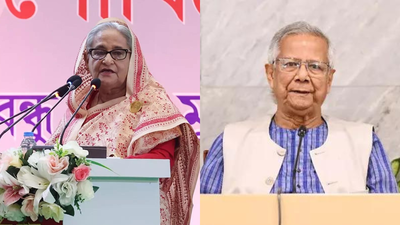
'Illegal usurpers have pushed Bangladesh towards darkness': Sheikh Hasina takes aim at Muhammad Yunus
Sheikh Hasina, Muhammad Yunus

DHAKA: Former Bangladesh PM Sheikh Hasina on Thursday accused the Muhammad Yunus-headed interim govt of pushing the country towards darkness, while her party Awami League said despite decades of peaceful coexistence, extremist groups are “emboldened” and minority communities are increasingly being branded as “political enemies”.“The masks and vile faces of the conspirators engaged in plots to destroy the country have already been exposed before you. You have seen how illegal usurpers, holding you hostage, have pushed the country towards darkness through limitless corruption, falsehood, and the intoxication of serving personal interests,” Hasina, who was ousted as PM following protests in 2024, said in her New Year message. Bangladesh is now associated with fear, and no country today looks upon Bangladesh and its people with respect, she said, days after important institutions were vandalised in the aftermath of the death of radical leader Sharif Osman Hadi, and minorities, particularly Hindus, were targetted.“Due to insecurity faced by foreign investors and donor groups, and because of chaotic conditions, the country’s economy has collapsed. We must all come together to save the country from this journey into darkness. Let us, as we welcome the New Year, pledge ourselves to that commitment of protecting the nation,” read the message posted on the X account of her party, which has been banned from political activities and contesting the election.“The distinct identity of Bangladesh and its historic struggle for liberation – of the Bangladesh for which my govt worked tirelessly with the determination to place it on a position of dignity in the world – are today being called into question… In the past, whenever such critical times have arisen, this nation has united, forgetting differences of class, religion, colour, language, and ethnicity, and has leapt forward to realise a collective dream.Meanwhile, Awami League on X issued a long post on how “like other minorities, the lives of Bangladesh’s Christian community (members) have been turned upside down” by extremist elements.“Since Yunus took charge (in 2024), reports show a sharp rise in Islamist extremism – leaving Christians increasingly targeted, threatened, and living in fear. In the run-up to Christmas and elections, extremist groups openly branded Christians as ‘enemies of Islam’, issuing threat letters to churches, schools, and missionary institutions,” it said.

[ad_2]

Source link
Retrenched staff to get reskilling fund within 45 days of losing job

[ad_1]

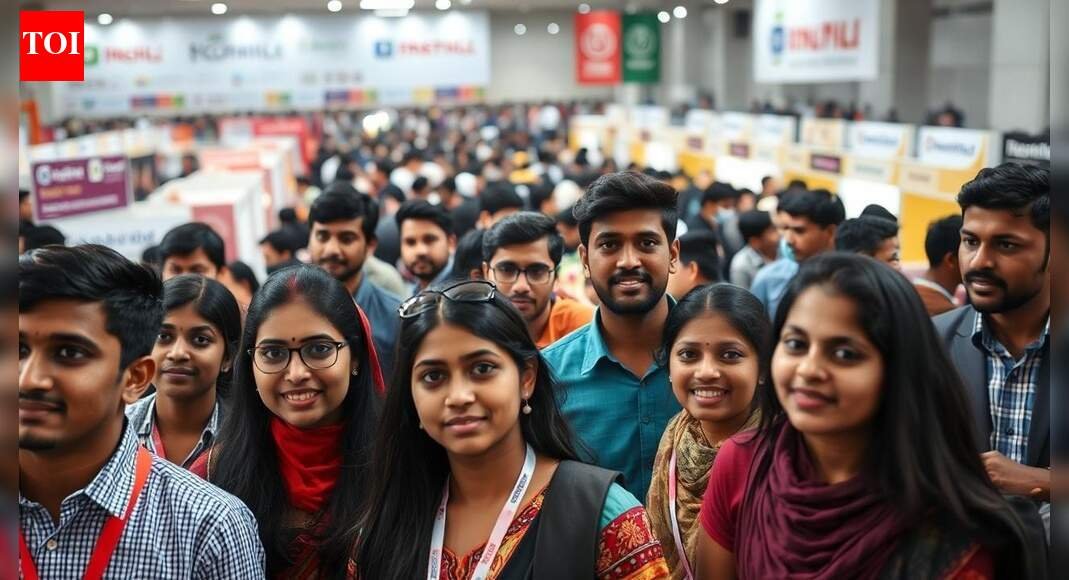
Retrenched staff to get reskilling fund within 45 days of losing job

NEW DELHI: An employee who loses a job is set to receive funds for reskilling within 45 days of retrenchment, the draft rules published under Industrial Relations Code, 2020 said. The amount – equivalent to 15 days of the worker’s last drawn wages – has been introduced under the new Industrial Relations Code as a move to ensure timely financial support for workers affected by job cuts and acknowledges the need for structured support in transitioning to new job roles. “The (fund) shall be transferred by (govt) electronically to each of the worker accounts within 45 days of retrenchment to enable him utilise that amount for reskilling,” said the draft rules, released for public comment. It said an employer who retrenches a worker must electronically transfer the amount to the proposed reskilling fund within 10 days. A govt official told TOI the fund for the first time ‘institutionalises skilling’ and recognises that when a job role becomes redundant, the system must support transition of workers and not only compensate for their exit. “The fund will be available for all levels and categories of workers as reskilling is a everyone’s need.” Besides, the rules also proposed the manner in which a retrenched employee will be given an opportunity for re-employment in case a similar vacancy arises in the establishment. An employer will need to prepare a list of employees being considered for retrenchment seven days prior and make it public. “When any vacancy occurs and there are workers retrenched within one year prior to the proposal for filling such vacancies, the employer shall, if such workers are citizens of India and have given willingness for employment, give them preference over others on the basis of service seniority,” the rules read.

[ad_2]

Source link

Govt proposes 90-day work a year for gig workers to get social security

[ad_1]

Govt proposes 90-day work a year for gig workers to get social security
Draft rules released for public review

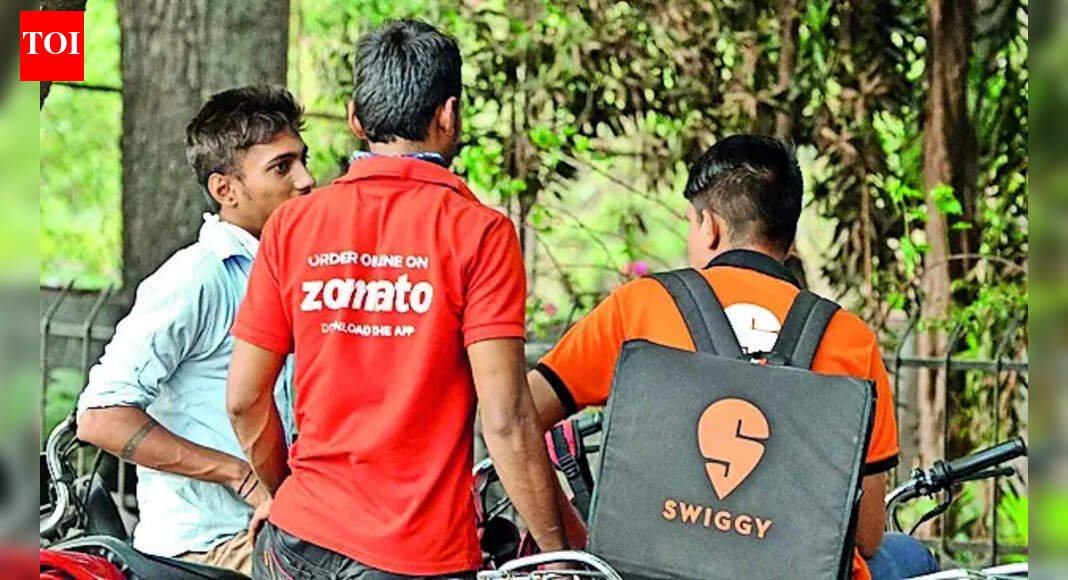
NEW DELHI: Gig and platform workers need to be engaged for at least 90 days with an aggregator within a financial year to avail social security benefits formulated under the new Social Security Code, draft rules released for public comment have proposed. For workers engaged with multiple aggregators, the threshold has been proposed at 120 days. The rules treat a worker as engaged from the day they start earning an income, regardless of the amount. If a worker is associated with multiple aggregators, their days of work will be counted cumulatively across all platforms. For example, if a gig or platform worker is engaged with three aggregators on a particular day, this will be counted as three days. The rules also clarified that an eligible gig or platform worker will include all such workers engaged by the aggregator directly or through an associate company, subsidiary or limited liability partnership or through a third party. The new labour codes mandate social security such as health, life and personal accident insurance for gig workers and other arrangements that govt may propose. Labour ministry has already started registering gig workers on ‘e-Shram’ portal and will be part of ‘Ayushman Bharat’. They may also be eligible for pension later based on contribution by both the platforms and gig workers. The rules said all gig workers above 16 years need to have Aadhaar-linked registration, with each aggregator sharing details of their gig and platform workers on Centre’s designated portal for generation of a universal account number, unless the worker is already registered. Every eligible registered gig and platform worker will be issued an identity card, digital or otherwise, the rules proposed. Besides, the draft notification has laid down the proposed composition of National Social Security Board, which will be responsible for assessing the number of gig workers and platform workers, identifying new types of aggregators and formulating welfare policies for them. The board will have five representatives nominated by govt from associations of unorganised sector workers and employers’ each. Gig workers will become ineligible for social security benefits once they turn 60, or if they haven’t worked for 90 days with an aggregator – or 120 days across multiple aggregators – in the previous fiscal.

[ad_2]

Source link

‘This is how greatness is built’: Former India cricketer backs Shubman Gill to follow Virat Kohli’s path | Cricket News

[ad_1]

'This is how greatness is built': Former India cricketer backs Shubman Gill to follow Virat Kohli's path

Former India all-rounder Irfan Pathan has publicly backed Shubman Gill, linking the young batter’s rapid rise to a lesson he received early in his own international career from Rahul Dravid. Speaking on JioHotstar, Pathan recalled how Dravid prepared him for the demands of international cricket when he broke into the Indian team as a teenager.

Can Virat Kohli chase down Sachin Tendulkar’s hundred hundreds?

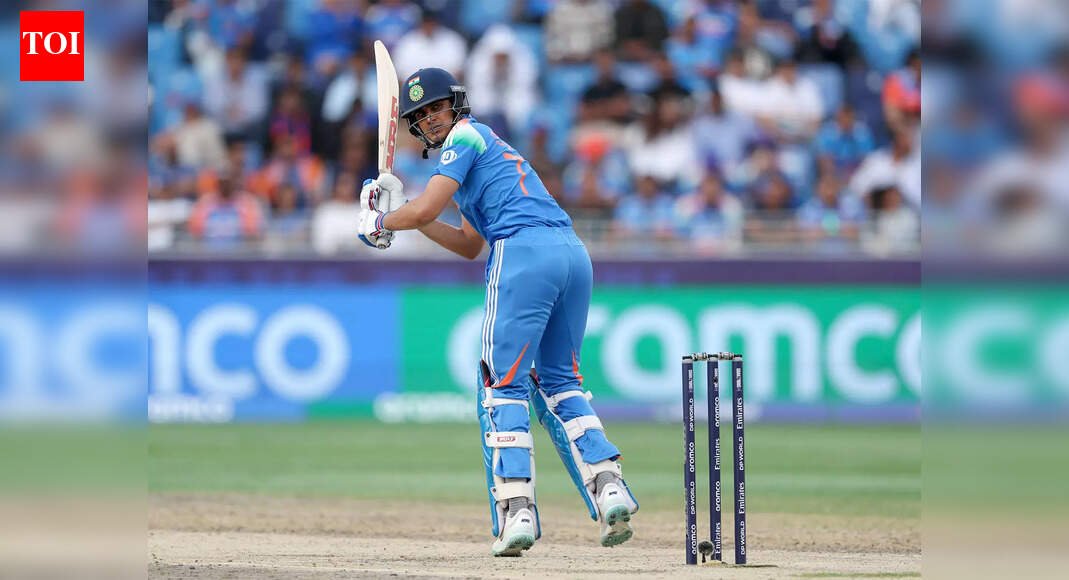
“When I entered the Indian team at the age of 19, the great Rahul Dravid told me that you have come to the team, it is good, but the things would get tougher from here. I asked what to do in case things get tough. He told me you would get used to it,” Pathan said. Pathan believes the same process of adjustment and growth now applies to Gill, particularly after being handed leadership responsibilities at a young age. “Same can be said for Gill. He became captain, in that England series, he increased his average and authority within the team. Then he got the ODI captaincy, when that happens, you get an opportunity to grow a lot,” he added. Gill’s 2025 began steadily in the ODI format, with consistent returns in bilateral series before playing a key role in India’s ICC Champions Trophy triumph. He finished the tournament with 188 runs, highlighted by a century against Bangladesh. The defining phase of Gill’s year, however, came during his first full Test tour of England. With Rohit Sharma, Virat Kohli and Ravichandran Ashwin unavailable, the burden of leadership fell heavily on the young Test captain. Gill responded with a historic series, scoring 754 runs in five Tests at an average of 75.40, including four centuries and a career-best 269. Pathan also addressed the weight of comparisons that follow elite Indian batters across generations. “He has a lot of talent. There will be always comparisons. Virat was compared with Sachin (Tendulkar), and now Gill is being compared to Virat, who has scored those 25,000–30,000 runs. I think he is fully capable of it. He has a fine range of shots,” Pathan said. Gill’s only notable setback came in T20 internationals, where a run of modest returns saw him score 291 runs in 15 innings at an average just over 24 in 2025, eventually missing out on selection for India’s T20 World Cup squad. Pathan views that phase as part of a broader learning curve. “The more responsibility and challenges he gets, he will grow more as a cricketer. I have seen that he is always ready for cricket. Always willing to learn. He has that attitude in him,” he said.

[ad_2]

Source link

Aravalli-like row in Bengaluru: SC panel visit today | India News

[ad_1]

Aravalli-like row in Bengaluru: SC panel visit today

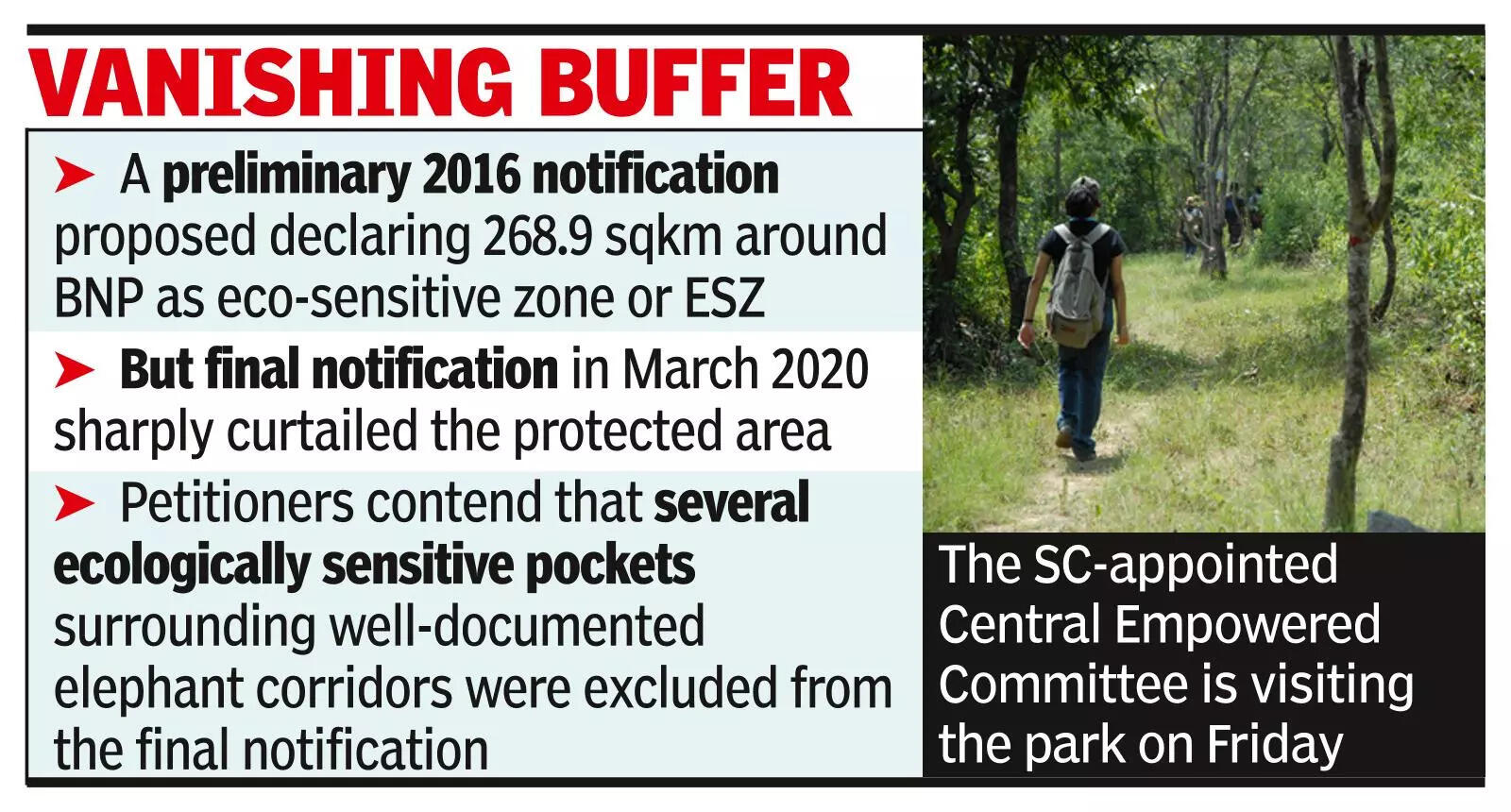
BENGALURU: Following a dispute mirroring the Aravalli controversy, members of a Supreme Court-appointed panel will inspect Bannerghatta National Park Friday after a plea against a 2018 govt move to cut the eco-sensitive zone (ESZ) around Bengaluru’s green backyard. The park is facing pressure from mining and real estate interests eyeing its contiguous landscape. At the core of the standoff is govt’s move to drastically shrink ESZ from 268.9sqkm to 168.8sqkm and curtail its width from 4km to just 1km.A group of citizens and activists led by K Belliappa had approached Supreme Court in May 2025, arguing the reduction undermines the purpose of an ESZ. On Friday, members of the Supreme Court-appointed Central Empowered Committee (CEC), led by Chandra Prakash Goyal, will survey the park and speak to senior Karnataka officials, including the chief secretary, to assess the ecological impact of the reduction.

An Aravali in Bengaluru backyard: ESZ shrinks, SC panel visits today

Vanishing buffer

In a preliminary notification in June 2016, the Union environment ministry had in consultation with the state proposed declaring 268.9sqkm around BNP as ESZ. However, the final notification of Nov 2018 sharply curtailed the protected area – a decision the petitioners alleged was influenced by real estate developers and mining and quarrying interests. They contended that several ecologically sensitive pockets surrounding well-documented elephant corridors were excluded from the final notification. Kiran Urs, a member of the Bannerghatta Nature Conservation Trust (BNCT), said ESZ reduction appeared to be an attempt to legitimise existing ecological violations. “The pockets excluded from the final notification contain active quarries, and there were efforts to build a township along the boundary, which will inevitably exert immense pressure on the ecosystem,” Urs alleged. Somashekhar, a farmer from Kaduchikkanahalli near the park, claimed he came under pressure to sell his land even after the final ESZ notification. “However, I continue to hold my land and grow ragi,” he said. Keerthan Reddy of BNCT described the park as one of the best ecological gifts for a burgeoning Bengaluru. “No other city can boast this vast green landscape in its backyard, dotted with a salubrious population of tigers, elephants, leopards, and countless other species of flora and fauna. The city is already witness to rising incidents of human-animal conflict, and violations like these would only add to the problem,” Reddy cautioned.

[ad_2]

Source link

NMC orders hospitals to stock rabies drugs after Supreme Court flags stray threat | India News

[ad_1]

NMC orders hospitals to stock rabies drugs after Supreme Court flags stray threat
Stray dog (Representative image)

NEW DELHI: National Medical Commission has directed all govt and private medical colleges and institutions to maintain a mandatory stock of anti-rabies vaccine (ARV) and rabies immunoglobulin (RIG) at all times, in a move that follows SC directions requiring hospitals to ensure timely and complete treatment of dog-bite victims.ARV helps body develop immunity against rabies virus after exposure, while RIG provides immediate antibodies in severe or high-risk bites, offering protection until vaccine takes effect.NMC has instructed principals, deans and heads of medical colleges and institutions to implement measures outlined by Union health secretary Punya Salila Srivastava, conveying SC’s time-bound directions to states, UTs and central authorities.SC, in its suo motu case – based on a TOI report “City Hounded by Strays, Kids Pay Price” published on July 28, 2025 – flagged rising dog-bite incidents within schools, hospitals and public institutions and ordered steps to secure premises.As reflected in NMC notice, uninterrupted availability of ARV and RIG has been mandated for all govt and private hospitals. SC had also ordered that educational institutions, hospitals, medical facilities, sports complexes, bus stands and railway stations be identified and secured through fencing, boundary walls, and similar measures within stipulated timelines.

[ad_2]

Source link

India, Bangladesh begin talks on Ganges treaty

[ad_1]

India, Bangladesh begin talks on Ganges treaty
AI Image used for representative purpose

DHAKA: India and Bangladesh have begun talks on renewing the Ganges Water Sharing Treaty, set to expire in Dec 2026 – 30 years after it was signed – according to officials. On Thursday, both started measuring water levels in the Ganga and Padma, with measurements to be recorded every 10 days till May 31. CWC deputy director Saurabh Kumar and CWC assistant director Sunny Arora are in Bangladesh, while a four-member Bangladeshi team is in India, the officials said. Senior Bangladesh water resource ministry official Shibber Hossain said “special attention” was being given to the Indian team’s security

[ad_2]

Source link

Ladakh’s new chief secy Ashish Kundra vows peace | India News

[ad_1]

Ladakh's new chief secy Ashish Kundra vows peace
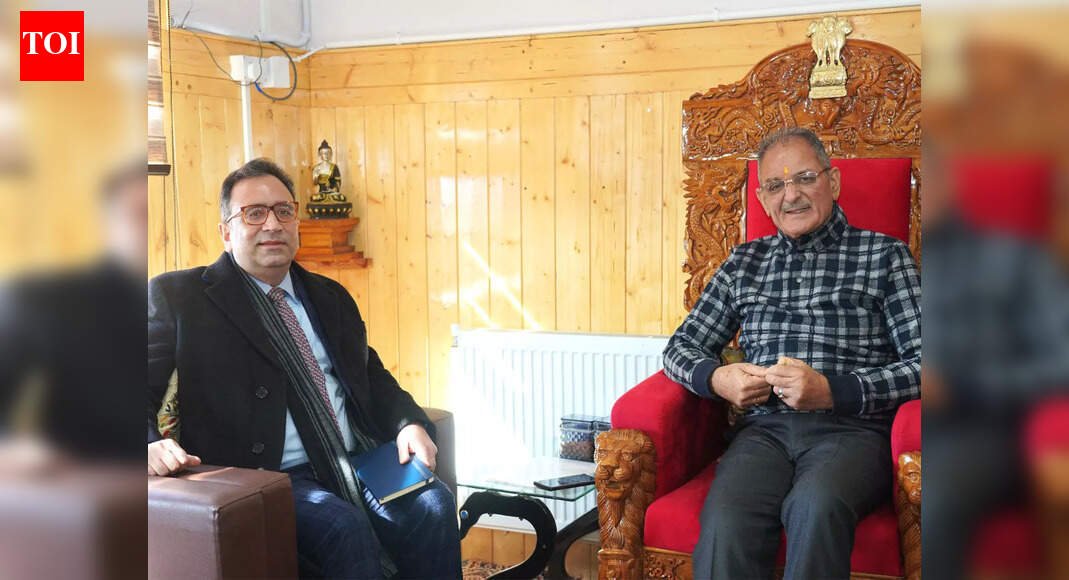
Ladakh chief secretary Ashish Kundra (left) calls on Ladakh LG Kavinder Gupta

NEW DELHI: Ladakh’s new chief secretary Ashish Kundra has listed addressing people’s aspirations as a key priority, stressing the Union territory’s “civilisational history of peace must be treasured and preserved”.The senior IAS officer, who took charge Thursday, comes in at a time of heightened tensions over demands by Leh Apex Body (LAB) and Kargil Democratic Alliance (KDA) for statehood and Sixth Schedule status.Four statehood protesters were killed in alleged police firing on Sept 24. Climate activist and LAB member Sonam Wangchuk was among the over 70 people arrested after the violence.Kundra, who previously served as principal secretary to Delhi LG VK Saxena, also echoed concerns over Ladakh’s fragile ecology, warning against “reckless construction in the name of development”.

[ad_2]

Source link

Insurance costs under lens: RBI flags high-cost distribution driving premium growth, warns of medium-term pressure

[ad_1]

Insurance costs under lens: RBI flags high-cost distribution driving premium growth, warns of medium-term pressure

The Reserve Bank of India has flagged emerging structural pressures in the insurance sector, warning that premium growth is increasingly being driven by high-cost, distribution-led strategies rather than improvements in operating efficiency, even as the sector remains stable in the near term, according to its latest Financial Stability Report.“While posing no near-term systemic risks, the surface-level stability masks emerging structural pressures that could weigh on medium-term sustainability and coverage expansion,” the RBI said in the report.“A primary pressure is the persistence of a high expense structure, particularly the acquisition costs. Premium growth has been increasingly driven by high-cost distribution-led strategies rather than operating efficiency,” the central bank noted.In the life insurance segment, the RBI said frontloaded acquisition costs have limited the extent to which scale efficiencies are passed on to policyholders. It added that the expected benefits from digitisation have not yet fully materialised.“From a financial stability perspective, continuously elevated expenses could weaken profitability buffers and amplify cyclical vulnerabilities,” the report said.The RBI said a reorientation towards cost rationalisation, better alignment of intermediary incentives with policy persistency and value, and wider adoption of technology-enabled low-cost distribution models are essential to improve the sector’s long-term resilience.Supported by regulatory initiatives such as the risk-based capital framework, enhanced disclosures and strengthened market conduct standards, a sustained moderation in expense intensity would improve consumer value and help the sector transition from a ‘high-cost, low-inclusion’ model to an ‘affordable-cost, broad inclusion and high quality’ equilibrium, it added.According to the report, total premium income rose to Rs 11.9 lakh crore in 2024-25 from Rs 8.3 lakh crore in 2020-21, reflecting continued expansion of the insurance market.“However, total insurance premium masks a significant growth moderation, as the growth rates for both life and non-life sectors have slowed sharply,” the RBI said.At a sectoral level, the life insurance segment continues to exhibit high concentration risk, while the non-life sector has seen a structural shift, with health insurance emerging as the leading segment. Product concentration across both segments indicates limited diversification, the report noted.Total assets under management of the insurance sector stood at Rs 74.4 lakh crore as on March 31, 2025, with life insurers accounting for 91 per cent of total investments, underscoring the sector’s growing role as a major institutional investor.The RBI also highlighted a divergence in cost efficiency between public and private insurers.“Public life insurers show a strong focus on expense management and potentially lower acquisition costs underlined by a flat commission structure despite growing premiums. In contrast, private life insurers show a steep increase in commission pay-outs, particularly surging from 2022-23 onwards, indicating business acquisition at higher marginal cost,” it said.In the non-life segment, public insurers maintain a stable but high expense base, with commission costs remaining low and flat. Private non-life insurers, however, show a sharper escalation in commission expenses, pointing to a high-cost distribution-led growth strategy that could impact underwriting margins, the RBI said.The report also noted that insurance density rose steadily from $78 in 2020-21 to $97 in 2024-25, indicating higher per-capita spending on insurance. At the same time, a decline in insurance penetration suggests that GDP growth has outpaced the rise in premiums.

[ad_2]

Source link

Pension reform: PFRDA allows banks to set up pension funds for NPS; aims to boost competition

[ad_1]

Pension reform: PFRDA allows banks to set up pension funds for NPS; aims to boost competition

The Pension Fund Regulatory and Development Authority (PFRDA) on Thursday permitted banks to independently set up pension funds to manage the government’s flagship National Pension System (NPS), a move aimed at enhancing competition and safeguarding subscriber interests, PTI reported.The PFRDA board “has approved, in principle, a framework to permit Scheduled Commercial Banks (SCBs) to independently set up pension funds to manage NPS, with the objective of strengthening the pension ecosystem, enhancing competition and safeguarding subscriber interests,” the regulator said in a statement.Under the proposed framework, PFRDA said it seeks to address regulatory constraints that had so far limited bank participation, while introducing clearly defined eligibility criteria based on net worth, market capitalisation and prudential soundness, in line with RBI norms. This is intended to ensure that only well-capitalised and systemically robust banks are allowed to sponsor pension funds.“The detailed criteria will be notified separately and will apply to both new and existing Pension Funds,” the regulator said. At present, there are 10 pension funds registered with PFRDA.In a parallel reform, the regulator said it has revised the Investment Management Fee (IMF) structure for pension funds with effect from April 1, 2026, to align with evolving realities, subscriber aspirations and international benchmarks, while expanding coverage across corporate, retail and gig-economy segments.The revised slab-based IMF structure introduces differentiated rates for government and non-government sector subscribers and will also apply to schemes under the Multiple Scheme Framework (MSF), with the MSF corpus being counted separately. However, the Annual Regulatory Fee (ARF) of 0.015% payable by pension funds to PFRDA will remain unchanged.The regulator said it expects these policy reforms to provide subscribers and stakeholders access to a more competitive, well-governed and resilient NPS ecosystem, leading to improved long-term retirement outcomes and enhanced old-age income security.Separately, PFRDA announced the appointment of three new trustees to the board of the NPS Trust. These include Dinesh Kumar Khara, former chairman of State Bank of India, Swati Anil Kulkarni, former executive vice president of UTI AMC, and Arvind Gupta, co-founder and head of Digital India Foundation.Khara has also been designated as the chairperson of the NPS Trust Board. The National Pension System currently has over 9 crore subscribers and assets under management of Rs 15.5 lakh crore as of August 31.

[ad_2]

Source link