Breaking News
CBAM impact: Carbon cost hits Indian steel and aluminium exports from Jan 1, here’s what GTRI report says

[ad_1]

CBAM impact: Carbon cost hits Indian steel and aluminium exports from Jan 1, here's what GTRI report says

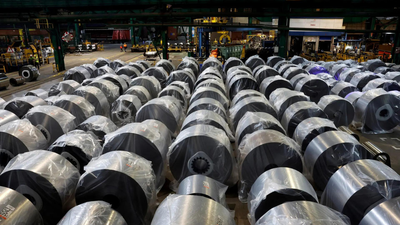
Indian steel and aluminium exports to the European Union will face a carbon-linked cost from January 1, 2026, as the EU’s Carbon Border Adjustment Mechanism (CBAM) moves from the reporting phase to its payment-linked stage, according to a report by the Global Trade Research Initiative (GTRI).Although the CBAM levy will be paid by EU-based importers, the report said the economic burden will be passed on to Indian exporters through lower realised prices, tougher contract terms and stricter supplier selection criteria.GTRI estimates that many Indian exporters may need to cut prices by 15–22% to remain competitive, allowing EU buyers to absorb the carbon cost through margins.From the first shipment of 2026, CBAM will become a commercial factor in pricing, even though formal certificate surrender will begin in 2027, the report said.EU buyers are expected to factor embedded carbon costs into procurement decisions from January 1, 2026, affecting price negotiations, contract clauses and supplier rankings.Exporters using high-emission production routes, such as blast furnace–basic oxygen furnace processes in steel, are likely to face the sharpest loss of competitiveness. In aluminium, the carbon burden will depend largely on electricity intensity and the source of power used.The report said CBAM is a plant-level emissions accounting regime, requiring exporters to calculate embedded emissions for each installation, covering direct fuel combustion and electricity consumption.Corporate averages, ESG disclosures or sustainability reports will not be accepted under CBAM. Without verified plant-level emissions data, exporters risk being assigned default emission values by EU authorities, which can be 30–80% higher than actual emissions and significantly raise carbon costs.From 2026, independent verification of emissions data will be mandatory, with only EU-recognised or ISO 14065–compliant verifiers accepted, the report said.GTRI said micro, small and medium enterprises are likely to bear a disproportionate share of the burden due to higher compliance and verification costs.“A key concern flagged in the report is that large producers often do not share plant-level emissions data with MSMEs that source steel or aluminium from them. In the absence of verified data, EU authorities may apply default emission values, sharply inflating the carbon cost even when actual emissions are lower.” GTRI founder Ajay Srivastava noted. “This asymmetry risks penalising MSMEs disproportionately and accelerating their exit from EU supply chains unless corrective mechanisms are introduced,” said Ajay Srivastava.The report said CBAM marks a shift in global trade dynamics, where carbon intensity, rather than cost efficiency alone, will increasingly determine competitiveness in regulated markets such as the EU.Low-emission producers could gain an advantage, while exporters that fail to align with CBAM’s data and verification requirements risk losing EU market access due to compliance gaps, it added.

[ad_2]

Source link

New year’s day 2026: What’s open and what’s closed across the US; will your bank or local store be open?

[ad_1]

New year’s day 2026: What’s open and what’s closed across the US; will your bank or local store be open?

Most government offices, banks and financial markets across the United States will remain closed on New Year’s Day, while major retailers and grocery chains are largely set to stay open, often with modified hours, the AP reported.Retailers are expected to use the holiday to offer discounts on older inventory ahead of new stock arrivals. However, store hours can vary by location, and shoppers are advised to check local schedules before heading out.Here is a breakdown of what will be open and closed on New Year’s Day 2026, according to AP.

Government offices and schools

Government buildings, post offices, courts and schools across the US are closed on New Year’s Day.

Banks and stock markets

US banks and stock markets are closed on Thursday for the holiday and are scheduled to reopen on Friday.

Package delivery services

Standard FedEx and UPS pickup and delivery services will not be available on New Year’s Day. Some limited or critical services may be offered at select locations, and customers are advised to check with their local outlets for details.

Retail stores

Most major retail chains will remain open on New Year’s Day, though many may operate with reduced or modified hours.

  • Walmart will be open, with hours varying by location.
  • Target will remain open, with modified hours at some stores.
  • Macy’s will be open, but operating hours may differ by location.
  • Kohl’s will be open, with potential changes to store hours.
  • CVS will be open, though pharmacy hours may vary.
  • Walgreens will be open, with pharmacy operations dependent on location.
  • Customers are advised to check store websites or call ahead to confirm hours.

Grocery stores

Most national grocery chains, including Albertsons, Whole Foods, Kroger and Aldi, will be open on New Year’s Day, though many locations may have shorter hours.In-store pharmacies at grocery outlets are generally expected to remain closed for the holiday.Two major chains — Trader Joe’s and Costco — will be closed on New Year’s Day.

What consumers should keep in mind

While many retailers and grocery stores will be open, operating hours can vary widely by location. Shoppers planning errands on New Year’s Day are advised to verify store timings in advance to avoid inconvenience.

[ad_2]

Source link

‘Hate-filled agenda’: Cong slams arrest of Nagpur Christian priest; demands action against Bajrang Dal | India News

[ad_1]

'Hate-filled agenda': Cong slams arrest of Nagpur Christian priest; demands action against Bajrang Dal

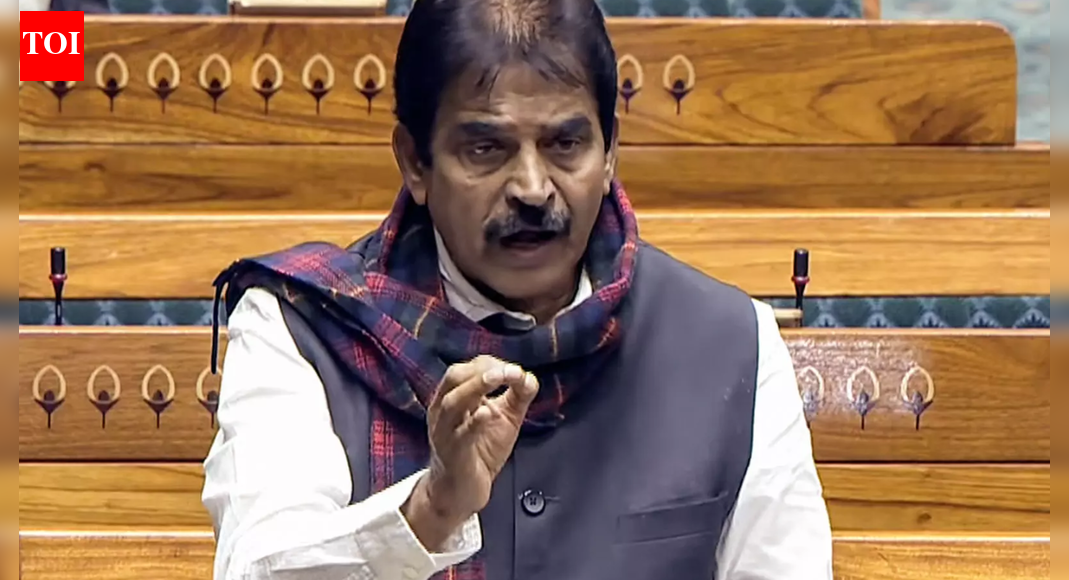
NEW DELHI: Congress on Wednesday strongly criticised the BJP following the arrest of a Christian priest and 11 others in Nagpur, Maharashtra, during a Christmas prayer meeting, accusing the party of pursuing a “hate-filled agenda of religious bigotry.The Maharashtra Police arrested 12 individuals, including Father Sudhir, a Malayali priest of the CSI South Kerala Diocese, Nagpur Mission, and his wife Jasmine, after a complaint allegedly filed by Bajrang Dal activists. The arrests reportedly took place around 8.00 pm during a Christmas prayer meeting in Nagpur. According to the leaders, people who later went to the police station to enquire about the incident were also taken into custody, and cases were registered against them.Congress MP KC Venugopal in an official post on X described the incident as “highly condemnable” and alleged that the arrest showed the BJP “uses the state machinery to harass Christians under the bogus pretense of religious conversions.”Venugopal said growing polarisation had made life “unlivable for all minorities” in BJP-ruled states. He demanded that the FIR against the priest be withdrawn immediately and called for strict action against what he described as “Bajrang Dal goons,” whose alleged “hooliganism” led to what he termed a “frivolous case.” He said, “Those who take law into their own hands and destroy the secular fabric envisioned in our Constitution must be the ones receiving punishment – not innocent citizens.”Kerala Assembly Leader of Opposition VD Satheesan also condemned the arrests and sought urgent intervention from the Centre and the Maharashtra government. In a post on X, he tagged PM Modi and Maharashtra chief minister Devendra Fadnavis, demanding the release of all those arrested.In his letter, Satheesan wrote, “I write this letter to register my strong protest and to seek your urgent intervention regarding the arrest of twelve persons, including a Malayali priest, in Nagpur on allegations of forced religious conversion.” He added that Father Sudhir is a native of Amaravila in Thiruvananthapuram district and has been serving in Maharashtra for the past five years, while the remaining 10 arrested individuals are natives of Maharashtra.Satheesan said all the arrested persons are currently being detained at the Benoda Police Station and are likely to be produced before a court shortly. He noted that CSI representatives attempted to secure bail at the police station but were directed to approach the court. Describing the incident as alarming, he said, “This incident is deeply disturbing and raises serious concerns about the violation of the fundamental rights guaranteed by the Constitution of India, particularly the freedom to profess, practice, and propagate religion. Arresting individuals for conducting a peaceful prayer meeting is unconstitutional and contrary to the spirit of our democratic and secular values.

[ad_2]

Source link

RBI Financial Stability Report: Economy stays resilient, banks remain strong; top points to know on NPAs, unsecured loans and crypto risks

[ad_1]

RBI Financial Stability Report: Economy stays resilient, banks remain strong; top points to know on NPAs, unsecured loans and crypto risks

India’s economy continues to expand at a robust pace, supported by strong domestic demand, low inflation and healthy bank balance sheets, even as risks from unsecured lending, fintech exposure, external uncertainties and stablecoins persist, the Reserve Bank of India said in its December 2025 Financial Stability Report (FSR), PTI reported.The report said the domestic financial system remains “robust and resilient”, aided by strong balance sheets, easy financial conditions and low financial market volatility. However, it cautioned that geopolitical and trade-related uncertainties pose near-term risks to financial stability.Here are the key highlights of the report.

Growth outlook remains positive

The RBI noted that real GDP growth surprised on the upside in the first two quarters of FY 2025-26, registering 7.8% in Q1 and 8.2% in Q2.Growth was supported by strong private consumption and public investment. The central bank said the outlook remains positive, aided by low inflation, easy financial conditions, an above-normal monsoon, tax reforms and the continued expansion of digital public infrastructure.

Banks’ asset quality improves further

The health of scheduled commercial banks remains sound, with strong capital and liquidity buffers, improved asset quality and robust profitability, the report said.The gross non-performing assets (GNPA) ratio stood at a multi-decade low of 2.1% in September 2025 and is projected to improve further to 1.9% by March 2027 under a baseline scenario.Under adverse stress scenarios, the GNPA ratio could rise to 3.2% and 4.2%, the RBI said.

Capital buffers remain adequate

From a capital perspective, the capital to risk-weighted assets ratio (CRAR) remained strong as of September 2025, with public sector banks at 16% and private sector banks at 18.1%.The aggregate CRAR of 46 major scheduled commercial banks may decline from 17.1% in September 2025 to 16.8% by March 2027 under the baseline scenario. Under hypothetical adverse scenarios, it may fall to 14.5% and 14.1%.Stress tests indicated relatively higher depletion in the capital of public sector banks compared with private and foreign banks. Six banks, accounting for 15% of total banking assets, would breach the regulatory minimum CRAR under a severe shock.

Unsecured loans drive retail slippages

More than half of retail loan slippages are coming from unsecured products such as personal loans and credit cards, the RBI said.Unsecured loans accounted for 53.1% of total retail loan slippages. Among bank groups, private sector lenders recorded a higher share of fresh slippages.Unsecured loans contributed nearly 76% of slippages for private banks, compared with 15.9% for public sector banks. At an aggregate level, the GNPA ratio for unsecured retail loans stood at 1.8%, compared with 1.1% for overall retail advances.

Fintech lending flagged

The RBI flagged elevated impairment among borrowers who have taken unsecured loans from five or more lenders, highlighting the role of fintech firms.Unsecured loans account for more than 70% of fintechs’ total loan books, with over half of such loans extended to borrowers under 35 years of age.Between September 2024 and September 2025, fintech lending grew 36.1%, driven largely by personal loans, the report said.

Stablecoins pose risks to monetary sovereignty

In a special feature of the report, the RBI warned that widespread adoption of stablecoins could pose significant risks to India’s monetary sovereignty and financial stability.The central bank said foreign currency-denominated stablecoins could erode monetary control, weaken monetary policy transmission and complicate capital flow management, particularly for emerging economies like India.It reiterated that central bank money must remain the ultimate settlement asset and said central bank digital currencies can deliver efficiency and programmability while preserving trust in money.The RBI cautioned that stablecoins can be volatile, vulnerable to confidence shocks and structural fragilities, and could be misused for money laundering, terrorism financing and weapons proliferation without adequate regulation.

Rupee weakens on trade and capital flow pressures

The report said the rupee depreciated against the US dollar due to falling terms of trade, high tariffs and a slowdown in capital flows.Despite a broad weakening of the US dollar against other major and Asian currencies, the rupee weakened as India’s effective US tariff rate remained higher than that of its trading partners.

[ad_2]

Source link

Oyo parent Prism files confidential IPO papers; seeks to raise Rs 6,650 crore

[ad_1]

Oyo parent Prism files confidential IPO papers; seeks to raise Rs 6,650 crore

MUMBAI: Prism, the parent company of Oyo, has filed draft IPO papers with markets regulator Securities and Exchange Board of India (SEBI) through the confidential route, people aware of the matter said, making its third attempt at going public. The company is seeking to raise up to Rs 6,650 crore through fresh issues of shares and is targeting a valuation of $7-$8 billion, they said.Oyo declined to comment.The SoftBank backed firm joins a clutch of startups including Zepto, PhonePe and Flipkart which are eyeing a listing on the bourses in 2026. India’s booming IPO market has allowed new age companies to access public markets for growth and give exit to early investors. As of now, Oyo has no plans to launch an offer for sale (OFS) as part of its IPO, the people said. In all, about 197 companies have either received regulatory clearance or are awaiting approval from Sebi, representing potential fund mobilisation of around $31 billion through IPOs in 2026. Weak markets and Oyo’s push towards profitability delayed the company’s IPO plans initially started in 2021. A confidential filing gives firms flexibility to plan issue timing, reduces market scrutiny during the regulatory review process, and enables issuers to test investor appetite before launching the IPO. Oyo posted net profits of over Rs 200 crore in Q1FY26. It acquired US-based G6 Hospitality, the economy lodging franchisor, operator of Motel 6 and Studio 6, boosting its international footprint.

[ad_2]

Source link

Stock market outlook 2026: Why did Sensex, Nifty underperform in 2025 & where are indices headed next year? Top things to know

[ad_1]

Stock market outlook 2026: Why did Sensex, Nifty underperform in 2025 & where are indices headed next year? Top things to know

If global markets were running a marathon this year, Indian equities were clearly trailing the pack. While South Korea saw Kospi skyrocketed nearly 76%, Japan’s Nikkei soared over 25%, and Hong Kong’s Hang Seng climbed more than 30%, China’s Shanghai Composite posted gains of over 16%. In the west, Wall Street also bagged doubled digit gains with tech heavy Nasdaq up 21%, S&P 500 rising 17.5%, and the Dow Jones advancing over 14%. Indian benchmark indices, Nifty50 and BSE Sensex, however, struggled to keep pace. Against these strong gains in global markets, India’s benchmarks posted more modest returns, with the Nifty 50 rising over 10% and the Sensex ending the year 8.55% higher. On December 31, the Sensex closed at 85,220.60, up 545.52 points, while the NSE’s Nifty 50 finished in the green at 26,129, gaining 190 points.Despite the Nifty 50 and Sensex recently touching record highs, broader market sentiment remained muted, with nearly half of the NSE’s top 500 stocks still trading below the benchmark. Though the indices ended 2025 in green, the relative underperformance has left investors struggling with two key questions as the calendar turns: Why did Dalal Street remain muted in 2025? And importantly, what’s the outlook for Nifty50 and Sensex in 2026?

So, what dragged Indian benchmarks down?

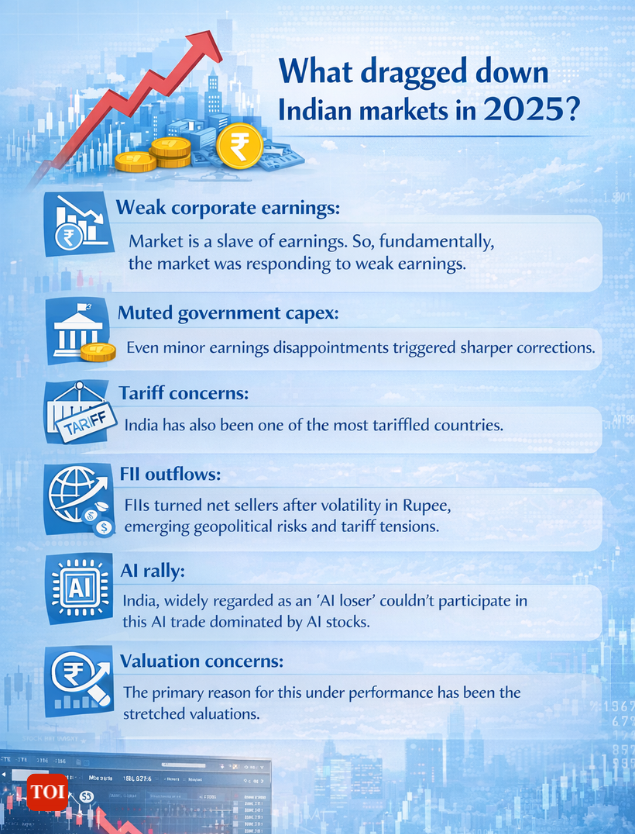
What dragged down Indian markets

According to experts that TOI spoke to, the stock market was dragged down by a combination of factors, both internal and external. Factors like US-India trade deal delay, not participating in the AI race, muted corporate earnings, and FII selling weighed the market down.Earnings slowdownMuted corporate earnings emerged as one of the major reasons behind the stock market’s underperformance. VK Vijayakumar, chief investment strategist at Geojit Investments, told TOI that “during the last six quarters, earnings growth has been in single digits. In the long run, the market is a slave of earnings.” So the drag down was, ultimately, the market’s response to weak earnings.Despite the benchmarks trading near lifetime highs, the overall market appeared weak, weighed down by the deceleration in earnings momentum since the June 2024 quarter, following a robust 18% CAGR during FY20–FY25, said Sunny Agrawal, head of fundamental research at SBI Securities. Sharp divergenceAccording to Ankit Soni, associate vice president – fundamental research at Mirae Asset Sharekhan, market returns over the last one-and-a-half years remained largely single-digit, with a stark gap across segments.“Large-cap indices delivered around single-digit returns, while mid and small caps underperformed by nearly 10%,” he said, highlighting the high variability in returns and sustained weakness in the broader market. Agrawal also noted that “despite benchmark indices trading close to lifetime highs, the broader market continued to trade on weaker footing.”FII sellingMarkets hit new highs towards the end of the year, but failed to hold those levels. Soni pointed out that “there is always a pullback of around 2–4% from the 52-week highs,” largely due to foreign institutional investor (FII) selling. Agrawal added that persistent selling by Foreign Portfolio Investors (FPI), promoters and PE firms, despite strong domestic liquidity enabling smooth exits, weighed heavily on sentiment.According to Nikhil Khandelwal, managing director at Systematix Group, uncertainty around global interest-rate trajectories, currency volatility and geopolitical tensions led to intermittent foreign portfolio outflows.Valuation concerns versus global peersSeveral experts flagged stretched valuations as a key deterrent for foreign investors. Sunny Agrawal said Indian markets looked relatively expensive compared to other emerging markets, prompting capital outflows. Siddarth Bhamre, head of institutional research at Asit C Mehta Investment Intermediates Limited said that while Indian markets delivered higher single-digit returns, the valuation premium made the underperformance stark when compared with global equities and other asset classes.Missing the AI rallyOne of the defining features of global markets in 2025 was the AI-led rally, which India largely missed. Vijayakumar described India as an “AI loser” in a year when “AI winners like the US, China, Taiwan and South Korea gained substantially.” The lack of a pure-play AI story reduced India’s attractiveness for global fund managers, Agrawal pointed out.Currency volatilityRupee instability emerged as another headwind, as the currency is hovering around 90 per US dollar levels. Vijayakumar explained that FII selling weakened the rupee, which in turn triggered further FPI outflows, creating a negative feedback loop. This year the currency has fallen over 5%, depreciating past the 91 per US dollar mark, before recovering to 89. Tariff tensions and geopolitical risksFears linked to geopolitical tensions combined with US President Donald Trump’s imposition of trade tariffs worsened the sentiment and disrupted global business dynamics.India’s export competitiveness also came under strain. Khandelwal pointed out that India became “one of the most tariffed countries by the US under the new tariff regime,” impacting export-oriented industries. Ankit Soni further cited the non-closure of key trade deals as one of the factors preventing markets from sustaining rallies.The United States imposed a total of 50% tariffs on India – with a 25% tariff on Indian imports for purchases of Russian oil. Muted domestic capex and policy-related concernsDomestically, muted government capital expenditure added to the pressure, particularly in sectors dependent on public spending, according to Nikhil Khandelwal. Policy changes such as an increase in capital gains tax also dented investor sentiment during the year, Agrawal flagged.“Valuations have turned comfortable for Nifty50, which is trading at a 1-year forward P/E multiple of 19-20x vs 22x-23x during the last peak in Sept’24. During the last 14 months, there has been notable compression in the valuation premium of Nifty50 over MSCI EM index from 80% in September 2024 to 47% in December 2025, which is below the 10 year average of 57%. Barring few pockets, valuations have turned comfortable across mid and small caps,” Agrawal told TOI.Now that we know why Dalal Street’s performance was muted in 2025, it is time to dive into how the stock market is likely to perform in 2026. The answer depends on many factors including FII performance, earnings, balance sheets and much more!

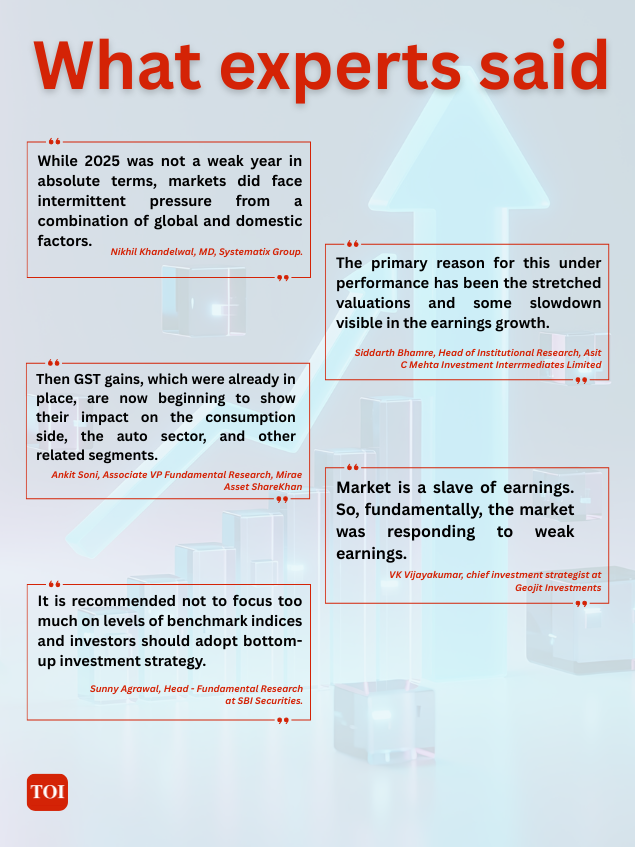
What experts said

What about next year — Will Dalal Street stand stronger in 2026?

A short answer to if the Indian stock market is expected to perform better than their global peers in 2026 would be, Yes. Here’s why:Just a consolidation phaseSoni told TOI that the stock markets gave a strong rally from 2022 to 2025 and hence this subdued momentum was just a pause.“A good set of rallies we have seen, so there is always a gap of one year or two with respect to your continuation of the rally, and this we feel is good for the market to consolidate for some time and then give us a good set of rallies,” he added.”India has structural growth driversAs compared to other markets, India remains “relatively well placed” supported by key growth drivers such as strong domestic demand and improving balance sheets. “While global markets will continue to influence sentiment, India’s long-term fundamentals remain supportive,” Nikhil told TOI.Reversal of fundsAgrawal also placed India among emerging markets like Brazil and China, supported by reversal of funds from “safe haven US Bonds towards riskier assets like EMs and commodities.”Meanwhile, Vijayakumar said that while India is expected to perform better than it did in 2025, it would be tough to say if it will be able to outperform its global peers.

Will FIIs come back?

In 2025, FIIs turned net sellers, withdrawing Rs 1,04,050 crore from India throughout the year. Funds from FIIs are expected to return in 2026, reversing their current position as net sellers. These inflows will however, depend on many factors. According to Bhamre, declining Rupee against US dollar has fueled the possibility that FIIs will be returning in the upcoming year, as “not an expensive market and depreciated currency is an ideal setup for foreigners.”The expert further added that besides the case of heavy buying, “they won’t be bigger sellers in 2026 of Indian equities.” Soni believes that a strong monsoon and a favourable kharif season, along with other positive factors, could encourage FIIs to return to the country.“FIIs won’t be able to neglect the Indian market for long,“ he said, adding that they will be back given RBI initiatives with respect to the open market operations, a better Kharif season and a good earnings report. He further added that FII inflows are expected after the H2 earnings report. “We could get stabilized FII inflows maybe in financial year 2027”Meanwhile, Nikhil told TOI that FII flows are expected to remain volatile and largely data-driven, shaped by global interest rate movements and currency trends. However, he said consistent domestic inflows through SIPs, along with long-term investments from global private equity and strategic investors, should act as a strong cushion, lowering India’s dependence on FPI flows compared with previous cycles.

Stock market in 2026 — What will support Dalal Street?

What will support Dalal Street?

Domestic factors2025 was a year of policy changes with GST reforms, income tax changes, interest rate reduction by 125 bps and more. The effect, however, will be visible in the upcoming year, 2026, Bhamre said. On the internal side, “consumption trends and credit growth will be closely watched,” Khandelwal said, adding “While global developments will continue to shape short-term sentiment, domestic fundamentals are likely to play a larger role in determining market direction.”Better corporate profileOne of the major internal factors to push stock markets higher is the growth in corporate earnings. “Indian corporates in the long term are likely to deliver earnings growth in line with the nominal GDP growth of 10-11% and the same should get reflected in the performance of benchmark indices,” Agrawal said. Simultaneously, “sustained improvement in profitability, margins, and cash flows will drive confidence,” Nikhil told TOI.Vijaykumar added that the rally might be further helped by weakening artificial intelligence trade.Sectoral revivalAutos, especially commercial and passenger vehicles, along with IT are emerging as critical growth engines. After underperforming for nearly two to three years, the auto sector is now gaining traction and is expected to contribute meaningfully to earnings in 2026, Soni adds. The agriculture sector is also expected to remain upbeat, thanks to a good kharif season and an overall favourable weather.According to Khandelwal, “returns are likely to be in the 10 -12% range, with outperformance coming from more sector specific, asset class specific and company specific investments.”RBI interventionInitiatives by the Reserve Bank of India with respect to the open market operations, controlling inflation and other aspects.Better valuationComfortable valuation for NSE benchmark Nift50, is expected to lift investor sentiments in 2026. Nifty “is trading at 1-year forward P/E multiple of 19-20x vs 22x-23x during the last peak in September 2024, significant compression in valuation premium over MSCI EM index from 80% in Sep’24 to 47% in Dec’25, which is below 10 year average of 57%,” Agrawal noted.US-India trade dealFactors such as delays in concluding the India-US trade deal are also expected to play a major role in deciding the momentum of Dalal Street next year as markets are more favourable towards early closure of the deal.Increased budgetAnother major driver that could boost growth and create a platform for other factors to contribute is government capital expenditure. Announcements of significant capital spending, whether in the upcoming budget or through other channels, could set the momentum for Indian equities, Bhamre said.

Nifty and Sensex targets in 2026

So, where are Nifty and Sensex headed in the coming year and what are the targets. According to experts, Nifty is expected to touch anywhere between 28,500 to 29,800. Sensex, meanwhile, might reach 98,000 levels. Nifty50 began 2025 at 23637.65 while the BSE benchmark began at 77,500. In the bull case scenario, NSE benchmark Nifty is expected to reach 29,800 by the end of 2026 while BSE Sensex is expected at 98,000, Vijaykumar predicted.According to Soni, the NSE benchmark is expected to touch 28,000 in financial year 2027, “and then 28,500 would be a good range of approach going forward”, Soni told TOI. provided the FIIs come back. “Nifty 50 FY27E EPS is likely to be Rs 1280-1300. At upper PE band of 22-23x – Nifty can touch 28,500-30,000 levels and accordingly Sensex should also deliver inline returns,” Agrawal said, adding that from an investor’s perspective, focus will be on the broader market which has been underperforming since the past 12-14 months.“The indices are trading at approx 22-23x PE basis the FY26 estimated EPS of Nifty, which is at the lower end of the past 10 year Nifty multiple of 22-28x,” Systematix executive told TOI.Agrawal suggested traders to not “focus too much on levels of benchmark indices and investors should adopt bottom-up investment strategy.”

Which sectors & stocks to watch in 2026

Large caps remain the preferred safety play:Market experts see large caps as relatively better placed in 2026 due to reasonable valuations, stronger balance sheets and clearer earnings visibility. Vijayakumar told TOI that large caps are fairly valued and remain his preferred segment, while Nikhil noted that companies with balance-sheet strength offer comfort in a volatile environment. According to Bhamre, FIIs are more likely to return to large-cap stocks where valuations remain attractive.Mid caps need selectivity, not blanket exposure:Experts told TOI that mid caps still offer opportunities, but only through careful stock selection. Soni believes cherry-picking in mid caps can deliver returns, while Khandelwal points out that select mid-cap companies with scalable business models and disciplined capital allocation could outperform. However, the consensus remains that 2026 will reward bottom-up investing, not broad-based bets.Divergent views on small-cap valuations:Views on small caps remain mixed. Agrawal said that small-cap valuations have turned more comfortable and could outperform in 2026. In contrast, Vijayakumar and Bhamre remain cautious, flagging continued overvaluation in parts of the segment, especially amid heavy retail inflows through mutual funds, which could amplify downside risks if liquidity tightens.Retail-driven liquidity a key risk factor:The surge in retail money into mid- and small-cap stocks has led to valuation excesses, warns Bhamre, who says any reversal in liquidity could cause sharp corrections. This risk underpins the broader market view that stability will be concentrated in large caps, while volatility remains higher in smaller stocks.Portfolio strategyReflecting the cautious optimism for 2026, Bhamre suggested a large-cap dominated portfolio with “with some room for high growth not richly valued mid and small cap” proposing an allocation of around 70% large caps, 20% mid caps and 10% small caps.

Sectors likely to stand out in 2026

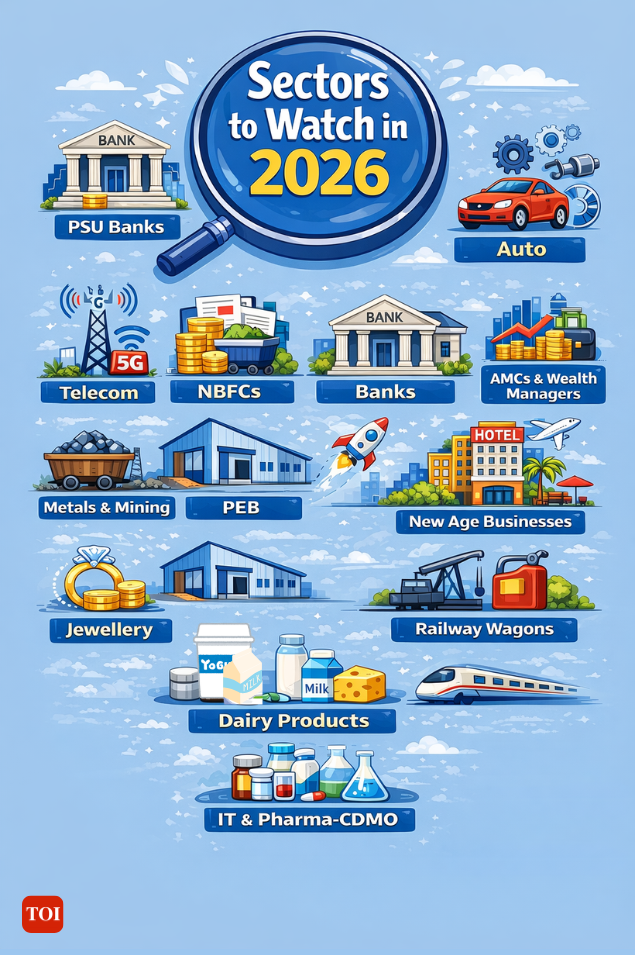
Sectors to watch in 2026

Metals: The metal sector is expected to deliver healthy returns, as valuations remain favourable when viewed over a longer horizon. While the sector is currently trading above its five-year average valuation, it is still well below the 10-year average. “So, we see a good set of values in the metal sectors out there,” Soni told TOI.PSU Banks: Public sector banks also continue to offer value, supported by relatively attractive valuations and improved balance sheets. “There is also good value in PSU Banks this year, as valuations remain at around 8–9x multiples…The last five years’ valuation is around 5%–10%, 11%–12%, which is currently at 8%–9%. So, we see a good value buying opportunity in PSU Banks.” IT: Soni said the IT sector is trading close to its long-term averages, creating a potential entry point for investors. “The IT sector itself is currently trading at a five-year average multiple of around 28, which is a five-year average multiple of 30X. So this could just provide you a good opportunity to invest into the IT sector; that sector is basically considered to be cheaper in relation to your stabilizing global macro environment,” he told TOI.Other industries like auto, auto ancillary, telecom, NBFCs, banks, AMCs, wealth managers, metals & mining, PEB, new age businesses, hotels, jewellery, liquor, dairy products, railway wagons, OMC, IT and Pharma-CDMO are also expected to outperform in 2026.

Risks for Dalal Street — factors that could hamper performance

Small caps at riskAn escalation in stress across the retail and MSME segments could lead to higher delinquencies, triggering market corrections, particularly in mid- and small-cap stocks, warned Bhamre, adding that a worst-case scenario would be rising NPAs in the NBFC space, which could dent consumption and create spillover risks across sectors.AI bubble shockA potential burst of the AI-driven tech bubble in the US is one of the biggest known risks for 2026, said Vijayakumar. While healthy corrections are desirable, a bubble burst could trigger sharp global market sell-offs. Vijayakumar also flags risks from a slowdown in India’s growth momentum and prolonged delays in a US–India trade deal.External macro risks could weigh on sentimentGlobal headwinds such as a sharper-than-expected slowdown in growth, renewed inflationary pressures and prolonged currency volatility could impact risk appetite, according to Khandelwal. Domestic factorsOn the domestic front, he cautioned that muted government capital expenditure and earnings disappointment in high-valuation pockets, such as the recent sell-off in EMS stocks, remain key concerns.Weak corporate profileMarkets are becoming increasingly unforgiving of weak execution, especially in over-owned themes where expectations are already stretched, Khandelwal noted. Companies that fail to deliver on earnings quality or governance could continue to underperform, reinforcing the need for disciplined stock selection.The absence of earnings upgrades could trigger meaningful market downside.Liquidity, crude oil and trade deficit risks loomA reduction in domestic liquidity support, a spike in crude oil prices due to geopolitical tensions, and a widening trade deficit could all act as pressure points for markets next year, said Agrawal.As the new year 2026 is knocking on the door, stakes are high for the stock market as investors look to bag bigger returns as compared to 2025. Traders need to watch out for internal and external components before making any investment decisions.(Disclaimer: Recommendations and views on the stock market, other asset classes or personal finance management tips given by experts are their own. These opinions do not represent the views of The Times of India)
[ad_2]

Source link

‘Oracle of Omaha’ steps aside: Warren Buffett retires today as Berkshire CEO after 6 decades of service; Gregory Abel takes operational charge

[ad_1]

'Oracle of Omaha' steps aside: Warren Buffett retires today as Berkshire CEO after 6 decades of service; Gregory Abel takes operational charge

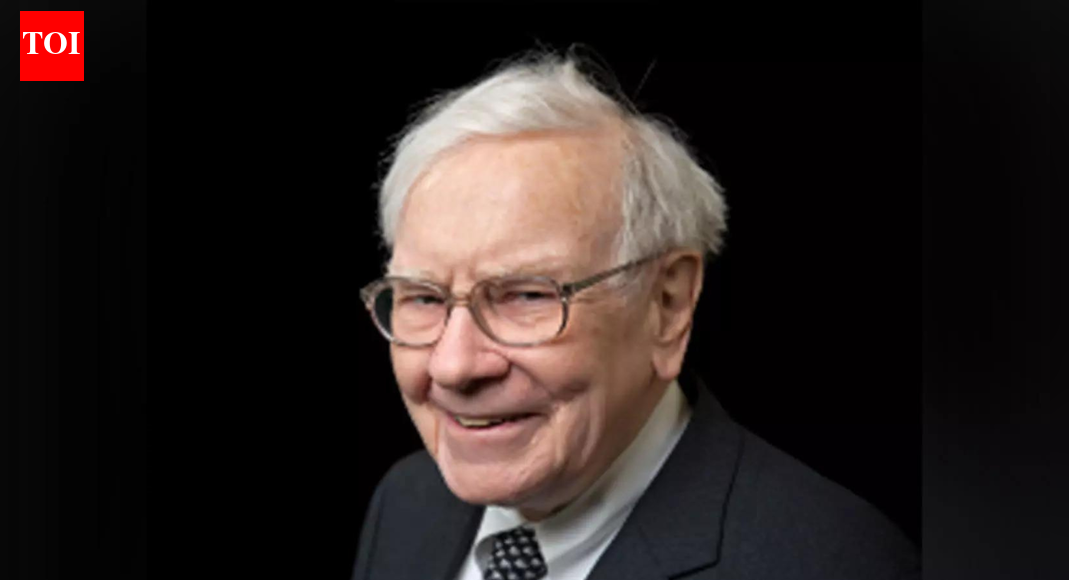
Warren Buffett stepped down as chief executive of Berkshire Hathaway today, bringing to an end one of the longest and most influential leadership runs in modern corporate history.The transition, announced earlier this year at Berkshire’s annual shareholders’ meeting, hands day-to-day control to vice-chairman Gregory Abel from January 1. Buffett, now 95, will remain chairman and has said he will continue coming to the office, but his withdrawal from operational leadership closes a chapter that reshaped both Berkshire and the wider landscape of American capitalism, according to ET report.What Buffett leaves behind is a company transformed beyond recognition. Once a struggling textile maker, Berkshire is today the ninth-most-valuable company in the United States, the country’s second-largest property and casualty insurer, and a sprawling conglomerate with nearly $700 billion in tradable stocks, bonds and cash, alongside ownership of roughly 200 operating businesses. Those span railroads, utilities and consumer brands, with the annual shareholder meeting in Omaha evolving into a ritual gathering for investors from around the world, ET noted.

An investor who resisted labels

Buffett was often described as the world’s greatest investor, though he resisted easy categorisation. He began with classic value investing, buying companies trading below the accounting value of their assets, and later embraced businesses with enduring competitive advantages capable of compounding value over decades.That evolution produced some of the most successful investments of modern times, including Apple, accumulated between 2016 and 2018 and now Berkshire’s most profitable holding. His emphasis on “economic moats” shaped a portfolio anchored by global franchises across banking, consumer goods and financial services.Yet Buffett’s most consequential insight lay not only in what he bought, but in how he paid for it.

Insurance float as quiet genius

The acquisition of National Indemnity in 1967, followed by GEICO and a major reinsurance operation, gave Berkshire access to insurance float — premiums collected before claims are paid. That pool of capital became the engine behind Berkshire’s growth, financing landmark deals such as the acquisition of BNSF and the company’s large stake in Occidental Petroleum, ET reported.This structure allowed Berkshire to deploy vast sums patiently, without dependence on short-term market funding, reinforcing Buffett’s reputation for disciplined capital allocation.

A succession shaped by continuity

The move to Gregory Abel marks a shift in style rather than a break in philosophy. Abel, who rose through Berkshire’s energy and utilities businesses, inherits a decentralised organisation built on trust and autonomy. Buffett’s hands-off approach — avoiding forced synergies and central control — now stands as a defining legacy Abel must steward.The transition comes amid mixed performance across some operating businesses and renewed scrutiny of Berkshire’s unusually large cash holdings. How that capital is deployed in the years ahead will be closely watched, but the company enters the handover with financial strength few peers can match.

More than a company

Buffett leaves behind more than a balance sheet. He leaves a way of thinking about business — patient, long-term and grounded in common sense. He spoke often about enjoying the work itself, once remarking, “I have a lot of fun doing what I do every day.”He was equally candid about wealth and responsibility, urging restraint and purpose rather than excess. Last month, he accelerated the transfer of Berkshire shares to foundations run by his three children, amounting to about $1.3 billion. In his Thanksgiving letter, he reminded readers that “kindness is costless but also priceless,” ET reported.As Berkshire enters this historic handover, much remains unchanged: the offices, routines and culture endure. What departs is the singular presence that held them together, and the assurance that came with it.

[ad_2]

Source link

Rishabh Pant fails ahead of NZ ODI series selection; Odisha hand Delhi first defeat in Vijay Hazare Trophy | Cricket News

[ad_1]

Rishabh Pant fails ahead of NZ ODI series selection; Odisha hand Delhi first defeat in Vijay Hazare Trophy

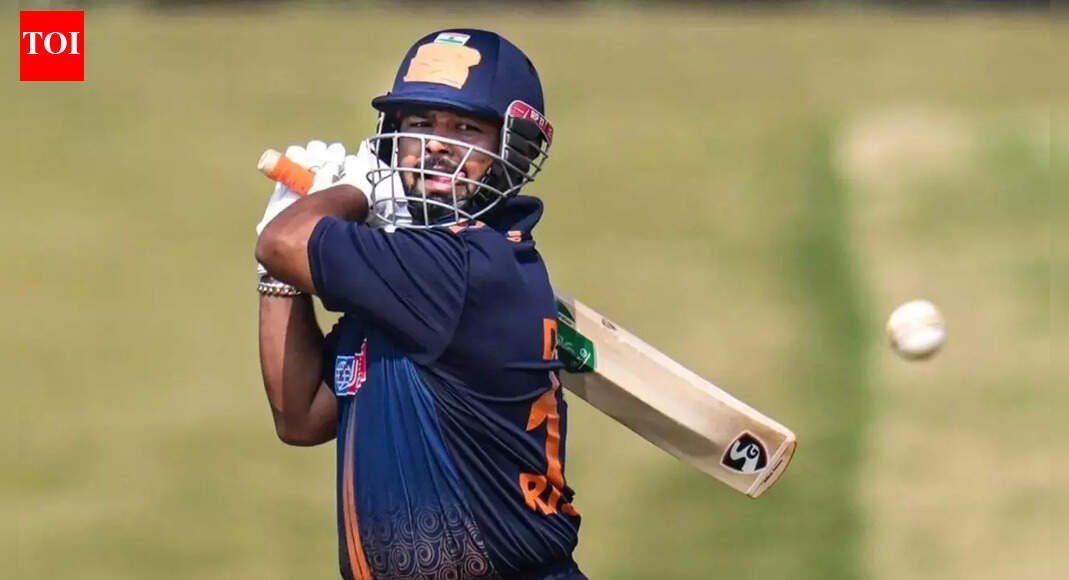
India wicketkeeper Rishabh Pant’s poor run with the bat, along with failures from Delhi’s senior batters, brought an end to the team’s unbeaten streak as Odisha registered a 79-run win in a fourth-round Group D match of the Vijay Hazare Trophy on Wednesday.With national selectors set to name the squad for the five-match ODI series against New Zealand in the first week of January, attention was firmly on Delhi captain Pant. However, the India batter managed only 24 as Delhi’s much-talked-about batting line-up collapsed, folding for 193 in 43.3 overs while chasing Odisha’s 272 for 8, a target that looked within reach.Delhi’s campaign this season has largely depended on one strong batting effort in each game. The absence of such a performance on Wednesday not only cost them the match but also their position at the top of the points table, a setback that could affect them later in the tournament.Odisha moved to the top of the table with 12 points and a strong net run rate. Delhi also have 12 points but slipped to fourth place, with Railways and Haryana moving above them on net run rate.This was the first time this season that Delhi failed to cross the 200-run mark. Earlier, the target had looked routine when Virat Kohli scored a century against Andhra in the opening match, and opener Priyansh Arya struck 78 against Saurashtra in the previous game.Pant, who had scores of 5, 70 and 22 earlier in the tournament, could add only 24 from 28 balls before being dismissed by pacer Debabrata Pradhan, who finished with figures of 3 for 28. Pradhan, along with young right-arm pacer Sambit Baral (3/34), played a key role in triggering Delhi’s collapse.Odisha’s total was anchored by captain Biplab Samantray, who scored 72 off 74 balls after the team lost three wickets before crossing 100. Contributions from the lower order added useful runs and tested the Delhi bowlers, including India players Navdeep Saini and Nitish Rana. Off-spinner Hrithik Shokeen was the pick of the Delhi bowlers with figures of 4 for 27 from his 10 overs.Delhi’s chase got off to a poor start as openers Priyansh Arya and Sarthak Ranjan were dismissed for single-digit scores, leaving the side at 6 for 2. Pant’s wicket reduced Delhi to 50 for 3 in the 11th over, and the situation soon worsened to 55 for 5.From there, a comeback was unlikely, though Harsh Tyagi (43) and Hrithik Shokeen (32) showed resistance and delayed the end with some determined batting.

[ad_2]

Source link

Growth outlook: Indian economy set to post high growth despite global headwinds; RBI flags domestic demand strength

[ad_1]

Growth outlook: Indian economy set to post high growth despite global headwinds; RBI flags domestic demand strength

India is projected to record high economic growth despite a volatile and unfavourable external environment, supported by strong domestic consumption and investment, Reserve Bank of India Governor Sanjay Malhotra said on Wednesday, PTI reported.“Maintaining financial stability and strengthening the financial system remains our north star,” Malhotra said in the foreword to the latest Financial Stability Report released by the RBI.He said financial sector regulators recognise that stability alone is not sufficient, and that promoting innovation and growth, protecting consumers, and adopting a pragmatic approach to regulation and supervision are equally important.“The most important contribution the policymakers can make is to foster a financial system that is robust and resilient to shocks, efficient in providing financial services and promotes responsible innovation,” Malhotra said.The governor noted that India’s economy and financial system remain robust and resilient, backed by strong growth, benign inflation, healthy balance sheets of financial and non-financial firms, sizeable buffers and prudent policy reforms.“Despite a volatile and unfavourable external environment, the Indian economy is projected to register high growth, driven by strong domestic consumption and investment,” he said, adding that the central bank remains mindful of near-term challenges from external spillovers.Malhotra said the RBI will continue to build strong guardrails to safeguard the economy and the financial system from potential shocks.

[ad_2]

Source link

Fiscal snapshot: Centre’s deficit widens to 62.3% of budget target by November; higher than last year

[ad_1]

Fiscal snapshot: Centre’s deficit widens to 62.3% of budget target by November; higher than last year

The Centre’s fiscal deficit stood at Rs 9.76 lakh crore at the end of November, accounting for 62.3% of the full-year budget estimate for 2025-26, government data released on Wednesday showed, PTI reported.The deficit was higher than the 52.5% recorded during the same period last year, reflecting a faster pace of expenditure relative to revenue mobilisation so far this financial year.According to data released by the Controller and Auditor General of India (CAG), the Centre has budgeted a fiscal deficit of 4.4% of GDP, or Rs 15.69 lakh crore, for 2025-26.The data showed that the central government’s total receipts up to November 2025 stood at around Rs 19.49 lakh crore, which is 55.7% of the corresponding budget estimate for the year.During the same period, total expenditure incurred by the Centre amounted to Rs 29.25 lakh crore, or 57.8% of the budget estimate for 2025-26. Of this, revenue expenditure accounted for Rs 22.67 lakh crore, while capital expenditure stood at Rs 6.58 lakh crore, the data showed.

[ad_2]

Source link