Breaking News
Pink tax, safety tax, health tax & more: The ‘hidden cost’ of being a woman no one counts | India News

[ad_1]

Pink tax, safety tax, health tax & more: The 'hidden cost' of being a woman no one counts
This is a representative AI image

What is luxury?For a woman, simply being able to take a walk at night is often considered a luxury. But this freedom isn’t free. It comes at a cost most people never see, the extra money, effort and emotional labour women pay every day just to exist.Every rupee women spend is backed by labour, yet when it comes to buying everyday essentials, its value seems to shrink. Every morning, as I get ready for office, I inevitably spend more than a man would and not because I am extravagant, but because of the hidden taxes I pay every time I buy something.Why? Because a moisturiser packaged in lavender tones, promising “smooth skin” , costs more than a man’s basic black bottle offering the same function. When I calculated my spending on personal care, clothing, services and daily necessities, the pattern became impossible to ignore.How? Because women consistently pay more year after year simply because products are marketed to them. And no, this isn’t just a Western problem. India isn’t exempt.

What is Pink Tax?

It may sound like a trivial question, but the answer points to a deeper issue: the Pink Tax. It is not a government levy or an official surcharge. Instead, it is the invisible premium women pay for products and services marketed “for women” , even when they are nearly identical to men’s versions.Simply put, it’s the cost of being a woman. Many everyday products aimed at women are priced higher than their male counterparts despite serving the same purpose.“I think most people have little idea of the extra costs a woman has to bear simply to exist. There is a concept of ‘Pink Tax’ that few men are aware of, as it mainly involves women’s personal care products. Beyond the monetary aspect, there is also a safety angle to all this,” said Aashish Saxena.That’s the Pink Tax — and that’s why a pink razor costs more than a man’s black one.The Pink Tax shows up across everyday life:Personal care products: Women’s shampoos, conditioners and moisturisers routinely cost more than men’s, even when the difference is limited to packaging or colour.Fashion and accessories: Women’s formalwear and accessories are often priced higher despite similar materials and construction. The markup is usually explained away as “fashion” or “finishing” .Cosmetic procedures: Aggressively marketed to women, adding to the financial burden.Healthcare: Gynaecological check-ups, fertility consultations and reproductive healthcare come with higher recurring costs.“If you book a full comprehensive check-up for men on the health/medical app, it costs Rs 4,999, but for women, it costs Rs 5,999,” said Pallavi, pointing to the hidden cost.

How marketing makes femininity costlier

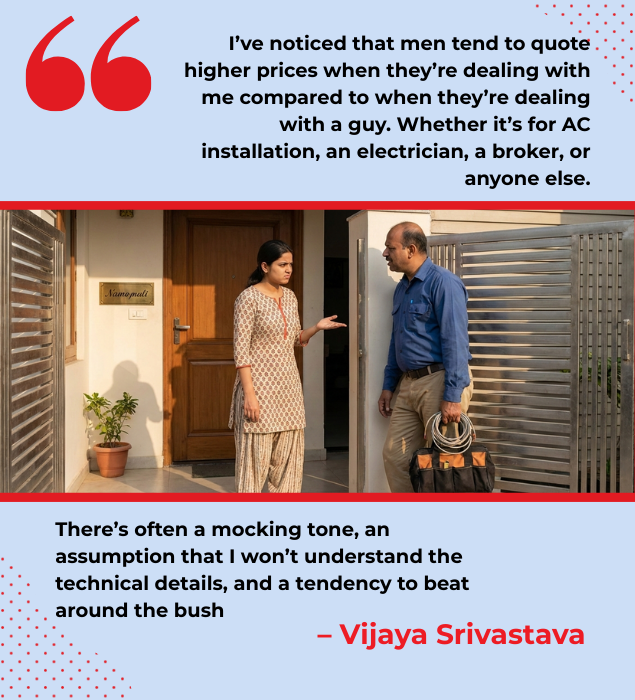
Women are often seen as less price-sensitive when it comes to personal care, not because they want to be, but because many of these products are framed as necessities. Companies exploit this shift. What was once optional is now presented as baseline: SPF, retinol, serums, AM/PM routines, laser treatments, Botox, hair removal, marketed as “permanent” solutions that never truly end.“If we look at the market, the range of products available for women the variants and the overall maintenance and is far wider compared to men. The skincare industry largely targets women, giving men limited space under the idea of toughness,” said Vijaya Srivastava.Pallavi also points to fashion as another quiet contributor to the hidden tax. “Why can’t I have jeans with normal-sized pockets that can fit today’s phones?” she asks.“Men can just slip their phones into their pockets and walk freely. Why do we have to carry a handbag just to hold a phone? Because we don’t have pockets.” Her frustration reflects how design choices, driven by fashion norms and commercial interests, create yet another invisible cost: one paid in convenience, money and everyday freedom.

The safety tax: Paying to feel safe

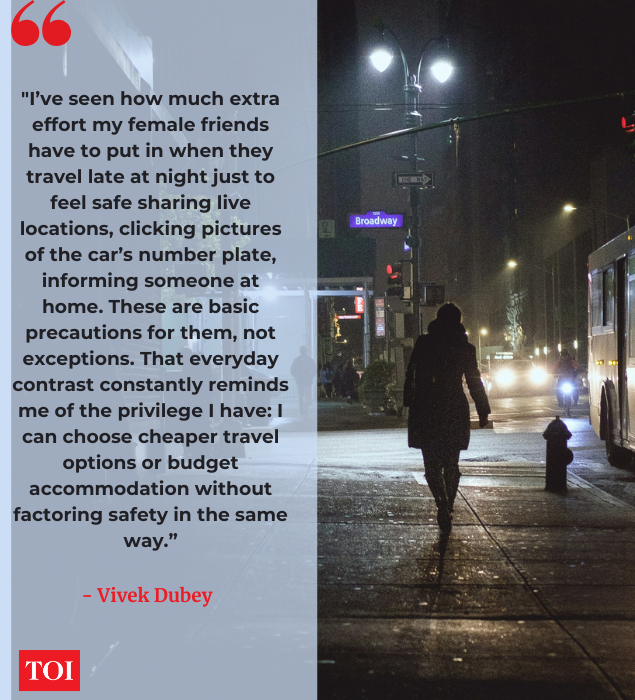
Beyond products, women quietly absorb another cost, the safety tax! In urban India, women often pay a premium simply to move through the city. Public transport that is cheaper for men is not always an option. Cabs, safer buses or higher travel classes become necessities, not luxuries.Ignoring buses, trains and shared autos “just to feel safe” is common and expensive. “While men don’t have to think twice about getting into a crowded metro or bus, a woman might opt for a far more expensive cab just to avoid harassment,” said Aashish.Aastha Jha explains the cost she absorbs every month. “I pay Rs 6,000 for travel to office every month. I haven’t used shared autos, buses or the metro enough to even compare. My area is quite secluded with poor connectivity, so sharing doesn’t feel safe.” She adds that this expense isn’t consciously planned. “I don’t budget for it deliberately, but I’ve been doing it subconsciously for years.” While men may think about safety during odd hours, Aastha notes the difference during the day. “Men my age think about safety late at night. During normal hours, they don’t have to factor it in.”For women, even basic freedoms come with anxiety. “Being able to take a walk at night feels like a luxury. Whether you live in a gated society or a secluded area, you never really know who could harm you.” Her colleague Vivek Dubey agrees. “Safety matters to everyone, but not in the same way. I can book a cab at midnight without much thought. My main concern is the driver’s driving, not my personal safety.” He admits this is a privilege men often overlook. “I can take a bike taxi because it’s cheaper. I wouldn’t recommend the same to my female friends because of harassment risks.”
.

Housing: Where safety overrides affordability

Safety also dictates where women live.“When I came to New Delhi, my priorities were safety and security,” recalls Jyoti, a college student. “I looked at high-rise societies with rents far above my budget, but I had no choice,” she said.Natasha Singh adds, “Safety plays a huge role in evaluating cost of living.” After a robbery at her home, she and her flatmate were more concerned about security than stolen items. “When my flatmate was not in town, I used to travel all the way from Noida to Gurgaon to live with my parents because I didn’t feel safe living alone.”

The unpaid labour tax

Women also bear the burden of unpaid domestic and emotional labour: cooking, cleaning, caregiving and emotional management, the work that doesn’t show up in GDP calculations.

Healthcare and fertility pressure

Menstrual products are unavoidable expenses men do not face. Beyond that, women incur ongoing costs linked to reproductive health, PCOS, fertility testing, supplements and preventive check-ups.“Women experience more frequent health milestones and transitions, which leads to higher spending on routine medical care and supplements — costs that are rarely framed as healthcare burdens,” said Priyanka Mukherjee.“The biggest hidden tax that I pay, I think, is healthcare tax. Firstly, female health is the least talked about. And because of that, even the most basic tests cost thousands. And I am just talking about tests, have not even started on medication, consultation,” said Aastha.Period poverty adds another layer. Despite GST removal on sanitary pads in 2018, one in ten girls under 21 in rural areas still cannot afford menstrual products.

The pay gap makes the burden heavier

Women earn less but pay more.In India, women earn approximately Rs 40 for every Rs 100 earned by men. The country ranks 131 out of 148 in the Global Gender Gap Report 2025.“Yes, I do believe women are often paid less than male colleagues with similar experience or output, though the gap is not always obvious on paper. It shows up in slower growth, fewer leadership opportunities, or being expected to “prove” consistency over time,” said Priyanka reflecting on the disparity that only makes the burden of the Pink Tax feel heavier.Vijaya highlighted what she sees as one of the biggest hidden taxes women pay at work. “I’ve had colleagues with the same or even less work experience earn a higher CTC than me. I’ve also seen my female colleagues having to switch jobs more frequently than men simply because companies don’t make retention offers to them,” she said.“Men, on the other hand, are often retained. There’s never been an official declaration, but the pattern is quite evident. Having to repeatedly adjust to new environments is another hidden tax I’ve noticed,” she added.The Pink Tax doesn’t just hurt wallets — it reinforces inequality!

The ‘career loss’ tax

Safety concerns also push many women out of high-paying night shifts or demanding roles altogether. A budding journalist, Oshin, said she considered quitting because late working hours didn’t feel feasible for her. Living far from work, she didn’t want to take on the additional financial and emotional burden of arranging safety every night.

Does simply existing as a woman cost more?

Smriti Jain believes it does. “Simply being a woman comes with higher, unavoidable expenses. While awareness is growing, the true economic impact is still not fully acknowledged,” she said.Natasha echoed the sentiment, saying, “From daily transport to monthly periods, our lives are forced to be comparatively more expensive. Whether it is shopping for toiletries or simply getting a haircut, everything is more costly, marketed as a better lifestyle choice.”Priyanka, speaking candidly, agreed. “Honestly, yes. Simply existing as a woman costs more — financially, emotionally and mentally. From safety planning and health spending to clothing choices shaped by social scrutiny, there are constant micro-costs attached to being cautious, prepared and presentable,” she said.She added that one of the biggest hidden taxes rarely discussed is mental bandwidth. “The cost of constantly thinking ahead. ‘Is this safe?’ ‘Should I stay late?’ ‘Do I need a cab?’ ‘Will this be misread?’ That constant vigilance has an economic value we never calculate.”“For many women, safety often feels like something you have to plan and pay for, rather than something that simply exists,” she added.
.

Vivek acknowledged the disparity. “Yes, I do think simply existing as a woman costs more, financially, mentally and emotionally. But I don’t think society truly acknowledges it. There’s a kind of collective blindness around this issue. It’s almost as if society has accepted that it’s expensive to be a woman and decided this is just how things are,” he said.Rajeev Singh another male colleague of Vivek also agreed. “Men generally have greater flexibility to compromise on comfort or safety. Social norms, lower levels of harassment and fewer restrictions on movement allow men to accept risks that would be unreasonable or dangerous for women. Womanhood does appear costly — even if you subtract safety-related expenses,” he said.

Does society acknowledge how expensive womanhood is?

Aastha believes the issue is deeply structural. “Absolutely. Society itself has made womanhood expensive by keeping research and technological development that could genuinely benefit women scarce,” she said. “An HPV vaccine that could prevent cervical cancer costs thousands. These are exactly the areas that should be mass-produced, considering women make up nearly half the country’s population,” she added.Priyanka, however, feels the burden remains largely invisible.

I don’t think society fully acknowledges how expensive womanhood is because many of these costs are normalised and invisible. They’re framed as ‘choices’, not necessities. Until we recognise these expenses as structural rather than personal, women will continue to bear them quietly, without much conversation.

Priyanka Mukherjee

Is safety treated as a luxury rather than a right?

Natasha believes it is. “It’s a known fact that women feel more restricted even if it’s self-imposed, after a safety incident occurs in their vicinity. When a DU student was harassed outside a girls’ college, the response was to put up posters listing ‘dos and don’ts’ for women. That tells you everything. Our safety is treated like a joke, not a basic right,” she said.Vivek added that meaningful change requires structural effort. “Real change would require going back to the basics, changing policies, enforcing laws, redesigning public spaces, and challenging everyday behaviour. That takes effort and intent. And perhaps that’s why the issue is often ignored, even though it affects the dignity and daily lives of nearly half the population,” he said.Taken together, these everyday choices where women live, how they travel, the work they take on and the risks they avoid rarely show up as line items in budgets or policy discussions. Yet they quietly shape women’s freedom, mobility and opportunities in ways that are easy to overlook but hard to escape.The bill may be invisible, but it’s paid daily.

[ad_2]

Source link

Gold rate outlook: Gold, silver hit lifetime highs on Fed signals; will inflation data fuel further gains?

[ad_1]

Gold rate outlook: Gold, silver hit lifetime highs on Fed signals; will inflation data fuel further gains?

Gold and silver are expected to prolong their record-setting surge in the coming week as traders turn their attention to a heavy line-up of global inflation data and macroeconomic indicators that will shape central bank policy expectations, analysts said. The focus will be on inflation prints from India, the US, Europe and the UK, along with provisional manufacturing and services PMI readings across major economies.In the US, investors will also monitor non-farm payroll and weekly jobless claims data, housing indicators and consumer sentiment surveys, all of which could influence bullion prices in the near term.“Gold and silver’s momentum will remain positive as (traders) focus on key data from China, followed by inflation numbers from India, the US, and the UK, along with provisional manufacturing/ services PMI data from across regions,” said Pranav Mer, Vice President, EBG – Commodity & Currency Research, JM Financial Services.On the Multi Commodity Exchange (MCX), gold futures rose Rs 3,160, or 2.42 per cent over the past week, closing at record levels. “Gold prices continued their positive momentum after Fed rate cuts, and liquidity boost measures. However, the central bank maintained a cautious tone, signalling it would wait for more data before additional easing. This stance triggered a sharp sell-off in US treasuries and pressured the dollar index, which in turn helped gold prices,” Mer added, PTI quoted.He also noted that geopolitical tensions between the US and Venezuela, along with concerns over unwinding of yen carry trades ahead of the Bank of Japan’s expected 25-basis-point rate hike on December 18, have boosted gold’s safe-haven appeal. On Friday, MCX gold touched a lifetime high of Rs 1,35,263 per 10 grams, aided by a weaker dollar and strong investor buying.Pankaj Singh, smallcase manager and SmartWealth AI Founder and Principal Researcher, said the rupee’s recent depreciation has amplified domestic gold returns. “Gold prices extended their upward momentum last week, as the rupee fell to record lows against the US dollar amid trade frictions, tariff uncertainty, and persistent capital outflows. The currency’s weakness continues to reinforce gold’s role as an foreign exchange hedge for Indian investors,” he said, adding that the medium-term outlook remains constructive.Internationally, Comex gold futures gained USD 85.3, or 2.01 per cent last week. “Gold extended its gains as the US Treasury and the dollar softened after the Federal Reserve’s third consecutive 25 basis point rate cut, signalling potential further easing in 2026 despite internal dissent,” said Riya Singh, Research Analyst, Commodities and Currency, Emkay Global Financial Services.Silver, too, continued its rally, marking a third consecutive week of gains. MCX silver futures climbed Rs 9,443, or 5.15 per cent, to hit an all-time high of Rs 2,01,615 per kg on Friday before easing on profit booking. Overseas silver futures jumped USD 2.95, or 5 per cent, breaching USD 65 per ounce for the first time.“Silver prices surged to yet another all-time high on Friday, breaching past Rs 2,00,000-level in the domestic market. However, the metal pared gains in a sharp sell-off of more than 4 per cent during the US trading session,” Mer said.Riya Singh added that investor participation remains strong. “India continues to see record ETF participation, while China’s silver market shows elevated speculative interest, with Shanghai trading volumes returning to levels seen during past supply squeezes,” she said.According to her, silver remains supported by falling yields, ample liquidity, central-bank buying, ETF inflows and firm industrial demand from solar and electronics. “The volatility may persist, unless US monetary expectations shift meaningfully, precious metals are poised to retain an upward bias into early 2026,” she added.Mer said silver is likely to stay bullish in the near term. “Silver prices look positive and may move further up towards Rs 2,25,000-2,40,000 per kilogram level,” he said.(Disclaimer: Recommendations and views on the stock market, other asset classes or personal finance management tips given by experts are their own. These opinions do not represent the views of The Times of India)

[ad_2]

Source link

Jewellery sector recovers: Exports up nearly 20% in November; GJEPC says demand returning in China, Hong Kong, Middle East

[ad_1]

Jewellery sector recovers: Exports up nearly 20% in November; GJEPC says demand returning in China, Hong Kong, Middle East

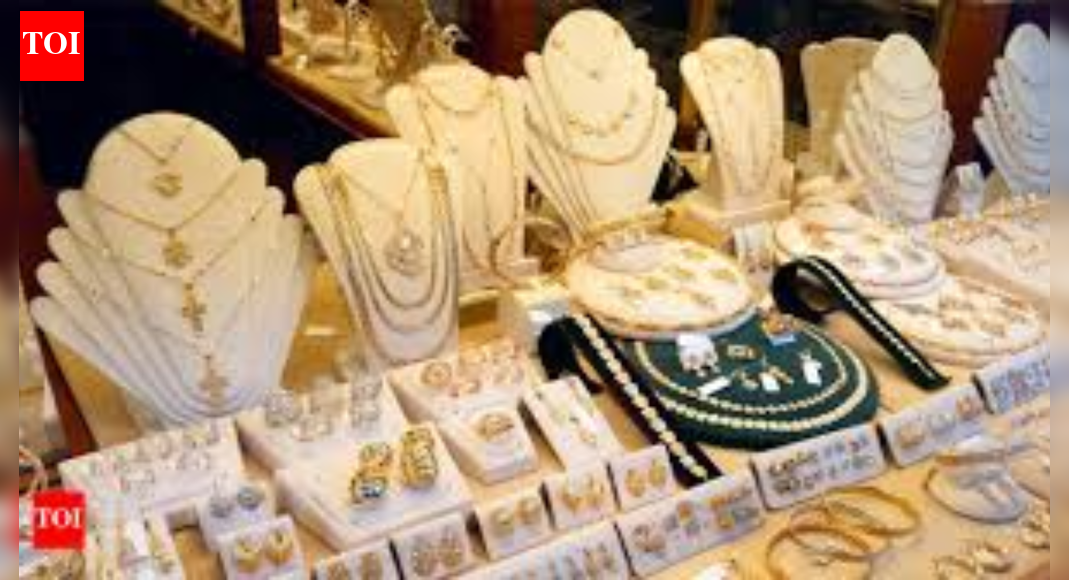
India’s gems and jewellery exports rose nearly 20 per cent year-on-year to $2.5 billion in November, buoyed by higher shipments of cut and polished diamonds, studded gold jewellery and silver items, according to provisional data released by the Gem and Jewellery Export Promotion Council (GJEPC), PTI reported.Exports stood at $2.1 billion in November last year. However, cumulative exports for April–November remained broadly unchanged at $18.86 billion compared with $18.85 billion in the corresponding period of 2023–24, reflecting uneven global demand conditions across major markets.Cut and polished diamonds logged a sharp increase in November, with gross exports rising to $919.74 million from $666.34 million a year earlier. Lab-grown polished diamonds also registered growth of 10.55 per cent, touching $76.09 million against $68.83 million last year.Gold jewellery exports remained largely flat at $1.21 billion versus $1.23 billion a year ago as volatility in global prices continued to weigh on orders. In contrast, studded gold jewellery exports surged to $828.89 million from $555.39 million on the back of higher job-work demand in India.Silver jewellery shipments posted one of the strongest recoveries, soaring to $197.97 million from $63.99 million after supply constraints in previous months eased.“Markets are stabilising and demand in many export destinations is picking up, including Hong Kong, China and the Middle East. Even as performance in the US remains slow, robust demand elsewhere is supporting growth,” GJEPC chairman Kirit Bhansali told PTI. He added that gold-studded jewellery exports surged as job-work orders increased, while silver shipments rebounded with supply chains normalising.Despite the mixed trend across categories, industry leaders expect export momentum to improve in the coming months as inventories stabilise and global retail demand turns more favourable.

[ad_2]

Source link

Investment focus: CII pitches reforms for Budget 2026-27; industry body seeks capex push

[ad_1]

Investment focus: CII pitches reforms for Budget 2026-27; industry body seeks capex push

The Confederation of Indian Industry (CII) has urged the Centre to adopt a wide-ranging set of reforms in the Union Budget 2026-27 to reinforce India’s investment-led growth cycle and sustain its position as one of the world’s fastest-expanding major economies, PTI reported.In a detailed submission for the upcoming Budget, CII recommended raising central capital expenditure by 12% and increasing capex support to states by 10% in FY27, launching a Rs 150 lakh crore National Infrastructure Pipeline (NIP) 2.0 for 2026-32, and introducing incremental tax credits or compliance relaxations for companies achieving notable milestones in investment, output or tax contribution. The industry body also sought an NRI Investment Promotion Fund and the reinstatement of accelerated depreciation benefits to spur fresh capital expenditure, especially for MSMEs and manufacturing sectors, without triggering Minimum Alternate Tax (MAT) liability.CII said strengthening the National Investment and Infrastructure Fund (NIIF) through a proposed Sovereign Investment Strategy Council (SIFC) would help align investments with national economic priorities. The Union Budget for FY27 is scheduled to be presented on February 1.According to the industry chamber, replacing rigid annual fiscal-deficit rules with an economic-cycle-based public debt framework would bolster resilience and allow counter-cyclical flexibility during global shocks, while ensuring the credibility of medium-term debt sustainability.“The forthcoming Union Budget 2026-27 has to serve the dual role of stabiliser and growth enabler, and promoting investments will be one of the most critical components in this regard,” said CII Director General Chandrajit Banerjee.He added that CII’s proposals centre on fiscal prudence, capital efficiency and building investor confidence.CII stressed that public capex has been the backbone of India’s post-pandemic recovery, crowding in private investment. To improve execution, it suggested creating a Capital Expenditure Efficiency Framework (CEEF) for selecting high-impact projects and monitoring outcomes based on productivity and regional growth spillovers.The chamber said facilitating private and foreign investment will be essential in driving the next phase of expansion. It proposed tax incentives linked to new investment and production milestones in high-growth areas such as clean energy, electronics, semiconductors and logistics. It also suggested the creation of an NRI Investment Promotion Fund — a government-private entity with up to 49% government stake — to mobilise overseas and institutional capital into infrastructure and emerging sectors.Further, easing external commercial borrowing norms with higher limits, longer tenures and partial risk cover for infrastructure and manufacturing projects would improve access to foreign capital, CII said. A single-window clearance system with deemed approval within 60-90 days for large FDI proposals was also recommended to accelerate big-ticket investment decisions.To deepen engagement with global investors, CII proposed an India Global Economic Forum — a government-led platform bringing together sovereign wealth funds, pension funds, private equity firms and multinational corporations for structured dialogue with senior policymakers.“An investment-driven growth strategy, anchored in fiscal credibility and institutional reforms, will define India’s next development phase,” Banerjee said.

[ad_2]

Source link

Brown University shooting: Person of interest in custody; manhunt ends

[ad_1]

Brown University shooting: Person of interest in custody; manhunt ends

A person of interest has been taken into custody in connection with the deadly shooting at Brown University that killed two people and injured nine others, officials said on Sunday, after hours of panic and a massive manhunt that left large parts of Providence on edge.The shooting unfolded Saturday afternoon during a final exam review session for a large economics class inside the Barus and Holley engineering and physics building, a central academic facility on Brown’s campus. At 4.22 pm, the university issued an emergency alert warning students and staff of an active shooter and instructing them to lock doors, silence phones and remain hidden.

US: Deadly Shootout At Brown University; Shooter ‘Hiding Inside Campus’, Mega Hunt On After 2 Killed

What followed was a chaotic and frightening evening. Hundreds of police officers flooded streets surrounding the Ivy League campus, knocking on doors, checking parked vehicles and sweeping neighbourhoods near Hope Street and Governor Street as the suspected gunman fled the scene. Restaurants and shops closed early, residents stayed indoors, and students sheltered in dormitories, basements and nearby businesses, including a popular tea shop.Providence Mayor Brett Smiley said at a late-night press conference that two people had been killed and nine others injured. Eight victims were shot and taken to hospital in critical condition, while a ninth person was hurt by bullet fragments. Authorities have not yet confirmed how many of the victims were Brown students.In the hours after the attack, university officials issued multiple alerts that were later corrected, at one point stating that a suspect had been detained before retracting the message. Another alert warning of additional gunfire off campus was also later described as inaccurate, adding to confusion and anxiety among students and residents.Police initially said they were searching for a male suspect dressed in black who exited the building on the Hope Street side. The type of weapon used remains unclear. Officials said more information would be released once the investigation progresses.President Donald Trump said on social media that he had been briefed on the incident and that the FBI was assisting local authorities. Rhode Island Governor Dan McKee said state law enforcement and emergency management teams were fully engaged in the response.As the campus remains closed and classes suspended, Brown University officials said counselling and support services would be made available, while investigators work to determine the motive behind one of the deadliest campus shootings in recent years.

[ad_2]

Source link

Navi Mumbai upgrade plan: CIDCO floats tender for third-runway study; feasibility report to shape future expansion

[ad_1]

Navi Mumbai upgrade plan: CIDCO floats tender for third-runway study; feasibility report to shape future expansion

The City and Industrial Development Corporation (CIDCO) has kicked off the process to evaluate the possibility of adding a third runway at the Navi Mumbai International Airport, issuing a bid invitation for a techno-commercial feasibility study, an official told PTI on Sunday.The state planning authority has launched an e-tender for the consultancy assignment, calling for online Requests for Proposal (RFP) from eligible single entities, joint ventures or consortiums that meet the stipulated criteria. “The consultancy assignment is aimed at assessing the technical and commercial viability of developing a third runway at the Navi Mumbai International Airport, keeping in view future air traffic growth and operational requirements. The scope of work falls under CIDCO’s Transport and Airport (T & C) department,” the official said.CIDCO has set a six-month timeframe for the study, with the consultant to be selected through the Least Cost Selection (LCS) method in line with procurement norms. The official added that tender documents and the bidding schedule will be available on the CIDCO e-tendering portal from December 16. The feasibility review is expected to be a critical input for long-term capacity planning at the greenfield airport, designed to ease pressure on Mumbai’s existing airport and support rising passenger and cargo movement across the Mumbai Metropolitan Region.

[ad_2]

Source link

‘Consistently reiterated our position’: India rebuts Bangladesh’s charges after envoy summoned; denies hostile acts | India News

[ad_1]

‘Consistently reiterated our position’: India rebuts Bangladesh's charges after envoy summoned; denies hostile acts
AI Image used for representative purpose

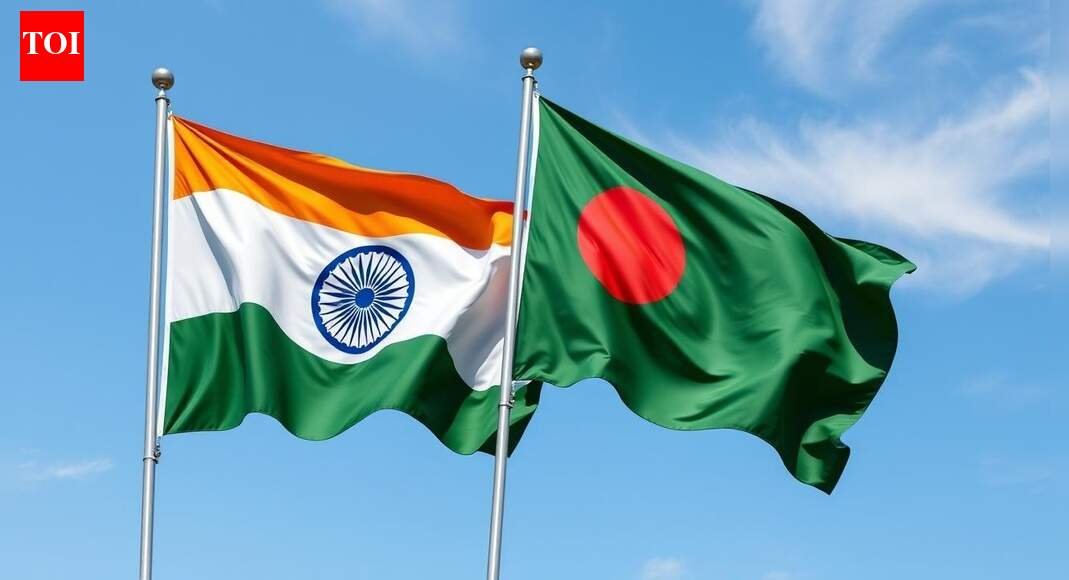
NEW DELHI: India on Sunday firmly rejected assertions made by the interim government of Bangladesh, saying New Delhi has consistently supported free, fair and inclusive elections in the neighbouring country and has never allowed its territory to be used for activities hostile to the interests of the Bangladeshi people.In a statement responding to a press note issued by Bangladesh’s interim government, the Ministry of External Affairs (MEA) said India “categorically rejects” the allegations levelled against it and reiterated that it has never allowed its territory to be used for activities inimical to the interests of the Bangladeshi people.“India has consistently reiterated its position in favour of free, fair, inclusive and credible elections being held in Bangladesh in a peaceful atmosphere,” the MEA said, adding that New Delhi’s stance on the issue has remained unchanged.The response came hours after Bangladesh summoned high commissioner Pranay Verma to its foreign ministry, conveying what it described as “deep concern” over Sheikh Hasina, who is currently in India, being allowed to make “provocative statements calling on leaders and activists to engage in terrorist activities” in Bangladesh.During the meeting, Dhaka also formally sought the immediate extradition of Sheikh Hasina. It further raised what it called “anti-Bangladesh activities” by Awami League members residing in India, alleging that they were attempting to disrupt the country’s upcoming national elections.In its statement, the MEA rejected any suggestion that India was complicit in destabilising Bangladesh. “India has never allowed its territory to be used for activities inimical to the interests of the friendly people of Bangladesh,” it said.At the same time, the MEA placed emphasis on Dhaka’s responsibility to ensure stability during the electoral process. “We expect that the interim government of Bangladesh will take all necessary measures for ensuring internal law and order, including for the purpose of holding peaceful elections,” the MEA added.

[ad_2]

Source link

Wealth outlook: India set for multi-trillion-dollar expansion; MoSL sees $12 trillion value boost ahead

[ad_1]

Wealth outlook: India set for multi-trillion-dollar expansion; MoSL sees $12 trillion value boost ahead

India is poised to enter a decisive phase of economic expansion that could redefine long-term wealth creation, according to Motilal Oswal Financial Services’ 30th Wealth Creation Study, which projects a sharp acceleration in the country’s economic and consumption landscape over the next 17 years, ANI reported.The study draws a parallel with the last growth cycle, when India’s GDP expanded fourfold from $1 trillion in 2008 to $4 trillion in 2025, and says a similar trajectory could take the economy to $16 trillion by 2042. Unlike the previous phase, which added $3 trillion in absolute GDP, the next leg is expected to add $12 trillion, signalling what the brokerage terms a much stronger wealth-effect that could significantly lift consumption, investment and corporate profitability.A major pillar of this expansion is expected to be the financial services ecosystem, with cumulative household savings estimated at $47 trillion over the period. Banks, NBFCs, insurers, AMCs, wealth managers, capital market platforms and other intermediaries are expected to play a central role in channelling these savings into productive financial assets as households move further towards formal wealth creation avenues.Per capita income, currently around $2,600, is projected to quadruple to $10,400 by 2042, pushing millions of Indians into higher consumption brackets. The study says this transition will strengthen discretionary categories including white goods, food-tech platforms, quick commerce, healthcare, travel, telecom and allied services, accelerating the shift from necessity spending to lifestyle-driven consumption.On automobiles, MoSL highlights significant headroom for growth. Penetration levels of cars, SUVs, two-wheelers and three-wheelers remain well below those of peer economies with similar income levels. As affordability improves and financing deepens, ownership ratios are expected to rise across cities and semi-urban markets.Real estate is also set to be a key beneficiary, with strong demand expected for credible developers, particularly in the premium and luxury segments. Rising household wealth, better affordability and higher preference for quality housing are likely to sustain sectoral momentum.Overall, the study notes that the next 17 years could mark a step-change in India’s economic and wealth trajectory. With expansion taking place on a much larger base, the impact of the wealth-effect is expected to be far deeper than previous cycles, creating long-term opportunities across financial services, consumption-led industries, automobiles and real estate.

[ad_2]

Source link

Sydney Bondi Beach shooting: Israel president condemns ‘cruel attack on Jews’ – top developments

[ad_1]

Sydney Bondi Beach shooting: Israel president condemns 'cruel attack on Jews' - top developments
Police cordon off an area at Bondi Beach (AP photo)

Australian city Sydney was shaken on Sunday by a violent mass shooting, involving two gunmen, at the city’s iconic Bondi Beach, leaving multiple people dead and others injured during a Chanukah celebration. The attack prompted condemnation from national leaders, community groups, and international figures as authorities work to investigate.

9 killed, several others injured

Nine people were killed after gunmen open fired at Sydney’s Bondi Beach, according to police’s statement to AFP. Additionally, Australia’s national broadcaster ABC reported that one of the attackers was also killed, and at least 11 others were injured.

2 gunmen involved

Two gunmen were involved in the shooting, leaving nine people dead, according to the Australian Broadcasting Corp. Police shot and killed one of the attackers. The other was arrested.One bystander emerged as a hero amid the chaos, confronting the armed gunman. A video captured the tense moment: as gunshots rang out and panicked crowds scattered, the man used parked cars for cover, closed in on the shooter, and tackled him in a daring attempt to wrestle the rifle away. His intervention briefly disarmed the attacker, providing a critical window for others to escape and for police to respond.Read more: Bystander tackles gunman at Bondi Beach; heroic act caught on camera

‘Shocking & distressing’: Australian PM Anthony Albanese

Australian Prime Minister Anthony Albanese expressed shock after the incident offering prayers and assistance. “The scenes in Bondi are shocking and distressing. Police and emergency responders are on the ground working to save lives. My thoughts are with every person affected,” he said. “I have just spoken to the AFP Commissioner and with the NSW Premier. We are working with the NSW Police and will provide further updates as more information is confirmed. I urge people in the vicinity to follow information from the NSW Police,” he added.

Israel calls the attack ‘vile’

Israeli leaders strongly condemned a terrorist attack on a Chanukah celebration in Sydney.Speaking at a ceremony honoring immigrant contributions to Israel, President Isaac Herzog called the attack “vile”. He said, “At these very moments, our sisters and brothers in Sydney, Australia, have been attacked by vile terrorists in a very cruel attack on Jews who went to light the first candle of Chanukah on Bondi Beach. Our hearts go out to them. The heart of the entire nation of Israel misses a beat at this very moment. As we pray for the recovery of the wounded, we pray for them and we pray for those who lost their lives. We send our warmest strength from Jerusalem.”Herzog also urged the Australian government to take action against rising antisemitism, warning of “the enormous wave of antisemitism which is plaguing Australian society.”Foreign Minister Gideon Sa’ar described the attack as “murderous” and linked it to years of antisemitic incitement in Australia. He tweeted, “These are the results of the anti-Semitic rampage in the streets of Australia over the past two years, with the anti-Semitic and inciting calls of ‘Globalise the Intifada’ that were realized today.” He added that the Australian government, “which received countless warning signs, must come to its senses.Energy Minister Eli Cohen extended condolences and emphasized the need to fight antisemitism worldwide. “We stand with the Jewish community in Sydney, Australia, in its difficult times, sending condolences to the murdered and praying for the recovery of the wounded,” Cohen said. “Sadly, antisemitism in the world is raising its head, gaining backing from weak leaders who succumb to terror and collaborate with false campaigns against Israel. We must fight antisemitism with an iron fist and by all means.”

Australian Muslim organisation condemns ‘horrific’ shootings

A major Australian Muslim organisation condemned the “horrific” shooting. “Our hearts, thoughts and prayers are with the victims, their families, and all those who witnessed or were affected by this deeply traumatic attack,” the Australian National Imams Council said in a statement. “This is a moment for all Australians, including the Australian Muslim community, to stand together in unity, compassion, and solidarity,” it added.

[ad_2]

Source link

Work-life balance push: Right to Disconnect Bill sparks corporate debate; firms say boundaries help but flexibility key

[ad_1]

Work-life balance push: Right to Disconnect Bill sparks corporate debate; firms say boundaries help but flexibility key

The Right to Disconnect Bill, 2025 — a private member’s bill introduced in Parliament last week — has reopened the conversation on work-life boundaries, even though experts say it is unlikely to become law anytime soon. The legislation, moved by NCP MP Supriya Sule, proposes giving employees the legal right to ignore work-related communication outside designated working hours. While private member’s bills seldom translate into statutes, they often succeed in spotlighting issues of public concern — and this one has already triggered strong reactions across India Inc, according to an ET report.Executives at Mercedes-Benz India, RPG Group, Bombay Realty (Wadia Group), Grant Thornton Bharat, TeamLease Services and Randstad India said the move underlines a growing cultural shift toward employee well-being. Several countries including France, Belgium, Ireland and Australia have already enacted similar rights, experts noted. “Its stated intent is broadly aligned with our approach to employee well-being in a holistic manner,” an RPG Group spokesperson told ET. The conglomerate has implemented flexible hours, hybrid models and firm boundaries such as CEAT’s 8 pm–8 am no-work window, no-work weekends and silent lunch hours. “We believe a happy work environment leads to happy employees, who in turn will deliver their best,” the spokesperson said, ET quoted.Mercedes-Benz India MD and CEO Santosh Iyer said the company’s hybrid working model — allowing employees to work from home twice a week — supports “quality time with family members” while maintaining accountability. “There is higher trust in hybrid culture,” he added. Randstad India CEO Viswanath PS described the proposed law as a “coming of age” moment for the Indian workforce. “This invites us to dismantle the ‘always-on’ habit,” he said, arguing that leadership must shift focus from “input metrics” like hours worked to “impact metrics”.Grant Thornton Bharat partner Priyanka Gulati said conversations with about 20 client organisations across sectors show broad support for clearer boundaries. “Self-accountability is more powerful in mature organisations where employees measure their energy, not just their hours,” she said. At the same time, she noted that companies expect employees to stretch when business demands it. TeamLease Digital CEO Neeti Sharma said defined hours — 9 am to 6 pm, Monday to Friday — act as a helpful baseline, particularly for dispersed teams. “Companies also need flexibility for global collaboration, time zones and project-based work,” she said.Experts stressed that young professionals often hesitate to say no, which makes clearer norms important. Lydia Naik, Group CHRO at Bombay Realty (Wadia Group), said there is “no one-size-fits-all” for work hours. “What truly matters is the quality of work, personal balance and ensuring workloads are realistic,” she said. Despite the bill’s uncertain legislative future, the renewed debate suggests a shift in how Indian workplaces view well-being, productivity and boundaries — with corporate India acknowledging that the era of being perpetually “online” may be nearing its end.

[ad_2]

Source link