Breaking News
Stock market today (March 27, 2026): Nifty50 opens below 23,100; BSE Sensex down over 800 points as US-Iran war, oil prices weigh on sentiment

[ad_1]

Stock market today (March 27, 2026): Nifty50 opens below 23,100; BSE Sensex down over 800 points as US-Iran war, oil prices weigh on sentiment
Stock market today (AI image)

Stock market today: Nifty50 and BSE Sensex dropped in opening trade on Friday as US-Iran war tensions and crude oil prices continued to weight on sentiment. While Nifty50 went below 23,100, BSE Sensex was down over 800 points. At 9:16 AM, Nifty50 was trading at 23,045.55, down 261 points or 1.12%. BSE Sensex was at 74,438.18, down 835 points or 1%.Dr. VK Vijayakumar, Chief Investment Strategist, Geojit Investments Limited says, “The on and off reaction of the market to news and events regarding the war is likely to continue in the near-term. The spike in Brent crude back to around $108 level will again trigger another round of risk-off in the Indian market. The market correction since the war began has brought down Nifty valuations to fair levels. Nifty is now trading at about 19 times, which is lower than the last 10-year average of 22.4 times. But if India’s macros take a hit due to this energy crisis, valuations may again decline factoring-in the feared hit to earnings growth in FY27.”“The Indian economy is strong enough to absorb the shock if the war ends, crude cools down and gas availability becomes normal. But if the war prolongs, crude remains elevated for months together, and gas availability constraints continue, the stress on India’s macros will be significant and the market will discount that. In brief, everything boils down to how long the war will last. The market hope is that since a prolonged war is in nobody’s interests, it may end soon. The US itself is now looking for an exit strategy. Market corrections and rising retail price of petroleum products may exert pressure on the US regime to cool down the conflict.”Global cues remained weak. US markets declined sharply, with the Nasdaq Composite dropping more than 2% to enter correction territory, while the S&P 500 and the Dow Jones Industrial Average fell over 1% each. Investors moved towards safer assets amid concerns over a potential escalation in the US-Israeli conflict with Iran, which has driven oil prices higher and intensified inflation worries.The weakness in Wall Street spilled over to Asian markets, with traders remaining cautious even after Donald Trump once again extended the deadline for Iran to reach an agreement. Crude oil prices, however, edged lower.On the domestic front, foreign institutional investors were net sellers on Wednesday, offloading equities worth Rs 1,805.37 crore. In contrast, domestic institutional investors remained net buyers, purchasing shares worth Rs 5,429.78 crore.(Disclaimer: Recommendations and views on the stock market, other asset classes or personal finance management tips given by experts are their own. These opinions do not represent the views of The Times of India)

[ad_2]

Source link

Cipla, Bajaj Finserv & more: Top stocks to watch on March 27, 2026

[ad_1]

Cipla, Bajaj Finserv & more: Top stocks to watch on March 27, 2026

UBS has a neutral rating on Cipla with the target price cut to Rs 1,400, from Rs 1,750 earlier. Analysts said the company’s growth drivers are intact but supply headwinds weigh on near-term outlook. A healthy product pipeline to drive FY28 earnings for Cipla. However, there is a lack of near-term catalysts. They feel a healthy product pipeline to drive medium-term growth. They pointed out that there are near-term headwinds for Cipla with key product Lanreotide facing supply issues.Motilal Oswal Securities has initiated its coverage of Bajaj Finserv with a neutral rating and a target price of Rs 1,900. Analysts said in the lending business, the company provides the scale, profitability and about 11-crore customer base. The company remains the core value contributor, providing predictable earnings, strong return on equity (ROE) and sustained compounding.Jefferies has a buy rating on LG India with the target price at Rs 1,910. Analysts said that the initial summer trends were good. The company had a 7-9% price hikes in 3 & 5-star ACs in the Jan-March quarter (Q4FY26). Further hikes of 5-10% likely in April due to weak rupee, and higher raw material cost. While LPG shortage is a key industry risk, players are evaluating other fuel sources. LG India’s exports at 6% of sales, of which West Asia is a smaller part.Nomura has a buy rating on EClerx Services with the target price cut to Rs 2,200 from Rs 2,800. Analysts said that the company’s annual contract value was healthy and sales effectiveness was visible in deal wins and a robust pipeline. The company is aiming to reinvest margins while keeping the guidance band intact. The stock is trading at an attractive valuation of 14.6x FY28 earnings per share (EPS).CLSA has a high conviction outperform rating on Coforge with the target price at Rs 2,278. Analysts met the company’s CEO to discuss the latest AI narrative along with Coforge’s positioning. The CEO mentioned that AI is not going to be deflationary for service providers who have both domain and technical knowledge to build solutions around AI tools. Similar to hybrid cloud and SaaS managed services opportunities during the last decade, there will be a significant managed services opportunity around managing frontier models and orchestrating AI agents. The proof of pudding in case of Coforge would be visible in strong growth in NTM executable orderbook, revenue per employee and earnings before interest and taxes (EBIT) margins. The analysts reiterated their rating on a mid-teens US dollar revenue growth.JP Morgan has an overweight rating on United Spirits with the target price at Rs 1,565. The company announced full divestiture of its stake in Royal Challengers Sports for Rs 16,660 crore (Rs 230/share). Adjusted for tax it would accrue Rs 195-200/share against. This follows a strategic review of the entity announced on November 5, 2025, as the company aims to focus more sharply on its core alcoholic beverage business. The transaction is expected to be completed within 6 months, subject to necessary approvals.(Disclaimer: Recommendations and views on the stock market, other asset classes or personal finance management tips given by experts are their own. These opinions do not represent the views of The Times of India)

[ad_2]

Source link

Ram Navami 2026 in Ayodhya: Surya Tilak at Ram Janmabhoomi temple, timings, rituals and celebration

[ad_1]

Ram Navami 2026 in Ayodhya: Surya Tilak at Ram Janmabhoomi temple, timings, rituals and celebration

A major Hindu festival, Ram Navami 2026 commemorates the birth anniversary of Lord Rama, the embodiment of purity and justice. Ram Navami was scheduled for Thursday, March 26, 2026 while Ayodhya city is celebrating Ram Navami today, March 27, 2026. Devotees unite on this auspicious occasion to honor the teachings, ideals, and values of Lord Rama. On this auspicious day, the much awaited Surya Tilak will also take place at 12 PM.

Ram Navami 2026: Date and Time

Tithi Date and Time
Navami Tithi Begins March 26, 2026 – 11:48 AM
Navami Tithi Ends March 27, 2026 – 10:06 AM
Rama Navami Madhyahna Muhurat March 27, 2026 – 11:13 AM to 01:41 PM
Rama Navami Madhyahna Moment March 27, 2026 – 12:27 PM

Watch

Chaitra Navratri Miracle | Do This for 9 Days and Transform Your Fate | Ft. DP Shastri

Ram Navami 2026: Significance

Ram Navami is one of the most prominent festivals of Hindus, that is celebrated across the country with great grandeur and enthusiasm. This is the birth anniversary of Lord hri Rama and a large number of people celebrated Ram Navami on March 26th but Ayodhya city is celebrating the Ram Janamotsav today on 27th March. King Dashrath and Queen Kaushalya welcomed Lord Ram into this world in Ayodhya, known as Ram Janmabhoomi. On this auspicious day, people celebrate Lord Ram’s birth anniversary and offer their sincere prayers. Additionally, the day represents the triumph of good over evil. On this unique day, many believers travel to Ayodhya to have a glimpse of Ram Lala. Ram Navami occurs during Chaitra Navratri on the ninth day (Navami) of the Hindu calendar’s Chaitra month.

How Ram Navami is celebrated?

Lord Ram is the seventh incarnation of Lord Vishnu, who is honored for truth, dharma (righteousness), and moral principles and that’s why he is known as Maryada Purushottam Ram. In Hinduism, Ram Navami holds a great relligious and spiritual significance. On Navami Tithi of Shukla Paksha in the month of Chaitra, the entire nation celebrates Ram Navami. In the northern Indian state of Uttar Pradesh, the well-known Ram temple, Ayodhya Ram Mandir, the birthplace of Lord Ram, is the most liked tourist attraction. Ayodhysa celebrates Ram Janmotsav with great splendour and joy. People first take a holy dip in Saryu river then they arrive the Ram temple.

Ram Navami 2026: Surya Tilak in Ayodhya:

Surya Tilak will take place today, on March 27, 2026 in Ayodhya, Janmabhoomi of Lord Shri Ram. On the auspicious day of Ram Navami, sunlight is diverted to contact the forehead of the Ram Lalla deity at precisely 12 PM in a ritual known as Surya Tilak. At precisely 12:00 PM on Ram Navami, a sophisticated system of mirrors and lenses designed by eminent Indian scientists directs sunlight into the sanctum sanctorum, producing a brilliant, blazing Tilak on the forehead of the Ram Lalla deity. This amazing moment will last for just few minutes and people would be able to view this magical moment from their eyes. The temple trust will broadcast the Surya Tilak live on screens across Ayodhya for those, who are unable to capture this incredible moment, and people from different cities will also be able to witness this moment through the news channels. On the holy day of Ram Janmotsav, the trust makes sure that nobody misses the magnificent moment of Surya Tilak.

Ram avami 2026: Free Darshan Timings

On the day of Ram Navami, devotees can attend the free darshan during the times listed below:

  • 07:00 AM to 09:00 AM
  • 09:00 AM to 11:00 AM
  • 11:00 AM to 12:00 PM
  • 01:00 PM to 03:00 PM
  • 03:00 PM to 05:00 PM
  • 05:00 PM to 07:00 PM
  • 07:00 PM to 09:00 PM
  • Mangal Aarti: 04:30 AM
  • Shringar Aarti: 06:30 AM
  • Shayan Aarti: 09:30 PM

Ram Navami 2026: Arrangements at Ram Mandir

According per the reports from Gopal Rao of the Shri Ram Janmabhoomi Teertha Kshetra Trust the proper arrangements have been made for the devotees. He claims that the midday aarti, which is scheduled for 12 PM, will coincide with Surya tilak. For almost four minutes, the sun’s rays will stay on the forehead of Ram Lalla, allowing devotees to have a glimpse of Surya Tilak. The temple administration installed television screens throughout the city so that the devotees can watch all of the ceremonies and Surya Tilak. This was done with the understanding that there would be a rush around the temple and that not all of the devotees would be able to witness this inside the temple. From early in the morning till late at night, the temple will be open today.

[ad_2]

Source link

Top stocks to buy today: Stock recommendations for March 27, 2026 – check list

[ad_1]

Top stocks to buy today: Stock recommendations for March 27, 2026 - check list
Top stocks to buy today (AI image)

Stock market recommendations: Granules India, and RBL Bank are the top two stocks that Bajaj Broking Research has recommended for March 27, 2026. Views on Nifty, and Bank Nifty have also been shared:Index View: NiftyIndian benchmark indices staged a strong rebound over the past two trading sessions, driven by improving global sentiment amid signs of a possible de-escalation in Middle East tensions. Investor confidence was buoyed by reports suggesting that U.S. President Donald Trump is actively pursuing a diplomatic resolution to the nearly month-long conflict involving joint U.S.-Israeli forces and Iran.According to media sources, Washington has presented Tehran with a comprehensive 15-point peace proposal aimed at easing hostilities and restoring stability in the region. While these developments have sparked optimism across global markets, there has been no official confirmation or response from the Iranian side so far, leaving some uncertainty over the outcome of the initiative.The prospect of mediated conversations between the U.S. and Iran was enough to spark a decline in oil prices, which have been elevated for days compared to pre-war levels.Volatility is expected to remain elevated in the near term due to uncertain global cues, firm crude oil prices, and ongoing geopolitical tensions. The index is likely to consolidate in the range of 22,400–23,850 in the coming sessions.Nifty in the last two sessions rebounded from extreme oversold territory on both daily and weekly oscillators. Going ahead, a move above Wednesday’s high of 23,465 could extend the pullback towards 23,800 levels.However, for a meaningful pause in the ongoing downtrend, the index needs to form a sustained higher high–higher low structure on the daily chart and close above last week’s high of 23,862.On the downside a breach below current week low of 22,471 may trigger further downside towards 22,100 and 21,800 levelsBANKNIFTYBank Nifty also witnessed a strong rebound in the last two sessions driven by improving global sentiment amid signs of a possible de-escalation in Middle East tensions.Volatility is expected to remain elevated in the near term, driven by rising geopolitical tensions, and rising crude oil prices which continue to weigh on overall market sentiment.Index is likely to consolidate in the range of 51,400-54,800 in the coming sessions.Going ahead a strength above Wednesday high (54150) will open further pullback towards 54,800 levels in the coming sessions. Index need to form higher high and higher low on a sustained basis and closed above the 54,700 levels to signal a pause in the downward trend.On the downside a breach below 51,400 will open further downside towards 50,700 and 50,000.

Stock Recommendations:

Granules IndiaBuy in the range of ₹ 620.00-632.00

Target Return STOPLOSS Time Period
₹ 685 10% 588 1 Month

The share price of Granules India has generated a breakout above the last three months consolidation range 625-560 signaling strength and offers fresh entry opportunity.The breakout is supported by strong volume signaling larger participation at the breakout area. We expect stock to extend the up move and head towards 685 levels, being the measuring implication of the recent range breakout. The daily 14 periods RSI is in uptrend rebounding taking support at its nine periods average thus validating positive bias.RBL BankBuy in the range of 298-305

Target Return STOPLOSS Time Period
₹ 330 10% 287 1 Month

The stock has formed a potential double bottom around 290 levels and has surged above the 50 days EMA thus offers fresh entry opportunity.The stock has also given a breakout above last 9 days range signaling positive bias. We expect it to head towards 330 levels in the coming month being the 80% retracement of the entire decline (340-288)The daily 14 periods RSI has generated a buy signal moving above its nine periods average thus validate positive bias.(Disclaimer: Recommendations and views on the stock market, other asset classes or personal finance management tips given by experts are their own. These opinions do not represent the views of The Times of India)

[ad_2]

Source link
Strait Of Hormuz: Iran’s oil revenue soars as others struggle due to Strait of Hormuz crisis; how much is it earning daily?

[ad_1]

Iran’s oil revenue soars as others struggle due to Strait of Hormuz crisis; how much is it earning daily?

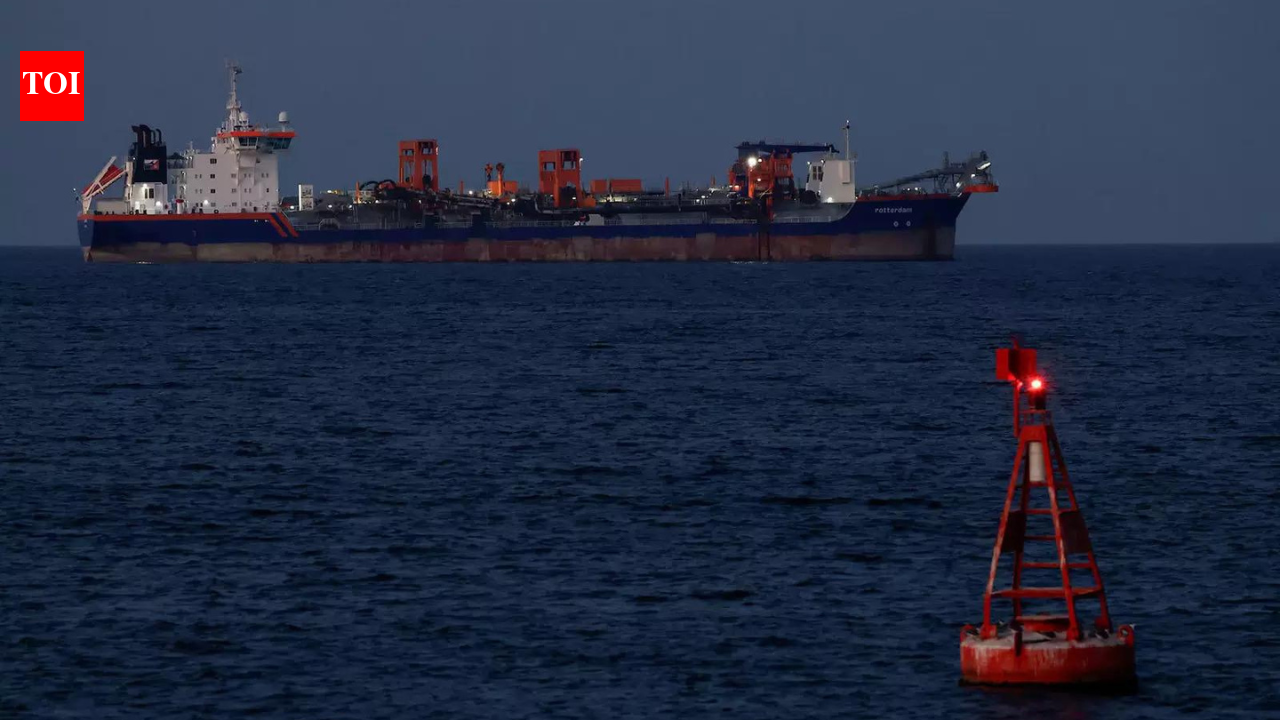
Iran is benefitting twofold from the sale of oil amid rising prices since the start of the war as it is the only country to transit the Strait of Hormuz. Tehran is estimated to have generated roughly $139 million per day from sales of this key blend so far in March, up from about $115 million per day in February, Bloomberg reported citing export estimates from TankerTrackers.com.Despite US and Israel’s continuous strikes on Iran, its crude exports are estimated to have stayed broadly in line with prewar levels of around 1.6 million barrels per day this month, the report said. Tankers carrying Iranian oil are still loading at the Kharg Island terminal and transiting the Strait of Hormuz, with activity picking up in recent days. Meanwhile the war-hit nation has blocked ships going to aggressor nations via Hormuz.

Watch

Strait of Hormuz Crisis Explained | Will Iran Challenge the West More Than Red Sea

Iran’s crude has strengthened relative to the global Brent benchmark, with its discount narrowing to about $2.10 per barrel at the start of this week, the tightest level in nearly a year. Before the conflict, the gap had exceeded $10 per barrel..While countries such as Iraq and Kuwait have been forced to sharply curb output and the UAE and Saudi Arabia have rushed to find alternative export routes, Iran has continued shipping crude from the Persian Gulf, exporting about 1.6 million barrels a day on average between March 1 and 23, near prewar levels, after already recording unusually high shipments in February, the strongest since around July 2018.Oil facilities at Iran’s key export hub on Kharg Island have remained untouched by US strikes, which targeted only military sites, even as US President Donald Trump had indicated at attacking the island during the initial days of the war.Iran has warned US and Israel that Hormuz would be “completely shut” if its energy infrastructure is targeted. Trump halted attacks on its energy infrastructure till April 6 saying the talks are going very well“As per Iranian Government request, please let this statement serve to represent that I am pausing the period of Energy Plant destruction by 10 Days to Monday, April 6, 2026, at 8 P.M., Eastern Time. Talks are ongoing and, despite erroneous statements to the contrary by the Fake News Media, and others, they are going very well,” he said.

[ad_2]

Source link

Horrific murder caught on camera in Karnataka: Man slits wife’s throat, drives SUV over her body | Hubballi News

[ad_1]

Horrific murder caught on camera in Karnataka: Man slits wife’s throat, drives SUV over her body
A shocking incident took place near Balurgi village in Afazalpur taluk in Kalaburagi district on Thursday, wherein a man slit his wife’s throat with a sharp weapon and drove his car over her body.

HUBBALI: A shocking incident took place near Balurgi village in Afazalpur taluk in Kalaburagi district on Thursday, wherein a man slit his wife’s throat with a sharp weapon and drove his car over her body. The victim is Saheli,26, from Baramati in Maharashtra, who was brutally murdered by her husband Akshaya and run over by his car. Saheli, along with her husband Akshaya, left by car from Baramati in Maharashtra for Devalagapur in Afazalpur taluk. Akshaya stopped the car near the main road on the outskirts of Balurgi village in Afazalpur taluk in the middle of the road, allegedly slit his wife’s throat with a sharp weapon and drove the vehicle over her. It is said that even as the murder was taking place in the middle of the road, the motorists who were driving by stood and watched, instead of stopping the crime. It has come to light that some people captured this terrifying scene on their mobile phones, and a video of this incident has gone viral on social media. On hearing the news, SP Addur Srinivasalu, Afazalpur CPI, PSI and staff, dog squad and fingerprint experts visited the spot and carried out an investigation. The exact reason for this murder has not been ascertained, and will be known after investigation, said police sources. A case has been registered at Afzalapur police station.

[ad_2]

Source link

Army puts to test its new ‘Shaurya’ drone squadron for tank units | India News

[ad_1]

Army puts to test its new ‘Shaurya’ drone squadron for tank units

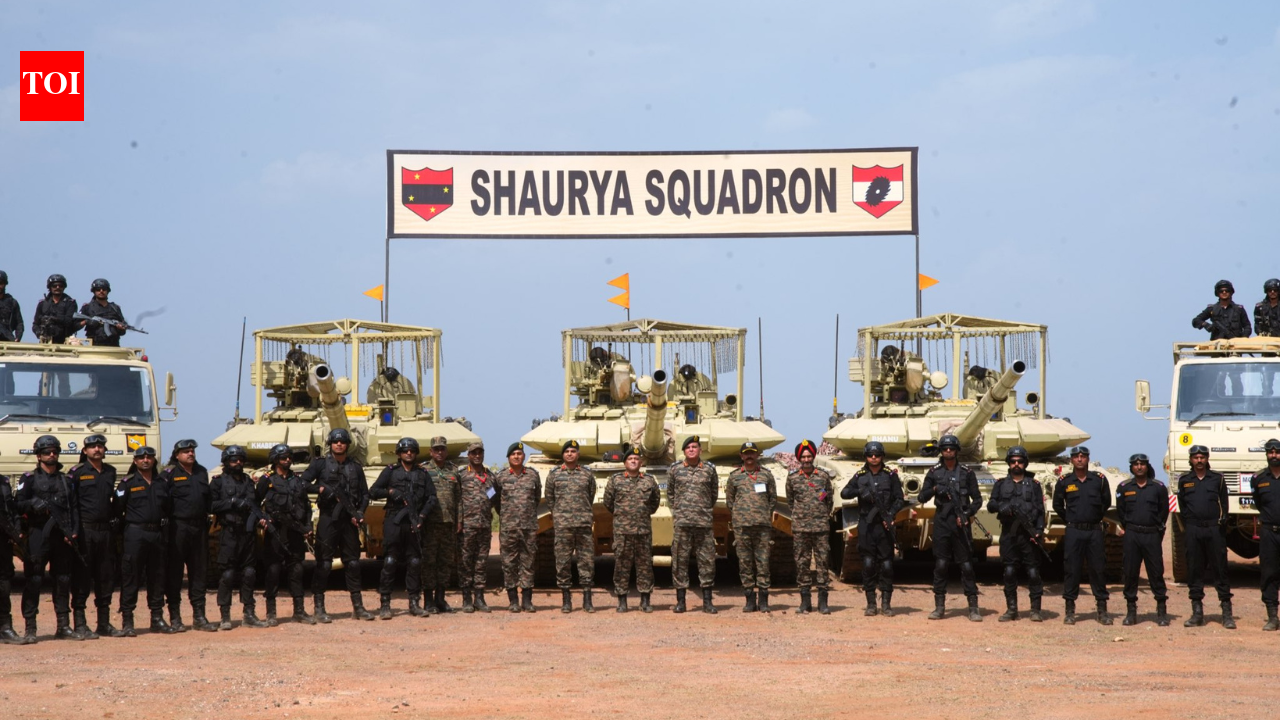
NEW DELHI: Learning from Operation Sindoor, the Indian Army is equipping its armoured regiments with dedicated drone units known as ‘Shaurya Squadrons’. These units are being integrated into tank formations to support surveillance, precision strikes, electronic warfare and logistics, adding drone capabilities directly to armoured operations.Just a few days ago, the Army tested a Shaurya Squadron in a realistic battle environment at Babina Field Firing Ranges near Jhansi, where Southern Army Commander Lt Gen Dhiraj Seth witnessed a drone squadron in action. Led by the White Tiger Division under the Sudarshan Chakra Corps, the 13-day drill showed how drone support added extra punch to the fire power of armoured regiments.On X, the Southern Command said, “Fielded in a realistic battle environment, Shaurya Squadron demonstrated the seamless integration of real-time surveillance assets with mechanised forces, attack helicopters, swarm strikes and coordinated firepower, enhancing battlefield awareness, compressing the sensor-to-shooter cycle and enabling swift, decisive battlefield response.”A source in the Army told TOI that “5-6 Shaurya Squadrons have been activated till now”. “However, the concept of the drone unit integration is still at a nascent stage and more trials are needed for perfection. The formal raising of such units will happen after a formal approval is received,” the source said.The Army operates one of the world’s largest main battle tank fleets with 63 armoured regiments. Each regiment is typically equipped with about 45 tanks, constituting a total fleet of roughly 4,500 tanks, including T-90S Bhishma, upgraded T-72 M1 ‘Ajeya’, and Arjun MK1/MK1A variants.Drawing lessons from global conflicts, including Russia-Ukraine war, that are drone-centric, the Indian Army is gradually pushing to institutionalise UAV or drone capabilities across its arms.In the infantry, the Army last year raised Ashni platoons, equipped with surveillance UAVs and loitering munitions for tactical ISR (intelligence, surveillance and reconnaissance) and strike roles. In the artillery, Divyastra batteries have been raised to integrate UAV-based targeting with conventional guns for faster and more autonomous engagement cycles.

[ad_2]

Source link

Iran hands Hormuz pass to India, Pak, Russia, China, Iraq | India News

[ad_1]

Iran hands Hormuz pass to India, Pak, Russia, China, Iraq

In what could potentially be a big relief, Iran has said it would allow India to use the Strait of Hormuz, clearing the way not only for 20 Indian-flagged cargo vessels stranded to its west to pass through the choke point, but also raising hopes that another 18 empty LPG tankers can go through the conflict-hit 52km strait to load cargo.“We have permitted certain countries that we consider friendly to pass through (Strait of Hormuz). We allowed China, Russia, India, Iraq and Pakistan to transit,” Iranian foreign minister Seyed Abbas Araghchi said, according to Iranian State TV. At the same time, he made it clear that ships linked to Iran’s adversaries will not be allowed to transit through the strategic waterway. “The region is a war zone, and there is no reason to allow the ships of our enemies …to pass through,” he said.TOI has learned that a dozen India-bound ships to the west of Hormuz – including five loaded with 2.3 lakh tonnes of LPG – are waiting to cross the strait and head to Indian ports. “The smooth passage of all Indian-flagged ships will improve availability of LPG, LNG and crude in India,” an official keeping a close watch on the developments said. India in Iran’s list of ‘friendly countries’ comes as a surpriseOnce these ships reach Indian ports and discharge the load, they can be sent to pick new consignments,” said the official. “Few of the 20 Indian-flagged vessels in this region are not bound for India but other ports,” the official added.The 18 LPG tankers are waiting to enter the strait to pick up cooking gas from Gulf nations, officials said.Iran’s decision to green flag ships headed for India marks a success for New Delhi’s diplomacy, with PM Modi holding two rounds of talks with Iranian president Masoud Pezeshkian. Modi had asserted that the blockade of the strait (by Iran) was unacceptable. External affairs minister S Jaishankar had also contacted his Iranian counterpart Araghchi with the same request.India’s inclusion in the group that Tehran called “friendly” came as a surprise. Two of the five “friendly countries” mentioned — Russia and China — are seen by Iran as partners in its fight against the US and Israel. The remaining two are the Islamic countries of Turkiye and Pakistan, with the latter anxiously trying to play the intermediary between the Trump administration and the Iranian leadership.India, in normal times, gets around 27-30 LPG tankers every month to meet domestic requirements as it imports 60% of its cooking gas, with 85-90% of this being sourced from Gulf countries, including Saudi Arabia and the UAE. To meet the shortfall, govt is sourcing cooking gas from the US, Argentina, Norway, Canada and Russia, and some cargo has already reached Indian ports through other sea routes.Two LPG vessels — Shivalik and Nanda Devi — reached India last week, while Pine Gas and Jag Vasant are likely to reach this week.According to Kpler, only 138 ships crossed the energy choke point between March 1 and 23, including 87 oil and gas tankers. This translates into 5-6 ships a day, a 95% drop in crossings since the war began. Reports also suggest that more than 1,900 ships are unable to move in the vicinity of the Strait of Hormuz.

[ad_2]

Source link

Fewer flights, no fare caps: Domestic airfares set to soar | India News

[ad_1]

Fewer flights, no fare caps: Domestic airfares set to soar

NEW DELHI: Be prepared for expensive domestic flights this summer, just like international flights have been since the outbreak of Iran war. The summer schedule is likely to see about 3,000 weekly fewer domestic flights – a 12% decline – over last summer’s 25,610. With the fare caps gone and the number of flights reduced, cost of travel is set to soar under the summer schedule that is effective from March 29.“A significant hike in aviation turbine fuel prices is expected from April 1. That will mean a serious increase in operating costs and fares. Though Air India group, IndiGo and Akasa have either hiked or levied, that will mean nothing compared to the ATF hike being anticipated. At those levels, only a handful of either profitable (read IndiGo) or backed by cash-rich groups (read Tata for Air India) will be able to operate flights as per demand. Some weak players simply won’t have funds to fill up their planes and will struggle to remain afloat,” said an industry insider.Airlines know hiking fares beyond a point will mean hurting demand, which will then mean operating fewer flights. The approved schedule anyway is the maximum number of flights that an airline can operate. The number that is actually does depends on supply, demand and operating costs, among other things.

[ad_2]

Source link

Deutsche Bank GCC fuels AI push with incubator

[ad_1]

Deutsche Bank GCC fuels AI push with incubator

MUMBAI: The Indian Global Capability Center (GCC) of Deutsche Bank is betting on a startup-style approach to accelerate AI adoption, with its in-house incubator at Deutsche India Pvt Ltd (DIPL) drawing 100 ideas within its first 100 days, reflecting what its leadership describes as an unusually high openness to technological change among the local workforce.Stefan Schaffer, MD & CEO of DIPL, said the India-based GCC has seen employees embrace AI-led transformation with far less resistance than in many mature markets. He attributed this to a broader cultural association of change with progress, shaped by rapid digital adoption in India, including platforms such as UPI. He said that this adaptability is proving valuable for a 150-year-old institution navigating structural shifts.DIPL, which employs over 20,000 people across Pune, Bengaluru, Jaipur and Mumbai, is driving its AI push through a programme called “AI Forward”, which combines top-down investment with bottom-up participation. A key pillar is the incubator, modelled on startup ecosystems, where employees can pitch ideas directly to leadership and refine them with expert input. Complementing this is a large-scale training effort that has already covered 20,000 employees on large language models and responsible AI usage, alongside a “Catalyst” initiative that embeds specialists within teams to prototype solutions in live environments.The shift towards AI is part of a broader strategic reset at Deutsche Bank’s technology operations. Having already rebalanced its workforce mix from 30% internal staff to 70%, and increased the share of engineers to 70%, the bank is now targeting deeper ownership from its GCCs. Under a new “70-50-30” framework, it aims to locate 50% of portfolio owners and 30% of senior leadership roles within its technology centres, including India, to ensure end-to-end accountability.Schaffer said that while AI is becoming embedded in mainstream operations, core enterprise platforms will remain critical. Instead of replacing foundational systems, AI is expected to transform the “last mile” of configuration, enabling faster and more flexible development while retaining the structural integrity required in a regulated banking environment.

[ad_2]

Source link