Breaking News
Stock market outlook: Fed rate call and FII flows set the tone; CPI, rupee in focus this week

[ad_1]

Stock market outlook: Fed rate call and FII flows set the tone; CPI, rupee in focus this week

Global cues are likely to take centre stage for Indian equities in the coming week, with investors bracing for the US Federal Reserve’s interest rate decision and closely tracking foreign institutional investor (FII) activity for direction, PTI reported.Analysts said domestic markets, which ended last week largely flat, are expected to react to a mix of global monetary signals, macro data and currency movements. Benchmark indices Sensex and Nifty closed the previous week with marginal losses, reflecting cautious sentiment.“This week, markets will closely track India’s CPI print on December 12. Globally, the spotlight will be on the US Federal Reserve’s interest rate decision, which could drive risk sentiment across emerging markets already navigating currency pressures,” Ajit Mishra, SVP (Research) at Religare Broking Ltd, said, PTI quoted.The rupee, which breached the 90-per-dollar mark last week, is also likely to stay on investors’ radar amid concerns over capital flows and global risk appetite.According to Pravesh Gour, senior technical analyst at Swastika Investmart Ltd, attention is firmly shifting to the US Federal Open Market Committee (FOMC) meeting scheduled for December 9–10. Alongside the rate decision, key US macro data will also be tracked.“Alongside the FOMC decision, key US economic data will remain on investors’ radar. The US JOLTs Job Openings data due on December 9 and the Employment Cost Index (q/q), scheduled for December 10, will provide fresh insights into the health of the US labour market and wage pressures,” Gour said.He added that movements in the US dollar index and Treasury bond yields will be critical, as sharp swings could influence risk appetite across global equity and debt markets.Market participants will also watch the tone of the Fed’s post-policy commentary and guidance on the future path of interest rates. “Beyond the rate action itself, investors will be keenly tracking the Fed’s commentary and guidance on the future path of interest rates — an element that may prove even more influential in the weeks ahead,” said Ponmudi R, CEO of Enrich Money, PTI quoted him as saying.With India’s economic growth remaining resilient despite global headwinds, analysts believe the domestic market could benefit if global fund flows rotate back towards emerging markets. “In this context, the Fed’s messaging will be pivotal in shaping near-term sentiment and market direction for India,” Ponmudi added.(Disclaimer: Recommendations and views on the stock market, other asset classes or personal finance management tips given by experts are their own. These opinions do not represent the views of The Times of India)


[ad_2]

Source link

Mitch Marner’s net worth in 2025: A look into his career earnings, endorsements, contract details, and more | NHL News

[ad_1]

Mitch Marner’s net worth in 2025: A look into his career earnings, endorsements, contract details, and more
Golden Knight’s right-winger Mitch Marner (Image Via Twitter)

Mitch Marner is one of the most promising right-wingers who has solidified his place and has quickly established himself as a dynamic force on the ice, who is now busy showcasing his professional skills with the Vegas Golden Knights since July 1, 2025.Known for his speed, creativity, and competitiveness despite a smaller frame, Marner reached several milestones: a Maple Leafs record 23-game point streak in 2022, 500 career points in just 467 games, and a career-high 99 points in 2022-23, which earned him a Selke Trophy nomination for his defensive play.Marner surpassed the 100-point mark for the first time in 2024-25. His decade-long run in Toronto ended when he was traded to the Vegas Golden Knights on July 1, 2025, where he signed an eight-year, $96 million contract after posting a career-best 102 points.Apart from his successful career, he has also earned significant wealth over the years. Let’s take a look at the details of his net worth in 2025, brand deals, endorsements, and life after moving to Vegas.

Mitch Marner’s net worth in 2025

According to Sportskeeda, Mitch Marner estimates a net worth of between $20 million and $25 million. After serving the Toronto Maple Leafs, his recent move to the Vegas Golden Knights has increased his value and recognition in the league. As per reports, Marner signed an eight-year, $96 million extension with Vegas, which is an average annual value of $12 million, adding to his annual net worth.

Mitch Marner’s career earnings in 2025

Reports suggest that Mitch Marner’s career earnings are rapidly climbing, and it is expected to exceed $83 million by mid-2025. His career earnings are going to be fueled by his massive 8-year, $96 million contract signed with the Vegas Golden Knights in 2025, including his earlier deals as well. According to Puckpedia, it is estimated that his total career earnings are around $97.65 million by late 2025, including his significant contracts.

Mitch Marner’s Top 10 Career Highlights

Mitch Marner’s endorsements

As Marner continues to reign in the hockey league, over the years he has signed good endorsement deals. Marner has signed an endorsement and is associted with world-famous brands like Nike, Beats by Dre, RedBull, Amazon Canada, Oakley, and Intact Insurance.

Mitch Marner’s contract details

Star winger Mitch Marner has been traded from the Toronto Maple Leafs to the Vegas Golden Knights in a blockbuster deal ahead of the 2025 NHL free-agency window in July, 1, 2025. The team secured Marner via trade, locking him into an eight-year contract worth whopping $96 million, with an average annual value of $12 million, making him one of the highest-paid wingers in the history of the league.Also read: Nikita Kucherov’s net worth: What are the current earnings of the Tampa Bay Lightning right-winger in 2025? | NHL News – The Times of India


[ad_2]

Source link

Gold rate outlook: Prices stay firm as Fed decision nears; analysts say rupee weakness adds support

[ad_1]

Gold rate outlook: Prices stay firm as Fed decision nears;  analysts say rupee weakness adds support

Gold prices are expected to remain on a positive footing in the coming week as investors await cues from the US Federal Reserve’s monetary policy decision, with a weaker rupee adding to support in the domestic market, analysts said, PTI reported. The bias for the yellow metal remains constructive amid expectations of an interest rate cut by the Fed and continued purchases by central banks. “Gold is expected to remain on the positive side as traders will be focusing on the US Federal Reserve’s FOMC meeting outcome and the Fed Chair Jerome Powell’s commentary,” said Pranav Mer, Vice President, EBG – Commodity & Currency Research at JM Financial Services Ltd, adding that China’s trade and inflation data and US jobs numbers will also be watched closely.On the Multi Commodity Exchange (MCX), gold futures gained Rs 958, or 0.74 per cent, during the week, outperforming global prices. Analysts attributed this outperformance largely to currency movements. “Gold prices in the Indian markets have rallied more than the Comex gold prices on account of rupee depreciation against the dollar. The rupee is now at the highest mark of 90, which makes gold in Indian currency costlier,” Prathamesh Mallya, DVP – Research, Non-Agri Commodities and Currencies at Angel One, said, PTI quoted.Mallya added that the rally could extend further, supported by expectations of a rate cut, rising central bank demand and fund buying. In contrast, Comex gold futures edged lower by $11.9, or 0.28 per cent, over the week. Mer said global prices largely consolidated within a range but remained supported by a weaker dollar and growing bets of a Fed rate cut at its December 10 meeting.Meanwhile, silver continued to outperform gold, touching fresh record highs on strong industrial demand. On the MCX, silver futures surged Rs 8,427, or 4.81 per cent, during the week. On Friday alone, prices jumped Rs 7,096, or 3.98 per cent, to hit a record Rs 1,85,234 per kilogram.“In the first half of the week, silver futures spiked close to Rs 1.80 lakh per kg and briefly touched fresh highs. Since then, prices have cooled off slightly but are still sitting on massive month-on-month gains,” said Chirag Doshi, CIO – Fixed Income at LGT Wealth India. He added that markets are consolidating at elevated levels, with traders increasingly using sharp intraday spikes to book profits.In overseas markets, Comex silver futures rose $1.89, or 3.30 per cent, during the week, and climbed $2.4, or 4.19 per cent, on Friday to a lifetime high of $59.90 per ounce. “Silver prices rose to yet another all-time high and moved close to $60 per ounce in the international market, while on the domestic market, prices rose close to Rs 1,90,000 per kg,” Mer said, citing strong industrial demand and tight supplies.Mer added that the momentum could push domestic silver prices towards Rs 2,00,000–2,25,000 levels in the short term. Analysts said the coming week will be crucial for bullion markets, with Fed policy cues, macroeconomic data from China and the US, and rupee trends guiding price direction.


[ad_2]

Source link

150 years of Vande Mataram: Why BJP and Congress are fighting over its ‘missing stanzas’ — explained | India News

[ad_1]

150 years of Vande Mataram: Why BJP and Congress are fighting over its ‘missing stanzas’ — explained
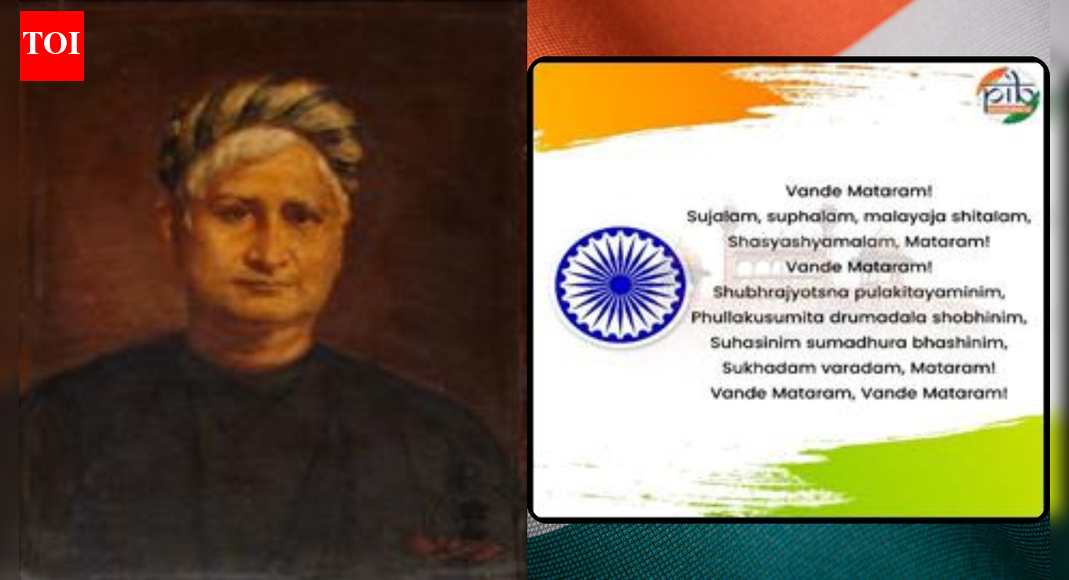
Bankim Chandra Chatterjee (Image credit: PIB)

Parliament will begin a special discussion in the Lok Sabha on Monday to commemorate 150 years of Vande Mataram, a song that remains one of the most debated symbols of India’s freedom struggle.Prime Minister Narendra Modi will open the debate, with defence minister Rajnath Singh scheduled to conclude it. The BJP has been given three hours in the Lok Sabha, the total debate will span nearly ten hours. The Rajya Sabha will hold its discussion the next day, to be opened by Union home minister Amit Shah.The commemoration is not merely ceremonial. It arrives amid renewed political sparring over the song’s historical evolution, religious imagery, and the choices made by India’s pre-independence national leadership. What began as a patriotic hymn in a Bengali novel is once again a focal point of fierce political messaging, competing historical narratives, and questions about national identity.This explainer traces the 150-year journey of Vande Mataram—from its birth in Bankimchandra Chattopadhyay’s writing to its role in nationalism, the Congress’s 1937 decision to officially use only its first two stanzas, and its recognition in the Constituent Assembly as having “equal honour and status” with the National Anthem.

Why it’s in the news now

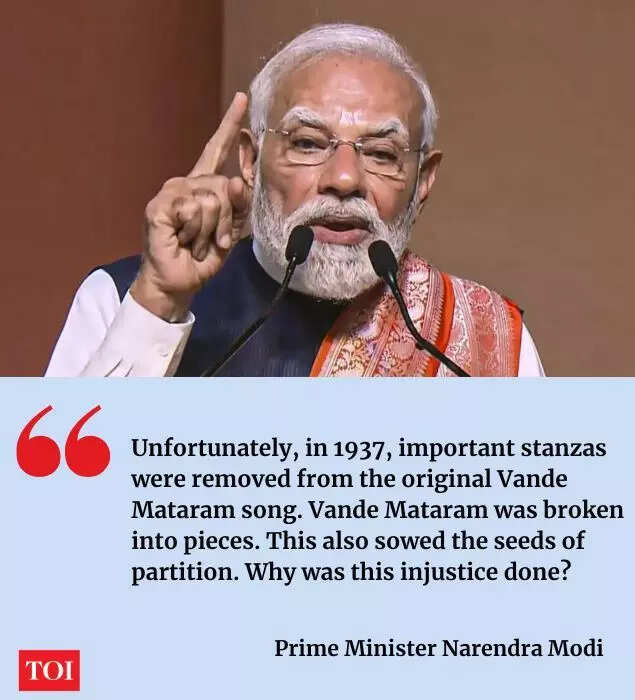
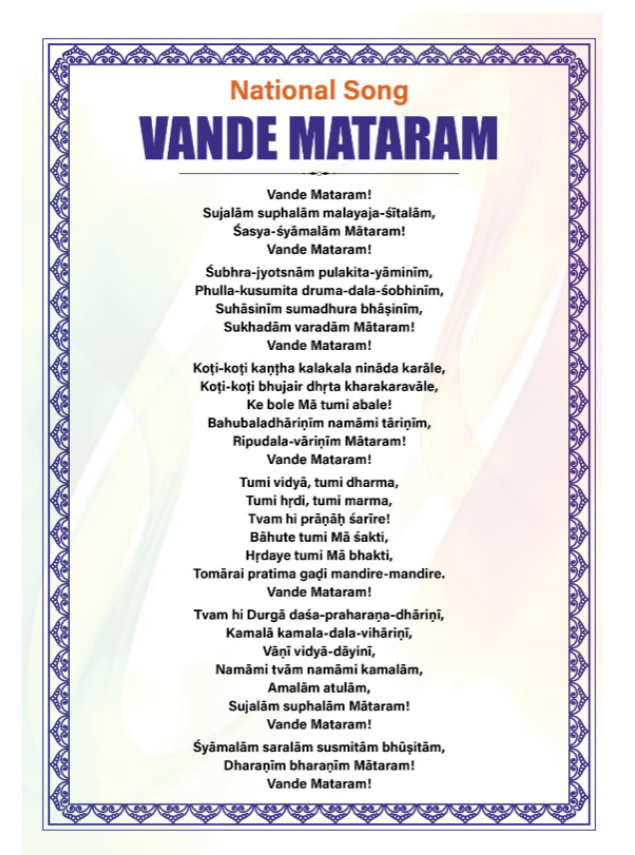
The upcoming debate is part of a special parliamentary focus on the legacy of Vande Mataram. But the political temperature was raised last month, during the commemoration event of 150 years of the national song, when Prime Minister Modi accused the Congress of having “removed important stanzas” from the original song during its 1937 Faizabad session, claiming this decision “sowed the seeds of partition.”According to the Prime Minister, the Congress’s move amounted to breaking the national song into pieces—an act that abandoned its original spirit and undermined unity. He has framed the issue within his broader narrative of ‘Viksit Bharat’, tying cultural heritage to national development.

-

The Congress hit back immediately. Citing The Collected Works of Mahatma Gandhi (Vol66, p46), the party argued that the 1937 decision was not an act of division, but a sensitive accommodation recommended by a Working Committee that included Mahatama Gandhi, Jawaharlal Nehru, Sardar Patel, Subhas Chandra Bose, Rajendra Prasad, Abul Kalam Azad, Sarojini Naidu, and other iconic leaders. The CWC noted that the first two stanzas were already the only widely sung and nationally recognised part, while the remaining contained religious imagery that some citizens objected to.The Congress also emphasised that the decision drew from the advice of Rabindranath Tagore, who had himself sung Vande Mataram at the 1896 Congress session.In its rebuttal, the party accused the prime minister of attacking the legacy of India’s freedom movement while avoiding present-day issues such as unemployment, inequality, and foreign policy challenges.This political exchange has made the upcoming parliamentary debate all the more charged.

Origins of Bande Mataram (1870s–1880s)

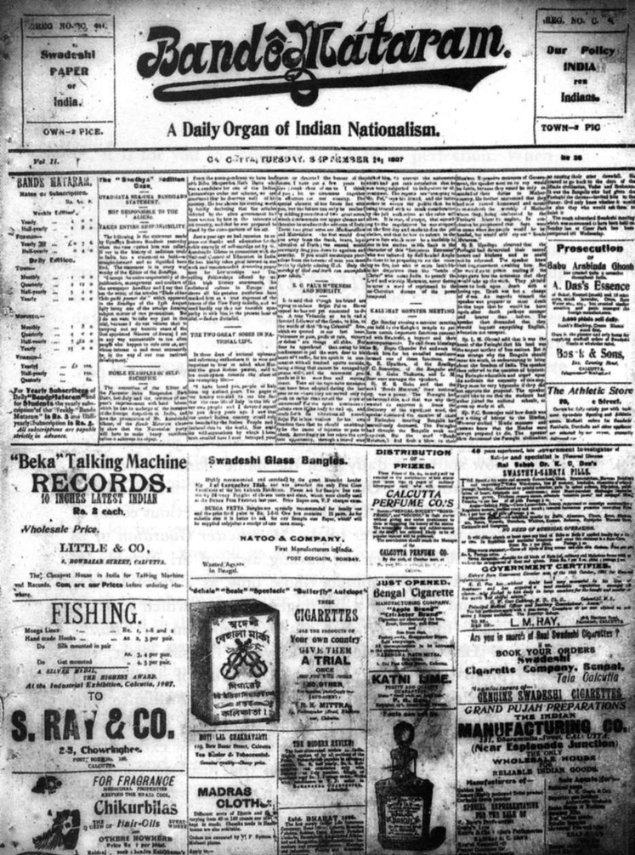
The PIB’s historical account helps clarify the origins of the song. According to Sri Aurobindo’s writing in the English daily Bande Mataram (16 April 1907), Bankimchandra Chattopadhyay composed the song around 1875. It was published more widely when Bankim’s novel Anandamath began serialization in the Bengali magazine Bangadarshan in March–April 1881.Song’s literary context: AnandamathAnandamath is built around a group of ascetic warriors, the Santanas, who dedicate themselves to freeing the motherland from oppression. Their devotion is entirely to Bharat Mata, envisioned not as a religious deity but as a personified motherland.In the temple of the Santanas stand three images of the Mother:

  1. The Mother that was – glorious and mighty
  2. The Mother that is – suffering and oppressed
  3. The Mother that will be – restored to strength and glory

For Aurobindo, the hymn embodied the essence of “the religion of patriotism.”Many later critics, however, would argue that the imagery—particularly in the later stanzas—draws from Hindu goddess symbolism that may not be inclusive of all communities.

-

From song to slogan: Birth of a nationalist cry (1900–1910)

By the early 20th century, Vande Mataram had escaped its literary origins and become one of the most electrifying symbols of Indian nationalism.Swadeshi and anti-partition movementAfter Lord Curzon’s 1905 partition of Bengal, the song became the rallying cry for:

  1. Boycott movements
  2. Protest marches
  3. Newspapers and political groups carrying its name

In 1906, at Barisal, more than 10,000 Hindus and Muslims together marched shouting Vande Mataram—a testament to its early cross-communal appeal.Figures who popularised it included:

  • Rabindranath Tagore
  • Bipin Chandra Pal
  • Sri Aurobindo

Aurobindo’s writings in Bande Mataram (the newspaper) turned the phrase into a political and spiritual exhortation for self-rule.

-

British repressionAlarmed by its galvanising effect, the colonial government tried repeatedly to suppress it through:

  • Fines for students
  • Police lathi-charges
  • Bans on marches
  • Threats of expulsion from schools and colleges

From Bengal to Bombay Presidency, chanting Vande Mataram became synonymous with nationalist defiance.In 1907, Madam Bhikaji Cama unfurled the first tricolour abroad—in Stuttgart—with the words Vande Mataram emblazoned across it.

The song and the Indian National Congress

The Congress adopted Vande Mataram not just culturally, but ceremonially.1896 —First Congress rendition: At the Calcutta session, Rabindranath Tagore sang the song, giving it national prominence.1905 — Nationwide adoption: At the Varanasi session, the Congress formally adopted Vande Mataram for all-India occasions. This was during the peak of the Swadeshi struggle, when the song had become the soundtrack of political awakening.

1937 CWC decision: Were the stanzas removed?

Yes.By the 1930s, debates around the song’s religious imagery had become politically relevant. India’s nationalist leadership wanted to keep the movement inclusive, and Muslim leaders raised objections to certain stanzas that invoked Hindu goddesses.

Did it ‘sow seeds of partition’?

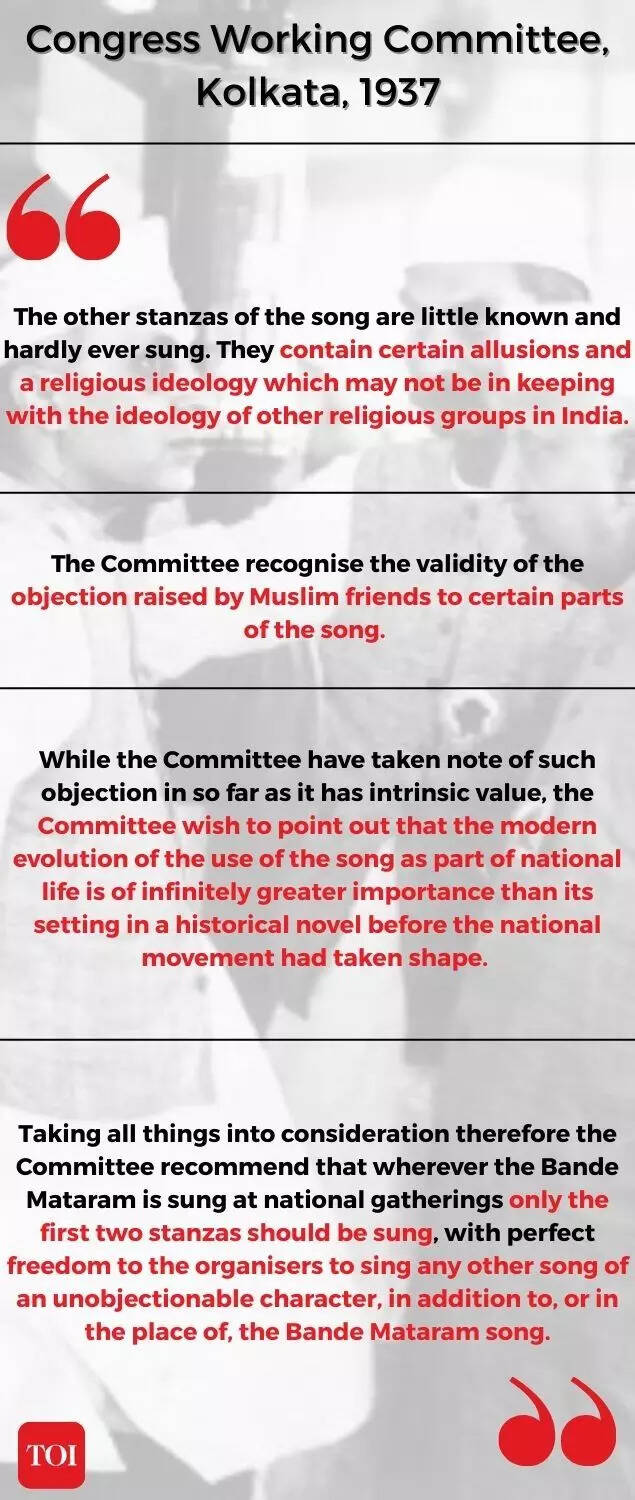
No.The CWC’s decision was more inclusive than divisive in nature.The eventual decision to restrict Vande Mataram to its first two stanzas drew directly from this history of selective popular usage. As the Committee noted, only the opening verses — celebrating the land’s beauty and abundance in gentle, inclusive imagery — had organically acquired national significance over the decades. The remaining stanzas were scarcely known, rarely sung, and contained religious allusions and ideological references that many felt were inconsistent with the beliefs of other communities. The CWC explicitly acknowledged the “validity of the objections raised by Muslim friends” to those portions. While emphasising that the song’s modern, unifying role in national life mattered far more than its origins in a historical novel, the committee concluded that only the first two stanzas should be sung at national gatherings. This, they argued, preserved the unifying spirit the song had come to embody while avoiding elements that could alienate sections of India’s diverse society.What the 1937 CWC actually saidThe CWC’s statement, issued between October 26–November 1 in Kolkata, recorded:

  • The first two stanzas had become widely used and carried no controversial imagery.
  • The remaining stanzas contained “allusions and a religious ideology” inconsistent with the beliefs of other religious groups.
  • Only the first two stanzas should be sung at national gatherings.
  • Organisers were free to choose additional songs if they wished.

The committee explicitly said that the modern national use of the first two stanzas was more important than the song’s original placement in a religiously infused novel.Tagore had long argued that when a cultural symbol is used nationally, it must not exclude or alienate. His views shaped the committee’s decision and remain central to the Congress’s defence today.

-

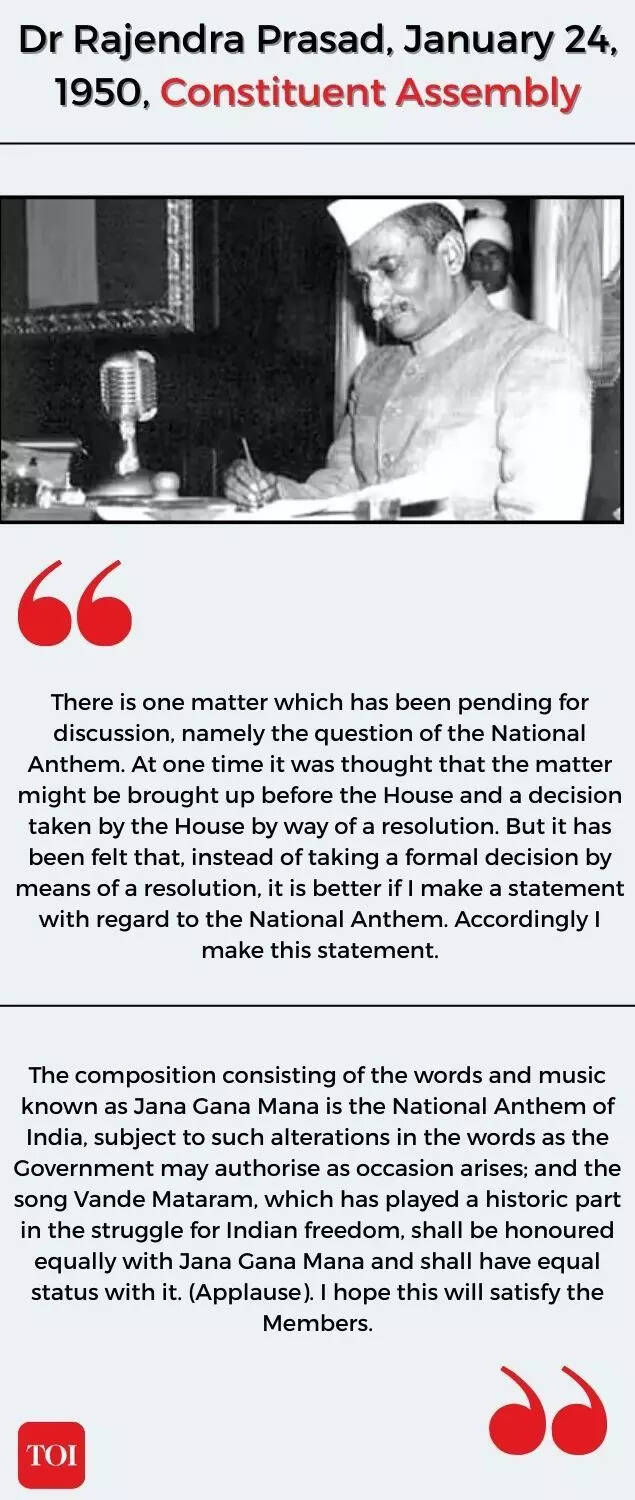
Constituent assembly: Equal honour, equal status (1950)When the Constituent Assembly met to choose India’s national symbols, there was no dispute between Jana Gana Mana and Vande Mataram.In his statement on January 24, 1950, DrRajendra Prasad, President of the Assembly, declared:Jana Gana Mana would be the national anthem.Vande Mataram, because of its historic role, would be honoured equally and accorded equal status.There was applause; no member raised objections.This dual recognition was meant to preserve both inclusivity and historical memory: the anthem would represent national unity, while Vande Mataram’s legacy would be canonised as part of India’s freedom story.

-

The debate today

Why is the BJP reviving the issue?For the ruling party, Vande Mataram is a civilizational invocation that predates partisan politics. The BJP frames the 1937 Congress decision as overly accommodative, even compromising, and often ties this critique to a larger argument about “appeasement.”In the government’s view, celebrating 150 years of the song is part of a project to reaffirm cultural pride and national self-confidence.Why is the Congress defensive?The Congress insists it is the party that first elevated the song, sang it at historic moments, and fought the British under its banner. It argues that:

  • The 1937 decision was guided by inclusivity, not division.
  • The BJP is weaponising history to distract from contemporary governance failures.
  • Tagore and the freedom movement need protecting from political revisionism.

What Jamiat Ulama-i-Hind has to say

The Jamiat Ulama-i-Hind, led by Maulana Mahmood Madani, has taken a clear and consistent position on the Vande Mataram debate: it accepts the first two stanzas as historically validated for national use but firmly rejects the remaining verses on theological grounds. Madani argued that the full composition contains imagery — particularly the depiction of the motherland as the goddess Durga — that conflicts with Islamic monotheism, making it impermissible for Muslims to recite.“He stated that Vande Mataram in its complete form is rooted in shirkiya aqaaid (polytheistic beliefs). Particularly, in the remaining four stanzas, the motherland is depicted as the goddess Durga and addressed with words of worship — concepts that clearly conflict with the Islamic belief in the oneness of God. ‘Muslims believe in one God and worship Him alone,’ Maulana Madani said. ‘Therefore, singing verses that ascribe divinity to anyone other than Allah goes against our faith and conscience,'” a statement by Jamiat said.




[ad_2]

Source link

Air India crash: Investigators to meet in US next week; Boeing and other agencies to attend

[ad_1]

Air India crash: Investigators to meet in US next week; Boeing and other agencies to attend

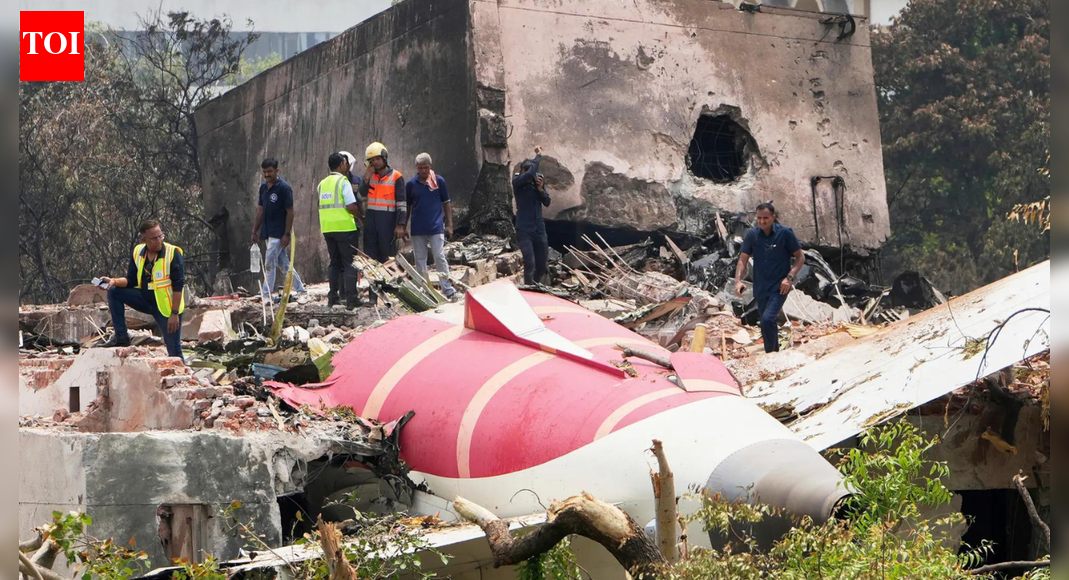
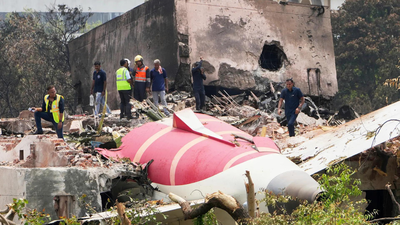
India is preparing to dispatch a team of accident investigators to Washington next week to review the ongoing probe into the June Air India crash that claimed 241 lives. The group will go through the data collected so far by the US National Transportation Safety Board (NTSB) and present their own analysis drawn from the cockpit voice recorder and flight data recorder, Bloomberg reported, citing a person with the knowledge of the matter.The Aircraft Accident Investigation Bureau (AAIB), which is heading the probe from the Indian side, will take part in the review meeting at the NTSB headquarters. Representatives from organisations involved in the investigation, including Boeing, are also expected to attend.

Who Cut the Fuel? Inside the Mystery of the Air India 171 Cockpit Audio

The NTSB said it has no information to share at this stage and referred questions to Indian authorities. Boeing directed queries to the AAIB. Attempts to reach the AAIB and India’s aviation ministry for comment over the weekend were unsuccessful.This latest development follows reports that tension has been building between Indian and American authorities over the conduct of the investigation, Bloomberg reported. At the same time, pilots’ unions in India have opposed any claims that the crash may have been the result of pilot action.The preliminary findings reported earlier noted that the aircraft’s fuel-control switches were turned off shortly after take-off from Ahmedabad, which caused the engines to lose power and left the flight unrecoverable. Although the switches were turned back on about 10 seconds later, the change was not enough to save the unfortunate Boeing 787 Dreamliner.Bloomberg reported that the investigators have not yet reached a final conclusion, though some information has already surfaced. The cockpit voice recordings reportedly captured the younger co-pilot, who was operating the aircraft at take-off, asking the captain why he turned off the switches while the captain denied doing so.The AAIB has said that more details will be available only when the final report is issued and has urged people not to draw conclusions before that point.


[ad_2]

Source link

Warner Bros-Netflix deal: Is the Tudum effect harmful for Indian cinema? ‘The risk is two-fold’

[ad_1]

Warner Bros-Netflix deal: Is the Tudum effect harmful for Indian cinema? 'The risk is two-fold'

Netflix’s takeover of Warner Bros Discovery has shaked up not just Hollywood but also caused India’s cinema industry. Multiplex Association of India (MAI) recently warned that the latest bout of consolidation could undermine the country’s theatrical ecosystem. The association has highlighted a worrying trend: global streaming platforms purchasing major studios. According to MAI, the shift in ownership threatens the supply of titles that cinemas depend on to maintain footfall across the year.Amazon’s purchase of MGM for $8.5 billion did not faced the same concerns because the studio was active at the time and Amazon subsequently increased its focus on cinemas. Amazon MGM Studios is now preparing to release three to four films annually in India, ET reported. Netflix, on the other hand, has continued to take a selective approach to theatrical releases. The financial scale of Netflix’s $83 billion agreement for Warner Bros Discovery, which follows the separation of the linear TV networks and Discovery+ into Discovery Global, places it among the largest entertainment mergers in years, comparable to Disney’s $71 billion acquisition of 21st Century Fox in 2019. MAI highlighted that Indian theatres depend on a steady, diverse slate to stay profitable. A major Hollywood studio shifting under a streaming platform that does not prioritise cinema, it argues, has implications for both competition and earnings. Warner Bros has been an integral supplier of titles to the Indian release calendar, it said. Kamal Gianchandani, president of MAI, said the Indian theatrical market is built on “choice, scale and cultural diversity” and noted the economic role played by cinemas. “Cinemas in India are more than entertainment venues. They are cultural hubs and major economic engines. They support millions of livelihoods across production, distribution, exhibition, food and beverage and ancillary services,” he told ET. He also cautioned that Netflix’s stance on cinema has already been evident. “If this acquisition proceeds, the risk is two-fold: a meaningful reduction in high quality content for cinemas and the potential for shortened or non existent theatrical windows. This would impact revenues, limit consumer choice and weaken the broader film ecosystem. A consolidation of this size requires careful scrutiny and MAI will continue to raise its concerns with regulators in India and abroad,” he said. Netflix has responded by saying it plans to retain Warner Bros’ existing operations and strengthen its theatrical capabilities. Executives within multiplex chains privately acknowledge that the merger’s immediate consequences for India may not be dramatic, as the country’s box office is driven primarily by Hindi and regional titles. Data by Ormax Media shows the 2025 box office reached Rs 11,077 crore by October, 24% higher than the previous year, with Hollywood accounting for 10% of revenue.Though Warner Bros Discovery’s share of that revenue sits in the low single digits, Hollywood oveall continues to be make double-digit contributions to large chains such as PVR Inox and Cinepolis. One senior multiplex executive noted the wider implications, “While WBD’s contribution in India is not very large, this merger will shake up global cinema in the years ahead. There is already strong opposition to the deal in the US,” he said.


[ad_2]

Source link

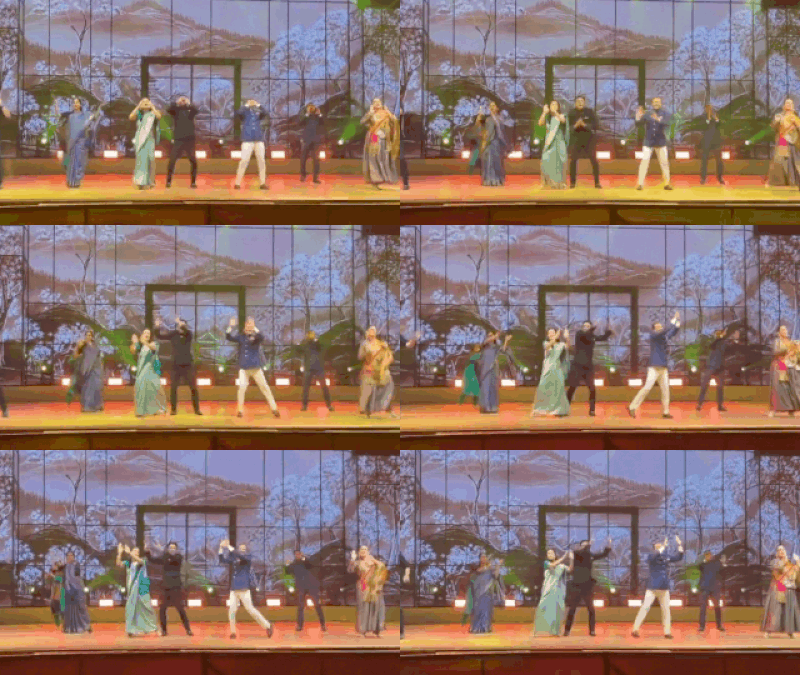
Watch: Kangana Ranaut, Mahua Moitra and Supriya Sule dance together at wedding | Delhi News

[ad_1]

Watch: Kangana Ranaut, Mahua Moitra and Supriya Sule dance together at wedding

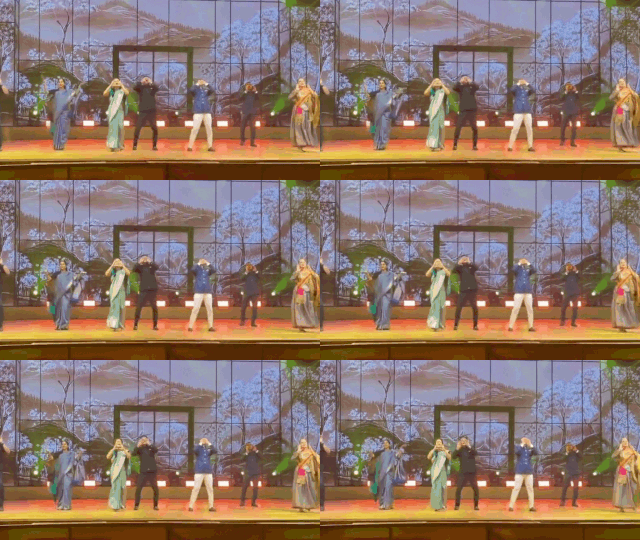
NEW DELHI: BJP MP Kangana Ranaut, TMC MP Mahua Moitra and NCP (SP) MP Supriya Sule were seen dancing during the wedding celebrations of industrialist-turned-politician Naveen Jindal’s daughter.The trio performed to a popular Bollywood song from movie ‘Om Shanti Om’.Videos of the performance have gone viral on social media, with many expressing surprise at the unusual combination of performers.The clip shows Ranaut dancing to ‘Deewangi Deewangi’ alongside Moitra and Sule, while Jindal takes centre stage.The actor-politician had also posted behind-the-scenes photos from dance practice sessions with her political rivals earlier this week.

Viral Video: Stage Crashes During UP Wedding As BJP Leaders Gather To Greet Bride & Groom

Ranaut shared a photo on Instagram showing her rehearsing for a sangeet performance with industrialist-turned-politician Naveen Jindal, TMC MP Mahua Moitra, and NCP MP Supriya Sule.

-

She captioned the post, “Filmy moments with fellow parliamentarians ha ha. Rehearsing for [Naveen Jindal] ji’s daughter’s wedding sangeet.”


[ad_2]

Source link

‘It’s really a pity’: South Africa coach Shukri Conrad accepts mistake after controversial ‘grovel’ comment | Cricket News

[ad_1]

'It's really a pity': South Africa coach Shukri Conrad accepts mistake after controversial 'grovel' comment
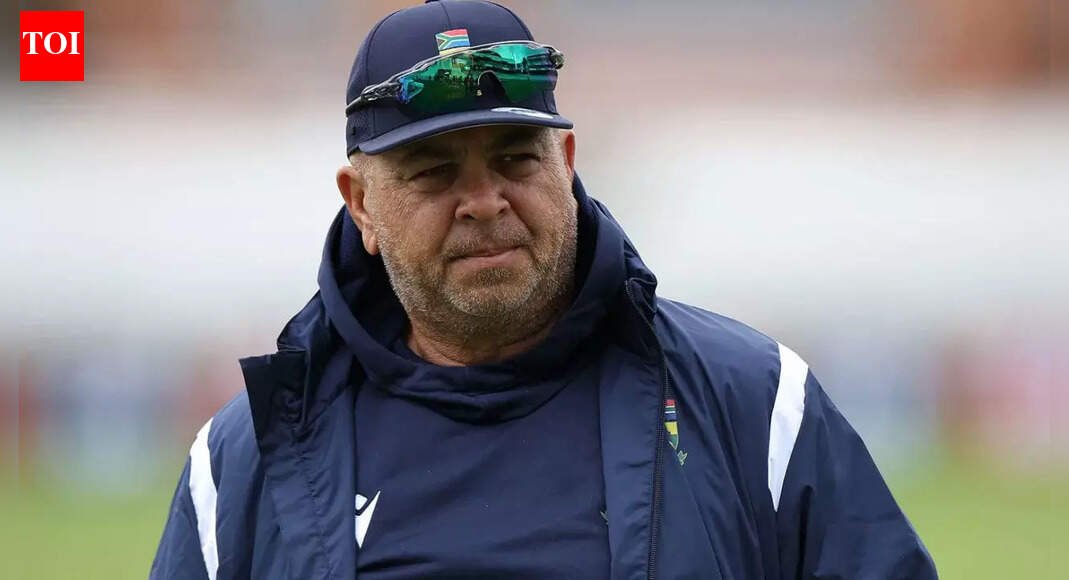
South Africa head coach Shukri Conrad (AFP Photo)

NEW DELHI: South Africa head coach Shukri Conrad acknowledged on Saturday that using the word “grovel” overshadowed his team’s historic Test win over India, though he reiterated there was no “malice” behind it. Conrad made the remark after day four of the second Test in Guwahati when South Africa were dominating, but the term — carrying racial undertones in cricket history — sparked strong reactions.Go Beyond The Boundary with our YouTube channel. SUBSCRIBE NOW!“I think on reflection, it was never my intention to cause any malice or not be humble about anything. How could I have chosen a better word on reflection? Yeah, I could have been smarter,” Conrad said after the third ODI.

Gautam Gambhir Press Conference: Team India head coach heaves fire after 2-1 ODI series win over SA

“It (the word) left it open to people putting their own context to it, where the only context I ever intended it to be was for India to spend a lot of time and make it really tough for them,” he added.Conrad said he will now be more mindful of language used in public spaces.“I’m going to be careful what word I use here now, because context would be attached to that as well. It’s really a pity. Maybe what it did do was to spice up the ODI series, especially with them winning that now, the T20 series becomes even more so.”He admitted the controversy diverted attention from South Africa’s first Test series win over India in 25 years.“The unfortunate thing is, with all the noise that word caused, I don’t think it’s a perfectly good English word, but like I said, it just left it open to too many interpretations.“What it did was take away the gloss of what was a really special win for our Test team. It’s unfortunate, but like I said, there was definitely no malice intended.”Conrad added that humility remains central to the team’s culture.“Being humble is a cornerstone of our Test team and all our teams for that matter. It’s unfortunate that the noise and the talk became around the coach.“People shouldn’t even know who the coach is. It should be about the players. That’s the unfortunate bit and I’d like to think that it’s going to be put to bed now,” he said.“We missed a special chance”Conrad also expressed regret that South Africa couldn’t secure another series win over India at home after claiming the Test victory.“Yes, we had a chance to do something really special,” he said.“I think the last time India lost both the Test and ODI series goes back to the 1990s. We missed out on that opportunity. But look, they’re a world-class side with world-class players.“When Rohit (Sharma) is in this type of form, you cannot afford to yield your game. But like I said, part of this is building towards 2027, the World Cup in South Africa. I’d like to think that a few things are starting to fall into place with that. A lot of experience built in you,” he noted.“Chance to learn from RoKo”Virat Kohli finished the ODI contest as Player of the Series with two centuries and a fifty, while Rohit Sharma also contributed with two half-centuries. Conrad said watching them was a learning experience for his young squad.“Therein lies the learnings for us, for our young batters to see what the world’s best does, i.e. Virat and Rohit, how they go about their business. And I’d like to think that we will take that learning with us and then grow from there, especially our younger batters,” he said.Conrad admitted South Africa fell short with the bat in the final ODI.“I’d like to think that we were a little bit short with the bat. We started off really well with the ball, but because we didn’t post a score big enough, the Indian opening batters didn’t have to take any risks and they put us under pressure.“But I think we let ourselves down with the bat. We needed to post something a lot more competitive to put India under pressure. But, such are the margins when two equally matched teams are up against each other, (and) when one team is slightly off,” he said.Finally, Conrad and the team manager confirmed that Tony de Zorzi will miss the upcoming T20I series after suffering a hamstring injury during the second ODI in Raipur.“He was out earlier today, so he was out of the T20 series as well. Yeah, it’s really tough. Obviously, we were, I guess I should use the term hamstrung. But we were hamstrung by Tony’s injury,” they said.


[ad_2]

Source link

23 killed in Goa’s Arpora nightclub fire: How a cylinder blast sparked deadly blaze; staffers trapped inside died of suffocation | Goa News

[ad_1]

23 killed in Goa's Arpora nightclub fire: How a cylinder blast sparked deadly blaze; staffers trapped inside die of suffocation

GOA: At least 23 people have died after a fire tore through a popular nightclub in North Goa’s Arpora village late on Saturday night, officials said. Most of the victims were staff members working at the venue. Goa’s police chief Alok Kumar told news agency PTI that the blaze was triggered by a cylinder blast inside Birch by Romeo Lane, a nightclub that opened last year and is located about 25km from the state capital, Panaji. “All the 23 bodies have been recovered,” he said, adding that the victims were almost entirely club employees. Three women were among the dead, according to chief minister Pramod Sawant. Sawant, who visited the site shortly after the fire was brought under control, said that while three people died of burn injuries, the remaining victims appeared to have succumbed to suffocation. He added that initial information suggested the club had not complied with fire safety norms. “We will take action against the club management and also against the officials who allowed it to operate despite flouting safety norms,” the chief minister said. “This is an unfortunate incident during the peak tourist season.” Earlier statements from local authorities suggested no tourists were harmed, but Sawant later said that “three to four tourists” were also among those killed. Local MLA Michael Lobo, who was also at the scene, told reporters that all the bodies had been sent to the Goa Medical College in Bambolim. He said firefighters and police teams worked through the night to recover the victims and secure the area. Lobo said the Calangute panchayat would issue notices to all nightclubs on Monday, asking them to furnish valid fire safety permissions. Licences of establishments found operating without the necessary clearances would be cancelled, he added. Authorities have ordered a detailed inquiry into the incident, and a fire safety audit of all clubs in the area is expected to begin shortly.Prime Minister Narendra Modi spoke to chief minister Pramod Sawant to enquire about the fire incident in Goa. Modi said that the fire mishap in Arpora, Goa, is deeply saddening.“My thoughts are with all those who lost their loved ones. May the injured recover at the earliest. The state govt is providing all possible assistance to those affected,” PM Modi said.


[ad_2]

Source link

Hasina’s stay in India is her personal decision: Jaishankar | India News

[ad_1]

Hasina’s stay in India is her personal decision: Jaishankar

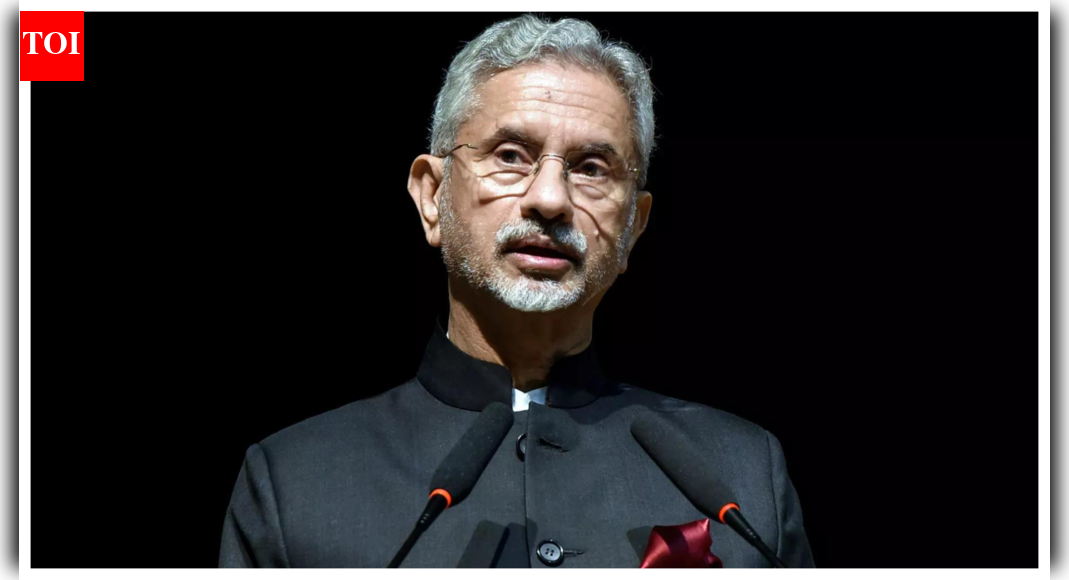
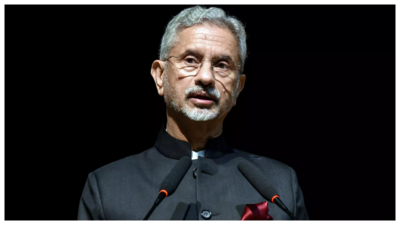
External affairs minister S Jaishankar

NEW DELHI: Amid calls by Bangladesh for ex-PM Sheikh Hasina’s extradition, external affairs minister S Jaishankar said Saturday her stay in India is her personal decision influenced by what transpired in the country last year.India has so far not acceded to Dhaka’s demand for the extradition of Hasina, who was sentenced to death last month for crimes against humanity.Asked if she could stay as long as she wanted, the minister said this was a different question. “She came here in a certain circumstance, and I think that circumstance clearly is a factor in what happens to her. But again, that is something in which she has to make up her mind,” he said. He also said India is a well-wisher of Bangladesh.

Hasina’s stay in India is her personal decision: Jaishankar

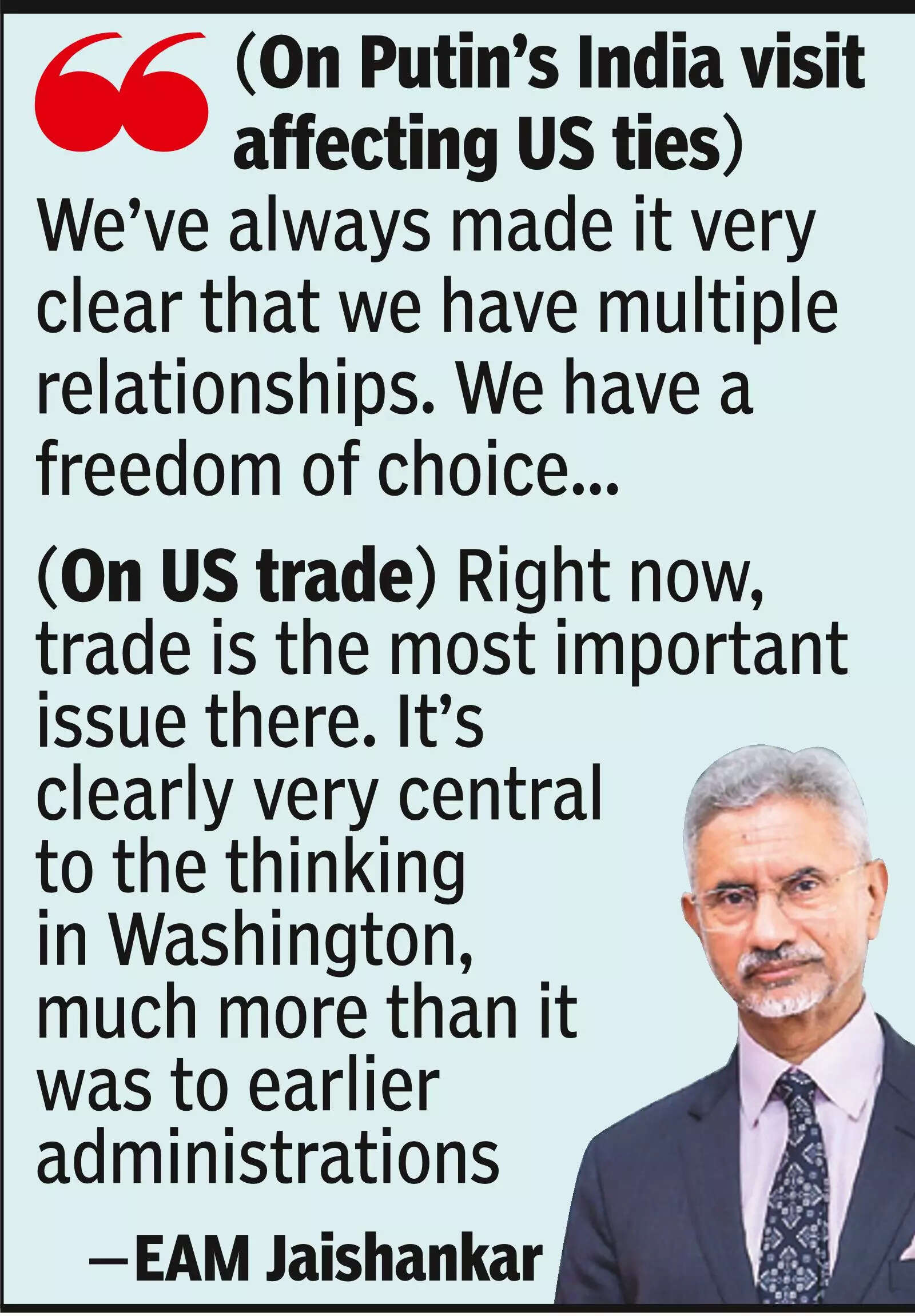
“As a democratic country… we would like to see the will of the people ascertained. I’m quite confident that whatever comes out… would have a balanced and mature view about the relationship and, hopefully things would improve,” he said at Hindustan Times Leadership Summit.On the visit by Russian President Vladimir Putin, he said the India-Russia partnership has been among the “steadiest big relationships” in the last 70-80 years.Unreasonable for nations to expect say in our foreign ties: EAMForeign minister Jaishankar disagreed that Putin’s visit could complicate India’s negotiations with the US on a bilateral trade agreement.“I think everybody knows that India has relations with all the major countries in the world,” Jaishankar said at the Hindustan Times Leadership Summit. “I think for any country to expect to have a veto or a say in how we develop our relations with others is not a reasonable proposition,” he said.Jaishankar was asked if Putin’s two-day visit to New Delhi that focused largely on significantly enhancing the economic dimension of India-Russia ties will have a bearing on the negotiations with the US for the proposed trade deal. “Because remember, the others can expect the same. I think we’ve always made it very clear that we have multiple relationships. We have a freedom of choice,” he said. “We talk about what is called strategic autonomy and that continues and I cannot imagine why anybody would have reason to expect the contrary,” he added.The minister acknowledged that the focus of the Trump administration has been on trade and noted that India’s approach in navigating it is totally driven by national interests. “I think clearly right now trade is the most important issue there. We have, it’s clearly very central to the thinking in Washington, much more than it was to earlier administrations, which is something which we have recognised and we are prepared to meet,” he said.“But we are prepared to meet it on reasonable terms. I mean, for those of you who think that diplomacy is about pleasing somebody else I’m sorry, that’s not my view of diplomacy. I mean, to me, it is about defending our national interests,” he said.The India-US relations are going through possibly the worst phase in the last two decades after Washington imposed a whopping 50% on Indian goods, including 25% levies for New Delhi’s procurement of Russian crude. The two sides are currently holding negotiations for the proposed a trade deal “We believe that there can be a landing point for our respective trade interests. Obviously, that is something which will be negotiated hard because it has an implication for livelihoods in this country,” he said.“At the end of the day, for us the interests of the workers and the farmers and the small business and the middle class matters. When we look at a trade agreement with a country like the US, you have to be extremely judicious about your position, about what you put on the table,” he said.On President Putin’s trip to India, Jaishankar said for a “big” and “rising” country like India, it is important to maintain good cooperation with as many important players as possible in the world in line with freedom of choice.


[ad_2]

Source link