Breaking News
Woman snubs marriage offer, ex-boyfriend shoots her dead in Noida house | Noida News

[ad_1]

Woman snubs marriage offer, ex-boyfriend shoots her dead in Noida house

NOIDA: A 23-year-old woman was shot dead in front of her sisters by her ex-boyfriend who pumped a bullet into her chest when she refused to marry her on Friday night.Originally from Amroha, Soni, the victim, had been working as a clerk at a private company. She stayed in a modest one-room house in Yakubpur village with her two younger sisters, Kusum (17) and Pushpa (14), and a younger brother, Rupesh (15), who was away attending a relative’s wedding at the time of the attack.According to police, Soni met Krishna (25) three years ago while both were employed as domestic workers at a high-rise society in Sector 142. Their friendship soon blossomed into a relationship, but Soni grew increasingly unhappy with Krishna’s aggressive behaviour.

Broke up with accused 4 months ago

Broke up with accused 4 months ago

“The woman was not happy with Krishna as he was very aggressive. A few times, he had even slapped her over trivial issues,” a senior police officer said.Four months ago, Soni decided to end the relationship and moved to a new building, hoping to escape Krishna’s persistent advances. For the past 15 days, she had even stopped taking calls from him. Undeterred, Krishna tracked her down and arrived at her house on Friday evening, just as she returned from work.Kusum recounted the terrifying moments leading up to the shooting. “It was surprising that Krishna came to the house. Soni didn’t allow him to come home because of his bad behaviour towards her. Krishna knocked on the door, and when we opened it, he pushed us inside, barged in and locked the gate. He said he just wanted to talk,” she told TOI.The conversation quickly escalated into a heated argument. “Soni tried to throw Krishna out, but he overpowered her. When she started dialling the cops, he snatched her phone and threw it away. He fired three rounds into the wall as he tried to force her to accept her marriage proposal. When Soni tried to open the door to run to the police station, he placed his gun on her chest and pulled the trigger,” Kusum sobbed.Neighbours, alarmed by the sound of gunshots, rushed to the scene. “People started knocking on our door. But Krishna opened the door and threatened them with the gun before escaping from the building,” Kusum said.Neighbours called police, who took Soni to a nearby hospital. She, however, succumbed to her injuries.Shakti Mohan Avasthy, DCP (central Noida), confirmed that an FIR had been registered against Krishna under Section 103 (murder) of the BNS. “Five teams have been formed to nab the accused. Police are checking CCTV cameras and trying to trace the accused with the help of surveillance,” he said.


[ad_2]

Source link
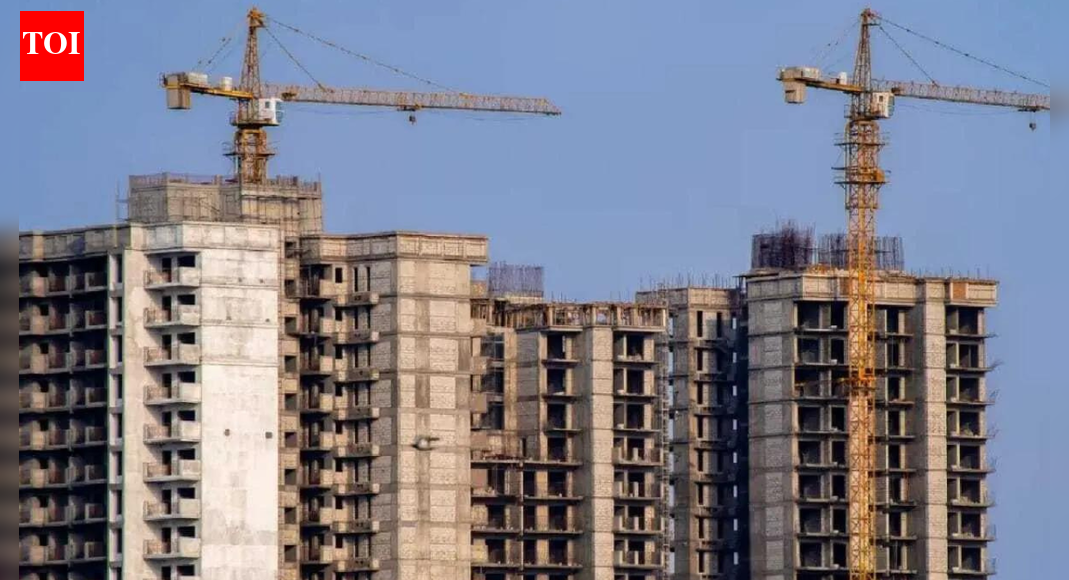
Residential sector: Tier II cities’ housing sales value rises 4%; strategic pause in launches keeps volumes lower, say analysts

[ad_1]

Residential sector: Tier II cities’ housing sales value rises 4%; strategic pause in launches keeps volumes lower, say analysts

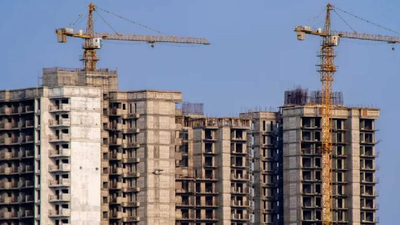
Housing sales across India’s 15 major Tier II cities rose 4 per cent in value to Rs 37,409 crore in the July-September quarter of 2025, even as volumes declined, according to real estate analytics firm PropEquity. Sales fell 4 per cent year-on-year to 39,201 units during the quarter, while new housing supply dropped 10 per cent to 28,721 units.The 15 cities include Ahmedabad, Surat, Gandhi Nagar, Vadodara, Jaipur, Nashik, Nagpur, Mohali, Bhubaneshwar, Lucknow, Bhopal, Coimbatore, Goa, Trivandrum, and Kochi. Ahmedabad, the largest market, recorded a 6 per cent decline in sales to 13,021 units, while Surat saw an 8 per cent drop to 4,936 units.Samir Jasuja, founder and CEO of PropEquity, was quoted by news agency PTI as saying, “Tier 2 cities remain the key engines of India’s growth story. Expanding employment opportunities, improving infrastructure, and stronger connectivity continue to drive sustained demand across residential, commercial, and retail real estate.”Lalit Parihar, MD of Aaiji Group, noted that the four Gujarat cities—Ahmedabad, Surat, Gandhi Nagar and Vadodara—dominate Tier II launches and sales, accounting for over 60 per cent. “These cities demonstrate strong housing demand driven by robust economic growth, rising white-collar employment, and rapid infrastructure upgrades. With improved connectivity and expanding industrial hubs, they offer a balanced mix of affordability, quality of life, and long-term investment potential,” he said, as per PTI.Kirthi Chilukuri, founder & MD of Stonecraft Group, said the drop in new launches is more of a strategic pause than a slowdown. “The 4 per cent rise in sales value shows demand remains strong, with buyers willing to pay more for trusted brands and better amenities. This signals a healthier, more mature market where long-term value matters,” Chilukuri added.Other industry experts, including Yashank Wason of Royal Green Realty and Rajat Khandelwal of Tribeca Developers, also affirmed that Tier II cities continue to see strong housing demand, with homebuyers showing preference for newly launched projects, reported PTI.


[ad_2]

Source link

Energy push: Oil India Limited begins deep offshore drilling in Kerala-Konkan basin; Hardeep Puri hails ‘inspirational stride’

[ad_1]

Energy push: Oil India Limited begins deep offshore drilling in Kerala-Konkan basin; Hardeep Puri hails ‘inspirational stride’
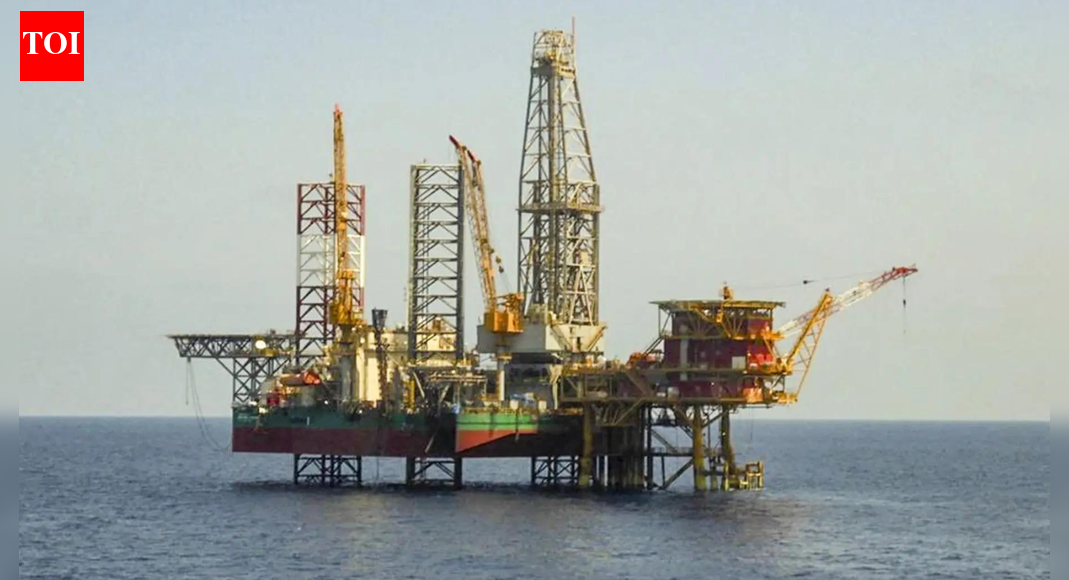
File photo (Picture credit: PTI)

Oil India Limited (OIL) launched a landmark offshore drilling campaign in the Kerala-Konkan basin by spudding its first deepwater well, Union petroleum and natural gas minister Hardeep Puri announced on Saturday.He described the development as an “inspirational stride” in India’s energy journey aligned with Prime Minister Narendra Modi’s vision.

India-Russia Summit Dates Out As PM Modi, Putin Review S-400, Su-57 And Global Security Challenges

The frontier Category-III basin is considered to hold significant potential, and the planned 6,000-metre-deep well—located 20 nautical miles offshore—will be among the deepest offshore wells drilled in Indian waters. Highlighting the groundwork already completed, Puri said on X that over 1,028 sq km of 3D seismic data had been acquired, and the campaign would “probe key Cretaceous plays and strengthen India’s pursuit of new energy frontiers.India currently imports 80 per cent of its oil and 50 per cent of its natural gas needs, as per ANI. To reduce dependence, the government has been expanding sourcing from multiple countries while simultaneously ramping up domestic exploration.A major push is underway in the Andaman region, where Puri earlier said exploration activity was pointing to “good news”, suggesting the area could become India’s “Guyana moment”.Strengthening its deepwater capabilities, OIL recently signed a Technology Service Agreement with TotalEnergies in New Delhi to enhance collaboration in deep and ultra-deepwater exploration across Indian sedimentary basins. The agreement aims to leverage TotalEnergies’ global expertise across OIL’s current and future offshore portfolio, including stratigraphic wells mandated by the government.India has about 3.5 million sq km of sedimentary basins, but only eight per cent has been explored so far, leaving a vast offshore expanse untapped.


[ad_2]

Source link

‘Severe beatings, dog attacks’: UN report accuses Israel of running ‘organized widespread torture’ system; flags human rights violation

[ad_1]

‘Severe beatings, dog attacks’: UN report accuses Israel of running ‘organized widespread torture’ system; flags human rights violation

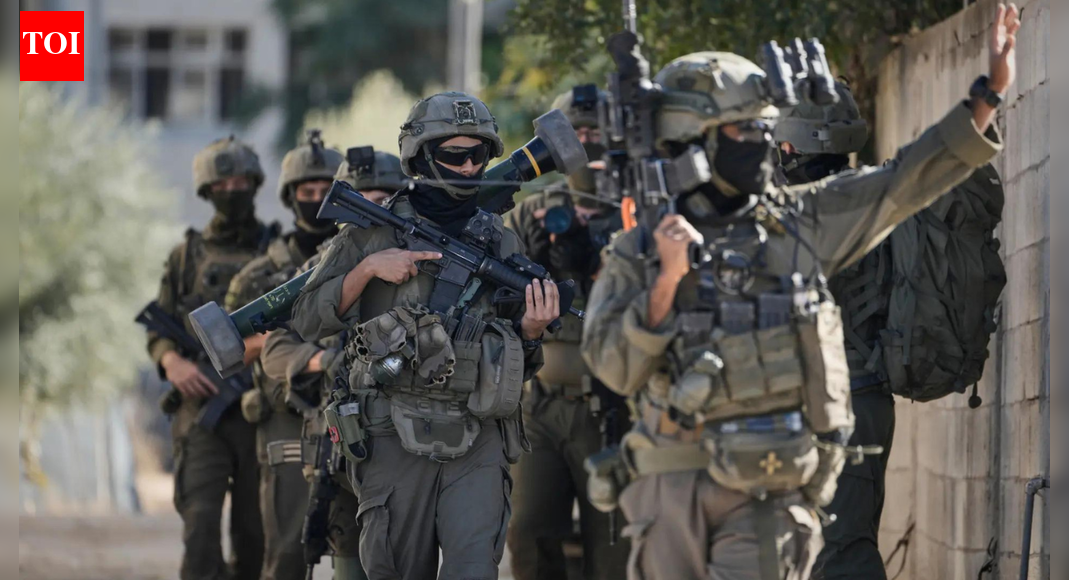
A United Nations report has found that Israel maintains “a de facto state policy of organised and widespread torture,” documenting abuses over the past two years and warning of continued impunity for Israeli security forces accused of war crimes.The report, released on Friday as part of the committee’s routine review of countries that have signed the UN Convention Against Torture, stated that Palestinian detainees were subjected to humiliation, including “being made to act like animals or being urinated on,” and were routinely denied medical treatment, as cited by the Guardian.It further noted that detainees faced excessive use of restraints, “in some cases resulting in amputation,” according to the findings.The Committee said it is deeply concerned “over allegations of repeated severe beatings, dog attacks, electrocution, waterboarding, use of prolonged stress positions [and] sexual violence”, highlighting a pattern of grave abuse reported by detainees.The UN committee of 10 independent experts also raised alarm over Israel’s extensive use of its unlawful combatants law, saying it was being applied to justify the prolonged detention of thousands of Palestinian men, women, and children without trial. According to the latest figures from Israeli human rights group B’Tselem, the Israel Prison Service was holding 3,474 Palestinians in “administrative detention”, meaning detention without trial, as of the end of September.The UN report highlights a surge in the detention of Palestinian children since the Gaza war began in October 2023, noting the “high proportion of children who are currently detained without charge or on remand” and pointing out that Israel’s age of criminal responsibility is 12, with even younger children reportedly held. It states that minors classified as security prisoners “have severe restrictions on family contact, may be held in solitary confinement, and do not have access to education,” urging Israel to ban solitary confinement for children. The committee, which monitors compliance with the UN convention against torture, warns that the cumulative impact of Israeli policies in the occupied territories “may amount to torture.The report said 75 Palestinians have died in custody since the Gaza war began, noting that detention conditions for Palestinians had undergone a “marked deterioration.” It described the death toll as “abnormally high” and affecting only Palestinian detainees, adding that “to date, no state officials have been held responsible or accountable for such deaths.”Israel has consistently denied using torture. The UN committee heard from officials of the foreign ministry, justice ministry and prison service, who maintained that detention conditions were adequate and subject to oversight, as reported by the Guardian.Meanwhile, a report by the UN Conference on Trade and Development (UNCTAD) warns that two years of Israeli military operations and longstanding restrictions have driven the occupied territory into an economic freefall, now ranked among the 10 worst collapses globally since 1960. The UN says the occupied Palestinian economy is experiencing its most severe downturn on record, fuelled by the scale of Israel’s genocidal war on Gaza and ongoing curbs on movement and trade, as cited by Al Jazeera.


[ad_2]

Source link

US tariffs bite: India’s engineering exports slump 16.7% in October; Asean, EU and UAE shipments weaken

[ad_1]

US tariffs bite: India’s engineering exports slump 16.7% in October; Asean, EU and UAE shipments weaken

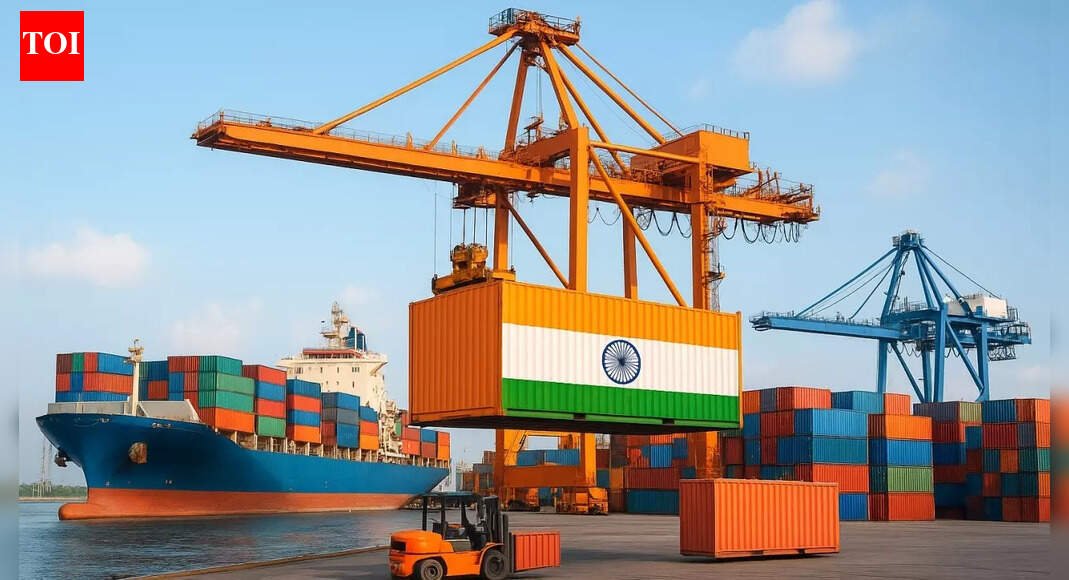
India’s engineering goods exports fell a steep 16.71 per cent year-on-year in October 2025 to $9.37 billion, primarily due to a sharp drop in shipments to the US and a high base effect, the Engineering Export Promotion Council of India (EEPC) said on Saturday.Exports to key markets recorded widespread declines, with the Asean region seeing an almost 50 per cent fall to $1.02 billion.The US remained India’s top destination for engineering goods, but shipments dropped 14.5 per cent to $1.39 billion in October 2025, compared with $1.63 billion a year earlier. The decline was driven by the combined impact of Section 232 tariffs and reciprocal tariffs, EEPC said. Exports to the UAE fell 19.3 per cent to $667 million, while North America and the EU — the top two regions — also witnessed year-on-year declines for the second consecutive month. Significant drops were noted across WANA, South Asia, Latin America and the CIS region.“While a high base effect was one of the reasons for the drop in exports during October this year, it was also a result of the US-administered reciprocal tariffs… The industry believes that trade diversion due to US tariffs is one of the reasons behind the declining exports,” EEPC Chairman Pankaj Chadha said. He added that the industry welcomed the government approving over Rs 25,000 crore for the Export Promotion Mission and Rs 20,000 crore for credit guarantee support.The fall in October marked the second monthly decline of FY26 after May, ending a four-month streak of growth. Panel-wise data showed major contractions in ‘Aircrafts and Spacecraft’ and ‘Ships, Boats and Floating structures’, both falling over 80 per cent.Key categories including ‘Electrical machinery’, ‘Products of iron and steel’, ‘Industrial machinery’ and ‘Aluminium products’ also registered year-on-year declines. Overall, 23 of 34 engineering panels recorded negative growth in October.India’s exports to the US have been under pressure for months due to steep tariff hikes. Between May and October 2025, US-bound shipments fell 28.5 per cent as American duties climbed from 10 per cent in April to 50 per cent by late August, as per a GTRI report. Labour-intensive goods, which faced 50 per cent tariffs, saw a 31.2 per cent drop in the same period.Despite the October setback, engineering exports grew 1.68 per cent on a cumulative basis during April-October 2025, rising to $68.73 billion from $67.60 billion a year earlier, ANI reported.


[ad_2]

Source link

Veiled jibe at the US? Jaishankar says politics now ‘trumps’ economics; urges India to diversify supply chains for security

[ad_1]

Veiled jibe at the US? Jaishankar says politics now ‘trumps’ economics; urges India to diversify supply chains for security
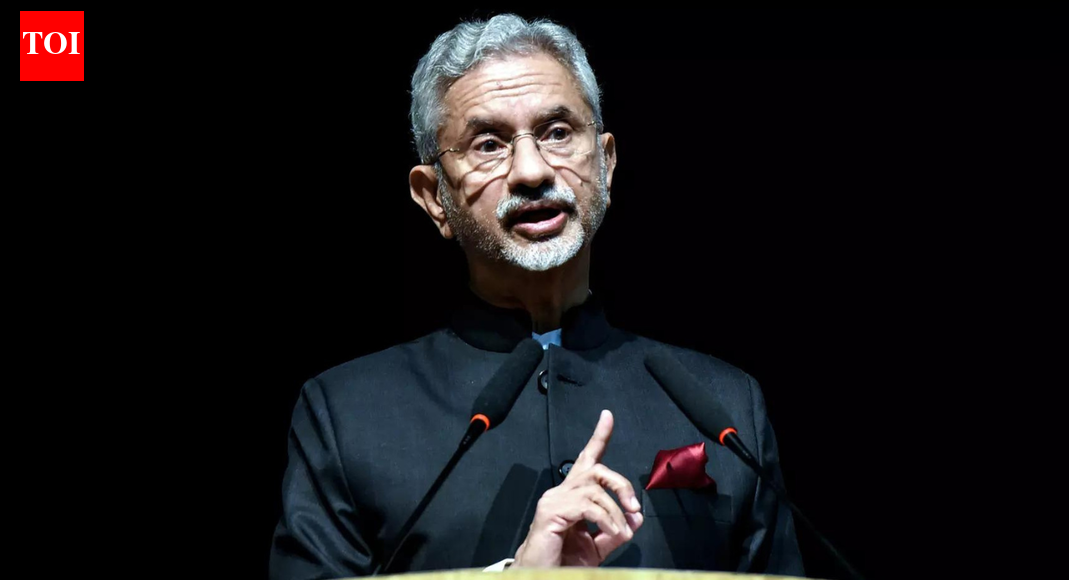
File photo: External affairs minister S Jaishankar (Picture credit: ANI)

External affairs minister S Jaishankar on Saturday said the world has entered an era where “politics increasingly trumps economics” and stressed that India must continuously diversify supply sources to safeguard national interests. The minister was speaking after receiving an Honorary Doctorate from IIM-Calcutta, reported PTI.

EAM Jaishankar Decodes Massive US China Power Shift And Global Realignment In Sharp Kolkata Address

“This is an era where politics increasingly trumps economics… and that is not a pun,” he said, adding that in an “uncertain world”, India must guarantee its needs by widening supply networks. He noted that the United States, “long the underwriter of the contemporary system”, has now set “radically new terms of engagement” by dealing with countries individually. He said China has “long played by its own rules” and continues to do so.Jaishankar highlighted that India and the US are currently engaged in two parallel negotiations — one on a framework trade deal focused on tariffs and another on a comprehensive agreement. His remarks come at a time when Indian exports to the US have seen a sharp 28.5 per cent decline between May and October 2025 due to aggressive tariff hikes, which pushed duties as high as 50 per cent by late August, as per a GTRI report.He said the global landscape is marked by fragmentation, supply insecurity and competing geopolitical pulls, with nations hedging against uncertainties.Jaishankar added that a third of global production “currently takes place in China”, putting the spotlight on supply-chain reliability. Conflicts and climate events have increased the risk of disruption.The minister asserted that India has been actively pursuing self-reliance and developing itself as a manufacturing base. He said the gap with successful Asian economies is narrowing with rapid progress in highways, railways, aviation, ports, energy and power. “We are now moving ahead, by any standards,” he said.Jaishankar emphasised that a major power like India must possess a strong industrial base, noting that ‘Make in India’ reflects a “different mindset and greater ambition”. He said industries must build domestic supply chains even as India seeks a stronger role in global ones.IIM-Calcutta, in its statement, said Jaishankar also reflected on the transformative impact of emerging technologies, including artificial intelligence, and underscored the need to strengthen domestic capabilities and reduce vulnerabilities.He reiterated that India’s foreign policy aims to expand the country’s global footprint as it works toward becoming a developed nation by 2047.


[ad_2]

Source link

Sebi REIT shift: MF and SIF investments to count as equity from 2026; existing debt-scheme stakes to be grandfathered

[ad_1]

Sebi REIT shift: MF and SIF investments to count as equity from 2026; existing debt-scheme stakes to be grandfathered

The Securities and Exchange Board of India (Sebi) has announced that investments made by Mutual Funds (MFs) and Specialised Investment Funds (SIFs) in Real Estate Investment Trusts (REITs) will be treated as equity-related instruments from January 1, 2026. The move is aimed at encouraging greater participation in the REIT market, reported news agency ANI.Sebi said it had amended the Sebi (Mutual Funds) Regulations, 1996, to enable this shift in classification. In a circular issued on November 28, the regulator stated, “With effect from January 01, 2026, any investment made by Mutual Funds and SIFs in REITs shall be considered as an investment in equity-related instruments.”The regulator clarified that REITs will be eligible for inclusion in equity indices from July 1, 2026, allowing for a six-month transition period. Infrastructure Investment Trusts (InvITs), however, will continue to be categorised as hybrid instruments for MFs and SIFs.Sebi also said existing REIT investments held by debt schemes of Mutual Funds and SIF strategies as of December 31, 2025, will be “grandfathered,” ensuring current portfolios are not forced to comply with the new classification immediately. Grandfathering typically shields ongoing investments or policies from updated rules.Despite this protection, Sebi has encouraged Asset Management Companies (AMCs) to gradually divest REIT holdings from debt schemes, considering market liquidity and investor interests.The regulator said the changes have been introduced “to protect the interests of investors in securities and to promote the development of, and to regulate the securities market”.


[ad_2]

Source link

‘We have all the cards’: Donald Trump touts tariffs as cornerstone of US strength; claims levies made America ‘rich and safe’

[ad_1]

‘We have all the cards’: Donald Trump touts tariffs as cornerstone of US strength; claims levies made America ‘rich and safe’
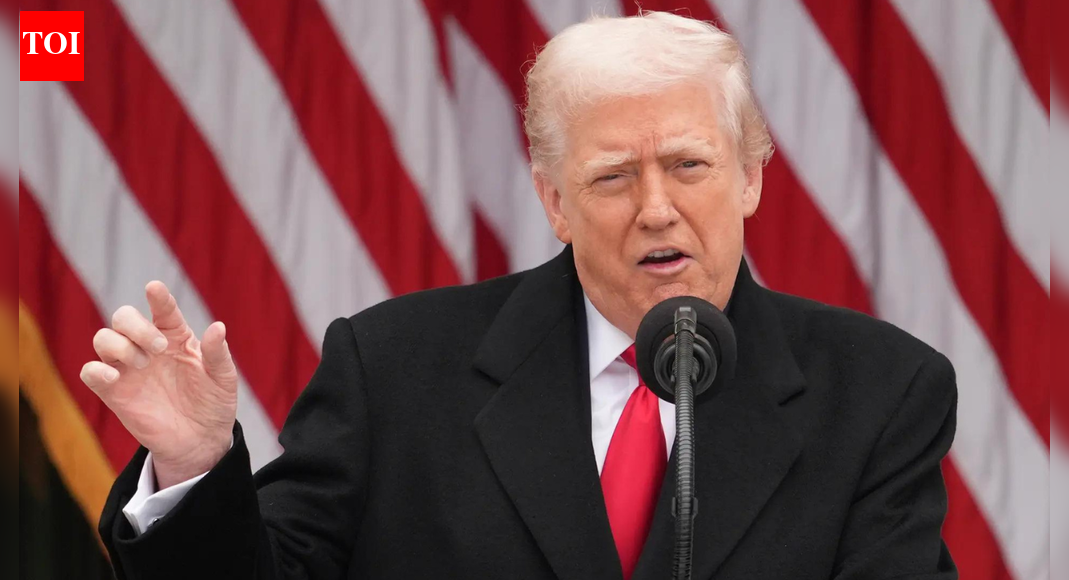
File photo: US President Donald Trump (Picture credit: AP)

US President Donald Trump on Saturday defended his sweeping tariff regime, saying the duties had made the country “Rich, Strong, Powerful, and Safe,” in a post on his Truth Social account. Trump argued that because of the tariff framework he “set in place,” the United States now holds “all the cards,” asserting that the measures had stopped wars, strengthened alliances and prevented other nations from “ripping off the United States anymore.”

India Says US Trade Deal Is ‘Only Matter Of Time’ As Tariffs Reshape Bilateral Trade Negotiations

He claimed the stock market and retirement savings had surged, adding that “Inflation, Prices and Taxes are down,” and that education was “being brought back to the States.” Trump also said the US military and southern border were “the strongest they have ever been,” contending that the country is “respected again, respected like never before.”He attributed these outcomes to what he described as “Strong leadership and tariffs.”The president’s remarks come at a sensitive moment, as the Supreme Court is preparing to rule on the extent of presidential authority to impose duties without congressional approval. Tariff revenues have climbed sharply in recent months, as per Fox Business, reaching a record $34.2 billion in October. Total duty collections were $215.2 billion in fiscal year 2025, and the Treasury has reported $41.6 billion in revenue so far in fiscal 2026.Since Trump unveiled his “Liberation Day” tariffs in April, collections jumped from $23.9 billion in May to $29 billion in July, with August and September together bringing in $62.6 billion, reported Fox Business. US businesses pay these import taxes but often pass on the costs to consumers, though Trump has recently lifted some duties to ease price pressures.Trump has pledged that tariff revenues could finance a one-time $2,000 dividend for low- and middle-income households. As per Fox Business, US trade representative Jamieson Greer recently said that the payments would not fuel inflation, stressing they would provide “welcome relief” without altering the broader economic outlook. Trump ended his post by urging Americans to “pray to God” that the Supreme Court “do the right thing for America.”


[ad_2]

Source link

‘Murda qaum, zinda qaum’: Jamiat chief Mahmood Madani stokes row; BJP hits out | India News

[ad_1]

'Murda qaum, zinda qaum': Jamiat chief Mahmood Madani stokes row; BJP hits out

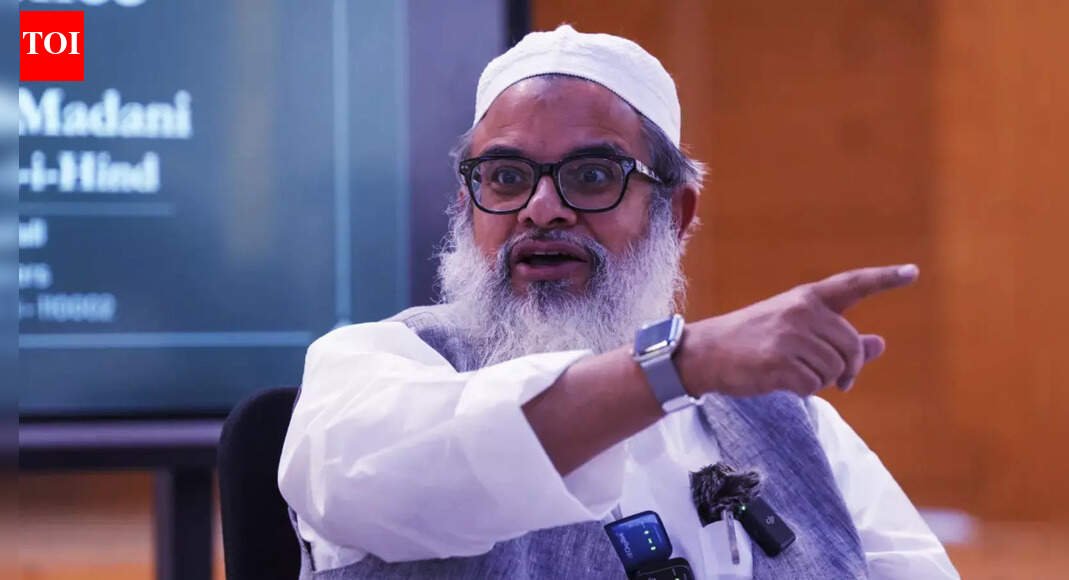
NEW DELHI: Jamiat Ulama-i-Hind chief Mahmood Madani on Saturday urged the Muslim community not to be a “murda qaum” (lifeless community) but to remain “zinda” (active) and confront challenges head-on.Speaking at a public rally in Bhopal, Madani said, “We are facing challenges and difficulties… a ‘murda qaum’ surrenders when confronted with hardships. If you are weak, they will ask you to recite Vande Mataram, and you will oblige. But this is the mark of a ‘murda qaum.’” He added, “To be a ‘zinda qaum,’ you must be courageous and face the situation. Remember, it is always a ‘zinda qaum’ that is challenged. They will keep testing you – don’t lose patience.”Hitting out at Madani, the BJP accused him of attempting to “vitiate” communal harmony. “He is a completely political person. I heard his speech. He was describing ‘jihad’ in an Islamic context… but he contradicted himself and said, ‘agar hum pe zulm hoga, toh jihad hoga’ (there will be jihad if we are oppressed). Who is he threatening — the Government of India?” Delhi BJP spokesperson Yaser Jilani told news agency ANI. Jilani warned Madani against issuing what he called “threats.” “Don’t threaten like this. The Government of India and Prime Minister Narendra Modi think for everyone. Mahmood Madani is trying to vitiate harmony,” he stated.


[ad_2]

Source link

Rupee outlook: Currency seen stabilising after 4% slide this year; traders eye India–US deal for next cues

[ad_1]

Rupee outlook: Currency seen stabilising after 4% slide this year; traders eye India–US deal for next cues

The Indian rupee, which has been under persistent pressure through 2025, is unlikely to witness any sharp fall in the immediate term as its recent weakness has already played out, Union Bank of India said in a recent assessment. The bank noted that the currency has already slipped about 4 per cent this year and is currently stuck in a narrow band, weighed down by firm US dollar strength, capital outflows and uncertainty linked to the delayed first tranche of the India–US BTA.The rupee has been trading close to record lows, briefly touching 89.4950 in recent sessions, as foreign institutional investors have withdrawn over $14 billion since January, as per ANI. The bank said easing inflation and GST-related reforms were helping cushion some of the external strain. “Given that the rupee has already weakened by roughly 4 per cent this year, we do not expect significant further depreciation in the near term,” the report stated. It added that once clarity emerges on the trade agreement, “the appreciation threshold for the currency should shift”.Union Bank expects the rupee to remain range-bound between 88.80 and 89.50 through December, with strength likely only if there is sustained domestic equity inflow or “tangible progress” on the BTA, which could pull the currency toward 88.50 per dollar. If the pact is finalised alongside an RBI rate cut, improved FII sentiment and an anticipated US Fed easing cycle, the bank said the rupee could strengthen meaningfully. Any bearish turn, however, is expected to meet strong resistance near 89.50, with a breach opening the door to 89.90.Recently, the rupee settled at 89.45 on Friday, slipping 9 paise as a stronger greenback, firmer crude and weak equities dragged sentiment. Traders stayed cautious ahead of GDP data, which later showed the economy growing 8.2 per cent — the highest in six quarters. Forex analysts quoted by PTI said that month-end dollar demand and continued outflows were keeping the rupee pinned, even as the USD-INR pair faces resistance at 89.70 and finds support at 88.80.The rupee closed at 89.4575 in the latest session, just shy of its record low of 89.49 hit a week ago, with markets watching geopolitical developments, US tariffs and progress on the India–US deal for fresh direction.


[ad_2]

Source link