Breaking News
Holiday rush: US retailers eye Black Friday lift; shoppers hunt deals despite weak sentiment

[ad_1]

Holiday rush: US retailers eye Black Friday lift; shoppers hunt deals despite weak sentiment

Black Friday no longer pulls Americans from Thanksgiving dinners for midnight mall queues, but it still draws more in-store traffic than any other day of the year — and remains the unofficial start of the US holiday shopping season.This year’s kickoff came as US consumer confidence slipped following the federal government shutdown, weak hiring and stubborn inflation, according to The Conference Board, AP reported. Retailers say shoppers have grown more selective and deal-focused, even as they continue to spend on big seasonal moments, creating what executives describe as a “halo effect”.“Consumers have been saying the economy is terrible while continuing to spend for years now, so the outlook is probably better than they are telling us,” Bill Adams, chief economist at Comerica Bank, said ahead of Black Friday.At Macy’s Herald Square in New York City, early-morning crowds searched for steep discounts on shoes, clothing, linens and cosmetics after doors opened at 6 a.m. Footwear — marked down by 40–50% — was among the busiest sections. But unlike in past years, the atmosphere was calm.Veronica Nam, 68, picked up Nike sneakers for her husband and spent $256 on Lacoste bedding she estimated was half-price. She said she would wait until after Christmas to buy gifts for other relatives amid fluctuating tariffs under President Donald Trump and several years of elevated prices. “Food is very expensive,” she said.Nearby, 19-year-old Nicholas Menasche was shopping with his mother before heading to Best Buy for video games. The banking intern plans to spend around $1,200 this holiday season — roughly the same as last year. “I’m here to buy stuff. Shoes and clothes,” he said. “It’s a great tradition. The stores are open really early.”Retailers spent spring and summer navigating tariff unpredictability, shifting shipments ahead of import taxes and absorbing some costs to avoid raising prices. Circana data showed 40% of general merchandise in September saw price hikes of at least 5% versus early 2025. Toys, housewares, baby products and sports gear were especially affected; 83% of toys saw at least a 5% price rise. Nearly 80% of US toy sales involve items made in China — a sector hit with steep Trump-era tariffs.Still, malls and analysts reported strong momentum heading into Black Friday. At Minnesota’s Mall of America, foot traffic has exceeded 2019 pre-pandemic levels in recent weeks, said Jill Renslow, the mall’s chief business development and marketing officer. “We’re seeing a very positive start to the holiday season,” she said. “The last few Saturdays in November have been very strong.”Online spending is also growing briskly. Between Nov. 1 and Nov. 23, consumers spent $79.7 billion, Adobe Analytics said — up 7.5% from a year earlier and ahead of its 5.3% forecast.Mastercard SpendingPulse projects holiday sales from Nov. 1 to Dec. 24 will rise 3.6%, compared with last year’s 4.1%.“Clearly, there’s uncertainty,” Mastercard Chief Economist Michelle Meyer said. “Clearly, consumers feel on edge. But at the moment, it doesn’t seem like it’s changing how they are showing up for this season.”


[ad_2]

Source link

Dana White drops big UFC 324 announcement as major title fights land in Las Vegas | International Sports News

[ad_1]

Dana White drops big UFC 324 announcement as major title fights land in Las Vegas
Dana White drops big UFC 324 announcement as major title fights land in Las Vegas (Image Via Getty)

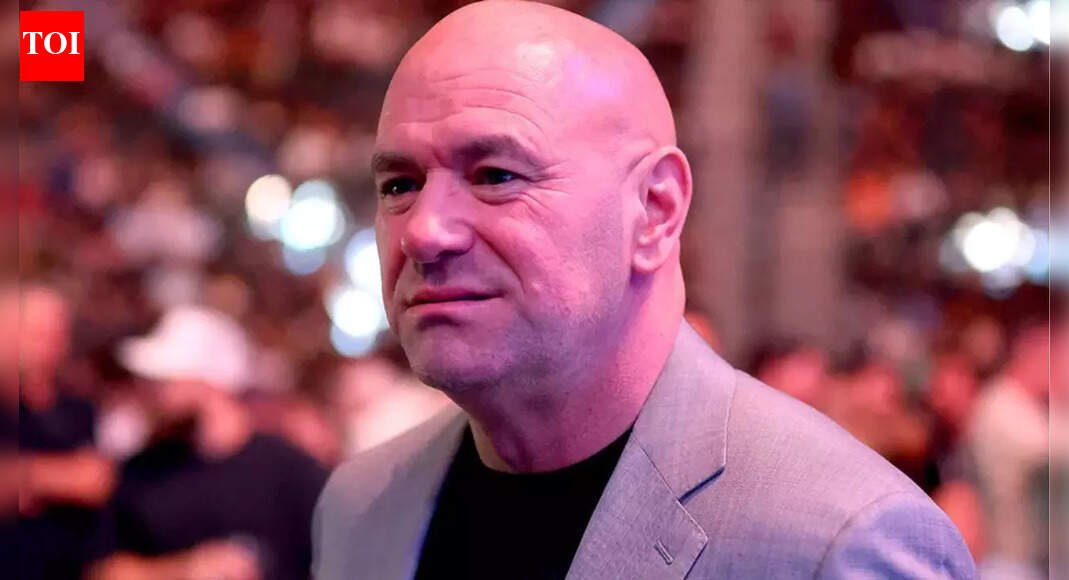
Dana White surprised fans on Thursday night when he announced a huge lineup for UFC 324, which will take place on January 24, 2026, at the T-Mobile Arena in Las Vegas. He revealed the matchups during half-time of the Chiefs vs Cowboys Thanksgiving game on CBS, sharing the full card live on national television.The interim lightweight title bout between Paddy Pimblett and Justin Gaethje grabbed most headlines. Dana White also affirmed that Amanda Nunes will return from retirement to face Kayla Harrison, while Sean O’Malley will battle Song Yadong in a critical bantamweight bout. The news came only a few hours after lightweight champion Ilia Topuria quit the sport to pay attention to a family issue.Justin Gaethje and Paddy Pimblett headline UFC 324 as Amanda Nunes and Sean O’Malley join the cardOn January 24, 2026, in Las Vegas, Dana White said during the CBS broadcast that Justin Gaethje and Paddy Pimblett would compete for the interim lightweight title.He said, “This event starts our new deal with Paramount, and it is packed with champions.” As part of the new deal, the main card will now begin at 9 p.m. ET, one hour earlier than past events.This fight became possible after Ilia Topuria announced on Thursday afternoon on X that he will not compete in the first quarter of 2026. Topuria wrote that he is “going through a difficult moment” and wants to “focus on my children.” With the champion out, Gaethje and Pimblett were the clear choices to compete for the interim title. Pimblett is on a strong win streak after beating Michael Chandler, while Gaethje last fought when he defeated Rafael Fiziev.The card grows even stronger with Amanda Nunes returning to face Kayla Harrison for the women’s bantamweight title. Nunes has not fought since she retired in June 2023, shortly after her win over Julianna Peña. Dana White called her “the greatest female fighter ever” and said this is “the biggest women’s fight we have seen.”Sean O’Malley will return to the cage two losses to Merab Dvalishvili, including a unanimous decision at UFC 306 and a submission loss in June, would help. He will meet Song Yadong, still among the most active competitors in the category. As the victor of Gaethje versus Pimblett meets Topuria once he returns to action, lightweight stars Arman Tsarukyan, Charles Oliveira, and Max Holloway will watch carefully.Also Read: Dana White’s Bold UFC White House Choice Sparks Questions As MMA Icon Gets Sidelined


[ad_2]

Source link

GDP grows at 8.2%, fastest in 6 quarters: What the data really says about Indian economy – explained

[ad_1]

GDP grows at 8.2%, fastest in 6 quarters: What the data really says about Indian economy - explained
India’s GDP growth has consistently surprised on the upside in the last few quarters. (AI image)

India’s GDP has grown at a robust 8.2% in the second quarter of the financial year – a number that beats all estimates by economists and even the RBI. The six-quarter high real GDP growth is expected to push up the full year number to above 7%, with India retaining its tag of being the fastest growing major economy in the world.Incidentally, the better-than-expected GDP growth comes at a time when the Indian economy faces external challenges in the form of 50% tariffs imposed by US President Donald Trump in late August. Even as hopes of an India-US trade deal are improving, the impact of trade war policies on India’s exports remains uncertain.

India’s Growth Story Is Built On Scale, Youth, And Resilience, Says World Bank Economist

India is largely a domestic consumption driven economy and the income tax cuts and sweeping GST rate changes are likely to cushion the impact of external headwinds, while at the same time driving growth upwards for the whole year.Why has the real GDP growth been more than expected and what’s the outlook for the coming quarters? Why are economists pointing to the narrowing gap between nominal and real GDP growth? We explore:

India’s Q2 FY 2025-26 GDP Growth: Top 7 Numbers

  1. India’s real GDP has grown at 8.2% in Q2 of FY 2025-26 as against a growth rate of 5.6% during Q2 of FY 2024-25, and 7.8% in Q1 FY 2025-26.The nominal GDP has seen a growth of 8.7% in Q2 of FY 2025-26.
  2. Real GDP has registered 8.0% growth rate in H1 (April-September) of FY 2025-26, as compared to the growth rate of 6.1% in H1 of FY 2024-25.
  3. The Secondary (8.1%) and Tertiary Sector (9.2%) has majorly boosted the real GDP growth rate in Q2 of FY 2025-26.
  4. Manufacturing (9.1%) and Construction (7.2%) in the Secondary Sector, have seen above 7.0% growth rate at constant Prices in this quarter.
  5. Financial, Real Estate & Professional Services (10.2%) in the Tertiary Sector has seen a sustained growth at Constant Prices in Q2 of FY 2025-26.
  6. Agriculture and Allied (3.5%) and Electricity, Gas, Water Supply and Other Utility Services Sector (4.4%) have seen moderate Real growth rate during Q2 of FY 2025-26.
  7. Real Private Final Consumption Expenditure (PFCE) has seen 7.9% growth rate during Q2 of FY 2025-26 as compared to the 6.4% growth rate in the corresponding period of previous financial year.

What does the better-than-expected GDP data tell us?

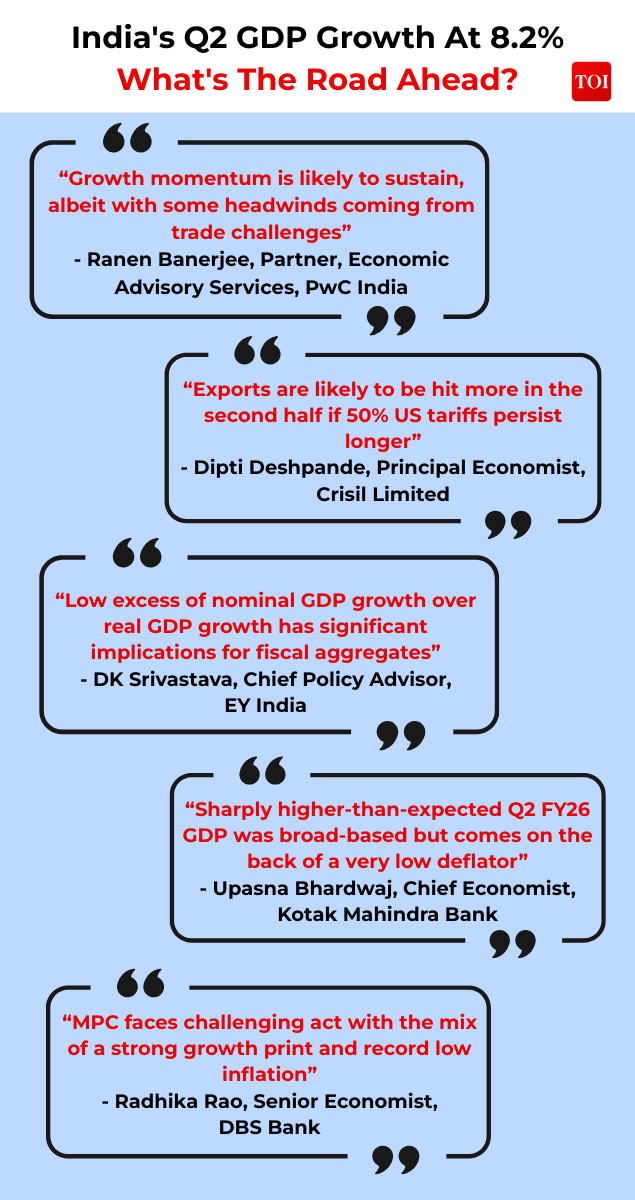
India’s GDP growth was led by a sharp increase in manufacturing growth of 9.1% – a multi quarter high. Other sectors on the output side that have done well include financial, real estate et al. services with a robust growth of 10.2% and public administration defence et al. services at 9.7%. For DK Srivastava, Chief Policy Advisor, EY India, India’s economic fundamentals are characterized by three key features.

  • First, growth is largely driven by domestic demand covering both consumption and investment demand.
  • Second, inflation momentum has remained subdued for some time.
  • Third, in the wake of private investment not showing enough growth, the government is ready to pick up the slack and frontload its own capital expenditure.

With these strengths, real GDP has shown a remarkable growth of 8.2%, he tells TOI.“There is a balanced sectoral spread of growth,” notes Srivastava. On the demand side, support to growth came from private final consumption expenditure which grew at 7.9% in 2Q. Gross fixed capital formation also showed a robust growth of 7.3%, largely driven by frontloading of GoI’s capital expenditure. “However, the negative contribution of net exports to GDP growth increased to (-)2.1% points in 2Q as compared to (-)1.4% points in 1Q 2025-26, reflecting the impact of the US tariff related issues and other global uncertainties,” the EY expert adds.Ranen Banerjee, Partner and Leader, Economic Advisory Services Government Sector Leader at PwC India explains that front loading of production for exports, sustained rural demand and government spending as well as a lower deflator owing to much lower inflation has helped the Q2 GDP print exceed consensus estimates.Dipti Deshpande, Principal Economist, Crisil Limited points out that India’s economy exhibited strength, despite the external headwinds. “Private consumption – the biggest driver of India’s GDP – grew above-trend at 7.9% even before GST cuts took effect. Robust rural demand, falling inflation, RBI’s rate cuts and some benefit from income tax relief have likely helped. Both industry and services growth improved in the second quarter, reflecting some impact of export frontloading on exports and supported by domestic macro tailwinds. That said, high real growth was also propped up by statistical factors such as low GDP deflator (due to low inflation), and low base effect (lower growth in the same quarter last year),” she tells TOI.

Why is the gap between nominal & real GDP growth narrowing and what it means

One of the most critical aspects highlighted by economists is nominal GDP growth slowdown, even as real GDP (inflation-adjusted growth) remains strong. Usually, in a developing economy like India, nominal GDP growth is significantly higher than real GDP growth because of inflation. The primary culprit is exceptionally low inflation, particularly in the wholesale sector (Wholesale Price Index or WPI). While low inflation is good for consumers (cheaper goods), a slowdown in nominal GDP poses a headache for the government’s fiscal math:Tax Collections: Taxes are calculated on the nominal value of goods and incomes. If prices aren’t rising, the tax base doesn’t expand as quickly. A nominal growth rate below the Union Budget’s assumption of 10.1% implies the government might collect less tax revenue than anticipated.Fiscal Deficit: The fiscal deficit is often expressed as a percentage of GDP (Nominal). If the denominator (Nominal GDP) grows slower than expected, the deficit ratio appears larger, potentially straining the government’s fiscal targets.The excess of real GDP growth at 8.2% over real GVA growth at 8.1% is limited. The difference between the two is due to the excess of product taxes over product subsidies. The growth in the net magnitude referred to as net-taxes on products fell from 10.3% in the first quarter to 9.5% in the second quarter 2025-26.The low excess of nominal GDP growth at 8.7% over real GDP growth of 8.2%, however, has significant implications particularly for fiscal aggregates. “This difference is due to the low level of GDP deflator-based inflation. For 1H 2025-26, the GDP deflator inflation was low at 0.8%. This low deflator inflation is due to both CPI and WPI inflation rates keeping low at 2.2% and 0.1% respectively in 1H 2025-26,” explains DK Srivastava of EY.“Data released today indicates GoI’s gross tax revenue (GTR) growth of 2.8% in 1H 2025-26 and 4.0% in the first seven months of the fiscal year. For the 1H, the GTR buoyancy is 0.32 as against a budgeted buoyancy assumption of 1.1. To meet the budget target for GTR growth of 12.5% over 2024-25 CGA actuals, a growth of 22.3% would be required in the remaining five months of the current fiscal year,” he adds.PwC’s Ranen Banerjee cautions that the nominal GDP growth being lower poses a challenge to the fiscal consolidation roadmap as the fiscal deficit is computed as a percentage of the nominal GDP.“This reduces the fiscal headroom available to meet the budgeted spending if revenues are not higher. However, given the non-tax revenue numbers are likely to be much higher, it should in all likelihood be able to make up for the shortfall,” he tells TOI.The CRISIL expert notes that the gap between nominal and real GDP growth is the lowest since fiscal 2020’s third quarter. The central government in its budget estimates, had penciled in a nominal GDP growth of 10.1% while computing crucial figures such as fiscal deficit to GDP ratio as well as for assumptions on tax collections for fiscal 2026. A lower nominal GDP growth (the first half saw a growth of 8.8%) could create some challenges.“Government tax collections have already trailed their targeted growth rates. Low nominal growth also affects the debt-GDP metric. However, the windfall from non-tax collections could create some offsets,” she says.

What’s the GDP growth outlook for the coming quarters?

Most economists are of the view that India’s GDP growth for the full fiscal year is likely to exceed 7%, much above RBI and IMF estimates of 6.8% and 6.6% respectively.DK Srivastava expects the annual real GDP growth to exceed 7.2% with a balanced spread of growth drivers both on the output side and on the demand side. “The key drivers will remain manufacturing growth on the output side and private final consumption expenditure on the demand side,” he says.PwC’s Ranen Banerjee also sees the growth momentum sustaining, albeit with some headwinds coming from trade challenges. “The GST reforms and the continued higher disposable incomes owing to income tax relief in the households at the lower end of tax brackets will support the urban demand. With good rainfall and no major adverse climatic event, rural demand will also sustain. Thus, we expect a strong print of the GDP in the second half too,” he says.
GDP Growth: Top Quotes From Experts

GDP Growth: Top Quotes From Experts

Dipti Deshpande of CRISIL expects growth to moderate in the second half of the financial year as statistical benefits from low deflator and base effect fade. She is of the view that unless Indian exporters diversify to other markets, merchandise exports could feel greater pain due to the delay in cementing an India-US trade deal.“Government capex, which was frontloaded this year, is also expected to moderate in the second half as the government targets its fiscal goals. Yet, private consumption should see strength supported by improved purchasing power due to tax relief measures, lower interest rates, strong agriculture incomes and a benign outlook on inflation,” she predicts.CRISIL has raised India’s GDP growth for this fiscal to 7%, up from 6.5%. “This follows a first-half growth of 8% and an expected slowdown to 6.1% in the second half owing to the impact of higher US tariffs and normalisation of government capital expenditure,” explains Dipti.

Will Trump’s 50% tariffs dent India’s growth story?

So far Trump’s 50% tariffs have not been able to significantly dent India’s growth story. As economists explain, there was a frontloading of exports in anticipation of tariffs. Additionally, of the three months that the GDP growth data is for, September is the only full month that saw the 50% tariffs. The impact of the tariffs is expected to be fully known in the coming quarters, if an India-US trade deal remains elusive. But will it be significant?According to Dipti Deshpande, exports are likely to be hit more in the second half if 50% US tariffs persist longer. “Export diversification to non-US markets can help mitigate the impact. While global growth has done better than expected so far, higher US tariffs on-year are likely to moderate growth in all major economies going ahead,” she says.Ramen Banerjee notes that the recently released export numbers show that the exporters have diversified their geographies of export.“With the 3.5% decline in the rupee dollar exchange rate, Indian goods will be more price competitive and that would offset some of the tariff headwinds. Hence, the impact on GDP growth is not expected to be very significant,” he tells TOI.DK Srivastava of EY expects the contribution of net exports to real GDP growth to remain negative and possibly increase in its magnitude. “In 2Q 2025-26, the contribution of net exports was (-)2.1% points rising from (-)1.4% points in 1Q. This impact may continue if there are no downward revisions in the US tariff rates in the near future. However, if a trade arrangement is worked out between the US and India in the near future, this adverse impact may not happen. There is a likelihood of a closure of the Russia-Ukraine conflict in the near future which may ease many supply chain bottlenecks,” he says.India’s GDP growth has consistently surprised on the upside in the last few quarters. As it moves on the road to becoming the third largest world economy in nominal GDP terms, its growth story will need to continue being broad-based, while successfully navigating global uncertainties and headwinds.



[ad_2]

Source link

Karnataka CM tussle: Congress veteran Moily breathes fire; blames top brass of being blind | India News

[ad_1]

Karnataka CM tussle: Congress veteran Moily breathes fire; blames top brass of being blind

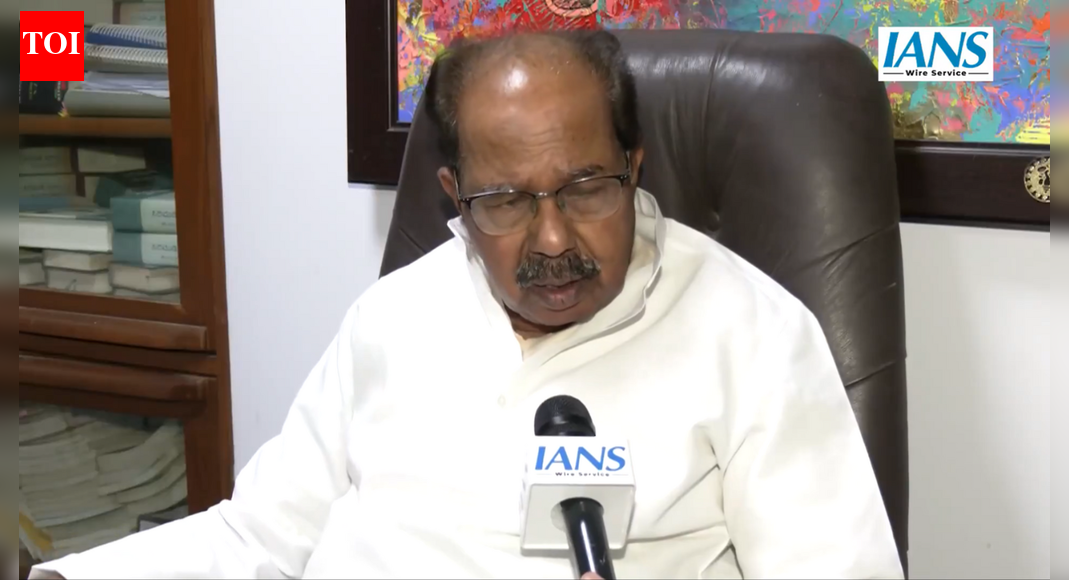
NEW DELHI: Amid the ongoing leadership crisis in Karnataka over the chief ministerial post, veteran Congress leader M Veerappa Moily on Friday launched a broadside against the party high command, saying that “discipline” has to be brought into the party.Talking to news agency IANS, the former Union minister said that the high command representatives should have foreseen some of these developments in the state.“If you want to turn it into a political turmoil, yes, it can happen, but the leaders of the Congress party who are in responsible positions, and also our high command representatives, whoever they may be, should have foreseen some of these developments. It’s not a sudden development,” Moily said.“I will not comment on who should continue, whether he should continue or whether a new Chief Minister will come or not. I am not on that. First, discipline has to be brought into the party,” he added.This comes amid the ongoing tussle between Karnataka CM Siddaramaiah and his deputy DK Shivakumar over the top job in the state.The deliberation over the issue has now shifted to Delhi, as both DKS and Siddaramaiah are likely to meet Mallikarjun Kharge along with Sonia and Rahul Gandhi on November 30.Earlier, Congress chief Mallikarjun Kharge played down the “internal conflict” within the party and said that the “high command” will sit together and deliberate on the issue.“Only the people there can say what the government is doing. But I would like to say that we will resolve such issues,” Kharge said.“People in the high command — Rahul Gandhi, Sonia Gandhi and I — will sit together and deliberate on this… We will give the medicine when required,” he added.This was the first acknowledgment by Kharge that there is indeed a power struggle between Siddaramaiah and his deputy DK Shivakumar in Karnataka.As soon as the Congress government in Karnataka completed its halfway mark on November 20, reports quoting Congress sources suggested that MLAs and MLCs from Shivakumar’s faction had camped in Delhi to push the party high command to make him the next chief minister.DK Shivakumar added to the speculations after he claimed that there had indeed been “a confidential understanding on leadership transition among five-six leaders” soon after Congress won a landslide in the 2023 elections.The deputy chief minister made the first reference to the power pact but stopped short of divulging more details. “This is confidential. I don’t want to speak publicly on this,” he said.


[ad_2]

Source link

Indian economy enters H2 of FY26: Finance ministry says GST reform lifts consumption; sees strong demand despite global risks

[ad_1]

Indian economy enters H2 of FY26: Finance ministry says GST reform lifts consumption; sees strong demand despite global risks

The finance ministry on Thursday said the Indian economy entered the second half of the fiscal year on a “firm foundation,” supported by easing inflation, resilient domestic demand and recent tax reforms. The rationalisation of goods and services tax (GST) rates has given a “measurable boost” to consumption, strengthening the growth outlook, it added.In its October monthly economic review, the ministry noted that easing inflation and recent GST changes have improved household disposable income. Retail inflation dropped sharply to 0.25% in October, from 1.44% in September, helped by GST cuts, a favourable base effect and softer food prices.“Overall, the economy enters the second half of FY26 on a stable footing, anchored by well-contained inflation, resilient domestic demand and supportive policy dynamics, even as global uncertainties warrant continued vigilance,” the report said.India’s GDP growth had risen to a five-quarter high of 7.8% in Q1, while the Q2 growth official numbers are expected at 7.3% The GST Council’s new two-slab structure of 5% and 18%, effective September 22, has reduced rates on several household goods.The ministry said that, “rationalisation of GST rates has provided a measurable boost to consumption, as reflected in the strengthening of high-frequency indicators, including higher e-way bill generation, record festive-season automobile sales, robust UPI transaction values, and a notable rise in tractor sales.”These trends suggest strengthening demand across both rural and urban markets. The full impact will be clearer over the next two quarters, it noted. On external conditions, the report flagged that global trade policy uncertainty remains high, ET reported.India’s merchandise exports fell 11.8% in October, while imports rose 16.6% due to higher gold and silver inflows. Services exports, however, hit a record $38.5 billion.The ministry also highlighted the impact of the 50% tariff imposed by the US, including a 25% penalty for importing Russian oil, warning that shifting trade policies, geopolitical tensions and financial market volatility could affect exports and investment flows.


[ad_2]

Source link

Putin-Modi meet: Russian president to visit India on December 4; what’s on agenda? | India News

[ad_1]

Putin-Modi meet: Russian president to visit India on December 4; what's on agenda?

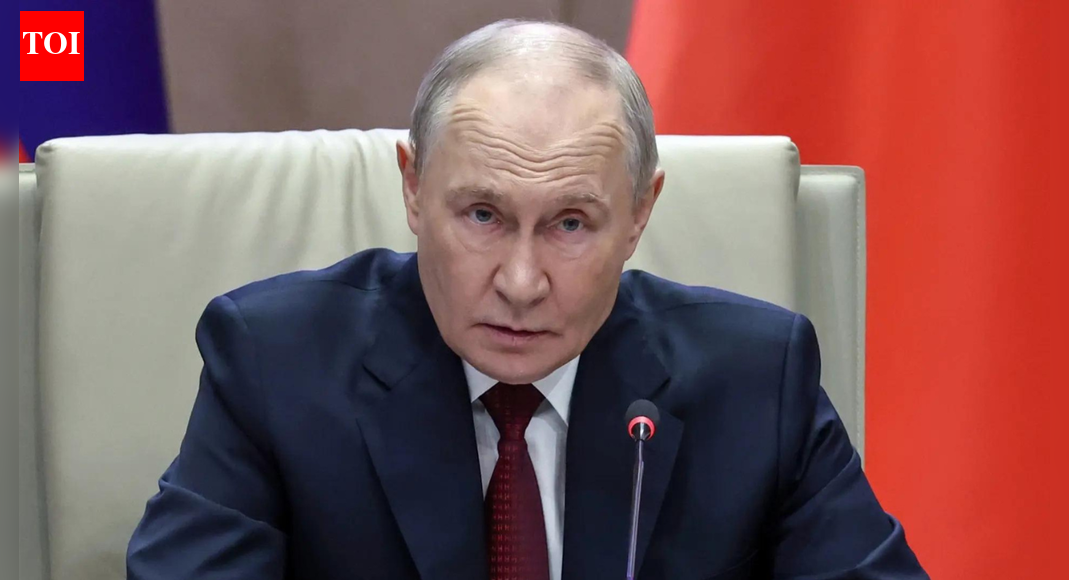
Russian President Vladimir Putin is set to be on a two-day visit to India, starting December 4, AFP reported citing Kremlin on Friday. During his visit, the Russian president is likely to meet Prime Minister Narendra Modi.This will be Putin’s first trip to India since the Russia-Ukraine war began in February 2022. His last visit was in December 2021 for the annual summit, which rotates between the two countries. Prime Minister Modi attended the most recent summit in Moscow in July of last year.

MEA Clears Air On Putin’s India Visit Dates As Both Nations Prepare For High-Stake Strategic Summit

Here’s what’s likely on the agenda

Procurement of S-400 air-defence squadrons

India’s proposal to procure five additional S-400 Triumf air-defence squadrons, along with a substantial stock of surface-to-air missiles for the systems already in service—which proved highly effective during Operation Sindoor—is expected to be part of the agenda when PM Modi and Putin meet for their summit on December 5.However, India has not yet decided whether to purchase two or three squadrons of Russia’s fifth-generation Sukhoi-57 fighter, which Moscow is pushing hard as an alternative to the American F-35 Lightning II jets, top sources told TOI.Another agenda could be discussion of Russia-Ukraine war, where PM Modi has advocated for peace several times. Recently, external affairs minister S Jaishankar spoke to Ukraine’s foreign minister Andrii Sybiha and discussed the latest developments in the Ukraine conflict.“Had a telecon with FM Andrii Sybiha last evening. Appreciate his briefing on the ongoing developments related to the Ukraine conflict. Reiterated India’s support for an early end to this conflict and the establishment of an enduring peace,” Jaishankar said.


[ad_2]

Source link

Top stocks to buy today: Stock recommendations for November 28, 2025 – check list

[ad_1]

Top stocks to buy today: Stock recommendations for November 28, 2025 - check list
Top stocks to buy (AI image)

Stock market recommendations: According to Bajaj Broking Research, the top stock picks for November 28, 2025 are JSW Steel, and JSW Energy. Here’s its view on Nifty and Bank Nifty:Index View: NIFTYBenchmark indices advanced for the third straight week, with the Nifty hitting a new all-time high of 26,310 during Thursday’s session. The rally was fueled by positive global cues and rising expectations of a U.S. Federal Reserve rate cut in December. Market sentiment further improved as crude oil prices eased on renewed optimism about a potential Ukraine–Russia peace agreement. Additionally, a lower India CPI inflation print boosted hopes of an RBI rate cut in the upcoming monetary policy review.A key point to note is that the index showed a much faster recovery this week, erasing the entire three-day decline in just one session and reinforcing the bullish momentum. Strong buying interest in heavyweight large-cap stocks fueled a sharp rebound, with market leadership clearly shifting toward major heavyweights.Going ahead we expect the index to maintain overall positive bias and gradually head towards 26,500 and then towards 26,800 levels in the coming weeks being the measuring implication of the recent range breakout (26,100-25,400). The two-month uptrend has remained well within a rising channel, indicating sustained demand even at higher levels and reinforcing the positive bias for the index. The channel’s upper band also aligns near the 26,800 marks.Short-term support is positioned in the 25,800–25,700 zone, which aligns with the confluence of the 20- and 50-day EMAs, the lower band of the two-month rising channel, and the recent two-week lows. This makes it an important level to monitor from a short-term perspective, sustaining above the same will keep the bias positive.While the Nifty and Nifty Midcap indices have already touched new all-time highs, the Small Cap index remains about 9% below its peak. We expect a gradual catch-up in the small-cap segment in the coming weeks, supported by emerging buying interest near the 52-week EMA in the Nifty small cap index.Key Monitorables for the short term:

  • US–India Trade Deal: Reports suggesting the US–India trade deal is close to completion have lifted market sentiment. A favourable outcome could reinforce positive momentum and potentially encourage FIIs to return to Indian equities.
  • GDP Data: Upcoming GDP releases from both the US and India will be important indicators to track.
  • Brent Crude: Brent crude prices continue to show corrective bias. Any further decline would be positive for the domestic market.
  • Policy Meetings: The RBI’s monetary policy announcement and the US FOMC meeting, both scheduled over the next two weeks, will be key events to watch closely.

NIFTY BANKBank Nifty extended its rally for the fourth week in a row as it rallied to a fresh all time high of 59866 levels in Thursday session. The index rebounded in Wednesday session from the upper band of the recent range breakout area and closed firmly above the 59,500 levels. The entire up move of the last 2 months is well channelled signaling sustained demand at elevated levels.We expect the index to retain its positive momentum and move towards the 60,400 level in the coming sessions, based on the measuring implication of the recent range breakout. A move above that will open further upside towards 61,000 levels in the coming weeks Meanwhile, the 58,500 is likely to act as a crucial support area, with the previous resistance now expected to serve as support.The daily 14 periods RSI has generated a bullish crossover above its nine periods average thus validating positive bias.

Stock Recommendations:

JSW SteelBuy in the range of ₹ 1145-1165

Target Stoploss Return Time Period
₹ 1240 1104 7.50% 3 Months

The stock is witnessing buying demand after a base at the 100 days EMA and the 61.8% retracement of the previous up move (1022-1223) signaling strength.We expect the stock to move higher and head towards 1240 levels in the coming month being the 123.6% external retracement of the previous decline (1223-1104).The daily 14 periods RSI has generated a buy signal moving above its nine periods average thus validates positive bias in the stock. JSW EnergyBuy in the range of 480-490

Target Stop loss Return Time Period
₹ 535 ₹ 454 10% 3 Months

The stock is rebounding from the support area of 480-470 being the confluence of the previous major lows and the trendline support joining the lows of October 2024 and February 2025,We expect the stock to resume up move and head towards 535 levels in the coming month being the 80% retracement of the recent breather (557-474)The daily stochastic has rebounded from the oversold territory and has generated a buy signal thus supporting the positive bias in the stock.(Disclaimer: Recommendations and views on the stock market, other asset classes or personal finance management tips given by experts are their own. These opinions do not represent the views of The Times of India)


[ad_2]

Source link

‘Both had to do something in India’: Congress leader claims CIA–Mossad behind 2014 rout; BJP hits back | India News

[ad_1]

'Both had to do something in India': Congress leader claims CIA–Mossad behind 2014 rout; BJP hits back

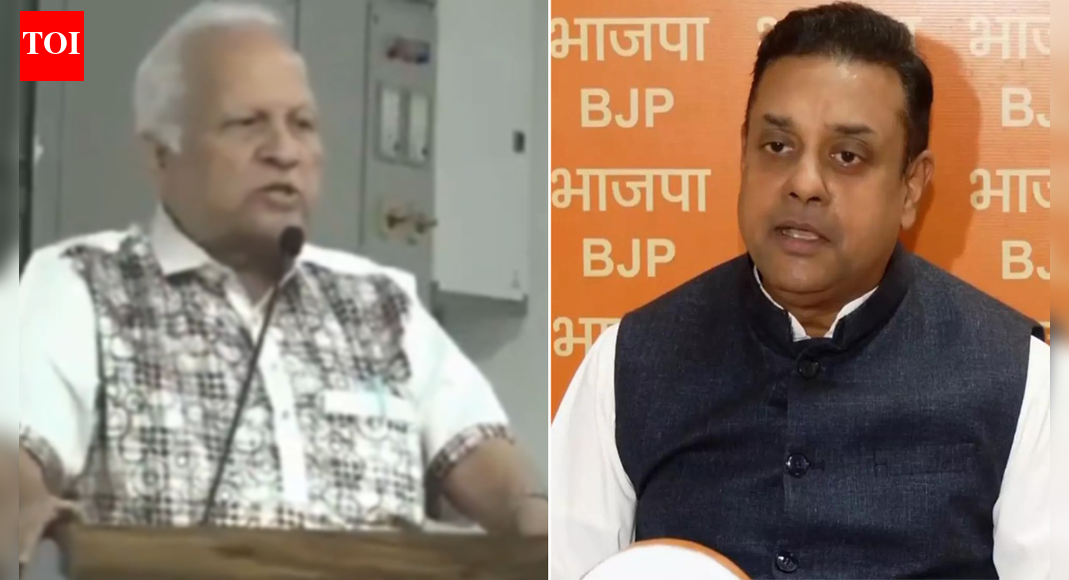
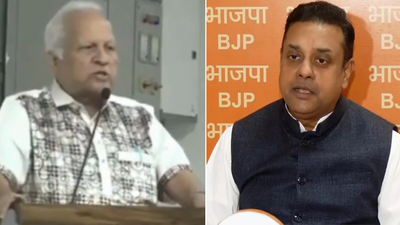
NEW DELHI: Congress and the Bharatiya Janata Party engaged in war of words after the grand old party’s former MP claimed meddling by US and Israel intelligence agencies in the 2014 Parliamentary elections. Kumar Ketkar blamed Mossad and CIA for the Congress party’s loss.BJP MP Sambit Patra, in turn, quipped saying that the Congress lost because “Pakistan’s intelligence agency ISI” carried forward its “agenda in India”.

Here’s what former Congress MP said

The former Rajya Sabha MP noted that the party secured 145 Lok Sabha seats in 2004 and increased its tally to 206 in the 2009 general election. If that trajectory had continued, he argued, the Congress might have reached around 250 seats and easily held on to power. Instead, the party’s seat count plunged to 44 in 2014, he observed.“There were organisations that acted in a way that ’till the time we do not bring down the Congress from 206, we would not be able to play games here (in India),” he said.“One of the organisations was the CIA and another was the Mossad of Israel. Both had decided that they had to do something in India. If a stable Congress government or a Congress-led alliance government came back to power again, they would not have been able to interfere in India and implement their policies,” he added.“The Mossad prepared detailed data on states and constituencies. The CIA and the Mossad have detailed data on states and constituencies,” the former journalist said.

What BJP said

The BJP countered Congress leader Ketkar’s allegation, insisting that its victories come from the support of “the people, not foreign intelligence agencies”.“Neither the CIA nor the Mossad makes the BJP win. It is the people who make the BJP win. Those who get gas cylinders and housing, as well as the poor, farmers, women and youth, make the Bharatiya Janata Party (BJP) win,” he said.“If you will work on the ISI’s blueprint, seek to reconstruct the Babri mosque, oppose Ram temple… If the Congress follows the ISI agenda, how will it progress?” the BJP leader told reporters at the party headquarters,” he added.


[ad_2]

Source link

Stocks to buy or sell: Stock recommendation by brokers for November 27, 2025 -check list

[ad_1]

Stocks to buy or sell: Stock recommendation by brokers for November 27, 2025 -check list

JP Morgan, Maquire see 30K nifty level by end-2026JP Morgan has raised the base case for the nifty target to 30,000 points for end-2026. Analysts feel with supportive fiscal and monetary policies, recovering domestic demand and broad-based sectoral growth, corporate earnings are set to rebound. They feel India’s valuations remain at a premium, but the gap with emerging markets has compressed to below the long-term average. A resolution in the US-India trade relations could trigger a re-rating in the near term. Macquarie, another large foreign broking house in India believes that the balance of risk has tilted favourably with nifty more likely to end 2026 closer to 30K than 20K levels. Analysts feel in 2026, India would come out of hibernation. Hence, from a cautious view on the India equity markets for 2025, they are now turning more optimistic on the top-down outlook for 2026. They see India’s outperformance would be driven by a revival in earnings growth premium, recovery in consumer spends, and resumption of foreign flows.Jefferies has a buy rating on PB Fintech with the target price at Rs 2,100. Analysts said that the company indicated that premium growth would continue to sustain around 30%. In addition, despite recent GST changes, the company expects take rates to stay stable through initiatives like higher riders, protection attachment, duration and mix change. They think that premium growth and operating leverage will drive strong profits and cash flows. They also said that PB Fintech’s hospital network initiative is in its early stages.HSBC has upgraded Bayer Corp’s rating to buy with the target price at Rs 5,200. Analysts expect an improved performance in the Oct-March half (H2FY26) with better industry dynamics and opportunities in the corn seeds business. They feel that the new product launches would support growth and fine tuning of the distribution and sourcing strategies to drive margin recovery. They upgraded the stock as they feel that the worst appears to be behind it.Goldman Sachs has a buy rating on Tata Consumer Products with the target price at Rs 1,350. Analysts feel the company is well positioned in growth categories and growth channels. Its salt business has headroom for growth driven by market share gain and premiumisation. It has also chalked out a range of initiatives for its ‘Growth’ segments. Analysts feel that the near term margins are improving from lower input costs, while the medium term aspirations are for a 17%-20% margin.ICICI Securities has a buy rating on Travel Food Services with the target price at Rs 1,600. Analysts feel the company’s structural growth story is gaining altitude. It has a superior execution strategy to further consolidate TFS’ leading position in travel QSR and lounge business. They expect its scale to improve its ability to win future concessions at other airports.(Disclaimer: Recommendations and views on the stock market, other asset classes or personal finance management tips given by experts are their own. These opinions do not represent the views of The Times of India)


[ad_2]

Source link

Income Tax ‘nudge’ for 25k cases of unreported foreign assets, income

[ad_1]

Income Tax ‘nudge’ for 25k cases of unreported foreign assets, income

NEW DELHI: The income tax department has launched a fresh campaign to nudge those with overseas assets or income to disclose details in India. Initially, around 25,000 high-risk cases will be targeted through SMS and e-mails, with the campaign proposed to be expanded mid-Dec to cover others, and improve the compliance ecosystem.The initiative comes exactly a year after a similar move led to nearly 25,000 taxpayers disclosing Rs 29,000 crore overseas assets and income of Rs 1,090 crore.Following analysis of data for 2024, from other tax jurisdictions, Central Board of Direct Taxes has identified high-risk cases in which foreign assets seem to exist, but have not been reported in FY 2024-25 I-T returns, a statement said. ‘Second NUDGE’ to advise people to review their returns by Dec 31The “second NUDGE campaign” will advise taxpayers to review and revise their returns by Dec 31 to avoid penal consequences. “The campaign aims at facilitating correct reporting in Schedule Foreign Assets and Foreign Source Income (FSI) in ITRs. Accurate & complete disclosure of foreign assets and income is a statutory requirement under the Income Tax Act, 1961, and the Black Money (Undisclosed Foreign Income and Assets) and Imposition of Tax Act, 2015,” CBDT said.The Black Money Act has prescribed penalty of Rs 10 lakh for non-disclosure of overseas assets apart from tax of 30% and penalty of 300% on the taxable amount.The income tax department has assessed around 1,080 cases, raising demand of Rs 40,000 crore till June 2025.Searches were also conducted in Delhi, Mumbai & Pune, based on data received on investments in Dubai, unearthing undisclosed foreign assets and income worth several hundreds of crores, an official said. Tax officials said that as part of the campaign, large companies whose employees have foreign assets and have not disclosed them are also being onboarded to sensitise taxpayers. Industry bodies, Institute of Chartered Accountants of India, and other associations have been requested to create awareness.


[ad_2]

Source link