Breaking News
Oil prices today (March 25, 2026): Crude slips below $100 amid ceasefire hopes in Iran; Brent down 6%, WTI at $87

[ad_1]

Oil prices today (March 25, 2026): Crude slips below $100 amid ceasefire hopes in Iran; Brent down 6%, WTI at $87

The Middle East crisis has stretched to its fourth week and oil prices have finally shown sign of relaxation, cooling off sharply on Wednesday. Fuel prices fell over 5%, giving back some of the gains from the previous session, as hopes of a possible diplomatic breakthrough in the Middle East raised expectations that supply disruptions might ease.The slide followed reports that the United States had put forward a 15-point proposal to Iran aimed at ending the ongoing conflict. US President Donald Trump said Washington and Tehran are “currently in negotiations” and suggested that Iran is eager to strike a peace deal, even as the Islamic Republic has denied holding any direct talks with the United States. He further added that in case the two nations agree to a deal to end the war, oil prices would “drop like a rock.”By 0058 GMT, Brent crude futures were down $6.21, or 5.9%, at $98.28 a barrel, after hitting a low of $97.57. US West Texas Intermediate crude futures fell $4.67, or 5.1%, to $87.68 a barrel, having earlier dropped to $86.72. The fall came a day after both benchmarks had climbed nearly 5% on Tuesday before retreating in volatile post-settlement trade. Meanwhile fuel prices also moved higher, with petrol climbing to a national average of $3.98 per gallon, according to the AAA motor club, marking a 34% rise since the war began. Diesel prices have surged even faster, reaching $5.35 per gallon, up 42% over the same period.Market participants appear to be adjusting positions amid slightly improved expectations of a ceasefire, leading to some profit booking. At the same time, uncertainty over the outcome of the proposed negotiations has kept the downside from deepening further.At the same time, supply concerns linked to the Strait of Hormuz remain unresolved. The conflict has disrupted flows through the key passage, which carries nearly one-fifth of global oil and liquefied natural gas shipments.International brokerage Macquarie told ET that even if tensions ease in the near term, oil prices are expected to hold firm in the $85–$90 range, with a gradual climb back towards $110 once normal flows through the Strait of Hormuz resume. It further cautioned that if disruptions continue through April, Brent prices could still rise to $150 per barrel.Looking ahead, the broader outlook points to further upside in crude. Kayanat Chainwala of Kotak Securities said prices could reach $120 per barrel in the near term and may even touch $150 if the conflict drags on.

[ad_2]

Source link

Facing legal charges, Yash Dayal won’t be part of IPL | Cricket News

[ad_1]

Facing legal charges, Yash Dayal won't be part of IPL
Yash Dayal (Image credit: BCCI/IPL)

BENGALURU : Putting speculation around Yash Dayal to rest, Royal Challengers Bengaluru’s director of cricket Mo Bobat on Tuesday confirmed that the leftarm pacer will not be part of this season’s IPL. Dayal, who has been dealing with legal issues, has not joined the RCB squad, which began training at the M Chinnaswamy Stadium last week. He has also been notably absent from the franchise’s social media posts, further fuelling uncertainty over his statusBobat said, “Yash will not be joining the squad as he is going through a personal situation. We’ve been very supportive of Yash to date and that’s reflected in the opportunity to either retain or release players. He remains under contract. We are communicating with him regularly but it has been decided that it is not in his or the franchise’s best interest for him to join up with us at this point.”

Watch

RCB’s big changes ahead of IPL: New rules, tribute & squad update

Dayal, who has been facing criminal charges since July last year, missed the entire domestic season for UP. “Yash’s situation has been tricky. We went into our auction planning for a worst-case scenario, so we have recruited accordingly. We have some excellent domestic bowlers who are potential options,” added Bobat.RCB’s bowling concerns have been compounded by the continued absence of Australian quick Josh Hazlewood, who is still recovering from injury.“As soon as CA is happy, he’ll come over,” Bobat said.

[ad_2]

Source link

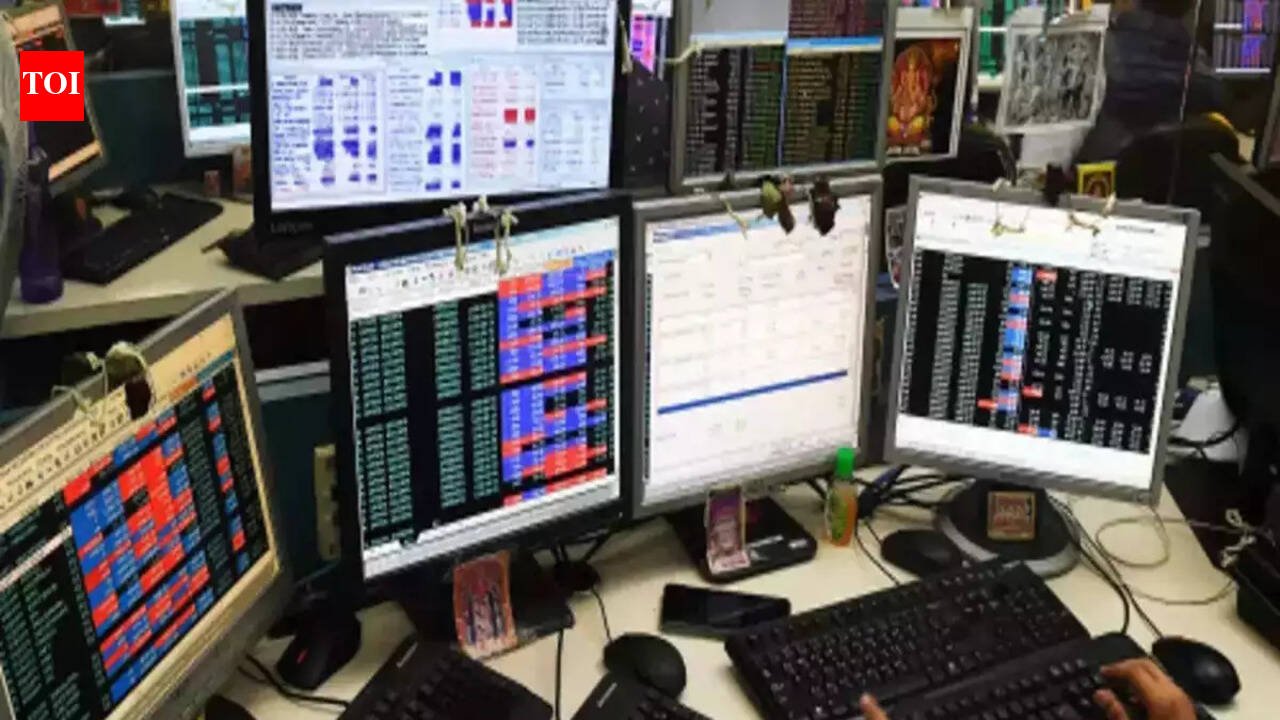
ITC, Tata Power & more: Top stocks to watch for on March 25, 2026

[ad_1]

ITC, Tata Power & more: Top stocks to watch for on March 25, 2026

Morgan Stanley initiated its coverage on Fractal Analytics with the target price at Rs 946. Analysts said they see Fractal Analytics as a challenger in the tech services space. With its strong positioning in data and analytics (a segment growing faster than overall IT services spend), and its platform-centric approach to delivering agentic AI services, expect its revenue growth to continue surpassing that of industry. They also expect gross margin improvement, alongside operating leverage across other items, to lift earnings before interest and taxes (EBIT) margins to 15% and narrow the gap with peers.UBS has a buy rating on ITC with the target price at Rs 395. Analysts said ITC has implemented price hikes across its cigarette portfolio following additional excise duties effective Feb 1 this year. It has adopted a three-pronged pricing strategy to protect volumes. Overall, the company has ensured a same-price option across all sensitive variants that should largely limit volume impact (barring trade destocking). But this pricing strategy leads to mid-single digit decline in net realisable value. Nonetheless, ITC is likely to exceed the bearish consensus expectations for FY27.Motilal Oswal Securities has a buy on Tata Power with the target price at Rs 455. Analysts said the company’s finalisation of the supplemental power purchase agreement (SPPA) with Gujarat is a significant positive development, addressing the viability challenges of the Mundra plant. If SPPA is adopted by all states, losses at Mundra are likely to reduce by 75% from current Rs 1,700-1,800 crore per annum. This would lead to a 4.5-5.5% upward earnings revision to our FY27/28 net profit estimates. Beyond Mundra, the company continued strong performance in the Odisha and Delhi distribution businesses, as well as the rooftop solar segment, along with backward integration through a planned 10GW ingot/wafer manufacturing capacity, emerging distribution opportunities, and an increased focus on expanding its own renewable energy capacity remain key growth drivers and catalysts for the company.Nuvama has a reduce rating on Coal India with the target price at Rs 384. Analysts said Coal India’s narrative of higher volume and e-auction prices, amid higher global coal prices, may not materialise due to excess domestic supply, competition and relatively lower demand. They expect blended e-auction prices to be range bound though volumes could be higher. Analysts are yet to see a volume growth in FY26 and a 4% volume compounded annual growth rate (CAGR) over FY26–FY28 is at risk amid higher volume from captive miners. Wage revision for non-executives is due from July ‘26 and the company may not be able to pass on the same. Earnings are likely to be muted over FY26–FY28.Kotak Institutional Equities has a reduce rating on Power Grid Corp with the target price at Rs 300. Analysts said the company has raised its capex and capitalization guidance for FY26 to Rs 35,000 crore and Rs 25,000 crore, respectively, while reiterating the guidance for FY27-28. Improved capitalization is largely on the back of the resolution of right of way issues. The company further highlighted CEA’s latest estimate for transmission capex of Rs 7.9 lakh crore for non-fossil fuel generation capacities by FY36, with potentially incremental opportunities from global undersea projects and Brahmaputra basin. The company’s management is accordingly targeting Rs 40,000 crore/Rs 35,000 crore of average annual capex/capitalization over FY29-FY36. A longer growth runway is positive, however, valuations at 16X of price-to-earnings are saturated.(Disclaimer: Recommendations and views on the stock market, other asset classes or personal finance management tips given by experts are their own. These opinions do not represent the views of The Times of India)

[ad_2]

Source link

Dhurandhar 2 Full Movie Collection: ‘Dhurandhar: The Revenge’ box office collection day 6: Ranveer Singh, Rakesh Bedi’s film eyes Rs 1,000 crore globally |

[ad_1]

Dhurandhar 2: The Revenge: The Untold Stories Behind The Biggest Blockbuster

‘Dhurandhar: The Revenge,’ starring Ranveer Singh, Rakesh Bedi, Arjun Rampal, Sanjay Dutt, and others, is enjoying its first week run at the box office. Released on March 19, 2026, the movie shattered records with impressive debut weekend numbers. Like any other film, the weekday collections are no match for the weekend run, yet ‘Dhurandhar: The Revenge’ can be seen setting new benchmarks. Within 6 days of its release, its net domestic collection has come close to Rs 600 crore, gross is racing towards Rs 700 crore, and worldwide collection is approaching Rs 1,000 crore.Dhurandhar 2 Movie ReviewRead on to know more about ‘Dhurandhar: The Revenge’ box office performance.

‘Dhurandhar: The Revenge’ box office collection day 6 update

According to the latest reports by Sacnilk, ‘Dhurandhar 2’ on Tuesday, March 24, 2026, Rs 56.55 crore net in India across 220,412 shows. If we compare it with the film’s first Monday numbers, which stood at Rs 65 crore net, then a clear drop of 13 per cent can be seen.

Watch

Dhurandhar 2: The Revenge: The Untold Stories Behind The Biggest Blockbuster

Meanwhile, here are the box office numbers, starting from the paid preview shows. On March 18, 2026, a day ahead of its official release, ‘Dhurandhar: The Revenge’ earned Rs 43 crore net, which soared to Rs 102.55 on day 1, Thursday. Day 2, saw a small roadblock with 80.72 crore net collection domestically, but the weekend brought a massive change. The Ranveer Singh starrer spy drama made Rs 113.00 crore and Rs 114.85 crore respectively on Saturday and Sunday.Currently, the total India net collection of ‘Dhurandhar: The Revenge’ stands at Rs 687.43 crore net, and Rs 575.67 crore gross. The overseas collections add Rs 231.57 crore, taking the worldwide collection of ‘Dhurandhar 2’ to Rs 919 crore across languages.

‘Dhurandhar: The Revenge’ day 6 occupancy

Directed by Aditya Dhar, ‘Dhurandhar 2’ saw an overall occupancy of 36.7% on Tuesday, March 24, 2026. Earlier, on Monday, the overall occupancy was 44.1%, and back on Sunday it stood at 79.7%. Tracing further back to day 3, it was 81.6%. Day 2 recorded 62.6% occupancy, while day 1 saw 67.8%. The occupancy during early previews was 64.8%.

‘Dhurandhar: The Revenge’

Starring Ranveer Singh in the lead, ‘Dhurandhar: The Revenge’ tells the tale of an undercover Indian spy, Jaskirat Singh Rangi. In the first part, the filmmakers show how Jaskirat, as Hamza, infiltrates the notorious gang of Rehman Dakait, and ultimately ends the leader. In ‘Dhurandhar 2’, the story picks up from where it left off in the first part and showcases Hamza’s journey of digging deep into Lyari’s underworld and political scene.DISCLAIMER: The box office numbers and data in this article are compiled from diverse public and industry sources. All figures are approximate unless explicitly mentioned, offering a fair representation of the movie’s box office performance. These totals may change as official studio data is updated or as additional international market reports are finalized. This data is provided by us for informational and entertainment purposes only.

[ad_2]

Source link

‘They are talking sense’: Trump says Iran ‘agreed to not have nuclear weapon’

[ad_1]

'They are talking sense': Trump says Iran 'agreed to not have nuclear weapon'

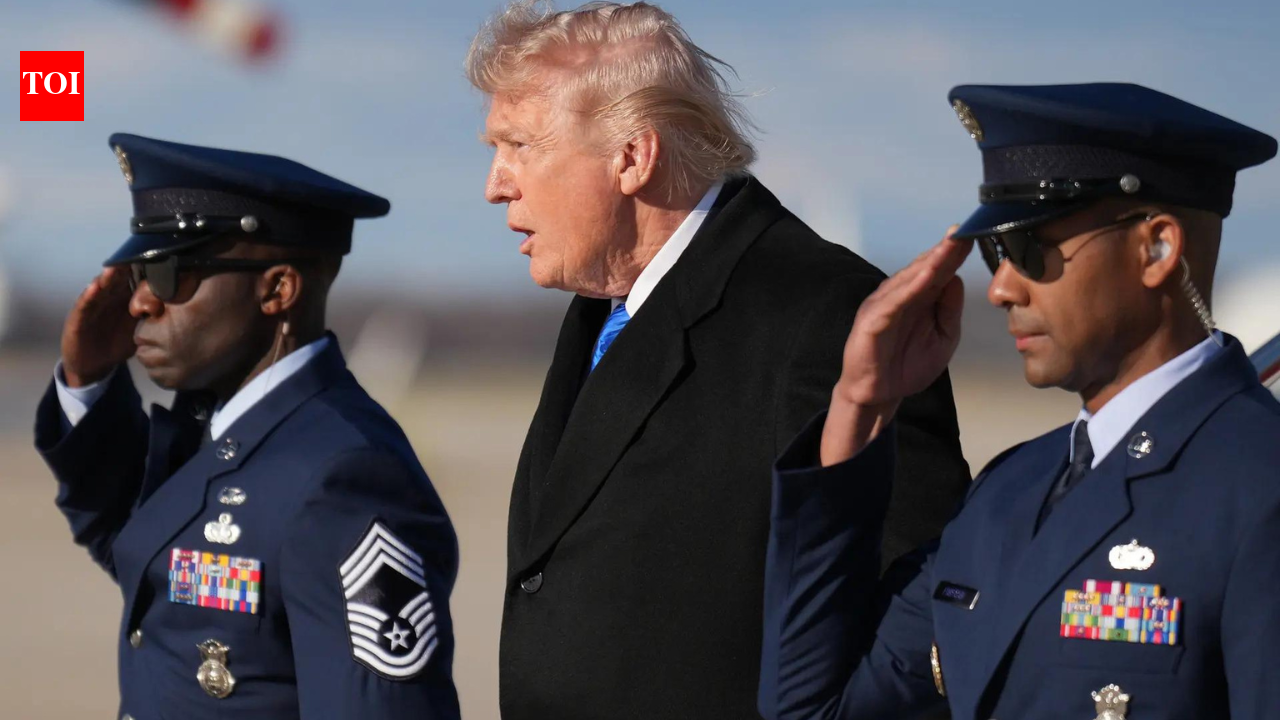
US President Donald Trump said Iran has agreed it will “never have a nuclear weapon”, even as fighting in the region continued and Tehran publicly denied that formal negotiations are underway.Speaking to reporters in the Oval Office on Tuesday, Trump projected confidence that diplomatic efforts were gaining traction after nearly a month of war. “The fact that they are talking to us and they are talking sense. It all starts with: they cannot have a nuclear weapon. They said, what are the top 10? I said, number 1, 2 and 3 is they can’t have a nuclear weapon… They have agreed that they will never have a nuclear weapon,” he said.

Watch

Iran Quagmire Explained: Trump’s 3 Options Are Dead Ends — Only Humiliation Awaits? | WATCH

Trump also claimed that Iran had sent what he described as a “very big present” linked to the Strait of Hormuz, calling it a sign that the US was “dealing with the right people”. He did not elaborate on the nature of the move, but tied it to broader efforts to reopen the vital oil shipping route, which has been disrupted during the conflict.The President added that the US was in a strong negotiating position. “We will have control of anything we want. If we can end this without more lives being down… I would like to be able to do that. They can’t have certain things. It starts with no nuclear weapons, and they have agreed to that,” he said.Despite Trump’s optimism, Iranian officials have rejected claims that talks are taking place. Tehran has instead struck a defiant tone, insisting it will continue fighting “until complete victory” even as international mediation efforts gather pace.Pakistan has emerged as a potential intermediary, with Prime Minister Shehbaz Sharif offering to host talks. Trump acknowledged that multiple senior figures, including Vice President J D Vance, Secretary of State Marco Rubio, envoy Steve Witkoff and adviser Jared Kushner, were involved in outreach efforts.Reports suggest Washington has floated a 15-point proposal that would impose strict limits on Iran’s nuclear programme, including ending uranium enrichment and transferring enriched material. In return, sanctions relief and assistance with civilian nuclear energy projects could be offered, alongside guarantees to keep the Strait of Hormuz open.There are also indications that a temporary ceasefire could be explored to create space for negotiations, although no formal agreement has been confirmed.

War intensifies even as talks discussed

On the ground, the conflict shows little sign of easing. Israeli strikes have targeted sites across Iran and allied positions in the region, while Iranian missiles and drones have hit Israel and neighbouring countries.The United States is also increasing its military footprint, with around 1,000 troops from the 82nd Airborne Division expected to deploy, joining thousands of Marines already heading to the Middle East. The build-up has fuelled speculation that Washington is preparing contingency plans even as it pursues diplomacy.At the same time, the Strait of Hormuz remains a focal point of the talks, with disruptions sending global oil prices sharply higher and raising concerns about the wider economic fallout.

[ad_2]

Source link

Middle East crisis: PM Modi sets up 7 empowered groups to assess impact of war | India News

[ad_1]

Middle East crisis: PM Modi sets up 7 empowered groups to assess impact of war

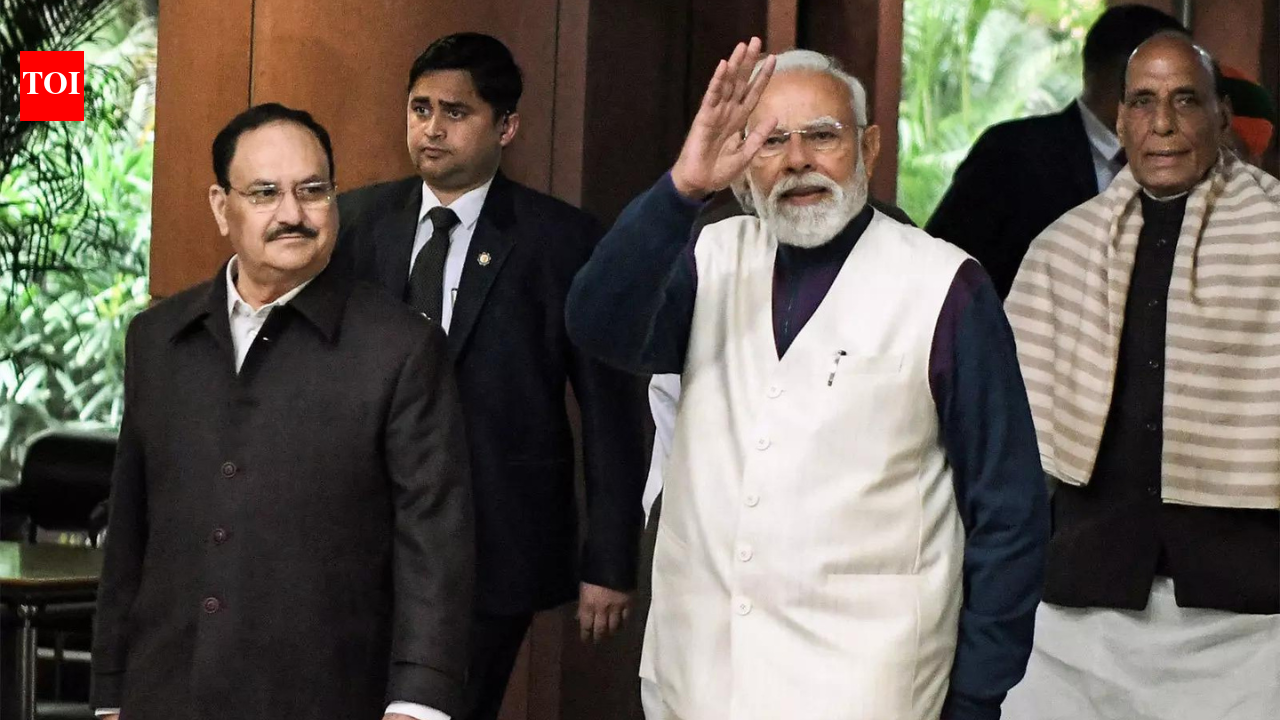
NEW DELHI: PM Narendra Modi on Tuesday announced the formation of seven empowered groups to assess the implications of the ongoing military conflict in West Asia on energy supplies, essential commodities and supply chains, and chart a strategy to cushion its impact on the Indian economy.In a statement in Rajya Sabha, Modi said the conflict had rattled economies across the world and cautioned that recovery from the damage inflicted in West Asia would take time. Drawing from govt’s playbook during the Covid-19 pandemic, he said the new groups would function as quick-response teams focusing on key areas such as petrol and diesel, fertilisers, gas, supply chains and inflation.“I am fully confident that through these shared and coordinated efforts, we’ll be able to navigate these circumstances more effectively,” the PM said, noting that an inter-ministerial group was already meeting regularly to track developments and address emerging challenges arising out of the situation.The seven panels, comprising senior officers from various ministries and departments, have been tasked with identifying risks and preparing short-, medium- and long-term strategies in a time-bound manner.Their mandate includes assessing vulnerabilities in energy supplies and pricing, ensuring adequacy of strategic reserves, and taking steps to manage price volatility and prevent supply disruptions. They will also examine potential bottlenecks – from shipping routes and ports to aviation corridors and critical imports and recommend pre-emptive measures.The groups are expected to explore alternative sources of imports to reduce dependence on any single region, while keeping a close watch on domestic availability and price stability of essential commodities, including food, fertilisers and fuels.During the pandemic, govt had set up 11 such empowered groups comprising officials and experts to take swift decisions and ensure coordination between the Centre and the states. Flagging the likelihood of a prolonged disruption, Modi said the conflict’s adverse effects may last a long time. “But I assure people that govt remains vigilant and proactive, and is taking every necessary decision with seriousness.”

[ad_2]

Source link

SC: Trials in UAPA cases must be completed in 1 year | India News

[ad_1]

SC: Trials in UAPA cases must be completed in 1 year

NEW DELHI: Supreme Court on Tuesday said trials in UAPA cases investigated by National Investigation Agency must be concluded within one year by additional exclusive special courts to allay misgivings about long pendency and consequent denial of bail for years.A bench of CJI Surya Kant and Justice Joymalya Bagchi said the Centre and states must take steps to depute a dedicated public prosecutor for these special courts to expedite pending trials.Identify how many special NIA courts needed for speedy trial: SC to statesThe advocates general of 17 states, where more than 10 cases are pending, expressing the willingness of each state to avail of the central funding to set up exclusive NIA courts.“The state govts must identify how many such exclusive special courts are required to be established for trial of NIA-investigated cas-es on a day-to-day basis with a categorical commitment that each trial must be completed in all circumstances within a year,” the bench said.Seeking the states’ response to this within four weeks, the bench asked the HCs to take necessary steps for adequate number of court staff for these special courts.“The prosecuting agency, Centre and states must take steps to appoint a dedicated public prosecutor, and notify special PP where sufficient PPs are not available in the cadre, to each of these special courts,” the bench said.Since the opinion of the HCs is required for some of the issues relating to establishment of special NIA courts, the registrars general will present their views before the court during the next date of hearing, it said.Additional solicitor general Aishwarya Bhati informed that the ministry of home affairs has written to the states that “in view of the security concerns, it is not advisable to construct a separate court complex for this purpose. It is, however, suggested that state govts may earmark one existing court for setting up a special court, exclusively for trial of NIA cases”. Bhati also had informed the court about the central funding for setting up of NIA courts.Delhi has the highest number of NIA cases pending at 59, followed by J&K (38), Assam, Kerala and Gujarat (33 each), Punjab and West Bengal (32 each), Jharkhand (28), Karnataka (27), TN (23), Telangana (22) and Maharashtra (21).Bhati had informed the court that the Centre has taken a decision to grant Rs 1 crore one-time grant for establishment of special NIA courts and bear a recurring expenditure of Rs 1 crore annually.Additional solicitor general S D Sanjay said the Narcotics Control Bureau is in the final stages of preparing a policy for establishment of special courts for cases under Narcotic Drugs and Psychotropic Substances Act. He said in Delhi 14 more special courts would come up in Rouse Avenue Court complex for MCOCA and UAPA cases.

[ad_2]

Source link

Government plans to merge Ircon, RVNL to help them scale up

[ad_1]

Government plans to merge Ircon, RVNL to help them scale up

NEW DELHI: Two major railway PSUs – Rail Vikas Nigam (RVNL) and Ircon International – are set to be merged as part of a move to create a bigger entity that can take up larger domestic and international projects, instead of competing with each other, top officials said Tuesday.This marks the second PSU merger after finance minister Nirmala Sitharaman announced the merger of PFC and REC in her Budget on Feb 1. The details of the RVNL-Ircon merger will be worked out by the railways brass in the coming days, the official said.People aware of the development said that railway has initiated the process, which will eliminate duplication, pooling of resources, and enhancing the ability of the merged entity to bid for mega infrastructure projects. They added that the process would be lengthy as this would require approvals from different departments and then from the Cabinet.As on Tuesday, the market capitalisation of RVNL was Rs 53,877 crore, while that of Ircon was Rs 11,159 crore, according to BSE data. Officials said the combined order book of the two entities is likely to be more than Rs 1.5 lakh crore. Ircon shares rose 2.9% on BSE to close at Rs 119, while RVNL closed 3.3% higher at Rs 258.“After merger, the new entity will become a bigger player and share value will also increase. The need for merging the two has been felt for a long time. It will increase pool of manpower and capability. The merged entity can give competition to other major players in infrastructure sector and it can handle larger order books,” said an official.

[ad_2]

Source link

FMCG companies plan to hike prices, cut grammage

[ad_1]

FMCG companies plan to hike prices, cut grammage

MUMBAI: Your next bottle of soft drink could cost you more and chances are that you will get lesser value out of the pack of biscuits or chips you buy. Consumer goods companies are implementing a mix of selective price hikes and grammage cuts to pass on some of the steep rise in input costs to consumers. Some firms are also looking at the option of smaller packs to make products more accessible for consumers. The West Asia conflict, which has now entered its fourth week, has triggered a surge in crude oil prices, shooting up raw material costs for companies. Crude oil has a direct bearing on packaging and logistics costs. Besides, crude derivatives are also used to manufacture several household products. “Some price corrections were already overdue over the past two years. Given the current environment, we have advanced this decision and will be implementing selective price increases effective April 1. In certain larger SKUs (stock keeping units), the increase may be slightly higher as there was some flexibility available through trade margin adjustments,” said Nikhil Doda, co-founder and chief operating officer at Lahori Zeera.Parle Products is looking to take selective price actions or grammage adjustments, said chief marketing officer Mayank Shah. “A more immediate and critical concern at this stage is the availability of fuel itself. It is important that policymakers differentiate between industrial users, with priority given to sectors linked to essential commodities like food to ensure there is no disruption in supply,” Shah said. Dabur will take price hikes wherever necessary, a company spokesperson said without sharing additional details. For FMCG companies, which had been betting on GST cuts to spur consumption after a long spell of sluggishness, the war risks slowing the pace of demand recovery just when revival was in sight. Firms had underlined improving consumption trends in their Q3 earnings. AWL Agri Business is pushing a wide range of pack sizes to the retail shelves starting from 200 ml. “If inflationary pressures continue, smaller pack sizes may help consumers manage their monthly household budgets more efficiently,” said managing director & CEO Shrikant Kanhere.“Household staples from soaps to packaged foods face margin pressure as petrochemical inputs rise. FMCG firms are weighing price hikes vs pack reduction-balancing margin protection with consumer demand,” said analysts at The Knowledge Company, who estimate packaging costs to have surged by 15%-20% on higher crude prices.

[ad_2]

Source link