Breaking News
Gold price today (March 20, 2026): How much 24K, 22K gold costs in Delhi, Hyderbad, Chennai & more – check rates

[ad_1]

Gold price today (March 20, 2026): How much 24K, 22K gold costs in Delhi, Hyderbad, Chennai & more - check rates

Gold prices surged by Rs 1,914 to Rs 1.46 lakh per 10 grams in futures trade on Friday, tracking firm global trends amid improving sentiment following signs of easing geopolitical tensions in West Asia, PTI reported.On the Multi Commodity Exchange (MCX), gold contracts for April delivery climbed by Rs 1,914, or 1.32 per cent, to Rs 1,46,868 per 10 grams.Analysts attributed the recovery in bullion prices to a stabilising risk outlook in the region after recent developments suggested a reduced likelihood of further disruptions to energy infrastructure.Here is how gold prices stand across major cities today:

Gold price in Delhi today

Gold prices in the national capital slipped, with 24K gold quoted at Rs 15,108 per gram, down Rs 371, while 22K gold declined Rs 340 to Rs 13,850 per gram.

Gold price in Mumbai today

Mumbai bullion markets also saw weaker retail rates as 24K gold was priced at Rs 15,093 per gram, down Rs 98, and 22K gold fell Rs 90 to Rs 13,835 per gram.

Gold price in Chennai today

Chennai recorded a sharper decline, with 24K gold selling at Rs 15,163 per gram, down Rs 437, while 22K gold dropped Rs 401 to Rs 13,899 per gram.

Gold price in Kolkata today

In Kolkata, bullion traders quoted 24K gold at Rs 15,093 per gram, down Rs 98, while 22K gold stood at Rs 13,835 per gram, lower by Rs 90.

Gold price in Ahmedabad today

Ahmedabad markets showed softer rates as 24K gold stood at Rs 15,098 per gram, down Rs 98, while 22K gold slipped Rs 90 to Rs 13,840 per gram.

Gold price in Hyderabad today

Hyderabad bullion markets reflected a similar trend, with 24K gold priced at Rs 15,093 per gram, down Rs 98, and 22K gold at Rs 13,835 per gram, slipping Rs 90.

Gold price in Bangalore today

In Bangalore, 24K gold was quoted at Rs 15,093 per gram, down Rs 98, while 22K gold was selling at Rs 13,835 per gram, lower by Rs 90.

Gold price in Lucknow today

Gold rates in Lucknow eased as 24K gold was priced at Rs 15,108 per gram, down Rs 98, while 22K gold moved lower by Rs 90 to Rs 13,850 per gram.

Gold price in Patna today

Patna markets also recorded weaker prices, with 24K gold quoted at Rs 15,098 per gram, down Rs 98, and 22K gold at Rs 13,840 per gram, lower by Rs 90.

Gold price in Chandigarh today

In Chandigarh, 24K gold was quoted at Rs 15,108 per gram, down Rs 98, while 22K gold declined Rs 90 to Rs 13,850 per gram.

[ad_2]

Source link
An alternative route to Strait of Hormuz? Iran sets up ‘corridor’, offers ships safe passage for a price

[ad_1]

An alternative route to Strait of Hormuz? Iran sets up 'corridor', offers ships safe passage for a price
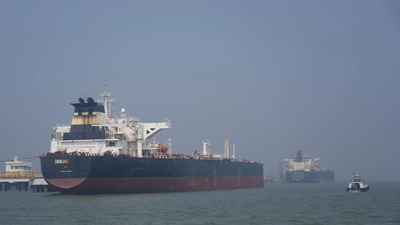
Strait of Hormuz (AP image)

Iran has introduced a ‘safe shipping corridor’ that allows selected vessels to pass through the Strait of Hormuz via a route inside its territorial waters, as tensions in the region continue to disrupt global maritime traffic.The corridor is being offered only to ships that receive prior approval from Iranian authorities, making it a controlled and selective alternative rather than a fully open route through one of the world’s busiest oil chokepoints.

What is the current process for ships to pass through ‘Strait of Hormuz’?

Under the current arrangement, ships must undergo a vetting process before entering the corridor. Several countries, including India, Pakistan, Iraq, Malaysia and China are in discussions with Tehran to coordinate safe passage for their vessels.The system is being managed by Iran’s Islamic Revolutionary Guard Corps (IRGC), which is developing a registration mechanism for ships seeking clearance. Shipping operators are required to share detailed information including vessel ownership, cargo and destination in advance through intermediaries.

.

.

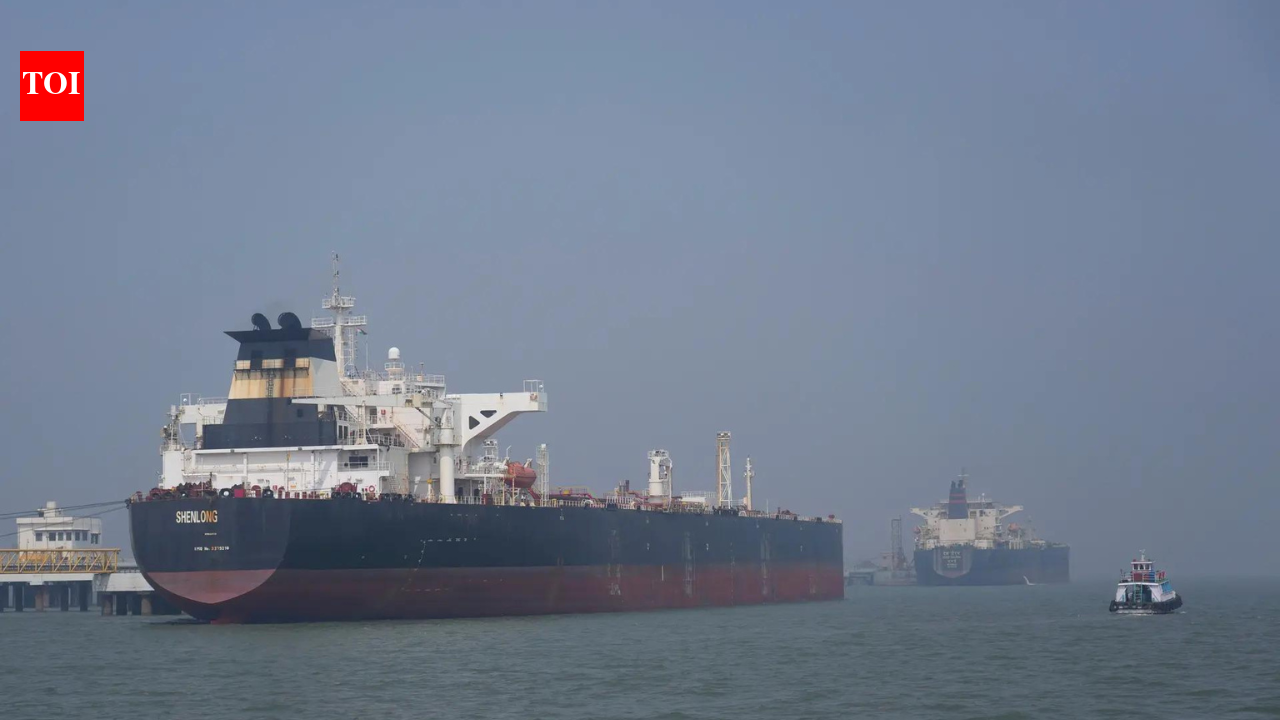
While the process is currently being handled on a case-by-case basis, reports suggest that a more formal and structured approval system may be introduced in the coming days, according to maritime news agency Lloyd’s List. At least nine ships have already used the corridor, travelling close to Iran’s Larak Island where the IRGC Navy and port authorities carry out visual inspections.Among them, three India-flagged gas tankers Shivalik, Nanda Devi and Jag Laadki have successfully transited the strait and arrived in India after taking this route. Shipping data indicates that these vessels avoided the usual shorter passage through Omani waters and instead moved through Iranian territorial waters under supervision.

.

.

Other vessels, including bulk carriers and tankers, have also reportedly followed similar routes.

Costs, risks and global concerns remain

According to a report by Lloyd’s List, at least one tanker operator is believed to have paid around $2 million to secure safe passage. In most cases, approvals have been granted through diplomatic coordination.Despite being described as “safe”, experts have raised concerns over the reliability of the corridor. They warn that clearance from Iranian authorities does not guarantee protection, as different units within the IRGC may still delay or even seize vessels, creating uncertainty for shipping companies.The development has also raised geopolitical concerns. While the United States is currently allowing limited transits to avoid disruptions in global energy supply, analysts believe it may not support such an arrangement in the long term. Any attempt by Iran to assert greater control over the strait could increase tensions and trigger responses.For many global shipping firms, especially those linked to Western countries, the risks remain high. However, operators with trade ties to Iran or fewer geopolitical constraints may continue to explore this option.Meanwhile, overall traffic through the Strait of Hormuz remains low. Most shipowners are avoiding the route due to security concerns, with recent data showing only a small number of transits.Iran has denied allegations that it is blocking the strait and has maintained that it supports free and safe navigation. It has attributed the current disruption to rising regional tensions and external military actions.

[ad_2]

Source link

Google, Amazon and nine other technology giants and retail companies join hands to fight online scams

[ad_1]

Google, Amazon and nine other technology giants and retail companies join hands to fight online scams

Google, Meta, Amazon, Microsoft along with nine other tech and retail giants have now come together to launch the Tech Industry Accord to Combat Scams. This initiative from the companies is designed to tackle the increasing problem of online fraud. Announced this week, the Accord is one of the largest industry collaborations till date which deals with scams that target consumers via fake ads, phishing and fraudulent listings.As part of the Accord the companies have pledged to share best practices, improve scam detection and collaborate more closely with law enforcement and consumer protection agencies. The initiative also stressed on information-sharing across platforms, so that fraudulent activity detected on one service can be flagged across others.According to the accord document, the goal is to create a “safer digital ecosystem” by reducing the prevalence of scams that erode consumer trust and cause billions in losses annually.“This Accord addresses the growing problem of online scams and fraud, specifically deceptive schemes targeting individuals or organizations with the intent of taking money and/or personal information, which impacts billions of users across the globe,” reads the document.The Accord also seeks to set expectations for how signatories will work across online services to counter scammers, in line with their own policies and practices as relevant to the commitments in the Accord.

Why the companies signed the Accord now

Online scams are on a rise worldwide and are exploiting the growth of e-commerce and digital services. The fraudsters are now using AI-generated content and other sophisticated social engineering tactics to exploit the users. By coming together these big companies now hope to stay ahead of fraudsters and also assure the customers all the platforms are now taking coordinated action.The move comes amid heightened scrutiny of tech platforms’ responsibility in protecting users. Regulators in the U.S., U.K., and EU have been pressing companies to strengthen safeguards against fraud. Similar alliances have emerged in financial services, but this marks a significant expansion into the broader tech and retail sectors.

[ad_2]

Source link

Gold price prediction amid US-Iran war: What’s the gold rate outlook for March 20, 2026?

[ad_1]

Gold price prediction amid US-Iran war: What's the gold rate outlook for March 20, 2026?
Gold price prediction today (AI image)

Gold price prediction today: Gold prices are range-bound and highly volatile in the current scenario, says Jateen Trivedi, VP Research Analyst – Commodity and Currency, LKP Securities.Gold futures on MCX are trading near ₹1,46,900 after witnessing a sharp decline followed by a recovery bounce. The price action indicates consolidation after a strong directional move, with markets now reacting to global cues. Ongoing geopolitical tensions and uncertainty around the U.S. Fed’s interest rate trajectory are keeping bullion highly sensitive, leading to sharp two-sided moves.Technical SetupPrices are hovering near the short-term EMA cluster, indicating indecision after the recent fall. The EMAs are flattening, suggesting consolidation and lack of a clear directional trend in the immediate term.Bands are wide, reflecting elevated volatility. Price is oscillating between the mid and lower band, indicating that sharp intraday swings may continue within a defined range.RSI is near 50, reflecting neutral momentum. This supports the view of a range-bound market with no strong directional conviction.MACD:MACD is flattening after a negative phase, indicating that bearish momentum has slowed while no strong bullish reversal is confirmed yet.Key Intraday Levels:Resistance Zones: • ₹1,47,500 – ₹1,47,800 (Immediate resistance) • ₹1,49,000 – ₹1,49,500 (Strong supply zone)Support Zones: • ₹1,46,000 – ₹1,45,800 (Immediate support) • ₹1,44,800 – ₹1,44,500 (Key demand zone)Volatility & Market View:Gold is expected to remain highly volatile amid: • Escalating geopolitical tensions driving safe-haven flows • Uncertainty over Fed rate cuts and inflation trajectory • Dollar index and bond yield fluctuationsIntraday movement is likely to remain wide and erratic, with potential spikes on news flow. The broader range for the session is seen between ₹1,45,000 – ₹1,49,000, with sudden breakouts possible on macro triggers.Gold is currently in a consolidation phase within a high-volatility environment, with prices reacting sharply to global developments. Traders should closely monitor key support and resistance levels, as any breakout beyond the defined range could trigger a directional move.Bias: Volatile & Range-BoundRange: ₹1,45,000 – ₹1,49,000(Disclaimer: Recommendations and views on the stock market, other asset classes or personal finance management tips given by experts are their own. These opinions do not represent the views of The Times of India)

[ad_2]

Source link
Premium petrol prices hiked by up to Rs 2.35 per litre amid Middle East tensions

[ad_1]

Premium petrol prices hiked by up to Rs 2.35 per litre amid Middle East tensions

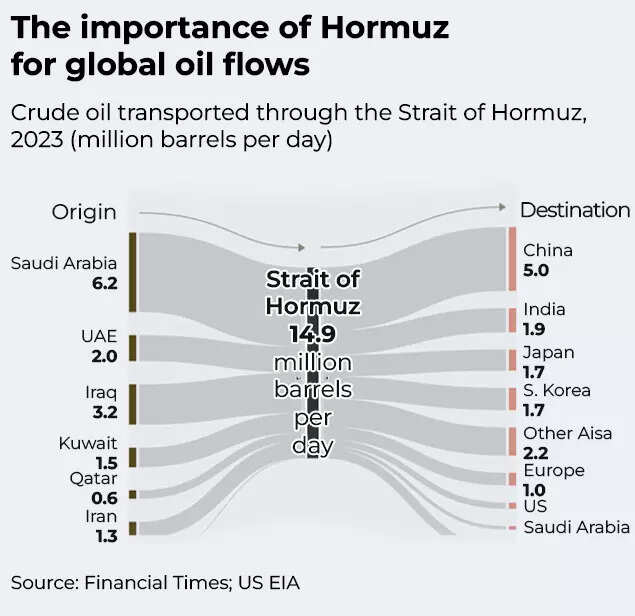
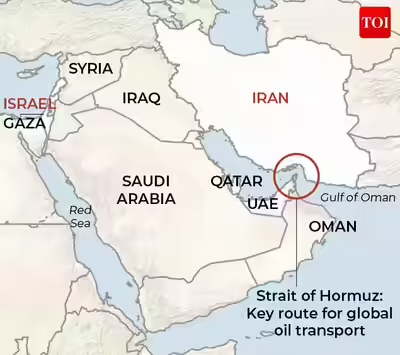
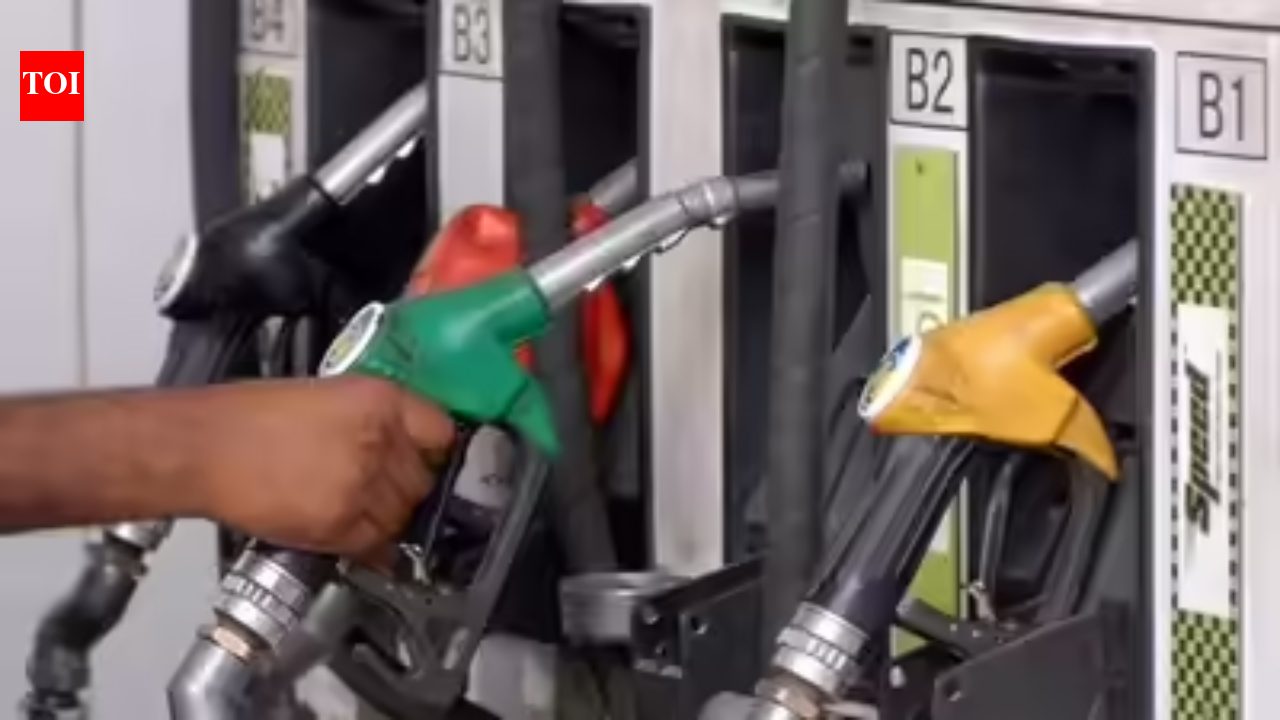
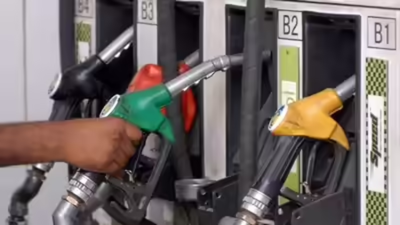
State run oil marketing companies on Friday increased the price of their premium-grade power petrol by over Rs 2 per litre, while keeping the prices of regular petrol and diesel unchanged.The revised rates apply to high-performance fuel variants, including BPCL’s Speed, HPCL’s Power and IOCL’s XP95, with prices increasing in the range of Rs 2.09 to Rs 2.35 per litre.There has been no change in the price of regular petrol, according to ANI. The revision comes amid ongoing volatility in global energy markets due to the Middle East crisis. However, HPCL said it has taken steps to shield retail consumers from broader price increases.The ongoing Iran conflict has triggered a sharp surge in global oil prices, largely due to disruptions around the Strait of Hormuz, a critical chokepoint through which nearly 20% of the world’s energy supplies pass.Escalating attacks on energy infrastructure by both sides — Iran and Israel-US — and threats to shipping in the region have pushed crude prices above $100 per barrel, with spikes nearing $120 at peak levels, as markets priced in supply risks.For India, the impact is significant due to its heavy dependence on imports. The country meets about 85–90% of its crude oil needs from overseas, with roughly 40–50% of supplies routed through the Strait of Hormuz.Any disruption in this corridor increases shipping costs, insurance premiums and overall import bills, while also raising the risk of supply shortages. Analysts warn that even a $10 rise in crude prices can substantially widen India’s import bill and add to inflationary pressures.The impact is already visible, with pressure on the rupee, foreign investor outflows, and concerns over rising fuel and LPG costs.

[ad_2]

Source link
New income tax rules notified from April 1; simplified law retains HRA relief and tightens disclosure norms

[ad_1]

New income tax rules notified from April 1; simplified law retains HRA relief and tightens disclosure norms

The Central Board of Direct Taxes (CBDT) on Friday notified the Income-tax Rules, 2026 to operationalise the simplified direct tax legislation passed by Parliament last year, with the new framework set to come into effect from April 1. “These rules may be called the Income-tax Rules, 2026. They shall come into force on the April 1, 2026,” a gazette notification said.Parliament had on August 12, 2025 cleared the new Income Tax Bill aimed at replacing the six-decade-old Income Tax Act, 1961. The legislation does not introduce any new tax rate and focuses on simplifying language to make complex provisions easier to understand.

HRA framework and eligibility norms

The notified rules retain the proposed structure for house rent allowance (HRA) exemptions applicable to salaried taxpayers. Under the new framework, eight cities– Mumbai, Kolkata, Delhi, Chennai, Hyderabad, Pune, Ahmedabad and Bengaluru –will qualify for a higher exemption limit of 50 per cent of salary, while all other locations will continue to have an exemption ceiling of 40 per cent.At present, salaried employees residing in Mumbai, Delhi, Kolkata and Chennai are allowed to claim HRA exemption of up to 50 per cent of their salary, while those living in other locations are eligible for a lower limit of 40 per cent, according to PTI report.The new rules also make disclosure of landlord-tenant relationship mandatory for claiming income-tax deductions linked to house rent allowance, thereby strengthening compliance requirements for taxpayers.

Simplification of tax law structure

The simplified law removes redundant provisions and archaic language and reduces the number of sections from 819 under the Income Tax Act of 1961 to 536, while the number of chapters has been cut from 47 to 23.The total number of words in the legislation has been reduced significantly from 5.12 lakh to 2.6 lakh. For the first time, the new framework introduces 39 tables and 40 formulas, replacing dense textual provisions to enhance clarity and improve ease of interpretation for taxpayers and practitioners.The notification also introduces more than 150 official forms — numbered from Form 33 onwards — covering a wide range of tax-related activities and procedural requirements.

Compliance tightening in key areas

New rules create stricter regulations around capital gains taxation, stock exchange dealings and non-resident taxation, while simplifying other disclosure mechanisms in the direct tax system.The framework increases the responsibility of auditors and companies for tax credit claims relating to foreign income. Auditors have also been entrusted with greater responsibility to check instances of PAN duplication and assess tax liabilities arising out of adverse audit observations.In addition, the rules clarify how the holding period of assets will be calculated in specific situations to determine whether gains are categorised as short-term or long-term.For converted securities such as shares or debentures, the holding period will include the duration for which the original instrument — including bonds, debentures or deposit certificates — was held before conversion, providing clarity on capital gains treatment in such cases.

[ad_2]

Source link

IRGC spokesperson Ali Mohammad Naini killed in strikes soon after issuing defiant warning to US-Israel

[ad_1]

IRGC spokesperson Ali Mohammad Naini killed in strikes soon after issuing defiant warning to US-Israel

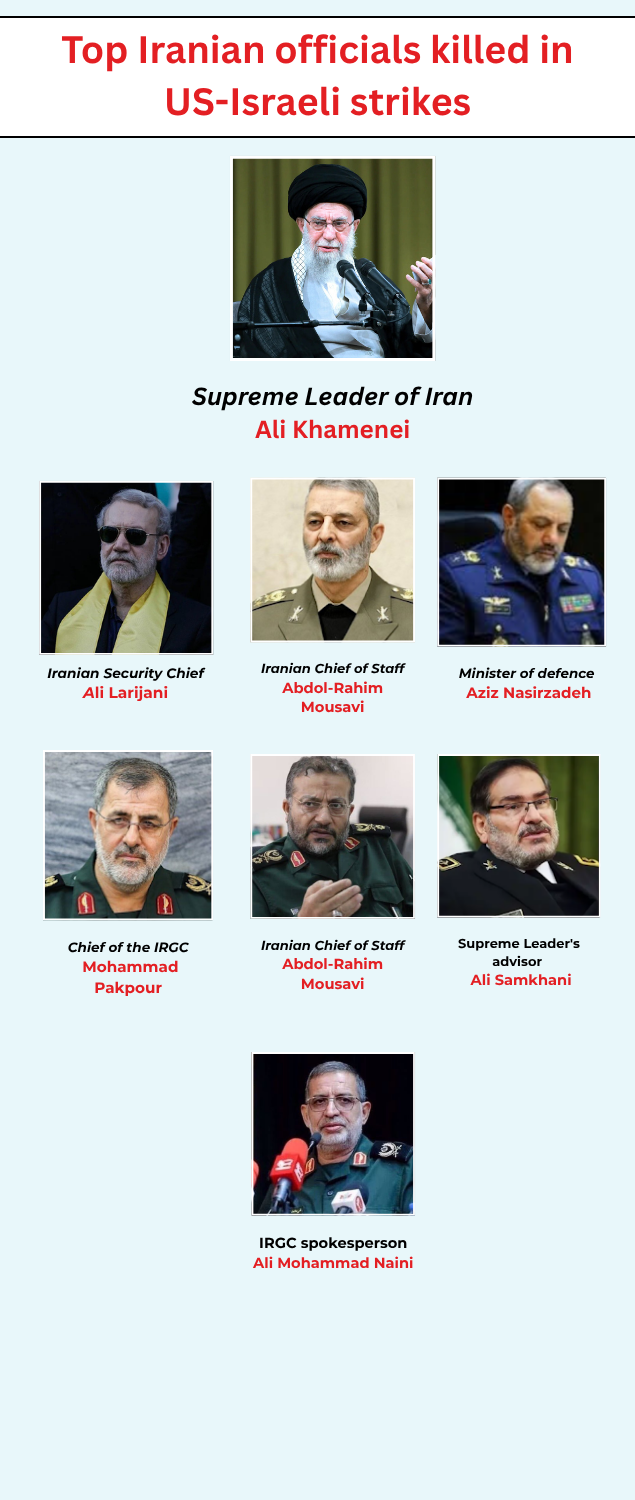
Iran’s Revolutionary Guard spokesperson Ali Mohammad Naini was killed in joint US and Israeli strikes, Iranian state media reported on Friday. His death came hours after he issued a defiant warning challenging US naval claims in the Gulf.Naini “was martyred in the criminal cowardly terrorist attack by the American-Zionist side at dawn”, the IRGC said in a statement, as quoted by news agency AFP

Top Iranian officials killed in US-Israeli strikes

The brigadier-general had openly mocked Donald Trump’s assertion that Iran’s navy had been destroyed, daring Washington to deploy ships into the Persian Gulf. He had also insisted Iran continued producing missiles despite ongoing strikes.“Didn’t Trump say that Iran’s navy has been destroyed? If so, let him send his ships into the Persian Gulf if he dares,” Naini was quoted as saying by the semi-official Tasnim news agency.

Watch

Thousands Gather At Ali Larijani’s Funeral, Take Chilling Anti-US Pledge | Watch

“Our missile industry deserves a perfect score… and there is no concern in this regard, because even under wartime conditions we continue missile production,” Guards spokesman Ali Mohammad Naini said, quoted by the Fars news agency.The developments follow a series of US–Israeli strikes that have eliminated several senior Iranian figures since the death of Ayatollah Ali Khamenei on 28 February. On Thursday, the Israel Defense Forces confirmed the killing of Intelligence Minister Esmaeil Khatib in Tehran, alleging his involvement in suppressing the 2022–23 Mahsa Amini protests and directing operations abroad. Earlier this week, security chief Ali Larijani and Basij leader Gholamreza Soleimani were also killed. President Pezeshkian condemned the deaths, vowing resilience. Foreign Minister Abbas Araghchi insisted Iran’s political system remains robust, stating that despite leadership losses, its institutional structure continues to function effectively.Tensions have escalated further after Israel targeted Iran’s South Pars gas field, prompting retaliatory strikes and raising fears of a broader energy crisis. Oil prices surged sharply amid concerns over supply disruptions, particularly through the strategically vital Strait of Hormuz, a key route for global energy shipments.A Kuwaiti oil refinery was struck by Iranian drones early on Friday, while sirens across Israel warned of incoming fire. At the same time, Israeli strikes triggered explosions over Tehran as the country marked the Persian New Year.As the conflict, now approaching its third week, continues to unsettle the global economy, Iran has maintained pressure on Gulf energy infrastructure. Kuwait reported that two waves of drone attacks hit the Mina Al-Ahmadi refinery, igniting a fire that emergency crews were working to contain. The facility, capable of processing around 730,000 barrels of oil daily, had already sustained damage in a previous strike.Elsewhere, air defences in Dubai intercepted incoming projectiles, with loud blasts heard across the city during Eid al-Fitr celebrations. In Bahrain, debris from an intercepted missile caused a warehouse fire, while Saudi Arabia said it had downed several drones aimed at its Eastern Province.

[ad_2]

Source link

LPG crisis: India turns to US to secure supplies as Strait of Hormuz disruptions continue to bite; shipments rise

[ad_1]

LPG crisis: India turns to US to secure supplies as Strait of Hormuz disruptions continue to bite; shipments rise
There is a chance that North American LPG will gain a stronger foothold in the Indian import mix. (AI image)

India is turning to the US to mitigate its ongoing LPG supply crisis as the war rages on in the Middle East. India gets around 60% of its LPG needs from the Gulf region, and more than crude oil, it is the disruption in liquified petroleum gas supply through the Strait of Hormuz that has got the government scrambling to secure stocks.As per an S&P Global Energy report, India is moving to broaden its sources of LPG imports, stepping up refinery output and intensifying diplomatic engagement as it works to maintain a steady supply of cooking fuel for households and essential services such as hospitals and educational institutions amid the ongoing Middle East conflict.

India turns to US for LPG supplies

Analysts at S&P Global Energy noted that the global LPG market is currently grappling with a shortage of cargoes, as disruptions in the Middle East have temporarily affected the Strait of Hormuz that accounts for nearly 30 per cent of global LPG supply. This has tightened overall availability and reduced the pool of spot cargoes.Anmol Bhushan, associate director for LPG at S&P Global Energy CERA, said, “India is increasingly turning to the US for LPG as geopolitical tensions reshape global trade flows.”

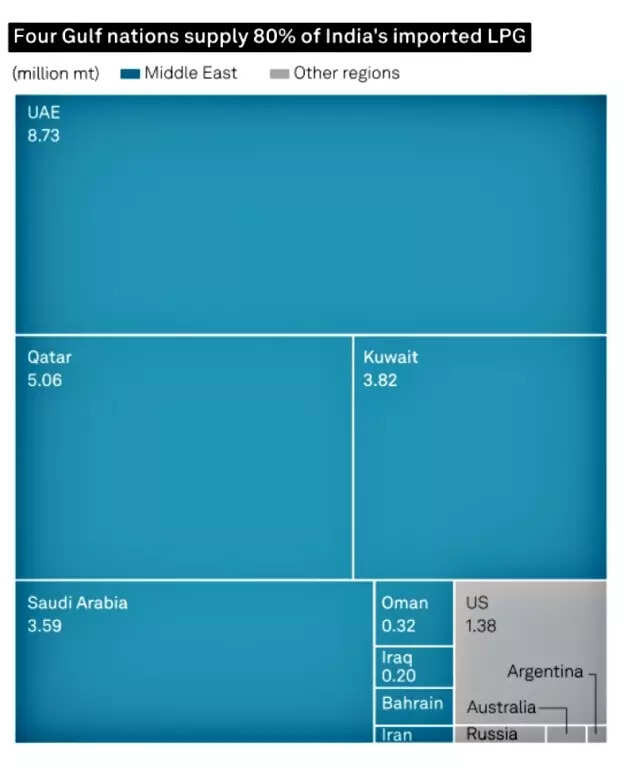
Four Gulf nations supply 80% of India's imported LPG

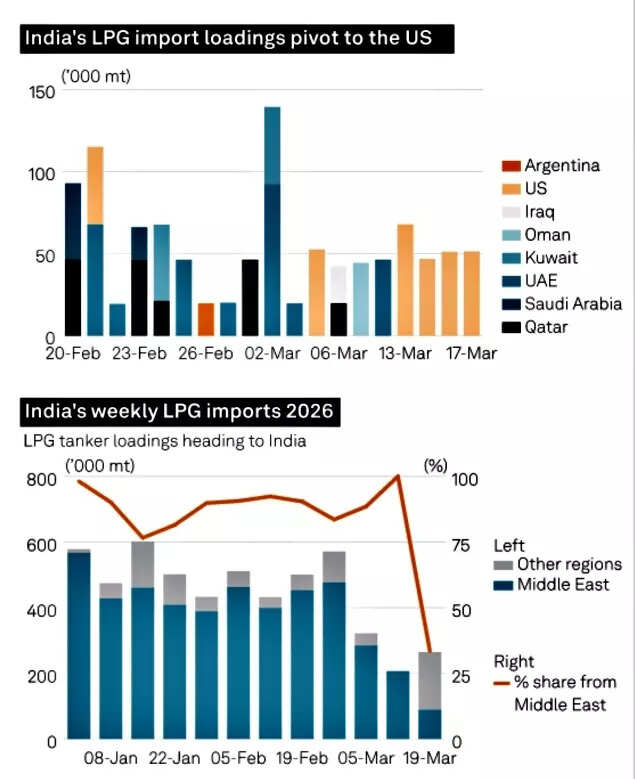
Four Gulf nations supply 80% of India’s imported LPG (Source: S&P Global Energy)

According to the expert, if the Middle East war conflict continues for a longer duration, there is a chance that North American LPG will gain a stronger foothold in the Indian import mix. “Recent trade patterns show rising US volumes moving into India”, he says.

Securing Passage Through Strait of Hormuz

With nearly 60 per cent of its LPG needs met through the Gulf region, the government has taken urgent steps to secure alternative supplies. It is also encouraging the use of substitutes such as kerosene and coal in restaurants and other non-priority segments to reduce pressure on limited availability.“The silver lining is the ongoing diplomatic dialogue between Iran and India. This engagement helped enable Indian-flagged LPG carriers to transit the region, setting a positive precedent,” said Charles Kim, associate director for LPG at S&P Global Commodities at Sea. “Continued cooperation could support the passage of additional Indian-linked ships, keeping vital supply routes workable for India and offering some relief to the broader market.”Two state-owned LPG carriers have safely navigated through the Strait of Hormuz, a critical route that handles around 90 per cent of the country’s LPG imports from the Middle East.

LPG flows from Middle East & US

  • Two state-owned LPG carriers, VLGCs Shivalik and Nanda Devi, successfully crossed the Strait of Hormuz and arrived in India during the week. Each vessel carried around 46,000 mt of LPG, taking total supplies delivered to over 92,000 mt for the domestic market.
  • Shipments of US-origin LPG to India have been rising, with volumes now exceeding those sourced from traditional Gulf suppliers, according to CAS data.
  • India’s weekly LPG imports declined to 265,000 mt in the week ending March 19, down from 322,000 mt on March 5, as per CAS data.
India's LPG import loadings pivot to US

India’s LPG import loadings pivot to US (Source: S&P Global Energy)

  • Supplies from the Middle East dropped sharply to 89,000 mt, accounting for just 34 per cent of total imports, the lowest share since January.
  • In contrast, alternative regional supplies increased to 176,000 mt during the same period, compared to zero in the previous week when the Middle East had accounted for all imports.
  • Indian oil marketing companies have secured a term contract for 2.2 million mt of US-origin LPG for 2026, equivalent to roughly four VLGC shipments per month. In the first two months of 2026 alone, India imported close to 480,000 mt of US LPG, translating to about 11 VLGC cargoes.
  • India has also rolled out emergency measures and ramped up domestic production to cushion households and businesses from potential LPG shortages, while also fast-tracking the shift toward piped natural gas.
  • Reliance Industries is operating at full capacity at its Jamnagar refining and petrochemical complex to boost LPG output for the domestic market.
  • Domestic production currently meets about 41 percent of India’s LPG requirement, with the remainder being sourced through imports, according to petroleum ministry officials.
  • The oil ministry has revised booking cycles to 25 days in urban areas and up to 45 days in rural regions to ensure a more balanced distribution.
  • State governments have intensified enforcement efforts to curb hoarding and black marketing of petrol, diesel and LPG.

[ad_2]

Source link

Asian stocks today: Markets mixed, oil falls to $107 as Iran war risks persist; US Futures up

[ad_1]

Asian stocks today:  Markets mixed, oil falls to $107 as Iran war risks persist; US Futures up

Asian markets showed a mixed performance on Friday, following modest losses on Wall Street and a retreat in oil prices after a sharp spike triggered by escalating Iran-Israel tensions.Oil had a volatile session on Thursday, with Brent crude briefly hitting $119 per barrel after Iranian attacks on Gulf energy facilities followed Israel’s strike on a key Iranian natural gas field. In early Friday trading, Brent fell 1.6% to $106.90 per barrel, while benchmark US crude dropped 2% to $93.63 per barrel. The decline came after Israeli prime minister Benjamin Netanyahu said he would hold off on further attacks on Iran’s gas field at the request of US president Donald Trump.The conflict, now in its third week, has disrupted energy supply, particularly through the Strait of Hormuz, a crucial waterway between Iran and Oman, and has heightened global inflation concerns. US treasury secretary Scott Bessent suggested that Washington might ease sanctions on Iranian oil already at sea to help stabilize prices.In regional equity markets, South Korea’s Kospi rose 0.6% to 5,798.23, while Hong Kong’s Hang Seng fell 0.6% to 25,340.43. China’s Shanghai Composite gained 0.2% to 4,013.16. Japan’s Nikkei 225 was closed for a holiday. Australia’s S&P/ASX 200 dropped 0.5%, and Taiwan’s Taiex was down 0.2%.Wall Street posted modest losses on Thursday, with the S&P 500 down 0.3% to 6,606.49, the Dow Jones Industrial Average losing 0.4% to 46,021.43, and the Nasdaq down 0.3% at 22,090.69. Shares of US memory chip maker Micron Technology fell 3.8% despite better-than-expected quarterly results, although the stock has risen roughly 330% over the past year amid a global memory shortage.Precious metals recovered from earlier dips, with gold rising 2.6% to $4,727.20 per ounce and silver gaining 4.2% to $74.22 per ounce. Currency movements saw the US dollar strengthen to 158.38 Japanese yen from 157.76 yen, while the euro traded slightly lower at $1.1558, down from $1.1589.The easing of oil prices helped stabilize markets, but analysts said uncertainty remains as the Iran-Israel conflict continues to impact energy supplies and global financial sentiment.

[ad_2]

Source link

Qatar Lng Export: Iran hits Ras Laffan facility: Qatar’s 17% LNG capacity gone, $20bn loss; which countries will be impacted?

[ad_1]

India May Face Rising Gas Prices And Energy Supply Risks After Qatar's Ras Laffan LNG Hub Strike

QatarEnergy says Iranian missiles hit Ras Laffan Industrial City, causing “extensive damage”

Iran’s unprecedented attacks on Qatar’s gas facilities would significantly dent the Gulf state’s liquefied natural gas (LNG) export capacity and result in losses running into billions of dollars, according to Qatar’s state minister for energy affairs, Saad al-Kaabi.“I never in my wildest dreams would have thought that Qatar would be — Qatar and the region — in such an attack, especially from a brotherly Muslim country in the month of Ramadan, attacking us in this way,” Kaabi, who is also the CEO of state-owned QatarEnergy, one of the facilities targeted by Iran, told Reuters.

Watch

India May Face Rising Gas Prices And Energy Supply Risks After Qatar’s Ras Laffan LNG Hub Strike

Also Read: Amid attacks, gas prices spike as countries look to secure suppliesThe Iranian strikes on oil and gas facilities in the region came in response to Israeli attacks on the Islamic Republic’s gas infrastructure.17% LNG export capacity ‘knocked out’Kaabi said the attacks have “knocked out” 17% of Qatar’s LNG export capacity, a development that could result in an estimated $20 billion in annual revenue losses. He added that, due to the repairs required, LNG output of 12.8 million tonnes would be “sidelined” for three to five years.He further stated that two of Qatar’s 14 LNG trains and one of its two gas-to-liquids (GTL) facilities were damaged in the strikes.The scale of the damage is such that the entire region has been set back “10 to 20 years,” the minister added.Beyond LNGThe impact extends well beyond LNG, with Qatar’s condensate exports likely to fall by around 24%, while liquefied petroleum gas (LPG) could decline by 13%. Helium output is expected to decrease by 14%, and naphtha and sulphur by 6% each.Rebuilding the damaged units would cost around $26 billion, Kaabi said.Force majeure on contracts for up to five yearsFollowing damage to the two LNG trains, QatarEnergy is likely to declare force majeure on LNG supplies to Italy, Belgium, South Korea and China for up to five years.LNG train S4 supplies Italy’s Edison and Belgium’s EDFT, while Train S6 delivers to South Korea’s KOGAS, EDFT and Shell in China.American oil major ExxonMobil holds a 34% stake in LNG train S4 and a 30% stake in Train S6.Earlier attacks on QatarEnergy’s Ras Laffan production hub, which was also targeted on Wednesday, had already forced the company to declare force majeure on its entire LNG output.Why Ras Laffan matters – and how India is impactedAccording to a Financial Times report, under normal conditions, Ras Laffan accounts for around 20% of the world’s LNG supply.Also Read: How Iran’s strikes on Qatar’s Ras Laffan, world’s largest LNG hub & other Middle East oil & gas infra, will impact IndiaAround 40% of India’s LNG requirements are met by Qatar.⁠India is a big importer of LPG and LNG and relies heavily on supplies from Middle Eastern countries such as Qatar, Saudi Arabia and the UAE. Hence, any supply disruption, whether it is due to passage threats in the Strait of Hormuz or closure of gas facilities in this region, has important ramifications for India.Why is Iran attacking Gulf statesThe current phase of the conflict began with joint US-Israel strikes across Iran on February 28. Tehran responded by targeting Israel and Gulf states hosting US military bases, including Qatar.Iran has also effectively disrupted traffic through the Strait of Hormuz, a crucial waterway through which roughly 20% of the world’s oil supply passes.US President Donald Trump has repeatedly claimed that Iran has been “decimated” and is seeking a ceasefire, even as Iranian leaders have firmly rejected such assertions and ruled out any potential truce.

[ad_2]

Source link