Breaking News
Budget 2026: The urgent need to tackle long-pending and long drawn-out tax litigation


Budget 2026: The urgent need to tackle long-pending and long drawn-out tax litigation

As of April 1, 2025, nearly 5.4 lakh appeals were pending before the Commissioner of Income-tax (Appeals). (AI image)

As the Union Budget 2026 draws closer, industry bodies and tax professionals are urging the government to shift part of its reform focus from tax rate rationalisation to the far more structural problem of long-pending direct tax litigation. On the ground, businesses argue that predictability, timeliness and administrative efficiency in dispute resolution matter as much as headline tax rates—particularly for capital-intensive sectors such as manufacturing.The scale of the problem is substantial. As of April 1, 2025, nearly 5.4 lakh appeals were pending before the Commissioner of Income-tax (Appeals), involving disputed demands of about ₹18.16 lakh crore. Protracted disputes result in working capital being locked up for years, management attention diverted from productive activity, and depressed valuations when Indian promoters seek foreign investment.Here are top five issues that Budget 2026 should tackle:1. Reduce pendency before CIT(A) and allow refund of taxes collected during pendency of appealIndustry body FICCI has flagged the mounting backlog at the CIT(A) level as a critical bottleneck in the dispute resolution framework. The first appellate authority, meant to serve as an effective corrective forum, has instead become a point of prolonged delay.FICCI points out that pendency increased sharply after the faceless appeal regime was rolled out in 2021. While faceless appeals were introduced to eliminate physical interface and improve transparency, the absence of effective monitoring and the unfamiliarity of both officers and taxpayers with the technology have led to repeated notices, duplication of submissions and delayed disposals. Even where taxpayers have filed detailed responses on the portal, they are often asked to resubmit information without clarity on what additional inputs are required. Virtual hearings, when sought, are not granted liberally, and even when conducted, limitations in document presentation weaken effective representation.A key procedural gap, according to FICCI, is the absence of any time limit for assessing officers to submit remand reports called for by the CIT(A), coupled with ambiguity over whether jurisdictional officers or faceless units are responsible for such reports. Meanwhile, parallel penalty proceedings are routinely initiated while quantum appeals remain pending, resulting in both quantum and penalty matters piling up at the first appellate stage.The industry body warns that the litigation lifecycle—already 12 to 15 years before Covid—has now lengthened by another five years. This not only delays revenue collection for the government but also forces companies to carry disputed tax demands as contingent liabilities, adversely impacting share valuations during fund-raising or stake sales.To address this, FICCI has recommended prioritised disposal of appeals involving high-pitched assessments, scrutiny cases, matters where detailed submissions have already been filed, issues covered by High Court or Supreme Court rulings, and appeals pending for over five years. It has also called for filling nearly 40% vacancies at the CIT(A) level and introducing a dual-track system, with fast-track disposal for simple, low-value cases and a detailed track for complex, high-value disputes, backed by differentiated timelines and targets.Tax professional Sandeep Bhalla, Partner at Dhruva Advisors, notes that appeals pending before the CIT(A) for more than two years cause serious hardship, particularly where disputed demands continue to remain outstanding. He argues that in such cases, taxpayers should not be compelled to wait indefinitely and should be allowed to approach the Income-tax Appellate Tribunal (ITAT) directly.Bhalla suggests a structured mechanism under which the assessee could approach the Range Head (Additional or Joint Commissioner), who would prepare a concise factual and legal factsheet. This, along with the appeal records, could then be placed directly before the Tribunal for adjudication. Such a process, he believes, would help decongest the CIT(A) level while ensuring quicker resolution of long-pending disputes.At the same time, Bhalla emphasises that institutional accountability must be built into the system so that appeals remaining undisposed beyond two years without taxpayer fault are treated as a measurable performance failure rather than an administrative inevitability.2. Rationalise provisions to facilitate obtaining full stay of demand during pendency of appealsFICCI has also called for a rethink of the current framework governing stay of disputed tax demands. Although CBDT instructions provide that a stay may be granted on payment of 20% of the disputed demand, taxpayers are often required to make this payment even when the issue has been decided in their favour in earlier years.Compounding the problem, refunds for subsequent years are routinely adjusted by the Central Processing Centre (CPC) against demands that are formally stayed, because stay orders are not digitally integrated with CPC systems. According to FICCI, this defeats the very purpose of a stay and intensifies liquidity stress for businesses.To resolve this, the industry body has suggested creating a real-time interface enabling assessing officers to upload stay orders so that stayed demands are automatically excluded from refund adjustments. It has also proposed allowing alternative forms of security—such as bank guarantees or indemnities—in appropriate cases instead of insisting on a cash pre-deposit, noting that international tax administrations adopt similar risk-based approaches without compromising revenue protection.3. Reducing administrative inconvenience and hardshipBhalla highlights that even after taxpayers succeed in appeals, delays in passing Orders Giving Effect (OGEs) often render appellate relief meaningless. Refunds remain on paper for months, or even years, resulting in continued cash-flow strain.He recommends that OGEs be system-driven and mandatorily passed within three months, with interest payable for departmental delays made personally recoverable from the concerned assessing officer. Mandatory uploading of scrutiny and compliance reports on the tax portal, he argues, would enhance transparency and accountability.Bhalla also points to the largely mechanical nature of rectifications under section 154 against CPC adjustments under section 143(1). He suggests that taxpayers should be allowed to file detailed reconciliations, that CPC orders rejecting rectification must give clear reasons, and that a virtual hearing should be provided wherever adjustments are proposed to be confirmed.4. Avoiding repetitive appeals by the RevenueDespite settled judicial precedents, the Revenue continues to litigate recurring issues, adding to the backlog. Bhalla recommends that the CBDT issue authoritative position papers on key settled matters, particularly those affecting specific industries, and hold field officers accountable for filing appeals contrary to binding rulings.5. Strengthening the advance ruling mechanismBhalla also flags concerns around the functioning of the Board for Advance Rulings, which replaced the Authority for Advance Rulings in 2021. More than four years on, the mechanism has failed to deliver the certainty it was meant to provide, especially for cross-border and high-value transactions, underscoring the need for corrective measures in Budget 2026.As India positions itself as a preferred investment destination, the credibility of its tax dispute resolution system will be closely watched by both domestic and global investors. Meaningful reforms that reduce pendency, ensure timely refunds and curb avoidable litigation could significantly improve confidence on the ground. Budget 2026, therefore, has a chance to signal that tax certainty and administrative efficiency are central to the government’s growth strategy.




Source link

‘Grave consequences’: White House says Iran ‘halted’ 800 executions after Trump’s warning; ground situation ‘monitored’


'Grave consequences': White House says Iran 'halted' 800 executions after Trump's warning; ground situation 'monitored'

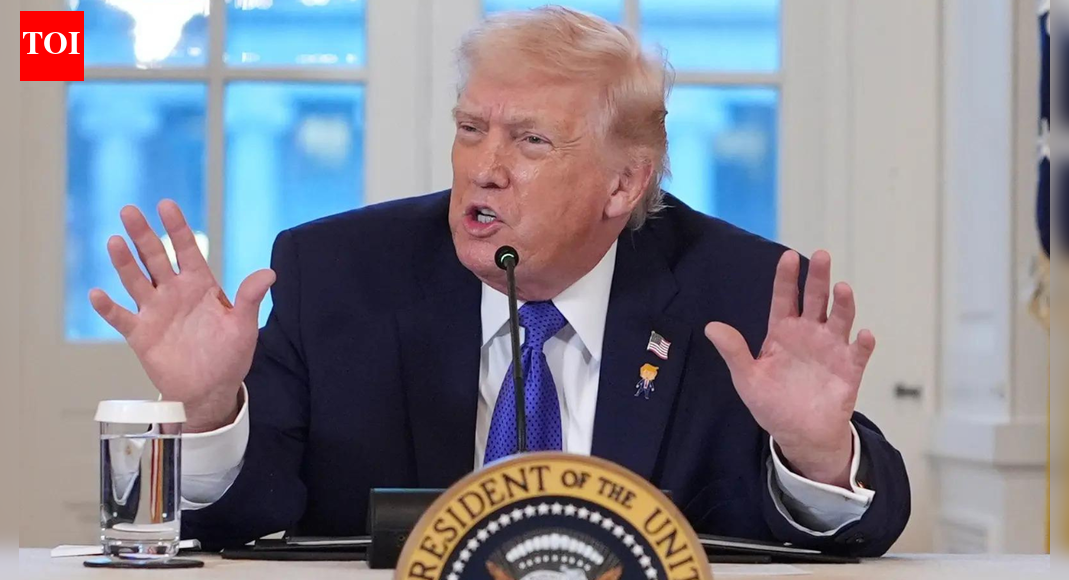
The United States claimed Iran halted 800 planned executions following pressure from President Donald Trump over Tehran’s crackdown on nationwide protests, even as Washington warned that military action remains an option. “The president understands today that 800 executions that were scheduled and supposed to take place yesterday were halted,” White House Press Secretary Karoline Leavitt told reporters on Thursday. “All options remain on the table for the president,” she said, adding that Trump had warned Iran of “grave consequences” if the killing of demonstrators continued.The White House also said that “President Donald Trump is closely monitoring the situation on the ground in Iran,” as quoted by Reuters.Earlier, Trump had said said that intermediaries from Iran had conveyed guarantees that executions would be halted. According to Trump, the assurances came from “very important sources on the other side,” even as regional allies grew increasingly concerned that rising tensions could trigger direct confrontation. With rhetoric from Washington and Tehran temporarily softening, a senior Saudi official told AFP on Thursday that Saudi Arabia, Qatar and Oman spearheaded an urgent diplomatic push to restrain Trump, citing fears of “grave blowbacks in the region”. The official said the three Gulf states mounted what he described as “a long, frantic, diplomatic last-minute effort to convince President Trump to give Iran a chance to show good intention”, requesting anonymity due to the sensitivity of the discussions. A second Gulf official corroborated the account, saying the diplomatic outreach also included a warning to Tehran that any strike on US facilities in the region would “have consequences”.The developments come as Iranian authorities continue a nationwide internet shutdown that activists fear is intended to conceal the scale of the crackdown. The blackout has now entered its seventh day. “Exactly one week ago… Iran fell into digital darkness as authorities imposed a national internet blackout,” internet monitoring group Netblocks said in a social media post, as quoted by AFP. Meanwhile, the US announced a new round of sanctions targeting Iranian officials accused of repressing protests challenging Iran’s theocratic leadership. Among those sanctioned is the secretary of Iran’s Supreme Council for National Security, whom the US Treasury Department accuses of being among the first officials to call for violence against protesters. The Treasury Department’s Office of Foreign Assets Control also designated 18 individuals and companies alleged to be involved in laundering money from Iranian oil sales through a shadow banking network linked to sanctioned institutions Bank Melli and Shahr Bank. Shadow banking refers to financial activities that resemble traditional banking but operate outside standard regulatory frameworks. Treasury Secretary Scott Bessent said the United States “stands firmly behind the Iranian people in their call for freedom and justice” and that Treasury “will use every tool to target those behind the regime’s tyrannical oppression of human rights.” The protests erupted on December 28 following the collapse of Iran’s rial currency, as the country’s economy has come under pressure from international sanctions imposed in part over its nuclear programme. Iranian Foreign Minister Abbas Araghchi offered a different account during an interview on Fox News Channel’s “Special Report with Bret Baier” on Wednesday, saying the protests began peacefully “and the government engaged with the protesters and with their leaders.” He said that after the tenth day, however, “terrorist elements led from outside” the country appeared and the demonstrations turned violent. In February, Trump reimposed a “maximum pressure” campaign on Iran aimed at blocking its development of nuclear weapons, including US-led strikes on three major Iranian enrichment facilities. While the threat of US retaliation over the deaths of protesters continues to loom, Trump has signalled the possibility of de-escalation, saying the killing appeared to be ending. The sanctions bar the targeted individuals and entities from accessing property or financial assets held in the US and prohibit US citizens and companies from doing business with them, though US officials acknowledge the measures are largely symbolic, as many of those sanctioned do not hold assets in US institutions.


Source link

Iran unrest: MEA prepares evacuation of Indians; first flight from Tehran to Delhi tomorrow, says sources | India News


Iran unrest: MEA prepares evacuation of Indians; first flight from Tehran to Delhi tomorrow, says sources

NEW DELHI: The ministry of external affairs on Thursday said it is making preparations to facilitate the return of Indian nationals from Iran who wish to travel back to India, in view of the evolving situation in the country, sources told ANI.Earlier,the Indian Embassy in Iran has issued an advisory urging all Indian citizens currently in the country to register with the embassy. Officials noted that the registration process has been slow due to an ongoing internet shutdown. Family members of Indians in Iran have been advised that they can complete the registration on behalf of their relatives through the MEA’s online portal at https://www.meaers.com/request/home

‘Leave By Any Means’: India Issues Fresh Advisory As Iran Protests Intensify Across Cities

The advisory further stated that Indian nationals in Iran, including students, pilgrims, businesspersons and tourists, should leave the country using any available means, including commercial flights. The embassy has also activated four emergency helplines for Indian citizens: +98 9128109115, +98 9128109109, +98 9128109102, and +98 9932179359.With Iran reopening its airspace to civilian traffic after a temporary closure amid rising tensions, the first evacuation flight is scheduled to depart from Tehran to Delhi tomorrow. According to officials, all students have been duly registered, the embassy has collected their personal details and passports, and the first batch has been asked to remain ready by 8:00 am. Students from Golestan University and a few students from SBUMS and TUMS are likely to be part of the first evacuation batch. The final passenger list will be shared later tonight once confirmed by the authorities.Iran has been witnessing nationwide protests for over two weeks, initially triggered by anger over the collapse of the national currency and worsening economic conditions. The unrest has since escalated into broader protests against the country’s theocratic leadership, driven by discontent over economic mismanagement and restrictions on personal freedoms.The evacuation move has brought relief to families, particularly in Jammu and Kashmir, who have been concerned about the safety of students amid the deteriorating security situation in Iran.


Source link

Mid-air scare: Air India’s Singapore-bound flight returns to Delhi; technical snag reported | India News


Mid-air scare: Air India’s Singapore-bound flight returns to Delhi; technical snag reported

NEW DELHI: A Singapore-bound Air India flight carrying around 190 passengers returned to Delhi early Thursday after the aircraft developed a technical issue mid-air.According to PTI, the Boeing 787-9 Dreamliner, operating flight AI 2380, received an Auxiliary Power Unit (APU) fire warning after take-off, prompting the crew to turn back. The aircraft had been airborne for about an hour before it landed safely at the national capital.Confirming the incident, an Air India spokesperson said the operating crew decided to carry out a precautionary return to Delhi shortly after take-off due to a suspected technical issue.“The aircraft landed safely in Delhi. Our ground teams at Delhi extended all necessary assistance to passengers and the flight departed for Singapore on an alternative aircraft,” the spokesperson said in a statement. The spokesperson also regretted the inconvenience caused to passengers due to the unforeseen situation.Flight tracking data from Flightradar24 showed that the aircraft took off late and landed back in Delhi at around 1 am on Thursday. Passengers were later flown to Singapore on another aircraft.


Source link

Nasa kicks-off first-ever ISS medical evacuation: Four astronauts return early; mission cut short by over a month


Nasa kicks-off first-ever ISS medical evacuation: Four astronauts return early; mission cut short by over a month
This screengrab from video provided by NASA TV shows the SpaceX Dragon departing from the ISS

Nasa began its first-ever medical evacuation from the International Space Station (ISS) on Wednesday, bringing back an astronaut in need of medical care along with three crewmates. The four astronauts, from the US, Russia, and Japan, are scheduled to splash down early Thursday morning in the Pacific near San Diego aboard a SpaceX capsule, cutting their mission short by over a month. “Our timing of this departure is unexpected,” Nasa astronaut Zena Cardman said before the return trip, “but what was not surprising to me was how well this crew came together as a family to help each other and just take care of each other.” Officials have not identified the astronaut requiring medical attention or revealed the specific health issues. Outgoing ISS commander Mike Fincke reassured that the astronaut is “stable, safe and well cared for,” noting that “this was a deliberate decision to allow the right medical evaluations to happen on the ground, where the full range of diagnostic capability exists.” Cardman, Fincke, Japan’s Kimiya Yui, and Russia’s Oleg Platonov were originally scheduled to remain on the station until late February. Nasa canceled a planned spacewalk on January 7 after the medical concern emerged and subsequently announced the crew’s early return. Officials emphasised that the health issue was unrelated to the spacewalk or other station operations and stressed that it was not an emergency situation. Nasa confirmed that standard splashdown and recovery procedures will be followed, with medical teams on hand aboard the Pacific recovery ship. It is not yet clear how soon all four astronauts will be flown from California to Houston, home of the Johnson Space Center.This was the first spaceflight for Cardman, a 38-year-old biologist and polar explorer, and Platonov, 39, a former Russian Air Force fighter pilot who had overcome a previous health issue that delayed his space debut. Fincke, 58, a retired Air Force colonel, and Yui, 55, a retired Japanese fighter pilot, were veteran space travelers. Fincke has spent more than 1½ years in orbit over four missions and conducted nine spacewalks, while Yui recently celebrated his 300th day in space across two missions. One US astronaut and two Russian cosmonauts remain aboard the ISS, just a month and a half into an eight-month mission that began with a Soyuz launch from Kazakhstan. Nasa and SpaceX are working to advance the launch of a replacement four-person crew from Florida, currently planned for mid-February.Nasa officials said it would have been riskier to leave the ailing astronaut in space for another month than to temporarily reduce the station crew by more than half. Until the next crew arrives, routine and emergency spacewalks, which require a two-person team with backup support, will be suspended. The medical evacuation marks the first major decision by Nasa’s new administrator, Jared Isaacman, who took office in December. “The health and the well-being of our astronauts is always and will be our highest priority,” Isaacman said when announcing the decision last week.Computer modeling had projected that a medical evacuation from the ISS would occur roughly once every three years, but Nasa had never faced such a situation in its 65-year history of human spaceflight. The Russians, however, have experienced similar events, including in 1985 when cosmonaut Vladimir Vasyutin returned early from Salyut 7 due to a serious illness.


Source link

‘Nato should be leading the way’: Donald Trump renews push to acquire Greenland, citing security concerns; links takeover to ‘Golden Dome’ defence


‘Nato should be leading the way’: Donald Trump renews push to acquire Greenland, citing security concerns; links takeover to ‘Golden Dome’ defence

File photo: US President Donald Trump (Picture credit: AP)

US President Donald Trump on Wednesday renewed his push for the United States to acquire Greenland, saying the Arctic island is vital for American national security and for the “Golden Dome” defence system he claims Washington is building.In a post on Truth Social, Trump said, “The United States needs Greenland for the purpose of National Security. It is vital for the Golden Dome that we are building.” He argued that Nato should take the lead in ensuring Greenland comes under US control, warning that if Washington does not act, “Russia or China will” — something he said “is not going to happen.”Trump also linked Greenland’s future directly to Nato’s military strength, claiming the alliance would be far less effective without US power. “Militarily, without the vast power of the United States… Nato would not be an effective force or deterrent — not even close!” he wrote, adding that Nato would become “far more formidable and effective with Greenland in the hands of the United States.” He concluded by saying that “anything less than that is unacceptable.”The remarks come amid fresh tensions with Denmark and Greenland’s leadership. Earlier, he warned Greenland’s prime minister after Jens-Frederik Nielsen reaffirmed the island’s commitment to Denmark and rejected the idea of becoming a US territory. “That’s their problem. I disagree with them,” Trump said, adding that Nielsen’s stance would be “a big problem for him.”Speaking in Copenhagen alongside Danish Prime Minister Mette Frederiksen, Nielsen said Greenland faced a clear choice and had decided to stand with Denmark, stressing unity within the Danish kingdom. While Greenland’s political debate continues to evolve, some voices on the island have argued that remaining under Denmark within Nato’s security framework is the wiser long-term option.Trump has repeatedly dismissed Denmark’s role, insisting that Greenland’s current defences are inadequate. He has claimed the island is vulnerable to Russian and Chinese naval activity and argued that US ownership — not leases or limited military access — is essential for effective defence. While acknowledging that the US already has bases and personnel on the island, Trump has said this is “insufficient” without full control.Denmark, meanwhile, has described the situation as a “decisive moment,” reiterating that Greenland is not for sale and rejecting Washington’s advances.The rhetoric has also raised alarm within US military circles. According to the Daily Mail, Trump has asked senior special forces commanders to prepare contingency plans for a possible invasion of Greenland, a move that has reportedly faced resistance from top military officials concerned about its legality and political feasibility.Despite the pushback, Trump has continued to frame Greenland as central to US and Nato security, warning that Washington will not allow either Russia or China to gain a foothold in the Arctic island.


Source link

Pakistan ties up with crypto business of Donald Trump’s family; World Liberty Financial to explore stablecoins use


Pakistan ties up with crypto business of Donald Trump’s family; World Liberty Financial to explore stablecoins use
World Liberty Financial will collaborate with Pakistan’s central bank to incorporate its USD1 stablecoin into a regulated digital payments framework. (AI image)

Donald Trump’s family has just upped their stakes in Pakistan! World Liberty Financial, a cryptocurrency venture linked to US President Donald Trump’s family, has entered into an agreement with Pakistan. The development comes at a time of improving relations between Pakistan and the United States.According to a Reuters report, the deal will assess the use of World Liberty’s stablecoin for cross-border transactions. The report adds that the deal is among the first publicly disclosed partnerships between World Liberty, which is a crypto-focused financial platform launched in September 2024, and a national government.

‘May Not Need IMF Loans In 6 Months’: Pakistan Eyes JF-17 Sales Surge To Save Economy

Trump Family-led Firm’s Stablecoin Deal with Pakistan

As part of the agreement, World Liberty Financial will collaborate with Pakistan’s central bank to incorporate its USD1 stablecoin into a regulated digital payments framework. This would allow the token to function alongside Pakistan’s existing digital currency systems, the Reuters report said.Further specifics of the agreement involving SC Financial Technologies, a relatively low-profile firm connected to World Liberty, were not disclosed. Pakistan is expected to formally announce the deal later on Wednesday during a visit to Islamabad by World Liberty chief executive Zach Witkoff.At the same time, Pakistan has been advancing work on digital currency initiatives as part of efforts to curb reliance on cash and enhance cross-border payment channels, particularly remittances, which are a major source of foreign exchange. In July last year, Pakistan’s central bank governor said preparations were underway for a digital currency pilot, alongside the finalisation of laws to regulate virtual assets.Stablecoins are digital assets which are generally linked to the value of the US dollar. These have grown rapidly in scale over recent years. Under President Donald Trump, the United States has rolled out federal regulations that are widely viewed as supportive of the cryptocurrency sector, while governments globally are increasingly looking at how stablecoins can be incorporated into payment mechanisms and broader financial systems.World Liberty reportedly contributed to a big jump in revenues for the Trump family’s business interests, collectively known as the Trump Organization, including earnings from overseas sources during the first half of last year. In May 2024, MGX, a state-owned investment firm based in Abu Dhabi, used the World Liberty stablecoin to acquire a $2 billion equity stake in Binance, which is the world’s largest cryptocurrency exchange.


Source link

New record! China trade surplus hits $1.2 trillion – what’s the outlook for 2026?


New record! China trade surplus hits $1.2 trillion - what’s the outlook for 2026?

China registered a trade surplus of nearly $1.2 trillion in 2025, the government reported on Wednesday. The record figure comes as strong exports to international markets offset slowing shipments to the United States. According to customs data cited by AP, the country’s exports rose 5.5% to $3.77 trillion last year, while imports remained steady at $2.58 trillion. The nation’s trade surplus in 2024 had stood at $992 billion. Back in December, exports rose 6.6% from the previous year in dollar terms, surpassing economists’ expectations and improving on November’s 5.9% year-on-year increase. At the same time, imports in the last month of 2025, rose 5.7% year-on-year, compared with a 1.9% increase in November.Though shipments to the United States have fallen drastically after President Donald Trump’s return to office and his escalation of the trade war with China, the decline has been largely offset by exports to South America, Southeast Asia, Africa and Europe.China’s economic growth has maintained its annual rate close to the official target of about 5%, thanks to strong exports. Other countries, meanwhile, are facing concerns about the impact of cheap imports on local industries. Last month, the head of the International Monetary Fund urged China to address economic imbalances and accelerate its shift away from export dependence by boosting domestic demand and investment. Meanwhile, a prolonged downturn in the property sector, triggered by the authorities’ crackdown on excessive borrowing and subsequent developer defaults, continues to weigh on consumer confidence and domestic spending.

Chinese economy — Outlook for 2026

Despite ongoing trade friction and geopolitical tensions, experts are anticipating that this year too exports will be driving Chinese economy.“We continue to expect exports to act as a big growth driver in 2026,” said Jacqueline Rong, chief China economist at BNP Paribas.Gary Ng, senior economist at French investment bank Natixis, extimated the trade surplus to remain above $1 trillion this year and exports will grow around 3% in 2026.


Source link

‘Struck him repeatedly on head, face with hammer’: Wife, her lover butcher man in UP | Meerut News


‘Struck him repeatedly on head, face with hammer’: Wife, her lover butcher man in UP
Image Used For Representational Purpose Only

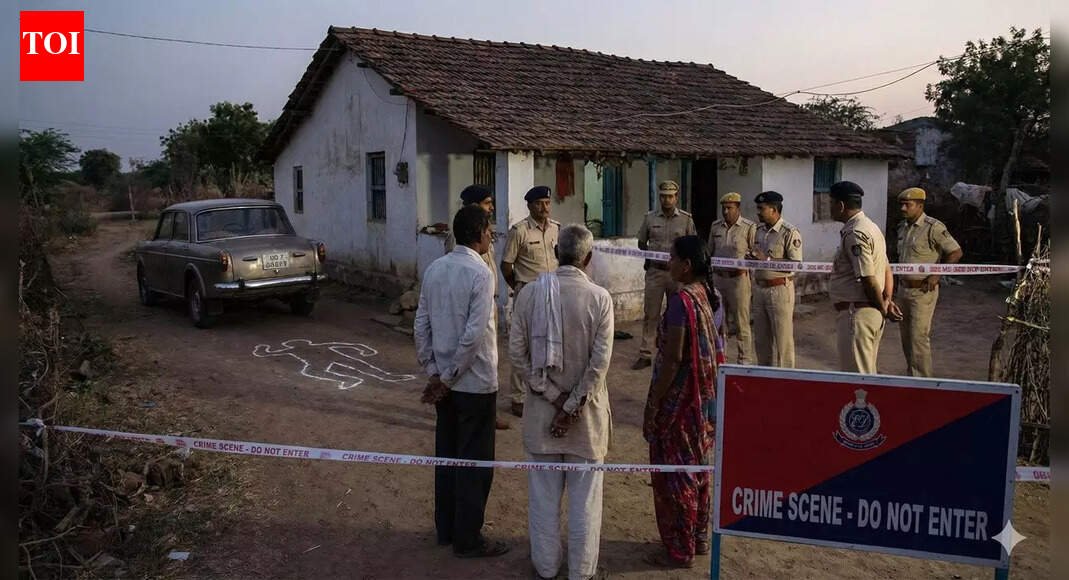
MEERUT: Police claimed to have cracked the murder case of a 50-year-old farmer who was beaten to death with a hammer in Bareilly on Saturday night and arrested his 30-year-old wife and her 26-year-old lover. The duo conspired to kill him for objecting to their affair, said police on Tuesday.Police said Mamta Devi, a native of Bihar, held her husband Sureshpal Singh down while he was asleep on a cot as her lover Hotam Singh, a daily-wage labourer, struck him repeatedly on the head and face with a hammer found in the room, killing him on the spot. Hotam fled with the weapon while Mamta remained at the house.SP (South) Anshika Verma said, “The couple had been married for 11 years and had three children. Mamta and Hotam were in an illicit relationship for the past three years. Sureshpal had come to know about the affair which led to frequent arguments between the married couple and confrontations with Hotam. Sureshpal often assaulted Mamta asking her to end the relationship and hence she conspired to eliminate him.” Sirauli SHO Vinod Singh said, “To mislead the police, Mamta woke up her eldest son Arjun, 11, who was sleeping in another room at the time of the incident and asked him to inform the village head. Mamta told villagers she panicked and could not call for help. Meanwhile, she destroyed her phone’s SIM card to erase call records and claimed that she found her husband lying in a pool of blood when she woke up to use the toilet.”ACP Verma said, “During questioning Mamta broke down and confessed to the crime. She was arrested based on call records and other evidence. Hotam was also arrested following a stakeout at Shivpuri Tiraha on the Mirganj road. The blood-stained hammer used in the crime was seized on his disclosure. An FIR has been registered under BNS section 103 (murder). Both accused were produced before a court and sent to jail on Tuesday.


Source link

Nipah alert in West Bengal: Pune lab confirms 2 samples; both nurses critical, over 120 contacts in home isolation | Kolkata News


Nipah alert in West Bengal: Pune lab confirms 2 samples; both nurses critical, over 120 contacts in home isolation

KOLKATA: The National Institute of Virology (NIV), Pune, has confirmed Nipah, a viral disease with high mortality, in both samples sent from Bengal. The samples were taken from two nurses of a Barasat hospital whose condition remain critical. A house staff at a Burdwan hospital, who came in close contact with one of the nurses, has developed mild fever, sources said. Officials are planning to bring the doctor to Beliaghata ID hospital. Earlier, samples from the two nurses, who are being treated at the Barasat hospital where they are employed, tested positive for Nipah at AIIMS Kalyani and were sent to Pune for re-confirmation.

Pune lab confirms Nipah in 2 samples, both nurses critical

The health department has identified over 120 people who came in close contact with the two nurses, one male and the other female, recently. All of them are in home isolation now. Efforts are on to identify more close contacts. “Contact tracing is on. The 120-odd close contacts identified so far include family members of the nurses and healthcare workers,” said a health department official.The healthcare personnel include nurses and doctors from the Barasat hospital and two hospitals in Katwa and Burdwan, where the female nurse was treated before being shifted to Barasat.Sources in the East Burdwan health department said 10 individuals from Katwa, including two doctors, and 38 from Burdwan, including eight doctors, are in home isolation.Apart from doctors, those under observation include nurses, ambulance drivers and other healthcare providers. Samples of some of the close contacts have been sent to AIIMS Kalyani.Sources said both patients are on ventilation, while the female nurse is in coma. “Doctors at the Barasat hospital are following all protocols. But the concern is the severity and high mortality of the infection,” said a health official.While the source of the infection is still unclear, sources indicated that the nurses might have contracted the virus from a colleague at the Barasat hospital. A healthcare worker at the hospital died a few weeks ago after showing symptoms of Nipah.“It is difficult to pinpoint the source of infection. It could be human-to-human transmission or they might have got the virus from contaminated fruits or fresh date palm sap,” an official said.The patients have no significant travel history outside the state, but they had gone home, to East Midnapore and Katwa, days before being taken ill. Health officials said many migrant workers from the state tend to come back home around this time, indicating another possibility of human-to-human transmission.“During winter, people in rural areas tend to drink raw date palm juice, which can be a potential source of infection as fruit bats feed on date palm,” said the source. A panel is coordinating with a National Joint Outbreak Response Team sent by the Union health ministry to monitor the situation.(With inputs from Mohammad Asif)


Source link