Breaking News
Probe religious discrimination in AMU: Ex-VC of Urdu university | India News


Probe religious discrimination in AMU: Ex-VC of Urdu university

NEW DELHI: The former chancellor of Maulana Azad National Urdu University Firoz Bakht Ahmed has written to Union education minister Dharmendra Pradhan, alleging religious discrimination, administrative apathy and institutional failure at Aligarh Muslim University (AMU) and seeking an independent central probe into the matter. In his letter, Ahmed flagged the case of Rachana Kaushal, a widowed professor of political science at AMU, who has allegedly faced harassment and discrimination over the past decade on religious grounds. Ahmed said Kaushal, who has been serving in AMU since 1998, has repeatedly approached the VC since Sept last year, but no meaningful action has been taken on her complaint. Kaushal said, “The chairperson and the dean have been harassing me for the past few years, which I initially ignored. However, the harassment reached a point where I was compelled to approach the VC… my promotion was stalled in 2017. I was promoted only after an HC directive.” She added: “At the time, a campaign was organised against me, and I have audio recordings wherein the issue was communalised with claims that I had said I was denied promotion because I am Hindu. I never mentioned my religion in any of my representations or in my court petition…”


Source link

Court proceedings distorted, High Court orders removal of reels | India News


Court proceedings distorted, High Court orders removal of reels

JABALPUR: Madhya Pradesh high court ordered Monday removal of 102 social media links that misused live-streamed court proceedings, giving platforms 48 hours to take down clips circulating as memes, reels and sensational videos. A division bench of Chief Justice Sanjeev Sachdeva and Justice Vinay Saraf passed the direction while hearing a petition warning that edited excerpts from open court hearings were being selectively circulated on YouTube and Instagram, distorting judicial proceedings and eroding institutional dignity. The case will be heard again on March 24. Petitioners – advocates Arihant Tiwari and Vidit Shah, along with Dr Vijay Bajaj of Jabalpur – said short videos lifted from live streams sensationalised judicial remarks and courtroom exchanges, amounting to contempt of court. They sought tighter monitoring of live-streamed hearings and a move away from open platforms such as YouTube to a secure, Webex-based system overseen by the HC’s registrar (IT). During earlier proceedings, the high court had asked Meta to identify objectionable content. Meta told the bench it would act once specific URLs were provided. Acting on that direction, petitioners had submitted a list of 102 links. Tiwari said in court the clips included selective portrayals of judges’ exchanges during hearings. One video showed Justice Vivek Agarwal revoking bail after an accused jumped bail, followed by a clip of the accused’s daughter pleading in court. Other videos highlighted sharp remarks by judges toward advocates over non-appearance or lack of preparedness, and observations made by Justice Rohit Arya during hearings in Gwalior.


Source link

Simple trick to dry shoes faster in winters: Shoes won’t stay wet for long |


Simple trick to dry shoes faster in winters: Shoes won’t stay wet for long

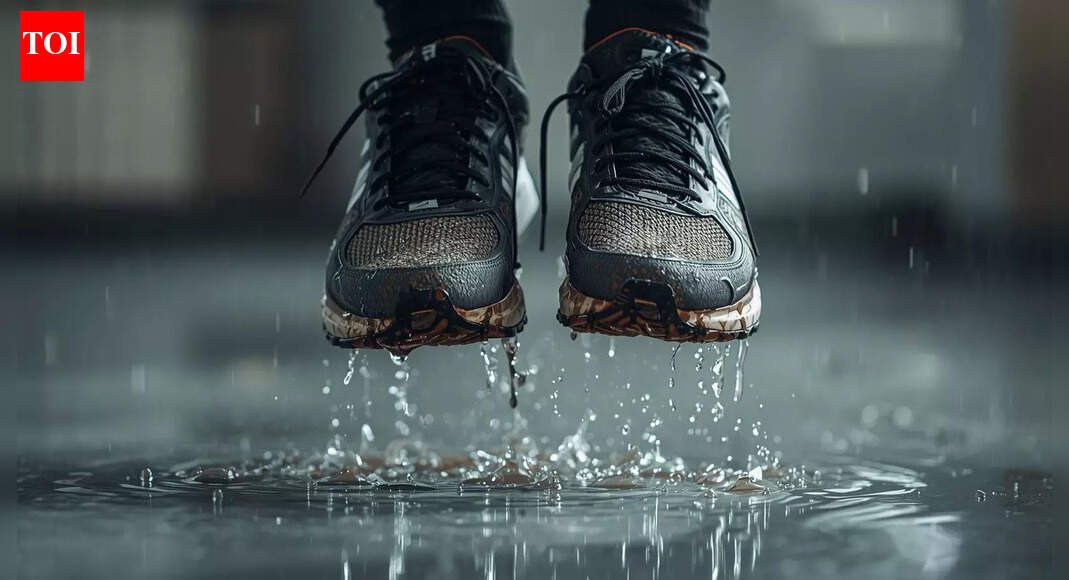
Winter makes small chores feel heavier than they should. Washing shoes is one of them. You clean them, set them aside, and then wait. A day passes. Sometimes two. They still feel cold and damp to the touch. The smell creeps in before they are properly dry. It is not dramatic, just irritating. Many people deal with this every winter without thinking much about it until the problem repeats. Damp shoes lose shape. Glue weakens. Fabric holds moisture longer than expected. This piece looks at a few simple ways people quietly deal with the issue. Nothing technical. Just small habits, borrowed tricks, and ordinary materials that help shoes dry faster in cold weather, without rushing them or causing damage.

How to dry shoes faster in winters without damaging them

Cold air holds less moisture, but it also slows evaporation. Add low sunlight and poor airflow, and wet shoes simply sit there. Thick soles and padded uppers trap water inside. Sports shoes and canvas pairs are the worst offenders. Leather behaves differently but still suffers if left damp for too long. The problem is not the water alone, but where it stays.Before thinking about heat or tricks, remove excess water. Many people skip this. Press the shoes gently with your hands to release trapped water. Do not twist them. That bends the structure and weakens stitching. Take out the insoles straight away. Insoles dry slower than the shoe itself and keep moisture locked inside if left in place.

Paper helps shoes dry faster

Newspaper works quietly well. Stuff dry newspaper or thick tissue inside the shoes, filling the toe and sides. Paper absorbs moisture from the inside, which is where drying usually stalls. If the shoes are very wet, replace the paper after a few hours. This method suits trainers and canvas shoes especially. It also helps shoes keep their shape while drying.

Keep in a warm, airy space (avoid keeping in front of a heater)

Avoid direct heat. Placing shoes next to a heater or blower seems tempting but often causes damage. Glue softens. Soles loosen. Fabric stiffens. A better option is a warm, airy space. Near a window. Under a ceiling fan. In a room with steady air movement. At night, leaving shoes out in an open room works better than locking them in a corner.

Hairdryer safe for drying shoes

Use carefully; keep the dryer on medium heat. Hold it at a distance. Move the airflow around rather than focusing on one spot. This helps remove surface moisture without stressing the material. It is useful when shoes are needed soon but should not replace slow drying entirely.

Use salt or silica gel

They do. Salt absorbs moisture naturally. Fill a cloth pouch with salt and place it inside the shoe. Leave it for several hours. Silica gel packets, often found in new shoes or bags, work in the same way. Both also help reduce odour. This is a slow, quiet method, suited to overnight drying.

How can you prevent bad smells in shoes while drying

Airflow matters more than fragrance. Dry shoes properly before storing them. Always dry insoles separately. Avoid closed cupboards until shoes are fully dry. Moisture causes odour, not dirt alone. A dry shoe rarely smells.Drying shoes in winter is less about speed and more about patience, with a few smart choices along the way. Small steps add up. The shoes last longer. They feel better to wear. And the wait becomes shorter, almost unnoticed.


Source link

Bangladesh’s T20 World Cup matches to remain in India, security risk adjudged at ‘low to moderate’: ICC Source | Cricket News


Bangladesh's T20 World Cup matches to remain in India, security risk adjudged at 'low to moderate': ICC Source
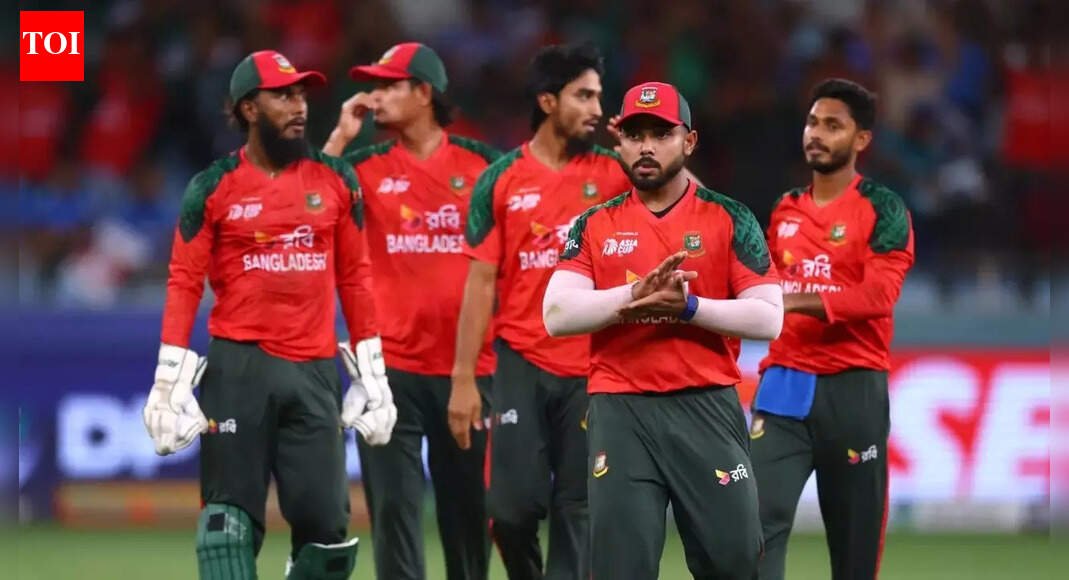
Players of Bangladesh celebrate the wicket of Tilak Varma of India during the Asia Cup match between India and Bangladesh at Dubai International Stadium on September 24, 2025 in Dubai, United Arab Emirates. (Photo/Getty Images)

NEW DELHI: Sources within the International Cricket Council (ICC) have denied claims that security concerns could prevent the Bangladesh men’s team from travelling to India for the ICC Men’s T20 World Cup 2026, clarifying that the cricket board’s risk assessments do not support such a conclusion.The clarification comes after Azif Nazrul, Bangladesh’s sports advisor, told reporters on Monday that the ICC’s security team had validated Dhaka’s concerns and warned of heightened risks for Bangladeshi players and supporters in India.

Bangladesh seek T20 WC match shift from India after Mustafizur Rahman’s IPL exit

Nazrul claimed the ICC had flagged increased security threats if star left-arm seamer Mustafizur Rahman was included in the squad, if fans wore Bangladesh jerseys in public, and if the tournament coincided with Bangladesh’s upcoming national elections.Nazrul went further, arguing that these purported observations made it “unrealistic and unreasonable” for Bangladesh to participate in a World Cup hosted in India.In a detailed statement on Monday evening, however, an ICC source rejected that interpretation, saying some public comments had selectively referenced its security risk assessment and misrepresented routine contingency planning as concrete threats.“The ICC’s independent risk assessments, carried out by internationally recognised security experts, do not conclude that Bangladesh cannot play its scheduled matches in India,” said the source in the ICC. It added that the overall security risk for the tournament had been assessed as “low to moderate”, consistent with many major global sporting events.Also read: ‘If Mustafizur Rahman is in team’ – Bangladesh claims ICC flagged security risks in IndiaThe source further clarified, no specific or direct threat has been identified to the Bangladesh team, officials or match venues. The risk associated with Bangladesh’s scheduled fixtures in Kolkata and Mumbai has also been assessed as low to moderate, with no indication of dangers that cannot be effectively managed through standard security planning.“The ICC wishes to be clear that it has never suggested, nor would it suggest, that any team should select or exclude players for security reasons, that supporters should be restricted from wearing national colours, or that domestic democratic processes be altered in order to participate in an ICC event,” the source explained.Tensions around Bangladesh’s participation escalated earlier this month after reports that the Bangladesh men’s team had decided not to travel to India for the 2026 tournament, citing safety concerns. The Bangladesh Cricket Board subsequently confirmed it had formally written to the ICC outlining its position, arguing that prevailing security issues made participation unfeasible if the event were held in India.The backdrop to the dispute also includes recent friction involving Mustafizur Rahman’s release from Kolkata Knight Riders squad ahead of the Indian Premier League 2026 season.Bangladesh are due to play three matches in India during the T20 World Cup, at the Eden Gardens in Kolkata and one match at Mumbai’s Wankhede Stadium. They are scheduled to take on West Indies, Italy and England on February 7, 9 and 14, respectively. Bangladesh are then due to take on Nepal in their last league stage game on February 17.


Source link

‘Hide Your Puppies’: Erin Andrews’ NFL Playoff Coat Goes Viral for All the Right and Wrong Reasons | NFL News


‘Hide Your Puppies’: Erin Andrews’ NFL Playoff Coat Goes Viral for All the Right and Wrong Reasons
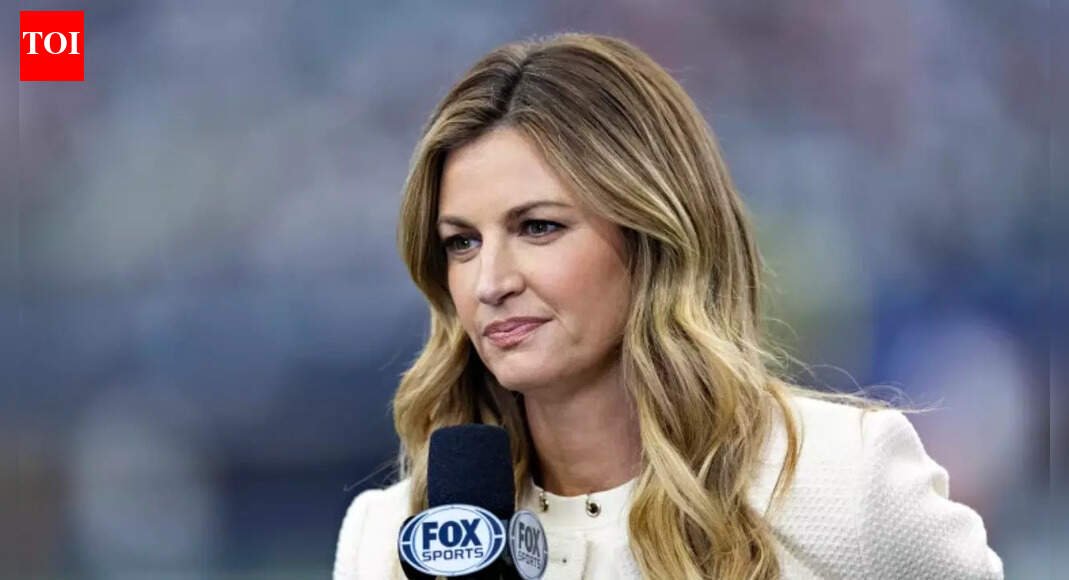
Erin Andrews didn’t score a touchdown, but she still owned the NFL playoff spotlight. One coat, endless memes, and a reminder that she never misses a beat on the sidelines. (Image via Getty)

Erin Andrews did not throw a pass, catch a touchdown, or call a play on Jan. 11. She still became one of the most talked-about figures of the NFL postseason.During the NFC Wild Card game between the San Francisco 49ers and Philadelphia Eagles at Lincoln Financial Field, the Fox Sports sideline reporter shifted attention away from the field with a bold wardrobe choice that quickly took over social media.

Erin Andrews’ sideline outfit turns a Wild Card game into a fashion moment

Andrews appeared on the Fox broadcast wearing an oversized black-and-ivory faux fur coat while reporting from the sidelines in Philadelphia. Game-time temperatures sat in the 30s with heavy wind, making outerwear a necessity. The coat still stood out the moment she went live.Within minutes, screenshots flooded X. Fans labeled it “outfit of the year” and turned the look into a running joke across the NFL internet. The coat’s sharp contrast and exaggerated collar drew instant comparisons to Cruella de Vil from 101 Dalmatians.One fan wrote, “Erin Andrews woke this morning and said ‘Imma slay bi**hes y’all!’” Another added, “Philadelphia, hide your puppies! Erin Andrews is in town.”The reaction did not stay online. Fox analyst Michael Strahan and members of the broadcast repeatedly referenced the coat on air. Andrews brushed it off each time and stayed focused on her reporting.According to Fox Sports and multiple fashion outlets, the coat is Auter’s “THE FOX JACKET” in Smoke Noir. It retails for roughly $950 and features a sculpted oversized collar designed for warmth and mobility. Auter describes the piece as a refined statement in faux fur with a bold black-and-smoke palette.The design worked on television. It also worked as insulation in freezing conditions. That combination fueled the reaction.

Internet jokes follow Erin Andrews while she keeps the broadcast on track

The comparisons escalated as the night went on. Fans likened Andrews to Cruella de Vil, Ric Flair, an emu, and even mafia movie extras. One joked, “Erin Andrews took out the entire polar bear exhibit at the Philadelphia Zoo to make this coat.” Merriam-Webster joined the moment with, “Fun fact: a group of emus is called a ‘mob.’”Not all reactions were positive. Some viewers argued the look distracted from the game. Others questioned whether sideline reporters should draw attention with fashion during playoff broadcasts.Veteran media writer Richard Deitsch addressed that debate directly, writing, “The position is valuable is my point. How you feel about specific reporters will always be subjective. Personally, I don’t care what anyone wears. Just ask good Qs, don’t be a league propagandist, and get info.”That is exactly what Andrews did. Despite the noise, she delivered key updates throughout the game. Most notably, she confirmed the Achilles injury suffered by 49ers tight end George Kittle, an injury that ended his season and placed his next year in question.Earlier that day, Andrews also drew attention for her pregame interview outfit while speaking with Christian McCaffrey. That look sparked its own split reaction online. Praise and criticism arrived in equal measure.The moment underscored a familiar reality in sports media. A woman can report accurately, break news, and still have her appearance dominate the conversation.By the end of the night, Andrews’ coat became a viral subplot to a playoff game that already carried high stakes. The Eagles led 13-10 at halftime. Injuries mounted for San Francisco. The Fox broadcast rolled on with Kevin Burkhardt, Tom Brady, Tom Rinaldi, and Andrews handling their roles.The coat did not change the outcome of the game. It did something else. It reminded everyone how fast attention moves and how easily it shifts. Andrews stayed steady while the internet ran wild. That part mattered more than the memes.


Source link

Another billionaire announces plan to leave California: ‘this make it irresponsible for me not to…’


Another billionaire announces plan to leave California: ‘this make it irresponsible for me not to...’

California is witnessing an exodus of high-net-worth individuals following the introduction of the new Wealth Tax. Last month, Google co-founders Sergey Brin and Larry Page officially shifted their base out of California just ahead of the January 1 deadline, and now another tech leader has announced that he is leaving the US state. Andy Fang, the billionaire co-founder of DoorDash, has become the latest high-profile tech leader to announce plans to leave California. In a post on X (formerly Twitter), Fang cited the state’s controversial 2026 Billionaire Tax Act as the primary driver, and specifically targeted a provision that penalises founders who maintain voting control over their companies.“I love California. Born and raised there. But stupid wealth tax proposals like this make it irresponsible for me not to plan leaving the state. This Class B thing itself could wipe me out,” he said in the post.“Being founder-led is a big part of what makes DoorDash special. I will fight to keep it that way,” he added.

What is the ‘Class B’ conflict in California ‘Wealth Tax’ Act

Fang post came in response to a particular post by Y Combinator CEO Garry Tan who highlighted concerns over the “dual-class” share structure which is common in Silicon Valley. Like the founders of Google and Meta, Fang holds Class B shares, which grant him more voting power than standard Class A shares – allowing founders to maintain control over their company’s direction. Tan explained this in his post:Section 50303(c)(3)(C) of the 2026 Billionaire Tax Act states: “For any interests that confer voting or other direct control rights, the percentage of the business entity owned by the taxpayer shall be presumed to be not less than the taxpayer’s percentage of the overall voting or other direct control rights.”This means if a founder holds shares representing only 3% of economic interest but 30% of voting control (through Class B supervoting shares), the tax would presume their ownership stake is at least 30% for valuation purposes, not 3%.The wealth tax is poorly defined and designed to drive tech innovation out of California.The law is so poorly written. While the lawyers who drafted it claim it doesn’t apply to publicly traded shares, they designed a legal trap where Class B voting shares would count as private shares and therefore considered ownership.It’s so dishonest.Tan calculated that this provision could effectively “confiscate” 50% of a founder’s wealth in a single year. Tan and Fang both criticised the language of the Act, with Tan even going forward to say, “The law is so poorly written”, calling it a “legal trap” designed to treat public voting shares as private ownership.


Source link

Will NDA’s house of cards hold in Tamil Nadu? Balancing between ‘koottani’ and ‘kattuppadu’ | India News


Will NDA’s house of cards hold in Tamil Nadu? Balancing between 'koottani' and 'kattuppadu'
Will NDA’s house of cards hold in Tamil Nadu?

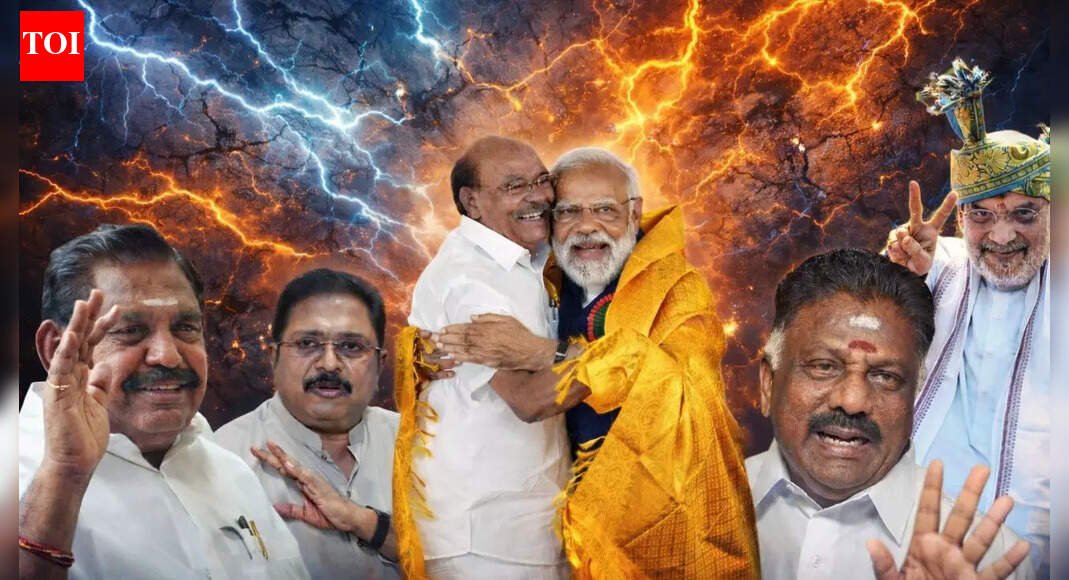
Late-night meetings in Delhi rarely make for calm politics, and the one that unfolded late evening last week between Union home minister Amit Shah and AIADMK general secretary Edappadi K Palaniswami, or EPS, was no exception. In optics, it was another routine round of koottani (alliance) discussions ahead of the 2026 Tamil Nadu Assembly elections. In substance, it revealed how the push for kattuppadu (control) was unsettling the alliance, exposing the deepest fault lines yet in the National Democratic Alliance’s (NDA) attempt to present a credible, unified challenge to the ruling Dravida Munnetra Kazhagam (DMK) government led by chief minister MK Stalin.At the heart of the tension lies a demand that goes beyond the usual arithmetic of seat-sharing. The BJP reportedly wants a formal power-sharing assurance from the AIADMK, including at least three cabinet berths if an AIADMK-led NDA were to form the next government.

Shah.

Union home minister and BJP leader Amit Shah with AIADMK general secretary Edappadi K Palaniswami during a press conference, in Chennai. AIADMK and BJP announced alliance for Tamil Nadu’s 2026 polls. (PTI photo)

For Tamil Nadu’s political culture, shaped by decades of Dravidian assertion and a strong emphasis on regional autonomy, such an explicit pre-election claim has few precedents. The reaction within the AIADMK has been wary, if not outright resistant, as the BJP’s clout in the South remains lean.The pre-poll power-sharing deal, however, is only one strand in a much larger and more byzantine political development. With just months to go before the 2026 polls, Tamil Nadu’s political field is unusually crowded and unsettled. The NDA is trying to stitch together a fragmented anti-DMK vote; the DMK is defending its record amid murmurs of alliance unease with the Congress, while actor-turned-politician Vijay has injected a new variable through his fledgling but closely watched Tamilaga Vettri Kazhagam (TVK). The result is a state on the cusp of a multi-cornered contest, where perception may matter as much as numbers.The BJP’s calculusFor the BJP, Tamil Nadu remains the most challenging large state on the electoral map. Despite steady organisational work over the past decade and a growing vote share, the party has not yet translated presence into power. Its alliance with the AIADMK has therefore always been more than tactical and is seen in Delhi as the primary vehicle for relevance in the southern state. However, the current BJP strategy, curated mainly by Amit Shah, reflects this urgency.

Amit Shah in Tamil Nadu.

Union Home Minister Amit Shah waves to the gathering during the Namma Ooru Modi Pongal festival, in Tiruchirappalli on January 5. (ANI photo)

BJP has consistently maintained that merely contesting a limited number of seats as a junior partner no longer serves the long-term interests of the party. The proposal that the BJP and its own allies together contest around 56 of the state’s 234 assembly seats is part of this thinking.More striking, however, is the reported insistence on cabinet representation, a move intended to signal to cadres and voters alike that the BJP is not just supporting an AIADMK government but would be a stakeholder in governance.

__EDS, YEARENDERS 2024_ News and Newsmakers__ Tiruppur_ Prime Minister Narendra ....

Prime Minister Narendra Modi with former Tamil Nadu BJP president K Annamalai and L Murugan during a roadshow at a public meeting for the culmination of the BJP’s ‘En Mann Ek Makkal’ padyatra, near Palladam in Tirupur in 2024. (PTI)

This push has coincided with a renewed effort by Shah and the central leadership to rebuild a broader NDA in the state. Former allies and breakaway factions are being courted again, including leaders who left the alliance last year. The BJP believes that consolidating these forces is essential to prevent vote-splitting that could once again hand the DMK an advantage.Yet, this centralised approach has also revived old anxieties. In Tamil Nadu, where electoral narratives are often framed around resistance to “Delhi control”, any perception that the BJP is dictating terms risks becoming a political liability rather than an asset for the AIADMK.Alliance arithmetic vs identity politicsFor the AIADMK, the alliance question is as much about survival as it is about strategy. Since the death of J Jayalalithaa, or Amma as she was popularly known, the party has struggled to regain the dominance it once enjoyed. In the 2016 elections, the AIADMK under Jayalalithaa had emerged victorious with 136 seats.The AIADMK-led alliance, in the 2021 state polls, which were fought in the absence of Amma, won 75 seats, of which the AIADMK itself secured 66, while the DMK-led front swept to power with 159 seats. The verdict underlined both the AIADMK’s residual strength and the scale of the challenge ahead.

481003.

An All India Anna Dravida Munnetra Kazhagam (AIADMK) party cadre greets himself at the feet of his party supremo Jayalalithaa Jayaram after party’s victory in the assembly polls, at her residence in Chennai on May 19, 2016. This is the first time since 1987 that an incumbent government has been re-elected in Tamil Nadu after the enormous success of AIADMK founder, MG Ramachandran. (Photo: Times Content)

After the 2021 assembly defeat, EPS moved decisively to consolidate control over the AIADMK, marginalising rivals and asserting himself as the party’s sole authority. This process effectively pushed out O Panneerselvam (OPS), once a key face of the party and a former chief minister. The EPS–OPS split was not just a leadership clash but a symptom of the AIADMK’s post-Jayalalithaa identity crisis.Palaniswami argued that a single centre of authority was essential for electoral recovery, while Panneerselvam continued to claim legitimacy through loyalty to Jayalalithaa’s legacy and sympathy among sections of the cadre. EPS emerged stronger within the party, but the split narrowed the AIADMK’s social and political reach at a time when it could least afford division.EPS vs OPS dilemma for BJPFor the BJP, this internal fracture has been an enduring source of discomfort. The party has viewed Panneerselvam as more approachable and politically expendable, someone who could be accommodated without threatening the alliance’s structure. Palaniswami, by contrast, has been guarded and transactional, keen to keep both the BJP and expelled leaders at arm’s length to protect his authority and the party’s regional identity. This has left the BJP caught between competing compulsions: it cannot ignore EPS without risking the alliance, but it also hesitates to shut the door on OPS, whose limited yet specific influence could matter in a tight contest. The result has been an uneasy balancing act, one that reflects the BJP’s broader struggle to manage Tamil Nadu politics without appearing overbearing.

அதிமுக பொதுக்குழு.

The EPS–OPS split was not just a leadership clash but a symptom of the AIADMK’s post-Jayalalithaa identity crisis.

Against this backdrop, Palaniswami’s reluctance to commit publicly to power-sharing with the BJP is rooted in political instinct. The AIADMK is also cautious about re-inducting expelled leaders and rival factions like the Amma Makkal Munnetra Kazhagam (AMMK). The AMMK did not win seats but polled enough votes in several regions to dent the AIADMK’s prospects, particularly in the southern and delta districts. This residual vote base, drawn mainly from sections of the Thevar community and AIADMK loyalists disillusioned with the current leadership, makes the AMMK less a kingmaker and more a potential spoiler. For the BJP, bringing Dhinakaran back into the NDA is about preventing further fragmentation of the anti-DMK vote rather than expecting direct seat gains.While the BJP sees figures like O Panneerselvam and TTV Dhinakaran’s AMMK as assets who can consolidate specific caste and regional vote banks, Palaniswami views their return as a threat to internal cohesion and his own authority.

ops with ttv.

TTV Dhinakaran and O Panneerselvam are linked by political compulsion rather than conviction, brought together mainly by their shared opposition to EPS.

PMK a boon or bane?The re-entry of the Pattali Makkal Katchi (PMK) into the NDA has given the alliance a symbolic boost, but not without complications. Anbumani Ramadoss’s decision to align with the AIADMK-BJP front was meant to strengthen the NDA’s presence in northern Tamil Nadu, where the PMK traditionally draws support from the Vanniyar community. Though this adds social breadth to the coalition at a time when consolidation is critical, the PMK is far from united.

Salem_ Prime Minister Narendra Modi with Pattali Makkal Katchi (PMK) founder S. ....

Prime Minister Narendra Modi with Pattali Makkal Katchi (PMK) founder S. Ramadoss during a public meeting ahead of Lok Sabha elections, in Salem, Tamil Nadu. (PTI photo from 2024)

The sharp and public rift between Anbumani and his father, party founder S Ramadoss, has fractured the cadre and weakened the party’s ability to transfer votes as a bloc. Rival claims over leadership and legitimacy have created confusion at the grassroots, blunting what was once the PMK’s core electoral strength.For the NDA, the PMK’s return improves optics but not certainty. Without internal cohesion, the party risks becoming an unreliable ally rather than a decisive force against the DMK in 2026.DMK’s quest to quell anti-incumbencyFor the DMK, the turbulence within the NDA offers both opportunity and warning. The party’s sweeping victory in 2021, when it returned to power after a decade in opposition, was built on a broad coalition that included the Congress and several regional players.

New Delhi, May 24 (ANI)_ Prime Minister Narendra Modi with Tamil Nadu Chief Mini....

Prime Minister Narendra Modi with Tamil Nadu CM MK Stalin during the 10th NITI Aayog Governing Council Meeting on ‘Viksit Rajya for Viksit Bharat@2047’, at Bharat Mandapam in New Delhi in 2025. (ANI Photo)

Since then, the government has focused on welfare schemes, social justice narratives, Tamil identity and language. However, incumbency carries its own risks. There are murmurs of unease within the DMK-led alliance, particularly the Congress seeking greater seat shares or a more visible role post the 2024 Lok Sabha elections.While these strains are far from a rupture, they are being closely watched by rivals eager to exploit any cracks. The DMK leadership, which is slowly transitioning from MK Stalin to Udhayanidhi Stalin, is also conscious that a fragmented opposition could paradoxically complicate its task.

Chennai, Nov 27 (ANI)_ Tamil Nadu Chief Minister MK Stalin kisses his son, Tamil....

Tamil Nadu chief minister MK Stalin kisses his son, Tamil Nadu deputy chief minister Udhayanidhi Stalin on his birthday, in Chennai.

A three- or four-cornered contest may lower the winning threshold in individual constituencies, but it also introduces unpredictability. The party’s messaging has therefore doubled down on stability, contrasting its governance record with what it portrays as an unstable and opportunistic opposition camp.The Vijay factor: A promise or perception?Perhaps the most intriguing element in the current churn is the emergence of Vijay as a political actor. His TVK has yet to contest a major election, but its entry has already altered calculations across the spectrum.Vijay’s appeal cuts across age groups, with particular resonance among younger voters and sections disillusioned with established parties.

Kanchipuram_ Tamilaga Vettri Kazhagam (TVK) chief and actor Vijay waves as he me....

Tamilaga Vettri Kazhagam (TVK) chief and actor Vijay waves as he meets with villagers of Ekanapuram who have been opposing the proposal to establish a greenfield airport at Parandur, in Kanchipuram district. (PTI)

His carefully calibrated stance, critical of both the BJP and the DMK, positions the TVK as an alternative rather than an adjunct. This has attracted exploratory overtures from leaders sidelined within traditional formations, adding to the sense of flux.At the same time, the TVK’s strengths remain largely potential rather than proven. Organisational depth, booth-level machinery, and the ability to translate popular enthusiasm into votes are tests that only an election can provide. For now, Vijay’s presence serves as a wildcard, expectedly capable of influencing outcomes even if it falls short of forming a government.Between the numbersTamil Nadu’s recent electoral history offers important context. In 2016, the AIADMK won 136 seats with around 41 per cent of the vote, while the DMK secured 98 seats with just under 40 per cent. The narrow margin reflected how small shifts in alliances and turnout can have outsized effects.Five years later, in 2021, the pendulum swung decisively. The DMK-led alliance polled close to 46 per cent and won 159 seats, while the AIADMK alliance’s vote share dipped to around 39 per cent, translating into 75 seats. The BJP, contesting as an ally, won four seats and improved its vote share, but remained dependent on the larger Dravidian partner. These figures highlight two enduring truths. First, alliances matter enormously in Tamil Nadu’s first-past-the-post system. Second, no single party, outside of peak DMK or AIADMK waves, can easily dominate without a broad coalition.The evolving battleAs the state heads towards the 2026 elections, the political picture remains fluid. The BJP is betting that a reconstituted NDA, bolstered by returning allies and clearer power-sharing signals, can present itself as a viable alternative. The AIADMK is trying to balance that partnership with its need to project independence and reassure its core electorate. The DMK is defending its turf while watching for signs of opposition consolidation. And Vijay’s TVK is carving out space in a crowded field, its final impact yet to be measured.What is clear is that Tamil Nadu’s politics is entering a phase where old certainties no longer apply automatically. The familiar binary of DMK versus AIADMK is giving way to a more layered contest, shaped by national ambitions, regional identities, and the aspirations of a new generation of voters.Whether the NDA’s current troubles are a prelude to a stronger, more coherent front, or a symptom of deeper contradictions, will become evident only as alliances crystallise and campaigns take shape. For now, the state watches as negotiations continue behind closed doors, aware that in Tamil Nadu, the path to power is rarely straightforward and often decided as much by perception as by pact.

Source link

Chinese tech leaders admit US export controls are a problem; say chances of beating OpenAI, Anthropic and other US tech giants are …


Chinese tech leaders admit US export controls are a problem; say chances of beating OpenAI, Anthropic and other US tech giants are ...

Contrary to what tech leaders like Jensen Huang and Eric Schmidt, some Chinese tech leaders are now saying China is unlikely to eclipse the US in the AI race. According to a report by Bloomberg, Justin Lin, head of Alibaba Group Holding Ltd.’s Qwen series of open-source models has said that currently there are less than 20% chances of any Chinese company surpassing US companies like OpenAI and Anthropic. Speaking at a panel at the AGI-Next summit in Beijing, lin said “A massive amount of OpenAI’s compute is dedicated to next-generation research, whereas we are stretched thin — just meeting delivery demands consumes most of our resources.” “It’s an age-old question: does innovation happen in the hands of the rich, or the poor?,” he stated.Lin’s concern was shared by leaders at Tencent Holdings Ltd. and Zhipu AI who were also present at the event. The report quotes Tang Jie, Zhipu’s founder and chief AI scientist, and Yao Shunyu, who recently joined Tencent from OpenAI to lead the AI push for China’s most valuable company. “We just released some open-source models, and some might feel excited, thinking Chinese models have surpassed the US. But the real answer is that the gap may actually be widening,” Tang said as quoted in the Bloomberg report. Core restrictionsChinese leaders cited limited resources and US export controls on chips and lithography equipment as major restrictions that could limit China’s AI growth. Tencent’s Yao Shunyu urged his industry peers to focus on the bottlenecks of next-generation models — such as long-term memory and self-learning. Yang, on the other hand, referred to artificial general intelligence (AGI) stating: “We should represent China to push AGI further for the world”, adding “Meaningless internal competition serves no purpose”. During the summit, the tech leaders also explained where they plan to focus their efforts in the coming year. Yao said he is helping Tencent use AI to create more value for its large user base, such as by connecting the company’s Yuanbao assistant with users’ WeChat chat history.Lin, on the other hand, highlighted Alibaba’s bet on multimodality and real-world agents.


Source link

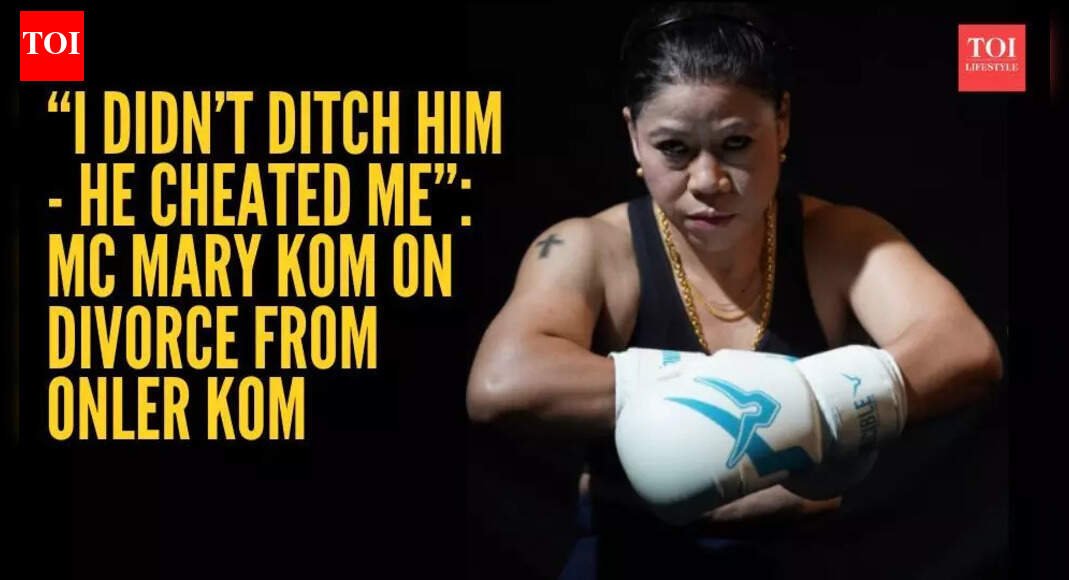
“I didn’t ditch him – he cheated me”: MC Mary Kom addresses affair rumours amid divorce from Onler Kom


“I didn’t ditch him - he cheated me”: MC Mary Kom addresses affair rumours amid divorce from Onler Kom
Photo: Mary Kom / Instagram

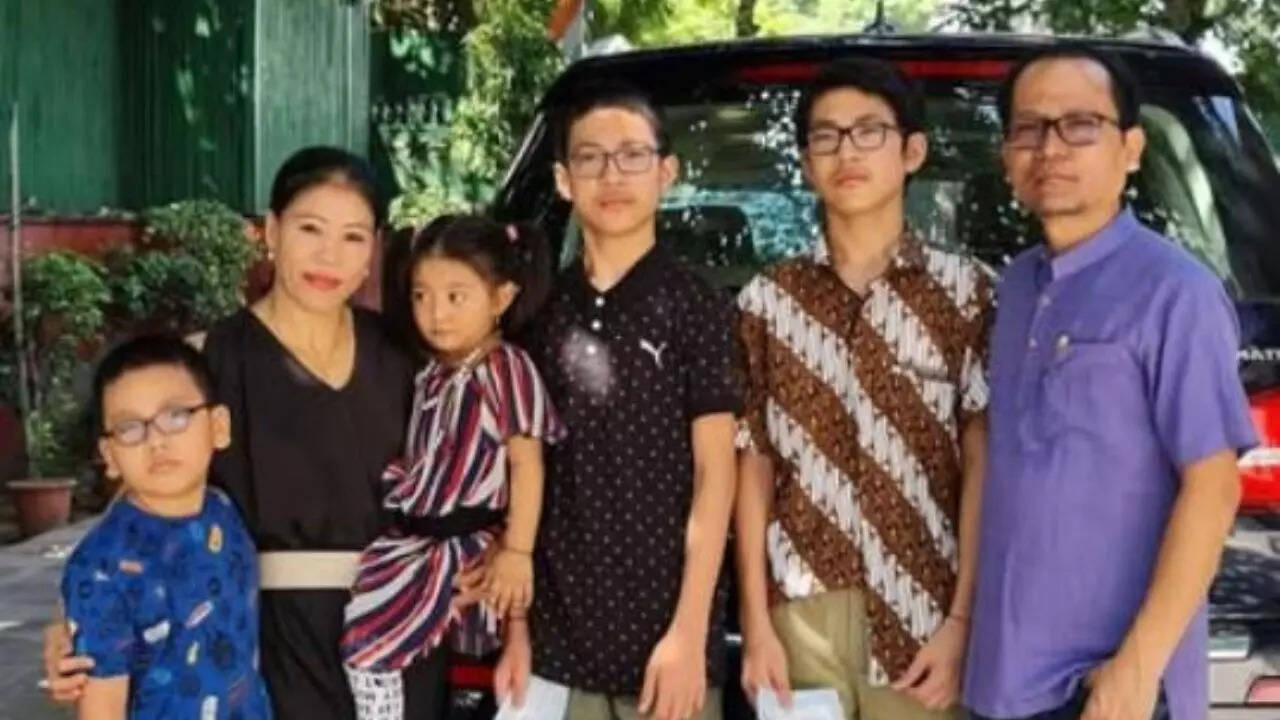
Legendary Indian boxer MC Mary Kom is making headlines these days, however, it is for a sad reason – her recent divorce with former husband Onler Kom after almost 20 years of marriage and having four children together! That’s a split that no one saw coming, and so the news has stunned many. In a new bombshell interview with Rajat Sharma on Aap Ki Adalat, the six-time world boxing champ and Olympic bronze medalist, Mary Kom didn’t hold back as the host grilled her about divorce drama, financial betrayal, and steamy affair allegations with business manager Hitesh Choudhary. From “he drank all day” to “my bank account was…”, Mary’s raw emotion shocked people. Here’s what she revealed while sharing her side of the story:“He never earned a penny!” – Mary Kom’s marriage shockerAfter roughly 20 years of marriage, and four kids (three sons including twins, one daughter who is the youngest), and Mary Kom said that she discovered her ex-husband, Onler Kom was living off her glory. When Sharma asked, “Is Mary Kom selfish? That’s what people are saying– that after becoming successful and rich, you ditched your husband…” To which Mary Kom replied, “I did not ditch him. He cheated and ditched me. For the last two years (since her divorce with Onler) I kept this a secret.”“My hard-earned money – he didn’t contribute ONE rupee!” she claimed. “He has no successful career. He plays street football, and so do many people; that doesn’t make you Bhaichung Bhutia or Sunil Chhetri!”The breaking point in her marriage came when she was bedridden post-injury, before the 2022 Commonwealth Games. “God gave me this injury for the better,” she said. Mary Kom further revealed that she caught her ex-husband red-handed: Onler withdrew INR 10 lakhs from her account, switched off his phone, and later lied about “just taking INR 30,000,” from a bank account which he was closing. These betrayals happened repeatedly, which took a toll on their marriage. She also spoke up about the election fiasco, wherein she shelled out INR 5-6 crores for Onler’s MLA dreams. “I don’t even like politics!” she said. Meanwhile, Onler took loans in her name, and drank daily – which slowly crumbled their marriage.

Mary Kom with her ex-husband Onler Kom in happier times

“I sacrificed my life to earn money, I sacrificed seeing my kids grow up… and he betrayed me! So, how can I be happy with such a man?,” Mary said.Revealing that her four children are with her, and she is the one taking care of them she said that her kids chose her post-divorce. “They’re with me – I handle ALL expenses,” she clarified. Onler’s “great dad” PR? “Maids cared for them – he just slept,” she said.Is Mary Kom dating again? The affair allegation that broke the internetRajat Sharma went on to ask, “There are allegations that you’re having an affair with your business manager Hitesh Choudhary (that broke your marriage)…” To which Mary replied, “He came into my life after I divorced Onler; later, this allegation of having an affair was made against me. But the truth is that for the last two years, after we got a divorced we have been living quite amicably!”But it was the church shaming that stung the deepest, Mary shared. Christian by faith, Mary’s Kumbh Mela, Shirdi trips and a visit to a sufi shrine created a lot of furore, “Even our PM Modi celebrates Christmas!” she fired back.While social media empathised with Onler, Mary said she was shown as a villain. Talking about how it impacted her, Mary said, “All I have to tell people is that– it doesn’t matter if you support me or not. You will get to know the truth one day or the other. I’m a fighter, I will fight.”Which side are you on– Team Mary or sympathising for Onler? Tell us in the comment section below.


Source link

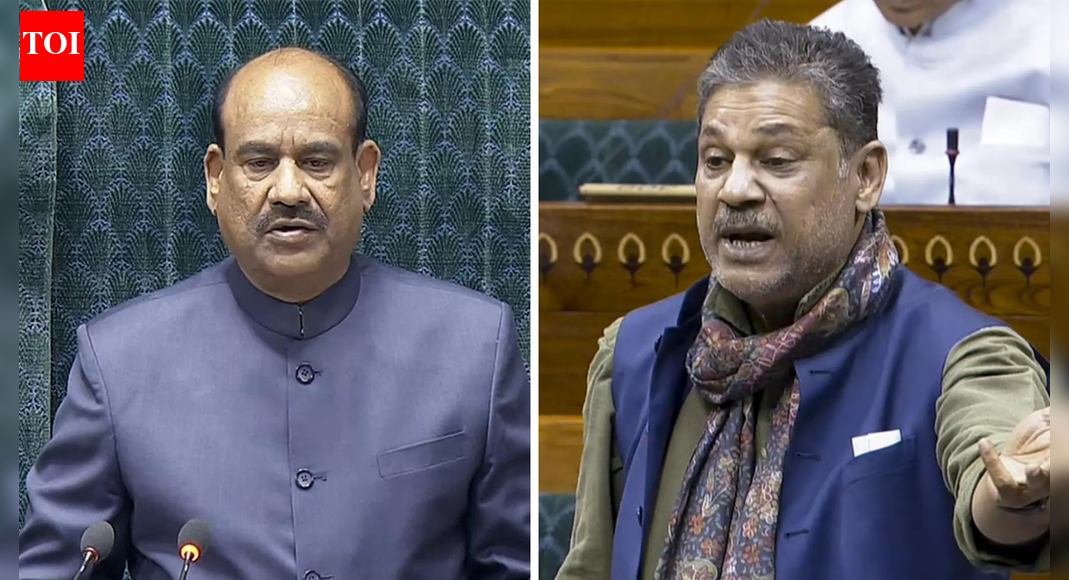
‘Have to maintain decorum’: Om Birla slams Kirti Azad for vaping inside Parliament; adds action soon | India News


'Have to maintain decorum': Om Birla slams Kirti Azad for vaping inside Parliament; adds action soon

NEW DELHI: Lok Sabha Speaker Om Birla on Monday said that disciplinary actions will be taken against TMC MP Kirti Azad fore allegedly smoking an E-cigarette inside the Parliament.Birla urged the parliamentarians to maintain decorum inside the House and it will not be possible for any one to spoil the dignity of the Parliament.“The process of investigation is in the direction of being completed. As soon as the investigation process is completed, the action plan will be made and will go to the committee, and the process will be completed. It will not be possible for anyone to spoil the dignity of the House,” Birla said.“It is a responsibility. You will have to maintain decorum inside the House and the one who does not maintain decorum will be punished under the rules and procedures of the Parliament. Action will be taken. Action will be taken as per the rules,” he added.During the winter session of the Parliament, Bharatiya Janata Party MP Anurag Thakur filed a complaint against Kirti Azad, claiming that he was vaping in the Lower House during the ongoing session.In the letter, Thakur stated, “A Member of Parliament belonging to the All India Trinamool Congress was seen openly using an electronic cigarette while seated in the House during the sittings.” He added that the act was “clearly visible” to several members present in the House.Thakur termed the alleged act a serious violation of parliamentary conduct, calling it a grave breach of rules and statutory provisions. He also noted that he had brought the issue to the Chair’s attention during the session.In his complaint, the BJP MP also reminded the Speaker that the manufacture, production, import, export, transport, sale, including online sale, distribution, storage and advertisement of electronic cigarettes are completely prohibited across the country under the Prohibition of Electronic Cigarettes (Production, Manufacture, Import, Export, Transport, Sale, Distribution, Storage and Advertisement) Act, 2019.BJP leader Amit Malviya also shared a 35-second video that according to him, showed Trinamool MP Kirti Azad vaping in the House. The video showed Azad sitting inside the Lok Sabha and purportedly making smoking gesture. Azad was seen bringing his cupped right hand towards his mouth and holding it for five seconds.


Source link