Breaking News
‘We were fully defeated on day 1’: Congress’s Prithviraj Chavan refuses to apologise for Operation Sindoor remark; BJP hits back | India News
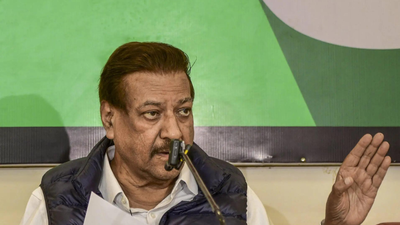

‘We were fully defeated on day 1’: Congress’s Prithviraj Chavan refuses to apologise for Operation Sindoor remark; BJP hits back

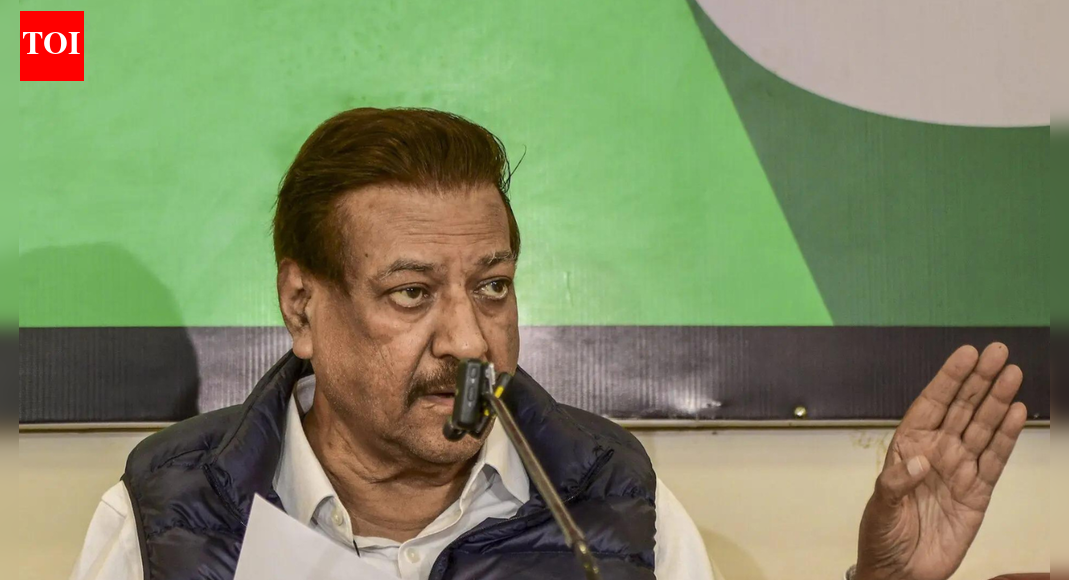
NEW DELHI: Congress leader and former Maharashtra chief minister Prithviraj Chavan on Wednesday refused to apologise for his remarks on Operation Sindoor, saying the Constitution gives him the right to ask questions.“Why will I apologise? It is out of the question. The Constitution gives me the right to ask questions,” Chavan said when asked whether he would apologise for his remarks.This comes a day after Chavan stirred controversy by claiming that India was “completely defeated” on the first day of Operation Sindoor, while questioning the conduct of the military operation.Also read: Former Maharashtra CM Prithviraj Chavan questions need for large Indian militarySpeaking to reporters in Pune, Chavan alleged that India suffered setbacks on the first day of the operation.“On the first day (of Operation Sindoor), we were completely defeated. In the half-hour aerial engagement that took place on the 7th, we were fully defeated, whether people accept it or not. Indian aircraft were shot down. The Air Force was completely grounded, and not a single aircraft flew. If any aircraft had taken off from Gwalior, Bathinda or Sirsa, there was a high probability of being shot down by Pakistan, which is why the Air Force was fully grounded,” Chavan said.The Congress leader further alleged that Operation Sindoor involved only aerial and missile warfare and saw no ground movement by the armed forces.“Recently, we saw during Operation Sindoor, there was not even a one-kilometre movement of the military… Whatever happened over two or three days was only an aerial war and missile warfare. In the future too, wars will be fought in the same way. In such a situation, do we really need to maintain an army of 12 lakh soldiers, or can we make they do some other work?” Chavan said.‘Insulting the army has become the hallmark of the Congress’Reacting strongly, BJP spokesperson Shehzad Poonawalla accused the Congress of repeatedly disrespecting the Indian Armed Forces and undermining national security operations.Poonawalla said the statements made by the former Maharashtra chief minister were “shocking” and targeted the Air Force and the armed forces.“Insulting the army has become the hallmark of the Congress party… This is not just Prithviraj Chavan’s statement; Rahul Gandhi has also made similar statements,” Poonawalla said.All these statements reflect Rahul Gandhi’s mindset, which is why Rahul Gandhi or the Congress party does not take any action against such leaders… These statements reveal their anti-army mentality,” he added.Union minister Giriraj Singh also launched a broadside against Chavan and said that no one has the right to “insult the valour of the Armed Forces.”“No one has the right to insult the valour of the Armed Forces. Those who do so can never think of the nation’s interest….It has become Congress’s habit to insult the Armed Forces,” Giriraj Singh said.Operation Sindoor was launched by India on May 7, targeting terror infrastructure deep inside Pakistan and Pakistan-occupied Kashmir (PoK). The operation was carried out in retaliation for the April 22 terror attack in Pahalgam, Jammu and Kashmir, in which 26 civilians were killed.


Source link

Is the Viksit Bharat Shiksha Adhishthan Bill dissolving federalism in education?


Is the Viksit Bharat Shiksha Adhishthan Bill dissolving federalism in education?

Few pieces of legislation put forth brimming ambition on the table and evoke deep constitutional unease. Such is the Viksit Bharat Shiksha Adhishthan Bill, 2025. It has been introduced in the Lok Sabha amid vocal opposition resistance, the bill seeks nothing less than a full-scale demolition and reconstruction of India’s higher education regulatory architecture. By repealing the University Grants Commission Act, 1956, the All India Council for Technical Education Act, 1987, and the National Council for Teacher Education Act, 1993, the government is proposing a singular, centralised command structure in the name of efficiency, coherence, and reform.On paper, the bill aligns itself firmly with the National Education Policy (NEP), 2020, a document that promised transformation, autonomy, and innovation. In practice, however, the legislation raises a more uncomfortable question: Does this reform strengthen India’s higher education system, or does it hollow out the federal compact that underpins it?

The new architecture: One apex, three councils, absolute authority

At the heart of the bill lies the creation of an umbrella regulator, the Viksit Bharat Shiksha Adhishthan, tasked with providing direction for the “comprehensive and holistic growth” of higher education. Beneath it will operate three distinct bodies: A regulatory council, an accreditation council, and a standards council.The design appears streamlined, even elegant. Years of complaints about overlapping mandates, duplicative inspections, and bureaucratic gridlock have given policymakers a compelling case for simplification. The bill’s Statement of Objects and Reasons explicitly cites overregulation and duplication as systemic failures requiring urgent correction.Yet the devil, as always, is in the detail.

Appointments, accountability, and the concentration of power

Every significant authority under the proposed framework, the chairperson of the apex body, its 12 members, and the presidents and members of all three councils, will be appointed by the President of India, based on recommendations from Union government-led search-cum-selection committees.Formally, this adheres to the constitutional process. Substantively, it places the entire higher education regulatory ecosystem firmly within the Union government’s sphere of influence. There is no institutionalised role for state governments in appointments, despite education being a subject that has long occupied a delicate space between the Union and the states.This centralisation becomes starker under Clauses 45 and 47, which grant the Union government overriding policy authority. Any disagreement over whether a matter constitutes “policy” will be resolved unilaterally by the Centre, its decision final and binding. The government may also direct the bodies to perform “such other functions as it deems fit,” an open-ended clause that leaves little room for autonomous regulatory judgment.

The power to supersede: Regulation by remote control

Perhaps the most contentious provision is the Union government’s power to supersede the commission or councils. If the Centre forms the opinion that a body has defaulted in its functions or failed to comply with its directions, it may dissolve that body, force its members to vacate office, and assume full control until reconstitution.This is not merely administrative oversight, it is executive dominance. Regulatory independence, a cornerstone of credible academic governance, is rendered fragile when the regulator exists at the pleasure of the government it is meant to advise, audit, or occasionally resist.

Funding flows and fiscal dependence

Financial autonomy, too, appears limited. The proposed Viksit Bharat Shiksha Adhishthan Fund will be financed primarily through Union government grants, along with receipts and deposits from states or other authorities. While pooled funding can enhance coordination, it also deepens fiscal dependence on the Centre, further narrowing the operational space for dissent or decentralised decision-making.

Federalism at stake: A structural, not symbolic, concern

Opposition parties have framed their objections around two axes: Overcentralisation and federal erosion. These concerns are not rhetorical flourishes. Higher education institutions, particularly state universities, operate within diverse linguistic, social, and economic contexts. Regulatory uniformity imposed from New Delhi risks flattening this diversity in pursuit of a one-size-fits-all model.The criticism of the bill’s Hindi nomenclature may seem cosmetic to some, but it feeds into a broader anxiety: Whose vision of “Viksit Bharat” is being institutionalised, and at whose expense? In a federal polity, symbolism and structure often travel together.

‘Light but tight,’ or tight and heavy?

The government insists that the bill reflects the NEP’s promise of a “light but tight” regulatory framework, minimal interference combined with strict accountability. Yet the expansive discretionary powers vested in the Union government complicate this claim. Autonomy without institutional safeguards quickly becomes conditional autonomy, granted and withdrawn at the Centre’s discretion.Efficiency, undeniably, is a legitimate policy goal. India’s higher education system has long suffered from regulatory congestion. But efficiency achieved through excessive central control carries its own democratic cost.

Reform or rupture?

The decision to send the bill to a Joint Parliamentary Committee is both prudent and revealing. It acknowledges, implicitly, that the legislation’s implications extend beyond technical reform into constitutional terrain. The committee’s deliberations will determine whether this bill evolves into a balanced reform, or hardens into a blueprint for centralised command.The question, ultimately, is not whether India’s higher education system needs reform, it does. The real question is whether reform must come at the expense of federalism, pluralism, and institutional autonomy.If the Viksit Bharat Shiksha Adhishthan Bill redraws the lines of educational governance too sharply, it risks converting cooperative federalism into administrative compliance. And that would be a transformation far more consequential than any regulatory overhaul.


Source link

Delhi smog crisis continues: Air quality stays ‘very poor’ at 350; 11 city areas show ‘severe’ AQI | Delhi News


Delhi smog crisis continues: Air quality stays 'very poor' at 350; 11 city areas show 'severe' AQI

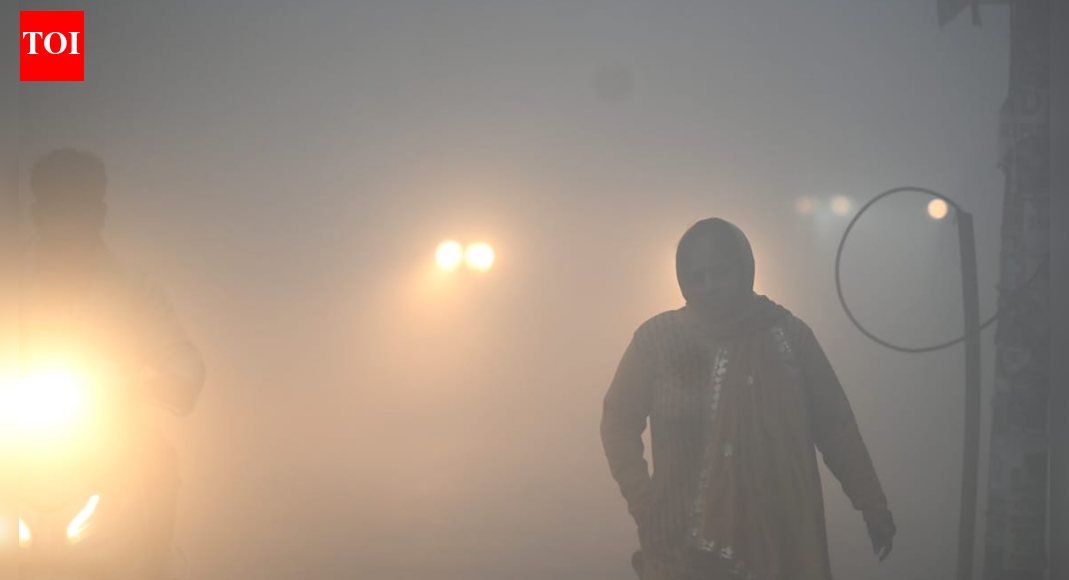
NEW DELHI: Dense smog continued to blanket the national capital on Wednesday, sharply reducing visibility and keeping air quality in the very poor to severe range, even as authorities stepped up curbs to rein in pollution. Delhi’s overall Air Quality Index (AQI) stood near 350, a marginal improvement from day earlier, but conditions remained hazardous. Data from the Central Pollution Control Board showed that 11 of the city’s 40 monitoring stations — including Jahangirpuri, Mundka and Wazirpur — recorded ‘severe’ AQI levels.

‘Delhi NOT Most Polluted’: Doctor’s Shocking Reveal On Toxic Monster; And How To Fight Back

The Delhi government announced that vehicles without a valid Pollution Under Control (PUC) certificate will not be allowed to purchase petrol or diesel in the city. It also said only BS-VI–compliant vehicles will be permitted to operate in Delhi, with older vehicles facing restrictions under the Graded Response Action Plan (GRAP). Fog disrupts flights, airlines issue advisories Poor air quality combined with dense fog continued to disrupt air traffic. IndiGo issued a late-night travel advisory, warning of reduced visibility and slower flight movements across parts of North and East India on Wednesday morning. “In the interest of safety, some flights may experience delays or adjustments,” the airline said, advising passengers to plan ahead, allow extra time to reach airports and check flight status before leaving home. IndiGo also cautioned that foggy conditions could slow road traffic, affecting access to airports. Earlier, Indira Gandhi International Airport issued a fog advisory, saying operations were steadily recovering but warning that disruptions could persist for certain arrivals and departures due to low visibility. Non-BS VI vehicle ban sparks commuter anxiety The Delhi government’s decision to bar non-BS VI vehicles from entering the city from Thursday has triggered concern across the NCR, where lakhs depend on daily cross-border travel. Official data indicates that over 2 lakh vehicles in Gurgaon, more than 4 lakh in Noida and around 5.5 lakh in Ghaziabad fall below BS-VI standards and could be affected. Traffic police teams have been deployed at Delhi-NCR borders, with violators facing fines and vehicle seizure. Residents described the move as abrupt and impractical, arguing that Delhi and its neighbouring cities function as a single economic unit. They warned the restrictions could disrupt daily work, strain public transport and add pressure on already crowded metro services. Officials defended the decision, saying it was necessary to tackle toxic air. “The restrictions are in line with GRAP norms. Our aim is to reduce emissions during severe pollution episodes,” an NCR transport official said. Slight relief, but pollution to persist Meteorological factors brought limited relief on Tuesday, with higher wind speeds helping disperse pollutants and push AQI down from the severe zone. The India Meteorological Department reported shallow fog across most parts of the city, though visibility remained poor in the early morning. Experts said stronger winds over the next few days could further improve air quality, but warned that AQI is likely to remain in the ‘very poor’ category till the end of the week, according to the Centre’s Air Quality Early Warning System. With fog, pollution and travel disruptions expected to continue, authorities have urged residents to limit outdoor activity, use public transport where possible, and stay alert to official advisories.


Source link

Romeo Lane nightclub fire: Luthra brothers taken to Goa by police; to be produced at Mapusa court today | Delhi News


Romeo Lane nightclub fire: Luthra brothers taken to Goa by police; to be produced at Mapusa court today

NEW DELHI: Gaurav and Saurabh Luthra, owners of the Birch by Romeo Lane nightclub in Arpora, Goa, are being transported to Goa by the state police on Wednesday following their arrest at Delhi’s IGI Airport immigration. The brothers were deported to India from Thailand, ending a 10-day international search after the deadly fire at their nightclub that claimed 25 lives.A Delhi court had earlier granted the Goa Police a two-day transit remand to facilitate their transfer. The Luthra brothers will be produced before a judicial magistrate in Mapusa, Goa, as the investigation into the incident continues.The duo fled India on Dec 7, hours after a fire at their nightclub claimed 25 lives. They had been staying at the Indigo Hotel in Phuket and were deported to India on Tuesday under escort by Thai authorities.At Bangkok airport, the brothers were masked and surrounded by immigration officials, seated at the rear of the aircraft under security. They were produced at Delhi’s Patiala House Court around 6.45 pm, where Goa police requested three days’ custody. The JMFC granted two-day transit remand. After medical examination, they were taken back to the airport to be flown to Goa, expected to arrive around 11 am on Wednesday, according to DySP Nilesh Rane.Their passports had been suspended by the Ministry of External Affairs (MEA) after a lookout notice, prompting the issuance of emergency travel documents by the Indian embassy in Thailand. The Luthra brothers had been detained by Thai authorities for staying illegally in the country, and a special team traveled to Phuket to facilitate their deportation.Goa police have registered an FIR against the duo under various sections of the BNS, including culpable homicide not amounting to murder. Local courts had rejected their anticipatory transit bail last week.So far, several associates linked to the nightclub have been arrested, including Gurgaon resident Ajay Gupta, Delhi-based Rajiv Modak and Priyanshu Thakur, and UP natives Rajveer Singhania, Vivek Singh, and Bharat Kohli. Preliminary investigations suggest the fire broke out around 11.45 pm on Dec 6, when over 150 tourists were attending an event, after electric firecrackers struck the wooden ceiling of the club.


Source link

‘Dhurandhar’ box office collection Day 12: Ranveer Singh–Akshaye Khanna starrer crosses Rs 400 crore India net; records biggest-ever second week in Hindi |


'Dhurandhar' box office collection Day 12: Ranveer Singh–Akshaye Khanna starrer crosses Rs 400 crore India net; records biggest-ever second week in Hindi

Director Aditya Dhar’s spy actioner ‘Dhurandhar’ starring Ranveer Singh and Akshaye Khanna in lead roles, has created box office history yet again, registering the biggest second week ever for a Hindi film.According to early estimates, the first instalment of the two-part franchise collected around Rs 30 crore net on Day 12, matching its second Monday figures. With this, the film recorded the biggest second Tuesday collection for any Hindi release to date.

‘Dhurandhar’ to surpass week 1 collections

The strong Tuesday push has taken the film’s second-week net total to Rs 204 crore, making ‘Dhurandhar’ the only Hindi film to cross the Rs 200 crore net mark in its second week. Notably, the milestone was achieved in just five days of its Week 2 run, thus cementing its place as one of the biggest box office performers in recent times.Keeping consistent momentum at the ticket counters, trade watchers believe the film could end its second week ahead of its first-week numbers. ‘Dhurandhar’ had earned Rs 207.25 crore net in its opening week, a figure it is now close to surpassing on Wednesday with still one more day to go before it wraps up the second week.

‘Dhurandhar’ all-India gross collections

After 12 days in theatres, the film has amassed an estimated Rs 411.25 crore India net. On the gross front, the film has surged to approximately Rs 493.5 crore, and is widely expected to cross the Rs 500 crore mark in India on Wednesday.

‘Dhurandhar’ worldwide box office

The film that crossed the Rs 100 crore mark at the international box office, now boasts of a total collection of Rs 130 crore. This in turn has pushed the worldwide box office collection to an estimated Rs 623.5 crore.

‘Dhurandhar’ sets new records

‘Dhurandhar’ continues to show an upward trend at the domestic box office. Following a series of record-breaking daily collections in its second week, the film delivered the biggest second Tuesday by a margin that is nearly double that of previous releases.‘Dhurandhar’ also broke the record previously held by ‘Pushpa 2 – The Rule’, starring Allu Arjun, which had collected Rs 196 crore net in its second week. The film managed to surpass this record in just five days.


Source link

Ram ka naam badnam na karo, Tharoor tells government | India News


Ram ka naam badnam na karo, Tharoor tells government

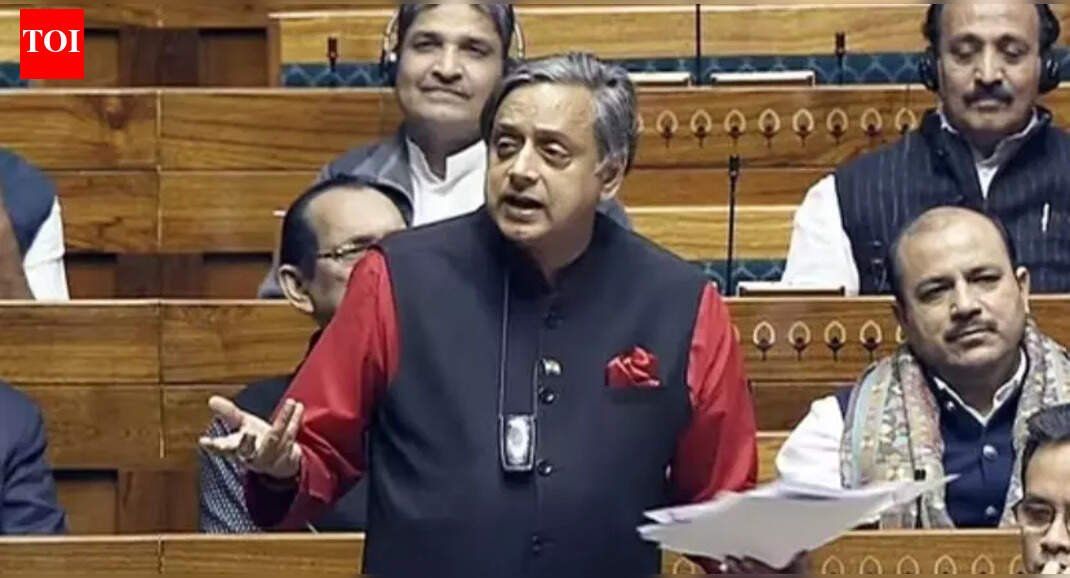
NEW DELHI: Congress on Tuesday protested both inside and outside Parliament against the “anti-people” G RAM G bill, with its MP Shashi Tharoor – who the party has accused of being soft on BJP – taking a dig at the governmentt in Lok Sabha by recalling an old Bollywood number – “dekho o deewano (tum) ye kaam na karo, Ram ka naam badnam na karo”.Sounding the bugle of “sansad to sadak” fight against the rural employment gurantee bill, Congress’s Rahul Gandhi alleged that PM Narendra Modi wants to target the secure livelihood of the poor after destroying the future of India’s youth through massive unemployment. He said saddling states with 40% financial burden will destroy the foundational principles of the job guarantee scheme – right to work, full central support for wages and 3/4th for material costs and autonomy to villages to decide development works.The prime minister has “deep dislike” for the rights of the poor, and MGNREGA is a living embodiment of Gandhi’s vision of ‘gram swaraj’ as a lifeline for crores of rural Indians, Rahul said. “To remove the name of Mahatma Gandhi is to strip the bill of its moral compass and historical legitimacy,” Tharoor said in Lok Sabha.


Source link

Trump expands travel ban: Five more countries added to no-entry list; new restrictions on others


Trump expands travel ban: Five more countries added to no-entry list; new restrictions on others

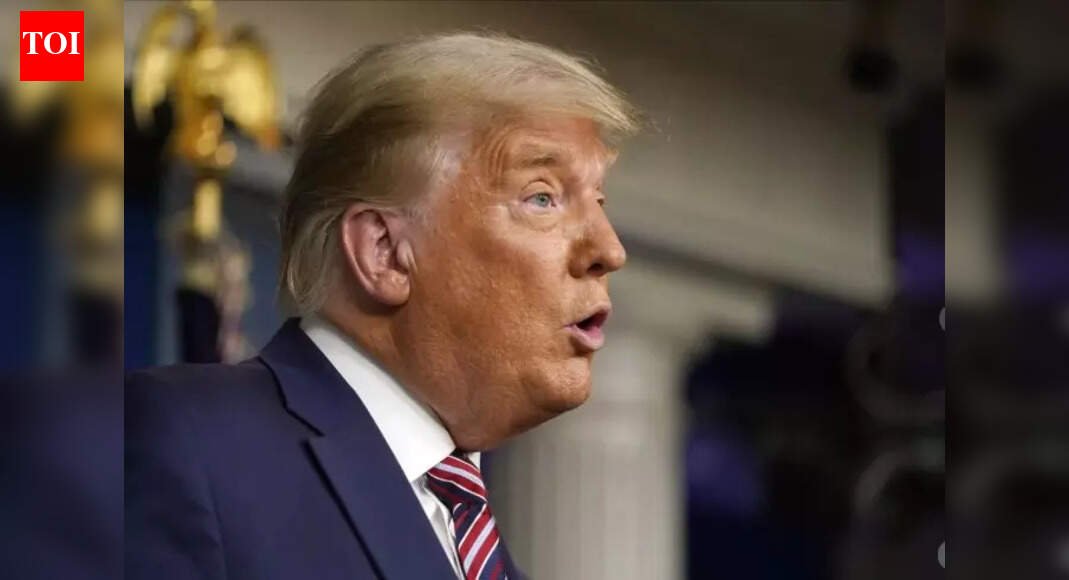
The Trump administration has expanded its travel ban to include five additional countries while imposing new restrictions on others.The administration’s June announcement had already banned visitors from 12 countries, including Afghanistan, Myanmar, Chad, Republic of Congo, Equatorial Guinea, Eritrea, Haiti, Iran, Libya, Somalia, Sudan, and Yemen.The new expansion adds Burkina Faso, Mali, Niger, South Sudan, and Syria to the list of banned countries. Additionally, travel has been fully restricted for individuals with Palestinian Authority-issued travel documents.Burundi, Cuba, Laos, Sierra Leone, Togo, Turkmenistan, and Venezuela were already facing heightened restrictions under the previous ban.The administration has also implemented partial restrictions for 15 more countries: Angola, Antigua and Barbuda, Benin, Côte d’Ivoire, Dominica, Gabon, Gambia, Malawi, Mauritania, Nigeria, Senegal, Tanzania, Tonga, Zambia, and Zimbabwe.“It is the policy of the United States to protect its citizens from foreign nationals who intend to commit terrorist attacks, threaten our national security and public safety, incite hate crimes, or otherwise exploit the immigration laws for malevolent purposes,” stated the White House.“The United States must exercise extreme vigilance during the visa-issuance and immigration processes to identify, prior to their admission or entry into the United States, foreign nationals who intend to harm Americans or our national interests,” it added,These changes are part of the administration’s broader efforts to strengthen US entry standards for travel and immigration.


Source link

Search continues for 3 Pakistani terrorists in Udhampur forest; police say escape routes sealed | Jammu News


Search continues for 3 Pakistani terrorists in Udhampur forest; police say escape routes sealed

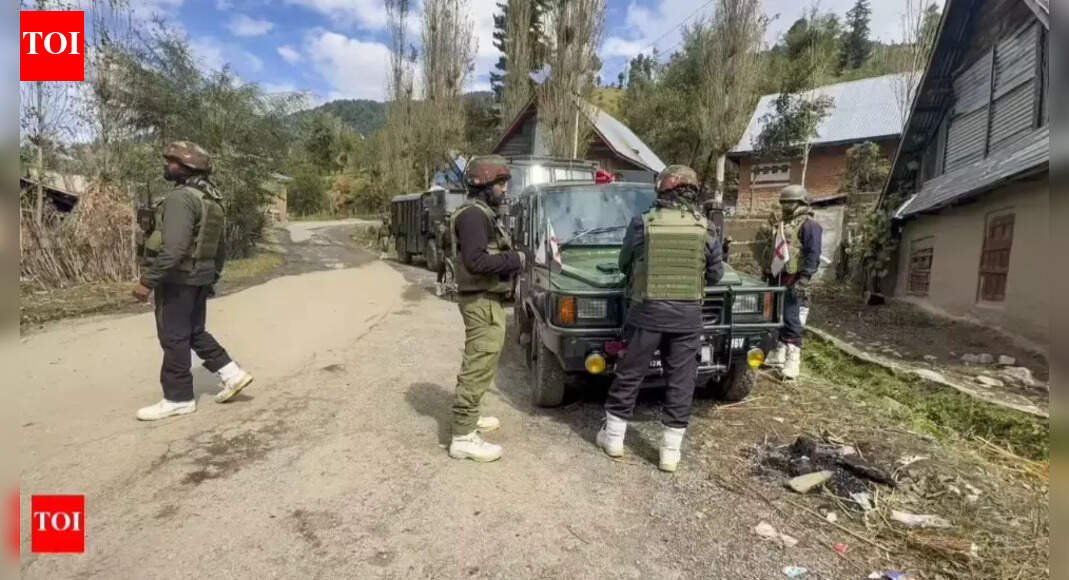
Jammu: Security forces on Tuesday intensified their operation to trace three terrorists holed up in a dense forest near a village in Jammu’s Udhampur district, a day after a policeman was killed in a gunfight in the area.Amjad Ali Khan, a special operations group (SOG) constable, lost his life on Monday night during the encounter that broke out in Soan village in Majalta area earlier in the evening. In a post on X, J&K Police said Amjad “made the supreme sacrifice, whilst combatting Pakistani terrorists”.Speaking to media persons in Udhampur on Tuesday, Jammu zone IGP Bhim Sen Tuti said after the initial firing, the terrorists escaped into a dense forest area. “However, all possible escape routes have been sealed and a tight security cordon has been established, with additional forces rushed to the spot. The operation is in progress,” he said.According to sources, one terrorist is believed to have been injured, but there was no official confirmation.The gun battle started after a search operation was launched on Monday evening on the basis of specific information about the presence of terrorists. “The intelligence input was accurate and during the exchange of fire, the presence of three terrorists was confirmed,” the IGP said.During the encounter, SOG jawan Amjad, a resident of Poonch, was injured. “We tried to get him out, but due to blood loss, unfortunately we lost him,” Tuti said.A wreath-laying ceremony for the slain cop was held at district police lines on Tuesday, which was attended by DGP Nalin Prabhat, IGP Tuti and other senior officers of J&K Police and CRPF and district administration. “Heroes Never Die!” J&K Police said in their tribute on X.Officials said the search operation continues, and the cordon has been further strengthened, with additional forces rushed to the spot. “A joint team of SOG, along with the Army and the CRPF, is on the job with sniffer dogs,” said an official.Traditionally, Pakistani terrorists have used areas like Basatgarh-Dudu area in Udhampur district, which have hilly terrain intersected with rivers and streams, to cross over to Doda and Kishtwar and further move to Kashmir Valley after entering from the International Border (IB) in Jammu’s Kathua district. The area has witnessed several encounters and terror incidents in the past.On Nov 28, the forces had launched a joint search operation in the upper reaches of Basantgarh after three suspected terrorists reportedly appeared at a Bakerwal’s house and demanded food at gunpoint, according to some reports.On Oct 7, a similar operation was carried out in the Dharni top area of Basantgarh after some locals reported movement of three suspected terrorists.Prior to this, on June 26, a Jaish-e-Mohammed (JeM) terrorist was killed by security forces, while his three associates remained trapped in an encounter in a forest area of Bihali, Basantgarh, in Udhampur.On April 24, an Army Havaldar, Jhantu Ali Sheikh from 6th Para of Special Forces (SF), was killed in an encounter in Dudu-Basantgarh area.


Source link

‘The Great Honour Nishan of Ethiopia’: PM Modi conferred country’s highest civilian award in Addis Ababa | India News


‘The Great Honour Nishan of Ethiopia’: PM Modi conferred country’s highest civilian award in Addis Ababa

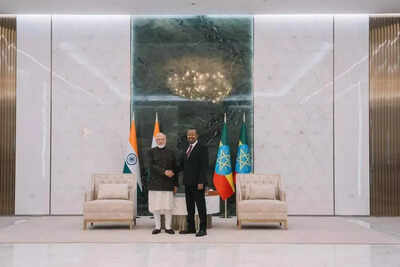
Prime Minister Narendra Modi was on Tuesday conferred with Ethiopia’s highest civilian honour, The Great Honour Nishan of Ethiopia, during his first bilateral visit to the country.Speaking after receiving the award, PM Modi said it was a matter of pride to be honoured by “a very ancient and prosperous civilisation”. He said he accepted the award on behalf of all Indians and described it as a recognition of the many Indians who have contributed to strengthening India–Ethiopia ties.PM Modi also said, “On this occasion, I also express heartfelt gratitude to my friend PM Abiy Ahmed Ali. Last month, when we met during the G20 Summit in South Africa, with great love and right, you had urged me to visit Ethiopia. How could I have turned down this invitation from my friend, my brother? So, at the first chance, I decided to come to Ethiopia.”During the visit, India and Ethiopia agreed to elevate their relationship to a strategic partnership. PM Modi held delegation-level talks with Ethiopian Prime Minister Abiy Ahmed Ali, where the two leaders discussed a wide range of bilateral and regional issues.“We are elevating India and Ethiopia relations to a strategic partnership. This step will provide new energy, new momentum and new depth to our ties,” Prime Minister Modi said during the delegation-level talks.PM Modi said the talks focused on cooperation in areas including economy, innovation, technology, defence, health, capacity-building and multilateral forums. On Wednesday, PM Modi is scheduled to address a joint session of Ethiopia’s Parliament, where he will speak about India’s democratic journey and the value of the India–Ethiopia partnership for the Global South.PM Modi arrived in Ethiopia from Jordan, where he held talks with King Abdullah II and signed several agreements to boost bilateral cooperation. He will next travel to Oman on the final leg of his three-nation tour.


Source link

IPL Auction: Auqib Nabi to Prashant Veer – Top 5 expensive Indian uncapped players | Cricket News


IPL Auction: Auqib Nabi to Prashant Veer - Top 5 expensive Indian uncapped players
From left, this combo of file pictures shows cricketers Prashant Veer, Auqib Nabi Dar and Kartik Sharma. (PTI)

The IPL 2026 player auction began with limited action in the uncapped players’ category before Prashant Veer and Kartik Sharma were signed by Chennai Super Kings for Rs 14.20 crore each, setting a new record for uncapped players.The uncapped batters’ category opened the auction, but all six players listed went unsold. The group included Aarya Desai, Yash Dhull, Abhinav Manohar, Anmolpreet Singh, Atharva Taide and Abhinav Tejrana.

KKR CEO Venky Mysore Explains Cameron Green Buy – ‘We were getting close to the limit’

The next major development came with Jammu and Kashmir all-rounder Auqib Dar, who was bought by Delhi Capitals for Rs 8.4 crore. Delhi Capitals outbid Rajasthan Royals, Royal Challengers Bengaluru and SunRisers Hyderabad to secure the player.Prashant Veer followed, with multiple teams entering the bidding before Chennai Super Kings secured him. Along with Kartik Sharma, Veer became the most expensive uncapped player in IPL history at the mini auction for the 2026 season held at Etihad Arena in Abu Dhabi on Tuesday.Both players entered the auction at a base price of Rs 30 lakh, with CSK paying Rs 14.20 crore each. Uttar Pradesh all-rounder Prashant Veer’s price rose significantly as CSK competed with Rajasthan Royals early in the bidding and SunRisers Hyderabad later to sign the 20-year-old left-arm spinner and middle-order batter.Veer is set to make his IPL debut. He came into focus after playing for Noida Super Kings in the UP T20 League and has since played domestic cricket. In 12 T20 matches, he has scored 112 runs at a strike rate of 167.16 and taken 12 wickets in nine innings at an economy rate of 6.45. His performances in the Syed Mushtaq Ali Trophy added to his profile, with CSK identifying him as a long-term option in the squad.Soon after, CSK signed Rajasthan batter Kartik Sharma for the same amount of Rs 14.20 crore following bidding involving Mumbai Indians, Lucknow Super Giants and Kolkata Knight Riders.Kartik has scored 334 runs in 12 T20 matches at a strike rate of 164, including 28 sixes, and featured among the leading six-hitters in the Ranji Trophy. In the Syed Mushtaq Ali Trophy league stage, he scored 133 runs in five matches at a strike rate above 160. Across his 12-match T20 career, he has maintained a strike rate above 160.Top 5 Indian uncapped players in IPL auction 2026

Player Base price Sold at
Prashant Veer Rs 30 lakh Rs 14.2 crore (CSK)
Kartik Sharma Rs 30 lakh Rs 14.2 crore (CSK)
Auqib Dar Rs 30 lakh Rs 8.4 crore (DC)
Mangesh Yadav Rs 30 lakh Rs 5.2 crore (RCB)
Tejasvi Singh Rs 30 lakh Rs 3 crore (KKR)


Source link